
Moving to Thailand is exciting and nerve wracking all at the same time.
Because there’s so much involved with the major life change, our long-term Thailand expat writers put together this guide to help you prepare for and adjust to your new life in the country.
Disclaimer: Some links in this article go to our partners, and we may earn a commission if you use them. It costs you nothing extra, and we only recommend services we'd use ourselves. Read more in our Advertising Disclosure.
Contents
- Moving to Thailand at a Glance
- How to Move to Thailand Step by Step
- Pros and Cons
- Cost of Living
- Living Standards
- Medical Care
- Job Opportunities
- Language
- Crime and Safety
- Air Pollution and PM2.5
- Health Insurance
- Visa
- Accommodation
- Property Purchases
- Where to Live
- Bank Account
- Phone and Internet
- Shipping
- School
- Taxation
- Culture
- Social Life
- Nightlife
- Moving to Thailand from America
- Moving to Thailand from the UK
- Moving to Thailand from Australia
- Moving to Thailand from Canada
- How to Live in Thailand Permanently
- Emergency Numbers
- Checklist
- Your First 90 Days in Thailand
- Frequently Asked Questions
- Is moving to Thailand a good idea for expats?
- How much money do I need to move to Thailand?
- What visa do I need to move to Thailand?
- Do I need to do anything before I land in Thailand?
- Can I stay in Thailand visa-free, and for how long?
- Can I bring my pet or car when I move to Thailand?
- Do I have to pay Thai tax on money I bring in from abroad?
- Can I live in Thailand permanently?
- What is the TM30 and who has to file it?
- How often do I have to do the 90-day report?
- Can I ship my furniture and appliances to Thailand without paying duty?
- How long before or after I arrive can my shipment land?
- Does every family member need their own TDAC?
- Sources Cited
- Essential Guides on Moving to Thailand
- Latest Guides on Moving to Thailand
Moving to Thailand at a Glance
- Entry: every arrival must complete the Digital Arrival Card (TDAC) online before travelling. The visa-free stay dropped from 60 days to 30 on 15 September 2026, so read what that changes before you book.
- Visa: pick a long-term visa that matches your reason for moving: retirement, marriage, business, the Destination Thailand Visa for remote workers, or the LTR visa for high earners.
- Budget: costs vary widely by city and lifestyle. See our cost of living guide for current figures.
- Health cover: arrange insurance before you arrive, since some visas require minimum coverage.
- Tax: spending 180 days or more a year makes you a Thai tax resident, which can affect how the foreign income you bring in is taxed.
How to Move to Thailand Step by Step
Most people asking how to move to Thailand are really asking which visa to use. Settle that first, because it decides your paperwork, your budget and where you can apply.
- Pick your route. Retirement, remote work, high income, marriage and employment each use a different visa. The table below matches each situation to a route.
- Apply for the visa. Requirements and the place you are allowed to apply have changed in 2026, so check the Thai embassy or consulate that covers where you live before you gather documents. Our Thailand visa guide compares the options.
- Arrange health insurance. Some long-stay visas require minimum cover, and a policy that starts before you fly covers you from the first day.
- Submit your TDAC. The Thailand Digital Arrival Card is free, can be filed up to 72 hours before you arrive, and is valid for one entry only.
- Book temporary housing. Reserve a hotel or serviced apartment for the first few weeks and sign a lease once you have seen the neighbourhood.
- Register after landing. Your address is reported to Immigration within 24 hours (TM30), and you report it again every 90 days. The first-90-days checklist further down covers both.
Use this table to choose a route. It names what to check first, not every requirement.
| Your situation | Usual route | Check first |
|---|---|---|
| Aged 50 or over, retiring | Retirement visa (Non-Immigrant O-A or O-X) | The O-A needs 800,000 baht in a bank account, or 65,000 baht a month in income, or a deposit plus income totalling 800,000 baht |
| Remote worker or freelancer for foreign clients | Destination Thailand Visa (DTV) | Where you can apply and which documents the embassy asks for |
| High earner or pensioner wanting a long stay | Long-Term Resident (LTR) visa from the BOI | BOI eligibility category and income evidence |
| Married to a Thai national | Marriage visa | Your marriage registration and financial proof |
| Employed by or running a Thai company | Non-Immigrant B with a work permit | Your employer’s sponsorship documents |
| Looking around before you commit | Visa exemption of up to 30 days | Whether your passport is on the 30-day list (Verified October 2026.) |
A visa-exempt stay is a way to look around, not a way to move. Our guide to the end of the 60-day free pass explains what to do instead.
Pros and Cons
Here’s a quick list of pros and cons of life in Thailand.
Pros
Living standards: Because of the low cost of living in Thailand, your living standards in Thailand tend to be much better than in your home country. For example, you can easily spend less than US$700 a month while renting a nice place even in Bangkok.
Healthcare: Being the top country for medical tourism, Thailand has quality and affordable healthcare, no matter where in the country you are.
Food: Thailand is the land of food. You can find plenty of tasty food at affordable prices. You can find food anytime of the day, from street food to fancy restaurants.
Travel: There are plenty of travel opportunities once you’re in Thailand, from beautiful beaches in the south to mountains in the north. No matter where you are, you can easily enjoy a weekend getaway.
Convenience: It’s easy to live in Thailand. Online shopping has become more popular. So you can buy everything online and have it delivered to your door.
Culture: Thailand is full of culture. In fact, each part of Thailand has a different culture for you to explore.
Safety: While Thailand’s safety record might not look good in the news, statistically it’s very safe to live here. A young woman can safely walk alone at night. But, of course, it’s still a good idea to use common sense and avoid dangerous areas.
Cons
Visas: It’s a hassle to get a visa in Thailand because regulations often change. Also, each immigration office tends to have its own rules when it comes to visas. So, prepare to spend an entire day just to renew your visa.
Language: Not every Thai can speak English well, especially outside of the city. So, if you want to live here, it’s a good idea to at least learn some basic Thai.
Traffic: Traffic in Thailand can be quite heavy, especially in popular cities like Bangkok, Phuket, and Chiang Mai. You should plan to travel at times other than rush hour.
Air quality: Air quality in Thailand gets bad during the cold season every year. While it’s not as bad as in parts of China, it can still affect your health.
Far away from home: It takes at least a whole day to fly to Thailand from North America and Europe. So, you may feel disconnected from your family while living here.
Cost of Living
One of the biggest reasons people move to Thailand is for the country’s relatively low cost of living. Many expats live in Thailand alone for only US$1,200 a month.
However, if you just move to Thailand, you should have some more budget in your pocket. To give you a good idea on the initial costs of moving to Thailand, here’s what one of our writers spent on his first three months in Bangkok, Thailand.

- Accommodation (US$1,250): A serviced apartment for six weeks followed by hotels around Thailand for two weeks. Then, the first month’s rent, US$150, for a studio apartment.
- Food and drink (US$1,750): Eating and drinking during the first few months. From shopping malls to drinking beers on beaches, bills add up.
- Clothes (US$300): Some expensive work clothes and shoes from an international chain in a shopping mall. Also, new T-shirts and casual shoes contributed to these costs.
- Household items (US$200): First apartment was furnished, but needed several items such as bedding, kitchen utensils, and hangers.
- Visa runs (US$450): Leave Thailand to get a new business visa, and then re-entering the country. This was the total cost for travel, accommodations, and visa fees.
- Tourist attractions (US$300): A number of must-see sights around Thailand during the first few weeks, from famous temples to national parks.
- Total: US$4,250
Good to Know: Bangkok is the most expensive city in Thailand according to statistics. That means that if you decide to move to Phuket, Chiang Mai, or Pattaya, the cost of living in those places is even lower. Some expats, though, will argue that Phuket is becoming more expensive than Bangkok.
For more detailed cost of living breakdowns, we’ve written a few guides to give you a better idea on how much you could spend each month in Thailand.
- Cost of Living in Thailand as an Expat: How Much Do You Need Per Month?
- How Our Family Spends 82,464 Baht a Month in Thailand in 2026
- Bangkok Cost of Living: How I Spend 80,658.52 Baht a Month
To put a number on it, calculate your cost of living based on your own location, home, and lifestyle.
Living Standards
What you get for the money goes a long way in Thailand, at least when it comes to accommodations.
Most mid- to top-tier rental properties in the major cities throughout the country come with a gym and pool. A lot of them are also located near public transportation or in city centers.
Comparatively, what you’d pay US$2,500 a month for in the U.S. you could get in Thailand for US$400 or even less. This leads to a quality of life that is hard to capture in the West.
The cost of food, transportation, and healthcare is also cheaper than in the West. Many expats who move to Thailand say that they have a better standard of living in Thailand than in their home country, even after earning less than half of what they did before.
Medical Care
Thailand has quality and affordable healthcare.
So, as an expat, you’ll get top-of-the-line treatment when going to private hospitals in Thailand. These hospitals are available in many parts of the country. Here are some of the best aspects of private medical care in Thailand:
- Waiting times are very short. In many cases, you can be in and out of the hospital within two hours.
- It’s possible to see a specialist on your first visit, even without a prior appointment.
- If you need a surgery, you should be able to make an appointment within a week or days
- Treatment quality and facilities are on par with the modern world, but the service you receive can be even better.
- Doctors and medical staff speak English well.
- A hospital visit costs only around US$50.
When it comes to medicine, it’s also extremely easy to get what you need from local pharmacies in Thailand. Just ask the person working at the hospital’s medicine counter to write down what you need, and you can buy it in your neighborhood.
You can visit government hospitals or premium clinics, too, where some doctors from private hospitals also practice, and pay up to 25 percent less for treatment. The wait times are a lot longer, however.
Local clinics can be found all over Thailand as well. They can help you with common ailments such as colds, food poisoning, and sprains. But staff at local clinics most likely won’t speak English.
Job Opportunities
In addition to teaching English, there are countless corporate careers to be had, such as acquisitions, customer relations, and so on. Bangkok is truly building an international workforce year after year.
We’ve done things like consulting, videography and photography, sports commentary, and much more. We also know people who work as social media managers and who are given work visas for this type of role.
Should you get a job before arriving in Thailand? Or should you get a job after you’ve arrived here?
We’ve found that most job opportunities in Thailand happen after living in the country for a few years. The type of work we’ve taken up isn’t offered to candidates applying from outside Thailand.
Working online in Thailand is still a gray area. Although there has been talk of finding ways around it, there is always a chance of an immigration crackdown. However, if you have a digital nomad visa, such as the Destination Thailand Visa, you are likely to be fine.
You can read our finding work in Thailand guide for more info. It uncovers the useful ways you can find a job and the opportunities available here.
We include a list of industry-specific job websites for teaching, IT, finance, NGOs, and other industries in this exclusive guide for our supporters.
Language
Thai is the official language of Thailand.
Some expats may never get the desire to learn Thai. Some argue that it’s not necessary to learn Thai. However, make no mistake about it – there are benefits to at least getting to a conversational level.
As an expat, you should make an effort to learn how to greet people, say “please,” and say “thank you.” The good thing is there are plenty of ways to learn.
You can also start learning Thai online using Thaipod101. It teaches you to quickly communicate in basic Thai.
Some expats learn their first Thai phrases at restaurants. Thais will usually approach and talk to you while eating. So, you’ll get to learn numbers and prices, food, greetings, and how to say a few important words such as delicious and spicy.
Some people may teach you Thai, yet others might teach you the Isan, or Northeast Thailand, dialect. So, you’ll get to learn a variety of words.
You can also pick up a couple of language books while here. 100 Thai Words That Make You Sound Thai by Stephen Saad is a good start. You can pick it up at Asia Books, and it includes useful phrases and words. It’s also a bit of a reference book and shows how to use the words in context. It’s not suitable for beginners, though.
Find out more:
- My Personal Tricks on How to Learn The Thai Language Fast
- The Complete Guide to Learning Thai Language for Beginners
Crime and Safety
The U.S. State Department has listed Thailand as a relatively safe travel destination, with some cautions. The website reads:
Level 2: Exercise increased caution in Thailand due to risk of unrest. Some areas have increased risk.
This is due to the recent border conflicts between Thailand and Cambodia, as well as the risk of political instability.
However, in general, most expats will tell you that they feel safer in Thailand than where they came from.
In fact, we, as a family of four, feel safer in Thailand than in London or New York City – even while walking around alone at night. We feel this way because in Thailand, it seems that trouble rarely comes looking for you.
In some major Western cities, you can mind your business and still fall victim to a robbery or violent crime. In Thailand, you really have to go seek out trouble to find it.
That’s not to say people won’t take advantage of you here. In the beginning, before you’re hip to the game and know how to speak Thai, people will overcharge you for certain things. But that’s mostly the extent of what you have to be careful of.
Of course, crime does happen in Thailand, even to non-Thais, so always practice common sense and take the above opinions as generalizations, not facts.
However, Thailand doesn’t have the best road safety record, and after a few days of being here you’ll see why. Over the Thai New Year alone, usually hundreds of people die in road accidents, but mostly in rural areas of the country.
However, be careful when driving and make sure to wear a seat belt or helmet, even if others don’t.
Air Pollution and PM2.5
Thailand’s air quality has been in the headlines over recent years. From about December to April of each year, PM2.5 levels reach hazardous numbers at times, raising a lot of concern about long-term health effects.

Unfortunately, because farmers in Thailand and the surrounding countries practice slash-and-burn methods of removing old crops, air pollution is expected to continue for the foreseeable future.
However, according to Bangkok Post, the overall air quality (at least in Bangkok) is getting better each year.

There are ways to minimize your exposure to PM2.5. In fact, we’ve created a guide to Thailand’s air pollution to show you how.
Health Insurance
There are mainly two types of health insurance available to expats in Thailand.
The first one is Social Security. This is only available to those who work for a company in Thailand.
The quality of treatment from Social Security depends mainly on which hospital you’re assigned. Wait times can be long as well. And you might still be liable for some medical expenses.
The second type is private insurance. This can be further categorized into international insurance and local insurance.
In general, international insurance policies are usually easier to understand. They come with higher coverage but are also more expensive than local insurance.
If you want to compare international policies, International Citizens Insurance returns quotes from several global insurers at once.
If you are moving here on a retirement visa or certain other long-stay visas, health insurance is not optional: some visa categories require minimum coverage. Our guide to mandatory health insurance rules for retirees covers what qualifies.
Tip: When you get health insurance, be sure to do so before you arrive here. This way, you’re covered from day one and can enjoy life in Thailand with peace of mind.
Find out more:
- Health Insurance in Thailand: What You Need to Know as an Expat
- The Complete Overview to Social Security in Thailand for Foreigners
Visa
Many nationalities can enter Thailand without a visa for up to 30 days (60 countries and territories since 15 September 2026, while a few get 15 days), so check the current exemption rules before you travel. But if you plan to be here long term, you need the right visa.
Some people leave the country and return with a new visa exemption or tourist visa. This is called a visa run or border bounce, and it’s considered illegal.
When applying for a long-term Thai visa, make sure you get one that corresponds with your reason for moving to Thailand and have the right document.
Getting a business, marriage, or retirement visa, isn’t too hard as long as you have the right paperwork.
If you have some money to spend, the Thailand Privilege visa is the best visa to get.
It’ll get you five to 20 years in the country, and with it, you won’t have to file the dreaded annual documents and paperwork required by other Thai visas.
Find out more: Non-Immigrant Visas to Thailand: an In-Depth Guide
Long-Term Visa Options
The right long-term visa depends on why you’re moving:
- Retirement (O-A / O-X): for applicants aged 50 and over. The O-A requires either THB800,000 in a Thai bank account or THB65,000 a month in income (or a combination totalling THB800,000), plus health insurance. See our Thai retirement visa guide.
- Destination Thailand Visa (DTV): aimed at remote workers and digital nomads working for foreign employers or clients, with long multi-entry stays. The rules on where you can apply and which police clearance you need changed on 31 August 2026, so check the embassy’s current checklist first. Read our DTV guide.
- Long-Term Resident (LTR) visa: a 10-year, BOI-administered visa for high earners, pensioners, and remote professionals. Foreign income remitted to Thailand is exempt from Thai personal income tax for LTR holders. Compare the two in our DTV vs. LTR guide and our LTR visa guide.
- Marriage and business visas: for spouses of Thai nationals and for those employed by or running a company in Thailand.
Before You Fly: the Digital Arrival Card (TDAC)
Since 1 May 2025, every non-Thai national must complete the Thailand Digital Arrival Card (TDAC) online before entering the country by air, land, or sea. It can be submitted up to 72 hours before arrival and applies on top of whatever visa or exemption you travel on. There is no fee, and you can be refused entry without it.
Accommodation
Renting a condominium is the most popular option for expats in Thailand, especially for those who live in Bangkok. This is because condos tend to be in convenient locations near either a BTS or MRT station and also supermarkets.
Many condos even have a swimming pool, gym, convenience store and a laundry shop right inside the building.
But condos can be small. Studio condos in Thailand are only around 25 square meters to 30 square meters. If you need more space, it’s better to rent a house, which is just as simple.
With a house, you’ll have more rooms for yourself and family members. Plus you’ll have a yard to hang out in. You do have to keep up with the leaves and yard, but labor is affordable in Thailand and you can always find someone to do that for you.
You can rent some condos by the month, although many of the better ones will require you to sign at least a six-month lease. A one-year lease is the most common.
To speed up the process of finding a rental, talk to a real estate agent. It’s basically free for you.
However, don’t rent a place long-term before arriving in Thailand unless it’s a part of a job offer. Even then, you should ask if it’s possible to arrange a viewing when first arriving.
Instead, you should plan to spend at least the first few days or even weeks in a hotel or short-term rental. Book at least a few nights in a Bangkok hotel to figure out where you want to live.
Another short-term option is renting a Bangkok serviced apartment. You most likely won’t have to sign a lease at these places, but you will have to leave a deposit.
If you’re on a budget, look at hostelworld.com. But you won’t get a room with enough space for all your belongings if you’re moving here.
However, we’ve met a few people who arrived in Thailand and stayed in a hostel while looking for a job, and they all said that the lack of privacy and facilities made things hard.


No matter which choice you make, you can sometimes cut your rent in Thailand by 40 percent through negotiating. We show you how in this exclusive guide for our supporters.
Related articles:
- Renting a House in Thailand? Read This Before Signing That Lease
- An In-Depth Guide to Renting an Apartment in Bangkok
Property Purchases
For those looking for something more long-term, you can buy a condo in Thailand if:
- at least 51 percent of the apartments in the building are owned by Thais
- you transfer money from abroad to Thailand to buy it
To find out more, read our guide on buying a condo in Thailand.

For other types of property, you can’t buy it. So, you’ll have to lease it for 30 or 60 years.
Your best bet is to talk to a property investment company such as Keller Henson. Then you can explain to them your situation.
They can help you find properties all over Thailand and assist you with the buying process.
Where to Live
Before moving to Thailand, it’s a good idea to think about where you want to live. Ask yourself these questions:
- Do I want to be next to the beach every day?
- Do I want to live on rolling farmlands?
- A big city?
- In the mountains?
Here are some of the more popular expat locations and what you could expect from each of them.
Bangkok
Bangkok is the city most people first visit when they arrive in Thailand.
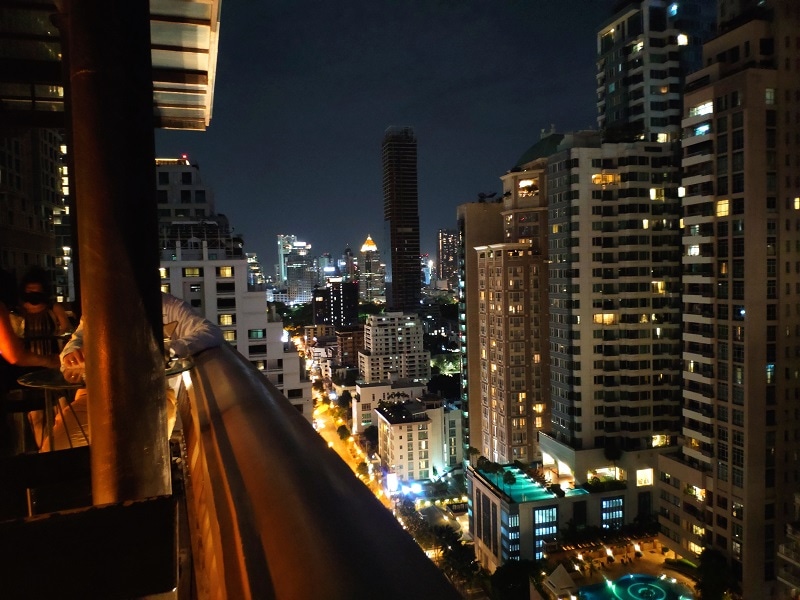
Here, you can find the best-paying jobs, a variety of restaurants, malls, leisure activities, and people from all over the world. Bangkok is also the major transportation hub of Thailand – you can travel to anywhere via bus, train, or plane.
There are a few downsides to being in the capital, though.
The traffic is bad, some areas could get noisy, and things tend to be a lot more expensive here than elsewhere in the country.
However, if you want access to everything an expat needs, Bangkok is the place.
Chiang Mai
The home for digital nomads, long-term travelers, and retirees, Chiang Mai has long been a popular choice for expats in Thailand.

Chiang Mai offers beautiful mountainous scenery and plenty of outdoor activities, such as hiking, biking, camping, and more. But because it does have a city center, you’re never too far away from the province’s diverse array of food and people.
The downside to living in Chiang Mai comes between February and April, where the burning season makes the air you breathe hazardous.
But expats have figured out a workaround to this issue – they usually head to the south of Thailand or Bangkok until the pollution subsides and they can return home.
Pattaya
The nightlife and existing expat scene in Pattaya make it a popular destination for people looking to call Thailand their home.

The city has a lower cost of living than Bangkok, the beaches are kept in good condition, and there is plenty of local and Western food to indulge in. Plus, pristine islands like Koh Kham are just an hour away.
Pattaya isn’t without its flaws, though. Some areas near the beach can get seedy and temptation lurks around every corner.
However, plenty of expats who raise families in Thailand live on the “dark side” of Pattaya – the section east of Sukhumvit Road – and they praise the city for all it has to offer.
Phuket
Phuket is one of the most visited places in the world, but some expats love it so much that they plant their roots on the island.

Like some of the other popular areas for expats throughout Thailand, Phuket has it all – beaches, outdoor activities, international schools, and employment opportunities, especially in hospitality.
But be prepared to pay more for certain things here. Officially, Phuket is ranked the second-most expensive place to live in Thailand next to Bangkok. However, people who live on the island will tell you that Phuket is just as expensive, if not more, than its centrally-located counterpart.
If you enjoy island life, then Phuket may be the place for you.
Koh Samui
Like Phuket, Koh Samui is another popular island with expats in Thailand and, and over the recent years, more and more people have been making it their home.

It may not have the same level of international schooling, private hospitals, and the like, but it makes up for that in quality of life. On Koh Samui, you’re never too far from a pristine beach.
Koh Samui also hasn’t yet been hit with the same price increases as Phuket, so condos, houses, and food tend to be a little bit cheaper here.
Also, the island has a variety of international restaurants where retired expat chefs tend to work to keep up with their craft.
One downside to living on Koh Samui is that, unlike in other parts of Thailand, expats don’t tend to stay very long. The island is still known primarily as a place to party, so people often come and go, making it hard to find long-term friends.
Hua Hin
Just two and half hours south of Bangkok is Hua Hin, a popular beach town destination for many retired expats in Thailand.

Hua Hin has everything you’d expect from a retirement destination, including affordable houses, private hospitals, and quality of life. For those who aren’t retired yet, the city has international schools, a hip local scene, and plenty of nightlife.
There aren’t many downsides to living in Hua Hin, but it’s small and quiet. Depending on your personality, you will either like this lifestyle or not. It’s also a bit far from Bangkok according to some, and hospital choices are a bit limited.
But if you don’t have to travel to the capital very often, then this beach town could be the place for you.
Isan
The Northeast of Thailand, or Isan, is famous for farming and is a common place for retired expats to relocate to. Most retired expats living in this region have Thai spouses and/or kids.
If you’ve never lived in a rural area, Isan may take some getting used to, as everything you do requires a car and a great deal of patience because things move at their own pace.
But if you don’t mind being surrounded by vibrant green rice fields in the rice growing season, this could be one option – just don’t expect to find too many jobs in this area.
Bank Account
Popular banks in Thailand are:
- Kasikorn Bank
- Bangkok Bank
- KrungThai Bank
- SCB
They all work the same. If you work in Thailand, your employer may ask you to open an account with a specific bank so that you can receive your salary.
To open an account, bring your work documents, visa, and passport, and the bank will walk you through the process. You’ll get an ATM card that day that you can use to shop online and off.
You can start by going to the nearest bank branch and asking about the requirements.
If you have a work visa, you’ll have no issues opening an account.
One of our writers even opened an account on his marriage visa. It took some asking around, but eventually he came across a KrungThai branch that was willing to give him an account.
Many banks won’t let you open an account on a tourist visa, but if you ask around enough, you may find one willing to give you an account.
Tip: Thailand is becoming a cashless society, so it’s recommended to open a bank account immediately after arriving in Thailand. After that, download a banking app and use it to pay for most things via QR code payment. It will make your life much more convenient.
Read more:Opening a Thai Bank Account: A Guide for Expats and Tourists
Phone and Internet
The first thing expats want to do when arriving in Thailand is set up their phone and internet.
There are two main phone companies in Thailand:
- AIS
- TRUE
They are all the same and offer a variety of plans based on whether internet or phone calls are more important to you. The internet speed in Thailand is also very fast and stable.
For around THB500 per month, you can get a package with a decent amount of internet data and a hundred or so minutes of call time.
Home internet is more dependent on where you live and the services offered in the region.
Most internet companies try to sell you an internet and TV package. This works out to around THB800 per month and includes a few English channels. For this amount, you should expect at least 200 MB of internet speed, a simple TV package, and 5G phone service.
If TV is your thing, then prepare to pay what you would back home to get movies and live premium TV (sports, Western channels, etc).
Tip: Thais mostly rely on messaging apps such as Line or Facebook Messenger. And many people do not have WhatsApp.
Find out more:
- Thai SIM Cards: Plans, Data, Price, and Registration
- Home Internet in Thailand: Provider, Package, and Cost
Shipping
Here’s what you need to do to prepare your shipping to Thailand.
Pack the Necessities
You can bring everything you need with you to Thailand – although, to be honest, this isn’t the most efficient way of going about this.
Since you can buy most things you use back home in Thailand, you don’t have to bring everything with you, but quality furniture and electronics are more expensive here, so it’s best to ship those things from home.
The items that are usually more expensive in Thailand are:
- books
- imported foods
- electronics
- car seats, high chairs, etc.
- vitamins and supplements
- brand-name clothes and shoes
Big size clothes, especially shoes, can be hard to find in Thailand.
If your company is relocating you to Thailand, you might not have to worry about shipping your things to the country, as they’ll do it for you.
But if you’re coming here on your own accord, you need to figure this part out yourself. Luckily, we have a shipping to Thailand guide that you can use to help pick an international mover and method.
If you’re ready to pack your bags and your bags include more than you can carry onto the plane, you can get free quotes from moving companies.
Important Documents
One thing you’ll learn about Thailand is that officials here love paperwork.
We’ve come to dread how many copies of our driving licenses, passports, and school degrees are floating around various government offices.
Below we’ve put a list of important documents you must bring. If possible, bring original copies with you.
- passport
- driving license
- birth certificate
- list of contact numbers
- home ownership deeds
- proof of income or pay slips
- medical certificates or reports
- marriage or divorce certificate
- degrees and transcripts
- taxes, social security cards, national insurance numbers
There’s also the chance you’ll need these documents either translated into Thai or verified by your embassy.
The Thai government now accepts gay marriage certificates. Civil partnership certificates are accepted in some contexts, but they can’t be used for a non-immigrant spouse visa under current law.
You should sign, date, and double-line strikethrough any photocopied documents.

Write a sentence stating what this signed copy is for as well. This way if there are any dishonest people who get hold of these copies, they won’t be able to use them.
Household Goods and Thai Customs
Thai Customs treats what you carry and what you ship as two different things. Knowing which is which decides whether you pay import duty on your furniture and appliances.
- Personal effects: clothes, books and similar items you bring with you for your own or professional use, in reasonable quantities. Cars, guns, ammunition and provisions are excluded.
- Household effects: other goods you owned and used abroad, such as a television, refrigerator or air conditioner. Customs can exempt used items from tax and duty when you are changing your residence to Thailand.
| Rule | What Thai Customs says |
|---|---|
| Used household goods | Duty and tax free in reasonable quantities, if you owned and used them in the country where you lived before moving |
| Electrical appliances | One unit of each type for a single mover, two units of each type when the whole family moves. Extra units pay normal duty, and Customs exempts the lowest-duty items first |
| Timing | Goods must arrive no earlier than one month before and no later than six months after you do. Customs can extend this in exceptional cases |
| Proof of moving residence | A non-immigrant quota shown in your passport, or for people allowed to work here, a one-year non-immigrant visa, a letter from Immigration confirming an annual stay, or a work permit of at least one year |
| Paperwork | A draft import declaration and your passport, plus the proof of residence above |
| Tobacco and alcohol in your luggage | Up to 200 cigarettes (or 250 g of cigars or tobacco) and one litre of liquor |
The exemption is tied to changing your residence, so a tourist-exemption arrival may not qualify. Ask your mover to confirm in writing how they will clear your shipment before it leaves home. (Verified October 2026.)
For what is worth shipping and what to buy here, see what to bring when shipping to Thailand. If a shipment is stuck or taxed, how to avoid customs tax covers the common causes.
Import Your Pet
It’s possible to bring your furry friend with you to Thailand, but make sure it will be able to handle the tropical climate.

There’s a trend of buying Siberian Huskies in Thailand, but since this breed loves cold weather, it might not be able to adapt to the tropical climate.
For more info, check out some of our popular pet guides:
- How to Buy or Adopt Dogs, Cats, and Exotic Pets in Thailand
- Moving to Thailand With a Dog or Cat: A Quick Guide
- How to Find Accommodations that Allow Pets in Thailand (Premium Content)
School
You can find international schools throughout Thailand.
Schools that follow the same curriculum as the one in your home country or your child’s previous school make it easier for your kids to adapt. It also makes it easier if or when you move back to your home country.
If you live in Bangkok or Chiang Mai, there’s a wide range of curricula available. These include:
- IB
- American
- British
- German
- Australian
- Singapore
- Japanese
International schools in Thailand can be broken down into four tiers, from Tier 1 to Tier 3.
Tier 1 is the most expensive. You should expect to pay around 600,000 baht to 1,000,000 baht a year in tuition.
A local school, on the other hand, offers your child the opportunity to immerse themselves in Thai culture. They can also get a deeper understanding of the language.
Local schools are cheaper than international schools. But prices alone are not a good indicator of whether a school is the right fit for your son or daughter. They don’t represent the quality of education offered at the school either.
Find out more:How to Pick the Best International Schools in Thailand for Expats
Taxation
When you move to Thailand, taxes will be a part of your reality, just like anywhere else in the world.
Value-added tax, or VAT, in Thailand is calculated at 7 percent across the board. This goes for foods, goods, and some services.
If you work in Thailand, you have to worry about another kind of tax: income tax. You are taxed according to how much you make on anything after THB150,000 per year.
From there, the tax rate increases from 5 percent all the way to 35 percent, depending on how much you bring home every year.
| Personal Taxable Income in Thai Baht | Tax Rate |
| 0-150,000 | Exempt |
| 150,000-300,000 | 5 percent |
| 300,000 – 500,000 | 10 percent |
| 500,000 – 750,000 | 15 percent |
| 750,000 – 1,000,000 | 20 percent |
| 1,000,000 – 2,000,000 | 25 percent |
| 2,000,000 – 5,000,000 | 30 percent |
| Over 5,000,000 | 35 percent |
In addition to these taxes, you also have to pay into Thai social security, which comes out to a maximum of THB875 per month (5 percent of a THB17,500 wage ceiling, effective January 2026).
Like other countries, you can take advantage of tax deductions in Thailand. Popular choices include buying SSF, paying for life insurance, and purchasing a condo. Expat and Thai workers get the same deductions.
For more info on Thai taxes, check out these guides:
- Thailand Income Tax for Foreigners: Do You Need to Pay?
- Taxation in Thailand: 6 Common Mistakes, Penalties, and How to Avoid Them
Tax Residency and Foreign Income
You become a Thai tax resident if you spend 180 days or more in Thailand in a calendar year. Since 2024, foreign-sourced income that a tax resident remits into Thailand can be subject to Thai personal income tax, where it once could be brought in tax-free if kept offshore until the following year. The details depend on when the income was earned and how it is brought in, so check current guidance or a tax advisor. Our guide to how Thailand taxes foreign income walks through it.
Culture
After your first few years, you’ll pick things up and over time become more understanding of how and why things happen like they do in Thailand. We can’t cover everything related to Thai culture in this section, but we’ve put a few basic points below.
Hierarchy in Thailand
Thais really respect their elders. This means the pecking order may be different from your own country. Young people will greet their elders with a wai, the traditional Thai greeting, which elders may or may not return.
Some elders make decisions for and give advice to the younger people in the family. It also seems to me that some Thai people do things to please the older members of their families, such as when choosing degrees or picking a career.
Yes, No, and Never Mind
One aspect of Thai culture that is hard to understand is that people don’t like to say “no.” Even the Thai word mai-chai, meaning “no,” translates to “not yes.”
This creates confusion as people will say “yes” when they have no intention of doing what they have agreed to. Often, there are certain visual or situational clues they give that you have to pay attention to.
They hope you’ll pick up to understand they meant “no.” We’ve had workmen not turn up, services not provided, and drama caused over this. It used to leave us frustrated, but we’ve begun to pick up on these little clues to know when “yes” means “no.”
One of the first Thai phrases you’ll learn is mai bpen rai, or never mind. We find that there is a “never mind” attitude from lots of people here in Thailand, both locals and expats. This frustrates some expats, as it seems people don’t care. But that’s not always the case.
Familial Living Arrangements
It’s common for Thai people to live with their family until married, but this is changing with the younger generation. Asking a partner to move in before marriage might prove hard, especially among traditional families.

We’ve even met couples who live in different provinces due to work or supporting a child through university or school in a different region.
Social Life
This part is interesting and is something some expats struggle with, at times. Some people aren’t committed to living in the country long-term. This makes long-lasting friendships harder to find.
We’ve managed to make some good friends here, though they have all come through work or neighborhood.
Thai friends are even harder to make. Expats may only be able to make one good Thai friend, but you should value that friendship.
In tourist areas, it’s true there are other Westerners, but it isn’t always obvious who is here on vacation and who is here long-term.
There are also social clubs from golf to football teams where you can meet people. Your best bet to find these is to search on either Google or Facebook for the club that interests you.
It’s also possible to make friends with people randomly. Living in a condo can help you meet other expats.
In local restaurants, you can meet people. In general, you don’t have to go looking for friends, but find yourself lucky enough to make a few good ones while here.
The final way to make friends is through your girlfriend or boyfriend. If you have a Thai partner, they may be able to introduce you to some Thai friends.
Nightlife
When people think of nightlife in Thailand, they often envision the party scenes dotted throughout the country. However, that makes up just one small portion of Thailand’s nightlife.
There’s also quiet walks in the park, jazz music along the river, musicals, movie theaters, concerts, festivals, outdoor restaurants on the beach, in addition to the partying.
Whatever you enjoy doing at night, Thailand will have it on tap. You just have to spend enough time here to get to know your options.
Moving to Thailand from America
For the most part, you can follow this guide to a T and smoothly transition from the United States to Thailand.
In short though, we can list a few of the pros and cons of moving from America to Thailand.
Being an American in Thailand is not that difficult. For one, the US Dollar goes far in Thailand. So, if you come here with a decent savings, you can afford a comfortable lifestyle.
Also, more opportunities in the workforce (especially teaching) open up to Americans who are also native English speakers. Thai parents often want their children to sound American rather than English or Australian or Filipino, so they request American teachers.
There are some drawbacks to being an American, though. One of them is that people tend to stereotype you. They think you live on either end of the spectrum – either you have money out the wazoo or you’re here for less than skillful things.
If you’re into expat blogs, Kylie Abroad has several posts about what she wishes she knew before moving to Thailand as an American. It reveals a lot of insights from a female’s perspective.
Related articles:
- My Personal Experience Living In Thailand as an American
- Moving to Thailand from America: How and Why Our Family Did It
Moving to Thailand from the UK
One of our friends, Carl, let us know what his biggest challenges in the country are as a British expat, and what he likes best about living in Thailand.
As for challenges, he said he doesn’t like when the admin from his daughters’ school uses their photos to advertise to Thai parents that luk krueng – or mixed-race children – go to the school. They did this, he said, without his permission.
But he loves that his life is simpler here in Southern Thailand. He doesn’t have to work as much as he would’ve in the U.K. to afford a comfortable lifestyle while still having time to spend with his family.
Read more: Moving to Thailand from the UK: How and Why I Did It
Moving to Thailand from Australia
Dan, a friend of one of our editors, is from Australia and gave his input on living in Thailand. One of his main choices for moving here was the lower cost of living. He said it’s becoming harder and harder to raise a family in Melbourne due to the increasing food and property prices.
He is also able to send his children to a private school in Bangkok, which he would never be able to do in Australia.
Since he owns a company in Thailand, he does face many challenges. His biggest issue is that everyone in the chain of business has to get paid for any deals or selling of products and services. This increases his costs, which he then has to pass on to his customers.
We don’t yet have a guide on moving to Thailand from Australia, but our guide on Ditching the Desk at 53 and Retiring in Thailand was written by two Australians. There are a lot of key takeaways in the article for those coming from Australia, so be sure to give it a read.
Moving to Thailand from Canada
Like Australia, we haven’t yet published a detailed guide on moving to Thailand from Canada.
However, Greg Jorgensen – one-half of The Bangkok Podcast – hails from Canada and often talks about the experience of moving to Thailand on the show.
An avid reader of Thailand Starter Kit, Vinny – from Montreal, said that his biggest challenges weren’t so much in Thailand, but in returning to Canada. After being in Thailand for 15 years, he’s lost touch with the things that people talk about back home. So, when he visits Canada every year, he feels extremely out of place.
Within Thailand, Vinny said he still faces a lot of the challenges that some other expats have. First, he’s tattooed from head-to-toe, so he’s often judged for his appearance. Second, the Canadian Dollar doesn’t go as far as the U.S. Dollar. Because he owns rental property in Canada, his income fluctuates with the exchange rates.
As for the pros of living in Thailand as a Canadian, that was easy for Vinny to answer. He has escaped the bitter-cold winters of the north for the year-round warm climate of Thailand.
How to Live in Thailand Permanently
Despite what people say, you can become a permanent resident in Thailand.
In a nutshell, you must fall into one of the five categories to apply:
- investment
- employment
- humanitarian
- expert
- extra circumstances
Each one of these categories come with their own separate requirements that you must meet, so be sure to check the link below to find out more.
In general, you need to live in Thailand for at least three years under the same non-immigrant type visa, whether that’s a business visa, marriage visa, or dependent visa.
You also need to meet the requirements for each category above. With investment, for example, you have to invest at least THB10 million into one of the given options.
With the humanitarian option, you have to be married to a Thai citizen for at least two years or be the mother or father of a Thai child.
As a permanent resident, you no longer have to do 90-day reports, you won’t need residence certificates, and you can apply for Thai citizenship after five years – just to name a few of the perks.
Read more:Thailand Permanent Residence: Cost, Requirements, and Procedure
Emergency Numbers
It’s always good to be prepared for emergencies. Should you ever need it, here’s a list of emergency phone numbers in Thailand.
| Contact | Number |
| Police | 191 |
| Tourist Police | 1155 |
| Highway Police | 1193 |
| Public Ambulance | 1669 |
| Private Ambulance | 1724 or 1719 |
| Fire Department | 199 |
Checklist
Here’s a checklist of everything you need to do to move to Thailand.
- Tie up loose ends at home (work, banks, legal obligations)
- Create a monthly budget
- Get a visa
- Collect and pack all your important documents
- Check health insurance
- Buy airline tickets
- Find a temporary place to live
- Spend time looking for work
- Once you land a job, find a place to live close to your workplace
- Learn Thai
- Network and make friends
Your First 90 Days in Thailand
The list above gets you on the plane. This one covers the paperwork and setup that follow, in the order most expats do it.
- Day 1: make sure your TM30 is filed. Under Section 38 of the Immigration Act, the owner, landlord or hotel manager hosting a foreigner must notify Immigration within 24 hours of arrival. Hotels do this for you. In a rented condo or house, ask your landlord to file it and keep the receipt slip. Our TM30 guide shows the steps. (Verified October 2026.)
- Days 1 to 3: get a local SIM or eSIM. A Thai number is what banks, delivery apps and landlords expect. Compare Thai SIM cards with an eSIM before you buy.
- Week 1: open a bank account. Branches differ on which visas they accept, so ask before you queue. Our guide to the easiest place to open a Thai bank account lists the branches that tend to say yes.
- Weeks 1 to 4: settle into a lease. Use your temporary housing to view a few places, then sign. Before you do, read what to check before signing a Thai lease.
- Month 1 to 2: check your health cover. Confirm your policy is active and that your visa’s insurance requirement, if it has one, is met.
- Month 1 to 3: plan your driving licence. A foreign licence is not the same as a Thai one, and the rules depend on your licence and visa. Start with our Thai driving licence guide.
- Before day 90: file your first 90-day report. A foreigner permitted to stay temporarily who remains in Thailand more than 90 days must report their address to Immigration every 90 days (Section 37(5) of the Immigration Act). Immigration says you can report in person, through an authorised person or by registered mail, and the report must fall within 15 days before or 7 days after the 90-day date. Our 90-day reporting guide walks through the process. (Verified October 2026.)
Frequently Asked Questions
Is moving to Thailand a good idea for expats?
For most people who plan ahead, yes. Thailand offers a lower cost of living than most Western countries, established expat communities in Bangkok and Chiang Mai, and a mature visa system for retirees, remote workers, and business owners. It works best for people who settle their visa route before landing and budget realistically.
How much money do I need to move to Thailand?
It depends on your visa route and city. Retirement visa applicants need a THB800,000 bank deposit or THB65,000 a month in income (or a combination totalling THB800,000). The Destination Thailand Visa asks for its own financial proof, and monthly living costs vary widely by city and lifestyle. See our cost of living guide for current figures.
What visa do I need to move to Thailand?
It depends on why you’re moving. Retirees typically use the O-A or O-X visa, remote workers and digital nomads often use the Destination Thailand Visa (DTV), high earners and certain professionals can qualify for the Long-Term Resident (LTR) visa through the BOI, and spouses of Thai nationals use a marriage visa. Business owners and employees use business or work-permit-linked visas.
Do I need to do anything before I land in Thailand?
Yes. Since May 2025, all non-Thai nationals must complete the Thailand Digital Arrival Card (TDAC) online before entry, regardless of visa type. It can be submitted up to 72 hours before arrival through the official government portal, on top of whatever visa or exemption you’re travelling on.
Can I stay in Thailand visa-free, and for how long?
From 15 September 2026, 60 countries and territories get 30 days visa-free, halved from the 60 days that applied between July 2024 and 14 September 2026. Mauritius and Seychelles get 15 days. A separate group of nationalities, including China, Russia and South Korea, enters under bilateral agreements on their own terms, which this change does not touch. Whatever your passport, 30 days plus a single 30-day extension is not a basis for moving here. Get a long-term visa.
Can I bring my pet or car when I move to Thailand?
Pets can be imported with the right vaccination records, health certificates, and an import permit; requirements vary by animal and country of origin, so start well before your move date. Bringing a personal vehicle is legally possible but import duties often make it more expensive than buying locally, so most expats sell up at home and buy in Thailand.
Do I have to pay Thai tax on money I bring in from abroad?
If you are a Thai tax resident (present in Thailand 180 days or more in a calendar year) and you remit foreign-sourced income into Thailand, that income can be subject to Thai personal income tax under rules that took effect in 2024. The details depend on when the income was earned and how it’s brought in, so check current Revenue Department guidance or a tax advisor before assuming either way.
Can I live in Thailand permanently?
Yes, though it takes time. Thailand offers permanent residency through several categories (investment, employment, marriage, expert, and others), generally after holding the same type of non-immigrant visa for a few years first. Permanent residents skip 90-day reporting and annual re-entry permits, and may later become eligible to apply for Thai citizenship.
What is the TM30 and who has to file it?
The TM30 is a notification to Immigration that a foreigner is staying at a given address. Under Section 38 of the Immigration Act, the house owner, landlord or hotel manager must file it within 24 hours of your arrival, in person, through an authorised person, by registered mail or online. Hotels file it for guests. If you rent, ask your landlord whether it has been filed and keep the receipt slip.
How often do I have to do the 90-day report?
Every 90 days, if you were permitted to stay temporarily and remain in Thailand beyond 90 days. Immigration says the report can be made in person, by an authorised person or by registered mail, within 15 days before or 7 days after the 90-day date. Permanent residents do not file it.
Can I ship my furniture and appliances to Thailand without paying duty?
Often yes, for used goods in reasonable quantities that you owned and used abroad, when you are changing your residence to Thailand. Thai Customs allows one unit of each electrical appliance per person, or two per family, and charges normal duty on the extras. You will need a draft import declaration, your passport and proof that you are moving your residence.
How long before or after I arrive can my shipment land?
For the household goods exemption, the goods must arrive no earlier than one month before you and no later than six months after you. Customs can extend these limits in exceptional circumstances. Plan your shipping date around your arrival, not your lease start.
Does every family member need their own TDAC?
Yes. Infants and children need one too, and each TDAC is valid for a single entry, so you submit a new one every time you enter Thailand. A family can file together, with up to 10 travellers in one submission. Crew members and passengers who stay airside on a transit do not need one.
Sources Cited
- Immigration Bureau, Thailand Digital Arrival Card (TDAC) FAQ: entry requirement for all arrivals.
- Board of Investment, Long-Term Resident (LTR) visa: categories and tax treatment.
- Ministry of Foreign Affairs, Non-Immigrant Visa “O-A” (Long Stay): retirement visa requirements.
- Tourism Authority of Thailand Newsroom, Cabinet visa-measure update: status of the visa-exemption change.
- Thai Customs Department, Household Items Import Clearance: personal versus household effects, one-or-two appliance limit, one-month-before and six-month-after timing, required documents.
- Immigration Bureau, Notification of residence for foreigners: the TM30 duty under Section 38 and the 24-hour deadline.
- Immigration Bureau, Notification of staying in the Kingdom over 90 days: the 90-day report procedure and the 15-day-before, 7-day-after window.
Essential Guides on Moving to Thailand
 Moving to Thailand from America: How and Why Our Family Did It 2026-01-18 Moving to Thailand was an exciting and at the same time stressful experience for me and my family. It was… ... Read more
 Shipping to Thailand: Services, Costs, and Customs 2026-04-29 Shipping a letter or package to Thailand? Moving here and need to send all your belongings? Find out how to… ... Read more
 Shipping From Thailand: Sea vs. Air, Customs Paperwork, and What You Can’t Export 2026-05-14 Everything on shipping out of Thailand: sea vs. air vs. courier, the export paperwork Thai Customs wants, and what you… ... Read more
 Best Places to Live in Thailand: An Expat’s Honest Guide (2026) 2026-01-15 Thailand isn't one place: Bangkok, Chiang Mai, Phuket, Pattaya, Hua Hin, and Koh Samui offer different lives. An honest look… ... Read more
 7 Best Places to Retire in Thailand in 2026 (Plus Cheaper Alternatives) 2026-01-10 Bangkok, Chiang Mai, Phuket, Pattaya, and Hua Hin are the classic picks, but Chiang Rai and Thailand's northeast cities cost… ... Read more
 How to Change or Update Your Address at Thailand Immigration Office (TM30) 2026-09-21 A step-by-step guide on informing Thai immigration of your new location. ... Read more
 How to Find the Best Moving Company in Bangkok 2026-01-03 Moving is a good chance to get rid of all the stuff you no longer want or need. But packing… ... Read more
 Importing a Dog or Cat to Thailand: Permits, Vaccines, and Airline Rules 2026-01-04 How to import a dog or cat to Thailand: the R1/1 permit, rabies and vaccine timing, microchip rules, and flying… ... Read more
 Cost of Living in Thailand for a Family: A Real Monthly Budget (2026) 2026-01-26 What it really costs a family of four to live in Thailand each month, from rent and groceries to health… ... Read more
Latest Guides on Moving to Thailand
- Pink ID Card in Thailand: What It’s For and How to Get One
- Yellow House Book in Thailand: What It Is and How to Get One
- Solar Electric Systems in Thailand: Equipment, Companies, Costs, and More
- Phrom Phong, Bangkok: The Big Guide to Living in Sukhumvit’s Little Japan
- Thai Residence Certificate: Cost, Documents & Where to Apply
- Living in Saphan Mai and Don Mueang: Rent, BTS, Budget Flights and Floods
- Living in Chaeng Watthana and Lak Si: Rent, the Immigration Office, Pink Line and Floods
- Living in Ram Inthra: Rent, the Pink Line, Houses and Floods
- Living in Lat Krabang: Rent, the Airport Rail Link, Students and Floods
- Living in Srinakarin and Suan Luang: Rent, the Yellow Line, Malls and Floods
- Living in Ramkhamhaeng and Bang Kapi
- Living in Pinklao: Rents, the MRT and Life Across the River From the Old Town
- Living in Min Buri: Rent, Houses, the Pink Line and Floods
- Living in Bang Sue and Tao Poon: Rail Hub, Cheap Rent and Quiet Evenings
- Living in Chinatown and the Old Town, Bangkok: Rent, Street Food, Transport and Who It Suits
- Living in Khlong San and Iconsiam: River Views, the Gold Line and Lower Rent
- Living in Charoen Krung and the Riverside, Bangkok: Rent, Transport, Flooding and Who It Suits
- Living in Lat Phrao: Rent, the Yellow Line, Food and Floods
- Living in Phaya Thai and Ratchathewi: Rent, the Airport Train, Hospitals and Daily Life
- Living in Bang Chak and Punnawithi: Rents, True Digital Park and the BTS


 Deutsch:
 Français:
 Español: