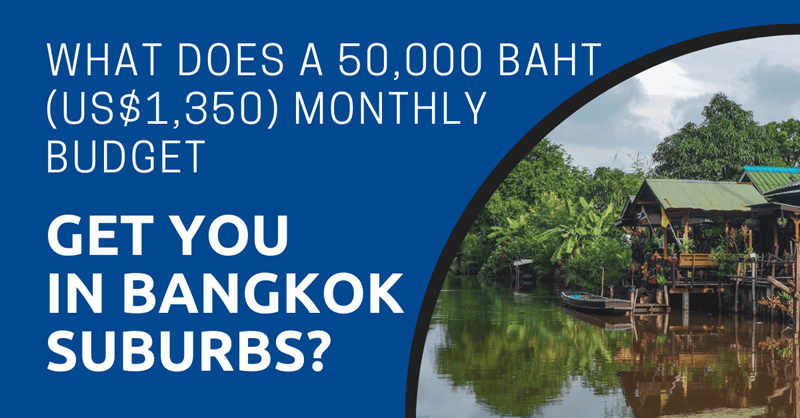
Bangkok’s suburbs trade downtown energy for space, quiet, and rent that’s 30 to 50 percent cheaper. For families especially, a gated-community house, real green space, and good schools make a strong case, as long as you sort out transport first.
When people talk about living in Bangkok, they’re almost always talking about a relatively small slice of a very large city. Asok, Thong Lo, Silom, Sathorn, and the Sukhumvit corridor get most of the attention because that’s where the tourist infrastructure and the visible expat scene are concentrated.
But Bangkok covers 1,568 square kilometres. It’s roughly the size of London, twice the size of Singapore, and seven times the size of Seattle.
Much of that area is suburban Bangkok: quieter, greener, more affordable, and home to a large and growing population of expats who’ve made a deliberate choice to step away from downtown density.
This guide covers what that choice actually looks like in practice: what you gain, what you give up, and which suburban neighborhoods deserve serious consideration.
Disclaimer: Some links in this article go to our partners, and we may earn a commission if you use them. It costs you nothing extra, and we only recommend services we'd use ourselves. Read more in our Advertising Disclosure.
Contents
- Key Takeaways
- About Bangkok's Suburbs
- Pros and Cons
- Quality of Life
- Cost of Living
- Accommodation
- Food
- Getting Around
- Healthcare
- Social Life and the Expat Community
- Activities
- Education and Family Life
- Job Opportunities
- Weather and Air Quality
- Flooding
- The Three Neighborhoods in Depth
- Should You Live in Bangkok's Suburbs?
Key Takeaways
- Bangkok’s suburbs offer rent that’s 30 to 50 percent cheaper than downtown, with meaningfully lower food costs and less traffic.
- The lifestyle shift is real: quieter pace, more space, more green areas, and a community more oriented around families than nightlife.
- Public transport access varies significantly by neighborhood. Choosing a suburb near an MRT or BTS station dramatically changes daily convenience.
- The three suburban areas covered in depth here, Lasalle, Min Buri, and Bang Sue, each suit different types of expats.
- A comfortable lifestyle in the suburbs costs around THB30,000 to 40,000 per month for a single person. A THB50,000 budget gives real flexibility.
- The expat community is smaller and more settled than downtown: mostly families, retirees, and teachers rather than the transient nomad scene.
About Bangkok’s Suburbs
Bangkok’s suburban districts sit beyond the Sukhumvit corridor and the city’s central commercial zones, extending east toward Samut Prakan, north toward Nonthaburi, and into the wider Bangkok Metropolitan Region. They’re genuine parts of Bangkok, administratively and practically, but with a character that’s distinctly different from the downtown experience.
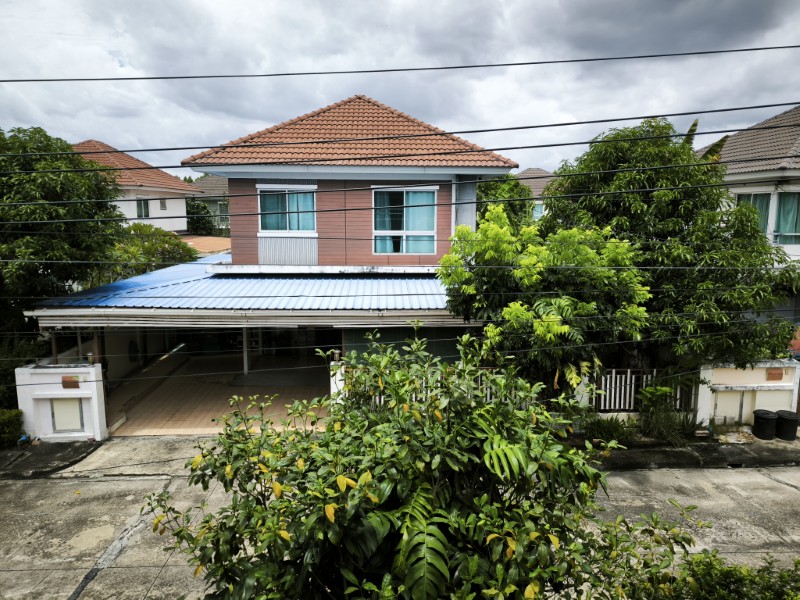
What defines suburban Bangkok is not remoteness but density:
- fewer tourists
- more Thai families
- more gated communities and standalone houses
- wider roads and better traffic
- in many areas, a surprising amount of green space, canals, and the kind of neighbourhood character that disappears the moment you move into the city center
The pattern is consistent enough to be worth noting: many expats arrive downtown, enjoy the energy, then start feeling the weight of the traffic, the noise, and the cost, and look for something calmer without leaving Bangkok entirely.
Pros and Cons
Reasons to live in the Bangkok suburbs:
- Rent 30 to 50 percent cheaper than downtown for comparable or larger spaces
- Food from local restaurants around 15 to 20 percent cheaper than city-center prices
- Significantly less traffic, making driving practical rather than exhausting
- More space: houses in gated communities, gardens, and room for children to play
- Quieter, less hectic daily rhythm without sacrificing access to modern conveniences
- Better air quality than downtown, with more green space and less vehicle density
- Strong family infrastructure: bilingual schools, international schools, parks, and family activities
- More authentic Thai community character outside tourist and expat zones
Reasons it might not work for you:
- Nightlife and the active expat social scene are in the city, not the suburbs
- Limited Western restaurant options in most areas
- You need your own vehicle in many neighborhoods, particularly gated communities
- Getting into the city center takes 45 to 60 minutes by public transport, which feels like a commitment
- English is less common among service staff and neighbors than in central areas
- The expat community is small; social life requires more deliberate effort
Quality of Life
The shift from downtown to suburban Bangkok is a lifestyle upgrade for people who value space and quiet over variety and convenience, and a downgrade for people who need constant stimulation or professional networking access.
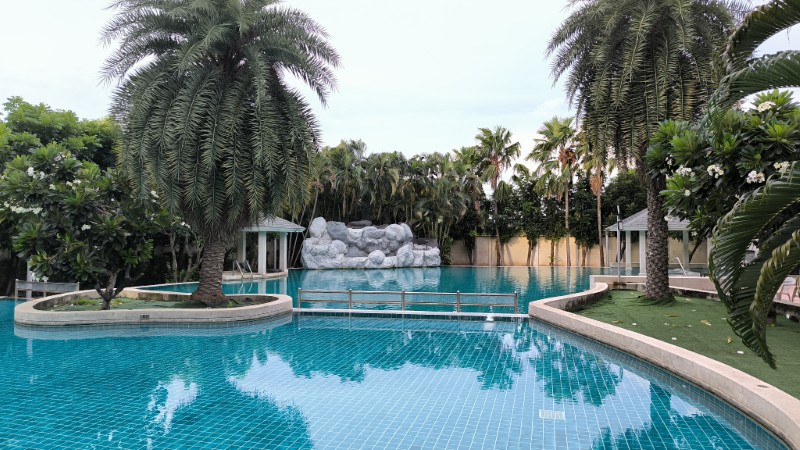
The expat community’s consistent description of suburban Bangkok life is that it takes adjustment and then becomes deeply comfortable:
- In a gated community, you have space for the first time: a garden, a driveway, room for a home office, neighbours whose kids play with yours.
- The pace is slower, genuinely so.
- You stop battling for taxis and parking.
- You stop paying downtown restaurant prices for everything.
What you trade is access. Going into the city for events, restaurants, or social gatherings becomes a decision rather than a casual choice. When it’s 45 minutes each way by MRT, you stop going spontaneously and start going when it’s worth the trip. Some expats find this liberating. Others find it isolating. The people who thrive in suburban Bangkok are those who were ready to make that transition.
A pattern that comes up consistently in community discussions: expats who move to the suburbs with families almost universally describe the quality of life as better than downtown for their children. More outdoor space, calmer surroundings, a community of other families, and schools that are genuinely accessible.
Cost of Living
The suburban Bangkok cost advantage is real and consistent. A comfortable single-expat lifestyle in the suburbs costs around THB30,000 to 40,000 per month. A THB50,000 budget gives genuine flexibility: a good condo or even a gated community house, daily restaurant meals, a motorcycle, health insurance, and a meaningful travel budget.
Here’s a realistic breakdown:
- Rent: THB8,000 to 25,000 depending on type and location
- Food: around THB14,000 for a mix of local restaurants and occasional home cooking
- Transportation: THB2,000 if relying on public transport from a transit-adjacent condo; THB3,000 to 7,000 if owning a motorcycle in the first year
- Health insurance: around THB3,500 for a mid-tier plan. See our Thailand health insurance guide.
- Utilities: around THB3,000 for electricity, water, and internet
- Social activities: THB1,000 to 2,000, reflecting the quieter suburban social scene
- Visa-related: THB500
- Travel: THB5,000
- Miscellaneous: THB2,000
- Total: THB39,000 to 62,000 per month
Family budgets:
- THB50,000 per month: a townhouse rental and a bilingual daycare for young children
- THB80,000 per month: a house in a gated community and a bilingual school at around THB125,000 per year
- THB150,000 per month: a gated community house, an international school (fees from THB500,000 per year), and a live-in nanny
For a full family cost comparison, see our cost of living in Thailand for a family guide.
Accommodation
The suburban Bangkok accommodation market is where the value proposition becomes most clear. For what a small studio costs in central Sukhumvit, you can rent a spacious condo in the suburbs. For the price of that suburban condo, you can often rent an entire house in a gated community.
Condos
Modern, fully furnished studios and one-bedrooms near MRT or BTS stations in the suburbs run THB8,000 to 14,000 per month. Buildings are typically newer than equivalent-priced downtown options, with good pool and gym facilities. Aspen Condo Lasalle and Atmoz Flow Minburi are examples of well-positioned newer buildings in the relevant areas.
Houses in Gated Communities
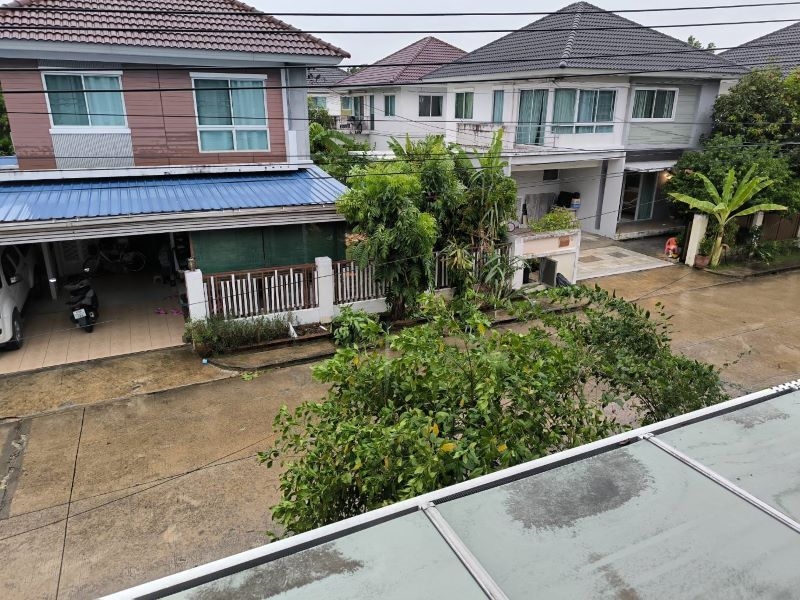
This is the suburban option that most appeals to families and long-term residents. A furnished house in an established gated community runs THB20,000 to 30,000 per month in most suburban areas, with the community providing security, parking, communal gardens, and often a pool and playground. These are house types that don’t exist at these prices anywhere in central Bangkok.
Practical note: inside gated communities, getting from your house to the main road without a vehicle is impractical. Any expat considering a gated community house needs to plan for their own transport from day one.
Food
Suburban Bangkok’s food scene is more local and less international than downtown, which works strongly in favor of people who eat Thai food regularly and against people who rely on Western cuisine as a daily staple.
Local Thai Food
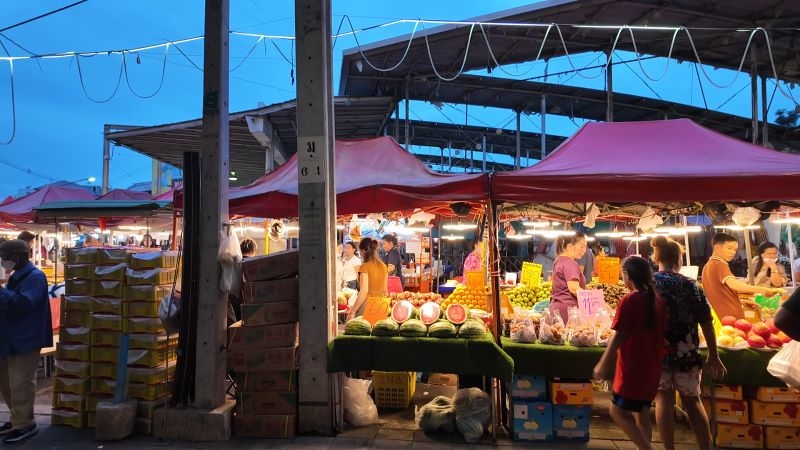
Local restaurants throughout the suburbs serve good food at affordable prices. THB40 to 60 per dish is achievable at neighborhood shops in areas like Min Buri, meaningfully cheaper than even budget eating in the central city. Multi-generational recipe restaurants, halal food from large Thai-Muslim communities, and the kind of family-run shops that don’t exist in tourist areas are all accessible.

Gated Community Food Culture
One of the underrated features of suburban Bangkok gated-community life is the internal food economy. Most large communities have a LINE group where residents sell food, groceries, home-cooked meals, and services to neighbors, often with free delivery within the community. Fresh vegetables, home-cooked Thai food, and specialty items circulate through these networks at prices well below what any delivery app offers.
International Restaurants
The options are narrower than downtown but exist. Western restaurants, Japanese food, steakhouses, and international cafés are present in most suburban areas, clustered around community malls and near major expat enclaves. For upscale international dining, the honest expectation is a trip into the city.
Cafés
The suburban café scene is one of its genuine surprises. Lower land costs have enabled café owners to build spaces with character that simply aren’t financially viable downtown:
- large garden cafés
- botanical-themed spaces
- forest-atmosphere venues
- farm-to-cup operations
These aren’t tourist attractions; they’re part of the local leisure culture, and they make a good option for remote workers who want somewhere that isn’t their living room. The tradeoff is that you need to drive to get there.
Groceries and Delivery
Lotus’s, Big C, Makro, and Villa Market are all present in the main suburban areas. LINE MAN, GrabFood, and the grocery apps from major supermarket chains cover most of suburban Bangkok for delivery.
Getting Around
Transport is the variable that makes or breaks suburban Bangkok living, and it depends almost entirely on which suburb you choose and where within it you live.
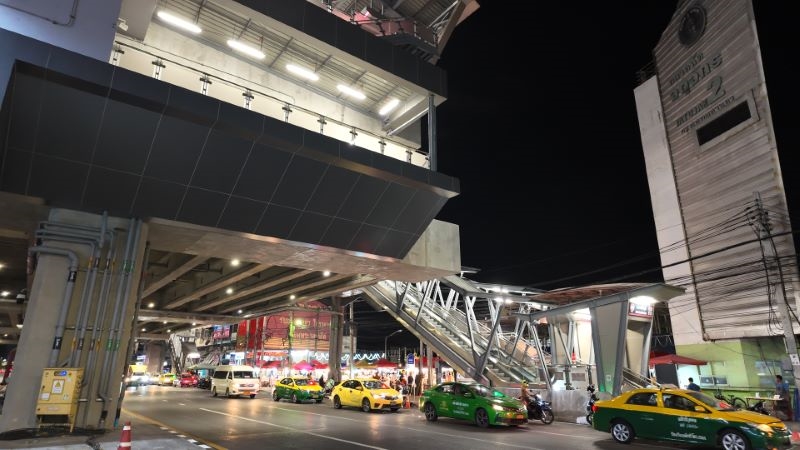
- Condos near MRT/BTS: if you’re in a transit-adjacent condo, public transport works. You can reach the city center in 45 to 60 minutes, and daily local errands are manageable on foot or by ride-hailing app. This is the most flexible suburban option for people without a vehicle.
- Houses in gated communities: a vehicle is mandatory. Getting from your front door to the nearest main road without transport is inconvenient. Most expats in gated communities own a motorcycle at minimum, and many have a car.
- Motorcycles are the practical starting point. Suburban roads are significantly more pleasant to ride than central Bangkok: wider, less congested, fewer aggressive lane changes.
- Cars become worthwhile for families or expats who’ve outgrown motorcycle-only life. A used Toyota Vios or Honda City runs around THB400,000, with monthly costs (insurance, fuel, maintenance) around THB7,000 in ongoing years. See our guide to owning a car in Thailand for the full picture.
- Grab and Bolt are available throughout suburban Bangkok and work reliably for occasional trips. Fine for ad-hoc use, expensive as a daily substitute for your own vehicle.
Healthcare
Bangkok’s suburbs are well served by private hospitals that, while not carrying the same international brand recognition as Bumrungrad or Bangkok Hospital, provide quality care at lower cost and with shorter waits.
Kasemrad Hospital has multiple branches throughout suburban Bangkok and is the most consistently available suburban private option. Navamin 9 Hospital serves Min Buri specifically with 24-hour emergency care and a full specialist roster. Yanhee Hospital and Phyathai Navamin are well-regarded in the Bang Sue and northern suburban corridor.
For the Lasalle and southeastern suburbs, Thainakarin Hospital and Sikarin Hospital are the most accessible private options, with English-speaking staff and full general services. See our Samut Prakan guide for more detail on these hospitals.
One practical advantage that Bang Sue residents specifically benefit from: major government hospitals including Siriraj Hospital and Ramathibodi Hospital are within 20 minutes by car. For serious illness where cost matters and wait times are acceptable, these are excellent institutions.
Social Life and the Expat Community
The social character of suburban Bangkok is fundamentally different from downtown, and understanding that before you move matters. The expat community in the suburbs is smaller and more settled. The mix is mostly:
- families raising children in Thailand
- retirees who want Bangkok without Bangkok’s intensity
- teachers at nearby international or bilingual schools
- remote workers who’ve traded social density for space and quiet
The social infrastructure in most suburban areas is thin compared to downtown. There are Facebook groups for expats in most suburban neighborhoods, and these are the practical starting point for finding people. Schools and gated communities become social centers in ways that don’t happen downtown: neighbors know each other, children play together, and community events create genuine familiarity.
The honest tradeoff: people who need constant social stimulation and variety will find suburban Bangkok limiting. People who’ve moved past that life stage, or who never needed it, often describe the suburban social community as warmer and more genuine than anything they found in central Bangkok. For downtown social access, choose a suburb near a BTS or MRT station and make occasional trips in. It’s a 45-minute investment, not a 20-minute one, but it’s manageable if you plan for it.
Activities
Parks and Outdoors
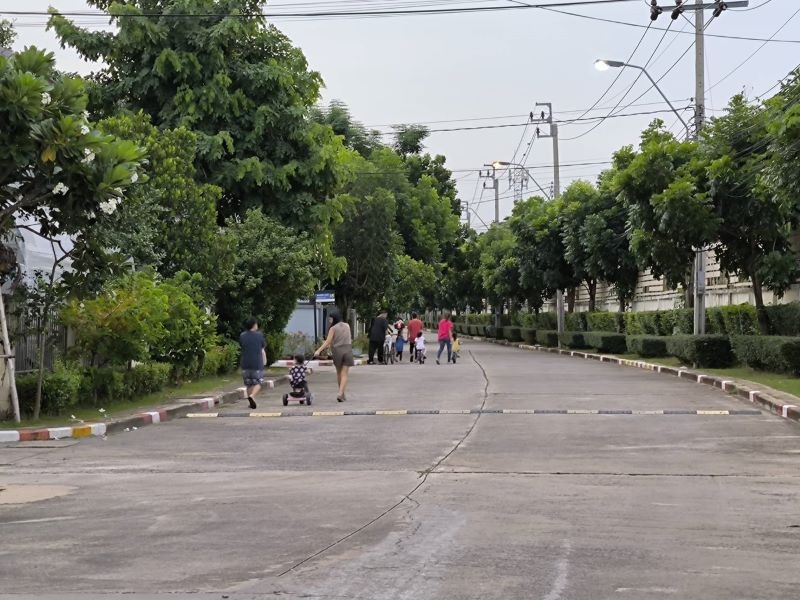
This is where suburban Bangkok genuinely outperforms the downtown areas. Suan Luang Rama IX Park is one of Bangkok’s largest parks, covering 500 rai in Prawet District, with gardens, ponds, exercise areas, and a relaxed atmosphere absent from the central parks (entry before 9am is free).
Nong Bon Water Sports Center adjacent to Suan Luang is the largest public park in Bangkok at 644 rai. Windsurfing, kayaking, sailing, stand-up paddleboarding, a 4-kilometre jogging trail, and a dog park are all accessible, with extremely affordable annual membership. Happy and Healthy Bike Lane near Suvarnabhumi Airport runs 23.5 kilometres alongside a runway, a genuinely unique cycling experience.
Golf is a distinctive feature of suburban Bangkok. Panya Indra Golf Club, Windsor Park and Golf Club, and Thanont Golf View near Min Buri represent the kind of access to quality courses that doesn’t exist in central Bangkok at any price.
Family Activities
Siam Amazing Park in Min Buri is Bangkok’s largest water park and theme park, with water slides, a wave pool, a lazy river, a dinosaur garden, and a zoo: a full-day destination for families. Safari World in Min Buri combines an open safari park with a marine park and is consistently rated among Bangkok’s best family attractions. Barakat LunLa Land Café and Farms in Min Buri combines horse riding, a mini zoo, and ATV tracks with café culture, the kind of large-scale family venue that the suburbs enable and downtown can’t.
Shopping
Rather than large central malls, suburban Bangkok life revolves around community malls and the occasional mega-mall.
- Mega Bangna in Bang Na is a genuine mega-mall with over 400 stores, IKEA, a cinema, an outdoor water park, and a driving range. Parking is easy and free.
- Central Westgate in the north is among Bangkok’s biggest malls.
- Fashion Island in Min Buri is smaller but practical, with free parking and light traffic.
Education and Family Life
This is the area where suburban Bangkok makes its strongest case. The combination of international school access, outdoor space, gated community safety, and lower cost of living has made the suburbs the default choice for a growing proportion of expat families.
International schools distributed across the main suburban areas include:
- Bangkok Patana School (Lasalle area, Bang Na): consistently rated among Thailand’s top international schools, British curriculum
- Ruamrudee International School Bangkok (RISM) (near Min Buri): American curriculum, well-established
- Bromsgrove International School Thailand (near Min Buri): British curriculum, strong academics
- Wells International School (Bang Na campus): American curriculum with competitive tuition
- Raffles American School Bangkok (Lasalle/Bang Na): American curriculum
- Concordian International School (Bang Phli, Samut Prakan border): full IB trilingual school
- Ascot International School and Heathfield International School (Min Buri area)
Bilingual schools at significantly lower fees are available throughout the suburbs. Tuition typically runs THB80,000 to 150,000 per year, making them accessible on budgets that don’t accommodate full international school costs. For a complete comparison, see our guide to international schools in Thailand.
Job Opportunities
Job opportunities in the Bangkok suburbs follow the same pattern as everywhere outside the central business districts: limited for most roles, but specific categories work well.
Teaching positions at nearby international and bilingual schools are the most common route, and the school density in areas like Lasalle and Min Buri means competition for positions is slightly lower than downtown. Remote work is the category that fits suburban Bangkok most naturally: the cost savings on rent and food, combined with the quieter working environment, make it genuinely favorable for location-independent workers.
Good to know: internet infrastructure in suburban Bangkok can be even better than the city center, because buildings have been built recently with better fiber.
Weather and Air Quality
Weather in suburban Bangkok follows the same patterns as downtown: hot, humid, with a rainy season from May to October and a cooler, more comfortable period from November to February.
The air quality distinction is real and noticeable but shouldn’t be overstated. Suburban air is fresher than downtown due to lower vehicle density and more green space, but it’s still Bangkok: during January to April, PM2.5 levels rise across the entire metropolitan area. An air purifier is sensible equipment in the suburbs too, particularly during the burning season. The subjective experience is meaningfully better, though. You notice it most in areas near parks and canals: a freshness that simply doesn’t exist on Sukhumvit Road.
Flooding
Suburban Bangkok has a complicated relationship with flooding. Some areas are historically flood-prone; others are specifically designed as flood management zones. Nong Bon Lake itself was built as an artificial reservoir to capture floodwater from eastern Bangkok, which is worth knowing before assuming all suburban areas are equally at risk. Min Buri and some eastern suburban areas have historically seen serious flooding during heavy rainy seasons.
Before committing to accommodation in any suburban area, ask directly about flooding history and check community Facebook groups for photos from rainy seasons. Newer gated communities on higher ground fare better than older housing near waterways. The general rule in the Bangkok suburbs: higher elevation and newer drainage infrastructure dramatically reduce flood risk.
The Three Neighborhoods in Depth
Lasalle
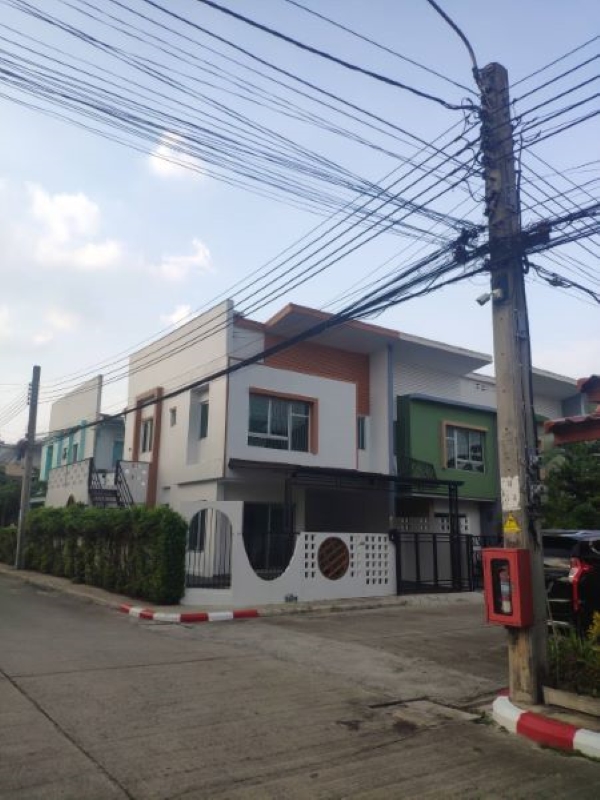
Lasalle sits in the southernmost part of Bang Na district, running between Srinakarin Road and Sukhumvit Road, bordered roughly by Sukhumvit 105 and Bearing Road. Both the BTS Sukhumvit Line and MRT Yellow Line pass through, giving it one of the best transit connections of any Bangkok suburb.
It’s the most expat-developed of the three areas covered here, and that shows in the infrastructure: Villa Market for imported groceries, a concentration of international schools nearby (Bangkok Patana, Montessori Academy, Wells International, Raffles American), and a food scene that includes Japanese restaurants, European dining, and reliable Western options alongside local Thai food.
Who it suits: teachers at nearby international schools; expats who want a suburban lifestyle while keeping easy city access via BTS; families with children at the Lasalle-area international schools.
Rent: modern studio condos from THB8,000 to 14,000 per month. Gated community houses from THB25,000 to 50,000.
Key amenities:
- Shopping at Mega Bangna, Seacon Square, Paradise Park, and Central Bangna
- Healthcare at Thainakarin Hospital and Sikarin Hospital
- Exercise at Suan Luang Rama IX Park and Nong Bon Water Sports Center
- Sports at La Salle Badminton Park
Practical note: the BTS Bearing side of Lasalle (higher rents, from around THB10,000 for a studio) gives better city access. The MRT Si La Salle side is cheaper and more suburban in character.
Min Buri
Min Buri is on Bangkok’s eastern edge, one of the few suburban areas with a historical identity: it was a separate provincial entity a century ago and retains an old-town market character that most Bangkok suburbs lack.
It’s the most affordable of the three areas, with gated community houses at THB20,000 to 30,000 per month and studio condos from THB8,000. The flip side is that it’s the least convenient for city access: reaching central Bangkok takes 45 to 60 minutes by MRT, and the area is large enough that a vehicle is practically mandatory. The family infrastructure is strong: Siam Amazing Park, Safari World, Barakat LunLa Land, and a collection of bilingual and international schools make it a well-developed choice for expats with children.
Who it suits: expat families who want a gated-community house at reasonable cost; golf lovers wanting easy course access; remote workers who don’t need city access regularly.
Rent: studio condos from THB8,000. Gated community houses from THB20,000 to 30,000.
Key amenities:
- Shopping at Fashion Island
- Healthcare at Navamin 9 Hospital, Ram 2 Hospital, and Navavej International Hospital
- Recreation at Siam Amazing Park, Safari World, and Happy and Healthy Bike Lane
- Golf at Panya Indra Golf Club, Windsor Park, and Thanont Golf View
- Education at Ek Burapa School (bilingual), Chokchai Hathairaj School (bilingual), Heathfield International School, Ascot International School, RISM, and Bromsgrove International School
Bang Sue
Bang Sue is northern Bangkok’s underrated suburban option, close to Nonthaburi and positioned at a genuine transport crossroads: three MRT lines (blue, purple, and red), the Krung Thep Aphiwat Central Terminal (Bangkok’s main railway station), and Don Mueang International Airport are all accessible within 20 to 30 minutes.

It’s the least developed of the three areas for expats, with a smaller international community and fewer expat-facing services. But its transit access is genuinely excellent, and for people who travel frequently within Thailand or value easy access to Don Mueang for budget flights, its position is hard to match. A specific Bang Sue advantage: proximity to major government hospitals. Siriraj Hospital, Ramathibodi Hospital, and Phramongkutklao Hospital are all within 20 minutes by car.
Who it suits: budget-conscious expats who still want city access; frequent domestic travellers using Don Mueang; expats with children in nearby bilingual schools who are comfortable with some Thai-language interaction.
Rent: studio condos from THB8,000 (Supalai Veranda Ratchawipha-Pracha Chuen near MRT Bang Son). River-view condos from THB20,000.
Key amenities:
- Shopping at Gateway at Bang Sue and Central Westgate (30 minutes)
- Healthcare at Bang Pho Hospital, Yanhee Hospital, and Phyathai Phaholyothin Hospital; major government hospitals within 20 minutes
- Parks at Chatuchak Park and Rot Fai Park
- Education at Thewphaingarm Canadian Bilingual School, Canadian International School of Thailand, and International Christian School Nonthaburi
- Transit access to the entire Bangkok rail network plus Don Mueang Airport
Should You Live in Bangkok’s Suburbs?
Suburban Bangkok works best for:
- expat families who want space, international schools, and outdoor activities for their children without the downtown price tag
- retirees who want Bangkok access and modern conveniences without the noise and congestion of the center
- remote workers who’ve decided that the downtown premium isn’t worth what it costs
- teachers at suburban bilingual or international schools who want to live near their workplace
It’s a poor fit for people who need frequent access to the city center’s social, professional, or nightlife scene, or who want Western restaurant variety as a daily feature. And it requires a vehicle plan: anyone moving into a gated community needs to sort transport before they sign a lease, not after.
The honest version of the suburban appeal is that it’s Bangkok for people who are done with a particular version of Bangkok. Once that phase passes, the space, the quiet, and the cost start looking more attractive than the energy.
For related guides, see our overviews of living in Bangkok, living in Samut Prakan, and living in Bang Na.


 Deutsch:
 Français:
'/%3E%3Cpath%20fill='%23b2b2b2'%20d='M241%20382q0%2016%2017%2026%2017%2011%2042%2011t42-11q16-11%2017-26V269H241'/%3E%3Cpath%20fill='%239f7e00'%20d='M241%20379q0%2014%208%2023%209%209%2021%209%2014%200%2021-9%209-9%209-23V269h-59'/%3E%3Cpath%20d='M241%20339v-70h59v110q0%2014-9%2023l-6%205v-68h-15v72q-8%200-14-4v-68zm59%2040c0%2022%2015%2032%2029%2032%2021%200%2030-18%2030-32v-40h-59'/%3E%3Cpath%20fill='%239f7e00'%20d='M266%20277v5h2v12h-3v-5h2v-5h-9v5h2v5h-4v9h3v18h-5v10h34v-10h-5v-18h3v-9h-4v-5h2v-5h-9v5h2v5h-3v-12h2v-5zm42%20101q0%2010%206%2017%206%206%2015%207%2010-1%2016-7%206-7%206-17v-29h-43'/%3E%3Ccircle%20fill='%230044ad'%20cx='329.5'%20cy='372'%20r='6'/%3E%3Cellipse%20fill='%230044ad'%20cx='300'%20cy='340'%20rx='16'%20ry='21'/%3E%3C/svg%3E) Español:
Español: