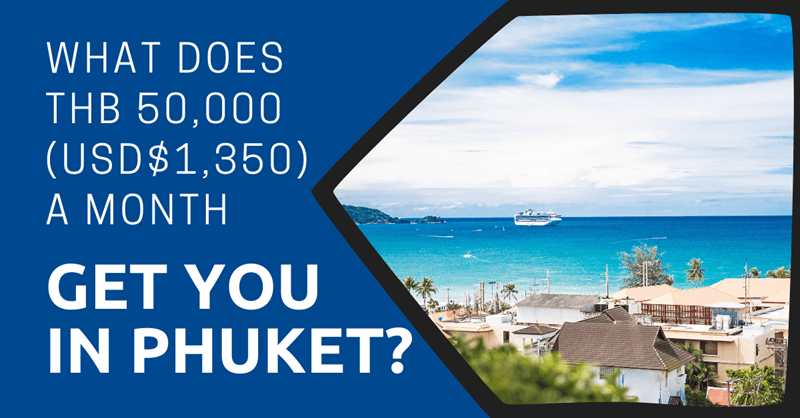
Phuket is Thailand’s most expensive province, and it rewards the people who arrive with their own income and actually use the beaches, gyms, and dive scene. Here’s what living there really costs and feels like once the holiday wears off.
The first week in Phuket feels like a holiday. By month three, it’s different.
You still love it, but now you’re arguing with yourself about traffic in the city and the packed tourists everywhere you go.
The beach is still there every evening if you want it. You’ve just stopped going every day.
That shift, from visitor to resident, is what this guide is about. Phuket as a place to live is different from Phuket as a place to visit. This guide covers what the lived experience actually looks like: the daily life, the costs, the tradeoffs, and whether the island suits your particular version of a good life.
Disclaimer: Some links in this article go to our partners, and we may earn a commission if you use them. It costs you nothing extra, and we only recommend services we'd use ourselves. Read more in our Advertising Disclosure.
Contents
- Key Takeaways
- About Phuket
- Pros and Cons
- Quality of Life
- Cost of Living
- Accommodation
- Food
- Getting Around
- Long-Distance Travel
- Healthcare
- Exercise and Fitness
- Social Life and the Expat Community
- Nightlife
- Activities
- Education and Family Life
- Job Opportunities
- Weather
- Air Quality
- Flooding
- Popular Neighborhoods
- Should You Live in Phuket?
Key Takeaways
- Phuket is Thailand’s most expensive province.
- A comfortable single-expat life costs around THB40,000 to 55,000 per month. Couples and families need meaningfully more.
- No public rail or bus system exists. A motorcycle or car is effectively mandatory for daily life.
- Bangkok Hospital Phuket and Bangkok Hospital Siriroj are both JCI-accredited BDMS network hospitals with strong English-speaking staff and extensive specialist coverage.
- Finding a good community requires going to the right places rather than tourist bars.
- Phuket’s property market is actively developing, particularly in Layan, Rawai, and Cherngtalay, making it increasingly popular for property investment alongside long-term living.
- A person who lived 15 years on the island describes the infrastructure as excellent, the roads well-maintained, and the lifestyle hard to replicate elsewhere, while acknowledging that the permanent-visa situation and limited path to citizenship means you’re always a visitor in the legal sense.
About Phuket
Phuket is Thailand’s largest island, connected to the mainland by two bridges in Phang Nga Province, sitting in the Andaman Sea on Thailand’s west coast. It’s about an hour’s flight south of Bangkok and has direct international connections to dozens of cities, which sets it apart from almost every other Thai destination.
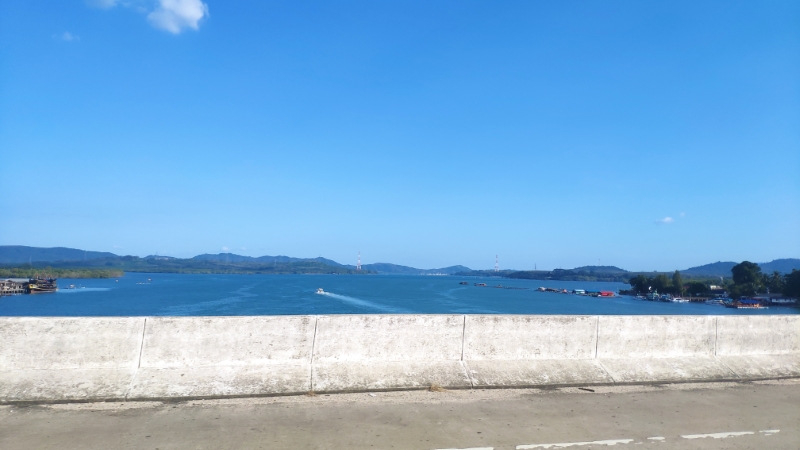
The island built its international reputation on beaches, and the beaches are genuinely excellent. But the infrastructure that tourism brought, international hospitals, schools, restaurants, gyms, co-working spaces, and a service economy calibrated to international expectations, is what makes Phuket livable for long-term expats rather than just attractive for holidays.
When you’re there, you may not realize you’re on an island at all unless you’re in a beach area. When I passed through the city area, with those underground tunnels and so on, it reminded me of Bangkok.
What you pay for that infrastructure is the highest cost of living in Thailand and a character that, in the tourist areas, feels less like Thailand and more like an international resort that happens to be located in Southeast Asia. Both of those things are real and worth understanding before you commit.
Pros and Cons
Reasons to move to Phuket:
- Some of Thailand’s most beautiful beaches, accessible as a daily feature rather than a weekend trip
- Direct international flights from Phuket International Airport, removing the Bangkok transfer requirement
- Strong international infrastructure: JCI-accredited hospitals, international schools, a diverse food scene
- Year-round warm weather with sea breezes that moderate the heat meaningfully
- Better air quality than Bangkok and dramatically better than northern Thailand during burning season
- Outstanding outdoor and water sports culture: diving, surfing, kitesurfing, Muay Thai, yoga
- Large expat community, active Facebook groups, and a fitness culture that’s visible and accessible
- Property market with investment potential, particularly in developing northern areas
Reasons it might not work for you:
- The most expensive province in Thailand
- No public rail or bus network; a vehicle is mandatory and motorcycle riding carries real risk
- Taxi overcharging is a persistent problem in tourist areas
- Parts of the island flood annually, and when it rains, it rains heavily
- Highly Westernized in tourist areas; finding authentic Thai life requires effort
- The tourist population makes building lasting friendships harder than in settled expat cities
Quality of Life
Long-term Phuket residents consistently describe the quality of daily life as high, with a specific texture that takes time to find and appreciate.
- Weather: For people who spent years in Northern European winters or air-conditioned offices, the access to warmth, light, and natural beauty as daily features rather than annual holidays changes how their days feel at a fundamental level.
- Fitness culture: Between the Soi Ta-iad gym corridor, Muay Thai camps throughout the island, yoga studios in every neighborhood, and the simple option of a beach workout, staying active in Phuket doesn’t require motivation the same way it does in a cold city. It’s just part of the environment.
- Outdoor dimension: The outdoor dimension is immediate. You’re likely to spend more time outside, even on a normal Tuesday. Long-term residents who weren’t particularly fitness-focused before Phuket often become so by default.
- Distance from the noise: This is a hidden benefit that surprises many long-timers. Phuket sits at a comfortable distance from the 24-hour news cycle that dominates life in many Western countries, and people who’ve lived here for years consistently mention that as an underrated benefit of the distance.
Living in Phuket means you get a high quality of life, but it’s mainly for those who come with their own income stream and a clear sense of what they want from island life. On the other hand, it frustrates the people who arrived assuming the lifestyle would be passive and that the community would come to them.
The island is beautiful, but it doesn’t organize itself around your social needs. You have to find your version of it.
Cost of Living
Phuket is Thailand’s most expensive province, even higher than Bangkok, and significantly higher for beachside accommodation and tourist-facing services. Products transported to the island carry a logistics premium, and tourist infrastructure in popular areas prices to tourist expectations, not local ones.
With that said, Phuket is still dramatically cheaper than equivalent beach-resort living in Europe, Australia, North America, or Southeast Asian alternatives like Bali.
Here’s a realistic monthly breakdown for a single person:
- Rent: THB10,000 to 20,000 for a studio or one-bedroom in a practical location
- Food: around THB13,000 for a mix of street food, local restaurants, and home cooking
- Transportation: around THB3,000 with your own motorcycle; THB5,000 if relying on taxis and ride-hailing apps
- Health insurance: around THB3,500 for a mid-tier plan. See our Thailand health insurance guide.
- Utilities: around THB3,000 for electricity, water, and internet
- Socializing: THB4,000 for drinks, meals out, and community activities
- Activities: THB4,000 for beach sports, gym, and occasional excursions
- Visa-related: THB500
- Travel: THB5,000
- Total: THB46,000 to 58,000 per month
Key tradeoffs:
- A villa with a private pool starts at THB40,000 per month for something modest, reshaping the entire budget.
- A car instead of a motorcycle adds roughly THB4,500 per month in fuel plus insurance.
- Families with children at international schools need to budget THB100,000 per month or more once school fees enter the picture.
For a broader cost comparison across Thailand, see our cost of living in Thailand guide.
Accommodation
Rent is the largest variable in Phuket’s cost of living, and the beach proximity premium is steep and consistent across the island.
Most expats on a THB50,000 budget land at THB10,000 to 15,000 for rent: a sub-40-square-meter unit that’s either close to a beach but small, or larger but inland.
Studios and One-Bedroom Condos
Budget studios exist in the THB6,000 to 8,000 range, but these are functional rather than comfortable: 30-square-meter units with basic furnishings, more apartment than condo in character.
Rawai Condotel and D Condo Mine Phuket are frequently cited as representative examples at this price point, but they have no beach access.
At THB10,000 to 15,000, decent one-bedroom condos inland in Kathu or smaller studios in better beach-adjacent locations become realistic. The jump to the beachside in areas like Kamala doubles the cost: around THB20,000 per month for a comparable unit.
Houses and Villas
The villa lifestyle that defines Phuket’s image starts at THB40,000 per month for something modest without a pool. A private pool villa in a decent location starts significantly higher. On a THB50,000 total budget, a villa means cutting almost everything else.

Food
Phuket’s food scene has developed over decades of international tourism and delivers at most price points.
Local and Street Food
One of the main disadvantages of living in Phuket is that it’s hard to find authentic local dishes. Many restaurants adjust the taste to suit tourists.
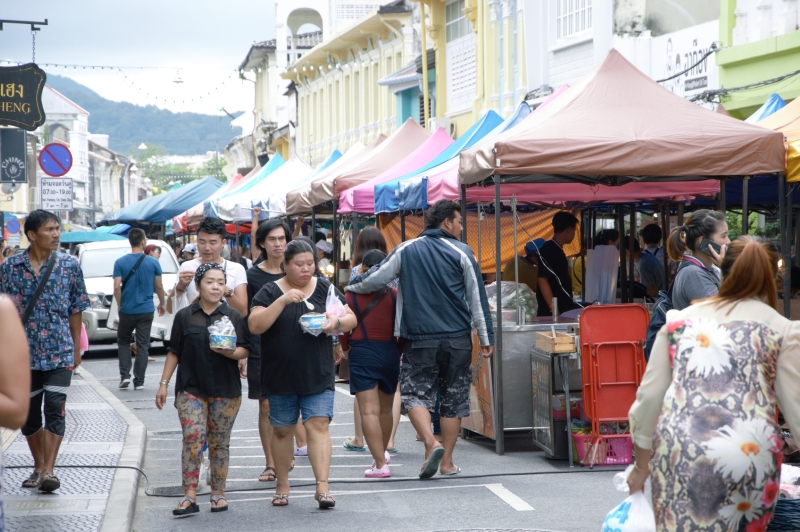
If you want more authentic food, head to Phuket Town. It’s more affordable and more genuinely Thai than the beach-area restaurants, with dishes around THB70 to 120 each. The Phang Nga Road area in Phuket Town has a concentration of well-regarded street food that’s worth seeking out once you’re oriented.
The community point that comes up consistently: eating as locals eat keeps costs manageable. Moving into tourist-area restaurants for every meal pushes food costs to Bangkok levels or beyond.
International Food
The international restaurant scene is among the best of any Thai island, driven by a diverse expat population that includes a disproportionate number of retired chefs and serious food people who’ve settled here.
Italian, Western, Japanese, Indian, and fusion options are distributed throughout the main residential and tourist areas. Expect THB300 to 800 per person at a mid-range international restaurant.
Night Markets
Phuket Town’s Sunday Walking Street and the Saturday Night Market on Thalang Road are among the island’s best food and atmosphere options: genuine local Phuket dishes, street food at honest prices, and a crowd that’s Thai-community rather than tourist-dominated. They’re essential for anyone who wants contact with the island’s actual culture.
Groceries
Lotus’s, Big C, Makro, and Villa Market cover standard and imported grocery needs across the island. Island logistics mean some imported goods carry a premium over mainland prices. Food delivery through LINE MAN and GrabFood covers most developed areas of the island reliably.
Getting Around
Phuket has no mass public transport system. This shapes daily life more than almost any other feature of the island.
Motorcycles are the practical daily choice for most expats, and the island has genuinely good roads relative to many Thai destinations. An expat who lives inland in Kathu notes having a regular bicycle route that’s shady and hilly with wide shoulders. The infrastructure for non-car transport is better than in many Thai cities.
That said, motorcycle accidents are among the most common emergency room presentations at Phuket’s hospitals, driven by narrow roads, steep gradients, and tourist-area congestion. Always wear a helmet, ride at a speed that matches your skill level, and take the mountain roads with appropriate caution.
Grab and Bolt are the most reliable alternatives to owning a vehicle. Transparent pricing avoids the overcharging that affects metered taxis. Both work well across the island and are the right choice for evening trips when motorcycle riding is riskier.
Taxis frequently operate on negotiated flat rates rather than meters. The airport-to-Patong fare is commonly quoted at THB800. In any tourist area, always compare with Grab before agreeing on a taxi price.
Songthaews run fixed routes between main areas cheaply, but the routes aren’t intuitive for newcomers and coverage is inconsistent. They’re good for specific known routes, but unreliable as a primary transport option.
Long-Distance Travel
Phuket International Airport offers direct international flights to dozens of cities without a Bangkok connection. This is a meaningful practical advantage over most Thai destinations and is one of the reasons Phuket attracts expats who travel internationally several times per year.
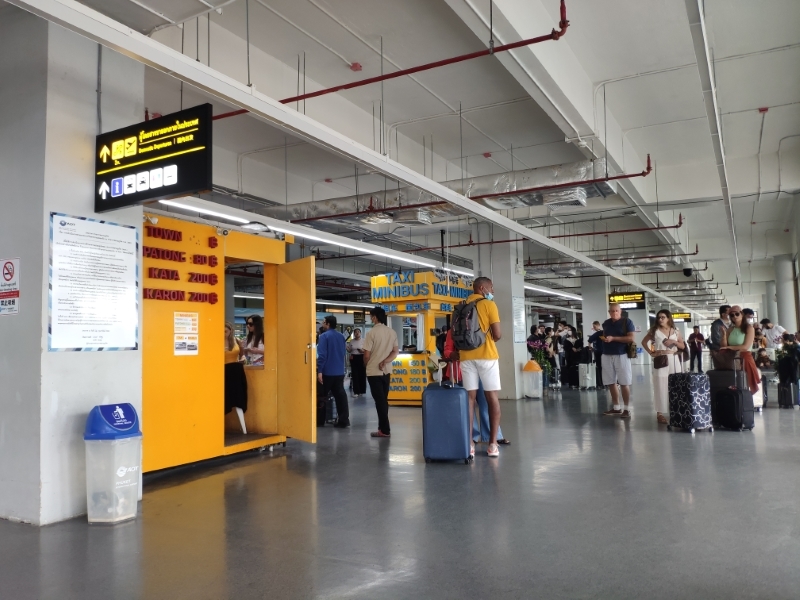
Direct routes to Singapore, Kuala Lumpur, Hong Kong, and multiple Chinese cities, alongside European connections, make it genuinely international.
There’s also a long-distance bus, but I don’t really recommend it: the trip is very long. It takes around 14 hours from Phuket to Bangkok by bus, and the ticket is around THB1,000 one-way. It’s better to pay slightly more for a one-hour flight instead.
Healthcare
Phuket’s private healthcare is quite good, with a patient base of several hundred thousand international patients per year that has driven quality standards.
Private hospitals are popular options for expats in Phuket. There are two main private hospitals here:
- Bangkok Hospital Phuket is the island’s largest and most prominent private hospital, with JCI accreditation and specialist coverage across cardiology, oncology, orthopedics, neurology, and more.
- Bangkok Hospital Siriroj is a 196-bed JCI-accredited hospital founded in 1982 as Phuket’s first private hospital, also part of the BDMS network.
Please note that they’re significantly more expensive than mid-tier Bangkok hospitals.
When it comes to public hospitals, Phuket’s government hospital options are limited and not well-suited for expats needing complex care. So if you want to live in Phuket, it’s better to have a good health insurance plan that can pay for these private hospitals. See our Thailand health insurance guide.
Dental care in Phuket has a different purpose than in other cities. Most dentists here focus on short-term treatment for tourists rather than long-term work like dental implants. While they can still offer the treatment, the clinic’s facilities and the dentist’s experience may not be comparable to Bangkok or Chiang Mai.
Exercise and Fitness
Phuket has a fitness culture that long-term residents consistently cite as one of the island’s underrated assets. It’s not just that facilities exist; it’s that staying active is embedded into the environment in a way that makes it easy rather than effortful.
Water Sports
Water sports are the entry point: diving and freediving instruction (Phuket is one of Asia’s major dive training hubs), surfing and kitesurfing particularly at Nai Harn and Kata, snorkeling, kayaking, and jet skiing. The diving industry alone supports dozens of schools, shops, and liveaboard operations.
Martial Arts
Martial arts is a Phuket institution. The island was an early international center for MMA, BJJ, and boxing alongside Muay Thai, and the gym ecosystem that developed is genuinely world-class. Tiger Muay Thai and Phuket Top Team have international reputations and attract fighters and fitness enthusiasts from around the world year-round. The Soi Ta-iad corridor has the highest concentration of serious gyms.
Yoga and Wellness
Yoga and wellness are well-represented throughout the island, particularly in the Rawai, Kata, and Laguna areas.
Parks and Outdoor Exercise
Khao Rang Hill gives a viewpoint with green space accessible from central Phuket. The Laguna reservoir area in the north is popular for cycling and running. And there’s the underrated option of simply running or cycling on the less-trafficked roads between beaches in the early morning, before the heat builds.
Social Life and the Expat Community
While Phuket’s expat community is large and diverse, the island draws a flow of people staying for months rather than years. Because of this, the visible social scene feels shallower than the numbers suggest.
Many people who describe Phuket as hard to make real friends in are interacting with short-term stayers rather than the deeper long-term community. That means finding a sense of community in Phuket takes deliberate effort, more so than in settled expat cities like Hua Hin or Samut Prakan.
The long-term community that has genuinely put down roots, often five, ten, or fifteen years on the island, is warm and well-connected. But finding it requires going to the right places. Sports clubs (road cycling groups, golf societies, dive clubs), gyms with monthly or annual contracts, and established community Facebook groups are where genuine connections form.
Learning the restaurants and bars that long-term residents frequent, rather than tourist-facing venues, is a real distinction that takes a few months to pick up.
Nightlife
Phuket’s nightlife is among the most developed of any Thai island and covers the full spectrum.
Bangla Road in Patong is the island’s main entertainment strip and one of the most intense nightlife zones in Southeast Asia. Its full range, from live music bars to nightclubs to the more notorious end of the entertainment spectrum, is well-documented and accurately reported. Most long-term expat residents are not regular Bangla Road visitors; it’s there for those who want it, not a feature of settled island life.
The more relevant nightlife for long-term residents:
- West coast sunset bars from Kamala down through Kata and Nai Harn: cocktails at sunset over the Andaman Sea is a version of an evening out that doesn’t get old quickly. Beachfront bars with a chilled atmosphere and good drinks are distributed throughout the quieter western beaches.
- Rawai and Nai Harn bars: the most settled expat neighborhood has its own bar scene that’s oriented toward residents rather than tourists. More modest in scale, more genuine in character.
- Muay Thai evenings: Rawai Muay Thai and Patong Boxing Stadium host regular fight nights that are popular with the expat community as an alternative evening out: good atmosphere, genuine sport, and a crowd that includes both serious enthusiasts and casual spectators.
Activities
Beaches
The beach variety in Phuket is genuinely one of the island’s strongest arguments for living here. Different beaches suit different moods and different people:
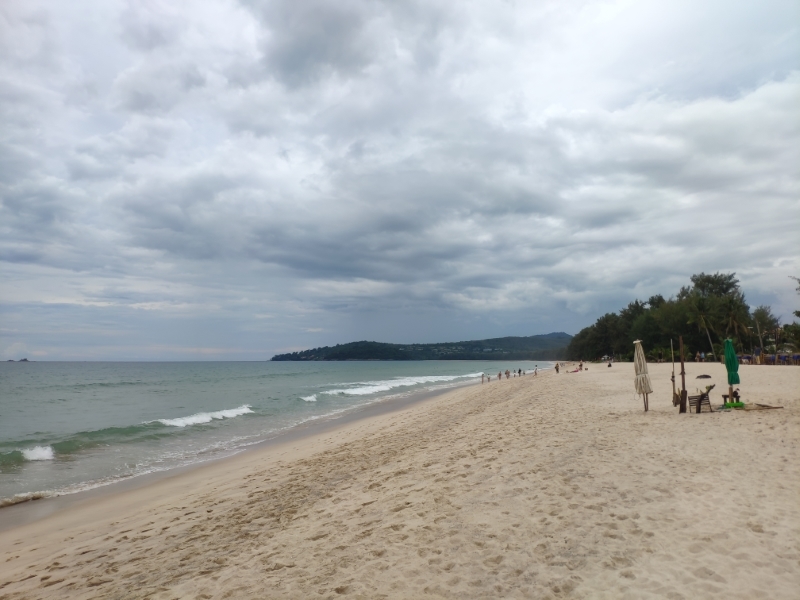
- Layan Beach: quiet and relatively unknown in the north, good for a peaceful morning without crowds
- Kamala Beach: mid-sized, family-friendly, calmer than Patong with a growing expat residential community nearby
- Karon Beach: long, wide, consistently less crowded than Patong
- Kata Beach: good surf, younger crowd, active atmosphere
- Bang Tao Beach: long and quieter, the Laguna resort complex behind it, increasingly popular with families and wealthier expats
- Nai Harn Beach: the best of the south, less developed, cleaner water, with a real community feel around the Rawai area
Water Park
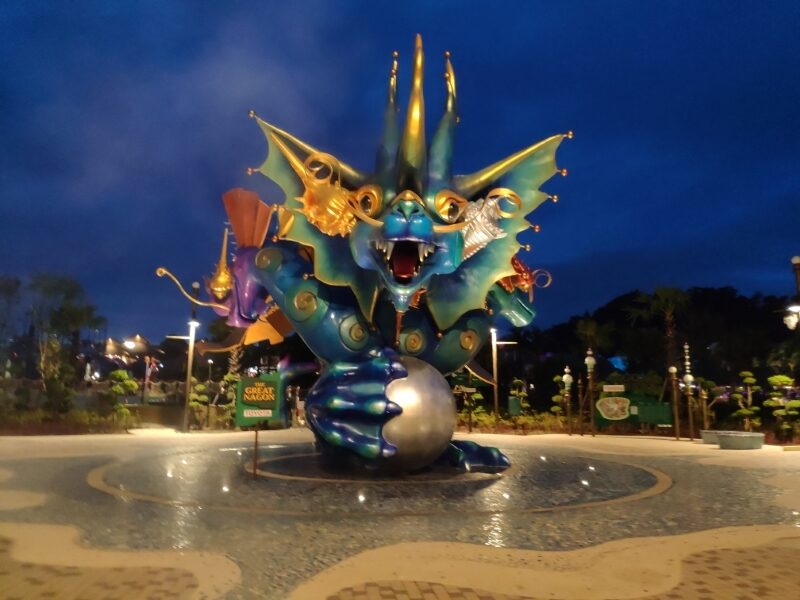
Andamanda Phuket in Kathu District is the island’s largest water park, open daily 10am to 7pm. It has five Thai-mythology-themed zones, 29 water slides, a 10,000-square-meter wave pool generating waves up to 3 metres, and a 300-metre artificial beach. Adult tickets run THB1,600 with advance app booking.
Culture and History
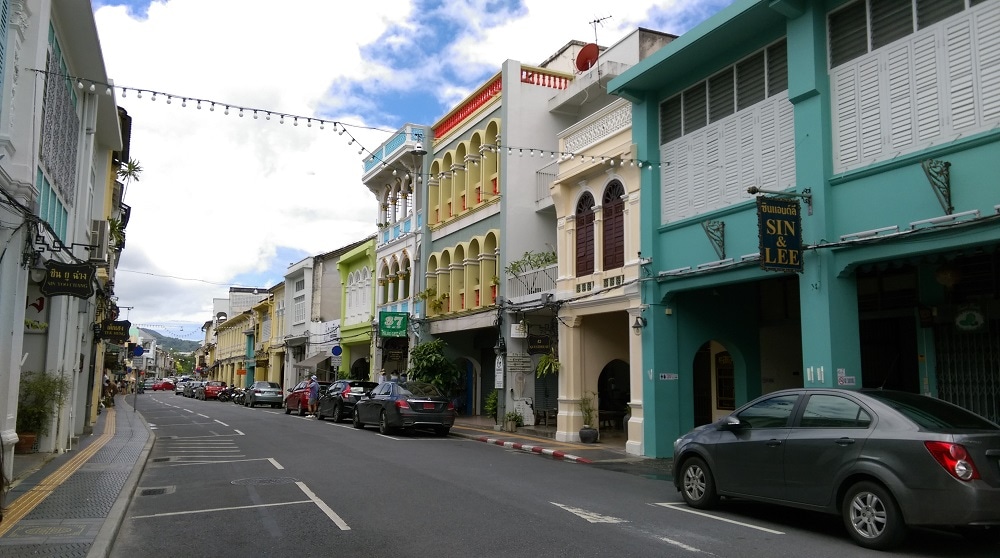
Phuket Old Town is the island’s most authentic cultural area: Sino-Portuguese architecture, weekend walking street markets, good independent cafés, and a community that’s Phuket-local rather than tourism-facing. It’s worth making a regular visit rather than treating it as a one-time tourist stop.
The Big Buddha on Nakkerd Hill is visible from most of the island and worth the drive up for the panoramic view over the Andaman coastline.
Nature and Viewpoints
The island’s interior hills provide a different dimension from the beaches. The road to Khao Rang Hill passes through residential neighborhoods and ends at a genuine panoramic viewpoint with food vendors. The forested sections of the road network between beaches offer morning cycling and running that’s genuinely pleasant before the heat builds.
Extreme Sports and Adventure
Zip-lining (through operations like Flight of the Gibbon Phuket) and bungee jumping are available for the adrenaline side of Phuket’s activity offering. Day trips to Phang Nga Bay for kayaking through limestone caves and to the Similan Islands for world-class diving are within easy reach.

Education and Family Life
Phuket has a well-developed international school sector, but costs are high, and on a tight budget, alternatives need serious consideration.
Top-tier international school fees on the island reach THB900,000 per year at the higher end. More accessible options exist:
- HeadStart International School: British curriculum, Cherngtalay, fees in the THB400,000 to 500,000 range
- British International School Phuket (BISP): one of the island’s most established, British curriculum, strong sport and activities program
- QSI International School of Phuket: American curriculum, established community
- Kajonkiet International School Phuket (KIS): a more affordable entry point to international education on the island
For families on constrained budgets, homeschooling through platforms like Phuket PALS offers a community of other homeschooling families at a fraction of international school cost. Thai private schools with English programs provide another lower-cost route.
Family life in Phuket benefits from a genuine family expat community, particularly in Kamala, Thalang, and the areas around Laguna and Cherngtalay. International school communities provide natural social infrastructure for children and parents alike.
For a full view of international schooling options, see our guide to international schools in Thailand.
Job Opportunities
Phuket’s job market is genuinely limited for foreigners, and the COVID period made the volatility of tourism-dependent employment starkly clear.
Thai employment law restricts around 40 occupations for foreign nationals. The available categories:
- Hospitality and hotel management: specialist roles exist, but typically go to people with strong industry backgrounds
- Fitness instruction: the martial arts and wellness industry is large and hires international instructors with verified credentials
- Teaching: international schools hire experienced qualified teachers; competition is real and pay is competitive
- Real estate: a growing sector for foreigners with relevant skills and networks
- Online business and entrepreneurship: the largest category of working expats on the island are running their own online operations, which the island’s infrastructure supports well
Most long-term expats who aren’t retirees arrive with their own income stream: remote work, an online business, investment income, or a pension.
Weather
Phuket’s average temperature runs 27 to 29°C year-round. The Andaman Sea position and consistent sea breezes moderate the heat meaningfully compared to inland Thai cities.
The dry season from December to March is the best and most popular time to be on the island: clear skies, lower humidity, calm seas, and peak tourist prices. Accommodation and activity costs are highest during this window.
The rainy season from May to October brings daily rain, sometimes heavy, but usually clearing within a few hours. September is the wettest month. Seas become rough, which affects diving and island-hopping trips.
The island has a different, quieter character during this period: lower prices, fewer tourists, and the landscape at its most lush. Many settled expats find the rainy-season Phuket their preferred version of the island.
April sits in transition: the hottest and driest month before the southwest monsoon arrives.
Air Quality
Air quality is one of Phuket’s genuine advantages over Bangkok and northern Thailand. The island’s Andaman Sea position and distance from agricultural burning sources keeps PM2.5 levels manageable for most of the year.
From December to May, moderate pollution on some days falls into the “unhealthy for sensitive groups” range on the worst days. This is dramatically milder than Chiang Mai’s months-long burning season or Bangkok’s January-to-April deterioration. This air quality advantage is one of the practical reasons retirees with respiratory concerns choose Phuket over northern Thailand.
Flooding
Parts of Phuket flood annually during the rainy season. Roads close, flights occasionally delay, and some beach roads become impassable during heavy downpours.
The flooding is generally temporary: water rises quickly and clears within hours rather than sitting for days. But the frequency means checking flood history for a specific street or building before signing a lease is worthwhile.
The hills and elevated sections of the island fare consistently better than coastal lowlands and inland valleys. Patong’s beach road and some low-lying inland sections in Kathu are the most commonly affected.
Popular Neighborhoods
Rawai and Nai Harn
The preferred area for long-term expats who want to actually live in Phuket rather than experience its resort infrastructure. Quieter than the tourist centers, with a genuine residential community built around the fitness, diving, and wellness culture that characterizes the Soi Ta-iad area. Nai Harn Beach is the island’s best southern beach.
Rawai market is excellent for fresh local produce and seafood at honest prices. The social scene is built around gyms, dive shops, and residents-only restaurants rather than tourist bars. The community consensus on where to start for new long-term arrivals consistently points here.
Kamala
A solid middle ground between Patong’s intensity and Rawai’s quiet. Beachside, with a growing expat family community, decent international food options, and enough infrastructure for comfortable daily life. Popular with expats who want beach proximity and a community feel without Patong’s character. The expat community here skews toward families and settled couples.
Kata and Karon
Good beaches, surfing options at Kata, more mid-range tourist infrastructure. The expat community is less established than Rawai but reasonable for people who want activity alongside residential life. Kata Beach has a younger energy; Karon is broader and quieter.
Patong
The entertainment center of the island. Maximum convenience, maximum intensity, maximum tourist presence. The right choice only for people who specifically want full immersion in the Patong experience. Most long-term settled expats move away from Patong after an initial period, once the novelty of its convenience gives way to the accumulated noise and transience.
Kathu and Thalang
Inland areas with lower land prices that suit families who need space near international schools. Kathu has the Andamanda water park and decent connections to both Patong and the west coast beaches. Thalang in the north is less developed but increasingly popular as the Cherngtalay and Laguna areas expand. Less glamorous than the beachside neighborhoods but genuinely practical for families.
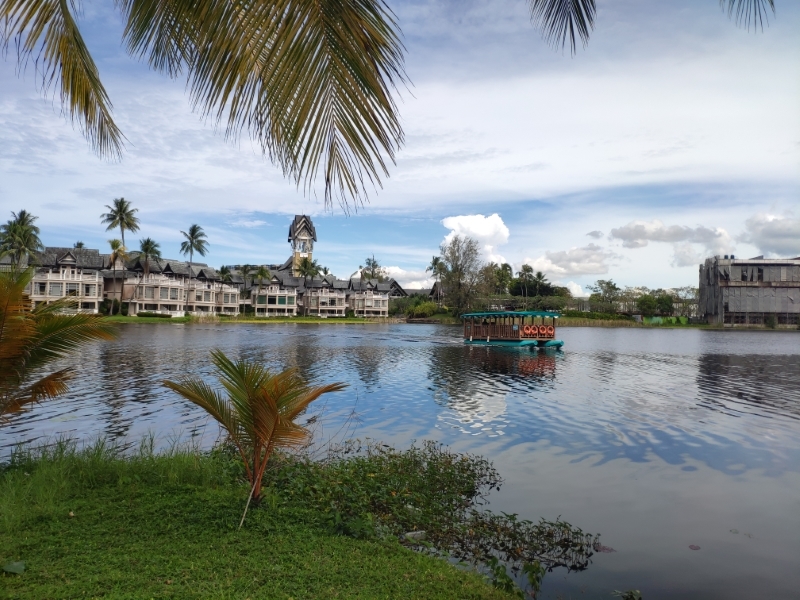
Bang Tao and Laguna
The northwest’s premium address. The Laguna Phuket resort complex anchors a residential community that’s increasingly popular with wealthier expats and families at the higher end of the budget. Long beach, high-end villas and condos, strong community infrastructure. More expensive than the south but representing a distinct version of Phuket living that many find attractive once they can afford it.
Should You Live in Phuket?
Phuket works best for:
- people who rank beach access and outdoor water sports as genuine daily features they’ll use, not just occasional aspirations
- remote workers, retirees, and business owners who want international infrastructure without Bangkok’s density and heat
- active expats who want a year-round outdoor lifestyle built around diving, martial arts, surfing, and beach life
- people who’ve deliberately chosen island life and are arriving with their own income stream
It’s a genuinely poor fit for people who would stretch their budget further in a smaller city, anyone who finds tourist-heavy environments uncomfortable over time, people who need frequent nightlife and active social variety without effort, or those who want authentic Thai community life as a daily feature.
The trial advice from long-term residents is consistent: come for a month at minimum, not a week. Stay in Rawai or Kamala rather than Patong. Visit in both dry season and rainy season if you can, because they’re genuinely different versions of the island.
Ride a motorcycle, figure out the roads, and get to know your neighborhood’s specific character. Phuket as a place to live reveals itself slowly, and the version you discover after three months is meaningfully different from the one you see in the first week.


 Deutsch:
 Français:
'/%3E%3Cpath%20fill='%23b2b2b2'%20d='M241%20382q0%2016%2017%2026%2017%2011%2042%2011t42-11q16-11%2017-26V269H241'/%3E%3Cpath%20fill='%239f7e00'%20d='M241%20379q0%2014%208%2023%209%209%2021%209%2014%200%2021-9%209-9%209-23V269h-59'/%3E%3Cpath%20d='M241%20339v-70h59v110q0%2014-9%2023l-6%205v-68h-15v72q-8%200-14-4v-68zm59%2040c0%2022%2015%2032%2029%2032%2021%200%2030-18%2030-32v-40h-59'/%3E%3Cpath%20fill='%239f7e00'%20d='M266%20277v5h2v12h-3v-5h2v-5h-9v5h2v5h-4v9h3v18h-5v10h34v-10h-5v-18h3v-9h-4v-5h2v-5h-9v5h2v5h-3v-12h2v-5zm42%20101q0%2010%206%2017%206%206%2015%207%2010-1%2016-7%206-7%206-17v-29h-43'/%3E%3Ccircle%20fill='%230044ad'%20cx='329.5'%20cy='372'%20r='6'/%3E%3Cellipse%20fill='%230044ad'%20cx='300'%20cy='340'%20rx='16'%20ry='21'/%3E%3C/svg%3E) Español:
Español: