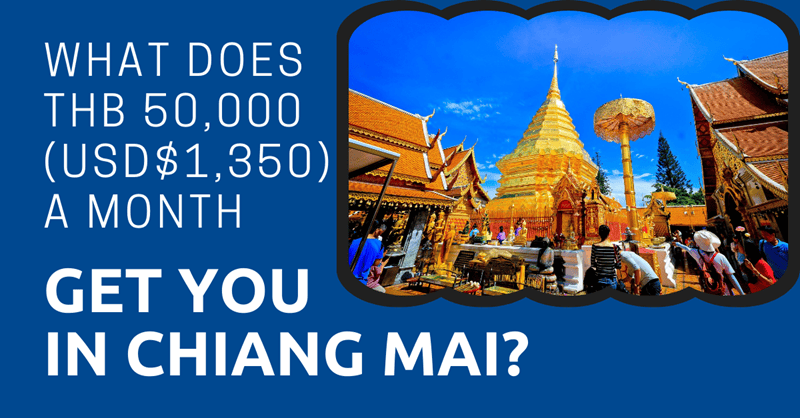
Chiang Mai is the default northern Thailand pick for good reason: a developed city at roughly 25 to 30 percent below Bangkok costs, with great food, real café and coworking culture, and mountains within an easy drive. The catch is burning season, roughly February to April.
Chiang Mai has been the default answer to “where should I live in northern Thailand?” for so long that it’s easy to take the recommendation for granted. But the city earns it, consistently, for reasons that go well beyond the marketing copy about temples and mountains.
The combination it offers genuinely doesn’t exist elsewhere in Thailand at the same price point:
- a developed city with full urban infrastructure
- a deeply established expat and digital nomad community
- natural access within an easy drive
- one of the best food scenes in Southeast Asia
- a pace of life meaningfully slower than Bangkok without losing the amenities that make daily life comfortable
The caveats are real too, and worth knowing before you arrive. This guide covers both.
Disclaimer: Some links in this article go to our partners, and we may earn a commission if you use them. It costs you nothing extra, and we only recommend services we'd use ourselves. Read more in our Advertising Disclosure.
Contents
- Key Takeaways
- About Chiang Mai
- Pros and Cons
- Quality of Life
- Cost of Living
- Accommodation
- Food
- Getting Around
- Long-Distance Travel
- Healthcare
- Expat Community
- Social Culture
- Nightlife
- Activities
- Education and Family Life
- Job Opportunities
- Weather
- Air Quality
- Flooding
- Popular Neighborhoods
- Should You Live in Chiang Mai?
- Sources Cited
Key Takeaways
- Chiang Mai is the largest city in northern Thailand and the most established expat hub outside Bangkok, with a particularly strong digital nomad and retiree community.
- Cost of living runs about 25 to 30 percent below Bangkok in our experience, and somewhat below Phuket and Pattaya. Most expats spend about THB25,000 to 52,500 per month.
- Burning season from roughly late January to early April is the single biggest quality-of-life issue. AQI levels regularly exceed 200 during peak weeks. Many long-term residents leave during this period.
- Bangkok Hospital Chiang Mai (JCI-accredited) and Chiang Mai Ram Hospital are the leading private hospitals. Lanna Hospital is the well-regarded affordable private alternative.
- The city has an outstanding natural setting: national parks, waterfalls, mountain viewpoints, and hot springs all within an hour or two.
- Chiang Mai International Airport offers direct domestic flights. International connections are limited; most long-haul routes go through Bangkok.
About Chiang Mai
Chiang Mai sits in a broad valley in northern Thailand at about 300 metres elevation, surrounded by mountains. It was founded in 1296 as the capital of the Lanna Kingdom, and that history is still visible in the moat-encircled Old City, the temple architecture, and a cultural identity that’s distinctly northern Thai rather than a version of Bangkok.
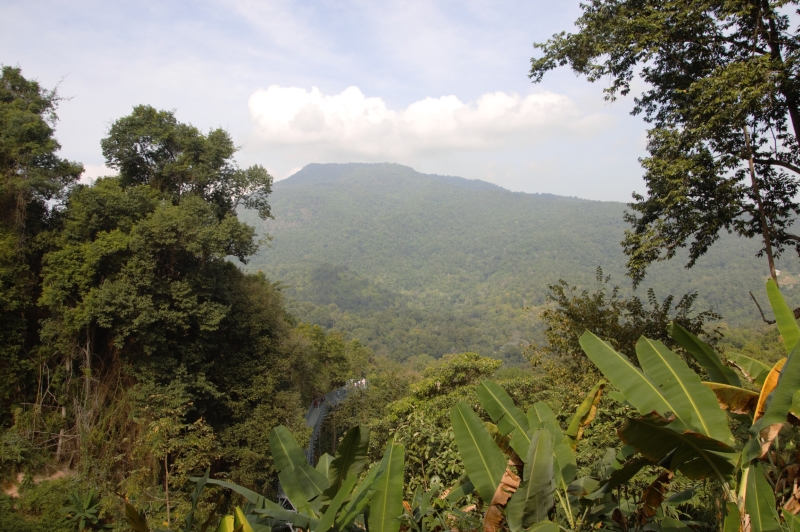
The modern city that’s grown around that old core is a genuine mid-sized Thai city: university town, commercial center, tourism hub, and increasingly an international destination for remote workers and retirees.
The combination of those layers gives Chiang Mai a texture that most Thai cities don’t have. There’s a world-class food scene alongside ancient wats, and excellent coworking spaces a short walk from centuries-old temples. That layering is what makes the city interesting to live in rather than just visit.

Pros and Cons
Reasons to move to Chiang Mai:
- Cost of living about 25 to 30 percent lower than Bangkok, with good quality across food, accommodation, and services
- Outstanding natural access: national parks, waterfalls, mountain viewpoints, and trekking all within easy reach
- One of Thailand’s best food scenes, particularly for northern Thai cuisine and café culture
- Large, organized expat and digital nomad community with deep social infrastructure
- Good private healthcare at multiple price points
- Strong international school options for families
- Cooler climate than southern Thailand for most of the year, particularly the cool season
- Cultural depth through temples, festivals, and Lanna traditions
Reasons it might not work for you:
- Burning season (late January to early April) brings seriously hazardous air quality; it’s the defining annual drawback
- No direct long-haul international flights; Bangkok is always a connection for intercontinental travel
- Traffic in Nimman and tourist areas is genuinely bad and worsening
- The city is increasingly developed and crowded compared to a decade ago; some long-termers feel it’s lost something
- Flooding in low-lying areas during the rainy season
Quality of Life
The expat community’s consistent description of Chiang Mai is that it’s a city that’s easy to settle into, for a few reasons:

- the infrastructure works
- food is excellent and cheap
- nature is accessible
- café culture is good enough that working from a café here isn’t a compromise; it’s pleasant
- the social scene requires very little effort to enter because it’s already there and organized
Community input across expat forums and Facebook groups reveals a specific pattern: new arrivals are almost universally positive, while people who’ve been here two to five years tend to appreciate it more thoughtfully, acknowledging the tradeoffs. And a meaningful percentage of long-term residents leave during the burning season every year and come back, which shapes how they think about the city as home.
Drawback: the flip side the same community consistently raises is that Chiang Mai isn’t what it was. The city has developed significantly over the past decade. Traffic in Nimman and the tourist areas is increasingly Bangkok-like on bad days, and rents have risen. People who moved here five or ten years ago often say it’s still great, but different.
Cost of Living
Chiang Mai is about 25 to 30 percent cheaper than Bangkok for the same lifestyle. That figure comes from our own experience living in both cities and from our interviews with expats who’ve made the move. Rent is where most people notice the gap first.
The gap is smaller against the beach cities, but Chiang Mai still comes in below Phuket and Pattaya. Add up the line items below and most people land between THB25,000 and 52,500 a month. A single nomad who lives simply sits near the bottom of that range.
Here’s a realistic monthly breakdown:
- Rent: THB8,500 to 20,000 for a well-positioned condo; less for older or more remote buildings
- Food: THB8,000 to 13,000 for a mix of local and international dining
- Transportation: THB2,500 to 5,000 depending on whether you use a motorcycle, ride-hailing apps, or both
- Health insurance: THB1,000 to 3,500 for a basic to mid-tier plan. See our Thailand health insurance guide.
- Utilities: THB1,500 to 3,000 for electricity, water, and internet
- Entertainment and social: THB3,000 to 8,000 for cafés, activities, events, and occasional travel
- Total: about THB25,000 to 52,500 per month
For a full comparison across Thailand, see our cost of living in Thailand guide.
Accommodation
Chiang Mai offers a range of accommodation at every price point, from basic studio apartments under THB5,000 per month to premium condos and resort-style houses.
Condos and Apartments
Condos and apartments are popular choices among digital nomads and remote workers. Most sit in the city center, so it’s easy to reach everything the center offers, and there are plenty of good options to choose from. Our guide to renting in Chiang Mai covers how to find them and what to check before you sign.
A modern one-bedroom condo in a good location runs THB8,500 to 20,000 per month depending on building quality, size, and neighborhood. Well-known buildings in different price tiers include:
- One Plus 19 (Chang Khlan): around THB8,500 for a 30-square-meter furnished one-bedroom with pool access
- D Condo Sign (Fa Ham): THB11,000 for a 30-square-meter modern unit with city and mountain views
- D Vieng Santitham (Chang Phueak): THB14,000 to 16,500 for a 40-square-meter one-bedroom in a quieter area
- S Condo Chiang Mai (Suthep): THB18,000 for a 58-square-meter unit with pool, gym, and good city access
- Punna Residence (Nimman): THB20,000 for a premium 50-square-meter unit in the heart of the nomad district
- The Astra Condo (Chang Khlan): THB25,000 for a 50-square-meter high-rise unit with rooftop pool near the Night Bazaar
Budget apartments throughout the city come in under THB5,000 per month. These are basic but functional and widely used by expats who prioritize location flexibility over amenities.
Houses
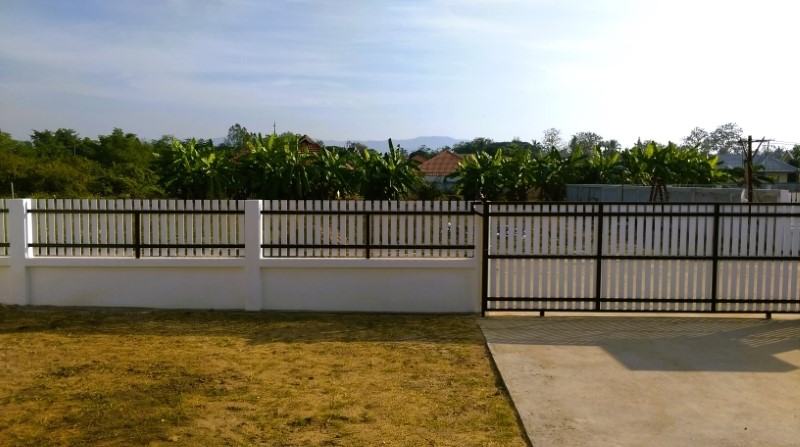
Houses are popular with retirees and families because they give you more space.
- A two-bedroom house in Hang Dong, a residential area south of the city, runs around THB15,000 per month. Three bedrooms usually cost THB20,000 to 25,000. (Verified October 2026.)
- Gated communities with pools, fitness centers, and security are common at THB15,000 to 25,000.
People in the Chiang Mai expat forums who rent houses at THB15,000 to 20,000 in outer districts like San Sai and Doi Saket say the space beats a small central condo easily. The catch is that you’ll need a car or motorbike for nearly everything.
That said, a house in Chiang Mai can be more expensive than in other cities outside Bangkok, Pattaya, and Phuket.
Food
The food scene in Chiang Mai is one of the strongest arguments for living here, and the expat community talks about it more than almost any other feature of the city.

Northern Thai Cuisine
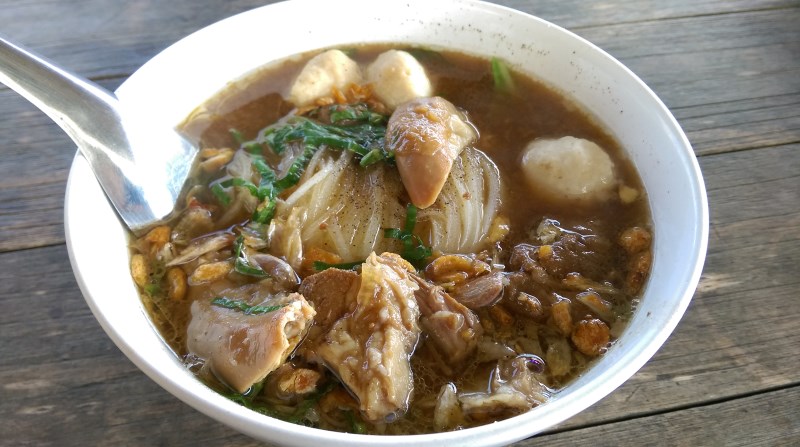
Khao soi is the signature dish of Chiang Mai, a rich coconut curry broth with egg noodles, braised chicken or beef, and crispy fried noodles on top, finished with lime, shallots, and pickled mustard greens. Beyond khao soi, other northern dishes that taste great here include:
- sai ua (northern Thai sausage)
- nam prik noom with sticky rice
- hang lay curry
Street food and local restaurants serve excellent food for THB50 to 80 per dish. The quality-to-price ratio is as good as anywhere in Thailand, and better than most of it.
Café Culture
This deserves its own section because it’s a genuine feature of the city rather than just a nice-to-have. Chiang Mai has hundreds of independent coffee shops, many with garden settings, mountain views, or architectural character that Bangkok or Pattaya simply don’t have. The province also grows high-quality Arabica coffee, and the local café culture reflects that.
For remote workers, the café-as-office option here is viable in a way it isn’t everywhere. There are enough good spots that you can rotate without repeating yourself for weeks. A coffee runs THB60 to 120 at a good independent shop.
International Restaurants
The international restaurant scene is extensive for a city of Chiang Mai’s size, driven by the large expat and nomad community. Italian, Japanese, Indian, Mexican, and Western food are all well-represented at reasonable prices. Meals at international restaurants run THB200 to 600 per person.
Groceries
Rimping Supermarket is the expat-favorite grocery store in Chiang Mai, with imported goods, quality produce, and a range that covers most needs. Tops Market, Big C, Lotus’s, and Makro cover everything else at lower prices. Fresh markets throughout the city are excellent for produce at honest prices.
Getting Around
Chiang Mai is a mid-sized city, and transport options vary by location and lifestyle.
- Songthaews (red trucks) are the most iconic local transport, running flexible routes throughout the city for around THB20 to 40 per person. They’re shared rides that may take detours, useful and cheap once you know how they work and confusing for newcomers. Some overcharge foreigners, so agree on the price first.
- Grab is widely used for fixed-price convenience. Cars start around THB80 per ride, GrabBike around THB50 to 60. The most practical option for non-motorcycle riders making occasional trips.
- Motorcycles are the most practical daily option for most expats. Monthly rental runs THB2,500 to 5,000 depending on the model; buying a used Honda Click or Wave runs THB25,000 to 35,000. Roads within the city are manageable, but routes into the hills can be steep and require confidence. Always wear a helmet and carry your license.
Long-Distance Travel
Chiang Mai International Airport has direct domestic flights to Bangkok, Phuket, Hat Yai, and several other cities. International connections are limited; most long-haul travel requires a Bangkok transfer.
A sleeper train is another popular way to travel between Chiang Mai and Bangkok. It’s a 12-hour trip, and it’s popular enough that you need to book at least a few weeks, or even months, in advance.
Healthcare
Chiang Mai’s private healthcare system is the best in northern Thailand and good by any Thai standard. The city has multiple private hospital options at different price points.
- Bangkok Hospital Chiang Mai is the BDMS network hospital in the city, JCI-accredited through 2027, with the full range of specialist care, modern equipment, and English-speaking staff. It’s the premium option: excellent quality, highest costs. A cardiac procedure quoted here was recently found to be nearly three times the price of the same procedure performed by the same surgeon at Sriphat Medical Center, which is a useful data point for understanding what the premium buys.
- Chiang Mai Ram Hospital is the city’s other big private hospital, and consistently the first recommendation for most expats: comprehensive specialist care, English-speaking staff, modern facilities, and slightly more accessible pricing than Bangkok Hospital.
- Lanna Hospital, with 180 beds, is the community’s go-to recommendation for solid private care at lower cost than the two big private hospitals. It has specialist centers for back pain and cardiac catheterization with genuine regional reputations. The tradeoff is fewer luxury amenities and less brand recognition.
- Sriphat Medical Center at Chiang Mai University is a public-university-affiliated facility worth knowing about, particularly for specialist care. The same cardiac surgeon who operates at Bangkok Hospital Chiang Mai also practices here, at a fraction of the cost. It’s an underused resource among expats who default to the well-known private hospitals.
- Nakornping Hospital is the main government hospital, offering affordable care with the longer waits and more limited English typical of public facilities.
Long-term residents in the local forums also point newcomers to McCormick Hospital and Rajavej Hospital for routine care. You pay well below the big private hospitals, and you save the premium names for when you really need them.
On insurance: private hospital visits run several thousand baht for routine care; admissions can reach six figures. A mid-tier expat plan runs THB1,000 to 3,500 per month for a 40-year-old depending on coverage level. See our Thailand health insurance guide.
Expat Community
Chiang Mai’s expat community is the most organized and active of any Thai city outside Bangkok, and in some ways more accessible than Bangkok because it’s smaller and more concentrated geographically.
The digital nomad infrastructure is extensive: CAMP coworking, Yellow, and dozens of other coworking spaces provide working environments across every price point. Regular events including tech meetups, language exchanges, meditation classes, cooking workshops, and social events happen every week and are easy to find through Facebook groups, which are extremely active and practical resources for everything from housing to visa advice to restaurant recommendations.
Social Culture
The social culture of Chiang Mai particularly rewards engagement. The community is welcoming but not passive: people who show up to events and join interest groups build connections quickly. People who stay in their condos waiting for social life to happen to them have a different experience.
Long-term expats consistently note that Chiang Mai attracts a specific kind of person: curious, somewhat adventurous, interested in Thai culture beyond its surface, and comfortable with periods of genuine solitude alongside an active social life. The social scene is rich but not relentless, which suits many people better than Bangkok’s constant-stimulation environment.
Nightlife
Chiang Mai’s nightlife is varied enough to serve most tastes without being as intense as Bangkok or Pattaya.
Live music and bars: North Gate Jazz Co-Op near the Old City’s north gate runs nightly jazz sessions that have become an institution. Zoe in Yellow is the livelier option, mixing locals, expats, and travelers. Thapae East combines live music, art events, and cultural programming in a way that appeals to the longer-term resident community.
Rooftop bars: Rise Rooftop Bar at Akyra Manor Chiang Mai and MAI The Sky Bar at Meliá Chiang Mai offer city and mountain views alongside well-made cocktails. A step up in price from the standard bar scene, but worth knowing for special evenings.
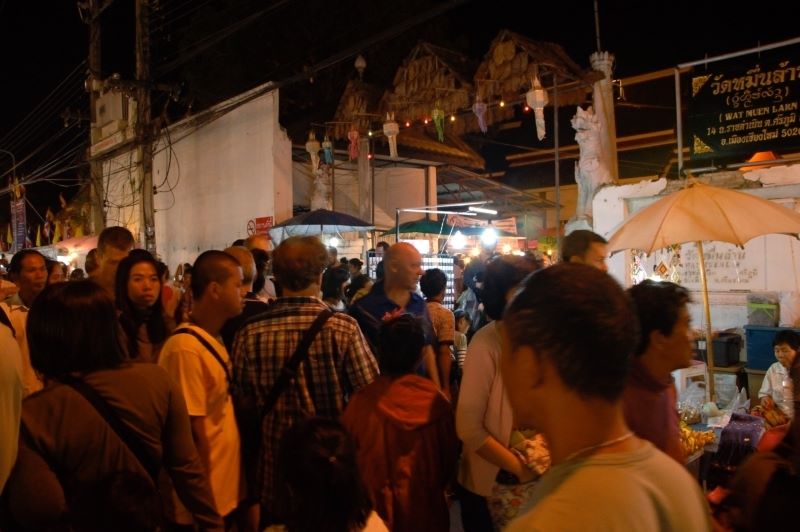
Night markets: Sunday Walking Street through the Old City is the most famous, with street food, crafts, and live performances every Sunday evening. Saturday Night Market on Wualai Road is slightly smaller and less crowded, with a more local character. Both are excellent.
Night clubs: Warm Up Café in Nimman is the enduring standard, running from live bands to DJ sets on different nights. Good Music Club and Infinity Club serve the clubbing end of the market.
Activities
Nature
This is where Chiang Mai genuinely separates itself from any other major Thai city. National park access within an easy drive is extraordinary.
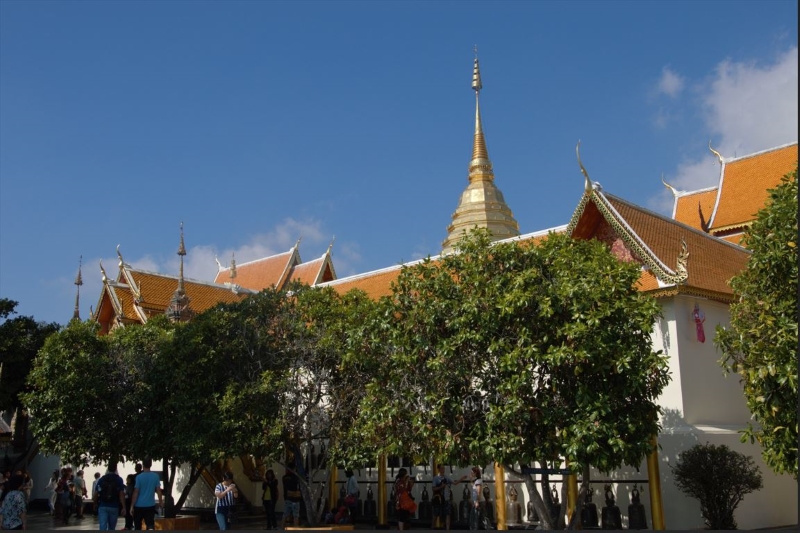
- Doi Suthep-Pui National Park: 15 km from the city. Home to the iconic Wat Phra That Doi Suthep, Bhubing Palace, and good hiking trails with city views. The short drive up changes the temperature noticeably.
- Doi Inthanon National Park: Thailand’s highest peak, 90 km away, with twin pagodas, waterfalls, and bird watching.
- Mae Sa Waterfall: 30 km, ten cascading tiers, good for a half-day trip.
- Bua Tong Sticky Waterfall: 60 km, a limestone formation that lets you walk up the cascades.
- Mae Taeng River: 80 km, the main white-water rafting destination from the city.
- San Kamphaeng Hot Springs: around 45 minutes, mineral springs with the famous egg-boiling pools.
- Mae Kampong Village: 50 km, a highland tea-plantation village worth an overnight homestay.
Culture and Temples
The Old City is one of Thailand’s most concentrated areas of temple architecture. Wat Phra Singh and Wat Chedi Luang are the two must-visit ones, but the Old City has dozens of active wats worth exploring.
The annual festivals are worth planning around. Loi Krathong and Yi Peng in November is one of the most visually striking events in Asia, with thousands of lanterns released over the city. Songkran in April is Chiang Mai’s most famous water festival, drawing visitors from across Thailand.
Markets and Shopping
The Night Bazaar near the river runs every evening. The Sunday and Saturday Walking Streets are the main weekly events. Central Chiangmai handles mainstream retail, and Rimping Supermarket and the network of fresh markets cover daily needs.
Wellness and Fitness
Yoga studios, Muay Thai gyms, meditation retreats, and wellness centers are embedded into the fabric of Chiang Mai at a density unusual for a city this size. The city has a long-established wellness community that predates the digital nomad wave, and it shows in the quality and variety of what’s available. Meditation retreats at temples like Wat Suan Dok are available for serious practice, not just tourist experiences.
Education and Family Life
Chiang Mai is a well-developed option for expat families, with a genuine range of international school choices and a family community that’s grown significantly in recent years.
- Chiang Mai International School (CMIS) follows an American curriculum from preschool through grade 12.
- Prem Tinsulanonda International School offers the full IB program (PYP, MYP, DP) on a spacious eco-friendly campus with residential options.
- Lanna International School Thailand (LIST) follows the British curriculum and is particularly well-regarded for its pastoral care and academic results.
- Nakornpayap International School (NIS) follows an American curriculum with an emphasis on diversity and holistic development.
- Panyaden International School blends the International Primary Curriculum with Buddhist principles and a sustainability focus, making it distinct from the standard international school model.
- Singapore International School Chiang Mai offers the Singapore Curriculum for primary, a Singapore-UK hybrid for lower secondary, IGCSE for upper secondary, and IB for sixth form.
For families needing bilingual options at lower cost, Sacred Heart College Chiang Mai near the southwest corner of the Old City offers both Thai and bilingual programs.
Family activities are extensive: Chiang Mai Zoo, Royal Park Rajapruek, and the surrounding national parks provide genuine options for children of different ages. The family expat community is active on Facebook groups specific to parenting in Chiang Mai. For a broader view of schooling across Thailand, see our guide to international schools in Thailand and our cost of living for families guide.
Job Opportunities
Job opportunities in Chiang Mai for foreigners are limited relative to Bangkok, and it’s worth being honest about that.
- English teaching is the most accessible route, with positions at international schools, language centers, and universities. Competition for well-paying international school positions is real.
- Entrepreneurship is where many expats find their path. The large, spending expat community supports cafés, yoga studios, tour operations, creative agencies, and wellness businesses run by foreigners. Success depends on proper structuring and understanding Thai business regulations.
- Tourism and hospitality offers some positions for people with relevant experience and language skills.
- Remote work is where Chiang Mai excels. The combination of excellent coworking infrastructure, reliable high-speed internet, good cafés, and a supportive community makes it one of the best cities in Asia for location-independent work.
Weather
Chiang Mai has three distinct seasons with genuinely different characters.
The cool season from November to February is the best time to be in the city. Days run 15 to 28°C, nights are refreshingly cool, and the combination of clear skies and mountain views makes this the most pleasant version of Chiang Mai. It’s also peak tourist season, so accommodation prices and crowds are at their highest.
The hot season from March to June is serious, with temperatures regularly exceeding 37°C in the afternoon. Morning and evening are manageable; mid-day is best avoided outdoors. This period overlaps significantly with burning season, compounding the difficulty.
The rainy season from July to October brings frequent downpours, high humidity, and lush green landscapes. Heavy rain can cause flash flooding in low-lying areas. For people without strong preferences about the rain, it’s actually a comfortable time to be in Chiang Mai: moderate temperatures, fewer crowds, and lower accommodation prices.
Air Quality
Burning season is the most important thing to understand about living in Chiang Mai, and it should be weighted seriously in any decision about long-term residence here.
From roughly late January to early April, and worst from late February to early April, agricultural burning across northern Thailand and smoke from neighboring Myanmar and Laos creates genuinely hazardous air quality. AQI levels regularly exceed 200 during peak weeks, and some days see AQI above 300. This is not a minor inconvenience: it causes real health effects, particularly for people with respiratory conditions, and limits outdoor life severely during the worst periods.
The community’s standard responses are:
- air purifiers running continuously at home
- N95 masks outdoors
- for many long-term residents, leaving the city entirely for two to four weeks during the worst of it
This is such a normalized response that the city is noticeably quieter during late March and early April as the established expat community temporarily relocates to the coast. An air purifier is not optional equipment in Chiang Mai; it’s standard living infrastructure. For anyone with serious respiratory conditions, asthma, or young children, burning season requires careful consideration. It is the most common reason people who love Chiang Mai eventually decide not to live here year-round.
Flooding
Chiang Mai has experienced increasingly severe flooding in recent years. The 2024 rainy season brought significant flooding to parts of the city, particularly areas near the Ping River and low-lying neighborhoods.
Before committing to accommodation, check the flooding history of the specific street or building. Ask locals and check Facebook groups for rainy-season accounts. Areas near the Ping River and some low-lying sois in the eastern parts of the city are most at risk. The Old City sits on slightly higher ground and fares better in most flood events.

Popular Neighborhoods
Your neighborhood in Chiang Mai decides your rent and how much traffic you sit in, so pick the area before you pick a building. For quieter spots off the usual list, see our guide to underrated neighborhoods in Chiang Mai.
Nimmanhaemin (Nimman)
The center of the digital nomad and young expat community, and the most cosmopolitan neighborhood in the city. Dense with cafés, coworking spaces, international restaurants, boutique shops, and nightlife, with modern condo options at multiple price points. The tradeoff is traffic: Nimman is heavily congested during busy periods, particularly around Chiang Mai University. Central Chiangmai is a short walk away. Nimman rewards people who want to be in the middle of everything; it frustrates people who want quiet.
Old City
The cultural heart of Chiang Mai, enclosed by its ancient moat. More temples than any other neighborhood, a slower pace, and a genuinely different atmosphere from Nimman. Accommodation leans toward guesthouses and older apartment buildings rather than modern condos. Quieter than Nimman but still central. Sacred Heart College and Singapore International School Chiang Mai are nearby, making it workable for families.
Hang Dong
South of the city, suburban, family-oriented, and noticeably calmer than the central areas. Lanna International School is here, making it the preferred neighborhood for families sending children there. Gated communities with pools and playgrounds are the main accommodation type, and Rimping Supermarket and other practical amenities are accessible. It requires a vehicle for most errands.
Chang Phueak (North of the City)
A quieter, more local residential area north of the Old City. Less tourist infrastructure than Nimman or the Old City, but more authentic and noticeably cheaper. Worth considering for people who’ve been in Chiang Mai for a while and want to step back from the expat bubble.
Should You Live in Chiang Mai?
Chiang Mai works best for:
- remote workers and digital nomads who want developed community infrastructure alongside genuine café and coworking culture
- retirees who want a slower-paced, affordable city with good healthcare and outstanding natural access
- people who value food, culture, and outdoor life over beach access
The burning season is the defining annual test. Before committing to Chiang Mai long-term, spend time there in March and see it honestly. If you can manage that period, or are willing to leave for a few weeks, Chiang Mai rewards long-term residents generously. If respiratory health is a serious concern or you can’t tolerate that level of disruption annually, the city will frustrate you in ways that accumulate.
The other honest note: Chiang Mai has changed, and people who knew it ten years ago sometimes find the current version more crowded and commercialized. That’s true and worth acknowledging. But for people arriving now, without nostalgia for a version they never knew, it remains one of the most livable cities in Southeast Asia at its price point.
For related guides, see our pieces on living in Chiang Rai, Bangkok vs Chiang Mai, retiring in Chiang Mai, and the best places to live in Thailand.
Sources Cited
- Bangkok Hospital Chiang Mai, awards and accreditations: Joint Commission International (JCI) accreditation, 2024 to 2027.
- FazWaz, One Plus 19 rental listing: 30-square-meter one-bedroom at THB8,500 a month (listed September 2026).
- FazWaz, houses for rent in Hang Dong: two-bedroom houses mostly around THB15,000, three-bedroom houses mostly THB20,000 to 25,000 (October 2026).


 Deutsch:
 Français:
'/%3E%3Cpath%20fill='%23b2b2b2'%20d='M241%20382q0%2016%2017%2026%2017%2011%2042%2011t42-11q16-11%2017-26V269H241'/%3E%3Cpath%20fill='%239f7e00'%20d='M241%20379q0%2014%208%2023%209%209%2021%209%2014%200%2021-9%209-9%209-23V269h-59'/%3E%3Cpath%20d='M241%20339v-70h59v110q0%2014-9%2023l-6%205v-68h-15v72q-8%200-14-4v-68zm59%2040c0%2022%2015%2032%2029%2032%2021%200%2030-18%2030-32v-40h-59'/%3E%3Cpath%20fill='%239f7e00'%20d='M266%20277v5h2v12h-3v-5h2v-5h-9v5h2v5h-4v9h3v18h-5v10h34v-10h-5v-18h3v-9h-4v-5h2v-5h-9v5h2v5h-3v-12h2v-5zm42%20101q0%2010%206%2017%206%206%2015%207%2010-1%2016-7%206-7%206-17v-29h-43'/%3E%3Ccircle%20fill='%230044ad'%20cx='329.5'%20cy='372'%20r='6'/%3E%3Cellipse%20fill='%230044ad'%20cx='300'%20cy='340'%20rx='16'%20ry='21'/%3E%3C/svg%3E) Español:
Español: