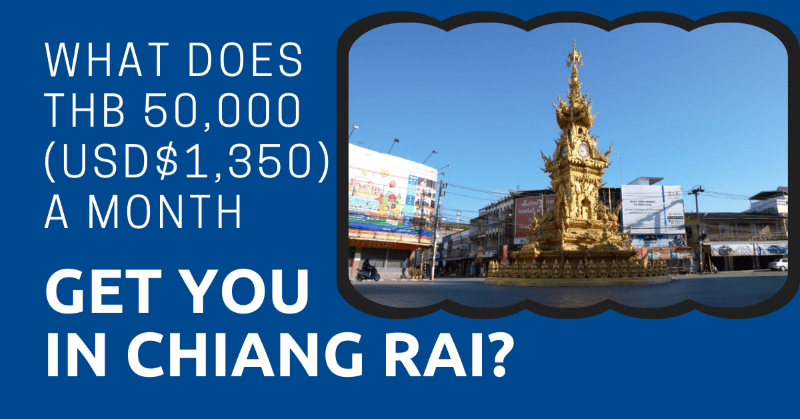
Chiang Rai is the quieter, cheaper alternative to Chiang Mai: smooth traffic, great nature, and living costs about 20 to 30 percent below Chiang Mai (roughly 40 to 50 percent below Bangkok). The catch is the same smog season, late February to April.
Chiang Rai gets overlooked because Chiang Mai is right there, familiar and well-documented and easy to slot into a plan. But if you’ve spent time in Chiang Mai recently and found yourself thinking it’s gotten louder, more congested, and more expensive than it used to be, Chiang Rai is worth a serious look.
It’s quieter, genuinely so. The traffic flows. The food is good and cheap. The nature is excellent. And the cost of living is low enough that a modest income goes meaningfully further than it would in any of Thailand’s main expat hubs.
The tradeoffs are real too, and I’ll be straight about them. But for the right kind of person, Chiang Rai is one of the most underrated places to live in northern Thailand.
Disclaimer: Some links in this article go to our partners, and we may earn a commission if you use them. It costs you nothing extra, and we only recommend services we'd use ourselves. Read more in our Advertising Disclosure.
Contents
- Key Takeaways
- About Chiang Rai
- Pros and Cons
- Quality of Life
- Cost of Living
- Accommodation
- Food
- Getting Around
- Long-Distance Travel
- Healthcare
- Exercise and Fitness
- Weather and Air Quality
- Social Life and the Expat Community
- Nightlife
- Activities
- Education and Family Life
- Job Opportunities
- Recommended Neighborhoods
- Should You Live in Chiang Rai?
- Sources Cited
Key Takeaways
- A single person can live in Chiang Rai on about THB18,000 to 42,000 a month, which in our experience is 20 to 30 percent less than Chiang Mai. A THB50,000 budget gives you a good home, decent food, and real savings room.
- Smog season from roughly late February to early April brings genuinely poor air quality due to agricultural burning and fires from neighboring countries. It’s the single biggest quality-of-life issue for most expats, and many choose to leave during the worst weeks.
- Private transport is essential outside the city center. A motorcycle rented from around THB2,500 per month is the most practical option for most people.
- Job opportunities for foreigners are very limited. English teaching is the most accessible option, and salaries are lower than in Bangkok or Chiang Mai.
- The expat community is small but genuinely close-knit, with regular meetups organized through Facebook groups.
- International schooling is limited to CRIS and CRICS, plus a couple of bilingual programs. Far fewer choices than Chiang Mai or Bangkok.
- Kasemrad Sriburin Hospital and Overbrook Hospital are the main private options, both with English-speaking staff. For major surgery, plan to travel to Chiang Mai or Bangkok.
- Chiang Rai suits retirees and location-independent workers who value peace, nature, and low costs. It’s not the right fit for those who need nightlife, a wide job market, or frequent international travel.
About Chiang Rai
Chiang Rai sits at the northernmost tip of Thailand, sharing borders with Myanmar and Laos, which is where the “Land of Three Borders” nickname comes from. It was founded in 1262 by King Mangrai as the original capital of the Lanna Kingdom, and that history shows up everywhere in the culture, the architecture, and the way people live.
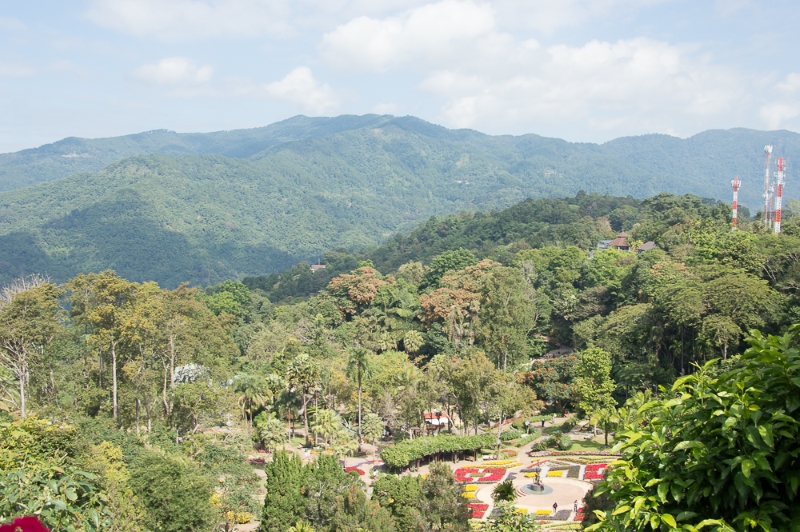
The landscape is defined by mountains and the Kok River, which runs through the city and gives it an anchor that many Thai provincial cities lack.
- the air is clean for most of the year
- the surrounding hills are covered in tea plantations and forest
- the general atmosphere is one of a place that hasn’t been overly shaped by tourism
Chiang Rai gets tourists, plenty of them, but it doesn’t feel built around them the way Chiang Mai increasingly does. That distinction matters a lot when you’re thinking about living somewhere rather than visiting.
Pros and Cons
Reasons to move to Chiang Rai:
- Cost of living runs about 20 to 30 percent below Chiang Mai, and roughly 40 to 50 percent below Bangkok
- Genuinely peaceful, with smooth traffic and an unhurried pace of daily life
- Strong natural surroundings: mountains, rivers, tea plantations, waterfalls, and national park access
- Outstanding Lanna culture, temples, and local food scene
- Good cool-season weather from November to February, with occasional cold nights in the hills
- Friendly, warm local population
- A smaller expat community means closer friendships
Reasons it might not work for you:
- Smog season (late February to early April) brings poor air quality on bad days
- Limited international food, nightlife, and big-city amenities
- Very few job opportunities for foreigners outside English teaching
- International schooling options are limited for families
- English is not widely spoken outside tourist and expat-facing businesses
- Only one direct international route (Scoot to Singapore), so most trips abroad still go through Bangkok or Chiang Mai
- Flooding has become a more serious issue in recent years, particularly near the Kok River
Quality of Life
Daily life in Chiang Rai has a rhythm that most people who’ve spent time in Bangkok or Chiang Mai find immediately refreshing.
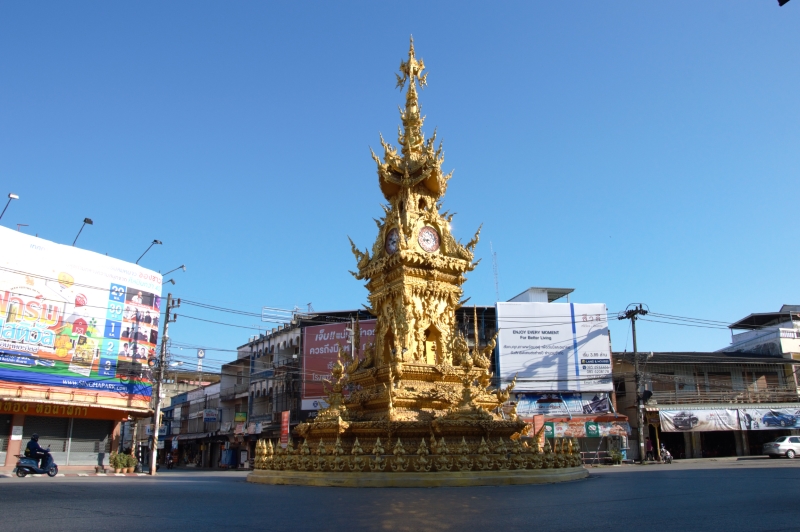
- traffic is light
- streets are walkable in the city center
- the pace is genuinely slower without feeling like things don’t work
The city also has what you practically need: Central Plaza Chiang Rai for shopping, Big C, Lotus’s, and Makro for groceries, a reasonable restaurant scene, consistently good cafés, and adequate healthcare for routine needs.
What it doesn’t have is variety. The restaurant options thin out quickly once you go beyond Thai food, the nightlife is modest, and the international community is small enough that if you need a lot of social stimulation, you’ll have to build it yourself rather than walk into it.
The honest standout is the natural setting. Having mountains, rivers, tea plantations, and national park access within an easy drive is something Chiang Mai used to offer and has gradually diluted as it developed. Chiang Rai still has it. For people who factor nature heavily into quality of life, that means something real.
Cost of Living
Chiang Rai costs about 20 to 30 percent less than Chiang Mai, which puts it roughly 40 to 50 percent below Bangkok. That’s our estimate from living in the north and from talking to expats here, not an official statistic.
It’s very affordable: one person can live well on THB18,000 to 42,000 a month. The gap narrows for imported goods and international restaurants.
Here’s a realistic monthly breakdown for someone living alone:
- Rent: THB5,000 to 15,000 depending on type and location
- Food: THB5,000 to 12,000, mostly local with occasional international meals
- Transportation: THB3,000 to 4,000 for motorcycle rental (from about THB2,500) and fuel; more if you use Grab regularly or own a car
- Utilities: THB1,500 to 3,000 for electricity, water, and internet
- Entertainment and activities: THB3,000 to 8,000 including cafés, massage, gyms, and occasional trips
Estimated total: THB18,000 to 42,000 per month. Most people can manage comfortably on THB25,000, and a THB50,000 budget gives you a genuinely comfortable life with savings room. For a broader comparison of costs across Thailand, see our cost of living in Thailand guide.
Accommodation
Rent in Chiang Rai is genuinely affordable across every category, with a range of options from city-center condos to large rural properties.
Condos and Studio Apartments
A one-bedroom condo near facilities in the city center runs THB6,000 to 10,000 per month, partially furnished, some with pool or gym access. Older apartment buildings and rooms around town come in at about THB3,500 to 6,000. You’ll find most of them on Thai-language sites like Renthub, not the English-language portals. Good value by any Thai standard. (Verified October 2026.)
Townhouses and Small Houses
Housing estates inside the city run THB10,000 to 20,000 per month for a two- or three-bedroom place, typically partially furnished. On the FazWaz rental listings, two-bedroom houses average about THB14,200 a month and three-bedrooms about THB18,800. (Verified October 2026.)
Local-style houses outside the center run about THB5,000 to 12,000, often with garden space that city condos can’t offer. The cheapest rarely reach the big listing sites. Look in Thai Facebook rental groups, where houses were advertised from about THB5,000 a month in 2026.
Larger Houses and Villas
Resort-style standalone properties with gardens and full amenities start around THB15,000 to 30,000 per month, suitable for families or anyone who wants genuine space.
Food
Chiang Rai’s food scene is one of its genuine strengths, with a northern Thai cuisine tradition that’s distinctive, affordable, and widely available.
Local Food
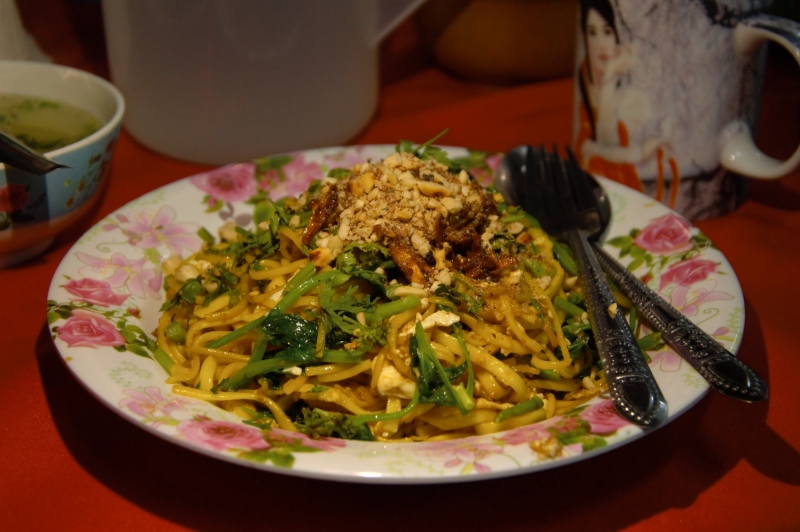
Northern Thai food has a flavor profile that’s milder than Isaan and more herb-driven than central Thai cuisine. Khao soi is the signature dish: a rich, aromatic curry broth with noodles, chicken or beef, and crispy fried noodles on top. Hang lay curry, nam prik noom with sai ua sausage, and various rice dishes are everywhere and cost THB40 to 70 at local spots. Eating local here is one of the better deals in Thailand.

International Restaurants
The international scene is limited but functional. Italian, American, Japanese, and Mexican options exist, concentrated in the downtown area. Expect to pay THB150 to 400 per dish. Don’t come expecting Bangkok or Chiang Mai variety, but there’s enough to break from local food regularly without feeling deprived.
Cafés
This is quietly one of Chiang Rai’s standout features. The province produces high-quality Arabica coffee and organic tea, and the café scene reflects it. There are dozens of independently run coffee shops, many with mountain views or garden settings, and the coffee genuinely competes with anywhere in Thailand.
A cup runs THB60 to 120. Many spots have decent WiFi and comfortable seating for remote work, often without the competition for seats you’d face in Chiang Mai.
Groceries
Big C, Lotus’s, Makro, and Tops Market cover standard grocery needs. For imported goods from Europe, America, and Asia, Tops inside Central Plaza Chiang Rai is the most reliable option. For Japanese cooking ingredients specifically, Kobe-Ya Chiang Rai carries what the supermarkets don’t. The selection is narrower than in Chiang Mai or Bangkok, but adequate for most needs.
Getting Around
Chiang Rai’s city center is compact enough to navigate on foot or by bicycle for short distances. Once you go beyond the center, private transport is effectively mandatory.
- Motorcycles are the most popular daily option. Roads within the city are straightforward; outside the city, routes into the hills can be steep and unpredictable in wet conditions, so confidence matters before you venture out. Always wear a helmet and get the relevant license; see our motorcycle license guide for Thailand.
- Grab and Bolt are available and the most convenient option for ad-hoc city travel without your own vehicle. Reasonable fares for short trips.
- Songthaews operate on main routes, but coverage is patchy and routes aren’t obvious to newcomers. Useful once you’ve figured out the system, impractical as a primary transport option.
- Taxis exist but are not metered in many cases for out-of-city routes. Agree on the fare before getting in to avoid the standard tourist overcharge.
- Cars are worth considering for longer-term residents who want to explore the province freely or live outside the center. The roads between districts are generally good but move fast, which makes a car safer than a motorcycle for regular long-distance trips.
Long-Distance Travel
For long-distance travel, Mae Fah Luang-Chiang Rai International Airport (CEI) offers direct flights to Bangkok and several other Thai cities, and the bus terminal connects to Bangkok and destinations across the country.
Chiang Rai has one international route: Scoot flies direct to Singapore five times a week. Anywhere else abroad means connecting through Bangkok or Chiang Mai first. (Verified October 2026.)
Healthcare
Healthcare in Chiang Rai is adequate for routine care, general treatment, and most non-specialist needs. For complex surgery or serious illness, the standard practice is to travel to Chiang Mai or Bangkok.
- Chiangrai Prachanukroh Hospital is the main public hospital, with a large team and comprehensive services at affordable rates. Wait times can be long and navigating the system without Thai is challenging, but the quality of care is solid for routine needs.
- Kasemrad Sriburin Hospital opened in 1984 as the Kasemrad group’s first hospital and has English-speaking staff. It operates 24 hours, covers most specialties, and is the standard choice for expats who want private hospital service without traveling to Chiang Mai. Reviews are mixed on waiting times, but the doctors and surgical team are generally well-regarded. Costs are significantly higher than the public system.
- Overbrook Hospital is a not-for-profit private hospital started by Christian missionaries. It holds HA accreditation, Thailand’s national hospital standard, has English-speaking staff, and is particularly well-regarded for its care culture and community orientation, running regular mobile medical missions to remote communities. For many expats, it’s the preferred option.
Specialist clinics for dental, dermatology, and general care are spread across the city and work well for routine check-ups and minor issues. Pharmacies are common and easy to find, though English is limited outside the main ones near expat and tourist areas.
On insurance: private hospital costs add up quickly. A consultation runs several thousand baht; a surgery or admission can reach six figures. Having solid inpatient coverage before you need it is the right approach. See our Thailand health insurance guide and digital nomad health insurance guide.
Exercise and Fitness
Chiang Rai offers solid options for staying active, both indoor and outdoor. For gym-based training, Supreme Fitness (the old Exclusive Fitness) on the third floor of Chiang Rai Mall is one of the biggest gyms in town, with Pilates classes and personal trainers alongside the usual equipment. It doesn’t publish a monthly rate online, so ask at the front desk.
Small neighborhood gyms cost far less. Pro Gym near the clock tower and Combo4 Fitness both list memberships around THB800 a month and THB50 day passes, according to the Chiang Rai Times gym guide. (Verified October 2026.)
Outdoor options are extensive:
- public parks like Tung and Khom Park are good for running, walking, and cycling in a relaxed setting
- the surrounding hills and national parks provide hiking and mountain biking that are far more accessible than in Chiang Mai, where similar terrain requires more travel
- Muay Thai camps and yoga studios are also available
Weather and Air Quality
Chiang Rai has three distinct seasons, broadly similar to the rest of northern Thailand.
Cool season (November to February) is the best time to be here. Temperatures sit around 20 to 28°C during the day and can drop to single digits overnight in the higher mountain areas. It’s comfortable, dry, and genuinely pleasant for outdoor life. This is peak season for a reason.
Hot season (March to May) brings temperatures of 30 to 40°C. Manageable indoors with air conditioning, but the heat limits outdoor activity during the middle of the day.
Rainy season (June to October) brings regular rainfall, keeping the landscape green and temperatures moderate. It’s a comfortable time to live here for most people.
Air Quality
The air quality caveat is significant enough to deserve its own paragraph. Expat communities consistently flag this as the single biggest quality-of-life drawback of living in Chiang Rai, and many long-term residents simply leave for a few weeks during the worst of it.
From roughly late January through April, and worst in late February to early April, agricultural burning and forest fires, including smoke blown in from Myanmar and Laos, create genuinely hazardous air quality. On 28 March 2026, the Pollution Control Department measured a 24-hour PM2.5 average of 186 micrograms per cubic meter in Mae Sai and 94 in Chiang Rai city. Thailand’s own safe limit is 37.5. That’s five times over at the border and two and a half times in town. An air purifier is a sensible investment if you plan to stay through the smog season. Our Chiang Mai burning season guide covers masks, purifiers and air-quality apps, and the same advice works here.
Flooding
Flooding has become a more serious issue in recent years. The 2024 floods affected significant parts of the province. Areas near the Kok River and low-lying neighborhoods are most at risk during heavy rain periods.
Mae Sai, on the Myanmar border, floods too. At the end of July 2026, residents on the ASEAN NOW Chiang Rai forum reported the Sai River pushing through the sandbag walls and flooding the Sai Lom Joy Market again. Before committing to accommodation, check flooding history with locals or a reliable agent.
Social Life and the Expat Community
The expat community in Chiang Rai is small, which cuts both ways. You won’t find the range of social options that Bangkok or Chiang Mai offer. What you will find is a tighter, more genuine community where people actually know each other.
The community is mostly retirees, English teachers, digital nomads, and people who married locally. Facebook groups are the primary organizing mechanism, running regular meetups, group activities, and the usual stream of practical information about living here. Cycling, hiking, and yoga groups provide activity-specific social entry points that are easier than cold-networking in a bar.
Practical advice: invest in social life early. Join the Facebook groups before you arrive, show up to meetups in the first few weeks, and pick up enough Thai to interact with locals properly. The community rewards people who make the effort.
Nightlife
Nightlife in Chiang Rai is minimal and best understood as relaxed evening socializing rather than a proper bar scene.
The Chiang Rai Night Bazaar is the main evening gathering point, with street food, souvenirs, and a live music stage running cultural performances. It’s a pleasant way to spend an evening, particularly in the cool season. Small bars and pubs in the surrounding area play live rock, pop, and folk, good for a few drinks with friends rather than a late night.
The Saturday Walking Street runs from 4pm to 11pm through about 1.5 kilometres of the city center, with food, handmade crafts, and live traditional music. For people who value this kind of community market atmosphere over club culture, it’s genuinely good.
If you’re coming from Bangkok or a beach resort expecting a comparable nightlife scene, Chiang Rai will disappoint. If you’re coming because you want to wind down in the evenings rather than go out, it works perfectly.
Activities
Temples and Cultural Sites
The temple game in Chiang Rai is impressive, and worth engaging with properly rather than treating it as a checklist.
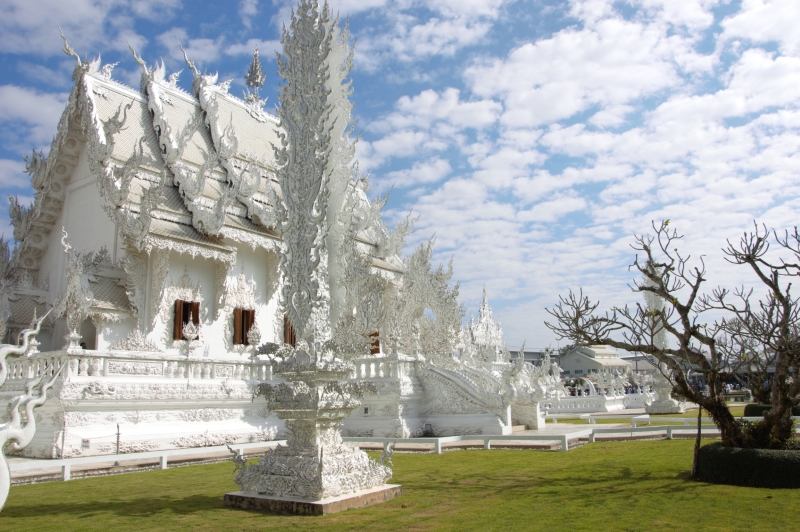
- Wat Rong Khun (the White Temple) is the most famous, a contemporary masterpiece by artist Chalermchai Kositpipat that blends Buddhist iconography with strikingly modern visual language.
- Wat Rong Suea Ten (the Blue Temple), designed by one of Chalermchai’s students, is visually striking in its own right, with deep blue and gold detail that photographs beautifully.
- Baan Dam (Black House), the home and museum of Thawan Duchanee, is darker and more unconventional, reflecting a completely different artistic vision.
- Wat Phra Kaew is historically significant as the original home of the Emerald Buddha.
Nature and Plantations
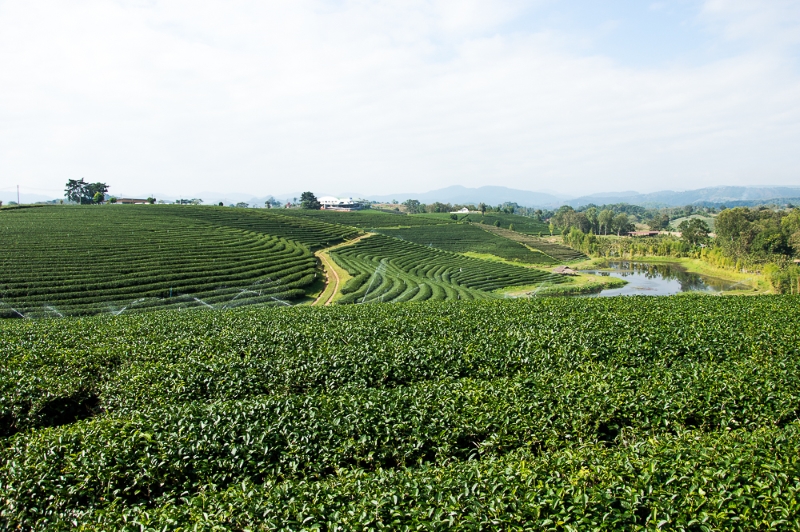
- Choui Fong Tea Plantation in Mae Chan district is the most famous of Chiang Rai’s tea destinations, a large terraced plantation about 40 kilometres from the city, open daily with no entrance fee and an on-site café, restaurant, and shop. Go mid-week and early to avoid the weekend crowds.
- Phu Chi Fa offers some of the best sea fog and sunrise views in northern Thailand and is worth the early start.
- Doi Mae Salong provides a different cultural experience, with Yunnan Chinese influence, excellent tea, and mountain views.
- Khun Korn Waterfall and the Kok River boat rides are easy half-day options from the city.
Markets and Shopping
- The Saturday Walking Street and Chiang Rai Night Bazaar are the main market options, both good for food, crafts, and atmosphere.
- Central Plaza Chiang Rai handles mainstream retail and the imported grocery section.
- Luang Market (Municipal Market 1) in the city center is the best spot for fresh local ingredients at honest prices.
Education and Family Life
Chiang Rai is a genuinely good environment for families in terms of safety, pace, and cost. The natural surroundings give children space that Bangkok can’t offer, and the cost of raising children here is significantly lower than in the main expat cities. The limitation is schooling options, which are narrow.
- Chiang Rai International School (CRIS) is the most established international school in the province, with a campus about 3 kilometres north of the city center. It follows an American-style curriculum from preschool through high school, with boarding options available, a Christian ethos, and a well-resourced campus for a provincial school.
- Chiang Rai International Christian School (CRICS) is a smaller alternative, with an American curriculum rooted in a Christian ethos, serving kindergarten through grade 12. It’s accredited by WASC and ACSI, and classes average 15 students, which suits families who want a closer community environment.
Bilingual program options also exist at Tondeesueksa School (AMEC) and Pitisuksa School (Chiang Rai Montessori), both offering English-medium instruction at lower cost than the international schools. For families needing a wide selection of curricula or large international school resources, Chiang Rai is limiting. See our guide to international schools in Thailand for the full picture.
Job Opportunities
There isn’t much to say here that’s encouraging. Job opportunities for foreigners in Chiang Rai are limited.
English teaching is the most accessible route, with demand across government schools, language centers, and private schools. Salaries are lower than in Chiang Mai or Bangkok. Chiang Rai school job ads in 2026 offered THB32,000 to 40,000 a month for qualified teachers, with the top end going to experienced native speakers (see current listings on Teast). (Verified October 2026.) Beyond teaching, the employment picture for foreigners is sparse.
Recommended Neighborhoods
City Center (Around Wiang)
The most practical starting point for anyone new to Chiang Rai. Everything you need day-to-day is walkable or a short ride away: hospitals, markets, restaurants, cafés, Central Plaza, and the night bazaar. The main concentration of condos and apartments is here. It’s the most convenient and the most urban part of the city, with noise as the main tradeoff. My recommendation for a first base.
San Sai and the City Outskirts
If you want more space and quiet while staying connected to the city, areas like San Sai offer newer housing estates with condos, townhouses, and standalone houses with pools and gyms, close to Big C, Makro, and CRIS. You’ll need your own vehicle, but the quality-of-life tradeoff is worth it for many people, particularly families.
Mae Fah Luang University Area
About 15 to 20 kilometres from the city center, this area has affordable housing, cheap food, and a campus atmosphere with students around. Good for people who don’t need the city regularly, or whose children are studying at Mae Fah Luang University. It requires significant driving for anything city-related.
Rural and Outskirts Districts
Areas like Mae Chan, Mae Suai, and Wiang Pa Pao offer resort-style homes with gardens at reasonable prices, fresh air, and genuine quiet. The right choice for retirees who want space, anyone interested in farming or gardening, and people who’ve already built connections in these areas. Not a good starting point if you’re arriving without a network, and you’ll need a car for everything.
Should You Live in Chiang Rai?
Chiang Rai is a specific kind of fit. The people who get the most from it tend to be:
- retirees looking for a beautiful, affordable, low-stress base
- digital nomads or remote workers who want mountain scenery and decent café culture without the price and congestion of Chiang Mai
- anyone who’s already done the rounds of Thailand’s main expat cities and wants something quieter and more authentic (it’s first on our list of underrated cities to live in Thailand)
It’s a poor fit for people who need diverse employment options, a big international social scene, or frequent international travel without the Bangkok leg. And if you have serious respiratory issues, the smog season is a genuine annual problem that should factor into your decision.
The advice I’d give anyone seriously considering a move: go for a long stay during the cool season first, then come back during smog season in March and spend a week or two. Both experiences are real. The cool season will make you want to stay; the smog season will test whether you can live with the tradeoff. If the answer is yes to both, Chiang Rai will reward you.
Sources Cited
- Tourism Authority of Thailand (TAT Newsroom): Scoot’s direct Singapore to Chiang Rai route, five flights a week.
- Healthcare Accreditation Institute: Overbrook Hospital’s current HA accreditation (valid to September 2027).
- Kasemrad Sriburin Hospital: opened in 1984 as the Kasemrad group’s first hospital.
- Bolt: Bolt ride-hailing service in Chiang Rai.
- Chiang Rai International Christian School FAQ: WASC and ACSI accreditation, average class size of 15.
- FazWaz: average house rents in Chiang Rai, October 2026.
- Pollution Control Department, Environment and Pollution Control Office 1: 24-hour PM2.5 averages for Mae Sai (186.1) and Mueang Chiang Rai (94.1) on 28 March 2026.
- Teast: Chiang Rai school job ads from 2026 offering THB32,000 to 40,000 a month.
- Renthub: apartment and room rents in Mueang Chiang Rai, October 2026.
- Chiang Rai Times: local gym prices (Pro Gym, Combo4 Fitness), September 2026.



 Deutsch:
 Français:
'/%3E%3Cpath%20fill='%23b2b2b2'%20d='M241%20382q0%2016%2017%2026%2017%2011%2042%2011t42-11q16-11%2017-26V269H241'/%3E%3Cpath%20fill='%239f7e00'%20d='M241%20379q0%2014%208%2023%209%209%2021%209%2014%200%2021-9%209-9%209-23V269h-59'/%3E%3Cpath%20d='M241%20339v-70h59v110q0%2014-9%2023l-6%205v-68h-15v72q-8%200-14-4v-68zm59%2040c0%2022%2015%2032%2029%2032%2021%200%2030-18%2030-32v-40h-59'/%3E%3Cpath%20fill='%239f7e00'%20d='M266%20277v5h2v12h-3v-5h2v-5h-9v5h2v5h-4v9h3v18h-5v10h34v-10h-5v-18h3v-9h-4v-5h2v-5h-9v5h2v5h-3v-12h2v-5zm42%20101q0%2010%206%2017%206%206%2015%207%2010-1%2016-7%206-7%206-17v-29h-43'/%3E%3Ccircle%20fill='%230044ad'%20cx='329.5'%20cy='372'%20r='6'/%3E%3Cellipse%20fill='%230044ad'%20cx='300'%20cy='340'%20rx='16'%20ry='21'/%3E%3C/svg%3E) Español:
Español: