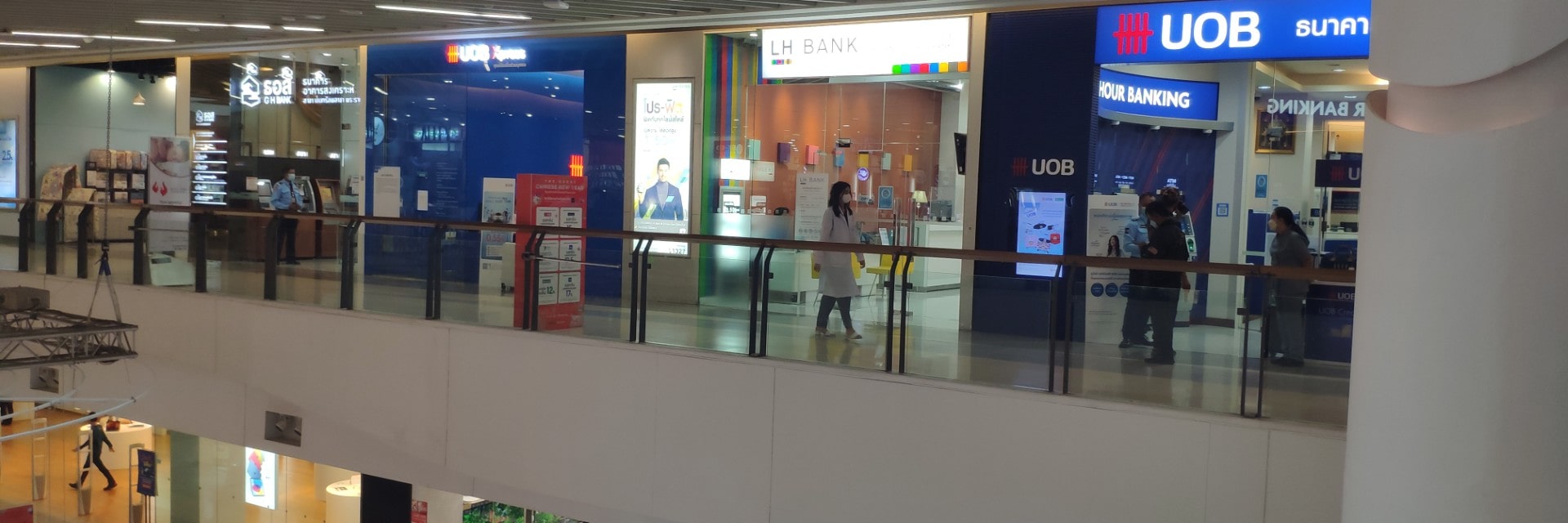
One of the first and most essential things you need to do when you move to Thailand is open a bank account. Not only will it help you pay for goods and services in the country, but having a Thai bank account makes it easier and cheaper to send and receive money both locally and internationally.
By the end of this guide, you’ll find out about the documents and requirements you need to open an account, the best Thai banks for expats, and much more.
If you want to set up your life in Thailand hassle-free and save thousands of dollars, become a Thailand Starter Kit Premium member. Once you join, you get instant access to over a hundred exclusive guides on how to get a job, start a business, manage your finances, and plenty more.
Here’s a sample of some of the exclusive finance guides you’d get instant access to:
- How to Choose the Right Bank in Thailand
- How to Get a Thai Credit Card without a Payroll Slip
- How Do Expats in Thailand Manage Their Finances?
- How to Get the Best Exchange Rate in Thailand That’s Better than SuperRich (With Free Delivery, Too)
- and much more…
Contents
- Key Takeaways
- Requirements for Opening a Bank Account in Thailand
- Can Tourists and Short-Stay Visitors Open a Thai Bank Account?
- Can You Open a Thai Bank Account Before You Arrive?
- How to Open a Bank Account in Thailand Step-by-Step
- Tips for Opening a Thai Bank Account in Thailand
- The Best Thai Banks for Expats
- Types of Accounts
- Thai Debit Cards
- ATMs in Thailand
- Mobile Banking Apps
- Paying for Goods and Services with Your Thai Bank Account
- Transferring Money into Your Thai Bank Account
- Setting Up Direct Deposit into Your Thai Bank Account
- Deposit Guarantees
- Bank Fees
- Bank Operating Hours
- Bank Holidays
- What Happens If Your Thai Bank Account Is Suspended
- Maintaining Your Thai Bank Account
- Alternatives to a Thai Bank Account
- Frequently Asked Questions
- Now, on to You
- Sources Cited
Key Takeaways
- The most expat-friendly banks in Thailand are Bangkok Bank, Kasikorn Bank, Siam Commercial Bank, CIMB, and United Overseas Bank.
- It’s often easier to open a savings account instead of a current account as an expat in Thailand.
- A Thai bank account lets you pay bills, transfer money, and receive your salary if you’re working in Thailand.
- Day-to-day banking runs through your bank’s mobile app, and a facial scan is required for transfers over THB50,000 or THB200,000 a day, so enroll your face when you set it up.
- Your Thai bank account is insured for up to THB1 million.
- Transferring money into your Thai bank account from overseas is simple and cheap with Wise.


Requirements for Opening a Bank Account in Thailand
There are three main requirements you need when opening a bank account in Thailand:
- Visa
- Documents
- Minimum deposit
If you have all of them, it’s usually straightforward to open a bank account in Thailand.
Let’s take a look at each one individually.
Visa
In 2026, banks in Thailand have become much stricter about opening accounts for foreigners. Most banks won’t let you open an account on a tourist visa or even the DTV visa. In most cases, you’ll need a long-term Thai visa.
Even then, approval isn’t always guaranteed. Some people use an agent to help open an account, but there’s still a chance the bank may freeze the account later and ask you to show your visa again for verification.
On the other hand, if you have a long-term visa, such as a retirement visa, marriage visa, LTR visa, or business visa, it’s quite straightforward to open a bank account in Thailand.
Documents
In order to open a bank account in Thailand, you’ll need the following documents:
- Your passport
- Your Thai visa*
- Certificate of residence
You may also need the following additional documents in some cases:
- Your Thai work permit (if you are working in Thailand)
- Thai driving license
- Thai house registration book or lease
- Letter of reference from a reputable Thai person, an embassy, a university, or a similar organization in good standing
- Letter from a company confirming that you’re in the process of getting a work permit
- Documents showing you receive a salary or pension
In the end, what the bank accepts as valid documents depends on the branch teller or manager on duty.
Minimum Deposit
The minimum amount required to open a bank account in Thailand varies by bank and account type. Most Thai banks require a minimum initial deposit of THB500, whereas United Overseas Bank (UOB) requires THB1,000 for savings accounts. (Verified September 2026.)
Foreign currency accounts will require a minimum balance of US$5,000 at most banks in Thailand for non-residents. To avoid maintenance fees, you’ll also need to keep a minimum balance in your account.
- Bangkok Bank: Minimum initial deposit of THB500. Minimum balance of THB2,000 for savings accounts if inactive for 12 months.
- Kasikorn Bank: Minimum initial deposit of THB500. Minimum balance of THB2,000 for savings accounts if inactive for 12 months.
- UOB: Minimum initial deposit of THB1,000. Minimum balance of THB5,000 at the end of each month.
The service fee is generally THB50 to THB100 per month if you fail to meet the minimum balance requirement.
Can Tourists and Short-Stay Visitors Open a Thai Bank Account?
Opening an account is straightforward if you hold a long-stay visa (a Non-Immigrant B, O, O-A, retirement, or education visa) and can show a work permit or a proof of address. It gets harder, and at many branches is now refused, if all you have is a visa exemption stamp or a tourist visa. Banks have tightened this over recent years as part of wider anti-money-laundering checks.
In practice, it depends on the bank, the branch, and increasingly on your visa. There is no single national rule that says “tourists cannot open an account.” Each bank sets its own policy, and individual branch managers have a lot of discretion, so two branches of the same bank can give you two different answers on the same day.
If you are here short-term and still want an account, these are the levers that tend to help:
- Bring a proof of address. A signed condo lease, or a residence certificate from Immigration, reassures a branch that you actually live here. Our guide on getting a residence certificate covers how to obtain one and what it is accepted for.
- Try a branch used to foreigners. Branches inside major malls, in expat-heavy areas, and at bank head offices deal with foreign customers daily and tend to have staff who can process a non-standard application.
- Consider a licensed introducer or agent. Some visa and relocation agents will accompany you and vouch for your address, which can get an account opened where a walk-in would be turned away. Confirm any fee up front, and never hand over control of the account itself.
- Ask which visa the branch requires. If one branch insists on a work permit you do not have, another bank or branch may accept a long-stay visa plus a lease instead. It is worth asking two or three before giving up.
If none of that works during a short trip, a Wise multi-currency account plus a card that reimburses ATM fees will cover you until you hold a visa that makes opening an account simple. The Alternatives section later in this guide goes into that setup.

Can You Open a Thai Bank Account Before You Arrive?
For a normal personal account, no. Thai banks require you to appear in person at a branch with your passport so they can verify your identity and take your signature and biometrics. There is no retail process that opens a fully functional Thai account remotely from abroad, and any service promising one for a standard tourist or expat should be treated with caution.
What you can do before you land is prepare, so the in-person visit takes minutes rather than repeat trips:
- Sort your visa and address first. The two things a branch weighs most are your visa type and evidence that you live here, so line up your long-stay visa and a lease or residence certificate before you try to open an account.
- Have a Thai phone number ready. Mobile banking and one-time passwords are tied to a Thai SIM, so buy a local number soon after arrival and before your bank visit.
- Carry a local address and a reachable phone. The application form asks for a Thai address and contact number, so know your condo address and have it written down.
Once the account is open, almost everything else moves online. You can pay bills, send money, and receive transfers through the bank’s app, and you can link the account to PromptPay for instant QR payments and transfers, which is how most day-to-day money moves in Thailand.
How to Open a Bank Account in Thailand Step-by-Step
Here’s what you need to do when opening a bank account in Thailand.
- Walk in: You don’t need to make an appointment to open a bank account here. You can just walk in. Normally, there’s a queue machine with a staff member standing beside it. Just tell them you’re there to open a bank account. They will then give you a queue number.
- Submit your documents: Once it’s your turn, submit all your documents to the bank staff, along with the minimum deposit.
- Sign the forms: If your documents are accepted, it’s time to sign the forms. Don’t be surprised if they ask you to sign an empty form. The staff will fill it out for you. Nearly every time I visit a Thai bank for something other than a withdrawal, I’m asked to sign a standard form. The usual process for many bank employees is to hand you a blank form and ask you to sign it, promising to fill in the details later. However, you can fill it out yourself and cross out any empty sections.
- Get your bank account: Once everything is done, you will get a bank book. Keep it safe. It might be the only time you use it, since after that, most of your bank management can be done through the bank app.
Once you open a bank account, there are two more things you should do right away:
- Install the bank app: Ask the bank staff to help you install the bank app. It’s a key app to manage your finance in Thailand. While it’s possible to do it yourself, if something goes wrong, you may need to revisit the branch.
- Get an ATM card: This is optional. You may or may not need it. I’ll talk about it later in the article.
Tips for Opening a Thai Bank Account in Thailand
There are some tips that can help you open a bank account in Thailand more easily.
- If one branch doesn’t let you open an account, try another branch: Many bank policies are branch-specific. Just because something does or doesn’t work at one branch doesn’t mean it will be the same at another. This can work in your favor if a branch is more flexible than it’s supposed to be, but it can also be frustrating when managers interpret the rules more strictly.
- Pick your branch wisely: Some procedures can only be done at the branch where you opened your account. Others can be done at any branch. A few can be done anywhere as long as your ID on file is current. So, pick a branch that’s convenient for you to visit in case something happens to your account.
- Bring all your documents: When opening an account, bring every document you have. This includes your passport, certificate of residence, work permit, or an employment letter showing your eligibility for a work visa. All documents must be originals, and some banks may require your passport to be certified by your embassy in Thailand. Some banks have issued me credit cards with nothing more than a Thai driver’s license, but generally, the requirements tend to be more extensive.
- Avoid weekends or rush hours: In general, branches inside department stores can be very busy on weekends or after work, which means long queues, especially at popular banks. On the other hand, if it’s a branch outside a department store, avoid going during lunch breaks when office workers are dealing with their finances.
The Best Thai Banks for Expats
The traditional choices for expats arriving in Thailand are Bangkok Bank and Kasikorn Bank. Both UOB and CIMB also have a reputation for being more lenient with expats and offer more benefits.
They are not the only options, though. Depending on your specific needs and immigration status, a different bank might be a better fit. Here’s a closer look at each.
Bangkok Bank

Bangkok Bank is one of Thailand’s largest banks and widely regarded as the most expat-friendly. Bangkok Bank’s main office on Silom Road is frequently recommended as the best branch to visit.
Bangkok Bank also tends to offer among the best exchange rates of all Thai banks for international money transfers.
Read more: Thai Baht: How to Get the Absolute Best Exchange Rates
Tip: If you’re on a retirement visa and want to use the monthly income method as proof of funds, you may want to choose another bank. Some expats have reported that Bangkok Bank no longer issues the confirmation letter needed for this method.
Kasikorn Bank
While Kasikorn Bank is one of the most popular banks in Thailand, queues at branches and ATMs tend to be long.

Its branches at Icon Siam, Central Embassy, and on Sukhumvit 33 appear to have the highest customer service ratings. If all your documents are approved, you’ll receive a bank book and ATM card on the spot.
I also found Kasikorn Bank to be one of the easier ones to work with when it comes to credit cards.
Siam Commercial Bank
Siam Commercial Bank (SCB) is a well-established bank favored among Thais for its user-friendly banking app.

It also has a strong reputation in investment banking and has designated SCB investment centers around Bangkok. If you’re considering opening a stock brokerage account in Thailand, SCB is a good place to start.
Some have said the brokerage platform feels a bit dated compared to other countries, but it gets the job done and transaction costs are lower than in many Western markets.
One downside: SCB charges a high markup on the exchange rate when you withdraw money from a foreign account at a Thai ATM.
CIMB
CIMB is a Malaysian bank and one of the largest in ASEAN. Many people have reported a better chance of opening an account at a CIMB branch on a tourist visa.
Based on online reviews, CIMB has been getting more positive feedback from expats, largely due to higher English proficiency among its staff.
CIMB also offers competitive interest rates on savings accounts in Thailand, although the rate depends on the type of account you open. Its regular savings account is around 0.25 percent per year, which is similar to SCB and Kasikorn. However, CIMB Speed D Plus offers higher tiered rates, starting from around 1.05 percent for balances from THB100,000 to under THB3 million in May 2026. That’s much higher than standard savings accounts from SCB and Kasikorn.
United Overseas Bank
UOB acquired Citibank’s consumer banking business in Thailand in 2022, picking up retail banking, credit cards, wealth management, and related services. Its head office is UOB Plaza Bangkok, a landmark 30-floor building on Sukhumvit Road.
This branch focuses primarily on Privilege and Wealth Banking customers, with only a few counters on the first floor for basic needs like account opening or withdrawals.
The Best Bank If You Renew a Visa Every Year
If you stay in Thailand on a retirement or marriage extension, your bank turns into part of your annual immigration paperwork. That makes it worth picking one that handles the paperwork quickly.
According to the Immigration Bureau, a retirement extension needs THB800,000 in a Thai bank account. A marriage extension needs THB400,000. Either way, the money has to sit in the account for at least two months before you file.
To prove it, immigration asks for a letter from your bank confirming the balance, plus a copy of your passbook updated on the day you apply. Most offices also want a statement covering the past 12 months.
This is where your choice of bank starts to matter. Expats commonly report that Kasikorn hands over the letter and the 12-month statement in a single visit, often in about 20 minutes.
Bangkok Bank is the one people complain about. A wait of several days for the same documents is common, and some branches have stopped issuing the deposit letter altogether. A few expats have even had immigration staff suggest moving their money to another bank.
None of this is a fixed rule, and branches vary a lot. But if your extension date is coming up, ask your branch how long the letter takes before you count on getting it the same day.
Types of Accounts
There are several different accounts available to expats. The easiest one to open is a savings account. For most other types, you need a Thai work permit.
- Savings accounts: Thai savings accounts work similarly to savings accounts elsewhere. They’re used to save money and earn interest. Without a work permit, a savings account will usually be the only type you can open.
- Current accounts: With a work permit, you can open a current account. There isn’t much practical difference between a current and savings account other than the type of bank book you receive.
- Fixed-term accounts: Fixed-term accounts let you set aside a sum of money for a set period and earn a guaranteed interest rate. Aside from testing one with Kasikorn Bank a few years back, I’ve stayed away from these in Thailand, partly due to non-resident rates and partly because I prefer the local stock market as an investment vehicle.
Thai Debit Cards
When you open a current or savings account in Thailand, it usually comes with a debit card you can use for withdrawing money from ATMs, online purchases, groceries, fuel, and more.
The card works almost anywhere in Thailand, but you’ll need to ask the bank to enable international payments if you want to use it on overseas websites like Amazon. You can also get a debit card that works when traveling abroad, so you can make withdrawals or purchases while on vacation or a business trip.
Given that debit cards are much easier to obtain than credit cards (no work permit required), many expats find one is enough and not worth the hassle of a full credit card application.
Keep in mind that debit cards usually carry an annual fee of THB200 to THB500. If you don’t plan to use one, you can tell the bank you don’t want a debit card. Some banks may also call it an ATM card. These days, you can withdraw money in Thailand through a bank app. In my case, I haven’t had a bank debit card for many years now.
ATMs in Thailand
ATMs are everywhere in Thailand and far more functional than what you might be used to back home. Thais use them to withdraw cash, but also to make bank transfers and pay bills.
I remember when I got my first debit card a decade ago, I was told the fee to withdraw money from a different bank’s ATM was “3.” I asked the teller if she meant 3 percent. Nope. It was 3 baht.
Fees have risen since then, but they’re still far lower than in most countries. Inter-bank ATM withdrawal fees now run between THB15 and THB25, though some banks allow a few free withdrawals per month for customers from other banks. For tips on keeping those costs down, see how to avoid ATM fees in Thailand.
One quirk worth knowing: you pay a surcharge when withdrawing from your own bank in a different province. Withdraw in the same province where you opened the account and it’s free.
Related article: The Complete Guide to ATMs in Thailand
Mobile Banking Apps
Once your account is open, the bank’s mobile app becomes the part you actually use every day. You will pay bills, scan QR codes, send transfers, and check your balance from your phone, and you will rarely set foot in a branch again.
Every major Thai bank has its own app, and the big ones all offer an English interface. In the expat forums, K PLUS is the one people most often praise for a clean, English-friendly design, while Bangkok Bank’s app tends to get called clunkier even though the bank itself is the easiest to open with.
- K PLUS (Kasikornbank): the most widely used app in Thailand, with a clean English mode. A popular first choice for expats.
- SCB Easy (Siam Commercial Bank): well liked for being simple to navigate, with full English support.
- Bangkok Bank Mobile Banking (Bualuang): from the bank most expats rate as the easiest to open with, and it works in English.
- Krungthai NEXT (Krungthai Bank): the state bank’s app, handy if you deal with government payments or benefits.
- Krungsri KMA (Bank of Ayudhya): another solid option with an English interface.
To set any of them up you need a Thai phone number. The app sends one-time passwords by SMS and ties your login to that SIM, so get a local number before your bank visit and ask the staff to help you install and activate the app on the spot. From there you can link the account to PromptPay for instant QR payments.
Facial Scans for Larger Transfers
Since a Bank of Thailand rule took effect in 2025, the apps ask you to scan your face for anything the regulator treats as higher risk. You need a facial scan to:
- send more than THB50,000 in a single transfer
- send more than THB200,000 in total across a day
- raise your transfer limit above THB50,000 per transaction
Enroll your face when you first set up the app so a big payment does not catch you out later. The system compares your live scan against the photo the bank holds, which is also why a lost or reset phone, or a change of SIM, often means a trip back to the branch to re-verify. One recurring frustration in the forums is branch staff who wrongly insist the facial scan is only for Thai ID holders, so if you hit that wall, it is worth trying another branch.
New accounts also start with a modest daily transfer limit. You can raise it yourself in the app’s settings, and that change is one of the actions that triggers the facial scan.
Paying for Goods and Services with Your Thai Bank Account
There are several ways to pay for things in Thailand using your bank account. Here are the most common ones.
- QR codes: The preferred method for most people and businesses in Thailand. When you scan a QR code payment in Thailand, the money comes straight out of your Thai bank account. Setup takes a few minutes through your bank app.
- Debit cards: Still widely used at malls, some convenience stores, and toll booths along highways. When you pay by debit card, the money is deducted from your account immediately. Some businesses have stopped accepting debit cards because of processing fees.
- Bank transfers: Done through your bank app. Select the bank name, enter the account number, and enter the amount. Transfers are instant. This is particularly useful for paying taxi drivers who don’t have a QR code but do have a bank account number.
- E-wallets: TrueMoney and Rabbit Line Pay are two popular e-wallets in Thailand. TrueMoney is hard for expats to register because it requires a non-immigrant visa, work permit, Thai driver’s license, and house registration. Rabbit Line Pay is easier to set up via the Line app. Since QR codes and banking apps now cover most payment situations, neither e-wallet is really necessary for most expats.
Transferring Money into Your Thai Bank Account
Once you open a Thai bank account, you have to find a way to fund it. You can do that by having your salary deposited directly (if you work legally in Thailand) or by transferring money from another account.

I’ll cover direct deposit in the next section. For now, here’s how to transfer money into your Thai account from abroad or from another Thai bank.
- From an international bank account: After you open a Thai bank account, you can make international transfers right away. We recommend using Wise, which offers mid-market exchange rates, low transfer fees, and fast international transfers. Note: Wise is changing how it operates in Thailand. Read what expats need to know before you transfer.
- From another Thai bank account: Just give the sender your bank name and account number, and they can transfer money directly through their banking app.
Related articles:
- How to Send Money to Thailand: The Fast, Cheap, Reliable Way
- Is Wise the Best Way to Send Money to Thailand?
Setting Up Direct Deposit into Your Thai Bank Account
There are two main situations where you’d set up direct deposit into your Thai bank account: when collecting a pension from overseas, and when working in Thailand.
- When collecting a pension from overseas: Contact the government agency responsible for your pension back home and ask for a direct deposit form. Fill in your name and address in Thailand, along with your Thai bank’s name, address, routing number, and account number, then submit it. If you’re retiring in Thailand, this is typically one of the first administrative steps to sort out.
- When working in Thailand: Your employer will tell you which bank to open an account with, and your salary will be transferred directly to that account each month.
Deposit Guarantees
Your accounts are protected for up to THB1 million under the Thai government’s Deposit Protection Agency Act, revised on 11 August 2021. (Verified September 2026.) Foreign currency accounts are not covered by this protection.
Bank Fees
Beyond the minimum deposit, you don’t pay any bank fees to open a savings account in Thailand. You will, however, incur some costs when preparing the required documents.
- Official letters: Some banks require a letter from your embassy validating your passport. This costs around THB1,500.
- Debit cards: Expect an initial fee of THB100 to THB300 for the card itself, plus an annual fee of THB200 to THB500.
- Official bank letters: If you hold a retirement, marriage, or dependent visa, you’ll need an official bank letter confirming your account balance each year. The fee is usually THB150.
- Other fees: All banks charge standard fees for account cancellation, card replacement, and similar services. Ask the teller to walk you through these before you open the account, or read the terms and conditions carefully.
Bank Operating Hours
Operating hours vary by branch type.
- Outside of department stores or office buildings: Typically 8:30 AM to 3:30 PM.
- Inside department stores or office buildings: Hours vary. Some open at 8:30 AM; others not until 11:00 AM. Closing times range from 6:00 PM to 8:00 PM.
The easiest way to check a specific branch’s hours is Google Maps. Search the branch name, tap on it, and you’ll see the hours listed in the Overview section.
Bank Holidays
Bank holidays in Thailand don’t always line up with public holidays.
Banks are generally closed for New Year’s, Songkran, and the king’s birthday, but remain open for events like Royal Ploughing Day or Buddhist Lent.
The Bank of Thailand’s website publishes the official bank holiday schedule each December. That’s the most reliable source to check.
What Happens If Your Thai Bank Account Is Suspended
There are times when your bank account may be suspended, especially now that Thai banks are becoming more cautious about scammers. This happened to John, our editor, even though he used his Thai bank account every month.
Basically, what he had to do to reinstate his account was visit a bank branch in person with documents to verify his identity, such as his passport, visa, and Thai driving license. You can read his full experience here.
Maintaining Your Thai Bank Account
While each bank may have a slightly different policy, there are two main things you need to do to maintain your Thai bank account.
- Use it at least once a year: It can be as simple as sending or receiving money. If you don’t use it, your bank may send you a letter saying your account is going to become inactive.
- Maintain a minimum balance of over THB2,000: If your account is inactive for a few months and your balance is lower than THB2,000, you may need to pay a small monthly bank fee. Each bank may have a different minimum balance requirement and fee, so check with your bank again.
To activate your Thai bank account again, you’ll need to visit a bank in person with documents to prove your identity.
Alternatives to a Thai Bank Account
You can get by without a Thai bank account, though it won’t be easy or cheap. Here are two alternatives worth knowing about.
- International no-ATM fee accounts: Both Charles Schwab and TD Bank offer free international ATM withdrawals. If you’re charged a fee withdrawing from a Thai ATM, you’ll be reimbursed at month end. Keep in mind you won’t get mid-market exchange rates. Both institutions take a small cut on currency conversion.
- Wise multi-currency account: Wise offers a multi-currency account that functions like a bank account in Thailand and comes with a debit card. You will be charged an exchange rate fee each time you spend in Thai Baht, and the rate varies by source currency.
- Thailand Privilege Card: If you have one of the Thailand Privilege Cards, you can walk into any Bangkok Bank or Kasikorn Bank and open a savings or foreign currency account.
Frequently Asked Questions
Can I open a Thai bank account on a tourist visa?
Sometimes, but it has become difficult. Many branches now want a long-stay visa plus a work permit or a proof of address, and will turn away a walk-in who only has a visa exemption stamp or a tourist visa. Policy varies by bank and branch, so it is worth trying a foreigner-friendly branch with a condo lease or residence certificate in hand, or using a licensed agent to help.
What is the minimum deposit to open a Thai bank account?
For a standard savings account it is small, typically around THB500 at most banks and THB1,000 at UOB. Foreign-currency accounts have much higher minimum balances. Confirm the current figure with your branch, since banks adjust these.
Is my money safe in a Thai bank?
Deposits in Thai baht are protected up to THB1 million per depositor per bank under the Deposit Protection Agency. Foreign-currency accounts are not covered by that protection.
Which Thai bank is best for foreigners?
There is no single best bank. Bangkok Bank and Kasikorn are the two most commonly recommended for expats because of their English-language apps and their experience with foreign customers. Compare the banks against how you will actually use the account.
What happens if my Thai bank account gets frozen or suspended?
Accounts can be suspended over inactivity, expired documents, or fraud-related flags. Our dedicated guide on what to do when your Thai bank account is suspended walks through why it happens and how to get access back.
Do I need a Thai bank account for a long-stay visa?
For several long-stay visas you effectively do, because the financial requirement has to be shown in a Thai account. Retirement and marriage visas, for example, ask you to hold a set balance in a Thai bank. Our visa comparison guide shows which visas carry a Thai-account funding requirement.
Now, on to You
For most expats, opening a bank account in Thailand is relatively straightforward as long as you have the right documents and meet the financial requirements. Banking apps have made day-to-day life much easier. Paying bills, transferring money, and managing your account from your phone are all standard now.
If you can open a Thai bank account, do it early. It makes living in Thailand much more convenient.
Also, you can become a Thailand Starter Kit Premium member and get instant access to the exact Thai bank branches that will let you open an account. You’ll also find out where to get a Thai credit card with only a THB15,000 monthly salary. Plus, you get access to over a hundred other exclusive guides.
Sources Cited
- Nation Thailand: the Bank of Thailand facial-verification thresholds for mobile banking, requiring a facial scan for transfers of THB50,000 or more, once daily transfers pass THB200,000, and to raise a transfer limit to THB50,000 or more.


 Deutsch:
 Français:
 Español: