Financial matters in Thailand can have a steep learning curve, as things may not be as straightforward as they were back home.
For example, when you open a bank account in Thailand, you will find that there’s no specific central requirement on what needs to be done. Instead, you will only have a rough idea of the documents you need based on what is listed on the bank’s website. Note that each bank branch has its own specific set of documents required to open an account.
This article is a reference guide for Thailand-based expats who need help navigating the processes involved in exchanging, sending, receiving, saving, and investing money. We also provide links to our other resources to help you further explore specific topics.
Please note that we are not financial advisors or tax professionals, so if you need expert advice for your situation, it’s best to consult a finance professional.
Disclaimer: Some links in this article go to our partners, and we may earn a commission if you use them. It costs you nothing extra, and we only recommend services we'd use ourselves. Read more in our Advertising Disclosure.
Contents
- Key Takeaways
- Essential Guides on Thailand Finance
- Latest Guides on Thailand Finance
Key Takeaways
- Skip the airport bank branches for currency exchange. Rates there are significantly worse than at city money changers like SuperRich or comparable operators nearby wherever you are.
- For sending money in or out of Thailand, Wise is generally cheaper than a bank wire. Banks restrict outbound transfers to roughly one year’s salary and require a stated reason, though proof is rarely asked for.
- Thai bank branches within the same bank can enforce different document requirements. What works at one branch may not work at another, so be prepared to try a different branch if you hit a wall.
- Local credit cards can unlock cashback rewards and discounts of up to 20% at partner merchants. Thais often carry multiple cards for this reason. Getting a local card is worth the effort for long-term residents.
- There is no capital gains tax on profits from buying and selling shares listed on the Stock Exchange of Thailand (SET). Dividends are taxed at 10% or your personal rate, whichever you choose. Brokerage fees are low, often under 0.25%.
- Personal income tax follows a progressive rate up to 35%, and anyone who brings money into Thailand is subject to Thai income tax. VAT is 7%. Consult a tax professional before making any significant investments or financial decisions.


Currency Exchange: How to Get the Best Rates for Thai Baht
There are several ways to exchange your local currencies to Thai Baht, with options ranging from cash exchange offices to Bitcoin operators.
Normally, the best way to get the best rate for Thai Baht is to bring your local currency and exchange it in Thailand. There are numerous money exchangers available throughout the country. But don’t exchange them at banks, especially at banks’ branches at the airport, because their fees are astronomical.
Instead, visit a money exchanger in the city proper and exchange your money there, so you can get a much better rate.
The most popular money exchangers in Thailand are called SuperRich, and you can find them throughout Bangkok. However, their rates are quite similar to other money exchangers but often have longer queues. In my case, right now, I do not have any specific money exchanger I use. I just exchange at the one nearest to me that has a similar rate to SuperRich.
You can find out more in our article about how to get the best currency exchange rates in Thailand.
Transfers: Sending Money to (and from) Thailand
Transferring money into Thailand is a whole topic of its own.
While most people think of bank transfers first, in many cases it’s not the cheapest option.
Currently, online money exchange services such as Wise have proven to offer a better way to send money to Thailand compared to other options.
We’ve put together a separate guide to sending money to Thailand to showcase the cheapest and fastest way of doing it.
Transferring money out of Thailand works similarly, so check out the guide above for some more details on that. There is however one thing to be aware of – transfer restrictions when remitting funds from Thailand abroad: Banks usually only permit people to transfer the equivalent of one year’s salary out of the country.
You have to apply for permission to make a transfer abroad and state the reason (e.g. savings, paying for studies abroad, supporting your family), though I’ve never seen anyone ask for proof.
Keep this in mind if you consider bringing large amounts of cash into (and out of) the country. The rules will also differ depending on the bank.
Banks: Opening a Thai Bank Account
Banks in Thailand work tend to operate a bit different from what you’re used to back home. Different branches (even of the same bank) tend to enforce their own approval procedures and document requirements. You might need a long list of documents in order to pick up a credit card at one branch, while another may just hand it over after seeing your Thai driver license.
I remember opening my first bank account in Thailand. A kind, middle-aged bank teller handled the application. My secretary was along to help translate. Halfway through the process, the teller turned to my secretary and asked, “Does he have a girlfriend?”
Maybe I was lucky that I didn’t, because that account setup seemed to go a lot smoother than anticipated; however, not all my dealings with Thai banks went that well.

To help you easily open a bank in Thailand, we’ve put together a guide on opening a bank account in Thailand that’ll help in navigating things when it comes to financial matters. It also covers other banking basics in Thailand including debit cards.
You can also read our guide to QR payment. It’s one of the most popular payment methods in Thailand right now.
Credit Cards: Loyalty Points and Applying as an Expat
You can get by in Thailand without a credit or a debit card.
You might end up having to pay bills and tickets at the 7/11 or through online banking, but very few things require a credit card. That being said, cards are widely accepted – from supermarkets to restaurants – and using a local card can save you the foreign currency surcharge.
In addition, cash back rewards can even give you on the spot discounts of up to 20%. Since those offers are usually dependent on having a card from a specific local bank, a lot of Thais carry a whole stack of cards with them in order to make sure they have one that qualifies for the best discount.
We wrote a separate article purely focusing on Thai credit cards for foreigners. It covers the whole application process, required documents, best loyalty program, as well as potential alternatives.
Checks: How to Cash Domestic and International Checks
Checks are no longer common in Thailand since online bank transfers are replacing them.
One of the more beneficial uses of checks is to make international transfers: in the past I’ve cashed THB checks into bank accounts in Germany. The advantage of that method is that the German bank converts THB to EUR rather than the Thai bank (as is the case with a wire transfer). This results in a slightly better exchange rate in my experience.
However, it can take several weeks for the checks to clear and unlike a wire transfer, you won’t know which exchange rate it’s going to be.
Foreign currency checks are a different animal. The first time I tried to cash a USD check with Bangkok Bank, they told me that this option is not available for accounts that were opened less than 6 months ago. I ended up cashing it at a Kasikorn Bank branch (‘Rachadaphisek-Huay Khwang‘). Like everywhere else, it still takes six weeks to get a foreign currency check credited, but at least you can do so immediately after opening an account.
One of the big pros of using checks is that the fees can be lower than for SWIFT transfers. In many cases, you can cash a check for as little as THB 300, making it significantly cheaper than wire transfers if you don’t mind the wait. But, as I said before, it’s not common anymore.
Stocks: How to Open a Brokerage Account
If you want to invest money in Thailand, there are some good reasons to go with a brokerage account: there is a very small tax on profits from buying and selling shares listed on the SET for individuals, and dividends can be taxed at a flat rate of 10%.
Brokerage fees tend to be very low; Siam Commercial Bank, for example, only charges a transaction fee that can be even lower than 0.25% (with a minimum of THB 100).
It’s possible to open a brokerage account without being a resident, but, in many cases, you’ll have to do it in person. In terms of paperwork, it’s one of the most arduous procedures in this article: the ‘standard’ contract by SCB to open an online brokerage account is thirteen pages long.
The user interface is a bit clunky but it gets the job done.
After you open a brokerage account, you can choose to download a mobile application such as Streaming where you can buy Thai stocks.
For a more detailed guide to dealing with brokers and investment in Thailand, check out our guide on how to invest in Thailand as an expat.
Taxes
The current VAT rate in Thailand is 7%. If you work in Thailand, you are subject to Thailand’s personal income tax, which follows a progressive rate structure with a maximum of 35%. Also, if you bring money to Thailand, you are also required to pay income tax in Thailand.
Read our guide to Thailand income tax for foreigners to get more information about this.
It’s worth noting that the Thai government offers several tax incentives for savings and investments, which can be particularly beneficial for those who are working in Thailand.
Two of the most common investments that receive preferential tax treatment are SSFs and RMFs.
At this point, we really want to repeat that I’m not an accountant or a tax professional. If you decide to get serious about investments, please do your own research or contact a professional for advice.
While We’ve done our best to ensure the accuracy (including running it past our own accountant), we can’t guarantee that it’s accurate and you’ll have to use the information at your discretion and without any guarantees. There are some serious tax risks associated with this, so please research things with caution and if in doubt, consult a tax professional.
Retirement Mutual Funds (RMFs)
With RMFs, you can invest up to 15% (not more than THB 500,000) of your yearly income while still receiving tax incentives.
However, you’ll have to keep paying in until you are at least 55 years old in order to keep the tax benefits. That makes it immensely inconvenient, especially for younger expats who might only be in the country for a limited number of years.
In addition to that, the management costs are going to eat up not only your tax savings, but also your gains beyond that. Then there’s also a significant tax risk associated with it, due to the likelihood of making a mistake over the course of its duration.
If you are in the top tax bracket and either certain you’ll stay in Thailand permanently or are older than 45 years old, RMFs get really interesting: the potential tax savings are much more significant and keeping up payments in the future will be less of a hassle and risk.
The Stock Market
One of the biggest Thai tax incentives for private individuals is the lack of a capital gains tax on profits made from buying and selling shares listed on the Stock Exchange of Thailand. This only applies to the difference between the purchasing and selling price.

Dividends still get taxed at a rate of 10% or whatever your personal taxation rate is (talk to an accountant about what works out better for you).
As to how to go about opening a trading account, please see the brokerage account section above.
Essential Guides on Thailand Finance
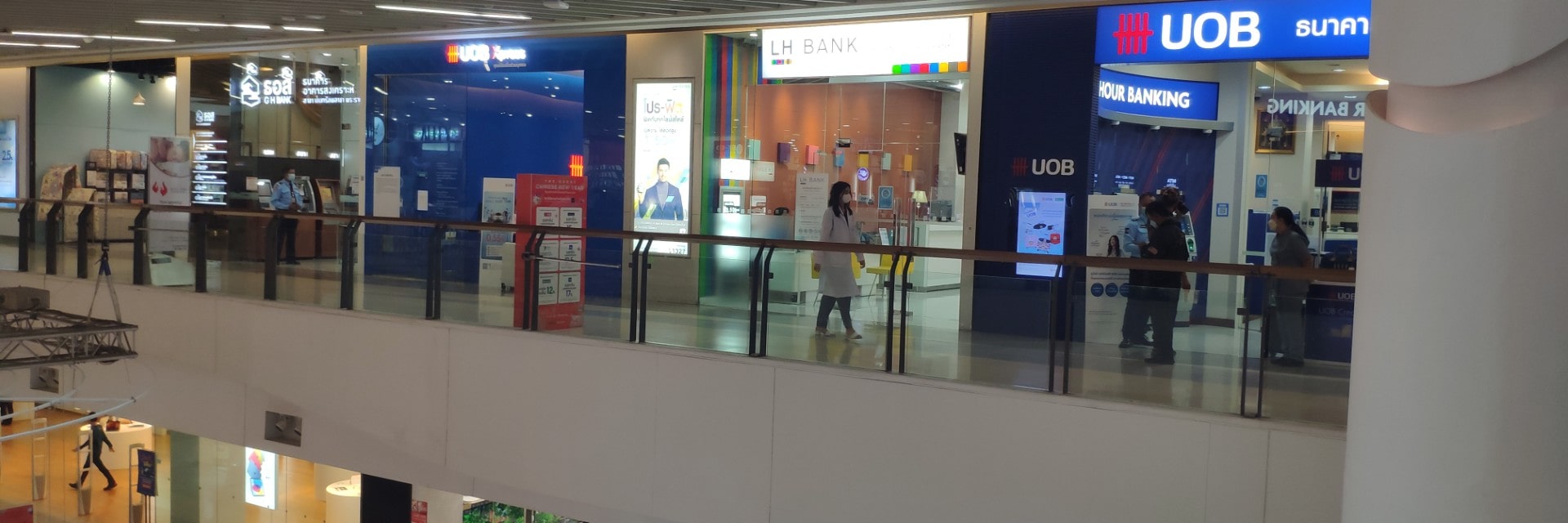 How to Open a Thai Bank Account in 2026: Requirements, Best Banks, and Tourist Rules 2026-09-18 What you need to open a Thai bank account, the best banks for expats, whether tourists can still open one,… ... Read more
 Thai Credit Cards for Foreigners: Eligibility, Fees, and Best Cards (2026) 2026-02-13 A guide to Thai credit cards for foreigners: income and work permit requirements, interest rate caps, fees, and the best… ... Read more
 Cost of Living in Thailand 2026: Real Monthly Budgets 2026-09-01 Real 2026 monthly budgets for Thailand, from THB25,000 (about US$770) bare-bones to THB90,000+ comfortable, by city and lifestyle, plus a… ... Read more
 Thailand Income Tax for Foreigners: Rates, Filing, and the 2024 Remittance Rule 2026-05-20 The 180-day residency test, current tax bands and deductions, the 2024 foreign-income remittance rule, penalties for filing late, and how… ... Read more
- How to Send Money to Thailand: The Fast, Cheap, Reliable Way 2026-04-29 Thailand Starter Kit's complete guide to sending money to Thailand, covering Wise, Remitly, bank transfers, SWIFT codes, and the best… ... Read more
 Insurance in Thailand: What’s Legally Required and What You Can Skip 2026-08-25 Only motor insurance is legally required in Thailand. Here's how OIC regulation works, and how to prioritize the other six… ... Read more
 Health Insurance in Thailand: What You Need to Know as an Expat in 2026 2026-03-19 Health insurance is one of the most sensible investments you can make as an expat in Thailand. This guide walks… ... Read more
 Currency Exchange in Thailand 2026: Best Rates & Fees Compared 2026-09-01 Skip the airport: get the best currency exchange in Thailand at a SuperRich kiosk. Compare kiosk, bank, ATM, and card… ... Read more
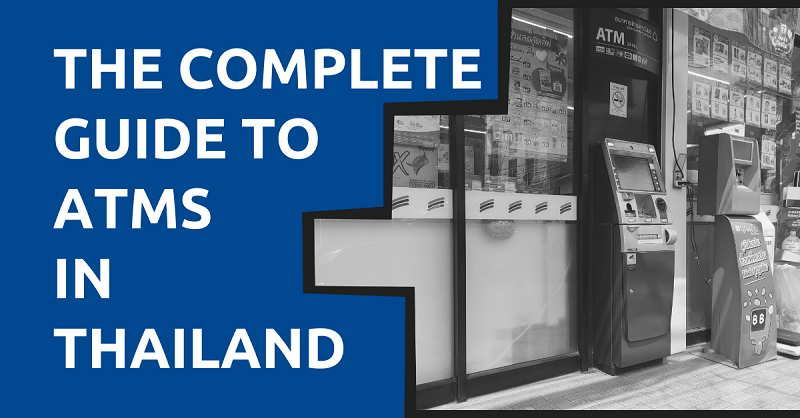 ATMs in Thailand: Fees, Withdrawal Limits, and How to Avoid Extra Charges 2026-02-23 What Thai ATMs charge foreign cards, how to avoid the fees, per-transaction limits, and the currency trap to watch for… ... Read more
Latest Guides on Thailand Finance
- Motorbike Insurance in Thailand: What’s Compulsory, What It Costs, and What’s Covered
- Car Insurance in Thailand: Types, Costs, and Coverage Explained (2026)
- How to Invest in the Thai Stock Market as a Foreigner
- UK State Pension in Thailand: The Freeze, Claiming, Tax and Visa Rules (2026)
- What Counts as a Pre-Existing Condition for Health Insurance in Thailand
- Thailand SSO vs. Private Health Insurance: Which One Is Better?
- Grocery Delivery in Bangkok: The Best Apps and Supermarkets in 2026
- Wise Is Changing in Thailand in October 2026. What Expats Need to Know
- Withholding Tax in Thailand: Rates, Forms & Filing Guide (2026)
- Christmas Dinner in Bangkok: Where to Eat, from Budget to 5-Star Buffets
- Is Wise the Best Way to Send Money to Thailand?
- WorldRemit Review: Is It Legit, What It Costs, and How It Compares
- How to Send Money from Australia to Thailand
- Property Tax in Thailand: Transfer Fees, Land Tax and Exemptions Explained
- P.P. 30 in Thailand: How to File Your Monthly VAT Return
- PND 51 in Thailand: Half-Year Corporate Tax Filing Guide
- Buying Property in Hua Hin: What You Need to Know Before You Invest
- The Cost of Dying in Thailand: Your Guide to Funeral Expenses in 2026
- PromptPay for Foreigners: Setup, Fees, and QR Payments in Thailand
- Insurance Brokers in Thailand: Experts You Can Work With in 2026



 Deutsch:
 Français:
 Español: