
If your Thai bank account gets suspended, you can usually reinstate it in about 15 minutes at your nearest branch with your passport, visa, and address proof. Here is what to bring, what to say, and how to prevent it from happening again.
If a Thai bank suspended your account and you committed no financial crimes, this guide will help you reinstate it.
This happened to me not too long ago. I transferred money just as I had every month for the last decade. But when I tried to access that money in my Thai bank account, I received a message stating my bank account had been suspended.
No access to my banking app, no access to an ATM, and no access to my debit card, with only THB80 of old-fashioned paper cash in my pocket, I was frustrated.
But this is becoming more common as banks in Thailand crack down on accounts they think are operated by scammers. You can find stories about this in the news headlines every week.
That said, by the end of this guide you’ll know exactly what steps to take and which documents you need to reinstate your suspended Thai bank account.
Disclaimer: Some links in this article go to our partners, and we may earn a commission if you use them. It costs you nothing extra, and we only recommend services we'd use ourselves. Read more in our Advertising Disclosure.
Contents
- Key Takeaways
- Understanding Why Your Thai Bank Account Gets Suspended
- Why Banks Are Freezing More Accounts: Thailand's Anti-Scam Crackdown (Long Version)
- If You Think Your Freeze Might Be Scam-related
- Reinstating Your Thai Bank Account After it’s Suspended
- Considering Each Bank’s Requirements
- Preventing Your Thai Account from Being Suspended Again
- Hiring a Lawyer to Help Reinstate Your Thai Bank Account
- FAQs
- What if My Thai Visa Has Expired Since Opening the Account? Can I Still Reinstate My Bank Account?
- What if I Don't Have a Thai Address Anymore or My Address Proof Is Outdated?
- What if My Original Thai Bank Branch Has Closed or I'm in a Different City?
- What if I Can't Physically Get to Thailand? Can Someone Else Handle This with a Power of Attorney?
- What Is a "Mule Account," and Could My Account Be Mistaken for One?
- My Account Was Frozen Right After I Received a Transfer From Someone Else. What Do I Do?
- Should I Call the 1441 Anti-Scam Hotline If My Account Is Frozen?
- Is a Scam-Related Freeze Different From a Normal Suspension?
- Protect Yourself from Frozen Accounts Using Wise
Key Takeaways
- You can usually reinstate your suspended Thai bank account in about 15 minutes by visiting your bank branch in person with your passport, current visa, and address proof, no fees required.
- Don’t waste time calling the bank’s customer service center as they cannot help with suspended accounts. You must visit a physical branch to resolve the issue.
- Prevent future suspensions by keeping your documents updated annually, maintaining regular account activity, and informing your bank ahead of time about large or unusual international transfers.


Understanding Why Your Thai Bank Account Gets Suspended
The Anti-Money Laundering Office (AMLO) and Bank of Thailand established Know Your Customer (KYC) regulations to prevent money laundering and the financing of terrorism.
Under the Anti-Money Laundering Act B.E. 2542 (1999) and the Financial Institutions Business Act B.E. 2551 (2008), banks have to verify your identity, assess your risk, and monitor your transactions.
Essentially, once you open a Thai bank account it can be suspended for any reason that falls under these regulations. But some other reasons include:
- Inactivity
- Missing or expired visas or work permits
- Address verification issues
- Suspicious transaction patterns
I asked the bank teller twice why they suspended my account before she finally said “AI detection.” But I believe “AMLO compliance” or “suspicious transactions” triggered the bank to suspend my account.
Why do I suspect this? I have to update my banking app at the bank because the facial recognition scanning never works for my large ears and even larger nose. While updating my app, the bank teller told me if I make transactions too soon, my account could be suspended. But she wasn’t specific about the amount, so I thought I’d be in the clear.
The day after updating my banking app, I made a transfer through Wise from the US to Thailand to pay for my daughter’s yearly school tuition. I then tried to transfer that money to the school in Bangkok and discovered my account was suspended.
Why Banks Are Freezing More Accounts: Thailand’s Anti-Scam Crackdown (Long Version)
Since March 2023, Thailand has run a separate, more aggressive system for freezing accounts tied to online scams. The Emergency Decree on Measures for the Prevention and Suppression of Technological Crimes, B.E. 2566 (2023) requires banks to share account and transaction data with the police, the Anti-Money Laundering Office (AMLO), and the Ministry of Digital Economy and Society whenever there’s reasonable cause to suspect an account is moving scam money. This is separate from the routine KYC reasons, and it’s why account freezes have become more common and, in some cases, harder to clear up in a single branch visit.
Under the decree, if a bank or the government’s anti-scam hotline flags a transaction as possibly linked to fraud, the bank must suspend it immediately for up to seven days while police or AMLO investigate. If they find no evidence connecting you to a crime within that window, the bank has to lift the suspension automatically. If you’re the one reporting a scam, the same seven-day clock applies once you file a police complaint, which you need to do within 72 hours of the bank freezing the transaction. (Verified September 2026.)
Separately, letting someone else use your bank account, ATM card, or e-money account to move money for them, even if you didn’t know it was for a scam, carries up to three years in prison or a THB300,000 fine under the same decree. This is why banks now freeze first and ask questions later on any account that looks like it might be a “mule account” moving money for someone else.
This isn’t a small program. The Bank of Thailand’s own 2024 annual report shows commercial banks collectively suspended 1.75 million mule accounts in 2024 alone. Banks now track people, not just individual accounts, so every account under your name can be affected if one of them gets flagged, and accounts are sorted into risk tiers (the BOT calls them black, gray, and brown) with different restrictions at each level, from blocking transfers to blocking new account openings.
Most expats will never trigger any of this. But a few situations can put an innocent account in its path:
- Receiving a transfer from someone whose own account later gets reported for fraud, even if you had a legitimate reason for the transfer
- A sudden large or unusual transfer in or out of an account that’s normally quiet
- A name or address on file that no longer matches your documents, which can make automated risk checks flag your account alongside genuine mule accounts
If You Think Your Freeze Might Be Scam-related
- Call the government’s Anti-Online Scam Operation Center on 1441 (24/7) and ask whether your account was flagged through the anti-scam system. It won’t unfreeze your account over the phone, but it can tell you what’s actually going on.
- Still go to your branch with the usual documents (passport, visa, address proof), plus anything that explains the transaction in question, such as a transfer receipt or a message from the sender.
- Ask the branch directly whether police or AMLO ordered the freeze. That determines whether it can be lifted on the spot or whether you need to wait out the investigation window.
- If the freeze isn’t lifted once that window closes, or the case turns out to be more complicated, our vetted lawyers can deal with the bank, police, and AMLO on your behalf.
Reinstating Your Thai Bank Account After it’s Suspended
If your Thai bank account is suspended, don’t bother reaching out to the call center. I tried this and they said they couldn’t do anything for me. Instead, take the following steps:
- Gather your documents: You’ll need your valid passport, Thai visa, Thai work permit (if you have one), and Thai driver’s license (if you have one) or some other way to prove your address. Since all banks work differently, bring everything you used to set up your account.
- Visit your bank branch: The call center can’t do anything for you, so you have to visit the nearest bank branch or the branch where you opened your bank account.
- Reinstate your account: Take a queue number and wait for the bank teller. Explain what happened — the teller will photocopy your documents. You will then sign those documents and a consent form (usually in Thai). The bank teller will reinstate your account and ask you to use your app to prove it works.
- Ask why your bank account was suspended: Reinstating your account will bring you peace of mind. But you also have to ask why it was suspended in the first place. This way, you can avoid doing anything in the future that might trigger another suspension.
All in all it takes about 15 minutes to reinstate your account once you see the bank teller. You shouldn’t have to pay any fees.
Considering Each Bank’s Requirements
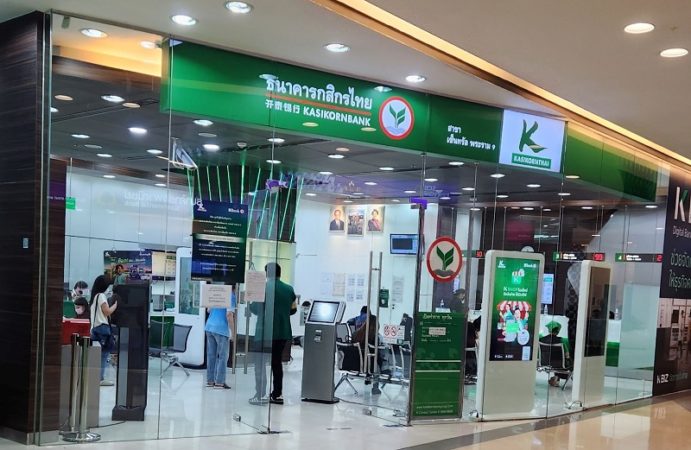
Keep in mind that all banks in Thailand work differently. The documents and process I used worked for me at Krungthai Bank, but it may not work for you at Bangkok Bank, Kasikorn, SCB, etc.
This is why it’s always best to bring with you everything that you used to open your Thai bank account. Speaking of which, your account type may also come into play. My current account was suspended, but if I had a savings account or business account, the bank may have asked for different or more documents.
Preventing Your Thai Account from Being Suspended Again
Banks may suspend your account despite precautions. But you can take a few steps to decrease the chances of it happening.
- Maintain minimum account activity: If you don’t use your Thai bank account, banks could suspend your account due to inactivity. Make several small monthly transactions to keep your account active.
- Keep documents up-to-date: Most expats with Thai bank accounts received a text message this year saying we had to go to the bank and update our contact info and documents. Because of stricter global banking regulations, this is something we may have to do every few years. Either way, update your contact details and documents every year so banks don’t suspend your account. You can do this when getting a copy of your bank statement for your annual visa.
- Communicate with your bank: If you make frequent international transfers, it might be worth telling your bank about it ahead of time. They might be able to put a note in the system to prevent your account from being suspended in the future.
What if you take all these steps and you still can’t reinstate your Thai bank account? Then you have to take additional steps.
Hiring a Lawyer to Help Reinstate Your Thai Bank Account
You may face complex cases where you cannot reinstate your bank account in Thailand, even after showing up in person and submitting your documents. What then?
In this case, I’d recommend hiring a lawyer to help reinstate your account. Lawyers in Thailand deal with challenging banking scenarios that we expats can’t handle alone.

We here at Thailand Starter Kit have a list of affordable and ethical lawyers who we recommend using in these cases. Fill out the form on our Legal Services Page to get in touch with a lawyer now.
FAQs
What if My Thai Visa Has Expired Since Opening the Account? Can I Still Reinstate My Bank Account?
If your Thai visa expires, banks may close your account because Thai law requires them to maintain current visa copies. If you change your Thai visa type, make sure to tell your bank so they can keep a copy on file. If your bank account was suspended at any time during a gap or change in your visa, and you never told the bank, it could extend the time it takes to reinstate your Thai bank account.
What if I Don’t Have a Thai Address Anymore or My Address Proof Is Outdated?
If you change your address in Thailand, you have to let your bank know. If you don’t and they suspend your account, they may ask you for more documents to prove your place of residence, like a house book or Thai residence certificate.
What if My Original Thai Bank Branch Has Closed or I’m in a Different City?
If your Thai bank branch has closed down or you now live in a different city in Thailand, you can go to any branch as long as it belongs to your bank. For example, if you opened a Bangkok Bank account, you have to visit a Bangkok Bank branch.
What if I Can’t Physically Get to Thailand? Can Someone Else Handle This with a Power of Attorney?
You may be able to hire a lawyer in Thailand and give them power of attorney to reinstate your Thai bank account if you are outside of the country. Get in touch with one of our vetted lawyers to find out more.
What Is a “Mule Account,” and Could My Account Be Mistaken for One?
A mule account is a bank account used to move money for someone else’s crime, usually a scam, sometimes without the account holder ever realizing it happened. Thai law makes it an offense to let this happen even unintentionally, so banks now watch for the pattern (money arriving from an unfamiliar source and moving out again quickly) rather than waiting for a single obviously “bad” transaction. That means an honest account can occasionally get caught up in the same checks as a real mule account.
My Account Was Frozen Right After I Received a Transfer From Someone Else. What Do I Do?
This is one of the most common ways an innocent account gets flagged. If the sender’s account, or an earlier one in the chain, was reported for fraud, Thai law requires the bank to suspend the transaction for up to seven days while police or AMLO look into it. Go to your branch with your documents and be ready to explain who sent the money and why. If there’s no evidence tying you to a crime, the suspension has to be lifted once that seven-day window closes.
Should I Call the 1441 Anti-Scam Hotline If My Account Is Frozen?
Yes, it’s worth the call. The government’s Anti-Online Scam Operation Center runs the 1441 hotline 24/7 and can tell you whether your account was flagged through the anti-scam system, which your bank’s regular call center often can’t confirm. The hotline can’t unfreeze your account by itself, so you’ll still need to visit your branch in person.
Is a Scam-Related Freeze Different From a Normal Suspension?
Yes. A routine suspension triggered by an expired visa or an outdated address usually clears up the same day once a teller updates your file. A freeze tied to a scam investigation follows a legal process with its own timeline, up to seven days for the bank to hold a flagged transaction while police or AMLO investigate, so it can take longer to resolve even when you’ve done nothing wrong.
Protect Yourself from Frozen Accounts Using Wise
This whole situation has taught me that as expats in Thailand, we need more than one bank account to keep our money safe, secure, and more importantly, accessible. This way, if banks happen to freeze one of our accounts, we will still have access to money in another account.
But because regulations are making it harder for us to open up Thai bank accounts, it’s a good time to open a Wise borderless account.
With it, you can make international transfers and add money to your Wise account for safe keeping. You’ll also get a Wise debit card, which you can use to withdraw money from an ATM or pay for goods and services just like you would with a Thai debit card. This makes having a Wise borderless account the perfect solution for financial emergencies like the one I experienced.



 Deutsch:
 Français:
'/%3E%3Cpath%20fill='%23b2b2b2'%20d='M241%20382q0%2016%2017%2026%2017%2011%2042%2011t42-11q16-11%2017-26V269H241'/%3E%3Cpath%20fill='%239f7e00'%20d='M241%20379q0%2014%208%2023%209%209%2021%209%2014%200%2021-9%209-9%209-23V269h-59'/%3E%3Cpath%20d='M241%20339v-70h59v110q0%2014-9%2023l-6%205v-68h-15v72q-8%200-14-4v-68zm59%2040c0%2022%2015%2032%2029%2032%2021%200%2030-18%2030-32v-40h-59'/%3E%3Cpath%20fill='%239f7e00'%20d='M266%20277v5h2v12h-3v-5h2v-5h-9v5h2v5h-4v9h3v18h-5v10h34v-10h-5v-18h3v-9h-4v-5h2v-5h-9v5h2v5h-3v-12h2v-5zm42%20101q0%2010%206%2017%206%206%2015%207%2010-1%2016-7%206-7%206-17v-29h-43'/%3E%3Ccircle%20fill='%230044ad'%20cx='329.5'%20cy='372'%20r='6'/%3E%3Cellipse%20fill='%230044ad'%20cx='300'%20cy='340'%20rx='16'%20ry='21'/%3E%3C/svg%3E) Español:
Español: