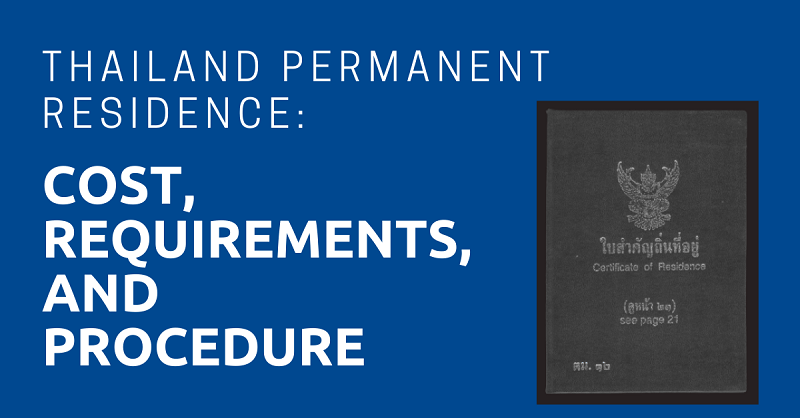
In this article, we are going to guide you through everything you must know about permanent residence in Thailand, including requirements, procedure, cost, advantages, disadvantages, limitations, and how to prepare yourself.
Are you thinking about living in Thailand permanently?
If so, Thailand permanent residence might be something to look into. It gives you the right to stay in Thailand permanently. You can live in Thailand and fly in and out of the country at any time without having to worry about getting visas anymore.
It is also the first step towards getting Thai citizenship.
The annual application window is announced by the Immigration Bureau each year, and its timing has shifted in recent years: the most recent round, for quota year B.E. 2568, opened in early 2026 rather than the traditional year-end. Check immigration.go.th for the current year’s dates before planning around any particular month.
In case you plan to apply for the Thailand PR this year, don’t forget to check our exclusive article on how to prepare for the Thailand permanent residence interview, including sample questions.
Disclaimer: Some links in this article go to our partners, and we may earn a commission if you use them. It costs you nothing extra, and we only recommend services we'd use ourselves. Read more in our Advertising Disclosure.
Contents
- Key Takeaways
- What Is It?
- Advantages
- Limitations
- Requirements
- Which Category Should I Apply for?
- Do I Need to Speak Thai?
- Quota
- How to Apply for the Thai PR
- When to Apply
- Where to Apply
- How Much Does It Cost?
- Other Residence Permit Fee Categories
- How Long Does It Take?
- Keeping Your Permanent Residence Active
- How to Prepare Yourself for Permanent Residence
- What Kind of Visa Will I be Holding While Waiting for the PR Approval?
- Do You Need to Hire a Lawyer?
- Is It Worth It?
- Permanent Residence vs. the LTR Visa and Thailand Privilege Card
- Can I Get a Thai Citizenship Directly without Having to Apply for the PR?
- Frequently Asked Questions
- How many people get Thailand permanent residence each year?
- Has the 2026 permanent residence application window opened yet?
- Can LTR visa holders apply for Thailand permanent residence?
- Will I lose my original citizenship if I get Thai permanent residence?
- How long after getting permanent residence can I apply for Thai citizenship?
- Are there permanent residence fees beyond the standard THB100,000?
- Now, on to You
Key Takeaways
- Thailand PR lets you stay indefinitely with no more visa renewals, 90-day reports, or TM30 filings — and puts you on the path to Thai citizenship after 5 years.
- You need at least 3 consecutive years on the same non-immigrant visa extension before you can apply.
- There are 5 categories: Investment (THB10 million+), Employment, Humanitarian (married to a Thai), Expert, and Extra Circumstances — marriage is the most popular route.
- Total costs run THB100,000 or more, including an initial application fee of THB7,600 and a final approval fee of THB95,700 (marriage) or THB191,400 (employment or investment).
- The interview is conducted in Thai, so you need at least conversational Thai to have a real chance of passing.
- The whole process officially takes around 6 months after the application window closes, but in practice it often takes 1 to 3 years.
- Even with PR you still need a work permit and a re-entry permit before leaving Thailand, and you cannot stay outside the country for more than 364 consecutive days.
- Start preparing documents as soon as you arrive in Thailand — some need to be notarized and legalized abroad, and missing even one document means waiting another year.



What Is It?
Permanent residence, or PR, is for anyone who is planning to live in Thailand permanently or for a very long time. It is officially called a resident’s visa or residence permit by the Thailand Immigration Office.
Once you have permanent residency in Thailand, you can stay in Thailand permanently. You don’t need to get a visa. You are even able to use the Thai passport control lane when leaving and entering Thailand.
You are also one step closer to having Thai citizenship.
Advantages
Having the right to stay in Thailand permanently isn’t the only advantage of permanent residence.
Here’s a list of its other advantages:
- You can say goodbye forever to 90-day notifications and TM30 reporting. They are not required for a PR holder.
- You can be listed under a normal house registration (Tabian Ban a.k.a. blue book). This means you don’t need to get a residence certificate anymore when getting a work permit, opening a bank account, or getting a driving license.
- Your spouse and children can get dependent visas based on your permanent resident status.
- You don’t need to send money from abroad to buy a condo in Thailand anymore.
- You can use the same line as Thai citizens at the airport when entering and leaving Thailand.
- Your kids will be able to get Thai citizenship if both you and your partner have PR status.
- You can apply for Thai citizenship after holding it for 5 years.
- You can be a director of a public company in Thailand.
Limitations
However, holding PR status is different from having Thai citizenship. There are some limitations with it, including:
- You cannot leave Thailand for more than 364 days in a row.
- You still need to get a work permit when working in Thailand. However, it’s much easier since you don’t need to get a business visa anymore. This means you have a higher chance to get a job in Thailand than other expats.
- You still need to get a re-entry permit before leaving Thailand.
- You can’t buy a house or property yet.
- You need to do a notification at a local police station every 5 years.
Requirements
To apply for the residence permit, you need to hold a non-immigrant visa and stay in Thailand for at least 3 years in a row with the same extension of stay.
Your visa extension needs to be active during the time of the application.
For example, if you stay in Thailand for 3 years with an extension of stay based on your business visa, you can apply for permanent residence.
On the other hand, if you stay in Thailand for 3 years with a business visa and then change to a marriage visa, you are unable to apply for permanent residence until you live in Thailand for another 3 years with an extension of stay based on your marriage visa.
Other requirements depend on which category you apply for. Currently, there are five categories in total.
The table below shows the general requirements of each category.
| Category | Requirements |
| Investment | Bring money from abroad to invest in Thailand of at least 10 million baht in a limited company, public company, the stock market, or a state-issued security or state enterprise’s security. |
| Employment | Run a business in Thailand in a specific position and business category as specified by the Thailand government, or work in Thailand for at least 3 years with a salary of 80,000 baht for at least 2 years. Or you need to pay Thailand personal income tax for more than 100,000 baht for at least 2 years in a row. You must also work at the same company in Thailand for at least 1 year during the time of the application. |
| Humanitarian | Marry a Thai citizen for at least 2 years, be the biological mother/father of a Thai child, or be the biological child of a Thai mother/father. |
| Expert | Have at least a Bachelor Degree and have special abilities needed in Thailand. |
| Extra Circumstances | It’s a special category given to those who provide benefits to Thailand. |
Please note that this is only a quick summary of each category. To see the full details and check the exact requirements, visit the Immigration Office website.

Which Category Should I Apply for?
The humanitarian (based on marriage) is the most popular category. The second most popular is the employment category.
Expert and extra circumstances categories are mainly given to those who are specially selected by the government on special occasions only.
Do I Need to Speak Thai?
Although it isn’t directly required, you do need to be able to speak Thai and understand Thai culture and etiquette in order to apply for Thailand permanent residence.
Why is that?
During the application procedure, you will be interviewed by immigration officers. They often ask about your background, your understanding of Thai culture, why you want to apply for the PR, and so on, in Thai.
If you can’t answer them, your chances of getting the resident permit will be much lower. We will talk more about this later in the article.
However, this doesn’t mean that you need to be able to speak Thai fluently. At the very least, you should be able to speak Thai in everyday situations.
So if you don’t know how to speak Thai, now’s a good time to learn. I’ve known many people who hire a Thai tutor for this purpose specifically.
Quota
There’s a limit to how many people can get Thailand permanent residence permits per year. Based on previous years, it’s 100 people per nationality per year. (Verified September 2026.)
However, you don’t need to worry about the quota at all. As far as we know, there are only two nationalities that might exceed the quota, which are Chinese and Indian.
For other nationalities, the number of people who get permanent residence permits is regularly less than 100 people per year.
How to Apply for the Thai PR
Getting permanent resident status in Thailand isn’t an easy task. It involves a lot of preparation, piles of documents, and many steps.
Let’s take a look at everything you need to do to apply for permanent residence.
Filing Documents
Applying for a residence permit in Thailand requires a lot of paperwork, which can be well over 100 pages in total. Basically, they want to know everything about you.
Here’s a list of documents you need for applying for permanent residence in 2026 so that you can prepare in advance.
- Some documents you need to get from your home country
- Some you need to get from your employer
- Some you need to get from the Thai government.
- Many documents must also be legalized by the Ministry of Foreign Affairs.
- If any document is issued outside of Thailand, it must first be notarized by your embassy before having it legalized by the Ministry of Foreign Affairs.
- Some documents might need to be translated into Thai.
Tip: If you have any questions, it’s best to contact an immigration office in Chaeng Wattana. Do not rely on the information from the internet since it varies between people and is subject to change every year.
Interview
After you submit all of the documents, you need to wait for a few months (or more) before the immigration officers schedule you for an interview.
The interview will be filmed and conducted in Thai. You can see a list of questions usually asked here. After the interview, you need to sign a statement in Thai based on your interview.
After the interview, you might need to take a multiple-choice test in Thai. If you can’t read Thai, an immigration officer will help you to do it.
The multiple-choice test usually asks general information about Thailand (eg, how many provinces are in Thailand), culture, and the PR process.
While waiting for the interview, they may also ask you for additional documents as well.
Evaluation
After that, your application will be reviewed, evaluated, and given points by the Immigration Commission, consisting of a representative from different government organizations such as the Ministry of Interior, the Ministry of Foreign Affairs, the Board of Investment, the Royal Thai Police, the Office of the Attorney General, and the National Security Council.
You need to get at least 50 out of 100 points in order to pass the evaluation.
Although the Thai Immigration Office doesn’t publicly announce how the point system works, they do give you a general idea of evaluation factors, including education, income, knowledge, skill, relationship with Thai citizens, Thai language fluency, personality, attitude, and even your contribution to Thailand and its society.
It is also said that if you are a member of a charity organization and regularly donate, you get extra points as well.
During the evaluation, immigration officers might visit your neighborhood and ask your neighbors about your behavior.
You don’t need to do anything during this process.
Final Approval
If you pass the evaluation, your application will be forwarded to get final approval from the Minister of the Interior.
The entire evaluation and the final approval process can easily take more than a year. Sometimes it can even take over 3 years.
Getting the Permanent Residence Certificate
Once the application is approved, you will receive a letter from the Immigration Office with detailed instructions on how to get the certificate of residence.
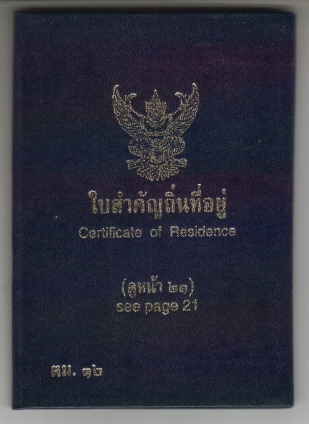
Usually, you just need to prepare a signed copy of your personal documents, pictures, go to the local immigration office, and pay the final fee.
Final Step
Once you get the certificate of residence, you need to take a trip to a police station to get an alien book and take another trip to a local district office to get listed on a house registration book (Tabien Baan – blue book).
Please note that the local district officer might interview you and the owner of the house to make sure that you two know each other well.
When to Apply
The application period is different each year. Sometimes the application window only lasts a couple of weeks; other years it runs for a few months.
There is no longer a fixed year-end deadline you can rely on. The window used to fall roughly between October and December, but the timing has shifted: the round for quota year B.E. 2568 opened in early 2026, not at year-end. Always check immigration.go.th for the current year’s announced dates rather than assuming an October-to-December window.
That said, you should stay tuned to the news in order to find out the application window.
However, the better way is to contact your local immigration office before the usual application window, such as in June.
By contacting them early on, they can help you prepare documents in advance and give you a better idea of the application period for that year. When the application window is open, you can send your documents and start the procedure right away.
You should also apply as quickly as possible. Many people fail and need to wait another year simply because they don’t have all of the documents prepared. They might be missing 1-2 documents that they don’t know about until the immigration officer checks them.
Where to Apply
You can apply at your local immigration office in person.
However, please note that the immigration office in Bangkok has the most experience when it comes to the permanent residence permit. They have specialized officers who can guide you through the process.
For other provinces, especially the unpopular expat ones, you might be the first person who applies for permanent residence there.
How Much Does It Cost?
Total costs run THB100,000 or more. That’s one of the biggest reasons people don’t apply for permanent residence in Thailand, since there are many fees involved, including:
- Initial application fee: THB7,600
- Final approval fee: THB95,700 or THB191,400, depending on your category. For example, it’s THB95,700 for marriage and THB191,400 for employment or investment.
- Document preparation: THB10,000+. This includes translation, notarization, and legalization. These costs vary from person to person.
Total: THB100,000+
Other Residence Permit Fee Categories
The marriage and employment/investment fees above cover most applicants, but the Immigration Bureau’s fee schedule lists several other categories that come up for specific family situations.
| Category | Fee |
|---|---|
| Head of family supporting a Thai child | THB95,700 |
| Spouse of someone who already holds Thai PR | THB95,700 |
| Minor child of a PR holder or a Thai national | THB95,700 |
| Adult child of a PR holder or a Thai national | THB191,400 |
| Reapplying to restore previously held PR status, outside the annual quota | THB95,700 |
| Replacing a damaged, lost, or fully stamped residence certificate | THB1,900 |
These are current as of this fee schedule’s last update on the Immigration Bureau’s own site. Confirm the amount with your local immigration office before paying, since fee schedules do change.
How Long Does It Take?
In theory, it should take around 6 months after the application window has ended. But in reality, it can take up to 3 years or more until you can get your permanent resident status approved. (Verified September 2026.)

The immigration office also cannot give you the exact time frame since final approval is from the Ministry of the Interior.
Keeping Your Permanent Residence Active
There are a few things you need to do in order to keep your permanent residence active.
- Before leaving Thailand, you need to get both a one-year endorsement of your residence book and also a re-entry permit.
- You also need to report to a local police station every 5 years.
How to Prepare Yourself for Permanent Residence
Getting a permanent residence permit is a long procedure. Planning, building your profile, and preparing documents in advance is key here.
If you plan to apply for permanent residence, you should start preparing documents as soon as possible – the faster the better. You should prepare for it right after you move to Thailand.
Then you should start building up your profile. Be nice to your neighbors and your company. You should find opportunities to contribute to society and also be careful on what you post on the internet, especially criticism of the royal family.
What Kind of Visa Will I be Holding While Waiting for the PR Approval?
After you submit your permanent residence application, you will get a visa stamp in your passport. It’s an extension of stay allowing you to stay in Thailand for 180 days.
You can keep getting this extension of stay until you know the result of your PR application.
Do You Need to Hire a Lawyer?
It totally depends on you. Many people get their permanent resident status in Thailand without hiring a lawyer. And I also know many people who hire a lawyer to help them apply for permanent residence.
So it is possible to do everything yourself.
The main advantage of hiring a lawyer is that they can help you prepare all of the documents you need and prepare you for the application process. For example, an experienced lawyer can tell you what you need to do in advance in order to build your profile and get extra points from the immigration officers.
They can also conduct a mock interview to help you get as many points as possible.
Is It Worth It?
It depends.
If you plan to live in Thailand permanently, then it’s a good idea to get a permanent resident permit. With it, you don’t need to worry about your visa ever again.
However, some people decide not to do it at all, even though they are eligible for it. They don’t want to deal with the long, complicated process. Also, the cost of getting permanent residence is even more expensive than getting a visa in Thailand for over ten years.
Some people just get the privilege visa. It’s the most expensive option but also the easiest.
Permanent Residence vs. the LTR Visa and Thailand Privilege Card
Permanent residence isn’t the only way to stop worrying about visa renewals in Thailand. Two other options come up constantly in the same conversation: the Long-Term Resident (LTR) visa and the Thailand Privilege Card. Each solves a different problem, and none of them make the other two irrelevant.
| Option | How You Qualify | Duration | Work Permit | Reporting |
|---|---|---|---|---|
| Permanent residence | 3 consecutive years on the same visa extension, then a quota-limited application and interview | Indefinite | Still required, but no business visa needed to get one | No 90-day or TM30 filings; report to police every 5 years |
| LTR visa | Meet one of four criteria: wealth, retirement income, remote work, or a skilled/large-company job, no prior years in Thailand needed | 10 years, renewable | Included, digital work permit | Once a year instead of every 90 days |
| Thailand Privilege Card | Pay the membership fee; no income, age, or employment requirement beyond a clean criminal record | 5 to 20 years, by tier | Not included | Standard 90-day reporting still applies |
The LTR visa is worth a close look if you don’t yet have 3 years on the same extension: our LTR visa guide covers eligibility, the flat 17% tax rate it offers qualifying holders, and how it can lead into permanent residence or citizenship later. The Thailand Privilege Card, covered in our Privilege Card review, skips the waiting and the interview entirely, current membership tiers start around THB650,000 for 5 years, but it doesn’t include a work permit and doesn’t count toward citizenship the way permanent residence does.
If your goal is Thai citizenship rather than just a hassle-free visa, permanent residence is the route that actually counts toward it. Our Thai citizenship and naturalization guide covers what comes after PR: another 5 years of holding it, a separate points test, and a Thai-language interview of its own.
Can I Get a Thai Citizenship Directly without Having to Apply for the PR?
The answer is YES, you can. But you must legally marry a Thai citizen, work, and live in Thailand for many years. You should also be able to speak Thai.
Frequently Asked Questions
How many people get Thailand permanent residence each year?
The Immigration Bureau’s own annual quota notification caps it at 100 people per nationality, plus 50 for stateless applicants. The quota is reissued every year under the Immigration Act, and in practice only a couple of nationalities ever come close to filling it.
Has the 2026 permanent residence application window opened yet?
The most recent window the Immigration Bureau announced ran in March 2026, under a quota notification signed in late February 2026, rather than the traditional year-end. As of this writing, the Bureau hasn’t published a new set of dates. Check immigration.go.th directly for the current year’s window before planning around any particular month, since the timing has shifted in recent years.
Can LTR visa holders apply for Thailand permanent residence?
Yes, according to our LTR visa guide, holding the LTR visa can lead into a permanent residence or citizenship application later. You’d still need to meet the same 3-consecutive-years requirement before applying.
Will I lose my original citizenship if I get Thai permanent residence?
No. Permanent residence is a residency status, not citizenship, so it has no effect on your existing nationality. That question only becomes relevant if you go on to naturalize as a Thai citizen, which is a separate process our Thai citizenship guide covers in detail.
How long after getting permanent residence can I apply for Thai citizenship?
Five years, at minimum. Our Thai citizenship and naturalization guide covers what that application adds on top of PR: a separate 100-point scoring test, a Thai-language and civics interview, and a decision that ultimately rests with the Minister of Interior.
Are there permanent residence fees beyond the standard THB100,000?
Yes, for specific family situations. A PR holder’s spouse or minor child pays THB95,700, an adult child pays THB191,400, and replacing a lost or expired residence certificate costs THB1,900.
Now, on to You
We hope that this article should answer everything you need to know about getting permanent residence status in Thailand.
If you are qualified and need help applying for the Thailand permanent residence, please feel free to fill in the form below. We will put you in touch with a lawyer who specializes in permanent resident permits.


 Deutsch:
 Français:
'/%3E%3Cpath%20fill='%23b2b2b2'%20d='M241%20382q0%2016%2017%2026%2017%2011%2042%2011t42-11q16-11%2017-26V269H241'/%3E%3Cpath%20fill='%239f7e00'%20d='M241%20379q0%2014%208%2023%209%209%2021%209%2014%200%2021-9%209-9%209-23V269h-59'/%3E%3Cpath%20d='M241%20339v-70h59v110q0%2014-9%2023l-6%205v-68h-15v72q-8%200-14-4v-68zm59%2040c0%2022%2015%2032%2029%2032%2021%200%2030-18%2030-32v-40h-59'/%3E%3Cpath%20fill='%239f7e00'%20d='M266%20277v5h2v12h-3v-5h2v-5h-9v5h2v5h-4v9h3v18h-5v10h34v-10h-5v-18h3v-9h-4v-5h2v-5h-9v5h2v5h-3v-12h2v-5zm42%20101q0%2010%206%2017%206%206%2015%207%2010-1%2016-7%206-7%206-17v-29h-43'/%3E%3Ccircle%20fill='%230044ad'%20cx='329.5'%20cy='372'%20r='6'/%3E%3Cellipse%20fill='%230044ad'%20cx='300'%20cy='340'%20rx='16'%20ry='21'/%3E%3C/svg%3E) Español:
Español: