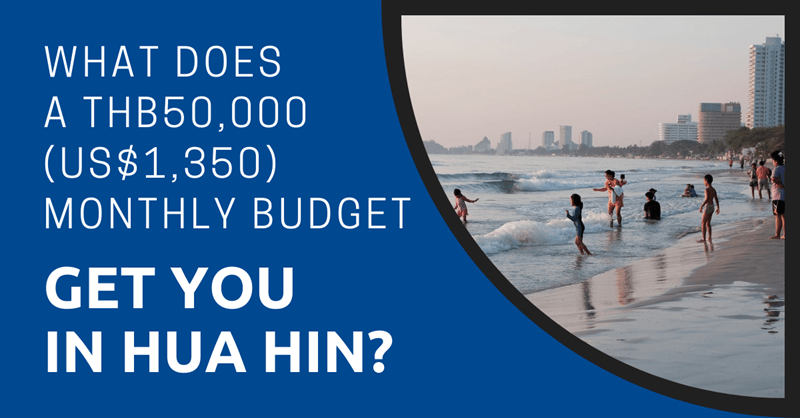
Hua Hin is the long-running favorite for retirees and families (and consistently ranks among the best places to retire in Thailand): a walkable beach town three hours from Bangkok, with good golf, a big expat community, and lower costs than Phuket or Samui. It’s quiet on weekdays and busy when Bangkok visits on weekends.
In short, Hua Hin suits retirees and families wanting a walkable beach town near Bangkok. It is less suited to those needing big-city nightlife or a major international airport.
Hua Hin has been drawing retirees and expat families for longer than almost anywhere else in Thailand, and the reasons haven’t changed much. It’s close to Bangkok, quiet, has decent healthcare, reasonable food, and a long quiet beach.
What has changed is the expat community. It’s grown considerably, particularly among families and retirees who want more than just a beach to walk on, and the infrastructure has kept pace.
There are now multiple international schools, a golf scene, a growing food and café culture, and a social fabric that’s warm without being overwhelming.
This guide covers everything you need to know about living in Hua Hin: what it costs, where to live, what the healthcare situation actually looks like, and whether it’s the right fit for your situation.
Disclaimer: Some links in this article go to our partners, and we may earn a commission if you use them. It costs you nothing extra, and we only recommend services we'd use ourselves. Read more in our Advertising Disclosure.
Contents
Key Takeaways
- Hua Hin is a small beach town in Prachuap Khiri Khan Province, about three hours south of Bangkok by car and well connected by bus, van, and train.
- A single expat typically spends THB42,000 to THB74,000 a month in Hua Hin, and rent is the biggest swing in that range. Couples share the rent, so their total rises by less than double.
- Rent ranges widely: from under THB10,000 for a basic studio to THB40,000 or more for a beachfront condo. Pool villas in the city run THB20,000 to THB40,000.
- Bangkok Hospital Hua Hin is the main private hospital for expats and has recently completed a major expansion, with its new Building B opening and departments relocating in May 2026. San Paulo Hua-Hin Hospital offers a more affordable private alternative.
- Golf, kitesurfing, yoga, Muay Thai, beach life, and wildlife observation are among the best daily activities.
- The expat community is large for a beach town, with Facebook groups running into the tens of thousands of members, making social integration easier than in most smaller Thai cities.
- Hua Hin has its own airport with a small domestic schedule, but no international flights as of October 2026. Most long-distance travel goes via Bangkok.
About Hua Hin
Hua Hin is a beach town in Prachuap Khiri Khan Province on the upper Gulf coast, about three hours south of Bangkok. It’s the gateway to southern Thailand and has been a royal retreat for decades: Klai Kangwon Palace was the frequent residence of King Rama IX, and that royal association gave the town a certain character early on.
For most of its modern history, Hua Hin was a weekend destination for Bangkok Thais looking for a beach escape. The last decade has shifted that considerably. More expats are choosing it as a permanent or long-term base, drawn by the combination of beach access, Bangkok proximity, improving infrastructure, and a cost of living that beats Phuket and Koh Samui at roughly comparable lifestyle levels.
The town is compact enough that life in the center is genuinely walkable, which is unusual for a Thai beach destination. That practical feature makes a real difference day to day.
For the bigger picture beyond Hua Hin, see our complete guide to moving to Thailand.

Pros and Cons
Reasons to move to Hua Hin:
- Laid-back beach lifestyle with access to modern conveniences
- Cheaper than Koh Samui or Phuket for comparable quality of life
- Large and growing expat community, easy to find your social footing
- World-class golf, kitesurfing, yoga, and a strong outdoor activity culture
- Good international schooling options for families
- Reasonable healthcare, with ongoing expansion at the main private hospital
- Easy travel connections to Bangkok
- Generally good air quality, better than northern Thailand during burning season
Reasons it might not work for you:
- Quieter than most expats expect on weekdays; the town can feel sleepy without weekend energy
- Weekend and holiday traffic and crowds, particularly around malls and markets
- Hospital options are limited compared to Bangkok, Chiang Mai, or Pattaya
- No major international airport; long-haul travel involves a Bangkok trip
- Beach quality is not comparable to the south
- Cost of living rises sharply the closer you live to the beach
Quality of Life
The quality of life in Hua Hin is built around a specific rhythm that suits certain people very well and frustrates others.
A typical day in the good version of Hua Hin life looks like this:
- morning walk along the beach or a round of golf
- lunch at a local spot
- afternoon coffee at a good café
- evening drinks with expat friends at a market or bar
It’s comfortable, social when you want it to be, and easy on the nervous system.
What you give up is the density of options that Bangkok or Chiang Mai provide. The restaurant scene is good but not wide. Shopping is covered by Market Village Hua Hin and Bluport Hua Hin but not deep. Big-city nightlife doesn’t exist here.
The upside of that limitation is that life is manageable in a way that Bangkok never is. Traffic is light most days. The streets near the center are walkable. Pharmacies, clinics, and grocery stores are accessible without planning an expedition.
The weekend caveat is real: Hua Hin is a popular domestic weekend getaway, and beaches, malls, and restaurants fill up noticeably on Saturdays and during Thai public holidays.
Cost of Living
The cost of living in Hua Hin is moderate by Thai standards, cheaper than Koh Samui and Phuket, but more expensive than Chiang Mai or smaller provincial cities. The biggest variable is accommodation: the closer you are to the beach, the more you pay, and the jump between inland and beachside is significant.
A realistic monthly breakdown for a single expat:
| Expense | Monthly Cost |
|---|---|
| Rent | THB10,000 to THB42,000 depending on type and location (see the Accommodation section) |
| Food | THB12,500 for a mix of local meals, home cooking, and occasional Western restaurants |
| Transportation | THB3,500 for a rented or owned scooter plus fuel |
| Health insurance | THB3,500 for a mid-tier plan covering private hospital treatment. See our Thailand health insurance guide for detailed plan comparisons. |
| Utilities | THB3,000 for electricity, water, and internet |
| Social activities | THB2,000 for markets, drinks, and casual outings |
| Visa-related | THB500 set aside for visa extensions and paperwork, averaged over the year |
| Travel | THB5,000 for trips to Bangkok and the occasional weekend away |
| Miscellaneous | THB2,000 |
| Total | THB42,000 to THB74,000 per month for a single person |
Key tradeoffs:
- If you want a pool villa instead of a condo, add around THB15,000 to your rent budget. Villas in Hua Hin typically run THB20,000 to THB40,000 per month.
- A beachside condo in the city center is a significant jump: top-end properties like InterContinental Residences run around THB42,000 to THB55,000 for rent alone, pushing total monthly costs well above THB50,000.
- If you have school-age children, add school fees on top of this budget. Bilingual school fees start around THB120,000 per year. International school tuition ranges from several hundred thousand baht to over THB500,000 per year at higher levels.
- If you’re over 60, health insurance costs increase meaningfully and should be budgeted at THB5,000 or more per month.
For a broader cost comparison, see our cost of living in Thailand guide and our guide to cost of living for expat families in Thailand.
Accommodation
Hua Hin offers a wide range of accommodation, from budget studios to luxury beachfront residences. If you plan to purchase rather than rent, see our guide on buying property in Hua Hin. In the local expat forums, the usual advice for villas is to rent rather than buy through a Thai company, because those nominee setups carry real legal risk. The key principle is that proximity to the beach drives prices up sharply.
Pool Villas
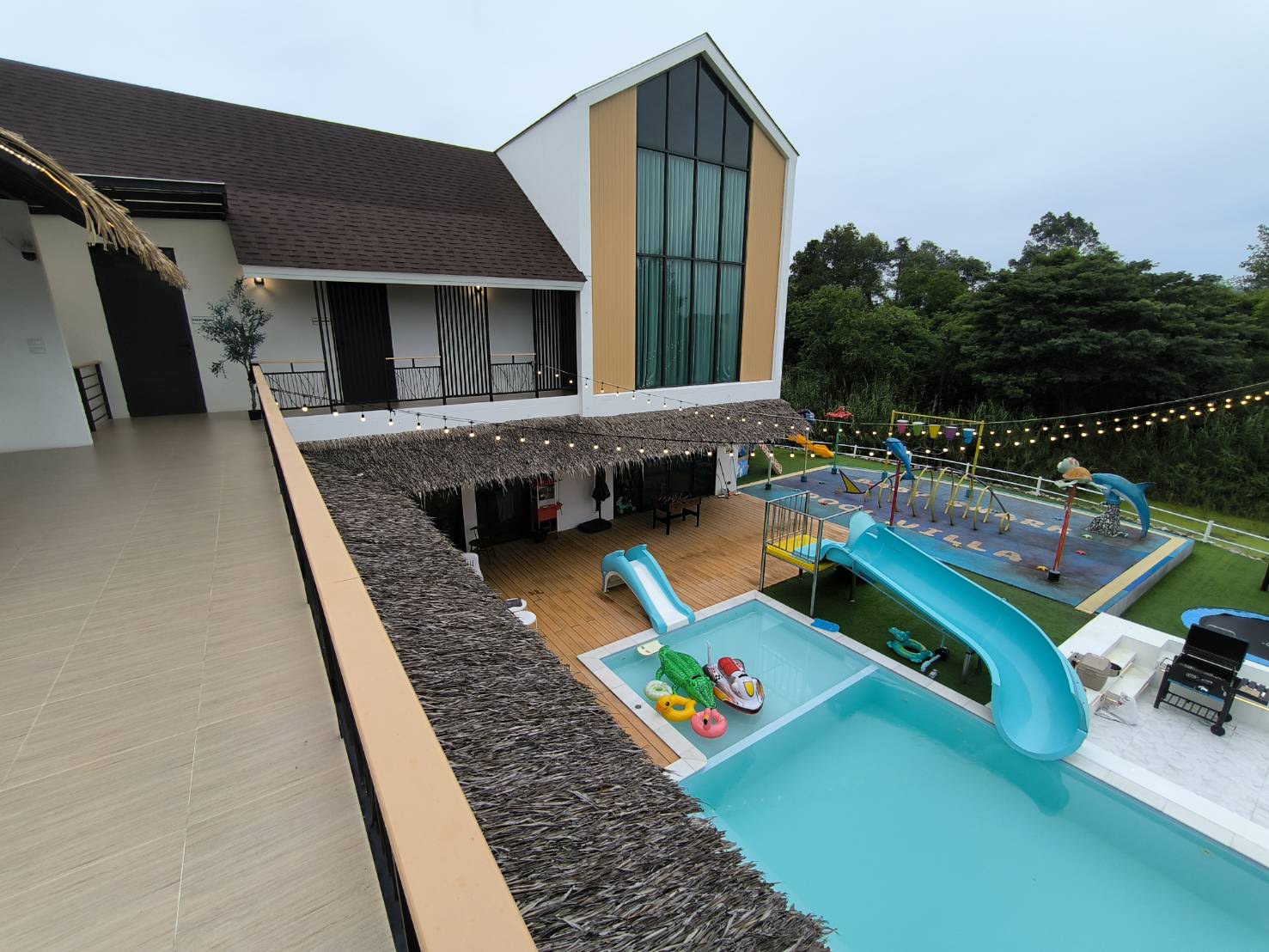
Hua Hin has an unusual density of pool villas for a Thai beach town, scattered throughout the city in both central and outlying areas. A fully furnished two- to three-bedroom pool villa runs THB20,000 to THB40,000 per month. Most are five to ten minutes from the beach by car. If outdoor living space matters to you more than beach walking distance, villas offer exceptional value.

Beachside and City Center Condos
For beach proximity, condos are the practical choice. Properties like InterContinental Residences Hua Hin, directly opposite Bluport in the city center, offer a resort-like experience at around THB42,000 per month for a 45-square-meter unit. More affordable beachside options include The Crest Santora Hua Hin, La Casita Hua Hin, and Mykonos Condo, running THB15,000 to THB25,000 per month.
Budget Options
Studio condos further from the beach and central amenities are available below THB10,000 per month. The quality varies considerably, so in-person inspection before signing is essential. Kwanchanok Apartment is mentioned frequently as an example of the budget end of the market, at around THB6,000 a month.

Want a base while you look around? Agoda lists over 6 million hotels and holiday properties and has 24/7 customer support. Book a couple of weeks somewhere central, then view rentals in person before you sign. Find a short stay on Agoda (Sponsored)
Food
Hua Hin’s food scene benefits from the large expat community: there’s genuine Western food variety here that smaller Thai towns don’t offer, alongside local Thai and seafood options.
Local Thai Food
Street food and local restaurants run THB50 to 80 per dish. Pad Thai, noodle dishes, curries, and rice plates are everywhere. The quality is good and the prices are honest. Eating locally here is as affordable as anywhere in Thailand.
Western and International Food
The expat population has produced a well-developed international restaurant scene. Italian, German, French, and fusion options exist throughout the city, with mains running THB300 to 500 at sit-down Western places. Quality varies, though.
Night Markets
Cicada Market is the expat-favorite weekend night market, open Friday and Saturday 4pm to 11pm, Sunday 4pm to 10pm near Khao Takiab in the south of the city. It’s an outdoor arts and food market with live music, handmade crafts, and a wide range of Thai and international food stalls. The adjacent Tamarind Market covers food more specifically and is worth visiting alongside it.
For something more local, Hua Hin Night Market near the train station, Baan Khun Por, and Saphan Pla Night Market are good for a more authentic Thai market atmosphere.
Shopping Malls
Market Village Hua Hin and Bluport Hua Hin are the two main malls. Both have food courts and restaurants alongside retail, and Bluport has a cinema. They’re the practical fallback for food when markets are closed or you want air conditioning.
Groceries
Lotus’s, Big C, and Villa Market are all available in Hua Hin. Villa Market carries a good range of imported goods, including Western items that the others don’t stock.
Getting Around
Hua Hin is one of the more navigable Thai beach towns for people without their own vehicle, at least in the city center.
- Walking is a real option for many expats. Hua Hin is one of the few towns in Thailand where you can get around on foot, since the center packs condos, shopping malls, night markets, and beaches close together.
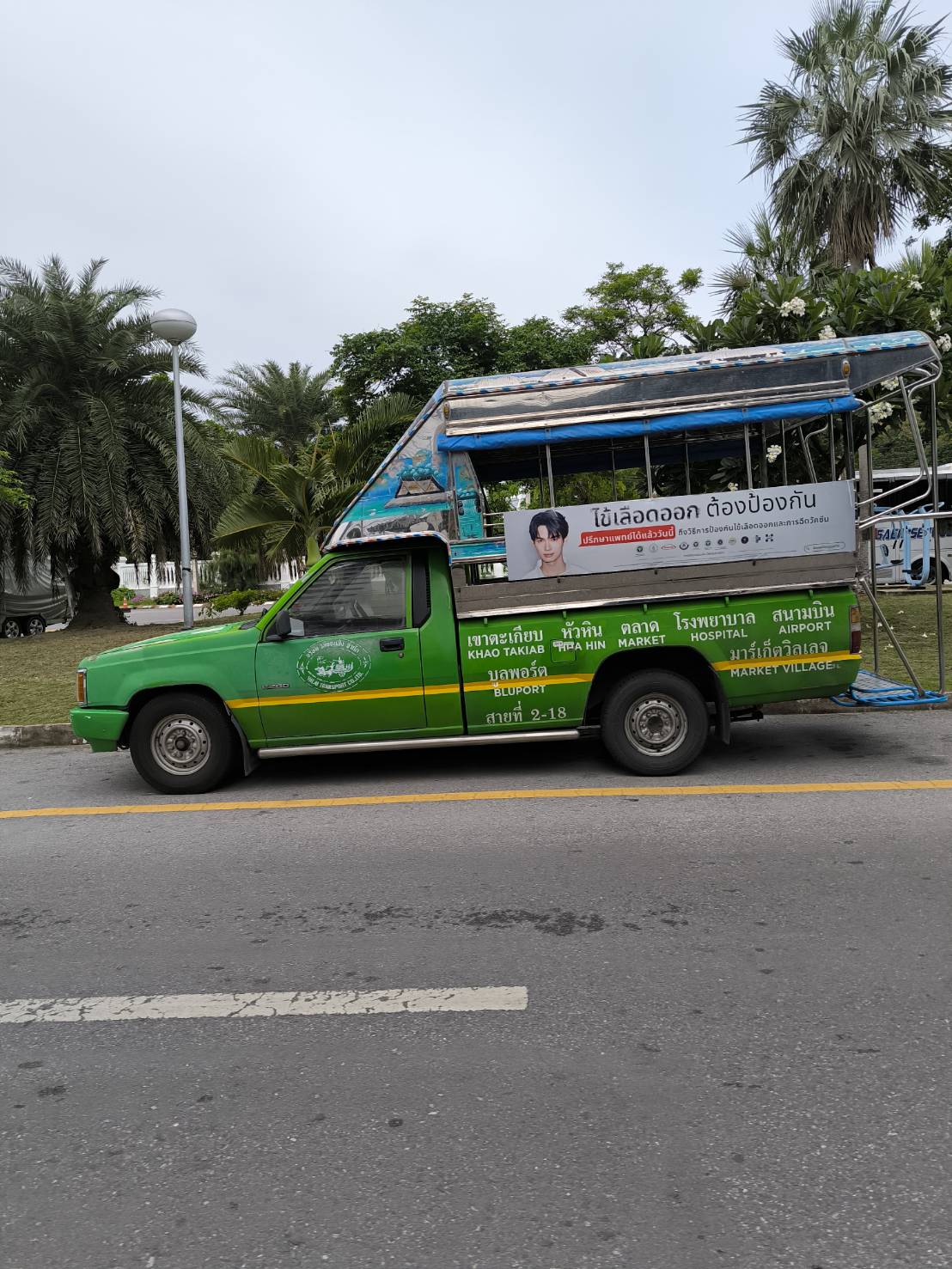
- Songthaews run along Phet Kasem Road and main city routes from early morning to evening for THB10 to 20 per trip. Reliable and cheap for central movement.
- Grab and Bolt both work in Hua Hin for on-demand rides. Convenient and fairly priced for occasional use.
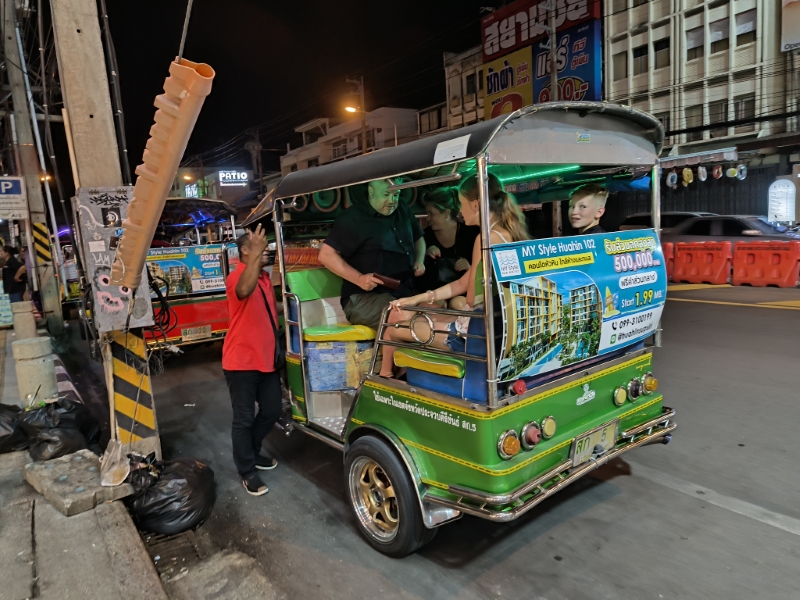
- Tuk-tuks are available at around THB100 per trip. They target tourists and expats rather than locals, so pricing is higher. Fine for short hops when nothing else is available.
- Scooters are the practical choice for daily independence. Buying a used scooter from a departing expat is common here, or you can rent one from a shop. If you ride, sort out a Thai driving license and motorbike insurance early.
Long-Distance Travel
Long-distance travel is well-served by bus and van to Bangkok and major cities, and by train to Bangkok and destinations along the southern rail network. A direct bus service runs to Suvarnabhumi Airport, which is convenient for frequent flyers.
Hua Hin Airport is small, with a limited domestic schedule and no international flights as of October 2026.
The government is widening the runway and expanding its safety areas to bring international flights back, with the works due to finish in August 2026. No international route had been announced as of October 2026, so plan on flying long-haul via Bangkok.
Healthcare
Healthcare in Hua Hin is solid for a town its size, with two functioning private hospitals and a reasonable network of clinics and pharmacies throughout the city.
Bangkok Hospital Hua Hin is the main private hospital for expats and the stronger of the two options. It’s a medium-sized private hospital, but it offers all the types of treatment you’re likely to need. Our Bangkok Hospital Hua Hin review covers it in detail.
San Paulo Hua-Hin Hospital is the more affordable private alternative and offers a full range of services including emergency care, ICU, radiology, and specialist departments. Reviews are more mixed than Bangkok Hospital, with some patients reporting variable English skills and longer wait times. For routine check-ups and non-urgent care where cost matters, it’s a reasonable option.
For serious cases requiring complex surgery, specialist oncology, or major interventions, it’s better to go to Bangkok. Hua Hin’s hospital infrastructure is good for the size of the town but has limits.
Pharmacies, clinics, and dentists are available throughout Hua Hin. English-speaking staff are more common here than in comparable provincial towns, partly due to the established expat population. Nursing homes and elderly care services are also well-developed, catering specifically to retirees who want assisted living with access to local hospital networks.

Want the most complete cover? Cigna Global has plans for expats in Thailand with THB35,000,000 in annual coverage. You can choose hospitals like Bumrungrad and Bangkok Hospital, and Cigna bills them directly. Get a free Cigna quote (Sponsored)

Looking for something more affordable? Luma is based in Bangkok and designs health plans for expats in Thailand, including retirees on an OA visa. You can choose from a wide range of deductibles to fit your budget, and hospitals bill Luma directly. Get a Luma quote (Sponsored)
Social Life
Hua Hin has one of the larger expat communities of any Thai beach town, and the social infrastructure that comes with it. Facebook groups for expats in Hua Hin have tens of thousands of members, with regular posts about social events, clubs, activities, and local information.
The community skews toward retirees, particularly from Scandinavian countries, but the family expat community is growing meaningfully. Digital nomads make up a smaller but visible part of the mix.
The Parents in Hua Hin Facebook group is a specific example of the family side of this: thousands of members networking specifically around family and children’s activities.
Good to know: groups meeting regularly include rugby clubs, spinning classes, yoga collectives, cycling groups, and various cultural exchange events. Making a new friend in Hua Hin is easier than in most Thai cities of comparable size.
Nightlife
Nightlife in Hua Hin is low-key, and that’s intentional, not a failing. The town is a retirement and family destination, not a party scene.
Most evening activity revolves around night markets, beach bars, and restaurants. The main bar and club strip runs along Sois 80, 88, 94, and 102, with a small red-light district that’s tame compared to Pattaya. For a broader comparison, read our guide on Hua Hin vs Pattaya for retirees and families. For an evening out, it’s fine. For someone who needs Bangkok-style nightlife, it’s a long way short.
The better version of an evening in Hua Hin is a beer at a market, dinner at a good restaurant, and an early night. People here tend to be early risers.
Activities
Hua Hin’s activity range is genuinely broad for a small beach town.
- Golf: this is where Hua Hin arguably leads all of Thailand. There are multiple world-class courses within a short drive, and the golfing culture is deeply embedded in the expat community. If golf is part of your life, Hua Hin is hard to beat.
- Kitesurfing: Hua Hin has favorable wind conditions for much of the year, particularly from November to April. There are several kitesurfing schools and a genuinely active community, making it one of the better places in Asia to learn or continue the sport.
- Beaches: Hua Hin Beach itself is broad and pleasant, with horse riding as a distinctive feature. For cleaner, quieter water, Takiab Beach to the south and Cha-Am Beach to the north are both worth knowing. The beaches aren’t the south’s best, but they’re relaxed and accessible.
- Muay Thai: several gyms offer training, including Sitjaopho, King of Muay Thai Gym, Hin Lek Fai Gym, and Pro Muay Thai Hua Hin. Quality varies; visit before committing to a longer package.
- Yoga: Hua Hin has developed a genuine reputation as a yoga destination, with several retreat-quality studios operating throughout the year.
- Hiking: Khao Sam Roi Yot National Park is about an hour away (around 60km) and offers dramatic limestone formations and caves. Khao Hin Lek Fai provides city views and is easily accessible from the center (watch for the macaques on the trail).
- Elephant observation: Kui Buri National Park, about 1.5 hours (around 85km) from Hua Hin, runs a well-regarded program for watching wild elephants at close range. It’s one of the better wildlife experiences in the region and far less known than it deserves to be.
- Water parks: Black Mountain Water Park and Vana Nava Water Jungle cater to families with children. Worth knowing about if you’re assessing Hua Hin as a family destination, but also a source of noise if you live nearby.
- Cinema: Major Cineplex Hua Hin and Bluport Cineplex both screen English-language films.
Education and Family Life
Hua Hin has become one of Thailand’s more compelling family destinations for expats, driven by improving school options, a safe environment, and a growing community of expat families who support each other.
International school options currently operating include:
- Hua Hin International School: follows the English National Curriculum through to Cambridge IGCSE and the IB Diploma.
- Beaconhouse Yamsaard School Hua Hin: part of the global Beaconhouse network, offering British and bilingual curriculum for ages 2 to 16, founded in 2007.
- Da Vinci International School: focuses on creativity and critical thinking.
Bilingual school options include Yamsaard School Hua Hin and Hua Hin Vittayalai School, with fees starting around THB120,000 per year. For a broader comparison, see our guide to international schools in Thailand.
English-speaking nannies and bilingual daycares are reasonably accessible given the expat community size. Daycare for younger children ranges from basic local options to bilingual facilities. The family environment is safe, outdoor-oriented, and genuinely good for children who benefit from beach, nature, and active lifestyle access. The main limitation relative to Bangkok or Chiang Mai is the narrower school selection.
Weather and Air Quality
Hua Hin has one of the milder climates of any Thai coastal city, for two specific reasons:
- it’s not as rainy as the southern islands
- it’s not as hot as central Thailand
Average daytime temperatures run around 32°C, with nights around 25°C. The humidity is real, but the sea breeze takes the edge off for much of the year. Hua Hin is quite windy for much of the year, which keeps air quality noticeably better than many parts of Thailand.
Tip: March and April are the hottest months. If you’re evaluating Hua Hin for a long-term move, visiting during this period is a practical test worth doing.
Air Pollution
The annual haze season from roughly January to April affects the province to some degree, but typically less severely than in northern Thailand or the industrial east.
Popular Neighborhoods
Central Hua Hin
The most convenient area to live and the best starting point for new arrivals. Shops, restaurants, markets, both malls, Bangkok Hospital, and the beach are all within walking distance if you base yourself near Market Village. Property prices are highest here, and the beach in the central stretch is the busiest but not the prettiest.
Practical note: the area around Market Village Hua Hin is the sweet spot for most expats. It’s walkable to the main mall, Bangkok Hospital, and the night market, and a short ride to the beach. If you want quiet, avoid housing near Sois 80, 88, 94, and 102 (the bar streets) and near the water parks if early mornings matter to you.
Takiab Beach
Slightly south of the center and noticeably quieter than the main town, with better beach quality. More popular with European retirees who want a calmer residential atmosphere. Beachside properties are more affordable than in central Hua Hin, with easy access to Cicada and Tamarind markets. Worth considering for anyone who wants beach access as a daily feature without central-area noise and crowds.
West Hua Hin
Ten to fifteen minutes from the beach and accordingly more affordable on land and property. Good villa options here at better price points than beach-adjacent zones. The infrastructure is less developed than the beach areas. Good for families who need space over location and have their own vehicle. Less walkable by definition.
Should You Live in Hua Hin?
Hua Hin makes most sense for:
- retirees who want beach access, a genuine community, good weather, and a cost of living that beats the obvious beach alternatives
- expat families who want good schools, outdoor activities for children, and a safe, unhurried environment
- remote workers who want a settled base with practical conveniences and don’t need city energy to function
It’s a poor fit for people who need active nightlife, a dense international city, frequent access to a major international airport, or the kind of beach quality that makes the south of Thailand worth moving to.
The honest tip before committing: go for a real stay of at least two weeks rather than a holiday weekend. Come in hot season. Walk the neighborhoods at different times of day, and check the weekend traffic and market crowds. Hua Hin reveals itself over time rather than immediately, and that’s the version you’d be living in.
While this complete guide covers the fundamentals, for some quick tips, you can also read our 23 things to know before living in Hua Hin.
Frequently Asked Questions
Is Hua Hin a good place to live?
For retirees and families who want a walkable beach town within reach of Bangkok, yes. It suits people who don’t need big-city nightlife or a major international airport on their doorstep.

Is Hua Hin a good place to retire?
For many retirees, yes. Hua Hin has a large retiree community, two private hospitals and a walkable center, at a lower cost than Phuket or Koh Samui.
Compare it with the alternatives in our guide to the best places to retire in Thailand.
How much does it cost to live in Hua Hin?
A single person typically spends THB42,000 to THB74,000 a month in Hua Hin, depending mostly on how close to the beach they rent. Couples share the rent, so their total rises by less than double.
How do I get from Bangkok to Hua Hin?
By car it’s roughly 200km and 2.5 to 3 hours depending on traffic. Buses, vans, and trains also run regularly, including direct bus services to Suvarnabhumi Airport.
Does Hua Hin have an international airport?
Not yet. Hua Hin Airport has a limited domestic schedule and no international flights as of October 2026. Most long-haul travel goes through Bangkok.
Is Hua Hin expat-friendly?
Yes. It has one of the larger expat communities of any Thai beach town, with active social groups, established schools, and English-speaking healthcare staff more common than in comparable provincial towns.
Is Hua Hin safe?
It is generally considered one of the safer beach destinations in Thailand for families and retirees, though specific safety questions are covered in more depth in our dedicated Is Hua Hin Safe guide.
What is the best area to live in Hua Hin?
Central Hua Hin near Market Village is the most walkable and convenient for first-time arrivals. Takiab Beach suits those wanting quieter, better beach access. West Hua Hin suits families who want more space and don’t mind driving.
Sources Cited
- Bangkok Hospital Hua Hin: services and the Building B expansion.
- San Paulo Hua-Hin Hospital: the hospital’s official name and services.
- The Nation, Thailand pushes Hua Hin Airport upgrade for foreign flights: runway and safety-area works due August 2026 and plans for international flights.
- Hua Hin International School: curriculum (English National Curriculum, Cambridge IGCSE, IB Diploma).
- Department of National Parks, Kui Buri National Park: wild elephant viewing near Hua Hin.


 Deutsch:
 Français:
'/%3E%3Cpath%20fill='%23b2b2b2'%20d='M241%20382q0%2016%2017%2026%2017%2011%2042%2011t42-11q16-11%2017-26V269H241'/%3E%3Cpath%20fill='%239f7e00'%20d='M241%20379q0%2014%208%2023%209%209%2021%209%2014%200%2021-9%209-9%209-23V269h-59'/%3E%3Cpath%20d='M241%20339v-70h59v110q0%2014-9%2023l-6%205v-68h-15v72q-8%200-14-4v-68zm59%2040c0%2022%2015%2032%2029%2032%2021%200%2030-18%2030-32v-40h-59'/%3E%3Cpath%20fill='%239f7e00'%20d='M266%20277v5h2v12h-3v-5h2v-5h-9v5h2v5h-4v9h3v18h-5v10h34v-10h-5v-18h3v-9h-4v-5h2v-5h-9v5h2v5h-3v-12h2v-5zm42%20101q0%2010%206%2017%206%206%2015%207%2010-1%2016-7%206-7%206-17v-29h-43'/%3E%3Ccircle%20fill='%230044ad'%20cx='329.5'%20cy='372'%20r='6'/%3E%3Cellipse%20fill='%230044ad'%20cx='300'%20cy='340'%20rx='16'%20ry='21'/%3E%3C/svg%3E) Español:
Español: