
Thailand isn’t one place. Bangkok, Chiang Mai, Phuket, Pattaya, Hua Hin, and Koh Samui offer completely different lives. Here’s an honest look at the six cities that make sense for long-term expat living, what each actually costs, which neighborhoods to target, and the downsides most guides skip.
Thailand sounds simple to move to: affordable, warm, great food, friendly people. The problem is that “Thailand” is not one place. Bangkok and Hua Hin are two entirely different lives, and Chiang Mai and Phuket attract almost opposite personalities. Pick the wrong city and you’ll spend your first year wondering what all the fuss is about; pick the right one and you’ll wonder why you waited so long.
I’ve spent years navigating this country and talking to the people who’ve made it work, and the ones who haven’t. This guide covers the six cities that make sense for long-term expat living.
Disclaimer: Some links in this article go to our partners, and we may earn a commission if you use them. It costs you nothing extra, and we only recommend services we'd use ourselves. Read more in our Advertising Disclosure.
Contents
Key Takeaways
- Bangkok is the only real choice if you need a local job, with the best healthcare, schools, and social scene, but traffic, smog, and a relentless pace.
- Chiang Mai is the best value for remote workers (from around THB25,000 a month), as long as you can tolerate burning season.
- Phuket has the best beaches and amenities but is the most expensive city, roughly 20 percent above Bangkok.
- Pattaya is the most affordable coastal option with easy Bangkok access; the nightlife reputation is confined to a few blocks.
- Hua Hin is quiet, cheap, and relaxed, ideal for retirees, but employment and international schooling are limited.
- Koh Samui offers island living with real infrastructure, priced between Phuket and Hua Hin.
- Whatever you pick, spend at least two weeks (ideally a month) living normally there before signing a lease.

How to Pick the Right City
Three variables drive the decision more than anything else.
- Your employment situation. If you need a local job, Bangkok is the only serious option. If you work remotely, every city on this list becomes viable. If you’re retired, cost and lifestyle matter most.
- Your budget. The gap between the cheapest and most expensive cities here is roughly 40 percent, the difference between stretching to stay and living comfortably.
- Your lifestyle priorities. Beaches, mountains, urban convenience, peace and quiet: Thailand has all of it, but in different places. Being honest about what you actually want, not what sounds good in conversation, saves a false start.
One rule applies regardless of where you land: spend at least two weeks in a city before signing a lease. The texture of daily life, commuting, grocery shopping, getting to a hospital, looks very different after week two than it did on arrival day.
Bangkok
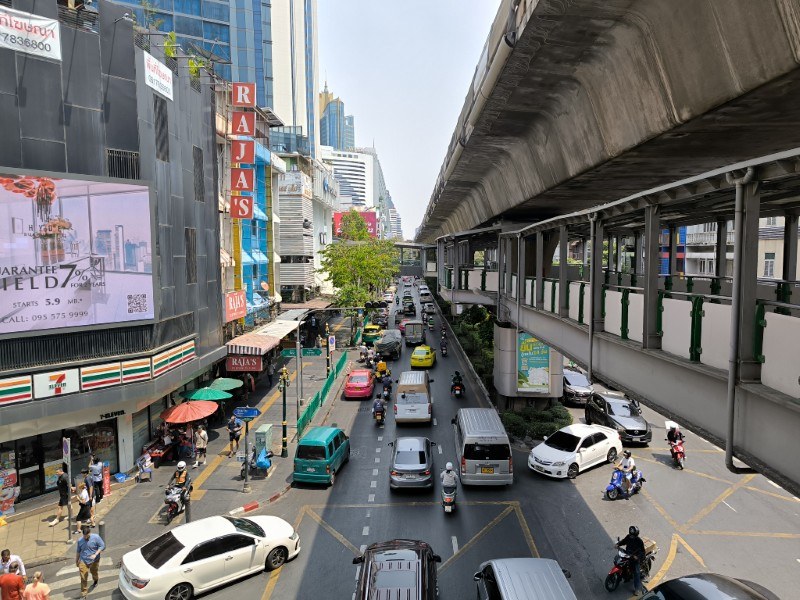
Bangkok is the obvious starting point for many expats. The career infrastructure here is unmatched in Thailand, Agoda, Google, and hundreds of international companies have regional offices here, and the teaching market alone absorbs thousands of foreigners a year. If you need a local salary, this is where you find one.
Cost of Living in Bangkok
The cost of living in Bangkok is among the highest in Thailand, but still affordable by Western standards, and the city offers a wide range of options for different living styles. You can eat a THB60 bowl of noodles at a food court, then walk into a Michelin-starred restaurant an hour later that costs over THB1,000 per dish. Some residents spend under THB30,000 a month while others easily spend over THB100,000. Our recommended budgets:
- A single person living comfortably (decent condo, mixed dining, a social life) needs roughly THB40,000 to THB65,000 per month.
- Families with kids in a local school spend around THB80,000 a month.
- Families with international school fees can push to THB150,000 or more.
Rent in Bangkok
One-bedroom condos in well-connected neighborhoods run THB15,000 to THB35,000 per month. Further from the BTS or MRT, prices drop sharply, and you can rent a detached house on the city outskirts for around THB20,000. Three neighborhoods are worth knowing if you’re starting your search:
- Sukhumvit (Phrom Phong to Thong Lo) is the expat heartland: upscale condos, international restaurants, family-friendly amenities. Convenient and social, but you pay for it.
- Ari is one of the best areas for expats who want a local vibe without giving up convenience. BTS Ari reaches Siam in about ten minutes, and the area is full of independent cafes and street food; a solid one-bedroom runs THB15,000 to THB22,000.
- Rama 9 is newer and less polished but noticeably more affordable; one-bedroom condos average THB18,000 to THB26,000, and the area is developing fast.
Healthcare, Education, and Social Scene in Bangkok
Healthcare is Bangkok’s strongest selling point. Bumrungrad International, Bangkok Hospital, and Samitivej are world-class, with English-speaking doctors, short wait times, and modern equipment. Over 100 international schools serve the city, covering every major curriculum, and two international airports (Suvarnabhumi and Don Mueang) mean cheap, frequent regional connections. Expats consistently describe the social scene as the easiest in the country to plug into, with a group for almost every interest, profession, and nationality.
The Downsides of Bangkok
- Traffic is genuinely bad: a 10-kilometer trip can take more than an hour.
- The annual smog season (roughly November to February) can make outdoor life miserable.
- For a city of ten million, green space is scarce. If you need trees and quiet to feel sane, Bangkok will grind you down unless you live outside the center.
Read more:Living in Bangkok, the cost of living in Bangkok, and underrated Bangkok neighborhoods.
Chiang Mai

Chiang Mai has been the digital nomad capital of Southeast Asia for over a decade, and it’s earned that for real reasons rather than hype. Fast internet, a coworking culture, low costs, and an established expat community are hard to replicate anywhere else in the region. The city is surrounded by mountains, temperatures are cooler (genuinely cold by Thai standards in December and January), the pace is slower, and the food is excellent.
Cost of Living in Chiang Mai
Chiang Mai is comfortably cheaper than Bangkok, and the lifestyle you get per baht is arguably better. A THB35,000 budget here buys a life that would cost twice as much in the capital. Our recommended budgets:
- A single person living comfortably needs roughly THB25,000 to THB45,000 per month.
- Families with kids in a local school spend around THB50,000 to THB65,000 a month.
- Families with international school fees can push to THB80,000 or more.
Internet is not an issue here. Fiber connections run 300 to 1,000 Mbps and cost THB500 to THB800 per month, and coworking spaces are plentiful and well-equipped.
Rent in Chiang Mai
Chiang Mai gives you significantly more space per baht than Bangkok. Studio condos in decent neighborhoods start around THB8,000 to THB12,000, and one-bedroom units in popular areas run THB12,000 to THB20,000. Three neighborhoods anchor most expat life:
- Nimman is the nomad hub: dense with cafes, coworking spaces, and international restaurants. Convenient, but it can feel like a bubble.
- Old City has more character, with moat views and temples on every block, slightly quieter and good for those who want to feel embedded in Thailand.
- Hang Dong and San Sai in the outer suburbs attract families with cars: more space, lower rents, green surroundings.
Healthcare, Education, and Social Scene in Chiang Mai
Healthcare is solid. Chiang Mai Ram and Bangkok Hospital Chiang Mai both have English-speaking staff and handle most expat needs reliably; for anything complex, both have relationships with Bangkok’s top facilities and arrange transfers. Several international schools cover British, American, and IB curricula, more limited than Bangkok but workable for most families. The social scene is easy to plug into, especially for remote workers, with regular meetups and a constant churn of new arrivals.
The Downsides of Chiang Mai
- Burning season is non-negotiable to understand. PM2.5 regularly exceeds 200 from February through April, well into the hazardous range, and many long-term residents simply leave for those six to eight weeks.
- Transport outside the center needs a motorbike or Grab, and there’s no skytrain or metro.
- If you need a local salary rather than remote income, the options are narrow, teaching is the main path, at lower pay than Bangkok.
Tip: budget for a good air purifier (THB5,000 to THB15,000) before you arrive. During burning season, running it 24 hours a day in your bedroom is the difference between manageable and miserable.
Read more:Living in Chiang Mai and Bangkok vs Chiang Mai.
Phuket

Phuket sells you a lifestyle: crystal-clear water, limestone cliffs, fresh seafood, the Andaman light at dusk. It delivers on the image, but it costs more than the brochure implies, and the experience depends heavily on which part of the island you choose. It’s a great place if you want good beach access, good air quality year-round, and a great lifestyle you can afford.
Cost of Living in Phuket
Phuket is the most expensive city in Thailand, running roughly 20 percent more than Bangkok, and it shows in rent, dining, and transport. The lifestyle justifies the premium for many people, particularly those with reliable remote income or retirement funds. Our recommended budgets:
- A single person living comfortably needs roughly THB50,000 to THB65,000 per month.
- Couples can manage on THB80,000 to THB100,000 a month.
- Families with international school fees can push to THB150,000 or more.
Rent in Phuket
Mid-range condos (one to two bedrooms) run THB15,000 to THB40,000. Moving ten minutes inland from the beach cuts that by 30 percent to 40 percent. Pool villas, common in Phuket in a way they aren’t elsewhere, start around THB60,000 for a three-bedroom. Four areas are worth knowing:

- Rawai and Chalong on the southern tip are the most popular with long-term expats: quieter, residential, close to good restaurants and the marina.
- Kata and Kamala strike a middle ground, real beaches and expat amenities without Patong’s chaos; a solid one-bedroom runs THB15,000 to THB25,000.
- Bang Tao in the north is newer and popular with families: wide beach, international schools nearby, a growing restaurant scene.
- Patong is where most tourists stay. Most long-term expats don’t.
Healthcare, Education, and Social Scene in Phuket
For an island, healthcare is strong. Bangkok Hospital Phuket holds JCI accreditation and is the most trusted facility, and Mission Hospital covers more routine care; both can handle most emergencies without a Bangkok transfer. Over ten international schools cover British, American, IB, and other curricula, alongside plenty of family-friendly activities. The expat social scene is well-developed but more fragmented than Bangkok’s, with communities forming around neighborhoods rather than the island as a whole.
The Downsides of Phuket
- Monsoon season (May to October) brings daily downpours, occasional flooding, and rough seas that close some beaches for weeks.
- Transport is a persistent frustration: no usable public transit, overcharging tuk-tuks, so a car or motorbike is essential.
- The cost of living is the highest on this list. If budget is the priority, Phuket works against you.
Read more:Living in Phuket and underrated Phuket neighborhoods.
Pattaya
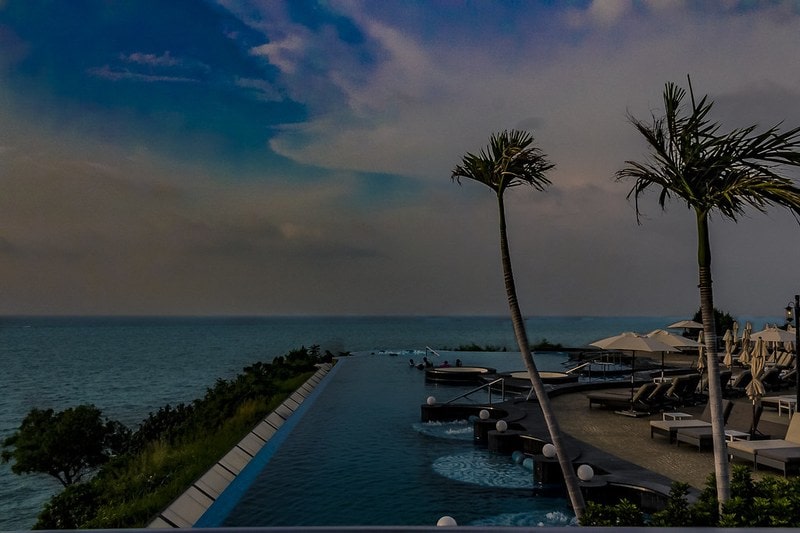
Pattaya has a reputation problem, and it’s earned one, but the reputation doesn’t match daily life for most expats who actually live there. The Walking Street image is real but confined to a few blocks. Step away and you find a functional coastal city with better infrastructure than you’d expect, two hours from Bangkok on the Eastern Seaboard, close enough for a weekend trip or even a long-day commute.
Cost of Living in Pattaya
Pattaya is one of the most affordable options on this list, particularly for retirees and families where rent is the biggest line item. Rent runs nearly half Bangkok’s rates. Our recommended budgets:
- A single person living comfortably needs roughly THB24,000 to THB45,000 per month.
- Families with kids in a local school spend around THB55,000 to THB75,000 a month.
- Families with international school fees can push to THB100,000 or more.
Rent in Pattaya
Three neighborhoods anchor most expat life:
- Jomtien is the go-to for families and retirees: quieter beach, good food, residential feel. One-bedroom condos run THB10,000 to THB25,000.
- Naklua in the north is more local in character, popular with longer-term residents who want to sidestep the tourist strip, with slightly lower rents than Jomtien.
- Central Pattaya has everything in walking distance but sits in the nightlife zone, fine for some, not for others.
Tip: if you’re bringing a family, anchor in Jomtien or Naklua and treat the rest of Pattaya as a commercial district you visit when you need something. The geography is compact enough that this works well.
Healthcare, Education, and Social Scene in Pattaya
Healthcare is genuinely good. Bangkok Hospital Pattaya and Pattaya International Hospital both operate at high standards with English-speaking staff. The city has branches of Rugby School Thailand and Regent’s International School, so families who wrote Pattaya off on reputation are often surprised by the schooling. The expat community is large and well-established, skewing older than Chiang Mai but more mixed than Hua Hin, with easy-to-find clubs, sports groups, and social organisations. The real draw isn’t the water; it’s the value, the Bangkok access, and the comprehensive amenities.
The Downsides of Pattaya
- The reputation follows you. Some expats find the association with the nightlife scene uncomfortable even if they never go near it.
- The beach is not Phuket or Samui. If great water is the priority, Pattaya won’t deliver it.
- Air quality and general aesthetics in central areas lag behind other cities on this list.
Read more:Living in Pattaya and Hua Hin vs Pattaya.
Hua Hin
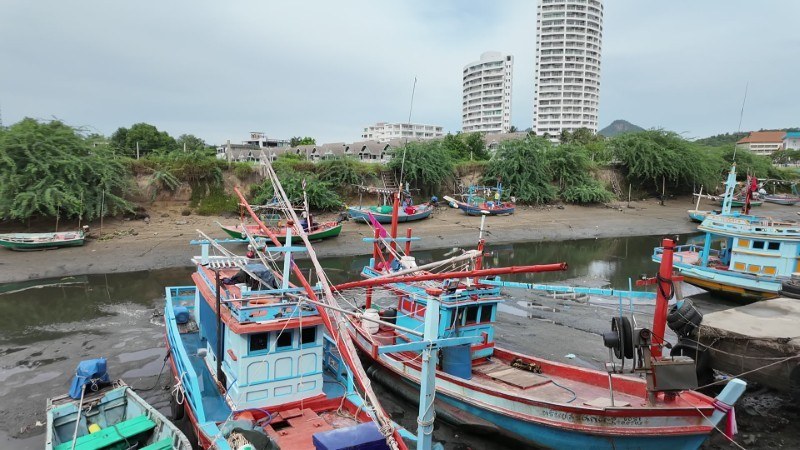
Hua Hin is where people end up when they’ve decided they don’t need to be anywhere in particular. The town sits on the Gulf coast about two and a half hours south of Bangkok. The expat community skews older, and that shapes the culture: golf, long lunches, evening markets, day trips to Khao Sam Roi Yot national park. Younger expats live here too, usually with remote income and a young family, but they’re in the minority.
Cost of Living in Hua Hin
Hua Hin is among the most affordable destinations on this list. Rent runs about 38 percent cheaper than Bangkok, and the slower pace tends to reduce the temptation to spend. Our recommended budgets:
- A single person living comfortably needs roughly THB28,000 to THB45,000 per month.
- Families with kids in a local school spend around THB55,000 to THB70,000 a month.
- Families needing international school will have to factor it in carefully, as options are limited to one school.
Rent in Hua Hin
Hua Hin offers genuine variety in the type of home you can rent, something Bangkok and Phuket rarely deliver at this price:
- A simple studio inland costs THB8,000 to THB12,000.
- A modern condo with pool and gym within walking distance of town runs THB18,000 to THB25,000.
- A house with a garden, genuinely viable here unlike in Bangkok or Phuket, can be found for THB15,000 to THB30,000.
Healthcare, Education, and Social Scene in Hua Hin
Healthcare is covered by a Bangkok Hospital branch that handles most expat needs; for anything serious, Bangkok is two and a half hours away. International schooling is limited to one option, Hua Hin International School, so families with multiple children or specific curriculum needs should weigh that carefully. The social scene is quieter than other cities here, which is exactly the point for most who choose it: a tight-knit community built around golf clubs, beach clubs, and evening markets. Employment is limited, mostly teaching at below-Bangkok wages, so this is primarily a destination for those whose income follows them.
The Downsides of Hua Hin
- The social scene, while friendly, is thin. If you need busy nightlife or a wide professional network, Hua Hin won’t provide it.
- Employment options are almost nonexistent outside teaching. This is a destination, not a career launchpad.
- International schooling is limited to a single option.
Tip: Cha-Am, about 25 kilometers north of Hua Hin, is even quieter and slightly cheaper. If Hua Hin’s modest tourist traffic still feels like too much, it’s worth a look before you commit.
Read more:Living in Hua Hin.
Koh Samui

Koh Samui sits in the Gulf of Thailand, about 80 kilometers off the Surat Thani coast, a one-hour flight from Bangkok or a ferry from the mainland. It’s Thailand’s third-largest island, with enough infrastructure to sustain genuine long-term living, which sets it apart from most Thai islands. The comparison most often made is with Phuket: Samui is smaller, quieter, and less developed, for better and worse, and for the right person it feels like what Phuket was before the luxury resorts took over.
Cost of Living in Koh Samui
Koh Samui sits between Phuket and Hua Hin in price: more expensive than the mainland alternatives, but noticeably cheaper than Phuket for a comparable lifestyle. Our recommended budgets:
- A single person living comfortably needs roughly THB35,000 to THB55,000 per month.
- Couples can manage on THB55,000 to THB80,000 a month.
- Families with international school fees can push to THB120,000 or more.
Rent in Koh Samui
Four neighborhoods cover most of where expats settle:
- Bophut is the first choice for families: home to the Fisherman’s Village Friday market, close to the island’s international schools, with a residential feel.
- Maenam is quieter and cheaper, with a long, shallow beach that’s safe for children; one-bedroom units run THB12,000 to THB28,000.
- Lamai has a laid-back energy and a younger crowd, good infrastructure and slightly more affordable; rents run THB10,000 to THB25,000.
- Chaweng is the main tourist strip, fine to visit but noisy, overpriced, and busy year-round.
Healthcare, Education, and Social Scene in Koh Samui
Bangkok Hospital Samui handles most expat medical needs, with English-speaking doctors and solid equipment; the one-hour flight to Bangkok is a genuine safety net for anything complex. International schooling is limited, with PBISS (the Phuket British International School Samui campus) serving families, workable at primary level but more constrained as children get older. The expat community is real but smaller than Phuket’s, clustering around neighborhoods rather than the island as a whole, with Bophut the most active.
The Downsides of Koh Samui
- Storm season (November through December on the Gulf side) brings daily rain, rough seas, flooding, and wind that grounds ferries for days.
- Transport requires a motorbike or car; there’s no public transit.
- The community is thinner than Phuket or Chiang Mai, and getting on and off the island adds friction that mainland cities don’t have.
Read more:Living in Koh Samui.
Which City Is Right for You?
No city is objectively the best; the right answer depends almost entirely on what you’re optimizing for. A few honest generalizations hold. If you need a local income, Bangkok is the only real choice. If you work remotely and want maximum value, Chiang Mai wins on budget, but only if you can tolerate burning season. And if a beach is non-negotiable, it comes down to what you’ll trade: Pattaya gives you the best value and Bangkok access, Phuket the best beaches and amenities at a premium, Samui quiet and a smaller community, and Hua Hin ease and affordability without much fuss.
| City | Best for | Monthly budget (single) | Key trade-off |
|---|---|---|---|
| Bangkok | Career-builders, families needing top schools, city lovers | THB40,000 to THB65,000 | Traffic, smog, pace |
| Chiang Mai | Digital nomads, budget-conscious retirees | THB25,000 to THB50,000 | Burning season, isolation |
| Phuket | Beach lifestyle with full amenities | THB50,000 to THB65,000 | Cost, transport, monsoon |
| Pattaya | Coastal living near Bangkok, budget families | THB24,000 to THB45,000 | Reputation, beach quality |
| Hua Hin | Retirees, quiet beach life, Bangkok access | THB28,000 to THB45,000 | Limited jobs, one school |
| Koh Samui | Island lifestyle, smaller community than Phuket | THB35,000 to THB55,000 | Storm season, thinner infrastructure |
Avoid this mistake: the biggest mistake I see expats make is choosing a city based on a two-week holiday. Spend a month living normally, grocery shopping, working, getting to a doctor, dealing with a rainy week, and the right answer usually becomes clear on its own.
What About Other Cities?
These are the six best cities to live in Thailand as an expat, and the most popular ones with the biggest communities. But Thailand is a big country with many places to live. If you’d rather be in a smaller city, see our guide to the underrated cities you should consider living in as an expat in Thailand.



 Français:
 Deutsch:
'/%3E%3Cpath%20fill='%23b2b2b2'%20d='M241%20382q0%2016%2017%2026%2017%2011%2042%2011t42-11q16-11%2017-26V269H241'/%3E%3Cpath%20fill='%239f7e00'%20d='M241%20379q0%2014%208%2023%209%209%2021%209%2014%200%2021-9%209-9%209-23V269h-59'/%3E%3Cpath%20d='M241%20339v-70h59v110q0%2014-9%2023l-6%205v-68h-15v72q-8%200-14-4v-68zm59%2040c0%2022%2015%2032%2029%2032%2021%200%2030-18%2030-32v-40h-59'/%3E%3Cpath%20fill='%239f7e00'%20d='M266%20277v5h2v12h-3v-5h2v-5h-9v5h2v5h-4v9h3v18h-5v10h34v-10h-5v-18h3v-9h-4v-5h2v-5h-9v5h2v5h-3v-12h2v-5zm42%20101q0%2010%206%2017%206%206%2015%207%2010-1%2016-7%206-7%206-17v-29h-43'/%3E%3Ccircle%20fill='%230044ad'%20cx='329.5'%20cy='372'%20r='6'/%3E%3Cellipse%20fill='%230044ad'%20cx='300'%20cy='340'%20rx='16'%20ry='21'/%3E%3C/svg%3E) Español:
Español: