This article will take approximately 17 minutes to read. Don't have the time right now? No worries. Email the ad-free version of the article to yourself and read it later!
Bangkok, Chiang Mai, and Phuket get all the attention, but Thailand has quieter, cheaper cities where a foreigner can live well. Here’s an honest look at six underrated places, what they cost, who they suit, and the downsides most guides skip.
When it comes to the best places to live in Thailand, people talk about the same cities: Bangkok for urban convenience, Chiang Mai for the nomad scene, Phuket for the beach, Pattaya for the nightlife, Hua Hin for retirees, and Koh Samui for island life with real infrastructure. Those cities earned their reputation, and we covered them in our first guide.
But Thailand has dozens of cities where a foreigner can live well, and the obvious six get so much coverage that the less obvious options rarely get a fair look. This article covers six hidden gems, smaller, quieter, and cheaper, but with good infrastructure and real culture: Chiang Rai, Kanchanaburi, Rayong, Samut Prakan, Udon Thani, and Khon Kaen. Each is a viable long-term base for the right person. None will suit everyone.
Contents
Key Takeaways
- Chiang Rai gives you northern Thailand (hills, cool climate, temples) at 20 percent to 30 percent less than Chiang Mai, with a smaller, quieter expat scene.
- Kanchanaburi is among the cheapest provinces (around THB25,800 a month for a single person), built around rivers and waterfalls, and an hour from Bangkok on the new motorway.
- Rayong offers Eastern Seaboard beaches and excellent infrastructure without Pattaya’s nightlife, two hours from Bangkok.
- Samut Prakan is Bangkok-adjacent with the same infrastructure at 30 percent to 40 percent lower rent, strong international schools, and Suvarnabhumi Airport 15 minutes away.
- Udon Thani has one of the largest expat communities outside Bangkok and Chiang Mai, plus solid healthcare and an IB World School.
- All six trade a big English-speaking social scene and specialist healthcare for lower costs and a more genuinely local life.

Chiang Rai
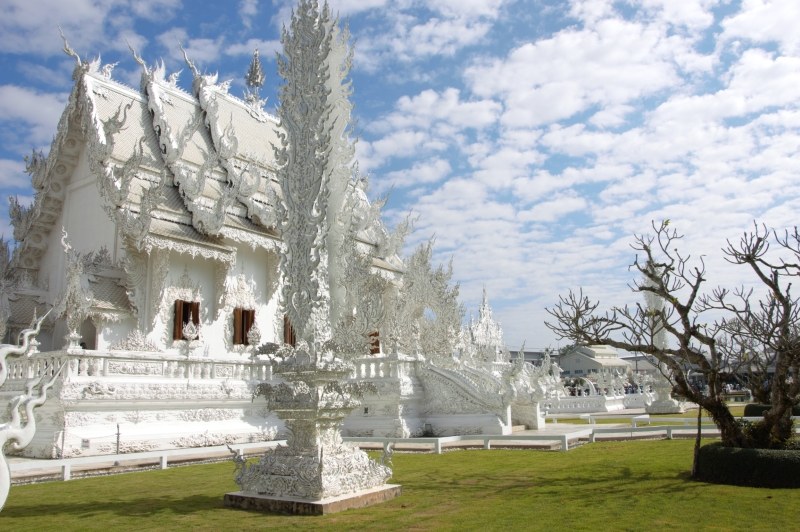
Chiang Rai sits in the far north, about 800 kilometers from Bangkok and three hours north of Chiang Mai by road. It’s a slower version of Chiang Mai with roughly half the social density and cheaper living, you still get the hills, the cooler climate, the temples, and the northern food, but without the crowds and traffic. Among expats who’ve settled here, the consistent line is that they wanted northern Thailand without Chiang Mai’s increasingly crowded version of it.
Why Live in Chiang Rai
- Affordable cost of living: you can live for 20 percent to 30 percent less than Chiang Mai, and up to 50 percent less than Bangkok.
- Infrastructure: the streets are wider and the traffic is lighter than Chiang Mai.
- Pace of life: closer to what Thailand felt like before mass tourism reached Chiang Mai.
- Nature: mountains, hiking trails, and the Golden Triangle nearby. You can eat a THB60 bowl of noodles and be on a mountain trail within 20 minutes.
Healthcare, Schools, and Community
Overbrook Hospital is the main private facility serving expats, with English-speaking staff and JCI accreditation, though anything requiring specialist equipment or complex surgery means a referral to Chiang Mai or Bangkok. International schooling exists but is limited beyond primary level. The expat community is small and cohesive, and it tends to attract people who specifically chose Chiang Rai over Chiang Mai: quieter, more settled, and more interested in integrating into Thai life than recreating a Western social scene.
The Downsides of Chiang Rai
- The same burning-season air pollution as Chiang Mai, from March through April.
- Thin expat infrastructure: coworking spaces exist, but not in Chiang Mai’s numbers.
- Limited Western goods, international restaurants, and specialized services.
- Negligible public transport, so you need a scooter or car, and a quiet social scene that anyone needing a large English-speaking community will find underwhelming.
Chiang Rai suits retirees who want somewhere quiet and genuinely cheap, long-term residents who’ve graduated from the nomad scene, and remote workers who don’t need daily coworking energy. It’s a poor fit for anyone who depends on a large expat network or comprehensive Western amenities.
Where to Live in Chiang Rai
- City center (Wiang): the most walkable part of the city, with one-bedroom condos at THB7,000 to THB10,000 a month.
- Rim Kok: along the river, suiting longer-stay residents who want space, with garden houses at THB10,000 to THB18,000.
- Mae Chan area: about 20 kilometers north, cheaper still and better for those with their own transport.
Read more: Living in Chiang Rai: an expat’s guide.
Kanchanaburi
Most people think of Kanchanaburi as the historical city of the Death Railway, but it’s a great place to live that few consider. The expats who’ve settled here give a similar answer: it’s a small city with good nature and infrastructure, only an hour from Bangkok.

Why Live in Kanchanaburi
- Affordability: it consistently ranks among Thailand’s cheapest provinces, with an estimated monthly cost of living around THB25,800 for a single person.
- Nature: day-to-day life is built around the outdoors, Erawan National Park, Sai Yok waterfall, and the River Kwai.
- Simplicity: no large expat scene to navigate and no tourist strip to avoid. Life here is local and grounded.
- Proximity to Bangkok: the new M81 motorway puts the capital within an hour’s drive.
Healthcare, Schools, and Community
Thanakarn Hospital is the main private facility and handles routine care adequately, but for specialist treatment or complex surgery, Bangkok is one to two hours away. There’s no international schooling in the province, so it doesn’t suit families with school-age children unless you plan to homeschool. The expat community is small and informal, built through Facebook groups and a handful of Western-run businesses along the river.
The Downsides of Kanchanaburi
- No airport. The train to Bangkok is scenic but slow, so most trips mean a car or bus, around two to three hours.
- Lower English proficiency among locals, so daily life takes more Thai.
- No advanced healthcare locally, a hard constraint for some people.
- Limited entertainment beyond nature, which wears thin faster than some expect.
Kanchanaburi suits budget-conscious retirees, remote workers with low outgoings, and anyone who wants to be surrounded by rivers, mountains, and waterfalls rather than coffee shops and expat bars. It doesn’t suit anyone who needs a full-service medical system, international schooling, or a ready-made social life.
Where to Live in Kanchanaburi
The town center, near the River Kwai and the main market, has the highest concentration of services and is walkable by Thai provincial standards, with one-bedroom apartments at THB4,000 to THB8,000 a month. You can live outside town too, but you’ll need a car and some local connections.
Read more: Living in Kanchanaburi: what does THB50,000 get you?
Rayong
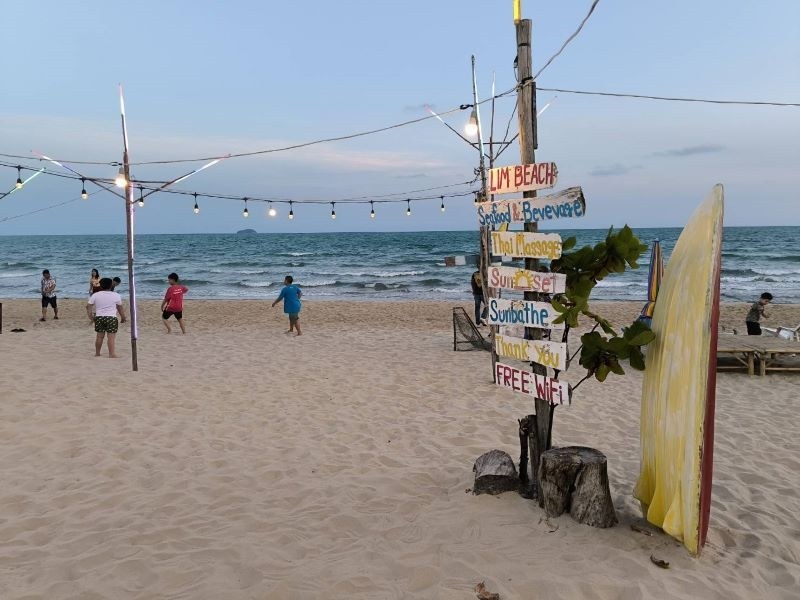
Rayong is my personal favourite, like living in the Bangkok suburbs but with easy access to beach living. It’s also a province with many industrial zones, which is either irrelevant or significant depending on where you live. The useful comparison is Pattaya, 60 kilometers west: Rayong has the same Gulf coast and Eastern Seaboard location without Pattaya’s nightlife industry, and a growing number of expats made exactly that trade deliberately.
Why Live in Rayong
- Infrastructure: as an industrial city, its infrastructure is among the best in Thailand, comparable to a Bangkok suburb but without the traffic.
- The beach: beaches like Mae Ram Phueng are clean and uncrowded, nothing like Thailand’s developed tourist coastlines.
- Bangkok access: an easy two-hour motorway trip to the capital.
- Value: modestly cheaper than Pattaya for a comparable lifestyle, with U-Tapao International Airport adding domestic connections.
Healthcare, Schools, and Community
Bangkok Hospital Rayong handles most expat medical needs with the equipment and English-speaking staff typical of the group, though it’s expensive and not quite Bangkok quality. International schooling is limited compared to Bangkok or Phuket and thins out at secondary level, so it’s a weak choice for families with older children. The expat community is small, made up of retirees, foreign spouses, and industrial-sector workers, and tends to be more integrated into Thai life than in cities with larger foreign populations.
The Downsides of Rayong
- The industrial character intrudes near the estates, with poor air quality from January through March (though Mae Ram Phueng and Ban Chang sit well away from the worst of it).
- Personal transport is essential, since public transit is minimal.
- The expat social scene is thin, so socializing takes more effort than in Bangkok or Chiang Mai.
Rayong suits retirees who want beach life without a tourist city’s noise and price, and settled expat families integrated into Thai life. It’s a poor fit for people who need a large expat network or comprehensive international schooling.
Where to Live in Rayong
- City area (central Rayong): the most complete set of services, with three-bedroom houses in gated communities at THB14,000 to THB18,000 a month and condos from THB6,000.
- Mae Ram Phueng Beach: about 12 kilometers from the city, popular with retirees and couples, with beachfront condos at THB10,000 to THB14,000.
- Ban Chang: a quieter beach town near U-Tapao Airport, with standalone houses at THB8,000 to THB12,000.
Read more: Living in Rayong: lifestyle and top neighborhoods.
Udon Thani
Udon Thani was a major US Air Force base during the Vietnam War, and that history still shapes it, some call it the “Pattaya of Isan.” Thousands of foreigners married to Thais live here, many of them retirees, so there are more Western-style restaurants and bars per capita than in most Thai cities its size. The foreign community has genuine depth, not just a handful of retirees who found their way off the tourist trail.
Why Live in Udon Thani
- Community: one of the largest expat communities outside Bangkok and Chiang Mai, anchored by the Soi Posri bar and restaurant strip. You don’t have to work to find people.
- Affordability: a local meal costs THB60 to THB120, and utilities with air conditioning run THB2,000 to THB3,500 a month. Bangkok rent gets you a detached house with a garden here.
- Transport hub: Bangkok is a one-hour flight, with multiple daily services and good train and bus links across the northeast.
- Food: genuinely multinational, with plenty of Vietnamese restaurants alongside the Western ones.
Healthcare, Schools, and Community
Bangkok Hospital Udon Thani has English-speaking staff and the standards typical of the group, which matters for a city this far from the capital. International schooling is real and reasonably comprehensive, Udon Thani International School (UDIS) is an IB World School. The social scene is the main reason Udon Thani outperforms other Isan cities, with established expat clubs and a community that welcomes newcomers, though much of it runs within the expat bubble rather than integrating into Thai life.
The Downsides of Udon Thani
- Brutal summers, April and May regularly top 40°C, with a dry, relentless heat.
- The city isn’t scenic, it’s functional and flat, with no mountains or beach.
- Isolation means any trip beyond the immediate region involves a flight.
- The community skews older and retirement-oriented, and is less digital-nomad-friendly.
Udon Thani suits retirees who want an affordable, sociable base with real expat infrastructure in a part of Thailand most visitors never see. It’s a poor fit for remote workers who need a young, professionally active community.
Where to Live in Udon Thani
- Soi Posri and surrounds: the expat hub, with the most foreign-friendly restaurants and services. One-bedroom condos and apartments run THB6,000 to THB9,000 a month.
- Nong Prajak: a quieter, slightly more upmarket residential area around a park lake, with two-bedroom condos at THB10,000 to THB15,000.
- Detached houses: gardens and good condition for THB8,000 to THB15,000 a month.
Read more: our Isan living guides for more on the northeast.

Samut Prakan
Samut Prakan is usually described as Bangkok’s southeastern suburb, the province where the BTS Green Line terminates and Suvarnabhumi Airport sits. That framing undersells it as a residential option. The honest case is simple: it’s Bangkok-adjacent with Bangkok-style infrastructure at 30 percent to 40 percent lower rent. If you work remotely and visit the city a few times a week, it works in a way that paying central Bangkok rents doesn’t always justify.
Why Live in Samut Prakan
- Value: the BTS Green Line extension puts Sukhumvit 30 to 45 minutes away at 25 percent to 35 percent less rent than outer Bangkok.
- Family infrastructure: the international school options are stronger than most people expect, which is why expat families who discover the province tend to stay.
- Authentic Thai life: a genuinely mixed community of Thais and long-stay foreigners, with no tourist overlay.
- Travel: Suvarnabhumi Airport is technically in Samut Prakan, so you can be at the airport within 15 minutes.
Healthcare, Schools, and Community
There are plenty of healthcare options. Ramathibodi Chakri Naruebodindra Hospital (opened 2021) provides solid care at lower cost than Bangkok’s private chains, and Samitivej Srinakarin offers private care with English-speaking staff, with Bangkok’s big hospitals half an hour away for anything serious. International schooling is one of the province’s genuine strengths, making it a practical choice for families without central Bangkok prices. The community is mostly families and commuters in gated communities rather than retirees or nomads, tighter, but harder to break into.
The Downsides of Samut Prakan
- The same air pollution as Bangkok.
- Much of the province is industrial and commercial, convenient rather than attractive.
- Areas without BTS or Yellow Line access need a car.
- Regular flooding in low-lying areas.
Samut Prakan suits Bangkok-connected workers who want to cut housing costs and families who need international schooling near Bangkok without central prices. It’s a poor fit for retirees seeking a lifestyle destination.
Where to Live in Samut Prakan
- Samrong Nuea: the most popular area for expats and commuters, near the BTS extension and international schools. Studio condos start at THB8,000; two-bedrooms run THB14,000 to THB18,000.
- Phra Pradaeng: a semi-rural peninsula with more Thai character, better for people with cars, with houses at THB10,000 to THB16,000.
- Bang Kaew: near international schools, with a conventional suburban feel that suits expat families.
Tip: the MRT Yellow Line (opened 2023) connects Samut Prakan’s interior to the BTS interchange at Samrong. Check your neighborhood’s proximity to Yellow Line stations before signing a lease, it changes the commuting picture significantly.
How to Choose Your Underrated City
| City | Budget (single/month) | Expat scene | Healthcare | Beach? | Bangkok access |
|---|---|---|---|---|---|
| Chiang Rai | THB28,000 to 45,000 | Small | Good | No | 1.5hr flight |
| Kanchanaburi | THB22,000 to 36,000 | Very small | Basic | No | 2.5hr drive |
| Rayong | THB35,000 to 55,000 | Small | Good | Yes | 2hr drive |
| Samut Prakan | THB30,000 to 50,000 | Family-oriented | Very good | No | 30 to 45min BTS |
| Udon Thani | THB25,000 to 40,000 | Large | Good | No | 1hr flight |
| Khon Kaen | THB20,000 to 35,000 | Very small | Very good | No | 1hr flight |
- Cheapest viable city: Kanchanaburi, as long as you can live with no airport, basic healthcare, and almost no expat community.
- Bangkok access without Bangkok rents: Samut Prakan. The BTS connection is the whole value proposition.
- A ready-made expat community outside the tourist cities: Udon Thani.
- Northern Thailand without Chiang Mai’s crowds: Chiang Rai.
- Beach life without Pattaya: Rayong, specifically Mae Ram Phueng Beach or Ban Chang.
Bonus: Bangkok Suburbs
People think of Bangkok as one big, busy city, but you don’t need to live in a tourist or expat zone. Move to the suburbs and you still get Bangkok-level infrastructure and real Thai culture, at a much lower cost of living (especially rent), with more green space and a slower pace. The trade-offs: a networking event means an hour’s commute, English may not be widely spoken, and the big hospitals are mostly in the city center. If that appeals, check out our guide to living in the Bangkok suburbs.



 Deutsch:
 Français:
 Español: