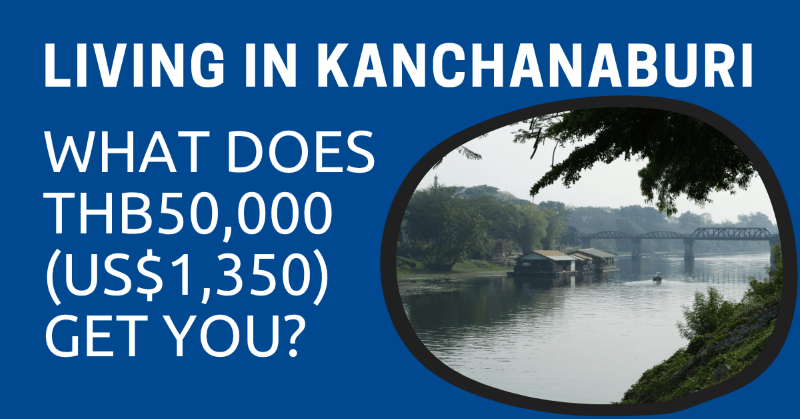
Most people only see Kanchanaburi on a weekend trip to the River Kwai. As a place to live, it’s a calm, cheap provincial city with great nature access and Bangkok two to three hours away. The catches: a small expat scene and no airport of its own.
Kanchanaburi doesn’t come up much when expats talk about where to live in Thailand. Most people picture the Death Railway, the war cemeteries, and a weekend trip from Bangkok. Then they leave. That’s a mistake, and this guide is for people who are willing to look past the obvious.
What you’ll actually find is a functioning provincial city with a low cost of living, reasonable infrastructure, good nature access, and a pace of life that most expats who’ve burned out on Bangkok or Chiang Mai would find immediately appealing. On top of that, it has great landscapes, with mountains, waterfalls, caves, and rivers.
It’s not for everyone, and I’ll be honest about where it falls short. But for the right person, it’s one of the better-kept secrets in Thailand.
Disclaimer: Some links in this article go to our partners, and we may earn a commission if you use them. It costs you nothing extra, and we only recommend services we'd use ourselves. Read more in our Advertising Disclosure.
Contents
- Key Takeaways
- About Kanchanaburi
- Pros and Cons
- Quality of Life
- Who Kanchanaburi Suits
- Cost of Living
- Accommodation
- Food
- Getting Around
- Healthcare
- Weather
- Air Quality
- Social Life and the Expat Community
- Nightlife
- Activities
- Kanchanaburi's Nature as an Everyday Amenity
- Education and Family Life
- Job Opportunities
- Recommended Neighborhoods
- The Immigration Office
- Frequently Asked Questions
- Is Kanchanaburi a good place to live, or only worth visiting?
- How much does it cost to live in Kanchanaburi?
- How far is Kanchanaburi from Bangkok, and how do you get there?
- Is Kanchanaburi suitable for retirees?
- What is healthcare like in Kanchanaburi?
- Is Kanchanaburi safe to live in?
- Can expat families find good schools in Kanchanaburi?
- Should You Move to Kanchanaburi?
Key Takeaways
- Kanchanaburi sits about 130 km west of Bangkok, roughly a 2 to 3 hour drive, and a new expressway (Route 81) may cut that to 1 hour.
- A comfortable expat lifestyle costs around THB22,000 to 36,000 per month, well within a THB50,000 budget.
- Rent is significantly cheaper than Bangkok or Phuket: a decent apartment runs THB4,000 to 10,000 per month, and a detached house THB10,000 to 15,000.
- The city has adequate amenities including Big C, Lotus’s, Robinson Mall, and private hospitals, though serious medical cases are better handled in Bangkok.
- Air quality is generally good, but agricultural burning from February to April can push AQI above 200 in some areas.
- The Kanchanaburi immigration office is known for short queues, making visa extensions and renewals far less stressful than in Bangkok.
- English is limited outside tourist zones, so even basic Thai goes a long way.
About Kanchanaburi
Kanchanaburi is located in western Thailand, about 130 kilometres from Bangkok. It’s the third-largest province in the country by area, which means it stretches well beyond the city itself into national parks, river valleys, mountains, and forest.
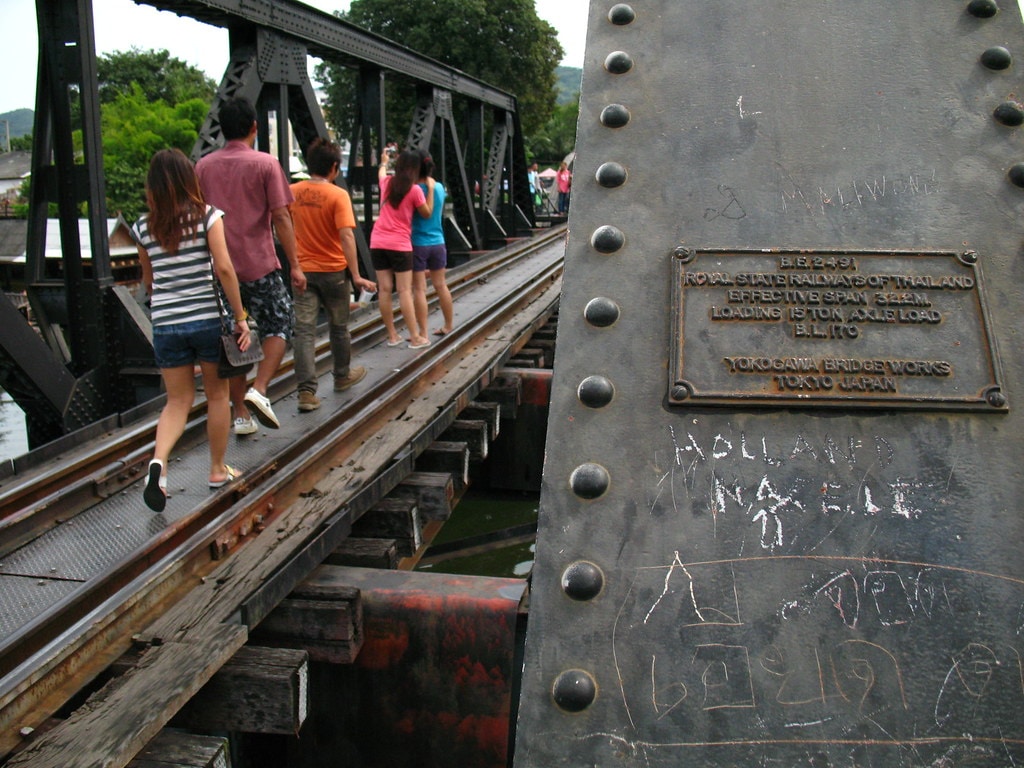
Most foreigners mainly know Kanchanaburi from three places:
- the Bridge on the River Kwai
- the Death Railway from World War II
- the Erawan Waterfall
What makes Kanchanaburi worth considering as a place to actually live is the combination of natural surroundings, a manageable city center, proximity to Bangkok, and a low cost of living. The local population is friendly in the way that smaller Thai cities tend to be: not the performative hospitality of tourist zones, but the straightforward warmth of people who aren’t constantly surrounded by visitors.
For expats considering other quieter alternatives, it’s worth comparing against living in Chiang Rai or living in Khon Kaen.
Pros and Cons
Reasons to move to Kanchanaburi:
- Low cost of living, with rent and food noticeably cheaper than the main expat hubs
- Strong nature access, with waterfalls, national parks, rivers, and mountains all nearby
- Close enough to Bangkok for day trips or hospital visits when needed
- Good weather for most of the year, particularly the cool season from November to February
- A relatively painless immigration office with short queues compared to Bangkok
- A genuine Thai city atmosphere, not a tourist bubble
Reasons it might not work for you:
- No airport, so every flight abroad adds a Bangkok leg
- Healthcare is adequate for routine care, but serious cases still go to Bangkok
- English is limited outside tourist areas, so you’ll need at least basic Thai
- The expat community is small, and you’ll need to build your own social network
- Agricultural burning from February to April can cause real air quality problems in some areas
- Public transport is thin; you’ll need your own vehicle for anything beyond the city center
Quality of Life
The first thing most people notice when they arrive in Kanchanaburi is the pace. It’s noticeably slower than Bangkok, and not in the frustrating, things-don’t-work way. Things work fine. It’s just calmer.
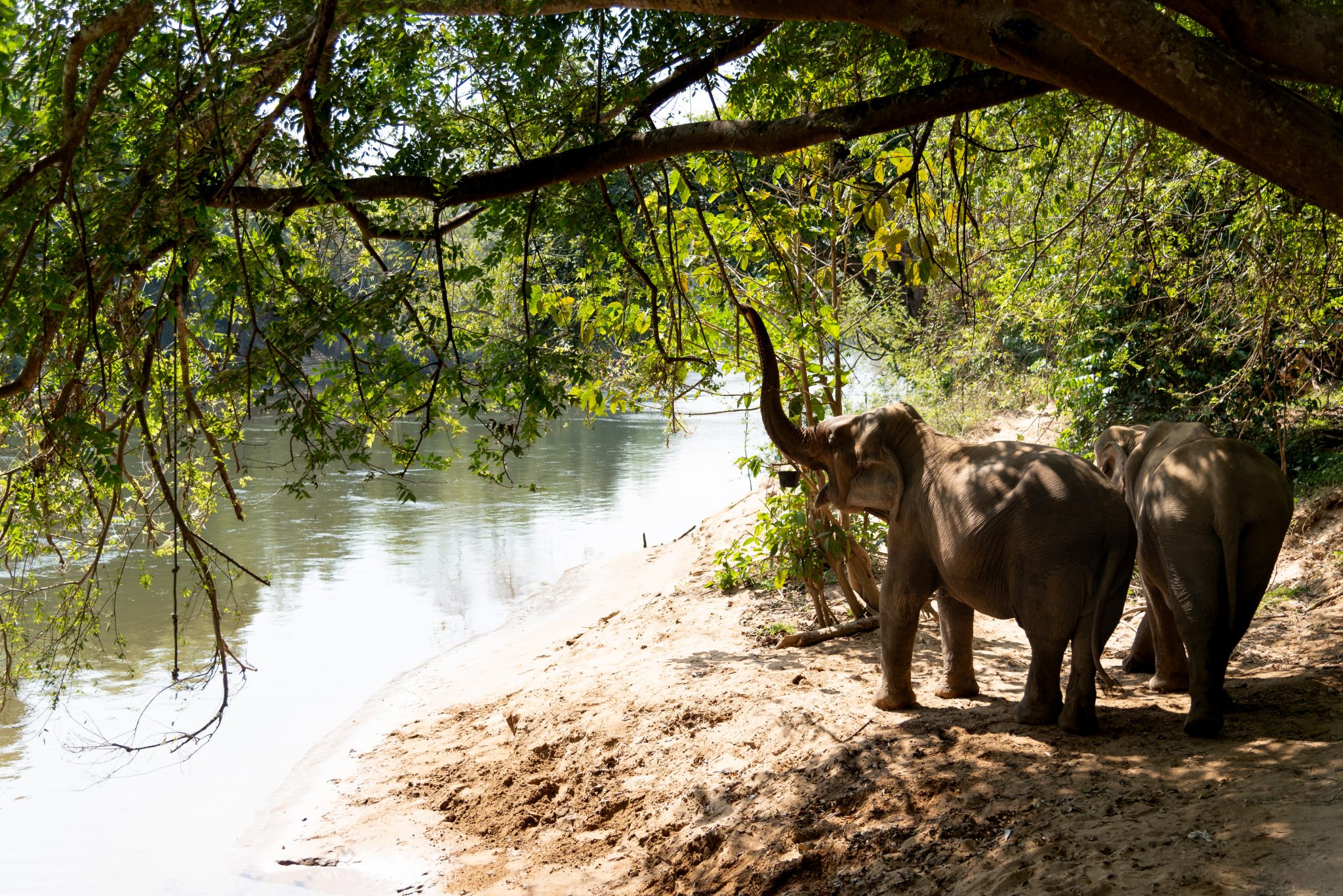
The city center has parks, cafés, riverside restaurants, and enough going on that you won’t run out of things to do in the first month. It also has Robinson Mall, Big C, Lotus’s, and Makro for errands.
The honest limitation is that it’s still a mid-sized provincial city. The restaurant scene, the nightlife, and the coworking options are all narrower than what you’d get in Chiang Mai or Bangkok. If variety and stimulation matter a lot to your daily quality of life, you’ll notice what’s missing. But if you’ve been through the Bangkok or Chiang Mai cycle and what you actually want is fresh air, lower costs, and time to think, Kanchanaburi delivers.
Who Kanchanaburi Suits
Kanchanaburi tends to work well for three kinds of expats:
- Retirees on a fixed budget get provincial-Thailand rent and food prices, with a real hospital nearby and an easy run to Bangkok when something bigger comes up.
- Remote workers who don’t need a fast international airport get river and mountain scenery, cheap living space, and a slower pace, though the coworking and networking scene is thin next to Chiang Mai.
- Families can make it work, but the international-school bench is shallow next to Bangkok or Chiang Mai, so read the Education and Family Life section below first.
Anyone who needs a busy expat social calendar or fast broadband-dependent work should treat Kanchanaburi as a maybe, not a default. For other budget-friendly bases, see our roundup of affordable alternatives to Bangkok.
Cost of Living
Kanchanaburi is cheaper than the main expat cities. Expats in online communities consistently report costs running 30 to 40 percent lower than Bangkok or Phuket for comparable housing. For food and daily expenses, the gap is real but smaller.
Here’s a realistic breakdown:
- Rent: THB4,000 to 15,000 per month depending on type and location
- Food: street food and local restaurants run THB40 to 80 per meal; international options THB150 to 300. Groceries land around THB2,000 to 4,000 per month depending on your cooking habits.
- Transportation: motorcycle rental runs THB2,000 to 4,000 per month plus THB500 to 1,000 in fuel. Grab and Bolt are available but less dense than in Bangkok.
- Utilities: electricity, water, and internet together run about THB2,000 to 3,000 per month. Air conditioning runs constantly through the hot months, so don’t underestimate the electricity bill.
- Health insurance: a basic expat plan with solid inpatient coverage typically runs THB1,500 to 3,000 per month for people in their 20s and 30s.
A comfortable lifestyle including rent, food, transport, utilities, health insurance, and some leisure lands around THB25,000 to 36,000 per month. With a budget of THB50,000 a month, you have meaningful room for travel, activities, and the occasional trip. For a broader comparison of what your money gets you across the country, see our guide to the cost of living in Thailand.
Accommodation
Kanchanaburi has good options across every budget. Prices are noticeably lower than Chiang Mai and significantly lower than Bangkok or Phuket.
Houses
A detached house is your main option here, and it’s where Kanchanaburi stands out. A decent detached house near the city center, with garden space and enough room for a family, runs THB10,000 to 15,000 per month. More comfortable or larger houses start around THB15,000 to 25,000. The space-to-cost ratio is good by Thai standards. Budget options in suburban areas can come in under THB8,000, though you’ll want your own vehicle if you go that route.
Townhouses
There are some townhouse options in the city center, but I don’t really recommend them, since they’re mainly on busy streets that aren’t great for living.
Condos and Apartments
Condos are rarely available here, and they’re much less fancy than those in Bangkok or Phuket, closer to apartment-standard accommodation. The upside is location. Condo Dream Kanchanaburi, for example, is a 5-minute walk to Lotus’s and Phahon Phonphayuhasena Hospital, a main public hospital here. The price is cheap too: a fully furnished room can be under THB7,000 a month.
Tip: the best deals rarely appear on apps. Facebook housing groups and walking directly into buildings to ask about monthly rates still work well here. Negotiation is worth attempting, especially outside peak season.

Food
Food in Kanchanaburi isn’t as distinctive as Isaan cuisine up north, but it’s good Thai food at honest prices, with enough variety to keep things interesting.
Local Food
Street food and local restaurants are the backbone of eating here. A plate of pad Thai, fried rice, noodles, or a curry runs THB40 to 80. Fresh markets are everywhere and good for produce, especially locally grown vegetables and fruit.
What makes Kanchanaburi stand out are the riverside restaurants. The stretch along the River Kwai has a solid selection with atmosphere to match.
- ME Kitchen and Bar in Tha Makham does Thai and fusion dishes in a relaxed riverside setting, open daily except Mondays.
- Loft Restaurant and Bar on Maenamkwai Road is a reliable evening option, with live music and a more upscale feel. Mains at places like these run roughly THB150 to 400.
There are plenty of freshwater fish available too, and because the province is still full of nature, you’ll find dishes made of wild animals such as boar, snake, and deer if that’s your thing. This kind of dish can be very spicy, even for Thais.
Worth knowing: Thai food in Kanchanaburi is genuinely spicy, not the toned-down version you get in tourist-heavy cities. If your heat tolerance is low, say “mai phet” every time, and be prepared to repeat yourself.
International Restaurants
The international scene is present but limited. Japanese, Korean, Italian, and French options exist, mostly in tourist-adjacent areas. Don’t expect Bangkok variety, but expect enough to not feel completely cut off from a taste of home.
Cafés
The café scene has been expanding, and it’s one of Kanchanaburi’s better surprises. There are independent coffee shops throughout the city, some garden-style, some modern, most with decent WiFi and comfortable seating. A coffee runs about THB50 to 100, good enough for a remote work session without competing for seats.
Groceries
Big C, Lotus’s, and Makro cover the standard grocery run. For imported ingredients, specialist shops like Besuto MK (Japanese ingredients) and Shinsen Frozen Food (fresh and frozen Japanese products including fish, salmon, and tuna) carry items that don’t show up at regular supermarkets.
Getting Around
Kanchanaburi is a large province and the city itself is spread out enough that you’ll need transportation. Walking is only practical for short distances, and the midday heat rules it out for most of the year.
- Songthaews cover the main city routes for THB10 to 30 per trip and are useful once you know which line goes where. Ask locals when in doubt; people here are genuinely happy to help.
- Grab and Bolt are both available, which makes ad-hoc trips manageable. Short trips run THB40 to 60 each way. Fine for occasional use; costs add up if you rely on them daily.
- Taxis and tuk-tuks exist but are limited to the city center area. Ride-hailing apps handle most of what you’d otherwise use them for.
- Motorcycles are great for getting around the city. Always wear a helmet, and be extra careful during the rainy season when roads outside the center get slippery. There are also many sharp curves here because of the mountainous terrain.
- Cars are the most practical daily option once you’re settled, particularly if you plan to explore the province. Roads between districts have fast traffic and mountainous stretches where a car is simply safer than a motorcycle.
For long-distance travel, there are two main options. The Kanchanaburi Provincial Bus Terminal runs routes to Bangkok and surrounding provinces, with the Red Bus (route 8203) running hourly to Bangkok throughout the day. Kanchanaburi Railway Station connects to Bangkok and the northeast, and the Death Railway route is a worthwhile trip in its own right. There is no airport in Kanchanaburi, so every flight goes through Bangkok.
Healthcare
Healthcare is adequate for routine care and general treatment. For anything serious, Bangkok is where most people go.
- Phahon Phonphayuhasena Hospital is the main public hospital. It covers the full range of specialties at affordable rates, with the longer wait times you’d expect from a large public system.
- Thanakarn Hospital is the main private option, a general hospital with 74 beds on Saeng Chooto Road. It was acquired by Principal Capital (PRINC) in June 2025 and continues to operate under the same name. Service is faster than the public system and the facilities are modern, though costs are higher and English is variable outside administrative staff.
There are also general and specialist clinics (dental, dermatology, and others) spread throughout the city, and they work well for routine check-ups and minor issues. Pharmacies are common, though English-speaking staff are mostly limited to tourist-area locations. For fitness, gyms with monthly memberships and outdoor options including jogging trails, hiking in national parks, mountain biking, and kayaking on the River Kwai make staying active straightforward.
Weather
The cool season from November to February is when Kanchanaburi is at its best: lower humidity, cooler evenings, and comfortable conditions for outdoor life. December and January nights can drop to 20°C in the higher-altitude areas of the province.
The hot season from March to May is serious. Temperatures regularly reach 35 to 40°C during the day, and unlike Bangkok’s humid heat, Kanchanaburi’s dry inland heat can feel more intense under direct sun.
The rainy season from June to October brings heavy rainfall, particularly in September and October. The landscape is at its greenest, but some low-lying areas near rivers are at flood risk. Areas directly along the River Kwai see flooding occasionally, though it’s not a regular annual event. Check flooding history with locals before committing to accommodation near the river.
Air Quality
Kanchanaburi is generally cleaner than Chiang Mai and doesn’t experience the extended burning season that the north does. But from February to April, agricultural burning can push AQI above 200 on bad days, and some of the crop burning is local. The haze doesn’t last as long as the northern burning season, but it’s real. You can track current conditions on IQAir.
Social Life and the Expat Community
This is one of Kanchanaburi’s limitations, and it’s worth being honest about. The expat community is small. The people who are here tend to be retirees or people who married locally, plus a smaller number running small tourism or hospitality businesses. It’s not a scene you drop into. It’s something you build.
If you need an active international social scene as part of your daily quality of life, Kanchanaburi will feel thin. If you’re comfortable building a smaller, tighter circle, it works well. Expats who have settled here point to the Kanchanaburi expat Facebook group as the most practical first step: it’s active enough that most newcomers get useful, friendly responses the same day, and it’s where most of the established community actually is.
Nightlife
Kanchanaburi isn’t a party destination, but it has enough for a relaxed evening. The riverside strip has bars with live music, good atmosphere, and the kind of setting where a long evening over drinks doesn’t feel forced. Loft Restaurant and Bar on Maenamkwai Road is the most consistent option for a proper evening out with music and cocktails, and ME Kitchen and Bar works well for earlier evenings combining food and drinks.
Sports bars catering to expats, including places showing Premier League and international matches, are clustered along the River Kwai Road strip. They’re casual, inexpensive, and serve as informal gathering points for the expat community. The strip is more socially compact than the city’s size would suggest: you see the same faces often enough that being a regular is effortless. Outside the city center and the riverside tourist strip, evenings get quiet quickly.
Activities
There’s more to do here than the city’s low profile suggests. Kanchanaburi is a popular province for Thais, especially those who live in Bangkok.
Nature and outdoors:
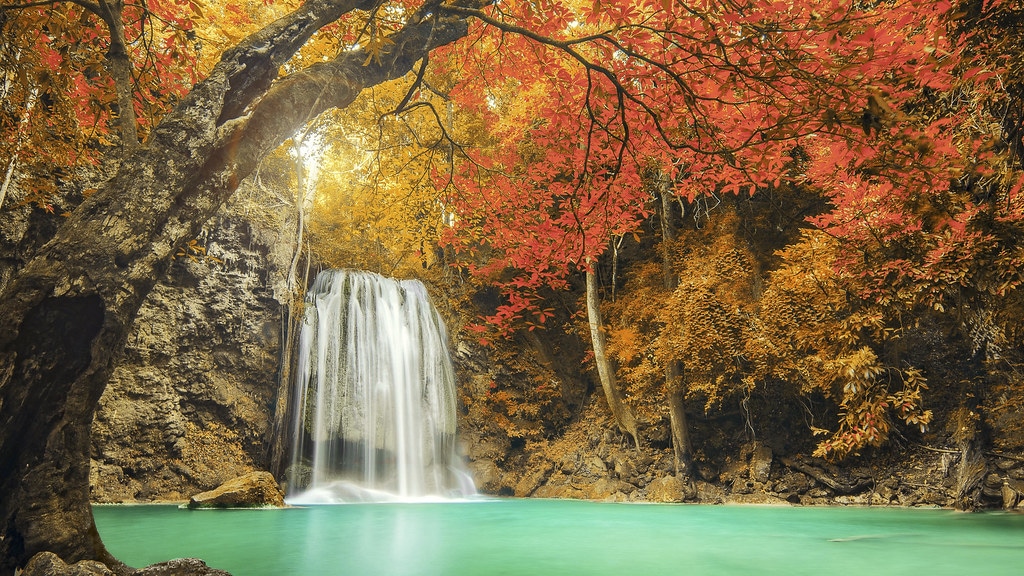
- Erawan National Park and its seven-tiered waterfall is the most visited attraction in the province. Go mid-week to avoid weekend crowds; on public holidays it gets genuinely packed.
- Huay Mae Khamin Waterfall is further out in Si Nakharin National Park but arguably more spectacular, with multiple tiers and good swimming.
- Khao Laem National Park and Chaloem Rattanakosin National Park are solid options for hiking, camping, and genuine wilderness.
- Srinakarin Dam and Vajiralongkorn Dam offer large-lake scenery and rafting packages. Overnight rafting trips are popular for longer stays.
- Hin Dat Hot Spring is a good half-day trip, particularly in the cool season.
History and culture:
- the Bridge on the River Kwai is the obvious starting point, worth doing properly, not just for the photo
- the Thailand-Burma Railway Centre and JEATH War Museum provide the historical context that makes the site meaningful rather than just scenic
- Krasae Cave along the Death Railway route is both historically significant and visually striking
- a river cruise on the River Kwai gives a different angle on the landscape and the history
Markets and shopping:
- Robinson Mall serves as the main shopping hub for practical purchases, and night markets in the city center are good for food, souvenirs, and an easy evening
- Big C and Lotus’s handle everything else
- the souvenir strip near the Bridge is very much aimed at tourists, but it’s easy enough to browse
Kanchanaburi’s Nature as an Everyday Amenity
Most write-ups treat the River Kwai, Erawan National Park’s waterfalls, and Sai Yok as things you see once on a weekend visit. For a resident they’re a standing weekend option:
- An early drive to Erawan for the tiered waterfalls
- Kayaking or floating-restaurant evenings on the river in town
- Cycling routes along the water that don’t exist in the same way in Bangkok or Chiang Mai
The trade-off is infrastructure. Park access roads and river-adjacent housing can flood in the rainy season, and evenings in the more rural outskirts are genuinely dark and quiet, which some residents love and others find isolating within a month.
If you’re still comparing provinces, our list of underrated places to live in Thailand puts Kanchanaburi in context.
Education and Family Life
Kanchanaburi is a safe, low-stress environment for families. Crime is minimal, healthcare is adequate for everyday needs, and the cost of raising children here is considerably lower than in Bangkok.
The limitation is international schooling. Options are fewer and smaller than in Bangkok or Chiang Mai. The main choice currently is Daruna Kanchanaburi School, a private school combining an English curriculum with the Thai national curriculum. Other private schools with English programs exist but vary in quality. Families needing a well-resourced international school with IB or Cambridge programs should plan on either a Bangkok arrangement or a move to a larger city.
Job Opportunities
There isn’t much formal employment for foreigners in Kanchanaburi. Most expats working here are teaching English at schools or language institutes, or running small businesses with a Thai partner in tourism, food, or accommodation.
If you’re coming to Kanchanaburi, the more realistic approach is to arrive with income from elsewhere: remote work, a pension, investment income, or freelance skills you can run from anywhere. Relying on local employment to fund your life here is a difficult position to be in.
Recommended Neighborhoods
City Center (Mueang Kanchanaburi)
The most practical choice for most expats, particularly those who’ve just arrived. Close to hospitals, Robinson Mall, fresh markets, restaurants, government offices, and transport options. Saeng Chuto Road and Mae Nam Kwae Road are the main arteries. This is where I’d start.
Just Outside the Center
Areas like Tha Maka (on the west bank of the Khwae River) and Tha Muang offer slightly lower rents, noticeably quieter streets, and easy enough access to city amenities. Good for people who want some breathing room without being far from practical infrastructure.
Outskirts and Rural Areas
Districts like Sai Yok and Thong Pha Phum are for people who genuinely want to be near national parks and don’t mind that everything requires a vehicle. The space is real, the nature is excellent, and the costs are lower. But it can feel isolating if you don’t already have connections in the area.
The Immigration Office
This is worth mentioning on its own because it’s one of Kanchanaburi’s underrated practical advantages. The Kanchanaburi Immigration Office is centrally located and consistently has short queues compared to Bangkok. Retirement visa renewals, 90-day reports, and other routine visa matters are handled with considerably less stress here. If visa administration is part of your regular calendar, this matters more than it sounds.
Frequently Asked Questions
Is Kanchanaburi a good place to live, or only worth visiting?
It works as a full-time home for people who want low costs, river and mountain access, and don’t need a big international airport nearby. It suits retirees and remote workers better than career-focused professionals, since the local job market is limited.
How much does it cost to live in Kanchanaburi?
A comfortable single-person budget runs roughly THB25,000 to 36,000 (about US$700 to 1,000) a month including rent, food, transport, and basic health insurance. See the Cost of Living section above for the full breakdown.
How far is Kanchanaburi from Bangkok, and how do you get there?
About 130 kilometres, roughly a 2 to 3 hour drive or bus ride.
Is Kanchanaburi suitable for retirees?
Yes, for retirees comfortable with a smaller expat community than Chiang Mai, Hua Hin, or Pattaya. Lower rent and food costs stretch a fixed income further, and serious cases can be referred to private hospitals in Bangkok two to three hours away. See our guide to the best places to retire in Thailand.
What is healthcare like in Kanchanaburi?
Phahon Ponphayuhasena Hospital is the main public option and Thanakarn Hospital the main private one, with general and specialist clinics around the city. Serious or specialist cases are usually referred to Bangkok.

Is Kanchanaburi safe to live in?
Kanchanaburi doesn’t see the tourist-scam or nightlife-related incidents more common in Pattaya or parts of Bangkok. The rural outskirts are quiet after dark, which is a safety plus for some and an isolation concern for others.
Can expat families find good schools in Kanchanaburi?
Options exist locally, but the international-school selection is far smaller than in Bangkok or Chiang Mai. Families set on international curricula should weigh this against the cost of living for a family in Thailand before committing.
Should You Move to Kanchanaburi?
If you want fresh air, genuine nature access, low costs, and proximity to Bangkok without actually living in Bangkok, Kanchanaburi deserves serious consideration. The people who get the most from it are:
- retirees who want a comfortable, affordable base close to Bangkok healthcare (see our full guide to retiring in Thailand)
- remote workers who want to settle somewhere quiet and let the work-to-life ratio shift in their favor
- anyone who’s done the Chiang Mai or Bangkok circuit and wants something different without sacrificing the basics
It’s a poor fit if you need a major international airport nearby, if you want a large expat community, or if high-end specialist healthcare on your doorstep is non-negotiable. But for the right person, it’s the kind of place you arrive expecting to stay for three months and find yourself extending. That says something worth paying attention to.


 Deutsch:
 Français:
'/%3E%3Cpath%20fill='%23b2b2b2'%20d='M241%20382q0%2016%2017%2026%2017%2011%2042%2011t42-11q16-11%2017-26V269H241'/%3E%3Cpath%20fill='%239f7e00'%20d='M241%20379q0%2014%208%2023%209%209%2021%209%2014%200%2021-9%209-9%209-23V269h-59'/%3E%3Cpath%20d='M241%20339v-70h59v110q0%2014-9%2023l-6%205v-68h-15v72q-8%200-14-4v-68zm59%2040c0%2022%2015%2032%2029%2032%2021%200%2030-18%2030-32v-40h-59'/%3E%3Cpath%20fill='%239f7e00'%20d='M266%20277v5h2v12h-3v-5h2v-5h-9v5h2v5h-4v9h3v18h-5v10h34v-10h-5v-18h3v-9h-4v-5h2v-5h-9v5h2v5h-3v-12h2v-5zm42%20101q0%2010%206%2017%206%206%2015%207%2010-1%2016-7%206-7%206-17v-29h-43'/%3E%3Ccircle%20fill='%230044ad'%20cx='329.5'%20cy='372'%20r='6'/%3E%3Cellipse%20fill='%230044ad'%20cx='300'%20cy='340'%20rx='16'%20ry='21'/%3E%3C/svg%3E) Español:
Español: