Khon Kaen is the overlooked medical and education hub of Isaan: a real, functioning city with hospital quality rivaling Bangkok at a fraction of the cost. The catches are extreme summer heat, a small expat scene, and no direct international flights.
While Khon Kaen is one of the biggest and most developed cities in Thailand’s Isaan region, it’s the kind of city that most people overlook, and then end up staying in longer than they planned.
When you look through expat communities and ask where people live, it’s very rare to find someone who says Khon Kaen. In fact, it can be a genuinely interesting city for expats. What you’ll find is a proper, functioning Thai city: several large malls, a respected university, and daily flights to many big cities in Thailand.
Healthcare is the real hidden story of Khon Kaen. For a regional city, the medical infrastructure here is extraordinary, and I’ll get into that properly below. This guide covers everything you need to decide whether Khon Kaen makes sense for your situation.
Disclaimer: Some links in this article go to our partners, and we may earn a commission if you use them. It costs you nothing extra, and we only recommend services we'd use ourselves. Read more in our Advertising Disclosure.
Contents
Key Takeaways
- Khon Kaen is the medical and education hub of northeast Thailand, with hospital quality that rivals Bangkok at a fraction of the cost.
- Cost of living is lower than Bangkok but not dramatically so; the gap is most meaningful when you’re earning in a foreign currency.
- The cool season, from November to February, is when the city is at its best; summers regularly exceed 40°C and meaningfully limit outdoor activity.
- The expat community is small, and social life depends on building connections yourself rather than finding a ready-made scene.
- You’ll need your own transport; songthaews cover basics cheaply, but a motorbike is what makes daily life genuinely convenient.
- There are no direct international flights; every trip abroad goes through Bangkok first.
- Healthcare is the city’s standout feature, with Srinagarind Hospital, Khon Kaen Ram, Ratchaphruek, and Bangkok Hospital Khon Kaen all operating in the same city.
- Remote workers and retirees get the most from Khon Kaen; the city rewards those who want a stable, affordable base over those chasing an active expat social scene.
About Khon Kaen
Khon Kaen is the center of northeastern Thailand. Its role as the regional hub means it sits at an interesting crossroads: modern enough to have everything you practically need, Isaan enough to still feel like a real Thai city. The province has built its reputation on two things among Thais:
- Education: Khon Kaen University is one of the top-ranked universities in the country.
- Healthcare: there are a lot of good doctors in Khon Kaen, since one of Thailand’s top medical schools is here and many of them stayed. That’s why the healthcare here is among the best in Thailand.
Beyond the practical stuff, Khon Kaen offers a relaxed lifestyle. There are good parks, a large lake at the center of town, a café scene that keeps expanding, and the kind of weekend market culture that’s easy to fall into. It’s a place you can settle into properly, not just pass through.
Pros and Cons
Reasons to move to Khon Kaen:
- A fully developed regional capital with all the infrastructure you actually need
- Healthcare that rivals Bangkok, with shorter waits and lower costs
- A lifestyle that’s more relaxed than other big cities
- A friendly, warm local population in the Isaan tradition
- A good cool season, with less severe air quality issues than northern Thailand during burning season
- A real Thai city, not a tourist bubble
Reasons it might not work for you:
- Extreme summer heat, regularly above 40°C during the day
- No direct international flights; Bangkok is always a layover
- A small expat community with a limited international social scene
- Narrower international food and nightlife options compared to Chiang Mai or Bangkok
- Development and amenities drop off sharply once you leave the city center
Quality of Life
The city has everything you need for a decent quality of life: hospitals, universities, shopping malls, parks, and even some good natural escapes within an hour or two. It’s a city built around Thai life rather than tourist infrastructure, which is either a feature or a limitation depending on what you’re looking for.
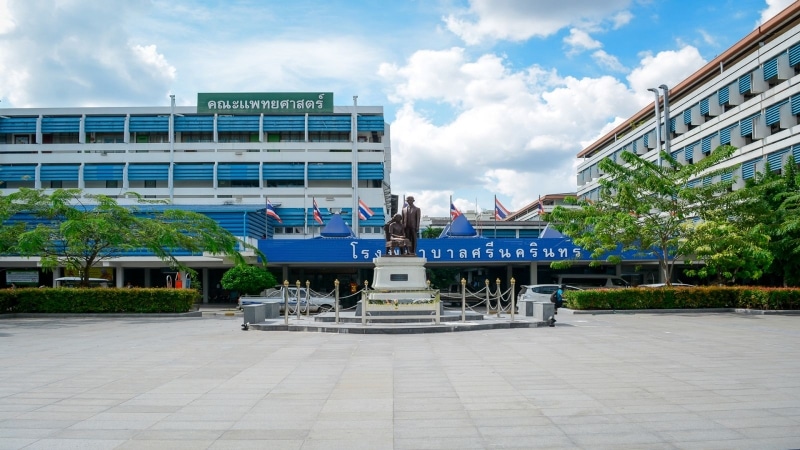
Day-to-day life in Khon Kaen is comfortable. It’s like a smaller version of Bangkok but with less traffic. The streets are maintained, there’s minimal crime, and the locals are the kind of friendly that actually means something, not just tourism-industry friendliness.
Expats who spend extended time here describe a similar rhythm: the city moves at an Isaan pace that’s genuinely calmer than Bangkok, which means lower stress and more time to actually live rather than commute.
Cost of Living
Here’s where things get more nuanced than most guides will tell you. The standard pitch for Khon Kaen is that it’s cheaper than Bangkok, and in absolute terms it mostly is. But that framing is a bit misleading, and Thai locals who live here will tell you so directly.
The more honest version is that costs are closer to Bangkok than you’d expect, and wages are significantly lower. That gap is the thing that matters.
- Food: prices sit roughly at Bangkok levels for many items. A simple plate of rice with something at a basic restaurant runs THB40 to 70. Pad kra pao with egg, one of those bellwether dishes, is THB70 to 90 in many spots.
- Public transport: cheaper, but the network is thin, so most people end up needing a vehicle anyway, which pushes costs up.
- Rent: in decent areas of the city, rent starts at THB8,000 to 9,000 and goes up from there.
What makes this sting more for Thai residents is that private-sector wages in Khon Kaen typically run THB13,000 to 18,000 per month for graduate-level work, compared to THB20,000 to 25,000 or more for equivalent roles in Bangkok. The cost of living tracks Bangkok; the salaries don’t. So, as an expat, to live in Khon Kaen comfortably you should expect to spend at least THB30,000 a month.
For expats bringing income from outside Thailand, this dynamic works in your favor. If you’re earning in a foreign currency or running a remote business, your money goes meaningfully further here than in Bangkok or the main tourist cities.
Two things that catch people out: electricity bills in Isaan run higher than expected because of how much air conditioning you’ll run through the hot season, so don’t underestimate utilities. And if you rely on Grab for daily transport without your own vehicle, the costs add up faster than they look: short trips of a few kilometers still clock up THB40 to 60 each way.
Accommodation
Khon Kaen has good options at every budget level, and prices are substantially lower than in the major tourist cities.
Houses
Khon Kaen is the kind of city where you can actually rent a proper house for a reasonable amount, unlike Bangkok or Phuket where standalone houses at sensible prices are hard to find. You can rent a nice house on 50 square wah (about 200 square meters) inside the city center near Khon Kaen airport for less than THB15,000 a month. That’s a perk you won’t find in other popular big Thai cities. On a budget, you can find houses in suburban areas for less than THB8,000. In our opinion, if you want to live in Khon Kaen, it’s better to rent a house.
Condos and Apartments
If you’d rather live in a condo, there are some good options available, though the choice isn’t as wide as in other big cities. Many condos are inside the city center, especially near Khon Kaen University. The price is quite affordable: a basic air-conditioned room starts from around THB3,000 to 6,000 per month. For a condo with a pool, gym, and full furnishings, budget THB7,000 to 15,000.
Food
Food in Khon Kaen is one of the genuine pleasures of living here. Isaan cuisine is one of Thailand’s most distinctive and satisfying regional cooking traditions, and you’re right in the middle of it.
Local Isaan Food
Grilled chicken, spicy papaya salad, larb, nam tok, goy, and jaew hon are everywhere and they’re outstanding. Many shops sell sticky rice, so it’s going to be a main dish in your life here. The night markets around Bueng Kaen Nakhon and Ton Tann Market are good starting points when you’re still figuring out the city. If you like Isaan food, it can be your paradise. If not, there’s still traditional Thai cuisine available, though your options are narrower than in other popular cities.
One piece of genuine advice: Isaan food is actually spicy. Not “Thai food adapted for tourists” spicy. Actually spicy. If your heat tolerance is low, tell the vendor “mai phet” (not spicy) every single time and be prepared to repeat yourself. The default assumption is that you can handle it.
International Restaurants
The international restaurant scene is decent but narrower than you’d get in Chiang Mai or Bangkok. Japanese, Korean, Chinese, Italian, and various fusion options are available, with mains running roughly THB150 to 500. It’s enough variety to not feel like you’re constantly missing out, but enough limitation to notice.
Cafés
The café culture in Khon Kaen has grown significantly and is one of the city’s better surprises. There are dozens of independently run coffee shops, ranging from polished modern spaces to garden cafés tucked off quiet side roads. Coffee runs about THB60 to 120 per drink. Many have good WiFi and are workable for a few hours, and unlike Chiang Mai, the best spots rarely get crowded enough to feel like you’re competing for a seat, which makes the city a quietly practical base for remote work.
Supermarkets and Groceries
Lotus’s, Big C, Makro, and Tops Supermarket cover standard grocery needs. For imported ingredients, the Central Khon Kaen mall and the Mahachai Group stores carry cheeses, quality meats, and international items that don’t show up at the standard supermarkets.

Healthcare
Healthcare is one of the main reasons Khon Kaen can be interesting for retirees. The medical infrastructure here is exceptional, better than anywhere else in Thailand outside Bangkok, and in certain specialties arguably better than some Bangkok hospitals.
Public Hospital
The reason is Khon Kaen University’s Faculty of Medicine. It’s one of the country’s top medical schools, and it has produced a generation of great physicians who trained here and stayed in the city. The research culture that runs through academic medicine raises the standard of care across the city.
Srinagarind Hospital is the teaching hospital of the Faculty of Medicine, KKU. It’s a public hospital with more than 1,600 beds, making it one of the largest in Asia, and the main hospital where patients from nearby provinces come for treatment. The honest tradeoffs are what you’d expect from a large public hospital: waiting times can be long and beds aren’t always available at peak times.
Private Hospitals
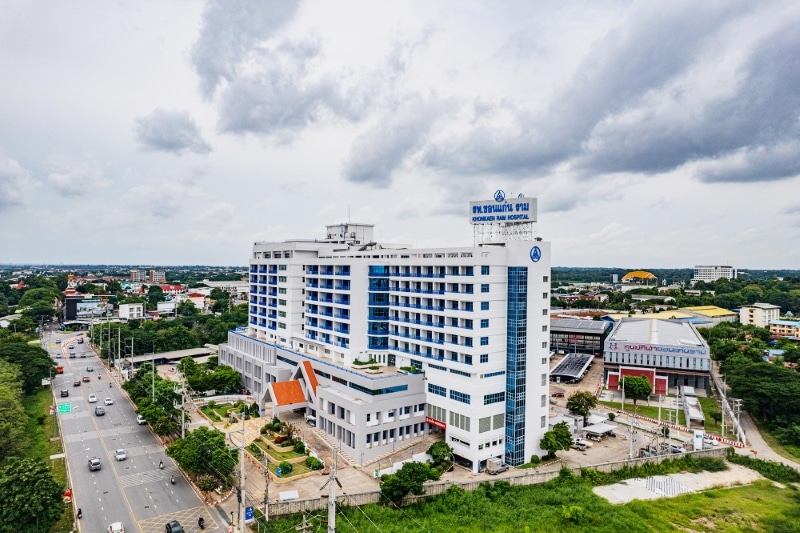
Khon Kaen Ram Hospital is the largest private hospital in the northeast, with 301 beds. It has modern technology, a full range of specialties, and runs considerably faster than the public system. It’s the standard choice for expats who want private hospital service without traveling to Bangkok. Costs are significantly higher than Srinagarind, so having health insurance before you need it matters.
Bangkok Hospital Khon Kaen is the local branch of the Bangkok Hospital network, with modern facilities and good service. A friend of mine had a cardiac balloon procedure here; it was done within a few hours and he recovered quickly without much pain at all. It has among the highest prices of the private options, though, so insurance isn’t a suggestion here; it’s a necessity if you want to use this hospital for serious treatment.
Another good option is Ratchaphruek Hospital, which holds JCI international accreditation and became the first hospital in northeastern Thailand to receive Global Healthcare Accreditation (GHA) with Excellence for Medical Travel Services. Costs are comparable to Khon Kaen Ram.
On insurance: costs at private hospitals in Khon Kaen add up fast. A consultation and basic treatment for anything beyond a minor illness runs several thousand baht, and a surgery or admission can go well into six figures. A basic expat plan with solid inpatient coverage typically runs THB1,500 to 3,000 per month for most people in their 20s and 30s. See our guide to health insurance in Thailand for more detail.
Getting Around
Khon Kaen is a large city and you’ll need transportation. Walking is only practical for very short distances, and the midday heat rules it out for much of the year. Popular public transport options include:
- Songthaews: the main public transport option. Fixed routes cover the city for THB9 to 15 per trip depending on distance. Cheap and very useful once you know the routes; the catch is that you need some idea of where each line goes. Ask locals when in doubt; people in Khon Kaen are usually happy to help.
- Grab and Bolt: both are available, which makes ad-hoc travel easy and reasonably priced. Most expats lean on these heavily, especially when they first arrive.
- Taxis: they exist but are less plentiful than in Bangkok, and airport or out-of-town trips sometimes don’t go by the meter. Ride-hailing apps eliminate that problem.
These options are mainly available in the central area, though. If you live here, you’ll need your own transport. Motorcycles are the most practical option for daily life once you’re settled, with monthly rentals around THB2,500 to 3,000 and used bikes costing THB30,000 to 50,000. But I’d recommend a car, and not just for convenience: it’s also for safety. While the roads here are calmer than Bangkok’s, Isaan driving habits have their own particular character.
Long-Distance Travel
For long-distance travel, Khon Kaen Airport runs daily direct flights to both Don Mueang and Suvarnabhumi in Bangkok, as well as Chiang Mai. Prices can be very reasonable if you book ahead. Khon Kaen Railway Station connects to Bangkok and destinations across the northeast, and the BKS 3 bus terminal runs routes across the country.
The one significant gap is that there are no direct international flights. Every trip abroad routes through Bangkok first. If you travel internationally more than once or twice a year, this adds real time and cost to factor in.
Weather and Air Quality
There are good and bad things about the weather in Khon Kaen. Let’s start with the bad news.
Summer in Khon Kaen is seriously hot. It’s classic Isaan weather where even the wind feels hot against your skin. Many locals joke that stepping outside during late morning feels like opening an oven door. From March to early April, daytime temperatures regularly climb above 40°C, and the heat often feels harsher than Bangkok because it’s drier and more intense under direct sunlight. During summer, you might not want to step outside at all between roughly 10am and 4pm. Even locals tend to stay indoors with air conditioning running constantly.
Here’s the good news. Nights are usually cooler than Bangkok. Once the sun goes down, temperatures drop more noticeably, especially during the cool season. From November to February, the weather becomes much more pleasant, with lower humidity, cooler evenings, and far more comfortable conditions for outdoor life.
Khon Kaen also doesn’t rain as much as other parts of Thailand, so flooding isn’t a big issue here except in some low-lying neighborhoods. And the air pollution is usually less severe and shorter than Chiang Mai’s burning season.
Social Life and the Expat Community
This is among the biggest disadvantages of living in Khon Kaen as a foreigner. The expat community is small. The community that exists tends to cluster around the university and downtown, and is made up of English teachers, academics affiliated with Khon Kaen University, retirees, people who married locally, and a smaller number running their own businesses.
But it’s still possible to make friends. The Khon Kaen Expats Facebook group, for example, has over 7,000 members and is a good place to start meeting people.
Activities
Temples and Cultural Sites
Phra Mahathat Kaen Nakhon, also known as the nine-floor chedi at Wat Nong Wang, is the city’s most distinctive landmark: an 80-meter stupa built to celebrate the 50th anniversary of King Rama IX’s coronation. Each of the nine floors has a museum and paintings depicting Isaan history and culture, and the view from the top over the city and lake is worth the climb. Wat Pa Saeng Arun is a quieter forest temple if you want somewhere for actual contemplation rather than sightseeing.
Nature
Bueng Kaen Nakhon is the central lake and the city’s best public space, with running tracks, exercise areas, and good evening atmosphere. Bueng Thung Sang was recently renovated and is another good outdoor option. Further afield, Ubolratana Dam is an easy day trip with a pleasant lakeside atmosphere, and Phu Kao-Phu Phan Kham National Park offers viewpoints, waterfalls, and caves for anyone wanting to get out of the city.
Shopping
Central Plaza Khon Kaen is the biggest mall in the province and genuinely comparable to the major malls in Bangkok. Ton Tann Market and the Train Market are good for evening browsing, food, and the occasional interesting find.

Festivals
The International Silk Festival is the city’s most significant annual event and worth being in town for. Songkran on Khao Niew Road is one of the better Songkran celebrations in the northeast.
Education for Families
Khon Kaen is a workable option for expat families. It’s safe, the healthcare is excellent, childcare costs are considerably lower than in Bangkok, and the pace of life is manageable with children. The limitation is international schooling, where options are fewer than in Bangkok or Chiang Mai. The two main choices are:
- Khon Kaen University Demonstration School’s International Program, which teaches in English and emphasizes innovation
- Khon Kaen Wittayasan Bilingual School, which follows the Cambridge curriculum and employs foreign teachers
The quality at both is reasonable, but if you need a well-resourced large international school with a wide choice of curricula, you’ll find Khon Kaen limiting. The expat family community is also small, which can make it harder for children to find an immediate peer group of other international kids. Worth factoring in, especially for younger children.
Job Opportunities
There aren’t many job opportunities in Khon Kaen for foreigners. Most expats working here are teaching English at schools, language centers, or the university, or running small businesses with a partner in food, hospitality, or services. If you want to live here, it’s better to rely on other sources of income rather than local employment.
Where to Live
The neighborhood you choose matters more than the accommodation type. Here’s how the main areas break down.
City Center
The city center is the most convenient: close to hospitals, malls, restaurants, and everything practical. It’s the most urban part of the city and, accordingly, the priciest. Around Central Khon Kaen and Kalpapruek Road is my personal recommendation for livability. It’s just slightly outside the center, quieter and more residential, but still close enough to get into town without thinking about it. There are good cafés and hidden-gem restaurants through this stretch. It has the feel of a neighborhood you could actually live in, rather than just be based in.
Khon Kaen University Area
The university area is lively and social, with cheap food, cafés, and a younger crowd. It’s good for people who want energy around them and don’t mind university-town noise.
Outskirts
Rural areas and outskirts are for retirees and families who want space and quiet. Land and accommodation are considerably cheaper, but you’ll need your own car for everything. It can be quite a challenge for expats to live in the outskirts, honestly, unless you already know someone in the area.
Tip: for finding rentals, Facebook groups like “Khon Kaen Expats” and local housing groups are the most practical starting point. Walking directly into condo buildings and asking about monthly rates also works well; a lot of the best deals aren’t advertised anywhere online.
Should You Move to Khon Kaen?
If you want a city that functions like a city, has excellent healthcare, costs significantly less than the main expat hubs, and sits inside one of the most culturally interesting regions in Thailand, Khon Kaen deserves serious consideration.
It’s not for everyone. If beach access matters to your daily quality of life, if you need a big international community, or if frequent international travel is part of your routine, Khon Kaen will create friction that accumulates over time.
But for retirees, English teachers, remote workers who want a settled base, and anyone who’s been through the Chiang Mai or Bangkok cycle and wants something quieter and more affordable without sacrificing the basics, this city has a lot to offer. It’s the kind of place that rewards you for looking past the obvious choices.
For a similar cost-of-living comparison in other Thai cities, see our guide to living in Bangkok vs Chiang Mai. For the full financial picture, see our cost of living in Thailand guide.



 Deutsch:
 Français:
'/%3E%3Cpath%20fill='%23b2b2b2'%20d='M241%20382q0%2016%2017%2026%2017%2011%2042%2011t42-11q16-11%2017-26V269H241'/%3E%3Cpath%20fill='%239f7e00'%20d='M241%20379q0%2014%208%2023%209%209%2021%209%2014%200%2021-9%209-9%209-23V269h-59'/%3E%3Cpath%20d='M241%20339v-70h59v110q0%2014-9%2023l-6%205v-68h-15v72q-8%200-14-4v-68zm59%2040c0%2022%2015%2032%2029%2032%2021%200%2030-18%2030-32v-40h-59'/%3E%3Cpath%20fill='%239f7e00'%20d='M266%20277v5h2v12h-3v-5h2v-5h-9v5h2v5h-4v9h3v18h-5v10h34v-10h-5v-18h3v-9h-4v-5h2v-5h-9v5h2v5h-3v-12h2v-5zm42%20101q0%2010%206%2017%206%206%2015%207%2010-1%2016-7%206-7%206-17v-29h-43'/%3E%3Ccircle%20fill='%230044ad'%20cx='329.5'%20cy='372'%20r='6'/%3E%3Cellipse%20fill='%230044ad'%20cx='300'%20cy='340'%20rx='16'%20ry='21'/%3E%3C/svg%3E) Español:
Español: