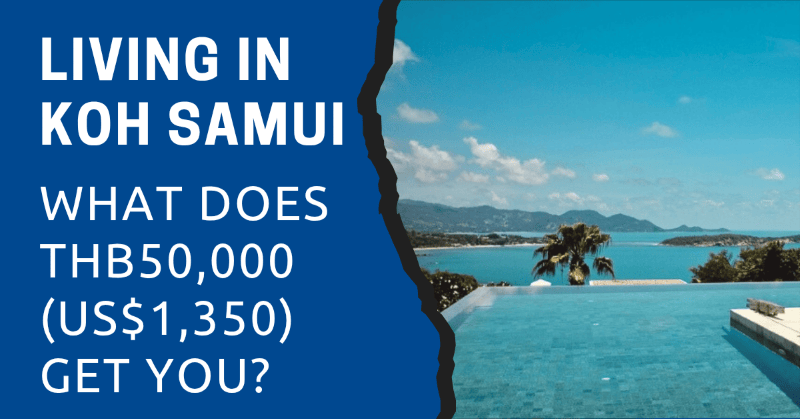

Koh Samui is the island a lot of people came to for a week and never left: good beaches, solid hospitals, a big expat community, and costs below Phuket. The catch is the island premium on everything, and pricey Bangkok Airways flights off the island.
Most people who end up living on Koh Samui didn’t plan on it. They came for a week, extended the trip, and then quietly started looking at a place to live. It happens often enough to be a pattern worth paying attention to.
The island has a well-earned reputation as a tourist destination, but that’s only part of the picture. Underneath the beach clubs and the airport arrivals board, there’s a functioning expat community, reasonable infrastructure, good private hospitals, and a cost of living that sits below Phuket while still offering most of the same lifestyle elements.
This guide covers what living here actually looks like: the costs, the tradeoffs, the healthcare, the neighborhoods, and the honest answer to whether Koh Samui makes sense for your situation.
Disclaimer: Some links in this article go to our partners, and we may earn a commission if you use them. It costs you nothing extra, and we only recommend services we'd use ourselves. Read more in our Advertising Disclosure.
Contents
- Key Takeaways
- About Koh Samui
- Pros and Cons
- Quality of Life
- Cost of Living
- Accommodation
- Registering Your Address
- Food
- Banking
- SIM Cards
- Getting Around
- Long-Distance Travel
- Healthcare
- Exercise and Fitness
- Social Life
- Activities
- Shopping
- Nightlife
- Education and Family Life
- Job Opportunities
- Weather and Air Quality
- Water Supply and Waste on an Island
- Popular Neighborhoods
- Frequently Asked Questions
- How much does it cost to live on Koh Samui?
- Is Koh Samui a good place for families with kids?
- Is healthcare on Koh Samui good enough, or do I need to fly to Bangkok?
- Why are flights off Koh Samui so expensive?
- Does Koh Samui have water shortages?
- Where should I live on Koh Samui as an expat?
- Is Koh Samui better than Phuket for expats?
- Should You Live on Koh Samui?
Key Takeaways
- Koh Samui is Thailand’s third-largest island, sitting in the Gulf of Thailand in Surat Thani Province, about 84 km from the mainland.
- Monthly expenses for a comfortable expat lifestyle run roughly THB40,000 to 55,000. A THB50,000 budget works, but leaves less margin than most guides suggest.
- Rent is the biggest cost: a decent one-bedroom condo runs THB10,000 to 25,000 per month, and houses start around THB15,000.
- The airport is owned by Bangkok Airways, which means flights off the island are significantly more expensive than elsewhere in Thailand. Budget accordingly.
- Private healthcare meets international standards, with Bangkok Samui Hospital and Wattanapat Hospital Samui both operating on the island.
- The expat community is large for an island, with over 12,000 foreign residents, making social integration considerably easier than in smaller provincial cities.
- Internet infrastructure is solid across developed areas, with fiber-optic broadband at typical speeds of 50 to 200 Mbps.
About Koh Samui
Koh Samui is Thailand’s third-largest island, located in the Gulf of Thailand about 84 kilometres from the Surat Thani mainland. It’s best known for white sand beaches, clear water, and a tourism infrastructure that’s been building for decades.
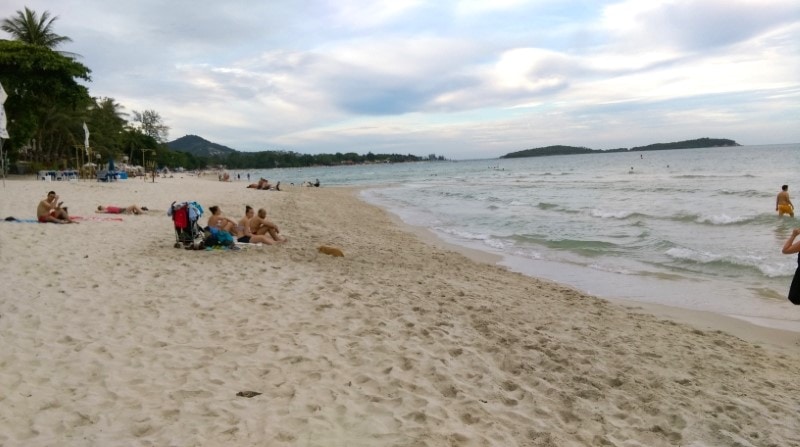
What most guides don’t emphasize is that the island has also developed a residential layer beneath the tourist surface. There are neighborhoods where locals and expats have lived for years, an established school system, supermarkets stocking imported goods, and private hospitals that handle serious treatment without sending patients to the mainland.
The island is large enough to feel like a real place rather than a resort, and small enough that you can get from one end to the other in under an hour by motorcycle. Chaweng Beach is the tourist and nightlife hub. Bo Phut (Fisherman’s Village) has a quieter, more residential feel that most long-term expats prefer. Lamai sits somewhere in between.
Pros and Cons
Reasons to move to Koh Samui:
- Excellent natural setting: beaches, clear water, and warm weather year-round
- Good air quality relative to mainland cities, with generally clean air off the tourist strip
- Fully developed infrastructure including malls, supermarkets, private hospitals, and international schools
- Large expat community, making it easier to build a social network than in smaller cities
- Cost of living lower than Phuket and significantly lower than Bangkok for comparable lifestyle quality
- Strong international food scene, partly thanks to retired chefs who’ve settled here
- Solid internet connectivity across developed areas, practical for remote work
Reasons it might not work for you:
- Cost of living is higher than mainland Thai cities and higher than most people expect
- Flights off the island are expensive because the airport is owned by Bangkok Airways
- Public transport is limited; a motorcycle or car is effectively mandatory
- Some goods are harder to find or more expensive than on the mainland, due to island logistics
- Taxis are notoriously expensive, and ride-hailing apps have limited coverage
- The island can feel small after a few years, and many expats report eventually wanting more variety
Quality of Life
The quality of life on Koh Samui is genuinely good, with some caveats worth knowing.
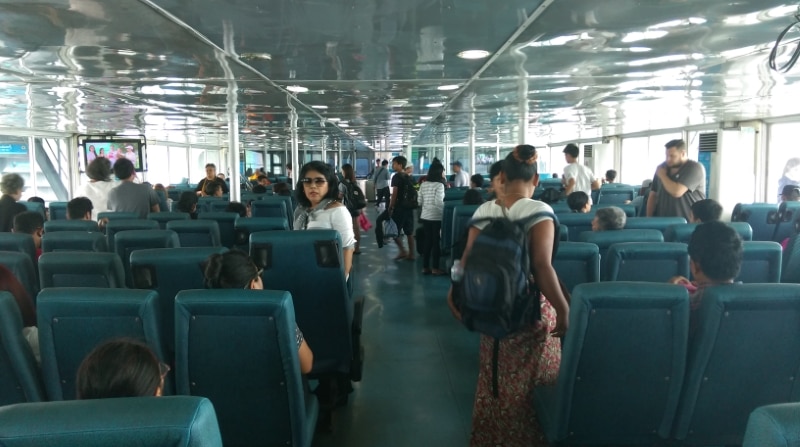
The natural environment is the obvious selling point. Waking up a short walk from the beach doesn’t get old quickly, and the outdoor options, swimming, snorkeling, hiking to viewpoints, and kayaking, are right there every day rather than requiring a trip.
The infrastructure is better than most islands of its size:
- Central Festival Samui is a proper mall with over 200 stores
- Lotus’s, Big C, Makro, and Tops Market cover everyday grocery needs
- private hospitals meet international standards
- there are international schools, yoga studios, and coworking spaces
The honest limitation is that island life accumulates constraints over time. The same ferry logistics that make Koh Samui feel remote and peaceful on day one become inconvenient when you need to travel regularly. Prices on everything from food to household goods run higher than the mainland due to transport costs. And after a couple of years, even a beautiful island starts to feel geographically bounded.
People who thrive here tend to be those who came specifically for the lifestyle, not those who ended up here by accident and find themselves needing things the island can’t provide.
Cost of Living
Koh Samui is among the more expensive places to live in Thailand. It’s cheaper than Phuket and significantly cheaper than Bangkok for certain things, but the island premium is real and shows up across multiple spending categories.
Here’s a realistic monthly breakdown:
- Rent: THB10,000 to 25,000 for a one-bedroom condo. Houses and villas start around THB15,000 to 30,000.
- Food: street food and local restaurants run THB80 to 150 per meal; mid-range restaurants THB150 to 300; international restaurants THB300 to 600. Total monthly food: THB9,000 to 15,000 depending on habits.
- Transportation: motorcycle rental runs THB2,500 to 4,000 per month plus THB500 to 1,000 in fuel. Taxis are expensive and best avoided for regular use.
- Utilities: electricity, water, and internet together run THB3,500 to 5,000 per month. Air conditioning is non-negotiable through most of the year, so the electricity bill is meaningful.
- Health insurance: a solid expat plan with good inpatient coverage runs THB3,000 to 8,000 per month depending on age and coverage. See our Thailand health insurance guide and our digital nomad health insurance guide.
- Entertainment and activities: gym membership, activities, and occasional nights out run THB1,500 to 3,500 per month.
Total realistic monthly costs for a comfortable expat lifestyle: THB40,000 to 55,000. A THB50,000 budget works, but it’s tight if you want any margin for travel or unexpected expenses. For a full picture of what to spend, see our cost of living in Thailand guide.
Accommodation
Rent is your biggest expense on Koh Samui, and the options are more limited than on the mainland. The further you get from Chaweng and Lamai, the better value you’ll find.
Condos and Apartments
Condos on Koh Samui tend to be low-rise buildings that feel more like apartment complexes than the high-rise towers you’d find in Bangkok. Expect to pay THB10,000 to 25,000 per month for a decent one-bedroom with air conditioning, hot water, and WiFi. Some buildings in this range include a communal pool. Areas like Bo Phut, Maenam, and Bangrak are noticeably cheaper than Chaweng or Lamai for equivalent quality.
Townhouses and Small Houses
A two-bedroom townhouse or small detached house runs THB15,000 to 30,000 per month depending on condition and location. You’ll need to look outside the main tourist strips, but these properties exist and offer considerably more space than a condo for a similar or slightly higher price.
Large Villas
If you want a large house with a private pool, budget at least THB30,000 per month, and significantly more for anything genuinely high-end or beachfront.
Registering Your Address
The task people forget is TM30: your landlord or the property owner is required to report your address to Thai Immigration within 24 hours of you moving in. If it’s skipped, it can cause friction later at 90-day reporting or a visa extension. Confirm with your landlord that it’s been filed.
See our TM30 guide for how it works and what to do if it wasn’t. The Immigration office serving Koh Samui is in Bo Phut, not Nathon, since the office relocated there in 2016.

Food
The food situation on Koh Samui is one of its genuine strengths, and it’s better than most island destinations of comparable size.
Local Food
Street food and local restaurants are solid and affordable. Rice dishes, noodles, curries, and stir-fries start at THB50 to 80, rising to THB100 to 150 in tourist-facing areas. Fresh markets, including Lamai Fresh Market, are good for produce, meat, and seafood at prices well below the supermarkets.
Tip: Koh Samui isn’t only a tourist island. There are neighborhoods where locals genuinely live, and they sell seafood at reasonable prices.
International Food
One of Koh Samui’s underrated advantages is the quality of its international dining scene, a direct consequence of the number of retired chefs and skilled cooks who’ve settled here over the years. Restaurants serving Italian, Japanese, Indian, French, and Western food are scattered throughout Chaweng and Bo Phut, with mains running THB200 to 500. The quality-to-price ratio is better than you’d expect for an island tourist destination, and the barbecue scene along the walking streets is particularly good.
Cafés
Koh Samui has a well-developed café scene across all the main areas. A good coffee runs THB80 to 120. Most places have workable WiFi, and the better spots in Bo Phut and Maenam are comfortable enough for a full remote work session.
Groceries
Lotus’s, Big C, Makro, and Tops Market handle standard grocery needs, and prices, including at convenience stores like 7-Eleven, are similar to what you pay inland. For imported ingredients, Samui Gourmet carries cheese, charcuterie, quality meats, and a wide range of imported products. Being an island means some things are harder to source and more expensive than on the mainland, particularly specialty or imported items.
Banking
Major Thai banks operate multiple branches on the island, with the heaviest concentration in Chaweng, Lamai, Bo Phut, and Nathon. If you’re opening your first account, see our guide to opening a Thai bank account before you go in, since requirements vary by branch and visa type.
SIM Cards
All three major Thai mobile networks, AIS, True, and dtac, cover the developed parts of the island, so a local SIM is straightforward to pick up at the airport, a mall counter, or any 7-Eleven. See our Thai SIM cards guide for which network and plan makes sense for your usage.
Getting Around
The lack of decent public transport is one of Koh Samui’s biggest limitations. Plan for it before you arrive.
- Motorcycles are the most practical and cost-effective way to get around. Monthly rental runs THB2,500 to 4,000 plus fuel. Roads around most of the island are in reasonable condition, with a few steeper sections in the interior and south. Always wear a helmet and get the appropriate license.
- Grab and InDrive are available, but coverage is thinner than in Bangkok or Chiang Mai. Fine for occasional use.
- Taxis are a known problem on Koh Samui. Fares are high, metered taxis are rare, and price negotiation before getting in is the norm. Avoid relying on them for regular transport.
- Songthaews run fixed routes around the island for THB50 to 200 per trip. Budget-friendly if you know the routes, but not practical as a daily commute for most people.
- Cars make sense for longer-term residents who want to travel comfortably or carry things. Renting rather than buying is usually the smarter choice given the island’s size. Daily rental runs THB600 to 3,500 depending on the vehicle.
Tip: there’s a Department of Land Transport office in Koh Samui, so you can apply for a Thai driving license and motorcycle license directly here. The staff are familiar with foreigners, since it’s one of the few places in Thailand where you see more foreigners than locals.
Long-Distance Travel
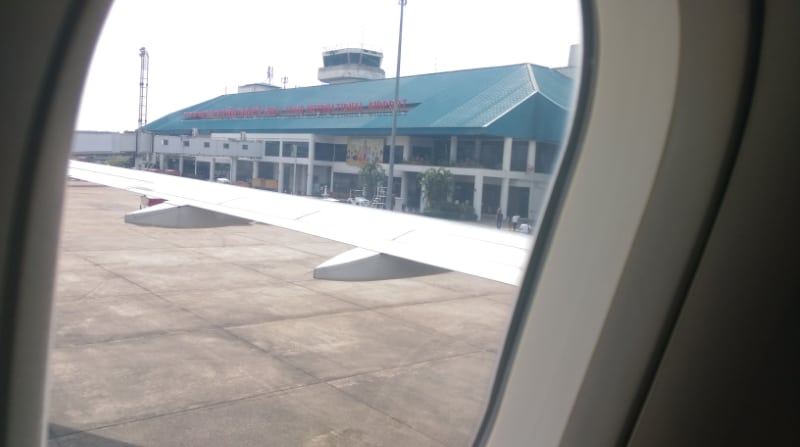
This is where island life creates real friction. Samui International Airport (USM) has direct flights to Bangkok, Phuket, Singapore, and Malaysia, but fares are significantly higher than standard Thai domestic flights because the airport is owned by Bangkok Airways.
Taking a ferry to Surat Thani via Raja Ferry or Lomprayah and then flying from Surat Thani Airport is substantially cheaper for Bangkok connections. Factor this into your travel budget if you fly more than once or twice a year.
Healthcare
Healthcare on Koh Samui is better than most islands of comparable size and handles routine to moderately complex care well. For major surgery, cancer treatment, or complex specialist care, most expats still go to Bangkok.
- Koh Samui Hospital is the main public hospital, offering general and emergency care including maternity services at affordable rates. Wait times can be long and the comfort level is lower than private facilities, but it meets basic standards and is the right choice for those without insurance or on a tight budget.
- Bangkok Samui Hospital in Bo Phut is the island’s leading private hospital and the standard choice for expats. It holds international accreditation, has English-speaking staff, and offers full facilities including private rooms and specialist care. Costs are significantly higher than the public system, so having insurance before you need it is essential.
- Wattanapat Hospital Samui is a 53-bed private hospital also in Bo Phut, opened in 2023. It’s working toward JCI accreditation and provides a strong alternative to Bangkok Samui Hospital, with 24-hour service, two operating rooms, and ICU facilities.
- Samui International Hospital is another private option worth knowing about, open 24 hours and positioned for both residents and tourists.
Pharmacies are common across the island, and most in tourist areas have English-speaking staff. General clinics in Chaweng handle minor ailments without the cost of a full private hospital visit.
Tip on insurance: a private hospital consultation on Koh Samui runs several thousand baht at minimum, and a surgery or admission goes well into six figures. The island location means a potential medical evacuation to Bangkok adds another layer of cost, and bad motorcycle crashes are not rare here. A solid expat plan with good inpatient coverage and medical evacuation is recommended.
Exercise and Fitness
Koh Samui is a strong choice for people who prioritize fitness. The outdoor options are immediate and free: beach running, sea swimming, hiking trails in the interior, cycling, and water sports of every variety.
For gym-based training, the options are good. Lamai Fitness near Lamai Beach is one of the longer-running facilities on the island, known for structured programs and returning clients. Samui Fitness Lab at Lamai Beach is a well-equipped 24-hour air-conditioned gym offering CrossFit, HYROX, and functional fitness with group classes. Monthly memberships across the island’s gyms generally run THB1,000 to 2,500, and there are numerous Muay Thai camps and yoga studios as well.
Social Life
With over 12,000 expats on the island, Koh Samui has one of the more developed international communities outside the major mainland cities. It’s significantly easier to build a social network here than in a place like Kanchanaburi or Khon Kaen.
The community includes digital nomads, retirees, people who married locally, hotel and hospitality workers, and a fair number of people who came for a holiday and never quite left. Most are drawn toward a slower, more outdoor-focused life than what Bangkok or Chiang Mai offers. Samui Expats is the main online community, running parties, charity events, and regular meetups, and joining before you arrive is worth doing for both practical advice and social connections. For those considering longer stays, our visa options for working remotely in Thailand guide covers what’s available.
Activities
The activity options on Koh Samui range well beyond the beaches, though the beaches are the obvious starting point.
Beaches and water:
- Chaweng Beach is the most developed and busiest, good for swimming and water sports
- Lamai Beach is quieter, with the famous Hin Ta and Hin Yai rocks nearby
- snorkeling and scuba diving around the island and the surrounding smaller islands are consistently good
- kayaking, jet skiing, and island-hopping to Koh Tan and Koh Matsum are easy to arrange
Nature and inland:
- Na Muang Waterfall is accessible and good for a half-day trip
- Tan Nimh Magic Garden (also called Secret Garden) in the interior is a quirky sculpture garden worth visiting once
- hiking trails through the forested interior offer a different side of the island
Culture:
- the Big Buddha Temple at Bang Rak is the island’s main landmark and worth visiting properly rather than driving past
- Nathon, the old island capital on the west coast, has a quieter, more authentic atmosphere than the tourist strip
Shopping
Central Festival Samui is the main mall, with over 200 stores, restaurants, and entertainment. Tops Market inside the mall is good for imported goods. For a more local feel, Nathon Market on the west coast has fresh produce and local goods at the best prices on the island. Chaweng Night Market is livelier and more tourist-facing but good for an evening browse, street food, and souvenirs.
Nightlife
Koh Samui has the most developed nightlife of any island in the Gulf of Thailand, with options ranging from beachfront fire shows to full-scale nightclubs.
Chaweng is the nightlife center. Green Mango Club on Soi Green Mango is the island’s most established nightclub, with over 1,000 capacity, multiple dance floors, and international DJs, running for over 20 years. ARKbar Beach Club on Chaweng Beach is the main daytime-to-evening venue, with pool parties, fire shows from 8pm, and live DJs.
Bo Phut is the choice for something more relaxed. Coco Tam’s in Fisherman’s Village is a popular beachfront bar with a nightly fire show that’s become something of an institution: bean bags, cocktails, ocean breeze, and a crowd there for the atmosphere rather than the volume. The minimum spend per person for fire-show seating is THB500, and getting there early is strongly advised on busier nights. Outside the main tourist areas, the island quiets down considerably at night, which suits plenty of people just fine.
Education and Family Life
Koh Samui is a comfortable place to raise children. The environment is safe, clean, and unhurried, and the expat community provides a social infrastructure for families that smaller Thai cities can’t match. On schooling, the island has several options worth knowing:
- International School of Samui follows a broad international curriculum
- Lamai International School is well-regarded for younger children
- Tree Yard International School focuses on child-centered learning
These schools emphasize multilingual and multicultural environments, which suits expat families well. They’re not the scale or resource level of Bangkok’s top international schools, but they’re solid and well-reviewed by the families using them. For a broader comparison of schooling across Thailand, see our guide to international schools in Thailand.
Job Opportunities
Finding formal employment on Koh Samui as a foreigner is difficult. The realistic options are English teaching at schools or language institutes, roles in hotels and tourism businesses for people with relevant skills, and dive instructor positions for those with PADI or equivalent qualifications.
If you have capital and the right setup, starting a small business in tourism, food, or services is a path some expats take successfully. The regulatory process is complex and requires professional guidance, but the market for expat-oriented businesses is real and established.
Weather and Air Quality
Koh Samui’s weather pattern differs from the rest of Thailand in one important way: its rainy season runs from September to November rather than the standard June to October cycle, driven by the northeast monsoon that sweeps across the Gulf.
- Cool and dry season (December to February): the best time to be on the island. Lower humidity, reliable sunshine, and comfortable temperatures. This is peak tourist season, so accommodation prices are higher.
- Hot season (March to May): temperatures hover around 29 to 34°C, humid and warm. Still manageable with air conditioning and beach access, but noticeably less comfortable than the cool season.
- Rainy season (September to November): heavy rain, occasional strong winds, and some stormy days. The landscape is lush, prices drop, and the island has a quieter character. Worth knowing about before booking a long-term rental starting in October.
Air Quality
Air quality on Koh Samui is good throughout the year. The island benefits from sea breezes that clear pollutants, and PM2.5 levels are consistently within safe ranges. You can track current conditions on IQAir. This is a meaningful advantage over northern Thailand during burning season.
Flooding
Flooding is not a major issue on most of the island. Heavy rain during the rainy season can cause temporary pooling on low-lying roads, but it clears quickly and doesn’t affect daily life significantly for most residents.
Water Supply and Waste on an Island
Two infrastructure realities are worth knowing before you commit to a lease, since neither shows up in most Samui guides.
Samui’s tap water comes mostly through an undersea pipeline from the Surat Thani mainland, supplemented by island reservoirs. In a bad dry season, demand has outpaced what the pipeline and reservoirs can supply, and the Provincial Waterworks Authority (PWA) has introduced rotating rationing to manage the shortfall, most recently during the 2024 dry season. It isn’t a constant problem, but it’s a real one in drought years, and it’s worth asking a landlord or condo manager whether the building has its own water tank as a buffer.
Waste is the other one. As an island, Samui has to barge or ferry most of what it can’t process locally to the mainland, and its municipal waste infrastructure has struggled to keep pace with tourist-season volume, a challenge that international development groups including the UNDP have worked on with the local municipality. In practice, this mostly shows up as inconsistent recycling collection rather than anything that affects daily life, but it’s part of why goods and services cost more here than on the mainland.
Tip: neither issue is a reason to rule out Koh Samui. They’re the kind of thing worth a five-minute conversation with your landlord or building manager before you sign, not a dealbreaker on their own.
Popular Neighborhoods
Chaweng
The island’s center of gravity for tourism, nightlife, and commerce. Convenient for everything, but noisy and busy. Good for a first month when you’re getting your bearings; less appealing for a long-term base unless you specifically want that energy.
Bo Phut (Fisherman’s Village)
The preferred area for most long-term expats. Quieter than Chaweng, with a genuine village atmosphere around the waterfront, good restaurant and café options, proximity to Bangkok Samui Hospital and Wattanapat Hospital, and Central Festival Samui nearby. This is where I’d look first.

Lamai
A middle ground between Chaweng’s bustle and Bo Phut’s quiet. Popular with people who want beach access and some nightlife without the full intensity of Chaweng. Lamai Beach is less crowded than Chaweng and the area has a solid expat presence.
Maenam and Bangrak
Further north and noticeably cheaper than the main tourist areas. Popular with families and budget-conscious expats. Less immediate beach access from most residences, but the tradeoff is meaningfully lower rent and a more local atmosphere.
Rural and Interior Areas
Not recommended unless you have existing connections in the area or a specific reason to be there. Transport is inconvenient, amenities are limited, and the isolation compounds over time.
Frequently Asked Questions
How much does it cost to live on Koh Samui?
A comfortable expat lifestyle runs THB40,000 to 55,000 a month, covering rent, food, transport, utilities, and health insurance. A THB50,000 budget works but leaves little margin for travel or unexpected costs. See the Cost of Living section above for the full breakdown.
Is Koh Samui a good place for families with kids?
Yes, with the caveat that school options are more limited than in Bangkok. The island has a handful of international schools, a safe and unhurried environment, and a large expat community that gives families a built-in social network.
Is healthcare on Koh Samui good enough, or do I need to fly to Bangkok?
Routine and moderately complex care is well handled on the island by private hospitals like Bangkok Samui Hospital and Wattanapat Hospital Samui. For major surgery, cancer treatment, or complex specialist care, most expats still travel to Bangkok, so insurance with medical evacuation coverage matters more here than in a mainland city.
Why are flights off Koh Samui so expensive?
Samui International Airport is privately owned and operated by Bangkok Airways, so it doesn’t have the same competitive pricing as government-run airports elsewhere in Thailand. Taking a ferry to Surat Thani and flying from there is the usual workaround for cheaper fares.
Does Koh Samui have water shortages?
In a bad dry season, yes. The island depends on an undersea pipeline from the mainland plus its own reservoirs, and in drought years the Provincial Waterworks Authority has introduced rotating rationing, most recently in 2024. It’s an occasional risk rather than a constant one, but worth asking about before signing a lease.
Where should I live on Koh Samui as an expat?
Bo Phut (Fisherman’s Village) is the preferred base for most long-term expats, thanks to its quieter atmosphere and proximity to the main hospitals. Lamai and Chaweng suit people who want more nightlife and beach energy, while Maenam and Bangrak offer lower rent for families and budget-conscious movers. See our Where to Live in Thailand tool if you’re still comparing Samui against other parts of the country.
Is Koh Samui better than Phuket for expats?
It depends on what you want. Samui is quieter and cheaper than Phuket, but less connected, with fewer international flight options and a smaller range of long-term activities. Phuket has more infrastructure and easier international access; Samui has a calmer pace and lower costs for a comparable lifestyle.
Should You Live on Koh Samui?
Koh Samui works well for a specific kind of expat: someone who came for the lifestyle and is committed to it. Retirees who want beach access and a warm community, digital nomads who want a beautiful base with decent internet, and families who value a safe, unhurried environment for their children all tend to do well here.
The people who struggle are those who underestimate the island premium on costs, those who need to travel internationally more than a couple of times a year without the expense of Bangkok Airways, and those who find that island life starts to feel confining after a year or two.
- The honest comparison with Phuket: Samui is quieter and cheaper, but less connected and with fewer things to do long-term.
- The honest comparison with the mainland: Samui costs more for almost everything but gives you something the mainland genuinely can’t.
For where Samui sits relative to the full range of Thai expat destinations, see our best places to retire in Thailand guide and our overview of the best place to live in Thailand.


 Deutsch:
 Français:
'/%3E%3Cpath%20fill='%23b2b2b2'%20d='M241%20382q0%2016%2017%2026%2017%2011%2042%2011t42-11q16-11%2017-26V269H241'/%3E%3Cpath%20fill='%239f7e00'%20d='M241%20379q0%2014%208%2023%209%209%2021%209%2014%200%2021-9%209-9%209-23V269h-59'/%3E%3Cpath%20d='M241%20339v-70h59v110q0%2014-9%2023l-6%205v-68h-15v72q-8%200-14-4v-68zm59%2040c0%2022%2015%2032%2029%2032%2021%200%2030-18%2030-32v-40h-59'/%3E%3Cpath%20fill='%239f7e00'%20d='M266%20277v5h2v12h-3v-5h2v-5h-9v5h2v5h-4v9h3v18h-5v10h34v-10h-5v-18h3v-9h-4v-5h2v-5h-9v5h2v5h-3v-12h2v-5zm42%20101q0%2010%206%2017%206%206%2015%207%2010-1%2016-7%206-7%206-17v-29h-43'/%3E%3Ccircle%20fill='%230044ad'%20cx='329.5'%20cy='372'%20r='6'/%3E%3Cellipse%20fill='%230044ad'%20cx='300'%20cy='340'%20rx='16'%20ry='21'/%3E%3C/svg%3E) Español:
Español: