This article will take approximately 27 minutes to read. Don't have the time right now? No worries. Email the ad-free version of the article to yourself and read it later!
Bangkok rewards the people who learn to use it: world-class food and hospitals, the country’s best transport, and Thailand’s biggest expat community, set against the heat, traffic, and January-to-April air. Here’s what living there is really like.
Bangkok polarizes people. Some expats arrive, spend a month, and can’t wait to leave. Others land, figure out the city, and five years later find they can’t imagine being anywhere else.
The gap between those two experiences is almost entirely explained by how you approach the city: what you expect from it, where you live in it, and whether its specific combination of assets matches what you actually need from daily life.
What Bangkok offers at its best is unmatched in Thailand and rarely matched anywhere in Asia:
- world-class food
- infrastructure that, once you know how to use it, works better than its reputation suggests
- excellent private healthcare
- professional opportunity
- a vast and organized expat community
What it takes from you in return is size, heat, air quality, and a relentlessness that accumulates slowly. Most long-term expats describe a version of the same arc: they loved it, they got tired of it, they left for somewhere quieter, and then they missed it.
This guide is about understanding what you’re getting into before you make that discovery yourself.
Contents
Key Takeaways
- Bangkok is Thailand’s capital and by far its largest and most developed city, with an expat community among the largest in Asia.
- The BTS and MRT system is the practical backbone of daily life. Single-journey fares run THB17 to 65. Living near a station shapes your experience more than almost any other factor.
- Cost of living is among the highest in Thailand, but meaningfully lower than equivalent cities in Europe, North America, or Australia. A comfortable single-expat life costs THB35,000 to 50,000 per month.
- Bumrungrad International Hospital, Bangkok Hospital, and Samitivej Hospital are world-class private facilities. Mid-tier private hospitals are excellent and significantly more affordable.
- Air quality deteriorates from January to April. An air purifier is standard household equipment, not a luxury.
- Bangkok suits people who need what it specifically offers: career and business infrastructure, maximum variety, and a large community. It’s a poor fit for people who want nature, quiet, or minimal cost.
About Bangkok
Bangkok, officially Krung Thep Maha Nakhon, is home to around 11 million people in the city proper and over 15 million in the greater metropolitan area. It’s Thailand’s political, commercial, cultural, and social hub, a city that grew rapidly and without a clear plan, producing a character that’s simultaneously chaotic and functional, overwhelming and deeply livable.
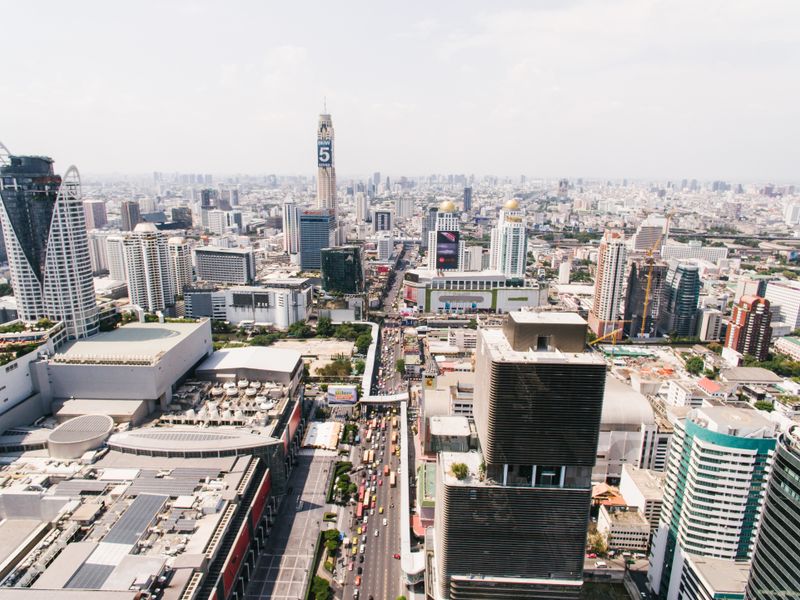
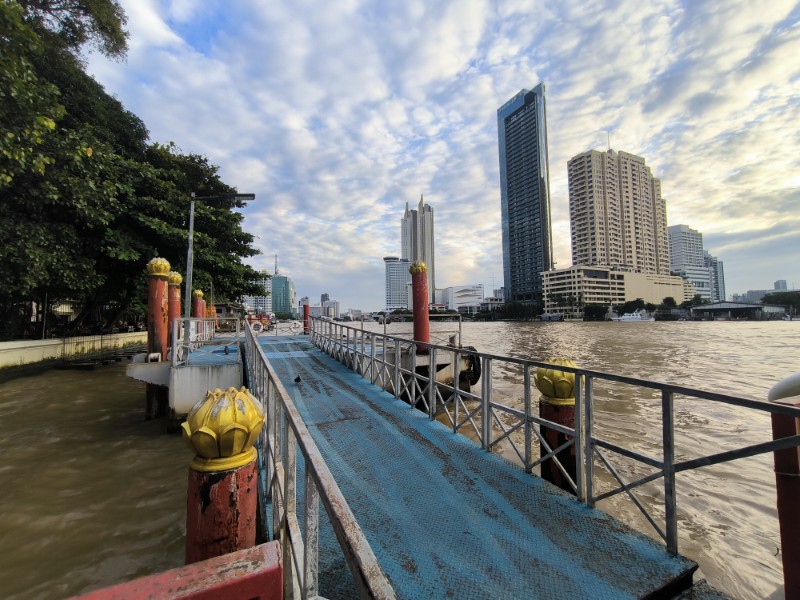
The city is built on a flat alluvial plain at the mouth of the Chao Phraya River, which runs through it and connects it to the Gulf of Thailand. The lack of elevation means flooding is a structural issue, the heat is unrelieved, and the sprawl extends in every direction without natural boundaries.
What Bangkok has in its favor is the density of what it’s accumulated:
- the best private hospitals in Southeast Asia outside Singapore
- a food scene that competes with any city in the world
- two major international airports
- an expat infrastructure built over decades that makes daily life genuinely accessible to people who don’t speak Thai
Pros and Cons
Reasons to move to Bangkok:
- The largest and most diverse expat community in Thailand, organized across dozens of industries, interests, and nationalities
- The best public transport in the country, with the BTS, MRT, and connecting rail lines expanding continuously
- World-class private hospitals at multiple price points
- The widest food variety in Thailand: every cuisine, every price point, at exceptional quality
- Unmatched professional and business networking, with regional headquarters of multinationals across every sector
- Two major international airports with direct connections to most of Asia and beyond
- Access to everything: international schools, specialist services, cultural events, and infrastructure that smaller cities simply don’t have
Reasons it might not work for you:
- Cost of living is among the highest in Thailand
- Traffic during rush hours is genuinely severe; life outside BTS and MRT corridors requires significant commute tolerance
- Air quality from January to April is a serious and recurring health concern
- The city’s scale is exhausting for people who want manageability over variety
- Authentic Thai culture and local life are harder to access amid the Westernization and tourist infrastructure
- Many long-term expats eventually burn out and want something quieter
Quality of Life
The expat community’s consistent message about Bangkok is simple: the city rewards people who learn how to use it.
Bangkok doesn’t reveal itself quickly. If you stay in a tourist area for a few weeks and leave thinking it’s crowded and expensive, that’s a valid impression, but it’s only part of the picture.
People who enjoy living in Bangkok long-term usually have a few things in common:
- They found a neighborhood that fits their lifestyle.
- They built friendships around shared interests, not just convenience.
- They learned the BTS and MRT routes that matter to their daily routine.
- They discovered local food spots, markets, and hidden gems beyond the tourist guides.
Digital nomads and remote workers often highlight Bangkok’s strong infrastructure, including:
- fast and reliable internet
- a mature e-commerce and digital payment ecosystem
- plenty of coworking spaces
- an endless selection of cafés, restaurants, and social venues
The city also has genuine startup and entrepreneurship energy, with regular events, an active tech community, and more co-founder meeting opportunities than anywhere else in Thailand.
The honest tradeoff the same community acknowledges: you experience a version of Bangkok, not Thailand. You can live here for years and remain inside an expat bubble that happens to be located in Southeast Asia. Some people are fine with that. Others, particularly after a few years, find they want more contact with actual Thai life and move somewhere smaller.
Cost of Living
Bangkok is the most expensive city in Thailand, but the gap with some second-tier cities has narrowed as those places develop. More importantly, Bangkok is significantly cheaper than comparable cities in Western countries, particularly for accommodation, food, and services.
A comfortable single-expat life costs around THB35,000 to 50,000 per month. The key variables are rent, food habits, and transport choices. Here’s a realistic monthly breakdown:
- Rent: THB15,000 to 20,000 for a studio near the BTS in central Sukhumvit; less further out or off the main corridors
- Food: THB12,000 to 14,000 for a mix of local vendors, mid-range restaurants, and occasional delivery
- Transportation: THB2,000 using BTS/MRT with a Rabbit Card bundle
- Health insurance: THB3,500 for a mid-tier plan covering private hospital treatment. See our Thailand health insurance guide.
- Utilities: THB3,000 for electricity, water, and internet
- Social activities: THB2,000 to 5,000 depending on lifestyle
- Visa-related: THB500
- Travel: THB5,000
- Miscellaneous: THB2,000
- Total: THB45,000 to 55,000 per month
Key tradeoffs:
- If you want a car, monthly costs including purchase installments, fuel, maintenance, insurance, and road tax run THB18,000 to 20,000 for a standard Japanese model. That reshapes the entire budget significantly.
- If you’re over 60, health insurance rises substantially; budget THB5,000 or more per month.
- If you have school-age children, international school fees start at THB500,000 to 800,000 per year, which pushes the total monthly budget well above THB50,000.
For a full comparison across Thailand, see our cost of living in Thailand guide.
Accommodation
Location relative to the BTS or MRT is the defining factor in Bangkok accommodation. Two condos of similar size and quality can have completely different daily-life implications depending on whether you’re five minutes from a station or twenty.

There are also several types of accommodation in Bangkok, each suiting a different kind of person.
Budget Apartment
This is a popular option among retirees who don’t have a big budget for living in Bangkok. There are many Thai-style apartments that are still comfortable enough to live in and within walking distance of the BTS or MRT, available in key locations such as Ratchadapisek, Ramkhamhaeng, or On Nut.

The price is only around THB5,000 to 7,000 a month. The facilities may not be as fancy as a condo, but they’re still good and secure enough to live in.
Condominium
This is the most popular choice for expats in Bangkok and most newcomers.
You can rent a condo near BTS stations at Asok, Nana, Phrom Phong, Thong Lo, and Ekkamai, with access to Terminal 21, EmQuartier, EmPorium, night markets, gyms, and some of the best restaurants in the city.
A studio in this zone runs THB15,000 to 20,000 for around 28 to 35 square meters. Condominiums in Thailand also tend to be fully furnished, with a pool, gym, 24-hour security, and convenience stores on site.
Townhouse
A townhouse is an underrated type of accommodation that not many expats think about. But long-term expats who need space sometimes prefer one, because you can rent a townhouse for the same cost as a condo and get much more space in a similar location.
For example, a condo in On Nut might cost around THB12,000 per month for a 30-square-meter studio. For the same price, you get a two-story townhouse. Another hidden benefit is that townhouses tend to sit in local areas, which means authentic local food at affordable prices and less reliance on convenience stores or food delivery.
Detached House
A detached house is a popular option for expat families, especially those in suburban areas like Bang Na with many international schools. Prices normally start at THB20,000 per month. Detached houses are limited inside the city area, though, or they get expensive.
Food
Food is the reason most long-term Bangkok expats find the city hard to leave. The combination of variety, quality, and price is without equal in Thailand and genuinely among the best in the world.
Local Thai Food
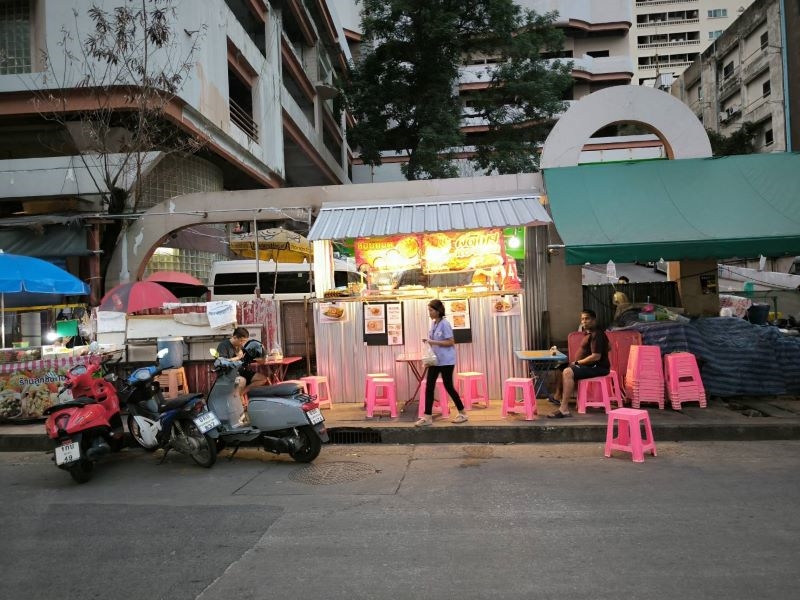
Street vendors, market stalls, and local shops serve noodles, rice dishes, curries, and stir-fries for THB60 to 80 including a drink. Khao mun gai, pad kra pao, beef noodles, boat noodles, and dozens of regional dishes from every corner of Thailand are available within walking distance of almost any central condo. Eating this way daily is one of Bangkok’s best-value pleasures, and the quality genuinely competes with sit-down restaurant food elsewhere.
The community point that comes up consistently: Bangkok is an inexpensive place to live if you eat as Thais eat. The moment you try to replicate a Western lifestyle with imported goods and international restaurant habits, costs rise sharply and quickly.
International Food
Bangkok’s international restaurant scene is one of the city’s strongest arguments for long-term living. Japanese, Italian, Indian, Mexican, Middle Eastern, Korean, and dozens of other cuisines are represented at quality levels that would be impossible to find in smaller Thai cities. Mid-range international restaurants run THB200 to 600 per person, and fine dining competes with any regional Asian capital.
Cafés and Coffee
The café culture has developed significantly. Independent coffee shops compete seriously with international chains across the central areas. Local Thai coffee runs THB40 to 80; international chains like Starbucks run around THB160. For remote workers, Bangkok’s café options are genuinely good, without being as distinctive as Chiang Mai’s café scene.
Night Markets and Food Courts
Chatuchak Weekend Market has one of the best concentrations of street food in the city. Train Night Market Ratchada combines rooftop viewing with good food vendors. The food courts in Terminal 21 and MBK Center are reliable, cheap, and air-conditioned, which matters in Bangkok.
Groceries
Lotus’s, Big C, Makro, Tops Market, Gourmet Market, and Villa Market cover every level of grocery need from budget local to premium imported. Most large malls have a supermarket on the basement floor. Food delivery through LINE MAN and GrabFood covers most of the city reliably, with deliveries in 15 to 30 minutes in central areas.
Getting Around
Bangkok’s public transport network is the most developed in Thailand and functional enough for most daily needs, provided you’ve chosen accommodation near the right stations.

BTS and MRT
The BTS Skytrain and MRT together cover most of central Bangkok and are expanding continuously with new lines and extensions. Single-journey BTS fares run THB17 to 65. The Rabbit Card with bundle packages from the Rabbit Rewards app reduces the effective per-ride cost for regular users.
Grab and Bolt
Both work reliably throughout Bangkok. A 10-kilometre trip runs around THB120 to 140. They’re essential for reaching places the rail network doesn’t cover, and significantly faster than taxis during surge pricing periods, but more expensive than the BTS/MRT for daily commuting.
Motorcycle Taxis
The fastest way to navigate short soi distances from BTS stations to homes or offices. THB20 to 40 for a 2-kilometre trip. The community consensus is consistent: use them on sois, not main roads.
Taxis
Metered taxis are available throughout the city. A 10-kilometre trip typically runs under THB140. Use ride-hailing apps to avoid the negotiated flat fares in tourist areas, which are reliably inflated.
Driving
Owning a car in Bangkok is a lifestyle choice with real tradeoffs. Traffic during rush hours is severe, parking in central areas is expensive and inconvenient, and the BTS handles most practical travel faster during peak times. Even with a car, you tend to use the BTS or MRT to escape the heavy traffic.
So unless you have a family or live outside the central area, you don’t need to own a car at all. Driving in Bangkok is also a challenge in itself, given the number of cars and the local driving habits. Most expats who’ve been in Bangkok for a while advise against car ownership unless you specifically need it.
Healthcare
Bangkok’s private hospital network is among the best in Asia, and this is one of the city’s strongest practical arguments for long-term residence.
- Bumrungrad International Hospital is Thailand’s most internationally recognized private hospital, with JCI accreditation, over 30 specialist centers, and English-speaking staff throughout. It’s also the top hospital choice for wealthy families in Thailand. Costs are among the highest in Thailand; having insurance before you need it is essential.
- Bangkok Hospital and Samitivej Hospital are the other flagship JCI-accredited private hospitals, both part of the BDMS network and both ranked among the best hospitals in Thailand by Newsweek for three consecutive years through 2025.
- For solid mid-tier private care at more manageable cost, Ramkhamhaeng Hospital, Bangkok Christian Hospital, and Saint Louis Hospital provide quality treatment at lower price points. These are the practical daily-use choice for expats who don’t want to pay premium-tier prices for routine care.
Bangkok also has many great public hospitals, such as Chulalongkorn Hospital, Siriraj Hospital, and Phramongkutklao Hospital. The quality of treatment at these hospitals is on par with, or even better than, private hospitals. But the waiting time is real, and they provide less English support.
Social Life and the Expat Community
Bangkok’s expat community is one of the largest in Asia and genuinely diverse across nationality, profession, age, and reason for being here. Digital nomads, corporate expats, retirees, teachers, entrepreneurs, and people who came for a holiday and never left all exist in meaningful numbers.
The community infrastructure built up around this population is the city’s social strength. Facebook groups for Bangkok expats have hundreds of thousands of members. The Meetup platform is active with groups covering tech networking, hiking, language exchange, book clubs, sports, and dozens of other interests. Regular networking events happen across every industry that has a significant expat presence in the city.
People who do well socially in Bangkok tend to be those who engage actively rather than waiting for community to happen to them. The city has everything you need to build a rich social life; it doesn’t deliver it passively. The people who describe Bangkok as lonely are typically those who stayed in their condos between tourist trips.
A nuance that comes up in honest community discussions is that Bangkok’s social scene has layers:
- The surface layer is for tourists.
- The middle layer is the rotating cast of digital nomads who stay for months.
- The deeper layer is the established long-term expat community, which is warm, knowledgeable, and helpful to newcomers who find it, but takes some effort to locate.
The practical advice from long-termers: find your interest groups early. Whether it’s running clubs, startup events, cooking classes, Muay Thai gyms, or language exchanges, the communities built around shared activities produce more genuine connections than bar socializing.
Nightlife
Bangkok’s nightlife is among the most developed in Southeast Asia, covering every point on the spectrum. The expat-facing nightlife concentrates around:
- Thong Lo and Ekkamai for higher-end bars and clubs with a more sophisticated crowd
- Sukhumvit Soi 11 for a mix of venues at every price point
- RCA (Royal City Avenue) for large clubs
- Silom and Patpong for their own entertainment-district character, more tourist-facing but with established expat venues alongside
For people who want quality rather than volume, Bangkok has excellent rooftop bars, craft cocktail lounges, and live music venues that hold their own against any city in Asia. The night market at Thong Lo and the food and drink scene along Ekkamai represent a more sophisticated version of Bangkok evening life that many long-term expats prefer.
Drinks at venues in the Thong Lo area run THB150 to 300 each. A night out with dinner and drinks runs THB500 to 1,500 depending on where you go.
Activities
Bangkok’s activity list is essentially boundless. The practical highlights for long-term residents rather than tourists:
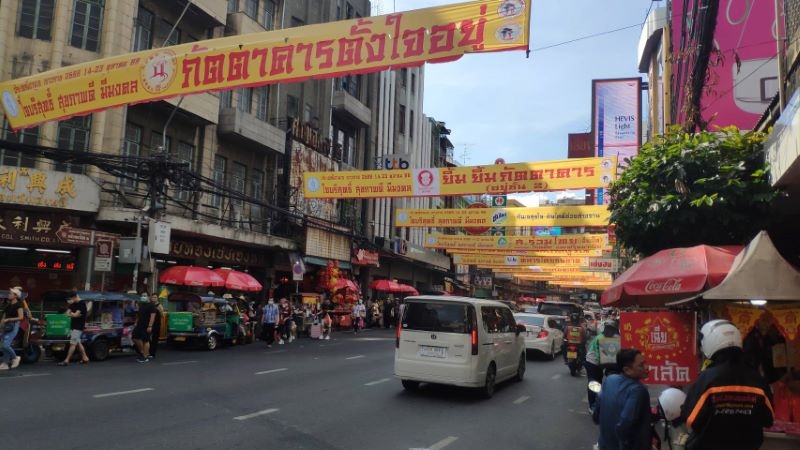
Culture and temples:
- Wat Phra Kaew and the Grand Palace: the essential Bangkok visit, worth doing properly at least once
- Wat Arun: best at sunset from the Chao Phraya side
- Jim Thompson House: an excellent museum on Thai silk and Bangkok’s mid-century history
- Museum Siam: an engaging interactive museum on Thai history and identity, underrated
Parks and outdoors:
- Lumpini Park: the central park, good for morning runs, outdoor exercise, and evening walks. Monitor lizards are a regular sight.
- Benjakitti Forest Park: newer and larger than Lumpini, with excellent cycling paths and a skybridge section over the forest canopy
Markets:
- Chatuchak Weekend Market: the largest market in Thailand with over 15,000 stalls. Go early on Saturday or Sunday before the heat peaks.
- Train Night Market Ratchada: rooftop views, good street food, popular with both locals and expats
Shopping: Siam Paragon, CentralWorld, Terminal 21, EmQuartier, and EmPorium cover mainstream retail. MBK Center remains the go-to for electronics, budget fashion, and the kind of sprawling market-mall hybrid that defines a certain version of Bangkok.
Wellness: Bangkok has an increasingly developed wellness scene. Yoga studios, Muay Thai gyms, meditation centers, and health-focused restaurants are distributed throughout the central areas, at a density that smaller cities don’t match.
Education and Family Life
Bangkok has Thailand’s most comprehensive international school landscape, covering every major curriculum and price point.
Leading options include Bangkok Patana School (British, IB), NIST International School (IB), International School Bangkok (ISB) (American, IB), Harrow International School Bangkok (British), and Bangkok International Preparatory and Secondary School (BIPSS), among dozens of others.
Fees at top-tier international schools start around THB500,000 to 800,000 per year and rise significantly at higher year levels. A THB50,000 per month total budget does not cover both Bangkok living costs and international school fees; families should plan budgets substantially above this. See our guide to international schools in Thailand and our cost of living for families guide.

For families without international school budgets, Bangkok has bilingual programs at private Thai schools that offer English-medium instruction at significantly lower cost. The family expat community is large and well-organized, with active groups on Facebook and Meetup covering parenting, children’s activities, and school navigation. Bangkok is generally considered a safe city for families; violent crime is rare and the main practical concerns are traffic and air quality.
Job Opportunities
Bangkok offers the widest range of employment for foreigners in Thailand by a significant margin.
- Corporate and multinational roles exist across finance, technology, consulting, logistics, and manufacturing. The presence of regional headquarters for major international companies means genuinely career-relevant positions exist here that don’t elsewhere in Thailand. Salaries are lower than Western equivalents but higher than elsewhere in the country.
- Teaching at international schools and universities is well-developed, with higher pay than teaching positions in smaller cities.
- Entrepreneurship has a real community in Bangkok, with startup events, co-founder meetups, and an established ecosystem for small business, particularly in the expat-serving sector.
- Remote work is well-served by Bangkok’s infrastructure: fast and stable internet throughout the central areas, and excellent coworking options.
Weather
Bangkok is hot year-round with no meaningful cold season. Average temperatures run 25 to 35°C, with March to May the most intense period and occasional days exceeding 40°C. Air conditioning is a core utility expense rather than an optional comfort.
The rainy season from May to October brings regular heavy downpours, typically clearing within an hour or two. September and October are the wettest months. The cool season from November to February is Bangkok at its most livable: lower humidity, slightly cooler temperatures, and the most comfortable conditions for outdoor life.
Many expats structure their Thailand experience around the seasons: Bangkok in the cool months, somewhere cooler or greener during the hot months. The city rewards this kind of fluid approach.
Air Quality
Air quality is Bangkok’s most significant environmental drawback and should be weighted seriously in any long-term living decision.
From roughly January to April, PM2.5 pollution from vehicle emissions, industrial activity, and agricultural burning pushes AQI levels well above safe limits on bad days. Bangkok regularly appears among Asia’s most polluted cities during this period.
- On days with AQI above 150, limiting outdoor activity and wearing an N95 mask is advisable.
- On days above 200, most health-conscious residents stay indoors as much as possible.
An air purifier is standard household equipment in Bangkok, not a luxury. HEPA-filter units for a 30 to 50-square-meter room run THB3,000 to 8,000 and make a meaningful difference to daily indoor air quality.
The community’s practical response: most long-term expats treat January to April as the season to travel more, leave Bangkok for weeks at a time during the worst periods, or invest in apartments with better air sealing and filtration. It’s a real constraint that experienced residents work around rather than pretend doesn’t exist.
Flooding
Bangkok floods. Low-lying neighborhoods, areas near canals, and zones with poor drainage are most at risk during the rainy season. The 2011 mega-flood remains in living memory, and while infrastructure improvements have reduced the risk of city-wide events, localized flooding after heavy rain is still routine in specific areas.
Before committing to accommodation, check the flooding history of the specific street and building. Condo buildings with elevated ground floors and a good drainage history handle heavy rain better. Ground-floor units in flood-prone sois are most vulnerable. Check community forums for honest recent-season accounts of specific areas.
Popular Neighborhoods
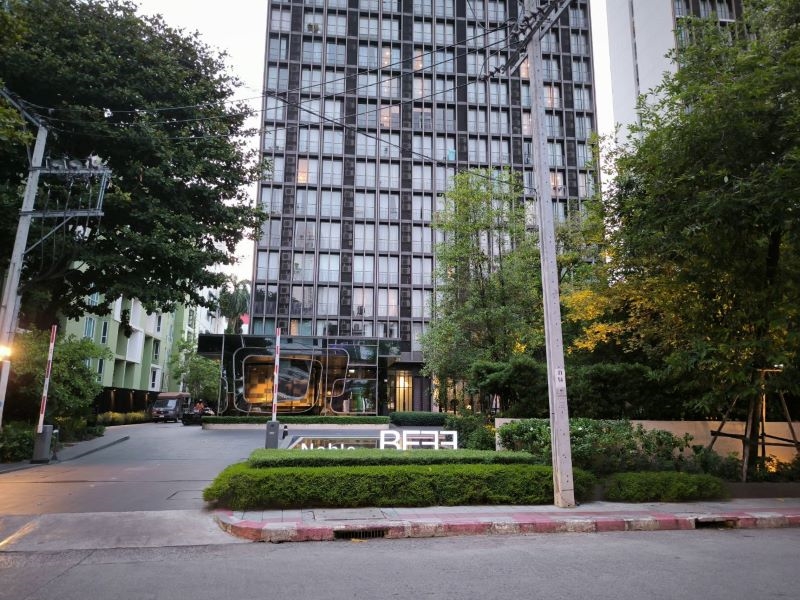
Asok and Nana (Sukhumvit 1 to 21)
Maximum convenience for newcomers: BTS Asok and MRT Sukhumvit at the same intersection give two separate rail lines, and Terminal 21 is directly connected. Dense with expat-facing services, restaurants, and social venues. The tradeoffs are noise, tourist density, and the least residential character of any expat neighborhood. It’s a good starting point for newcomers, though many people move elsewhere after getting their footing.
Thong Lo and Ekkamai (Sukhumvit 55 to 63)
The preferred neighborhood for long-term expats who have some budget and want city energy with more residential character. A better independent restaurant and café scene than the Asok area, with more evening options that suit settled residents rather than tourists. Slightly more expensive for comparable condo sizes. The community here skews toward people who’ve been in Bangkok long enough to find their preferred version of it.
On Nut, Bang Chak, Udom Suk (Sukhumvit 77 onwards)
The budget-conscious and space-conscious alternative to central Sukhumvit. More room for less money, a growing local food and café scene, and still on the BTS. Popular with expats who work remotely or value space over centrality. It takes 20 to 25 minutes to reach the heart of the city, which is a real but manageable tradeoff.
Silom and Sathorn
Bangkok’s financial district: more corporate during the week, with a concentrated nightlife scene including Patpong and Silom Soi 4. Good MRT access. A better fit for people in finance, law, or corporate roles than the Sukhumvit corridor.
Ari, Lat Phrao, and Ratchada
Growing expat neighborhoods off the standard corridors, with their own food and social scenes at lower rents than Sukhumvit. Well-served by MRT and newer BTS lines. Worth considering for people who don’t need to be in central Sukhumvit and want more space or a more local atmosphere. It’s becoming more popular with long-term expats who’ve outgrown the Sukhumvit bubble.
Should You Live in Bangkok?
Bangkok works best for:
- professionals and entrepreneurs who need the city’s business infrastructure, networking, and career opportunities
- anyone who values maximum variety in food, social life, cultural activities, and lifestyle options
- people who are new to Thailand and want the support of a large, established community while they figure out what they actually want from living here
It’s a poor fit for people who want nature access as a daily feature, clean air year-round, a slow pace of life, or the ability to live comfortably on a minimal budget. Many expats do a few years in Bangkok, learn what they need from the experience, and then move to a smaller city with a clearer sense of what they want.
That’s not a failure of Bangkok. It’s the city doing what it does: offering everything, at a cost, and letting you figure out whether that trade makes sense for your life.
The honest starting advice from people who know the city well: rent month-to-month for the first three months before signing a year-long lease, and live in two or three different neighborhoods during that period if you can. Bangkok reveals its character slowly, and the neighborhood that looks right on paper doesn’t always feel right once you’re in it.
For a related guide, see our comparison of living in Bangkok vs Chiang Mai.


 Deutsch:
 Français:
 Español: