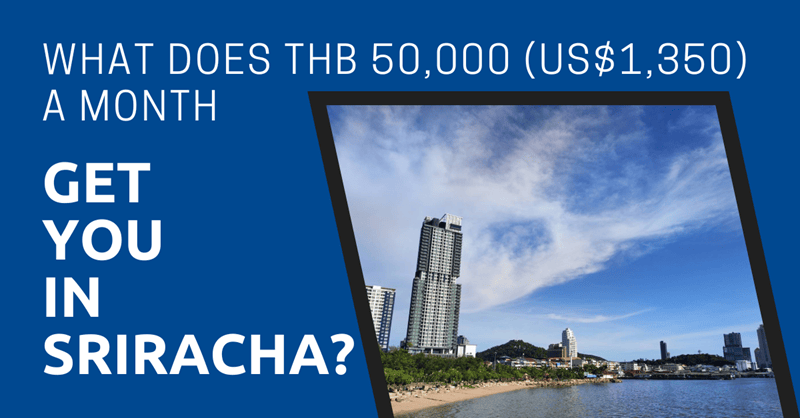
Sriracha is the eastern seaboard’s quiet, affordable “Little Osaka”: excellent hospitals, cheap Thai-Japanese food, and the best early-childhood schooling outside Bangkok. The beach isn’t swimmable and nightlife is thin, but Pattaya is 45 minutes away.
Most people associate Sriracha with two things: the hot sauce, and the road you take to get somewhere else. That’s the reputation, and it’s almost entirely wrong as a guide to what it’s like to live here.
Sriracha is a functioning, affordable small city on Thailand’s eastern seaboard with good healthcare, cheap and varied food, a large and well-established Japanese expat community, and a family infrastructure that’s better than almost anywhere outside Bangkok. It’s quieter than Pattaya, cheaper than most beach cities, and significantly less chaotic than the places most expats end up defaulting to.
It won’t suit everyone. The beach is not a feature. The Western expat community is thin. And if you need nightlife or a large international social scene, you’ll be driving to Pattaya regularly. But for a certain kind of expat, particularly families and remote workers, it’s one of the most underrated cities on the eastern seaboard.
Disclaimer: Some links in this article go to our partners, and we may earn a commission if you use them. It costs you nothing extra, and we only recommend services we'd use ourselves. Read more in our Advertising Disclosure.
Contents
- Key Takeaways
- About Sriracha
- Pros and Cons
- Quality of Life
- Cost of Living
- Accommodation
- Food
- Coworking Spaces and Remote Work
- Getting Around
- Long-Distance Travel
- Healthcare
- Exercise and Fitness
- Social Life and the Expat Community
- Nightlife
- Activities
- Education and Family Life
- Job Opportunities
- Immigration and Visa Services
- Weather
- Air Quality
- Flooding
- Popular Neighborhoods
- Frequently Asked Questions
- What is Sriracha known for among expats?
- Is Sriracha a good place for families with young children?
- How much does it cost to live in Sriracha?
- Can you swim at the beach in Sriracha?
- How do you get to Sriracha from Bangkok or Pattaya?
- What is the Japanese expat community like in Sriracha?
- What is healthcare like in Sriracha?
- Does Sriracha flood?
- Where is the immigration office for Sriracha visa extensions?
- Are there coworking spaces in Sriracha?
- Can foreigners buy property in Sriracha?
- Is Sriracha a good base for digital nomads?
- What visa types are common among expats in Sriracha?
- Should You Live in Sriracha?
Key Takeaways
- Sriracha is a small beach city in Chon Buri, 45 minutes from Pattaya and 90 minutes from Bangkok.
- It has a large Japanese expat community, earning the nickname “Little Osaka.” Most restaurants, schools, and services cater to both Japanese and Western families.
- A comfortable expat lifestyle costs around THB40,000 to 50,000 per month. Budget-conscious expats can manage on less.
- Samitivej Sriracha Hospital is the leading private hospital, with 234 beds, JCI accreditation, a dedicated Japanese hospital wing, and interpreters in English, Japanese, Korean, Burmese, and Arabic.
- Phyathai Sriracha Hospital has expanded with a second location (Phyathai Sriracha 2) and offers more affordable private care than Samitivej.
- Sriracha is particularly good for families with young children, with over 20 international daycares and kindergartens.
- The beach is not a draw: water quality rules out swimming and water activities from the city itself.
- Parts of the city flood during the rainy season; choosing a higher-elevation area matters.
About Sriracha
Sriracha is a district in Chon Buri Province on Thailand’s eastern seaboard, about 90 minutes by car from Bangkok and 45 minutes from Pattaya. It sits next to Laem Chabang, one of Thailand’s largest deep-sea ports, which partly explains the city’s industrial and logistics backbone.
The Japanese connection is the defining feature of the expat landscape here. Industrial estates throughout the Chon Buri region brought large numbers of Japanese workers and families, and the city evolved to serve them. There are Japanese restaurants, Japanese-run schools, a Shinto shrine, Japanese-language services at hospitals, and a Japanese-style shopping complex in J-Park. That critical mass has made Sriracha livable for families, regardless of nationality.
What it’s not is a tourist city. The absence of tourist infrastructure is actually one of its strengths:
- prices are honest
- tuk-tuk drivers don’t overcharge
- the general pace is that of a working Thai city rather than a resort
Fun fact worth knowing: the original Sriracha sauce is made here by Sriraja Panich. The globally famous American version is a separate product.
Pros and Cons
Reasons to move to Sriracha:
- Significantly cheaper than Pattaya, Phuket, and most beach cities in Thailand
- Excellent private healthcare, including a dedicated Japanese hospital wing at Samitivej
- Outstanding early childhood education, with over 20 international daycares and kindergartens
- Safe, low-crime environment well-suited for families
- Good food scene, particularly Thai-Chinese and Japanese cuisine
- Easy access to Bangkok, Pattaya, and U-Tapao International Airport
- Light traffic and manageable roads most of the day
- Better public transport than most comparable Thai beach cities
Reasons it might not work for you:
- The beach is not usable for swimming; genuine beach access requires a drive or ferry
- The Western expat community is small; social life skews heavily Japanese
- Nightlife is limited to a single bar street and Japanese-style venues
- School options for children over 6 are limited; international schools require a commute
- Flooding in lower-lying areas during the rainy season
Quality of Life
Day-to-day life in Sriracha is comfortable without being exciting, and that’s not a criticism. The city has what you need within a 15 to 20-minute drive: grocery stores, malls, hospitals, restaurants, parks, and schools. Traffic is light outside rush hours. The roads are in good condition. Things work.
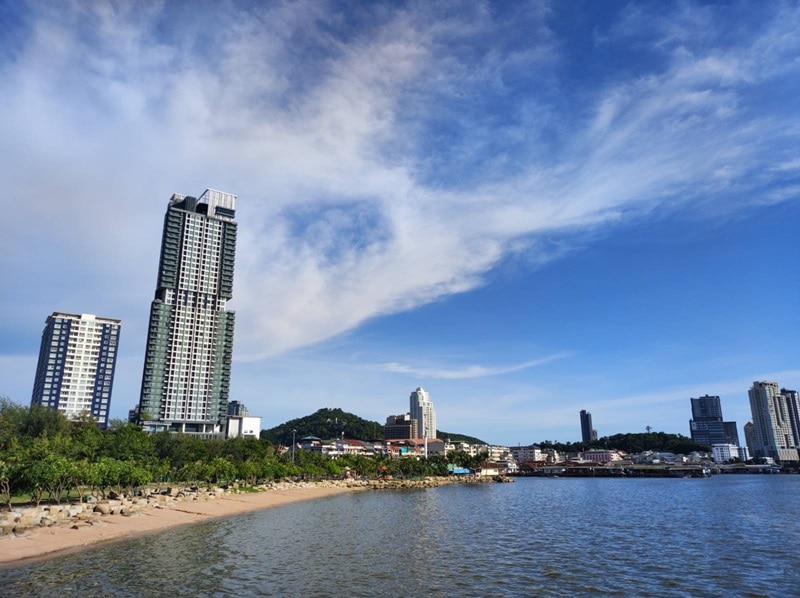
The honest tradeoff is stimulation. Sriracha doesn’t have the variety that Bangkok, Pattaya, or even Hua Hin offer for evenings and weekends. What it does have is a functional, affordable, family-oriented city life that many expats who’ve lived in more chaotic places find genuinely refreshing.
The Japanese community has effectively built a parallel infrastructure here. J-Park Nihon Mura is a Japanese-themed outdoor mall with restaurants, koi ponds, and a distinctly different atmosphere from standard Thai commercial development. It’s a social hub for Japanese families and increasingly for non-Japanese expats who want a more relaxed weekend spot than Pattaya offers.
Cost of Living
Sriracha is one of the more affordable beach cities in Thailand. It doesn’t inflate prices for tourists the way Pattaya or Phuket do, and because much of the consumer base is long-term resident rather than transient visitor, food and services stay closer to real-world Thai pricing.
Here’s a realistic monthly breakdown:
- Rent: THB8,000 to 25,000 depending on type and location
- Food: THB12,500 for a mix of local meals, home cooking, and occasional restaurants
- Transportation: THB3,500 for a scooter plus fuel
- Health insurance: THB5,500 for a mid-tier expat plan with solid inpatient coverage. See our Thailand health insurance guide for plan options.
- Utilities: THB3,000 for electricity, water, and internet
- Social activities: THB2,000
- Visa-related: THB500
- Travel: THB5,000
- Miscellaneous: THB2,000
- Total: THB42,000 to 59,000 per month
Key tradeoffs:
- If you’re over 60, health insurance rises significantly, often to THB10,000 or more per month.
- With school-age children (6 and up), budget at least THB80,000 per month to cover a used car, a house in a gated community, and a private school with an English program.
- Budget alternatives exist. Older condos in good downtown locations are available under THB10,000 per month, townhouses run similarly, and a two-bedroom house near Tiger Topia Zoo runs around THB15,000.
For a broader cost comparison across Thailand, see our cost of living in Thailand guide.
Accommodation
Rent in Sriracha is genuinely affordable and the quality-to-cost ratio is good, particularly in the city center where most practical amenities are within walking distance.
Condos and Apartments
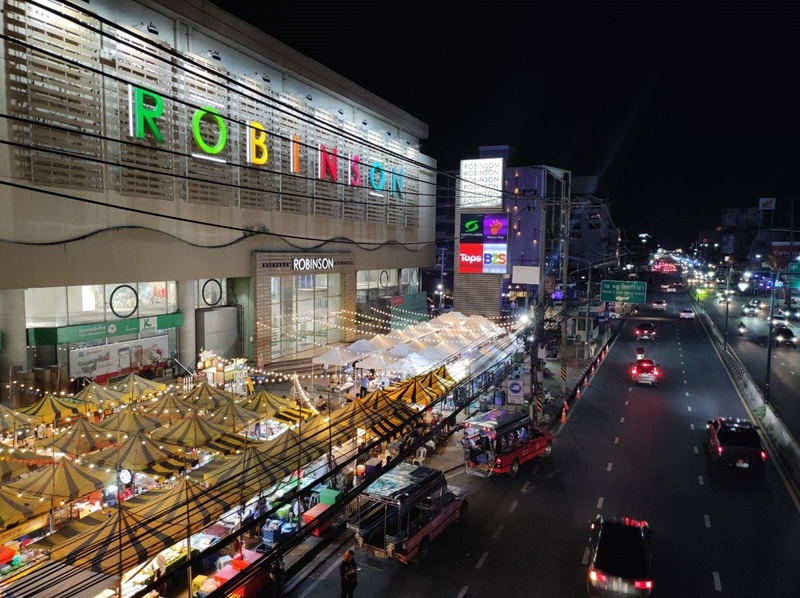
Modern, fully furnished condos in the city center run THB10,000 to 15,000 per month for around 42 to 50 square meters. Buildings like Keen Centre Sriracha, Ladda Condo View, and Sriracha Condoview are commonly mentioned by expats for their central location, opposite or near Robinson Sriracha. Some Japanese-oriented condos in this range include onsens, golf simulators, and twice-weekly cleaning services, a reflection of the Japanese corporate rental culture here. Budget condos near Kasetsart University Sriracha Campus start at THB8,000.
Houses in Gated Communities
For families, gated community houses near J-Park are the practical choice, running THB12,000 to 25,000 per month for two to three bedrooms with space for children.
Tip: some estates sit near the highway, which brings noise and air quality worth checking before signing.
Food
The food in Sriracha is one of its underrated strengths, driven by two distinct traditions that sit unusually well together.
Thai-Chinese Local Food
The Thai-Chinese families who’ve lived in Sriracha for generations run many of the best local spots: small shops serving noodles, congee, khao mun gai, and fish maw soup that you won’t find in tourist cities. Prices run THB40 to 50 per dish, genuinely cheap even by Thai standards. These places are the best argument for living downtown rather than in the suburbs.
Japanese Food
The Japanese restaurant scene here is good for a city this size. Restaurants run by Japanese expats serving authentic food at non-tourist prices exist throughout the city and in J-Park. Shimai Japanese Restaurant, KOBE Gyu no Takumi, Kamome Izakaya Sriracha, and Nanja Tei are regularly cited by the expat community as reliable. Prices run what you’d expect for genuine Japanese food anywhere in Thailand: more than local Thai, less than Bangkok’s top-end Japanese.

Seafood
The area around Sriracha Fishing Pier and Udom Bay has affordable beachside seafood restaurants using fresh local catch. These are a popular choice for weekend lunches among residents and worth knowing as a regular option even if the beach itself isn’t usable.
Western Food
Options are narrower than Pattaya but present. Emporio Mare is a waterfront Italian restaurant consistently praised in the expat community for its homemade pizza and setting. Silom Steak covers the steak and grills category. Tops Market inside Robinson Sriracha carries imported Western ingredients comparable to what you’d find in Bangkok.
Cafés
There is a Starbucks at both Robinson Sriracha and Central Sriracha, and an expanding number of independent cafés throughout the city. Nothing as developed as Chiang Rai or Chiang Mai, but adequate for daily working-from-a-café routines.
Coworking Spaces and Remote Work
Sriracha sits inside the Eastern Economic Corridor, and the coworking scene reflects that. It’s built more for engineers and corporate staff on short assignments than for freelancers, but there’s enough here for remote workers who don’t want to commute to Bangkok or Pattaya for a desk.
For most people, a café is the easier daily setup than a coworking membership:
- Chain cafés at the malls: the Starbucks inside Central Sriracha, and similar chains, are set up for laptop work with power outlets, air conditioning, and reliable Wi-Fi.
- Independent cafés downtown (see Cafés, above): a handful are geared for laptop use if you’d rather skip the mall.
If you’d rather have a dedicated desk or a professional address, two coworking options exist:
- Regus at J-Park Nihon Mura: a serviced office and meeting rooms inside the same complex covered in the Shopping section.
- Co Working Space Success Sriracha, on Sukhumvit Road in the city center: the closest thing to a dedicated freelancer space, with day passes and monthly desks.
None of this rivals Chiang Mai or Bangkok’s coworking scene. For a digital nomad who mainly needs a quiet, affordable base with good healthcare and doesn’t need a coworking community, that’s a fair trade.
Getting Around
Sriracha has better public transport than most comparable Thai beach cities, though it still requires a vehicle for anything beyond the central area.
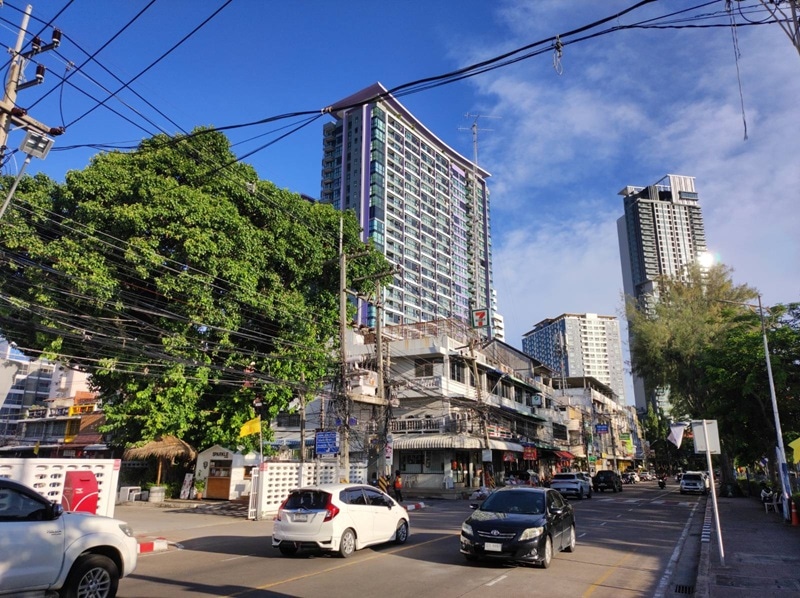
- Tuk-tuks are the most distinctive transport feature of Sriracha and genuinely cheap by Thai standards. It’s one of the few places in Thailand where you won’t get overcharged by a tuk-tuk. The ride from Sukhumvit Road to the beach costs around THB60.
- Songthaews run along Sukhumvit Road and main routes. Cheap and functional if you know the routes.
- Motorcycle taxis are available throughout the city for short hops.
- Grab and Bolt are available and reliable for when other options aren’t convenient. Less dense than in Bangkok but workable.
- Your own scooter is the practical daily choice for most expats. Roads are wide and in good condition, and traffic is light except during morning and evening rush hours.
- A car is recommended if you live here with a family, if only to provide a safe ride to school.
Long-Distance Travel
For long-distance travel, Sriracha’s location works in its favor: Bangkok is 90 minutes by road, Pattaya is 45 minutes, and U-Tapao International Airport is under an hour away for domestic and some international flights. Suvarnabhumi Airport is about 90 minutes away.
Healthcare
Healthcare in Sriracha is good, better than many expats expect from a small city, driven partly by the Japanese corporate presence, which demands international-standard care.
- Samitivej Sriracha Hospital is the flagship private option, with 234 beds, over 100 examination rooms, and a medical staff of more than 1,000 professionals. It operates a dedicated Japanese hospital wing within the main building, with Japanese-speaking staff. Treatment quality and pricing are on par with leading Bangkok private hospitals.
- Phyathai Sriracha Hospital is the more affordable private alternative, with 341 beds and roughly 30 years of operation (it opened in 1995). For expats who want private care at lower cost than Samitivej, Phyathai is the practical choice.
- Queen Savang Vadhana Memorial Hospital is the main public hospital, one of the largest government hospitals in eastern Thailand. English-speaking staff are available. Wait times can be long but the quality of care is solid for routine needs.
Pharmacies, dentists, and general clinics are easy to find throughout the city.
On insurance: a visit to Samitivej runs several thousand baht for routine care; admissions go well into six figures for serious treatment. See our Thailand health insurance guide and digital nomad health insurance guide.
Exercise and Fitness
Surasak Montri Park (known locally as suan sukapob, or “healthy park”) is the city’s main outdoor exercise space, located by the sea with a large running track, outdoor playgrounds, and regular evening live music. It’s a genuine community gathering point, with locals coming to jog, exercise, picnic, and watch the sunset. Worth discovering early after you arrive.
CK Muay Thai Academy is the main Muay Thai training option for expats wanting a structured workout that’s different from a standard gym. Golf is one of Sriracha’s genuine lifestyle advantages, with several good courses within easy reach, including Bangpra Golf Club, Pleasant Valley Golf and Country Club, and Khao Kheow Country Club. Meeting other expats at these courses is one of the more organic social options the city provides. Standard gyms are available throughout the city for those who prefer conventional facilities.
Social Life and the Expat Community
The expat community in Sriracha is smaller than in Pattaya or Hua Hin, and skews heavily Japanese. Western expats are present but thin on the ground, and social infrastructure built specifically for English-speaking expats is limited.
The practical reality is that social life in Sriracha works best if you engage with the Japanese community rather than waiting for a Western community to materialize, join the golf clubs and sports groups that operate across national lines, and make the 45-minute drive to Pattaya when you want a more developed social scene. For families specifically, the school and daycare communities provide a natural social entry point: the international kindergartens draw a mix of Japanese, Korean, Western, and Thai families, and parent networks form organically around those institutions. Facebook groups for expats in Chon Buri and Sriracha are the best digital starting point.
Nightlife
Nightlife in Sriracha is centered on Sriracha Nakorn 1 Road, which has a strip of Thai and Japanese bars, nightclubs, and beachside restaurants with a vibe that’s been compared to a quieter, more local version of Khao San Road. Many venues target Japanese expats specifically.
Beyond that street, there are rooftop bars and beachside restaurants that work for a relaxed evening. It’s not a nightlife city. If that matters to you, Pattaya is close enough that it functions as an extension rather than a replacement.
Activities
Beaches and Water
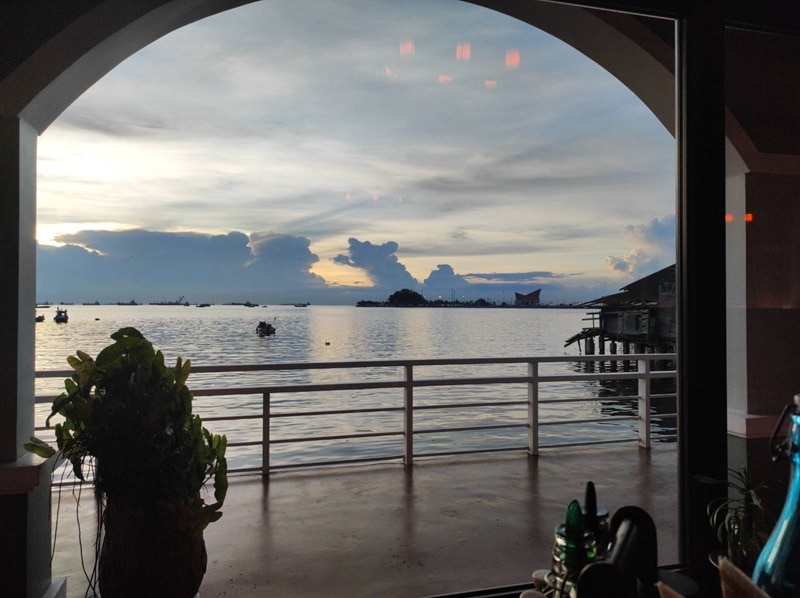
The city’s own beach at Surasak Montri Park is a narrow strip of sand at low tide, suitable for walking and watching the sunset. Swimming and water activities are not viable due to water quality. The nearest alternative is Bangsaen Beach about 20 minutes north, popular for beachside restaurants but not particularly clean for swimming either. For genuine beach quality, the practical options are:
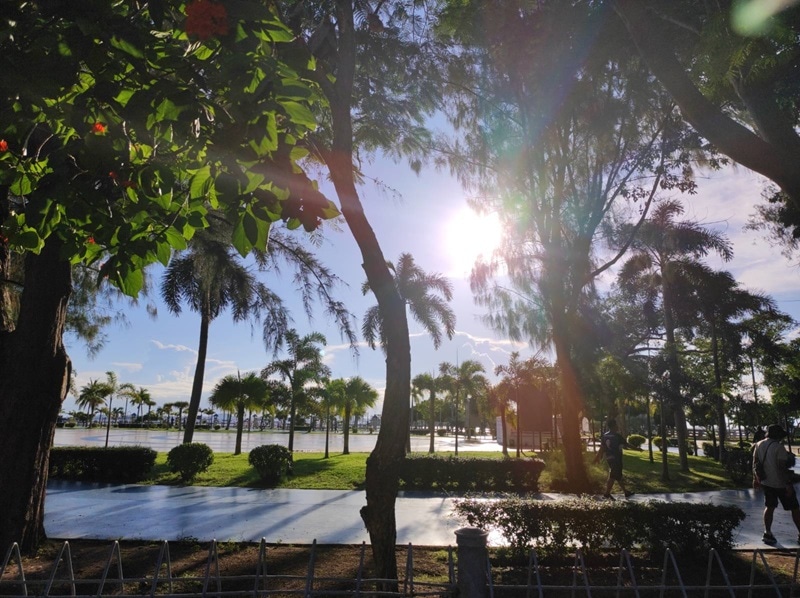
- Koh Si Chang: a 45-minute ferry ride from Sriracha Pier, a relaxed and quiet island popular with Thai weekenders. Roads have sharp curves in places; ride carefully if renting a motorcycle.
- Sattahip: about 45 minutes past Pattaya, with clean beaches and clear water in areas managed by the Royal Thai Navy.
Nature and Outdoors
- Bang Phra Reservoir: good cycling trails in a scenic setting.
- Khao Kheow: combines the open zoo with cycling and nature trails.
Wildlife and Family Attractions
- Khao Kheow Open Zoo: one of the best zoos in Thailand and probably the most compelling day-out option near Sriracha, with 8,000 animals across 300 species in a large open-habitat setting. It’s also home to Moo Deng, the baby pygmy hippo who became an international viral phenomenon in 2024.
- Tiger Topia Sriracha Zoo (formerly Sriracha Tiger Zoo): the original tiger-focused zoo near the city, rebranded and continuing to operate. Reviews on animal welfare are mixed; research current conditions before visiting.
Shopping
- Robinson Sriracha: the main shopping mall in the city, with Tops Market on the ground floor for imported groceries.
- Central Sriracha: notably different in character from the standard Central formula, according to long-term residents. Worth exploring rather than writing off as just another mall.
- J-Park Nihon Mura: the Japanese-themed outdoor complex with restaurants, koi ponds, and a relaxed atmosphere. More of a lifestyle destination than a mall.
Other
- Space Inspirium: a science and space museum that works well for families with children.
- Koh Si Chang: a day trip or overnight island escape from the city.
Education and Family Life
This is where Sriracha genuinely distinguishes itself. The Japanese corporate community has driven the development of an early childhood education infrastructure that’s disproportionately rich for a small city.
Early Childhood (Under 6)
Over 20 international daycares, nursery schools, and kindergartens serve the city, accepting English-speaking families in addition to Japanese. Many use Montessori methods, including:
- Kids Avenue International Kindergarten
- EQ Nursery
- Playhouse International Preschool
Cambridge International Sriracha is an early-years nursery and language center rather than a full K-12 school, which is why its fees are a modest THB6,000 to 8,000 per month. Swimming schools, indoor playgrounds, and outdoor playgrounds are readily available.
Primary and Secondary (6 and Over)
This is the gap. Options thin out significantly for older children. ISE International School Eastern Seaboard is the closest international school, located about 30 minutes from central Sriracha. It’s a legitimate option but requires a daily commute.
For children comfortable in Thai-medium instruction with English programs, three strong Thai private schools operate in Sriracha:
- Assumption College Sriracha (boys only)
- Saint Paul Convent School (girls only)
- Darasamutr School (co-educational)
All three have solid academic reputations with EP (English Program) options, with yearly fees starting around THB100,000. Thai-Japanese Association School Sriracha operates for Japanese nationals specifically. For a broader view of international schooling in Thailand, see our guide to international schools in Thailand.
Job Opportunities
Job opportunities for foreigners in Sriracha are limited. The industrial sector employs some expats in logistics, engineering, and factory management, but most positions go to Thai or Japanese nationals first. Teaching positions are fewer than in other cities because most Sriracha schools serve children under six. English teaching at Thai private schools exists but is not abundant.
Immigration and Visa Services
Sriracha has its own immigration office, so most expats living here don’t need to travel to Pattaya or Bangkok for routine visa business.
- Sriracha Immigration Office handles visa extensions, 90-day reporting, and re-entry permits for Sriracha District and most of Chonburi Province (Banglamung, Koh Sichang, Sattahip, and Pattaya District are handled separately, out of the Jomtien office near Pattaya).
- Bring your passport, a recent photo, and the standard extension paperwork for your visa type. Call the office on 038-312-571 to confirm the current document requirements and its location before you go, since both can change (the Sriracha office relocated recently).
- The Chonburi Immigration office in Jomtien is the fallback for anything the Sriracha branch doesn’t handle, about 45 minutes away by the same road you’d take to Pattaya.
Tip: confirm the office’s current address and hours directly before a visa run. Immigration offices in Thailand occasionally shift location or adjust opening hours, and a wasted trip costs half a day.
Weather
Sriracha’s weather closely mirrors Pattaya’s, with an average annual temperature of around 28°C. The climate is hot and humid year-round, with a rainy season from June to October. September and October bring the heaviest rainfall. The cool season from November to February is the most comfortable, with lower humidity and occasionally breezy evenings. The hot season from March to May is intense but no worse than the rest of coastal eastern Thailand.
Air Quality
Air quality in Sriracha is generally good for most of the year, benefiting from sea breezes that clear coastal pollution. Like most of Thailand, it experiences some deterioration during the burning season from roughly January to April, but this is significantly less severe than in northern Thailand.
Industrial activity in the Chon Buri area is a background consideration. Day-to-day air quality stays within acceptable limits according to the Thailand Pollution Control Department, but the industrial character of the eastern seaboard means the risk profile is different from a purely residential province.
Flooding
Flooding is a recurring issue in parts of Sriracha during the rainy season, particularly in lower-lying neighborhoods. Because the city is built on hilly terrain, certain areas drain poorly and flood quickly after heavy rain. Floodwaters typically clear within a few hours rather than causing prolonged problems.
Tip: choose accommodation in a higher area of the city and ask about flooding history directly before signing any lease. The downtown area on higher ground is generally less affected than lower-lying residential zones further out.
Popular Neighborhoods
Downtown Sriracha
The most practical choice for most expats, particularly those without a car or who want to minimize daily driving. Central location, walkable to Robinson Sriracha, Central Sriracha, Samitivej and Phyathai hospitals, and the majority of good restaurants. Accommodation is primarily condos. The convenience is the main draw.
East Sriracha
The residential side of the city, with gated communities and houses that suit families with children. Many estates are close to J-Park, which makes Japanese restaurants and the wider J-Park social scene easily accessible. It requires your own vehicle for everything. Some estates sit next to the highway; check for traffic noise and proximity to industrial activity before choosing a specific location.
Frequently Asked Questions
What is Sriracha known for among expats?
Sriracha is known as Thailand’s “Little Osaka” for its large, long-established Japanese expat community, tied to the industrial estates near the Laem Chabang deep-sea port. It also has strong private hospitals, affordable Thai-Chinese and Japanese food, and some of the best early-childhood education options outside Bangkok.
Is Sriracha a good place for families with young children?
Yes. Sriracha has over 20 international daycares, nursery schools, and kindergartens, many using Montessori methods, with fees starting around THB6,000 per month. Options thin out for children over 6: the nearest international school is about 30 minutes away, though three well-regarded Thai private schools with English programs operate in the city.
How much does it cost to live in Sriracha?
A comfortable expat lifestyle runs roughly THB42,000 to 59,000 per month, covering rent, food, transport, health insurance, and utilities. Budget-conscious expats can spend less by choosing older condos or townhouses under THB10,000 per month in rent; families with school-age children should budget at least THB80,000 per month.
Can you swim at the beach in Sriracha?
No. The city’s own beach at Surasak Montri Park is a narrow strip suitable for walking and watching the sunset, but water quality rules out swimming. Cleaner water requires a trip to Koh Si Chang, a 45-minute ferry ride away, or Sattahip, about 45 minutes past Pattaya.
How do you get to Sriracha from Bangkok or Pattaya?
Sriracha is about 90 minutes by road from Bangkok and 45 minutes from Pattaya. U-Tapao International Airport is under an hour away for domestic and some international flights, and Suvarnabhumi Airport is roughly 90 minutes away.

What is the Japanese expat community like in Sriracha?
Sriracha has one of Thailand’s largest Japanese expat populations, drawn by nearby industrial estates. The city has Japanese restaurants, Japanese-run schools, a Shinto shrine, Japanese-language hospital services, and the J-Park Nihon Mura shopping and dining complex, which is where the “Little Osaka” nickname comes from.
What is healthcare like in Sriracha?
Healthcare is a strength. Samitivej Sriracha Hospital operates a dedicated Japanese hospital wing with interpreters in several languages, and Phyathai Sriracha Hospital offers more affordable private care nearby. Queen Savang Vadhana Memorial Hospital covers public healthcare, with English-speaking staff but longer wait times.
Does Sriracha flood?
Parts of Sriracha flood during the rainy season, particularly in lower-lying neighborhoods, because the city sits on hilly terrain that drains unevenly. Floodwaters typically clear within a few hours; choosing accommodation on higher ground and asking about flooding history before signing a lease reduces the risk.
Where is the immigration office for Sriracha visa extensions?
Sriracha has its own immigration office, which handles visa extensions and 90-day reporting for Sriracha District and most of Chonburi Province. Banglamung, Sattahip, Koh Sichang, and Pattaya District route through the Chonburi Immigration office in Jomtien instead. The Sriracha office relocated recently, so call ahead on 038-312-571 to confirm the current address before you go.
Are there coworking spaces in Sriracha?
Yes, though the scene is small. Regus operates a serviced office at J-Park Nihon Mura, and Co Working Space Success Sriracha on Sukhumvit Road offers day passes and monthly desks. For most remote workers, though, a café like the Starbucks in Central Sriracha or an independent spot downtown is the simpler daily option.
Can foreigners buy property in Sriracha?
Foreigners can buy a condo unit in Sriracha under freehold ownership, subject to the same national rule that foreign ownership can’t exceed 49% of the units in any single condo building. Land and houses require a Thai company structure or leasehold arrangement, the same as anywhere else in Thailand.
Is Sriracha a good base for digital nomads?
It suits a nomad who wants low costs, good healthcare, and a quiet routine over an active coworking or social scene. The city has functional but limited coworking options, and most freelancers work from cafés or a serviced office at J-Park. Nomads who want a built-in remote-work community are better served by Chiang Mai or Bangkok.
What visa types are common among expats in Sriracha?
The mix reflects the local economy: work permits tied to the industrial estates and Japanese firms, retirement extensions, marriage-based extensions, and a smaller number of remote workers on tourist or long-stay visas. See our Thailand digital nomad visa guide for the remote-work option specifically.
Should You Live in Sriracha?
Sriracha works best for:
- families with young children who want excellent early education options in a safe, affordable environment
- remote workers and pensioners who want a functional, low-cost coastal city without tourist pricing
- anyone based in the EEC industrial corridor who wants residential life separate from Pattaya
It’s a poor fit for people who need beach access, a large Western expat community, or active nightlife as daily features. For those needs, Pattaya is nearby enough to use occasionally, but the cities offer genuinely different day-to-day experiences.
For alternative options, see our overviews of living in Pattaya and living in Rayong.


 Deutsch:
 Français:
'/%3E%3Cpath%20fill='%23b2b2b2'%20d='M241%20382q0%2016%2017%2026%2017%2011%2042%2011t42-11q16-11%2017-26V269H241'/%3E%3Cpath%20fill='%239f7e00'%20d='M241%20379q0%2014%208%2023%209%209%2021%209%2014%200%2021-9%209-9%209-23V269h-59'/%3E%3Cpath%20d='M241%20339v-70h59v110q0%2014-9%2023l-6%205v-68h-15v72q-8%200-14-4v-68zm59%2040c0%2022%2015%2032%2029%2032%2021%200%2030-18%2030-32v-40h-59'/%3E%3Cpath%20fill='%239f7e00'%20d='M266%20277v5h2v12h-3v-5h2v-5h-9v5h2v5h-4v9h3v18h-5v10h34v-10h-5v-18h3v-9h-4v-5h2v-5h-9v5h2v5h-3v-12h2v-5zm42%20101q0%2010%206%2017%206%206%2015%207%2010-1%2016-7%206-7%206-17v-29h-43'/%3E%3Ccircle%20fill='%230044ad'%20cx='329.5'%20cy='372'%20r='6'/%3E%3Cellipse%20fill='%230044ad'%20cx='300'%20cy='340'%20rx='16'%20ry='21'/%3E%3C/svg%3E) Español:
Español: