Rayong is one of Thailand’s most overlooked provinces: well-built roads, good hospitals, and cheap beachfront condos, with a comfortable expat life from around THB35,000 a month and an industrial backdrop kept honestly in view.
Rayong gets overlooked. Most people know the name vaguely from the industrial estates, or from driving past on the way to somewhere else, and that association sticks.
What they miss is that Rayong is actually one of the better-functioning provinces in Thailand:
- well-developed roads
- a proper city center
- good hospitals
- affordable beachfront living
- plenty of business opportunities
- a pace of life that nobody would call stressful
It’s not a tourist destination, which is precisely the point. The infrastructure here was built for people who actually live and work, not for visitors who need to be entertained for a week. That makes it a more practical base than many better-known alternatives.
This guide covers what daily life in Rayong looks like, what it costs, where to live, and whether it’s a fit for your situation.
Disclaimer: Some links in this article go to our partners, and we may earn a commission if you use them. It costs you nothing extra, and we only recommend services we'd use ourselves. Read more in our Advertising Disclosure.
Contents
- Key Takeaways
- About Rayong
- Pros and Cons
- Quality of Life
- Industrial Backdrop
- Cost of Living
- Accommodation
- Food
- Getting Around
- Long-Distance Travel
- Healthcare
- Weather and Air Quality
- Social Life
- Nightlife
- Activities
- Education and Family Life
- Job Opportunities
- Recommended Neighborhoods
- Rayong Compared to Other Coastal Cities
- Frequently Asked Questions
- How much does it cost to live in Rayong as an expat?
- Is Rayong a good place to live for expats?
- How do you get to Rayong from Bangkok?
- What are the beaches like in Rayong?
- Is industrial pollution a problem in Rayong?
- What job opportunities are there for expats in Rayong?
- Are there good international schools in Rayong?
- Where's the best area to live in Rayong?
- Should You Live in Rayong?
Key Takeaways
- Rayong sits on the east coast of Thailand, about two to two and a half hours by car from Bangkok, and 45 minutes from U-Tapao International Airport, which serves several domestic routes and international flights to China, Malaysia, and Russia.
- A comfortable expat lifestyle costs around THB35,000 per month. A THB50,000 budget gives you meaningful choices: a beachfront condo, a house in a gated community, good food, health insurance, and savings room.
- Rent is significantly cheaper than Bangkok or Pattaya for comparable quality. Beachfront condos, in particular, are accessible at price points that simply don’t exist in the south.
- Bangkok Hospital Rayong is a 256-bed private hospital and the main healthcare option for expats. Quality is high; costs are among the highest of any private hospital in the province.
- Roads are well maintained and traffic is genuinely light, which makes daily movement around the province noticeably less stressful than in most Thai cities.
- Industrial pollution is a real consideration. There have been significant environmental incidents, and the industrial character of the province is a real part of living here.
- International schools in Ban Chang include Garden International School and SISB Rayong Campus, making the province a viable option for expat families.
About Rayong
Rayong is a coastal province on Thailand’s eastern seaboard, bordered by Chon Buri to the west. Its official profile is dominated by industry:
- it consistently records the highest gross provincial product (GPP) of any province in Thailand, including Bangkok, driven by the industrial estates that line the inner province
- more than 3,000 factories and numerous shipping ports make it a major logistics and manufacturing hub
That economic engine shapes the character of the place. People come here to work, run businesses, and raise families. The restaurants are good because the local workforce wants good food after a long day. The roads are maintained because commerce depends on them. The infrastructure works because the economy demands it.
Koh Samet, one of the most popular islands on Thailand’s east coast, sits within the province, as does a long coastline of beaches ranging from busy city-adjacent stretches to quiet spots further out.
Rayong is also the fruit capital of the region, with durian, mangosteen, and rambutan farms throughout the province.
For expats considering the eastern seaboard more broadly, our guide on living in Pattaya and our best places to retire in Thailand overview are useful comparisons.
Pros and Cons
Reasons to move to Rayong:
- Well-developed infrastructure with good roads, light traffic, and easy access to facilities
- Affordable beachfront condos compared to Phuket, Pattaya, or Bangkok
- High-quality private hospital in Bangkok Hospital Rayong
- Good international schools for families with children
- Strong business opportunities, particularly in the industrial and EEC sectors
- Fresh, high-quality seafood and fruit at genuine value
- Safer and quieter than Pattaya, with less tourist-trap culture
- Good air quality for most of the year, benefiting from sea breezes
Reasons it might not work for you:
- Industrial pollution risk: there have been significant environmental incidents, including oil spills and a chemical tank explosion
- Limited nightlife and a limited expat social scene
- Public transport is minimal; a car or motorcycle is effectively mandatory
- Western food options are narrower than in Pattaya or Bangkok
- Hospital choice is limited; Bangkok Hospital Rayong is the main quality option
- Not a beach destination in the same league as the south; the beaches are pleasant but not beautiful
Quality of Life
The quality of life in Rayong is genuinely good if you’re coming from a work-or-retire mindset rather than a lifestyle-and-entertainment one.
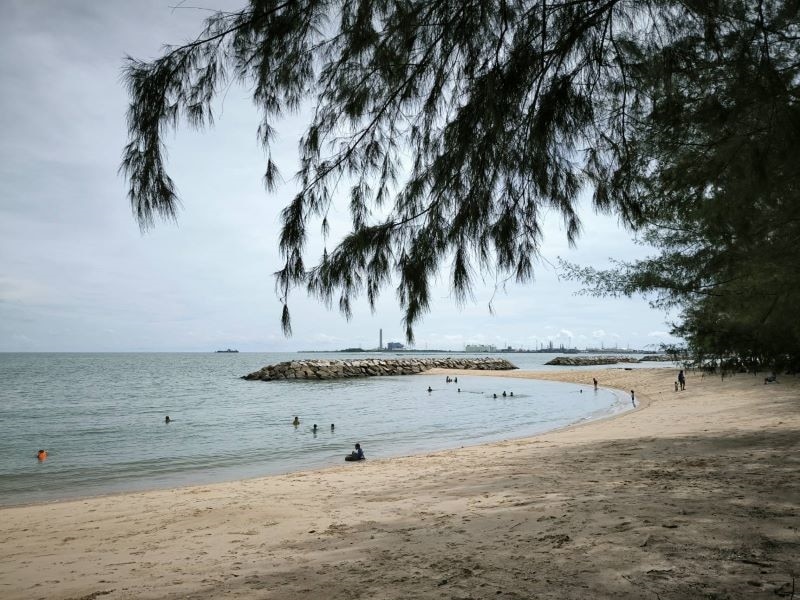
- You can live in a beachfront condo with sea views and a pool for less than the cost of a basic apartment in central Bangkok.
- The infrastructure in the city area is like living in the Bangkok suburbs. You have everything you need within a 15-minute drive without heavy traffic.
- You can get to the beach in 15 minutes from most parts of the city.
- The grocery options are solid, food delivery works through LINE MAN and GrabFood, and Central Plaza Rayong handles everything else.
What you give up is variety. The restaurant scene is good but not wide. The nightlife is minimal. The expat community is small and mostly composed of people here for work or retirement, not a social scene you drop into easily.
Industrial Backdrop
The industrial backdrop is worth knowing about directly. Rayong is a working province, not a resort. The refineries and factories that drive its economy also create real environmental risk.
The 2013 and 2022 oil spills and the 2024 chemical tank explosion, which resulted in one fatality and heavy smoke in surrounding areas, are part of the honest picture.
These incidents have been exceptional rather than routine, and air quality is generally within safe limits according to the Thailand Pollution Control Department, but the risk profile is different from a purely residential or tourist province. Factor it into your decision accordingly.
Cost of Living
Rayong costs roughly the same as Bangkok for food and daily expenses, but meaningfully less for rent, and the quality of what your money buys, particularly for seafood and fresh produce, is often better.
Most expats live comfortably in Rayong for around THB35,000 per month. With THB50,000, you have real choices. Here’s a realistic monthly breakdown:
- Rent: THB6,000 to 16,000 depending on type and location
- Food: around THB13,500 for a mix of restaurant meals, home cooking, and occasional delivery
- Transportation: around THB3,000 for fuel and motorcycle or car maintenance
- Health insurance: around THB6,000 for comprehensive expat coverage at age 40. See our Thailand health insurance guide for options.
- Utilities: around THB3,000 for electricity, water, and internet
- Social activities: THB1,000 to 2,000 for a few outings per month
- Travel: THB5,000 for occasional trips
- Personal and miscellaneous: THB2,000
If you have school-age children, budget at least THB100,000 per month. International school fees start around THB400,000 per year. Bilingual private schools start around THB250,000 per year. See the Education section below for specifics.

For a full picture of family costs across Thailand, see our cost of living in Thailand for a family guide.
Accommodation
Rayong’s accommodation options punch above their weight relative to cost. The gated community and beachfront condo market here offers Bangkok-comparable facilities at a fraction of the price.
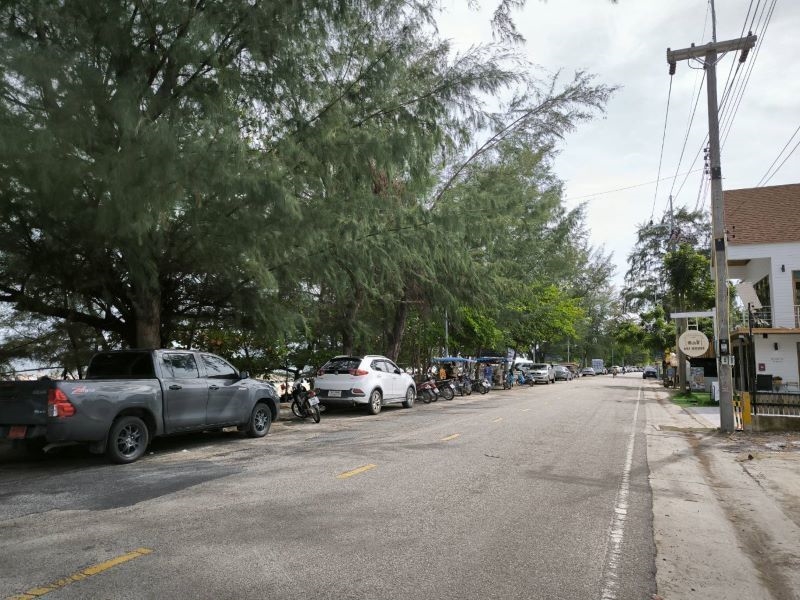
Houses in Gated Communities
Gated communities in the Rayong city area offer three-bedroom houses with security, communal pools, and maintained common areas from around THB16,000 per month.
These are proper family homes with space that simply isn’t available at this price point in Bangkok or Pattaya. They’re good for families, or anyone who wants to live properly rather than compress into a small condo.
One good option is Moo Ban Phloenjai 2. I went there regularly because a friend lived there, and she told me many foreigners live there too.
Beachfront Condos
This is where Rayong stands out most clearly.
A 36-square-meter beachfront studio at a property like The Ultimate River Beach Condominium on Moonlight Beach runs around THB12,000 per month. Comparable sea views in Phuket or even Pattaya would cost two to three times as much.
For tighter budgets, condos in the city area like Parkland Rayong and Supalai City Resort Rayong run THB6,000 to 8,000 per month with reasonable facilities. They’re still within 15 minutes of Central Plaza Rayong, Bangkok Hospital Rayong, and the main beaches.
Mae Ram Phueng Beach and Ban Chang
Beachfront condos in Mae Ram Phueng Beach run even cheaper, under THB8,000 for a studio. Ban Chang has house rentals under THB10,000, with the added advantage of proximity to U-Tapao Airport and Garden International School.
Practical note: Don’t sign a long-term contract until you’ve been there in person and tested the commute and surroundings. Start with a hotel stay while you look around. For general guidance on the rental process in Thailand, see our guide to renting an apartment in Thailand.
Food
Food is one of Rayong’s genuine strengths. The local workforce drives a restaurant culture that prioritizes quality and variety over tourist-friendly pricing, and the province’s fishing industry and fruit farms mean the raw ingredients are excellent.
Local Thai Food
Rice and noodle dishes at local spots and food courts run THB40 to 80. Pork noodles at a good local restaurant, for example, come in around THB60 with noticeably larger portions and fresher ingredients than the Bangkok equivalent.
Food courts in markets like Mang Mee Market or Central Rayong offer variety at slightly higher prices than street stalls, but still excellent value.
Seafood
Fresh seafood is a particular strength of Rayong.
Beachside seafood restaurants along Moonlight Beach, Mae Ram Phueng, and Suan Son serve at prices that would be unthinkable in Phuket.
Flavors are more authentic too: spicier and sourer than the tourist-softened versions you get in high-traffic resort areas. The fishing industry here is large and the supply chain is short.
International Food
Western options are available but limited compared to Pattaya or Bangkok. There are German, steak, and fusion options in the city area, and the restaurant scene is growing as the province develops.
Don’t come expecting Bangkok variety, but expect enough to not feel perpetually food-deprived.
Night Markets
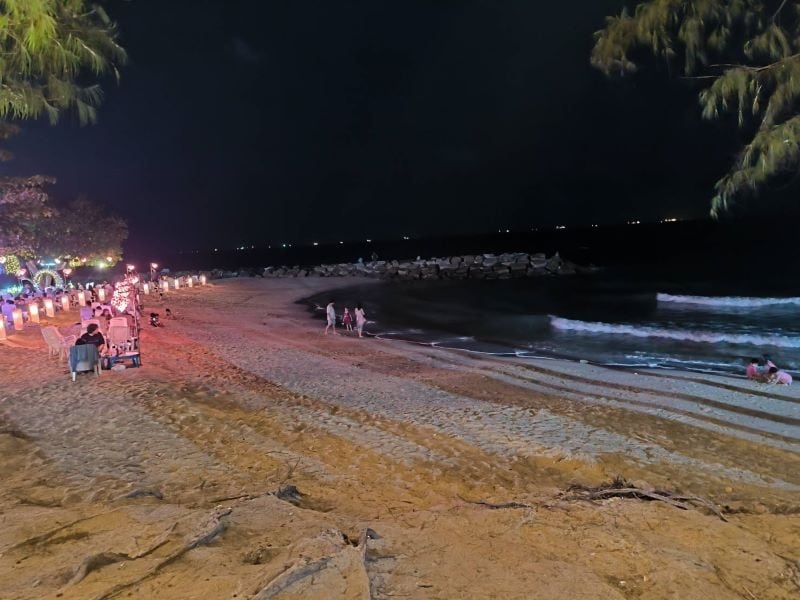
The Star Night Market in the city area is the main evening street food option, with a good range of local dishes, snacks, and the relaxed atmosphere that Rayong’s night markets are known for. It’s more local, though, with few international food choices.
Groceries
Lotus’s and Makro are both available throughout the province. For cooking at home, both carry a reasonable range of imported and local ingredients. Food delivery via LINE MAN and GrabFood covers the city area well for when you don’t want to go out.
Fruit
Fruit is worth mentioning separately. Rayong’s fruit farms produce durian, mangosteen, and rambutan of exceptional quality, and seasonal fruit is cheap and plentiful. It’s one of those small daily pleasures that becomes a quality-of-life feature over time.
Getting Around
Public transport in Rayong is minimal. It’s a strange feature that a developed city like this lacks public transport.
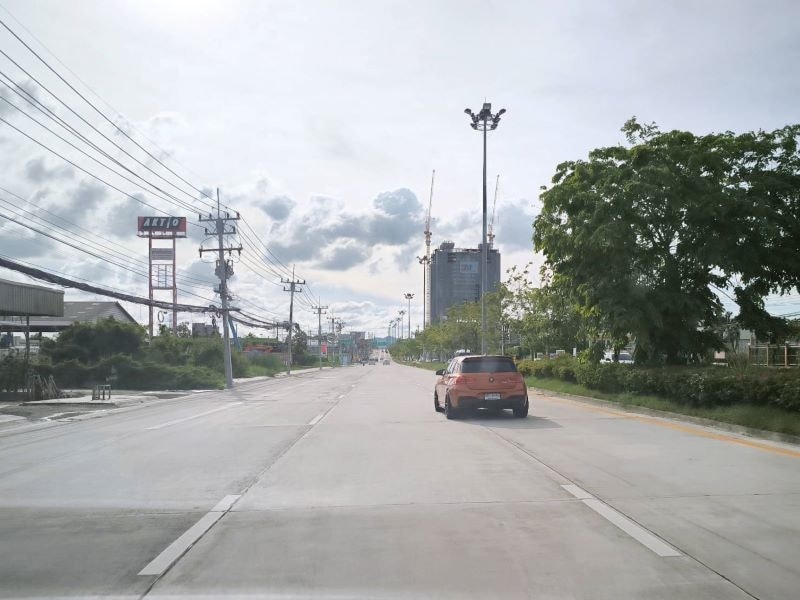
- Songthaews run along the main Sukhumvit Road corridor but don’t cover most areas usefully. For practical daily life, you need your own vehicle.
- Motorcycles are the most economical option for getting around the city. Roads are well maintained and traffic is light, which makes riding here considerably more pleasant than in Bangkok or Pattaya. Motorcycles carry inherent risk regardless of road conditions, and the recommendation for anyone planning to stay long-term is to get the appropriate license. See our motorcycle license guide for Thailand.
- Cars are the more comfortable choice for families or anyone making regular trips outside the city. Fuel costs are manageable given Rayong’s light traffic and the proximity of gas stations throughout the province.
- Grab and Bolt are available for ad-hoc trips. Fares are similar to Bangkok, generally under THB120 for a 10-kilometre ride. They’re good for occasional use, but costly as a daily substitute for your own vehicle.
Long-Distance Travel
Long-distance travel is one of Rayong’s understated advantages. U-Tapao International Airport is 45 minutes away and serves Chiang Mai, Hat Yai, Khon Kaen, Phuket, Koh Samui, and international routes to China, Malaysia, and Russia. Flights aren’t daily, though.
Domestic flights to Bangkok aren’t necessary given the road distance. It’s an easy 90-minute drive to Suvarnabhumi Airport. Either way, U-Tapao opens up connections to other Thai provinces without the Bangkok transfer.
Healthcare
Healthcare in Rayong is anchored by one standout institution and rounded out by adequate but less impressive alternatives.
- Bangkok Hospital Rayong is the main private hospital and the clear recommendation for expats. It’s a 256-bed facility under the Bangkok Dusit Medical Services (BDMS) network, with 132 specialist physicians, modern equipment, and a quality standard that rivals Bangkok hospitals in most specialties. Costs are among the highest of any private hospital in the province, on par with premium Bangkok chains.
- Rayong Hospital is the main public hospital, covering the full range of general services at affordable rates. The expected tradeoffs apply: longer wait times, less English, and a less comfortable experience than private care.
Pharmacies, dentists, and general clinics are easy to find throughout the province for routine needs.
On insurance: A doctor visit at Bangkok Hospital Rayong runs approximately THB2,500 to 3,500. An overnight admission starts around THB20,000. Comprehensive expat health insurance at age 40 runs around THB6,000 per month for solid inpatient coverage. See our Thailand health insurance guide and our guide to digital nomad health insurance in Thailand for specific plan recommendations.
Weather and Air Quality
Rayong’s weather is similar to Pattaya, its nearest comparable city. It’s hot and humid year-round, with a rainy season from June to October bringing heavy rainfall.
The average annual temperature is around 28°C.
Air Pollution
According to IQAir, air quality dips in January and February, with average AQI in the moderate range (35.5 to 55.4 μg/m³). For the rest of the year the air is clean, noticeably cleaner than Bangkok or northern provinces during burning season.
The coast provides relief through sea breezes that keep the air quality generally good.
The industrial caveat applies directly to air quality. Day-to-day industrial activity stays within regulated limits. But Rayong’s industrial history includes serious incidents: oil spills in 2013 and 2022, and a chemical storage tank explosion in 2024 that caused one death and heavy smoke in nearby areas.
These are not everyday occurrences, but they’re part of the honest risk profile of living in an industrial province. If you’re particularly sensitive to air quality or environmental risk, this is worth weighting in your decision.
Social Life
The expat community in Rayong is small and specific. Most foreigners here fall into three broad groups:
- retirees who want a quiet beach lifestyle
- people who married Thai nationals and settled here
- professionals working in the industrial sector or running businesses in the Eastern Economic Corridor (EEC)
It’s not the kind of community you walk into. If you’re coming from Chiang Mai or Bangkok expecting a ready-made social scene, Rayong will feel thin. If you’re arriving with a clear purpose and don’t need a large international social network to feel settled, it works fine.
As the province continues to develop under EEC investment, the expat population and the social infrastructure around it should grow. But that’s a future projection, not the current reality.
Budget around THB1,000 to 2,000 per month for social activities: dinners out, occasional trips to Pattaya for more variety, or the kind of low-key socializing that suits Rayong’s character.
Nightlife
Rayong is not a nightlife destination, and there’s no point dressing that up. After work, people eat at restaurants they enjoy and go home.
The Star Night Market provides evening street food and a relaxed atmosphere. There are bars and small venues in the city, but nothing that competes with Pattaya, which is an hour away and serves that purpose adequately for anyone who needs it periodically.
If lively evenings are important to your quality of life, Rayong will frustrate you. If you’re content with good food, a quiet drink, and early nights, it suits the lifestyle well.

Activities
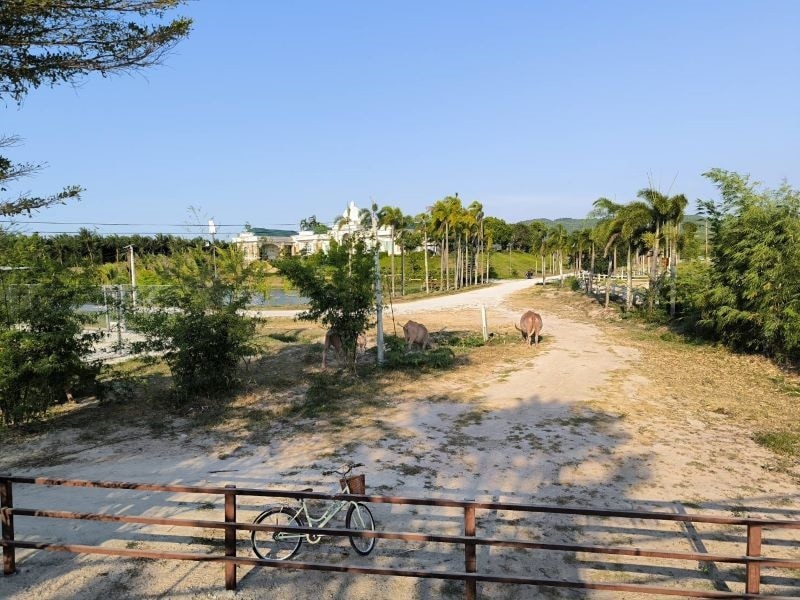
The activity range in Rayong is broader than its industrial reputation suggests.
Beaches and water:
- Moonlight Beach and Laem Charoen Beach are in the city area, with restaurants and occasional beachside music festivals.
- Mae Ram Phueng Beach is 15 minutes from the city, known for its relaxed atmosphere, affordable seafood, and popular beachfront condos.
- Suan Son Beach has good beachside restaurants and a quieter crowd.
- Phala, Phayun, and Nam Rin Beaches in the Ban Chang area are quieter still.
- Koh Samet within Khao Laem Ya-Mu Ko Samet National Park is the province’s most celebrated natural asset. Snorkeling, water sports, and the park’s hiking trails are accessible by ferry from Ban Phe. The ferry ticket runs THB100 return and takes about 35 minutes.
- Laem Mae Phim Beach offers surfing, kayaking, fishing, and snorkeling in a less-visited setting.
Nature and outdoors:
- Rayong Botanic Garden is a full day of kayaking and cycling in a well-maintained setting.
- The Mangrove Forest Learning Center offers a different kind of outdoors experience: kayaking through mangrove channels and watching wildlife, including hawks over the Prasae River estuary at sunset.
- Khao Laem Ya provides hiking that combines mountain and beach scenery in one trail.
Day trips and fruit:
- Fruit farms including Suphattraland offer pick-your-own experiences during fruit season. Rayong’s durian, mangosteen, and rambutan season draws Thai visitors from across the region. Going directly to the farms is the best version of this.
Shopping:
- Central Plaza Rayong is the province’s main mall, opened in 2015, with over 300 tenants including a cinema, food court, supermarket, and mainstream retail. It’s the social hub of the city on weekends and handles most shopping needs competently.
Education and Family Life
Rayong is a solid choice for expat families, particularly for those who are here for work or a settled long-term life rather than a short stay.
The international school options are genuine, concentrated in the Ban Chang area:
- Garden International School Rayong in Ban Chang follows a British curriculum, serving ages 3 to 18, and offers Cambridge IGCSE and the International Baccalaureate Diploma Programme. Annual fees run approximately THB436,000 to 543,000 for the 2025/2026 academic year. The school has an active campus and a current website, with around 475 students.
- SISB Rayong Campus (Singapore International School of Bangkok) follows a blended curriculum combining Singapore Primary, Cambridge IGCSE, and IBDP. It serves ages 2 to 18. SISB has been operating since 2001 and the Rayong campus is an established branch of the wider network.
- Assumption Rayong School is one of the leading private schools in the province for Thai-speaking students or those comfortable in a Thai-medium environment. Bilingual program fees start around THB250,000 per year.
- Rayong English Programme School (REPS Ban Chang) is a bilingual option serving ages 1 through grade 12, combining English and Thai instruction with elements from the Cambridge, Oxford, and Singapore curricula. It’s an established option for families who want good English instruction at a more accessible price point.
Bilingual daycares exist but are still limited, particularly for children under two.
The family environment is genuinely good: safe streets, outdoor activities, space that Bangkok can’t match, and a community of expat families increasingly concentrated around the Ban Chang and city areas.
For a broader view of international schooling across Thailand, see our guide to international schools in Thailand.
Job Opportunities
Employment for foreigners in Rayong is shaped entirely by the industrial character of the province. The main opportunities are in engineering, factory management, logistics, and industrial sector roles. If you have relevant skills and are coming through a multinational or industrial employer, Rayong is well-structured for that.
Teaching positions exist at international schools and language centers but are limited in number.
For entrepreneurs and business owners, Rayong’s position within the Eastern Economic Corridor (EEC) creates genuine opportunity. The EEC is Thailand’s flagship special economic zone, offering corporate tax exemptions and other incentives through the Board of Investment. With the richest province in Thailand as your market and a concentration of high-income business owners and professionals as your customer base, Rayong can support businesses that wouldn’t work elsewhere.
Remote workers and digital nomads can base here effectively. Internet infrastructure is solid, the cost of living is reasonable, and the relative quiet of the city makes it a workable environment. For visa options, see our Destination Thailand Visa guide and our Thailand visa overview.
Recommended Neighborhoods
City Area
The most practical choice for most expats. Everything is within 15 minutes: Central Plaza Rayong, Bangkok Hospital Rayong, Moonlight Beach, night markets, and restaurants. It’s the most expensive area in the province, but the convenience justifies it for most people. Good for retirees, couples, and remote workers who want city access alongside beach proximity.
Mae Ram Phueng Beach
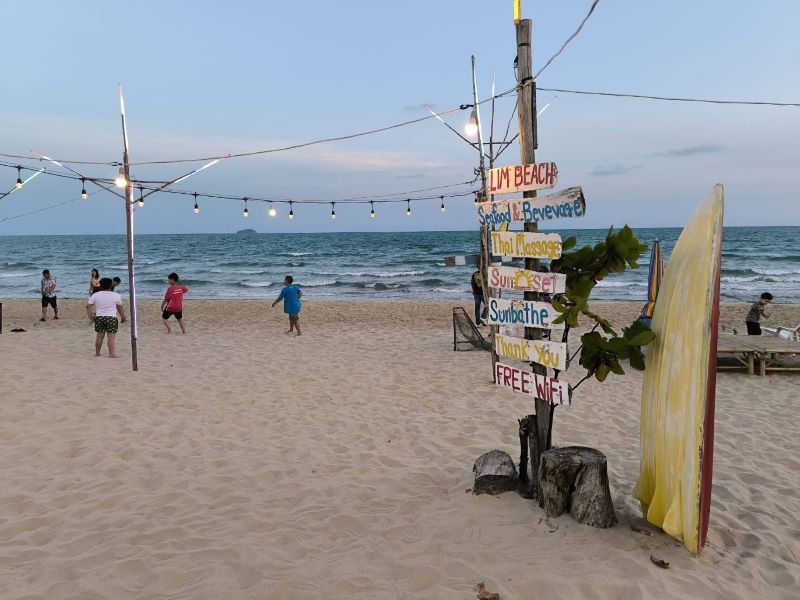
About 15 minutes from the city and the best choice for anyone who wants beachfront living at a budget price. It’s popular with retirees and quieter than the city, particularly at night, so you’ll want your own transport for anything beyond the immediate area. The affordable beachfront condo market here is a genuine draw.
Ban Chang
A small beach town 10 minutes from U-Tapao Airport, with a more established expat community, especially retirees, than the Rayong city area, particularly among those connected to the industrial sector or the international schools.
It has its own cluster of Western restaurants, gyms, and sports facilities. It’s quieter than the city but not isolated. It’s the right choice for families with children at Garden International or SISB, and for anyone who values easy airport access. Housing here runs under THB10,000 for a house rental in many cases.
Rayong Compared to Other Coastal Cities
Rayong vs. Pattaya
Pattaya is busier, noisier, and about 10 to 20 percent more expensive. It has more nightlife, more tourist-facing restaurants, and a more developed expat social scene. It also has Bangkok Hospital Pattaya as a healthcare option and broader hospital choices overall.
If you want city energy and things to do at night, Pattaya wins. If you want a calmer life with better roads, less crime risk, and cheaper rent, Rayong wins.
Rayong vs. Phuket
These are fundamentally different propositions. Phuket has world-class beaches, a packed international community, and dramatically higher costs across the board. It’s also significantly more congested and touristy.
Rayong is cheaper, quieter, and more practical, but doesn’t offer the beach quality or the lifestyle variety. Your priorities determine which is right.
Rayong vs. Hua Hin
Both are quiet, both have reasonable infrastructure, and both cost roughly the same. Hua Hin has a larger expat community, better nightlife, more international school options, and no industrial risk.
Rayong has better hospitals, stronger city infrastructure, better modern facilities, and business opportunities that Hua Hin can’t match. For families who want schooling options, Hua Hin has the edge. For anyone who needs modern facilities and wants to run a business or work in industry, Rayong wins.
Frequently Asked Questions
How much does it cost to live in Rayong as an expat?
Most expats live comfortably in Rayong for around THB35,000 a month. A THB50,000 budget covers rent on a beachfront condo or a house in a gated community, food, health insurance, transportation, and some savings. Families with school-age children should budget at least THB100,000 a month once international school fees are factored in.
Is Rayong a good place to live for expats?
Rayong suits people who want a practical, work-or-retire lifestyle rather than an entertainment-heavy one. It offers well-maintained roads, light traffic, affordable beachfront housing, and a solid private hospital, but the nightlife is limited and the expat community is small. It works well for retirees, remote workers, and professionals in the industrial sector, less so for anyone who wants an active social scene.
How do you get to Rayong from Bangkok?
Rayong is about two to two and a half hours’ drive from Bangkok by car. U-Tapao International Airport is 45 minutes from the city and serves domestic routes plus international flights to China, Malaysia, and Russia, though flights aren’t daily. Suvarnabhumi Airport is only about a 90-minute drive away, so most travelers skip domestic flights and drive straight there instead.
What are the beaches like in Rayong?
Rayong’s coastline includes Moonlight Beach and Laem Charoen Beach in the city area, the quieter Mae Ram Phueng and Suan Son beaches, and the popular island of Koh Samet within Khao Laem Ya-Mu Ko Samet National Park. The beaches are pleasant rather than spectacular; they don’t match the south of Thailand for scenery, but they’re calmer and far cheaper.
Is industrial pollution a problem in Rayong?
Rayong is Thailand’s most industrialized province, with more than 3,000 factories and a history of environmental incidents, including oil spills in 2013 and 2022 and a chemical tank explosion in 2024 that caused one death. Day-to-day air quality is generally within safe limits and benefits from sea breezes, dipping only in January and February. The incidents have been exceptional rather than routine, but the risk profile differs from a purely residential province and is worth weighing if you’re sensitive to it.
What job opportunities are there for expats in Rayong?
Employment for foreigners centers on engineering, factory management, logistics, and other industrial roles tied to the province’s manufacturing base. Rayong sits within the Eastern Economic Corridor (EEC), Thailand’s flagship special economic zone, which creates real opportunities for entrepreneurs and business owners through Board of Investment incentives. Remote workers and digital nomads can also base there comfortably given solid internet infrastructure and a low cost of living.


Are there good international schools in Rayong?
Yes. Garden International School and SISB Rayong Campus, both in Ban Chang, offer British and Singapore-based curricula respectively for ages 2 or 3 through 18. Bilingual options like Rayong English Programme School and Assumption Rayong School serve families who want lower fees or a more Thai-medium environment.
Where’s the best area to live in Rayong?
The city area is the most convenient, putting Central Plaza Rayong, Bangkok Hospital Rayong, and the beaches within 15 minutes, though it’s also the most expensive. Mae Ram Phueng Beach suits anyone who wants cheaper beachfront living, and Ban Chang works best for families near the international schools and U-Tapao Airport.
Should You Live in Rayong?
Rayong works well for a specific set of people:
- retirees who want beach access and a comfortable, practical life without tourist-town pricing
- professionals in the industrial sector or EEC businesses
- remote workers who want low costs and don’t need constant stimulation
- families who want international schooling, outdoor activities, and genuine space at a Bangkok-comparable quality of life but significantly lower cost
It’s not for people who need active nightlife, a large international social community, or the kind of beach quality that makes living on an island worthwhile. The industrial character is also a genuine consideration for anyone with air quality sensitivity.
The best way to find out if Rayong works for you is to stay for a month rather than a week. The province rewards people who are actually looking to live rather than visit.
For a related guide, see our overview of living in Sriracha, another Eastern Seaboard option worth comparing.


 Deutsch:
 Français:
'/%3E%3Cpath%20fill='%23b2b2b2'%20d='M241%20382q0%2016%2017%2026%2017%2011%2042%2011t42-11q16-11%2017-26V269H241'/%3E%3Cpath%20fill='%239f7e00'%20d='M241%20379q0%2014%208%2023%209%209%2021%209%2014%200%2021-9%209-9%209-23V269h-59'/%3E%3Cpath%20d='M241%20339v-70h59v110q0%2014-9%2023l-6%205v-68h-15v72q-8%200-14-4v-68zm59%2040c0%2022%2015%2032%2029%2032%2021%200%2030-18%2030-32v-40h-59'/%3E%3Cpath%20fill='%239f7e00'%20d='M266%20277v5h2v12h-3v-5h2v-5h-9v5h2v5h-4v9h3v18h-5v10h34v-10h-5v-18h3v-9h-4v-5h2v-5h-9v5h2v5h-3v-12h2v-5zm42%20101q0%2010%206%2017%206%206%2015%207%2010-1%2016-7%206-7%206-17v-29h-43'/%3E%3Ccircle%20fill='%230044ad'%20cx='329.5'%20cy='372'%20r='6'/%3E%3Cellipse%20fill='%230044ad'%20cx='300'%20cy='340'%20rx='16'%20ry='21'/%3E%3C/svg%3E) Español:
Español: