The two-week holiday and the long-term reality are two different things. Here’s an honest look at what daily life in Thailand is actually like: the heat, the visas, and the “rich farang” dynamic, alongside the food, safety, and financial breathing room that keep people here.
There’s a term that long-term expats use for the person you are when you visit Thailand on a two-week holiday: a two-week millionaire. You’re staying somewhere nice, eating everywhere, spending freely, and thinking, “I could absolutely live like this.“
But is it really like that? Traveling here and living here are totally different. This article is about what daily life actually feels like when you live in Thailand: what a Tuesday looks like, what gets easier with time, and what stays hard.
After you read this, if you decide you want to live in Thailand, our step-by-step relocation guides are the place to go next.
Disclaimer: Some links in this article go to our partners, and we may earn a commission if you use them. It costs you nothing extra, and we only recommend services we'd use ourselves. Read more in our Advertising Disclosure.
Contents
Key Takeaways
- The holiday experience and the day-to-day reality are different. Thailand is cheap for local-style living but moderate for expat comfort, and some items like wine, good beef, and electronics cost more than at home.
- Bangkok offers great infrastructure and an active social scene but does not have an off switch. Chiang Mai runs slower and cheaper but has serious air quality problems from February to April. Island life depends heavily on budget.
- The 90-day visa reporting requirement and TM30 landlord paperwork catch most expats off guard. Laws on the ground can also vary by officer and province rather than following the written rule consistently.
- Private hospitals are world-class but expensive without insurance, and public hospitals have long waiting times. Retirees have no access to public health coverage unless they previously paid into Thai Social Security.
- Road safety is the most serious daily hazard. Motorcycle accidents are the leading cause of expat injury, and street dogs add an additional risk on quieter roads at night.
- People who do well in Thailand tend to adapt to the pace, face-saving culture, and local expectations. Those who struggle often need the systemic efficiency or career infrastructure that Thailand does not provide.
- A comfortable life in Chiang Mai runs about THB50,000-60,000 per month. Bangkok requires THB70,000-90,000 for equivalent comfort. Budget at least THB100,000 in savings before you arrive to cover setup costs.
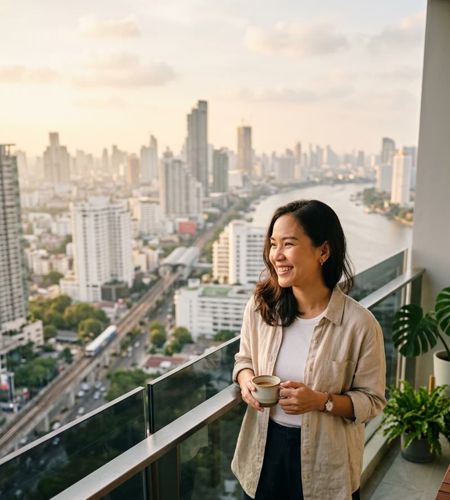

What a Normal Day Actually Looks Like
This varies enormously depending on where you are and who you are, which is part of what makes Thailand work for so many different types of people.
A Morning in Bangkok
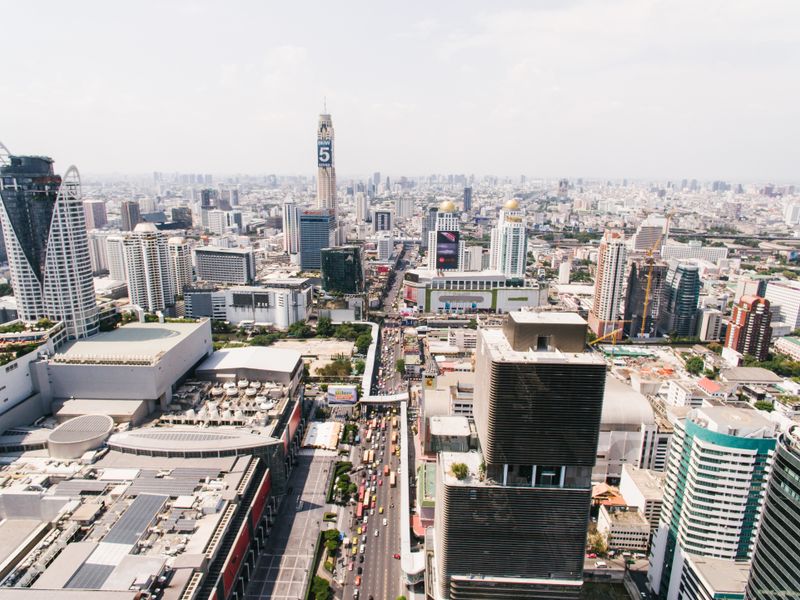
Living in Bangkok is like living in a hectic city with things going on all the time. It’s convenient, you can find something to eat almost everywhere, and you get around easily on the BTS and MRT. It’s also easy to make new friends, with networking events happening almost every day.
But Bangkok can also be overwhelming. Writing on Business Insider, Andrew Neveling describes starting his Thailand life in Bangkok, his favorite city, only to find that even a favorite has downsides: the constant motion, the density, the noise, and the near-impossibility of finding genuine quiet. Bangkok doesn’t come with an off switch.
On top of that, Bangkok traffic can be a nightmare. You might spend two hours sitting in a Grab because you misjudged the traffic.
A Day in Chiang Mai
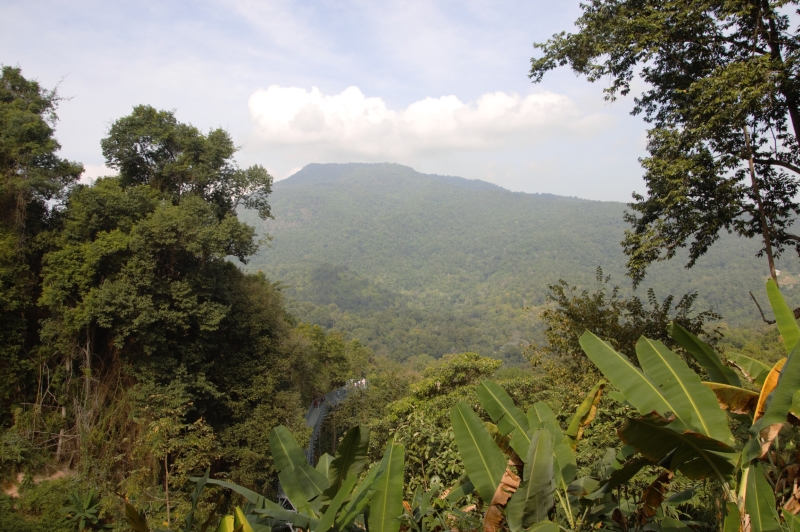
Life in Chiang Mai looks different. The temperature is more forgiving (outside of burning season), people are friendly, and life moves at a slower pace. It’s also a digital nomad capital, with co-working spaces throughout the Nimman area.
You work in a place where you know the barista’s name. You might end the evening at a Muay Thai class or wandering the Sunday Walking Street. But traffic in Chiang Mai is getting heavier, especially around the Maya shopping mall, and you need at least a scooter to get around easily, though not everyone is a confident rider. And the burning season and air pollution problem is real.
A Day on an Island
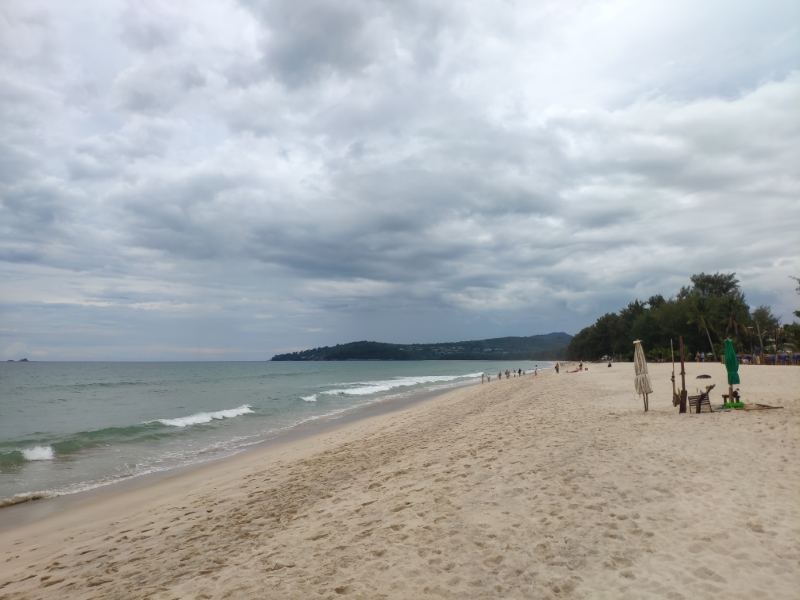
Island life is its own category and depends heavily on where you live. In Phuket, you might not realize you’re on an island at all unless you’re in a beach area; the island can be over-developed.
And while living by a beach is a dream for many, in reality it isn’t as easy as that. It’s mainly for those who can really afford it. A popular beach can be overdeveloped; a less popular one can leave you short of things to do. And your body will feel sticky throughout the day living by the sea.
The Things Nobody Warns You About
This is the section that travel blogs skip because they’re trying to sell you the destination. We’re not, so here’s the honest list.
Heat
The summer season in Thailand is harsh, and it feels like it’s getting hotter every year. We’re talking sustained heat above 40°C, humidity that makes it feel worse, and air quality that compounds everything. It’s not just uncomfortable; you feel fatigue quickly and don’t want to leave any room that doesn’t have air conditioning.
So during the summer season, most people mainly stay indoors during the daytime, and the electricity cost can be expensive too. But many expats I know say that at least heat is easier to handle than snow: you can stay in your place with the AC running and drink plenty of water.
Burning Season Isn’t Only a Northern Problem
If you’re based in Chiang Mai or anywhere in northern Thailand, this matters more than almost anything else. From roughly February through April, agricultural burning creates air quality so poor that AQI levels regularly exceed 200 on bad days, well into the hazardous range.
And this isn’t only a problem in the north. It affects many parts of the country. While it’s less severe elsewhere, it’s still bad for your health. In Bangkok, Hua Hin, and Rayong, there are still many days with unhealthy AQI levels. Some people say their province doesn’t have an air pollution problem; in fact there is one, they just don’t have a good tool to check it.
Time and Urgency
Western-style time efficiency isn’t the operating norm here, and it’s one of the reasons Thailand feels so relaxed. It’s also why the contractor who said he’d arrive at 9am hasn’t shown up by noon and won’t be responding to messages until he does, or why someone schedules you for 10am and shows up at 11am blaming “traffic.” Things move more slowly than you expect, so you need to go with the flow.
Saving Face Culture
Direct confrontation and blunt honesty can be counterproductive here. Even when you know someone is in the wrong, you can’t say so to their face. Otherwise you’re considered “rude,” and you’ve lost the interaction regardless of who’s factually correct. If they’re your coworkers, you might lose the relationship outside of work too. This applies in shops, with landlords, in negotiations, and in many other places. You have to learn how to use words carefully without stripping anyone of their dignity, and that takes time.
The “Rich Farang” Dynamic
A lot of people still believe that all foreigners, especially from the West, are rich. That means you might get overpriced in some places simply because you’re white. This plays out not just in everyday transactions but, more significantly, in romantic relationships: some people may expect you to pay generously, and if you don’t, you risk being called a “cheap farang.” The dynamic is shifting among younger, more educated Thais, particularly in Bangkok, but in many places it’s still there.

Thailand Isn’t That Cheap
This is probably the biggest surprise for people who moved here on the strength of what they read years ago. In 2026, the “Thailand is cheap” headline is a half-truth. Thailand is cheap if you live like a Thai person. It’s moderate if you live like a comfortable expat. But if you live like an expat without adapting to a local style, it can be expensive.
Local beer, food, utilities, and public transport are cheap, but housing can be more expensive than you think. Prices also jump the moment you step into a comfortable, air-conditioned shopping center. You might expect groceries, clothes, electronics, and household goods to be a fraction of what you paid back home, but they often aren’t. Brand-name items and some products, especially wine, good beef, and cheese, can cost more than in your home country. We cover the actual numbers in our cost of living in Thailand guide.
The Visa Bureaucracy
The 90-day reporting requirement is the one that catches people off guard most often. Every 90 days, if you’re in the country, you’re required to report your address to immigration. It’s an outdated rule that mostly generates inconvenience.
There’s also a rule requiring your landlord to file a TM30 within 24 hours that many landlords don’t even know about, and it creates problems for you when you deal with your Thai visa. Beyond that, laws in Thailand are often less fixed in practice than they appear on paper. Interpretation varies between officers, offices, and provinces. Things that were fine last year sometimes aren’t this year, not because the law changed, but because you’re talking to a different officer.
The Tourist Bubble
As a foreigner, you’re often sorted into the “tourist” category by default, regardless of how long you’ve been here or how settled your life is. This affects everything from how you’re priced to how you’re approached socially.
I knew a Finn who had lived in Thailand for over a decade, since his university days, and still got overcharged by a motorcycle taxi. He only got the normal price once he started speaking Thai. And if you marry a Thai, some people will quietly assume it’s about money rather than love. Building genuine connections with Thai people requires language ability, patience, and the willingness to show up in spaces that aren’t designed around expat comfort. It can be done, but it takes longer than most people assume.
Family Life
There are pros and cons to raising a family in Thailand. On the plus side, Thai culture is family-friendly and forgiving when your children misbehave. If your kids run or scream in a restaurant, Thais tend to be okay with it and treat it as just a kid being a kid. Finding a nanny is affordable, there’s plenty for kids to do, and it’s easy to teach them to swim without worrying about cost or weather.
On the downside, international schools in Thailand are expensive, easily over US$30,000 a year for a leading school. At a normal private or public school, your kids, even if they’re half-Thai, may have trouble adapting. The education quality still isn’t on par with the West, and in some months there are road safety and air quality concerns to weigh as well.
What Genuinely Gets Better Over Time
The friction is real, but so is the other side of the ledger.
Food
Living in Thailand, you stop ordering pad thai and start ordering what Thais actually order: khao man gai, khao pad kra pao, khao pad, som tam with a lot of chilies, and more. The good side is that it’s affordable and there’s enormous choice, and you can order delivery through LINE MAN or Grab and have it brought to your door.
The bad side is that you can run out of ideas quickly. You may find yourself eating khao man gai from the same shop five days in a row, and you’ll eat less street food once you realize how much oil it involves. And unless you live in a big city like Bangkok, Phuket, Pattaya, or Chiang Mai, finding good Western restaurants can be a challenge when you miss the taste of home. Cheese and wine are expensive too.
Healthcare
There’s good and bad here. Thailand’s private hospital network is world-class. Hospitals like Bumrungrad in Bangkok, Bangkok Hospital (with branches countrywide), and Samitivej treat English-speaking patients daily and do it well. The bad part is that they’re not always affordable. Without health insurance, you may avoid these hospitals because of the cost and go to less fancy ones instead.
Public hospitals aren’t something you want to rely on. One reader shared a story of needing surgery: he first planned to have it at Banglamung Hospital in Chon Buri, but the waiting time was too long, so he went to a private hospital in Bangkok instead. There’s also bad news for retirees: unless you worked here and paid into Thai Social Security, you can’t get public insurance, and private insurance can be very expensive. I knew a retired Dane who flew back to Denmark for knee surgery on his Danish public insurance, then flew back to Bangkok to retire here. Read our full breakdown of the Thailand healthcare system for what to expect and where to go.
Income
This is something not many people mention, especially for those who work here. Unless you get a relocation package, your salary is going to be lower than at home, often two to three times lower. But this isn’t always a bad thing. Some expats feel more free even on a lower income, because the cost of living is lower and money goes further. It means less stress and anxiety, and the sense of having more life rather than more work.
Travel
The way you travel changes after living here. Instead of the famous destinations, you start going to underrated places you’d never thought about. Bueng Nong Bon, a lake in eastern Bangkok, might become your new favorite spot. Your international travel changes too: instead of European countries, your trips will mostly be around Asia, to Vietnam, Japan, Malaysia, the Philippines, Taiwan, Hong Kong, or Singapore. A 12-hour flight back to the US starts to feel like a nightmare.
Safety
While Thailand isn’t safe when it comes to the roads, everyday life here is. John, our editor from New Jersey, mentioned that he can send his kids to school without worrying about the kind of shooting that happens regularly in the US. People buy gold at a market or mall without fear of it being stolen, and you’ll see laptops left unattended in coffee shops. You don’t need to worry much about people snatching your belongings in public. Of course, not everywhere is safe, so it’s still worth reading up on the specifics.
The Bum Gun
A lighter note to close this section. Most bathrooms in Thailand don’t rely on toilet paper. They have a handheld spray bidet, the bum gun, positioned next to the toilet. It takes some adjustment, but most people who’ve been here longer than a month can no longer imagine going back.
What Gets Harder
Living in Thailand isn’t always paradise. Some things get harder over time.
Distance from Family
This one tends to crystallize over time rather than at the beginning. The first year is too new for homesickness to fully land. A few years in, for milestone events, a parent’s illness, or a sibling’s wedding, the distance and the cost of flights become a real weight. If you’re from the US, it can take a full day to fly back and the round trip can easily run over US$1,000. If a family member falls seriously ill, getting back in time isn’t easy.
Making Friends
The expat social scene in Thailand has a high turnover rate, especially among younger nomads and shorter-term expats. You build friendships and then people move on. In a place where people come and go quickly, like Pattaya, it can be hard to make long-term friends. And making friends with locals can be difficult because of the tourist bubble mentioned earlier. Some expats struggle to make friends even after living here for over a year.
Career Stagnation
Work opportunities for foreigners in Thailand are limited by law and by the local job market. If your income depends on finding work here rather than bringing it with you, the picture is genuinely hard. And if you decide you no longer want to live in Thailand, finding a job back home can be harder than before too.
Road Safety
When you first arrive, you’ll like how quiet the streets are, without constant honking. But Thailand’s roads are among the more dangerous in Southeast Asia. Many expats, especially retirees, never feel comfortable driving here even after many years, which limits where they can go, particularly outside the big cities.
Motorcycles are convenient and everywhere, but the accident rate is sobering. Street dogs are an additional hazard, especially when one darts in front of your scooter. If you’re going to ride, read our guide on how to safely ride a motorcycle in Thailand before you get on one, and our overview of driving in Thailand covers what to expect on the roads.
The Language Ceiling
English works fine in Bangkok, tourist areas, and expat-facing environments. But in government offices, local clinics, and daily life outside the familiar bubble, Thai matters. Without it, you depend on others in ways that add friction and limit how deeply you can engage with the country. This doesn’t get easier on its own; it requires active effort. And Thai is a hard language to learn, with its script and tones.
Who Thrives in Thailand, and Who Doesn’t
After enough years here, a pattern becomes visible. There are those who do well in Thailand and those who don’t.
People Who Do Well
The people who do well in Thailand share one thing: they adapt. They’re more chilled, relaxed, and respectful of the culture. They don’t expect things to work like in their home country.
People Who Struggle
They often need things Thailand doesn’t offer: the systemic efficiency they’re used to, a clear local career path, or the comfort of feeling like they belong in a civic sense. And some simply can’t build a social circle here.
Good to know: the insight from Allianz Care’s assessment of expat life here is blunt but fair: relocating requires patience, flexibility, and preparation. With the right mindset, Thailand can be genuinely rewarding. Without it, the friction compounds. Someone who wants an active social life will do better in Bangkok or a coastal expat hub, while someone who values peace and space might do better in a quieter town. The country is varied enough that most people can find a version that works, if they’re honest about what they need.
Is Living in Thailand Worth It?
The honest answer is that “worth it” isn’t quite the right frame. The more useful question is whether the trade-offs of living here align with what you’re actually trying to build or preserve.
Here’s what you get from living in Thailand:
- financial breathing room
- food, which is one of the best things about daily life here
- ease of regional travel
- a more relaxed lifestyle
- friendly locals
- good healthcare
- a safe living environment (with some exceptions)
And here are the trade-offs:
- distance from family
- bureaucracy, especially around visas
- heat and air quality
- making friends (for some people)
If you’re still figuring out whether this is for you, read our quality of life in Thailand overview and take a look at the best places to live in Thailand to start thinking about where you’d actually fit.
Frequently Asked Questions
Is Thailand a Good Place to Live Long-Term?
For the right person, yes. Thailand offers a genuine quality-of-life advantage over many Western countries: lower cost of living, good private healthcare, excellent food, a warm climate, and easy regional travel. The trade-offs are real, including distance from family, bureaucratic friction, and limited local career options. Whether those trade-offs work depends entirely on your situation and what you’re optimizing for.
What’s the Hardest Part of Living in Thailand?
Most long-term expats point to one of three things: distance from family during significant life events, the bureaucratic overhead of managing visas and immigration requirements, or the social churn of an expat community where people constantly move on. The language barrier is also underestimated by people who assume English covers everything. It doesn’t, outside of tourist and expat-facing environments.
Do You Need to Speak Thai to Live in Thailand?
You don’t need it to get by, but you’ll hit a ceiling without it. English works fine in Bangkok, tourist areas, and expat environments. In government offices, local clinics, smaller towns, and for deeper relationships with Thai people, some Thai makes a significant difference to the quality of your experience.
Is Thailand Safe to Live In?
Generally yes, with some important caveats. Petty theft exists, particularly in tourist-heavy areas. The road situation is a genuine concern: Thailand’s traffic fatality rate is high, and motorcycle accidents are the most common serious hazard expats face. Read up on road safety before getting on a motorbike. For other safety questions, our guides on whether Bangkok is safe and Chiang Mai safety cover what you need to know.
What’s the Best City in Thailand to Live In?
It depends on your priorities. Chiang Mai is best for budget-conscious expats, those who want a slower pace, and people building a nomad social network. Bangkok is best for infrastructure, networking, healthcare, and city energy. Phuket suits higher-budget expats who want beach access and an international community. Our full breakdown of the best places to live in Thailand covers this in detail.
How Much Money Do You Need to Live Comfortably in Thailand?
A comfortable life in Chiang Mai runs around THB50,000 to 60,000 per month (roughly US$1,400 to 1,700). Bangkok requires more, typically THB70,000 to 90,000 for equivalent comfort given higher rents and living costs. Phuket tracks closer to Bangkok or above it in tourist-heavy areas. Budget at least THB100,000 in savings before you arrive to cover setup costs, visa fees, and the first deposit on accommodation. See our cost of living guide for a full breakdown.



 Deutsch:
 Français:
'/%3E%3Cpath%20fill='%23b2b2b2'%20d='M241%20382q0%2016%2017%2026%2017%2011%2042%2011t42-11q16-11%2017-26V269H241'/%3E%3Cpath%20fill='%239f7e00'%20d='M241%20379q0%2014%208%2023%209%209%2021%209%2014%200%2021-9%209-9%209-23V269h-59'/%3E%3Cpath%20d='M241%20339v-70h59v110q0%2014-9%2023l-6%205v-68h-15v72q-8%200-14-4v-68zm59%2040c0%2022%2015%2032%2029%2032%2021%200%2030-18%2030-32v-40h-59'/%3E%3Cpath%20fill='%239f7e00'%20d='M266%20277v5h2v12h-3v-5h2v-5h-9v5h2v5h-4v9h3v18h-5v10h34v-10h-5v-18h3v-9h-4v-5h2v-5h-9v5h2v5h-3v-12h2v-5zm42%20101q0%2010%206%2017%206%206%2015%207%2010-1%2016-7%206-7%206-17v-29h-43'/%3E%3Ccircle%20fill='%230044ad'%20cx='329.5'%20cy='372'%20r='6'/%3E%3Cellipse%20fill='%230044ad'%20cx='300'%20cy='340'%20rx='16'%20ry='21'/%3E%3C/svg%3E) Español:
Español: