
Getting across Bangkok, whether for your first day of work or for your first day of vacation, can be overwhelming. After all, you have a dozen or so options to get you across the city.
So how do you know which one to take? That all depends on the time of day and day of the week.
In this guide, we’ll break down all the possible transportation methods in Bangkok and give you advice on which ones to use at which times. We also list the average prices, routes, and fare costs.
Disclaimer: Some links in this article go to our partners, and we may earn a commission if you use them. It costs you nothing extra, and we only recommend services we'd use ourselves. Read more in our Advertising Disclosure.
Contents
- Key Takeaways
- Rail Transportation
- Paying Without Cash: EMV Contactless Cards on the MRT
- Road Transportation
- Water Transportation
- Free Transport Options
- Getting Around Bangkok with Limited Mobility, a Stroller, or Heavy Luggage
- Private Hires
- General Tips and Advice
- Frequently Asked Questions
- What's the fastest way to get around Bangkok?
- How much does the BTS or MRT cost in Bangkok?
- Is Uber available in Bangkok?
- What time do the BTS and MRT stop running?
- Are tuk-tuks worth taking in Bangkok?
- Are motorcycle taxis safe in Bangkok?
- When is rush hour in Bangkok, and what should I avoid?
- Do I need a Rabbit card or an MRT card for occasional trips?
- Can I tap my debit or credit card directly on the BTS or MRT?
- Is Bangkok's public transport accessible for wheelchairs and strollers?
- Now, on to You
- Sources Cited
Key Takeaways
- The BTS (Skytrain) and MRT are the backbone of Bangkok transport: cheap (from THB17), frequent during rush hour, air-conditioned, and the fastest option when roads are jammed.
- A Rabbit card on the BTS and a contactless credit card on the MRT save time at busy stations. The old MRT stored-value cards stopped working on 1 June 2026.
- Motorbike taxis (identified by orange vests) are the fastest option for short soi trips, especially during rush hour, but they are statistically the most dangerous way to get around the city.
- Tuk-tuks are fun once but rarely practical for regular use: fares are negotiable and usually higher than a metered taxi or Grab to the same destination.
- Grab and Bolt are the safest and most predictable options for late-night travel after the trains stop around midnight, and for destinations not served by the rail network.
- Bangkok’s main rush hours run 7-9:30 AM and 4-7 PM on weekdays. During these windows, use the BTS or MRT and avoid taxis and buses entirely if you have a deadline to meet.

Rail Transportation
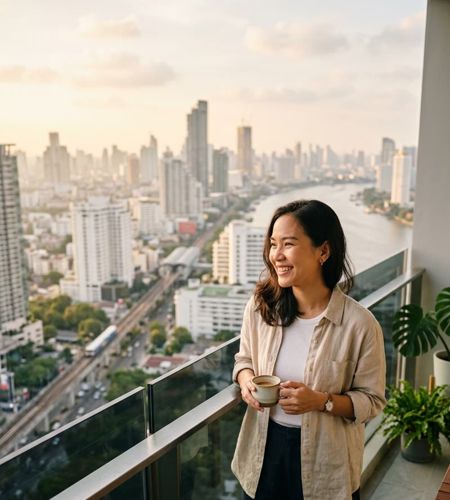
Bangkok has a vast public railway transportation system, including the BTS, MRT, SRT, and more. It’s going to be your main method of getting around the city.
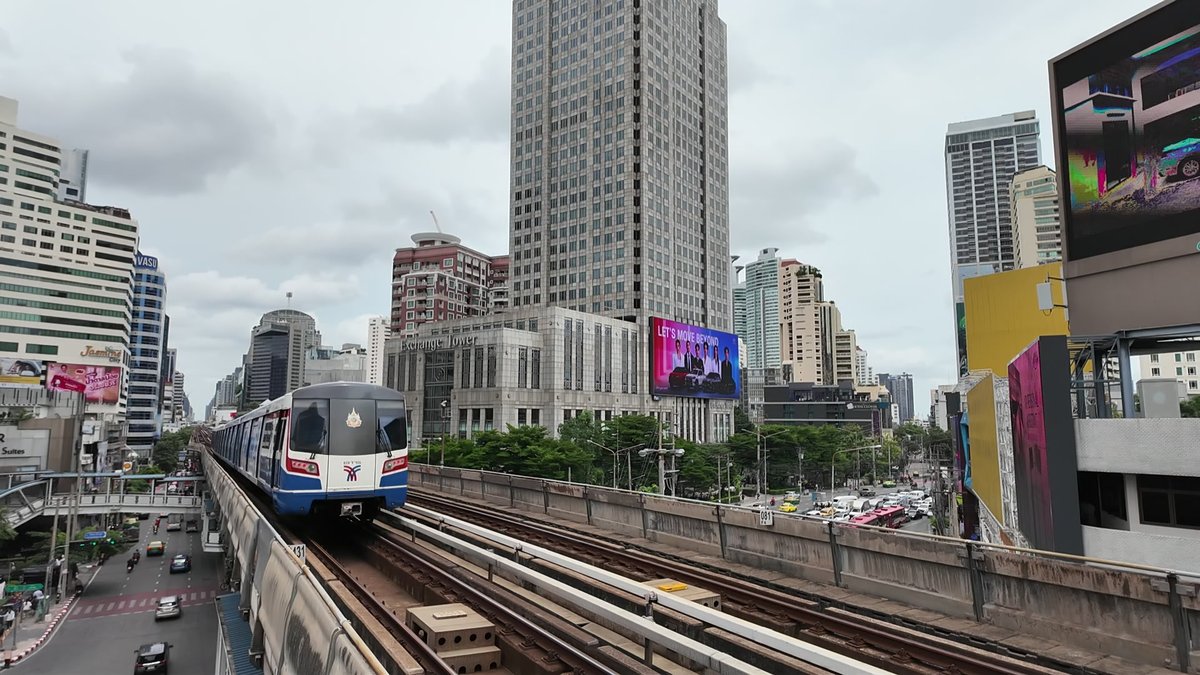
BTS
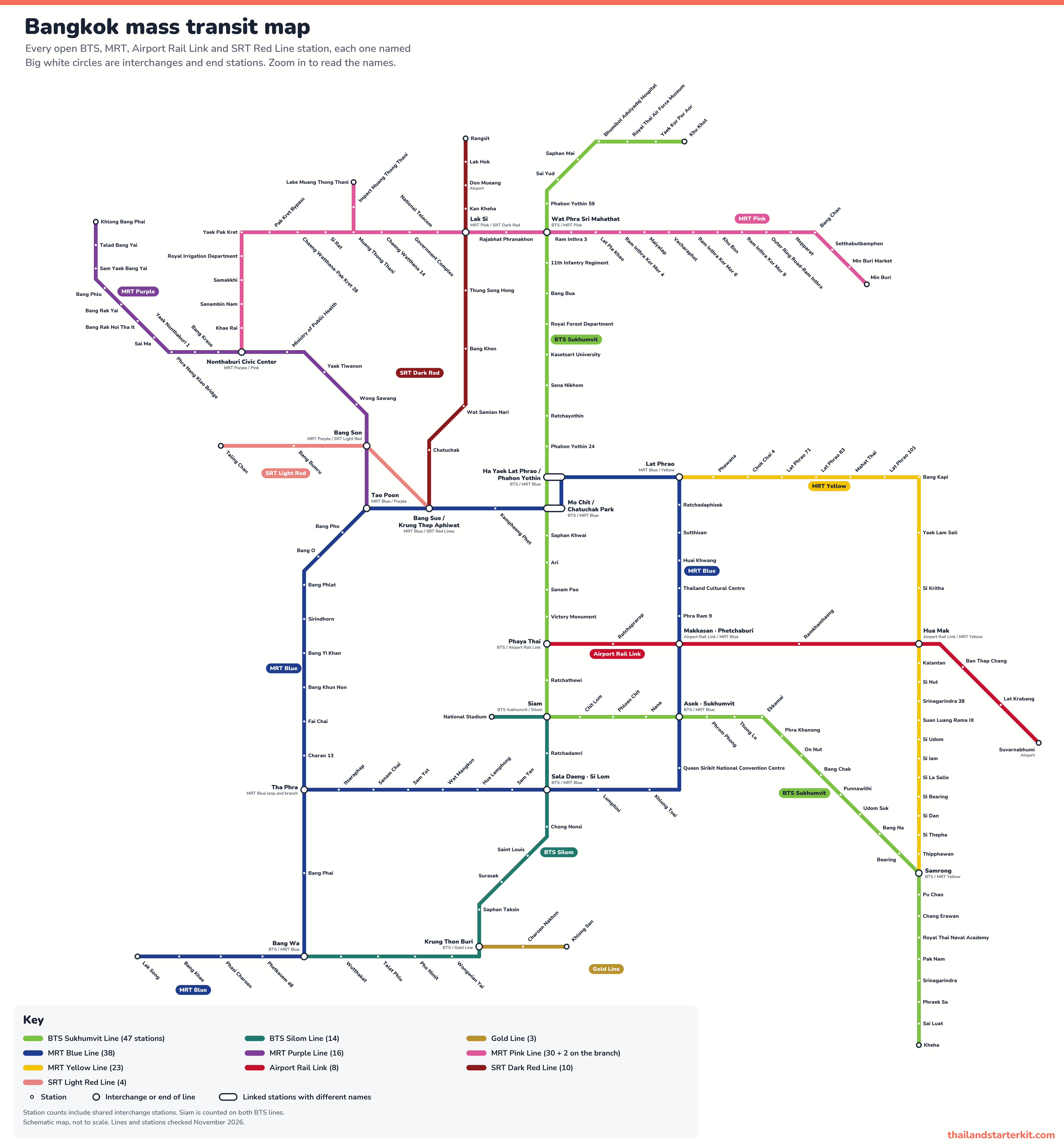
The BTS Skytrain is Bangkok’s elevated train, and an adult trip costs THB17 to THB65. (Verified November 2026.) The Sukhumvit Line runs from Khu Khot to Kheha in Samut Prakan, and the Silom Line from National Stadium to Bang Wa, meeting at Siam.
The iconic BTS forms the backbone of Bangkok’s mass transit system and covers much of the city’s central business district. The two lines meet at the hub station of Siam on Rama 1 Road, right next to Siam Paragon. The Sukhumvit Line follows Sukhumvit Road, so it’s the one most expats end up living along. The shorter Silom Line crosses the river to Bang Wa, passing through the business and nightlife district of Silom and the classy riverside neighborhood of Sathorn.
- Fare: THB17 to THB65 by distance; children under 90 centimeters ride free
- Hours of Operation: 6:00 AM to midnight
- Pros: Runs above the traffic
- Cons: Packed at rush hour; no contactless bank cards at the gates
Our full guide to riding the BTS in Bangkok covers fares, Rabbit cards, trip packages and where to change to the MRT.
MRT
The MRT is Bangkok’s metro, and an adult Blue Line trip costs THB17 to THB44. (Verified November 2026.) The underground Blue Line loops round the center, the Purple Line heads into Nonthaburi, and the Yellow and Pink monorails serve the suburbs.
- Fare: THB17 to THB44 (Blue), THB14 to THB42 (Purple); children up to 120 centimeters ride both free (90 centimeters on the monorails)
- Hours of Operation: 6:00 AM to midnight; the Purple Line opens at 5:30 AM on weekdays
- Pros: Tap a contactless credit card at the gate
- Cons: Crowded at rush hour; changing to the BTS costs a second fare
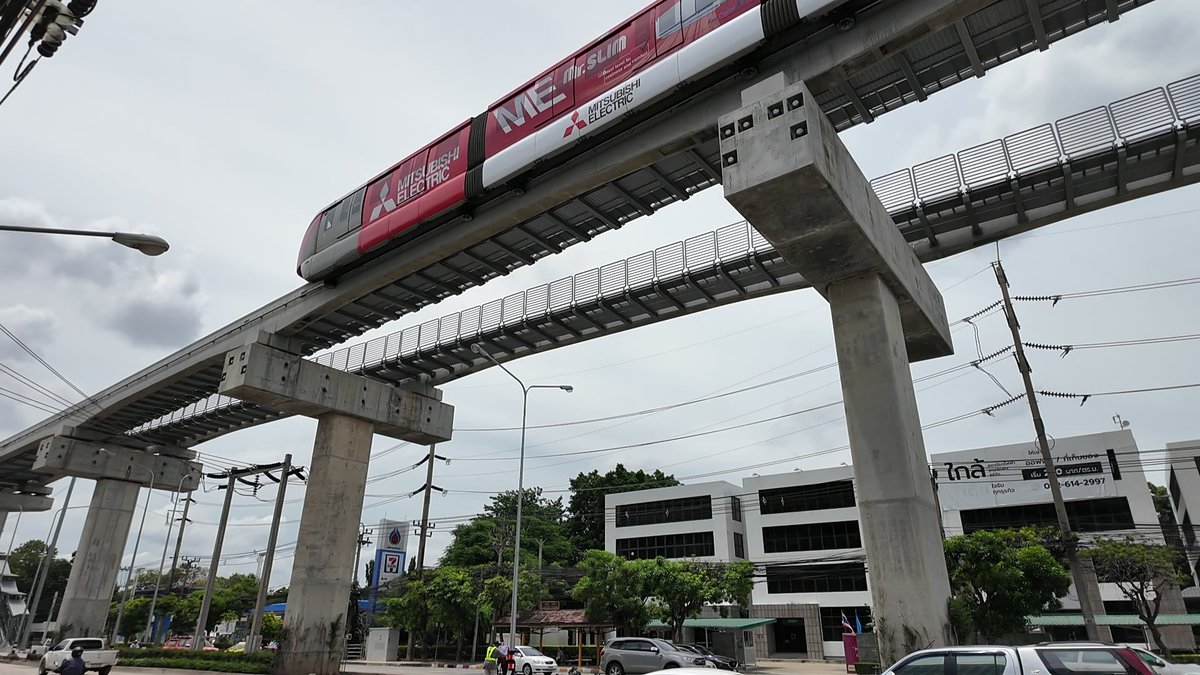
The MRT is a great way to get across to different parts of the city, and the underground Blue Line keeps you out of the traffic completely. Changing lines can mean some walking, though, so give yourself a few extra minutes when you switch between the MRT and the BTS.
Our full guide to riding the MRT in Bangkok covers all four lines, bank cards, tokens and changing to the BTS.
ARL Airport Rail Link
The Airport Rail Link runs from Suvarnabhumi Airport into the city and ends at Phaya Thai, where you can change to the BTS. Get off at Makkasan for MRT Phetchaburi, or at Hua Mak for the MRT Yellow Line.
- Fare: Set by distance; check the fare table at the station
- Hours of Operation: 5:30 AM to midnight (Verified November 2026.)
- Pros: Skips the traffic to and from the airport
- Cons: Crowded at rush hour, when suitcases meet commuters
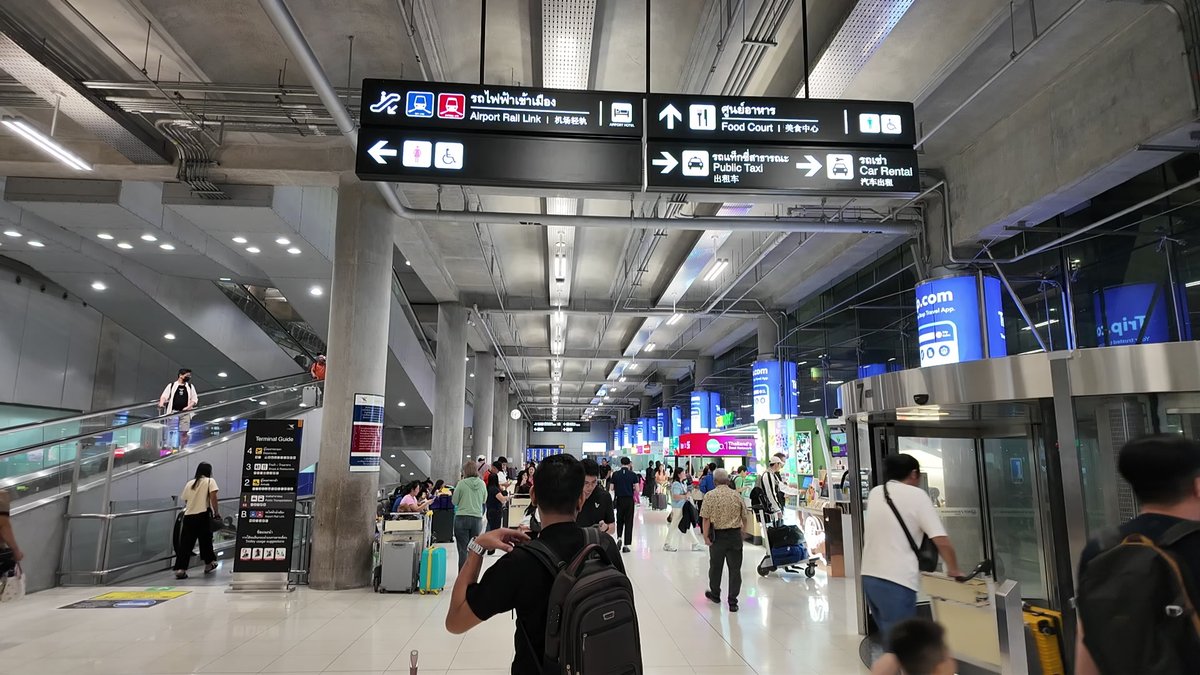
At Suvarnabhumi, the station is on Level B1 of the main terminal. If you’re traveling light, it’s a great way to get into the city from the airport, and you skip the traffic completely. Going back to the airport is a different story. Trains are packed during rush hours, so plan your time well and leave early. Commuters ride it too, since it stops at Ramkhamhaeng and Lat Krabang. For every way into town from both airports, see our guide to Bangkok airport transfers.
BRT Sathorn-Ratchapruek Line
Initially part of a projected network of high-tech buses spanning the entire city, only a single BRT route in Sathorn was ever completed before the whole project was scrapped.
- Starting Cost: THB15
- Hours of Operation: 6:00 AM to midnight
- Pros: Quick and cheap
- Cons: 10-minute gaps between buses during off-peak hours

The BRT’s single line runs from Sathorn, where it intersects with BTS Chong Nongsi, across the river in a broad U-shape to Ratchapreuk Station, where it again intersects with the BTS Silom Line at Talat Phlu.
Working in a similar fashion to the rest of Bangkok’s mass transit, you purchase a ticket at the ticket machines, scan your ticket at the gate, and wait at the station for the bus to arrive.
Unlike the regular buses found on Bangkok’s roadways that spend much of their time on the road wrestling for space in chronic gridlock, the BRT maintains its own lane, fenced off from the rest of the road, and is therefore capable of traversing the city at a reasonable speed.
Paying Without Cash: EMV Contactless Cards on the MRT
All four MRT lines let you tap a contactless bank card at the gate, but the BTS still doesn’t. (Verified November 2026.)
- MRT Blue and Purple Lines. Visa or Mastercard credit cards from any bank, Thai or foreign. Debit cards only work if they’re from Krungthai, Krungsri, Kasikornbank, SCB or UOB.
- Pink Line and Yellow Line. Also take contactless bank cards, and the BTS Rabbit card too.
- BTS Skytrain (Green Line). No contactless bank cards yet. You still need a single-journey ticket or a Rabbit card to ride.
Tip: Tap in and out with the same card. Exit with a different one and each card can be charged the maximum fare, which is THB44 on a Blue Line trip and THB45 on the Pink Line. If you’re setting up long-term in Thailand, see our guide to Thai credit cards for foreigners.
For a short visit, a contactless credit card is the easiest way to ride the MRT, with nothing to buy, top up or return before you fly home. If you’ll ride the Skytrain often, add a Rabbit card.

Road Transportation
Bangkok has numerous options for getting across the city if railways aren’t your thing, but be prepared to spend a lot of time in traffic.
Metered Taxis
Metered taxis in Bangkok serve both locals and expats, and they’re the most common method of getting around the city. Taxis are relatively cheap, air-conditioned, and ludicrously frequent in most parts of the city.
- Starting Cost: THB35 for the first kilometer with the price increasing exponentially with each additional kilometer
Pros: Fast (traffic permitting), cheap (traffic permitting), and air-conditioned
Cons: Prone to fall victim to Bangkok traffic, and dishonest or incompetent drivers
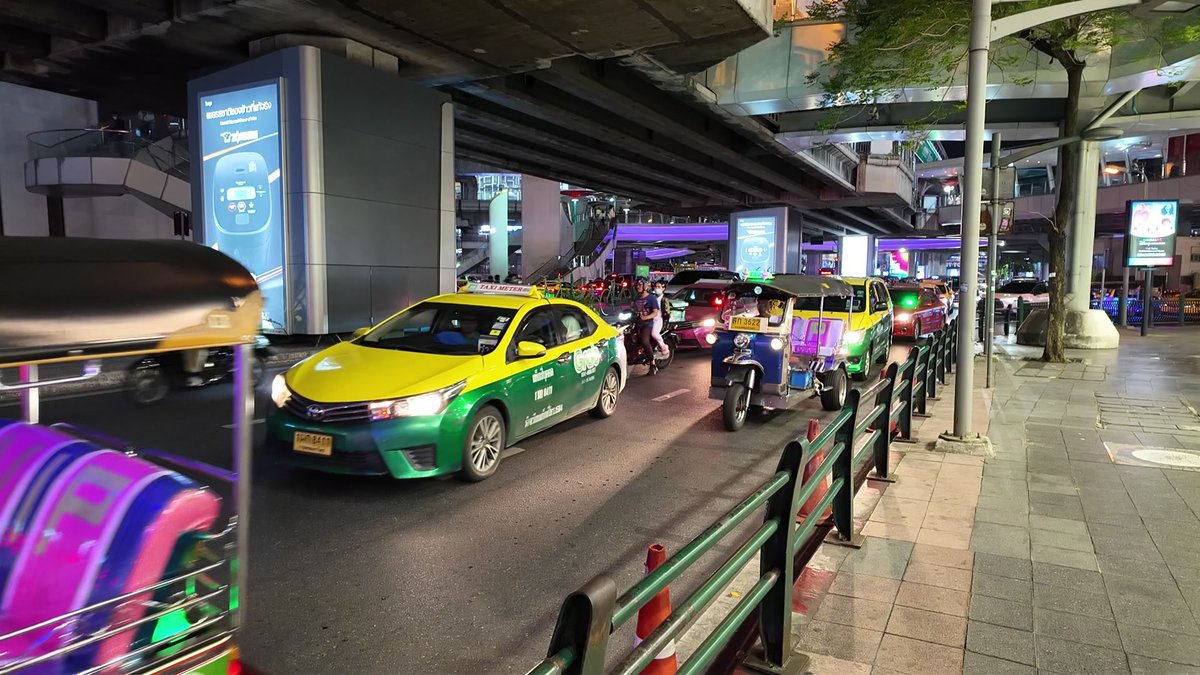
Generally either bright pink, teal, or yellow, metered taxis can be found parked outside the majority of the city’s major shopping centers and attractions, or can be waved down from the side of the road if the neon red vacant sign in the windscreen is glowing.
There is rarely a shortage of taxis, even late at night. However, be warned that drivers will frequently refuse to take the fare if your destination happens to traverse an area known for traffic, it’s raining, or they’re preparing to clock off.
Bangkok’s taxis are subtly color-coded. Generally speaking, solid colors (usually pink, blue, or red) are owned by the company, with each color representing a different company or co-operative, and rented by the driver.
Two-color taxis (the yellow/green split being the most common) are the freelancers who own their own ride. Flagging down one of these freelancers is usually a safer bet when it comes to getting good service, as they’re more likely to be concerned about their rep and the state of their vehicle.
Most of the city’s savvier residents and tourists are generally moving toward the risk-free taxi apps that are available such as Grab. However, if you must get a meter taxi, a few basic rules will make life a little easier for you.
- If the driver quotes you a price outright, refuse it. You can guarantee it’ll be a rip-off. Shut the door and wait for the next taxi, which will be probably arriving in less than a minute. In fact, a good rule of thumb is not to get too comfortable until the driver has pushed the meter button. Occasionally a driver will accept the fare, wait till you sit down, and then quote you an inflated price. State, “Meter,” politely but firmly. If they insist on a flat fee, leave.
- Note that most taxi drivers will have rudimentary English at best. Unless you’re planning on traveling to a particularly notable area of Bangkok, it helps to have the name and address of the location in Thai script with you. Having the phone number of a contact at your destination is also extremely useful. There are several pages on the web containing a few useful phrases for dealing with taxi drivers, such as this one from LangHub.
- It’s also helpful to have a rough idea of where your location is, and the most effective route to take. Don’t assume that your driver will know, or that he won’t assume you’re a gullible tourist who won’t notice him taking the scenic route to your destination to try and squeeze a few extra baht out of the meter. Google Maps is your friend, especially with the GPS turned on.
- For long trips, the driver will often ask if you’d prefer to take the tollway. Note that if you do so, the cost will be passed on to you – it’s usually between THB20 and THB50 depending on the road. The fare will be displayed at the toll station when entering. Personally speaking, I almost always opt for the tollway, as the time saved is worth the small increase in price, especially near or during rush hour, but it’s entirely at your discretion.
- Tipping is not essential, or for the most part even expected. However, drivers will generally round your fare up or down. For example, if you pay for a THB96 ride with a THB100 note, don’t expect change. Just the same, you could pay a THB41 fare with THB40 and the driver won’t raise a brow. However, a small tip would be greatly appreciated if you’ve had a particularly good trip.
- Personal safety is a major concern, particularly with cruising taxis. I know women who refuse to take metered taxis alone. And I’ve also heard a number of horror stories regarding single females and late-night drivers. Although taxis are regulated in Bangkok, rules are poorly enforced, and there are no shortage of dubious characters prowling the streets under false IDs. Always take note of the license plate and the driver ID pinned to the windshield in front of the front passenger seat. If possible, ensure that your driver’s face matches the picture, and take a note of his name and ID. Where possible, try not to take a taxi alone late at night, or while intoxicated. A taxi app is generally a safer bet.
- Note that the Department of Land Transport (DLT) has a hotline number, 1584, which can be called to report any bad drivers.
For a reliable alternative to flagging one down on the street, use an app-based service like Grab or Bolt. The fare is metered, the trip is GPS-tracked, and the driver cannot refuse your destination the way a cruising taxi sometimes will.
Ride-Hailing App
- Starting Cost: Varies depending on distance but expect the average fare to be THB100
- Pros: You can call a taxi ahead of time, you can select your driver/car type, safer than metered taxis
- Cons: If you have to cancel a car, you may have to pay the initial deposit
There are many ride-hailing apps in Thailand. The three most popular are:
- Grab
- LINE
- Bolt
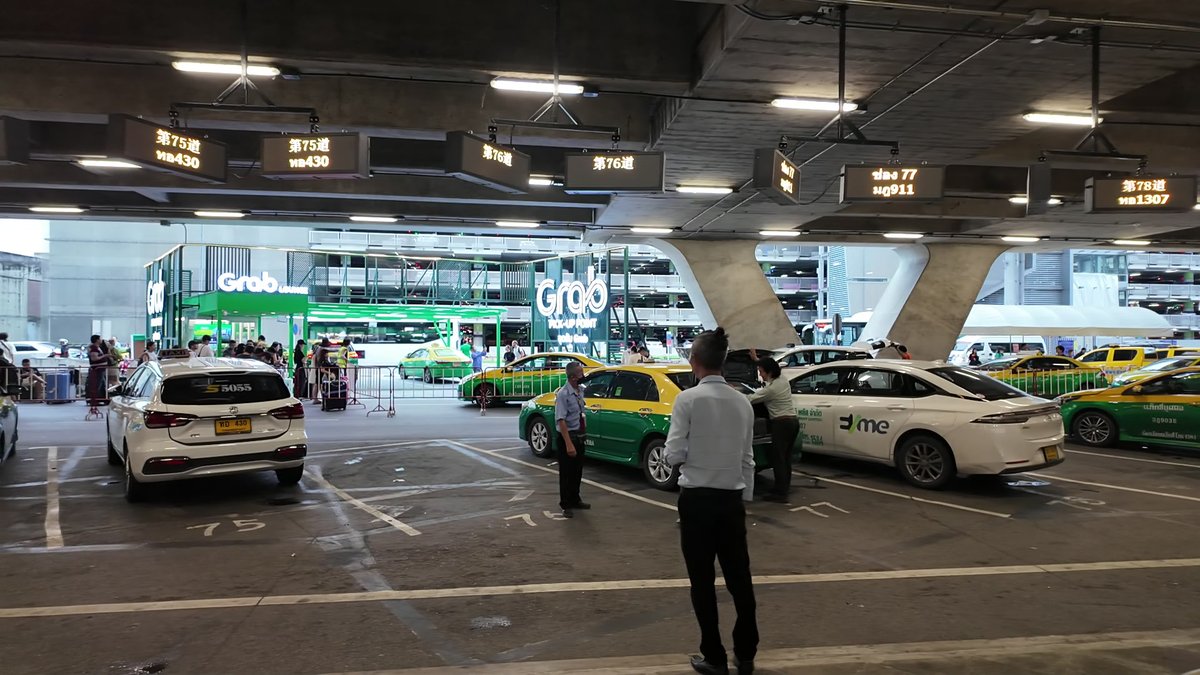
In my opinion, Grab is the most popular ride-hailing app in Thailand. It works similarly to Uber, allowing you to book a taxi, motorcycle taxi, or private ride. The price may be slightly higher than a metered taxi, but you know the fare in advance. Additionally, it’s more secure since you can see all the driver’s details. If there’s a problem, you can contact Grab’s support team to report an issue.
LINE works in a similar way. The two companies are direct competitors.
Bolt, on the other hand, is the cheapest option available. However, it isn’t as regulated as the other two.
If you’ve downloaded these applications in any of the other territories in which it operates, you can use it in Thailand, too. It’s pretty straightforward to use. Select which service you’d like. You’ll be presented with a map, on which you can select your pickup point and drop-off point.
Your request will be pinged to all of the drivers in the surrounding area, who pop up on your map surrounded by a little colored circle. Green means they’ve received the request, red means they’ve chosen to reject it.
Once a driver accepts the fare, you’ll receive a little pop-up containing their name, photo, and registration number. You can then follow the icon as it meanders through the streets to your chosen pickup point. The driver will then usually call to let you know when they arrive, and to confirm the pickup location. At the end of the ride, pay them the fare and service fee.
**Uber isn’t available in Thailand.
Buses
Bangkok has countless bus routes and operators that could take you across the city at almost any time.
- Starting Cost: THB8 (no air conditioning) and THB10 (air conditioning)
- Hours of Operation: 5 AM to 10 PM in most cases; some buses run to midnight and others operate through the night
- Pros: Inexpensive
- Cons: Slow along most downtown routes, no air conditioning on some buses, and overcrowded
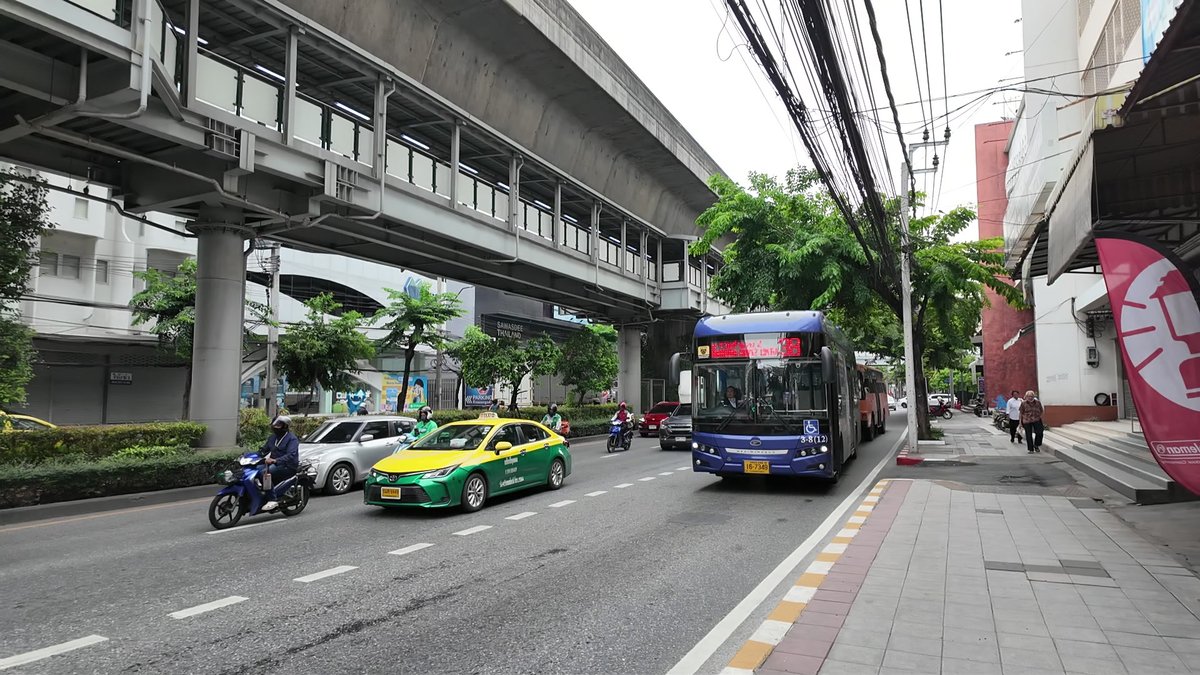
Bangkok’s buses are big, grunting rusty monsters that lurch and swerve through city gridlock at preposterous speeds, tossing their inhabitants around like socks in a dryer. Most of buses label their destinations in Thai script only.
Riding the bus is an adventure in and of itself, and I’d take it over the city’s mass transit any day (except for days where I have places to be).
Most buses here generally work the same way as buses in other major cities. Wait at the designated bus stop. When the bus number you require turns up, hop on and take a seat or find somewhere to stand. Wait for the conductor to arrive. On air conditioned buses, state your destination and pay the required amount.
As non-air conditioned buses charge a flat fee, you need only to hand over the money. Buses generally deal in small nominations only. So, don’t pay with a THB500 or THB1,000 note unless you’re interested in learning some new and fairly brutal Thai vocabulary. Receive a ticket. Don’t immediately toss it — inspectors do occasionally get on to check tickets, and you’ll be paying twice if you don’t have yours.
To stop the bus, press one of the buttons attached to the handrails, preferably giving the driver enough time to safely stop before your destination. A few friendly conductors will indicate when your stop is coming up if you’re clearly having difficulty, but don’t count on it — it’s best to keep an eye out yourself.
It’s common for drivers to briefly pause in the center of the road rather than pulling in to the stop if they’re on a particularly tight schedule, so take a second to check for passing motorcycles before stepping off.
The Bangkok bus network is labyrinthine in nature, with over 100 routes covering Bangkok, Nonthaburi, Pathum Thani, Samut Sakhon, Samut Prakan, and Nakhon Pathom. They come in a range of colors and conditions from fully air-conditioned and relatively modern to fan-cooled rust-buckets.
It’s a good idea to check a route map before setting out. You can find an example on the Viabus app or the BMTA’s website.
It’s always worth finding out what number you need beforehand. Also, bear in mind that the color of the bus sometimes matters, as some buses with the same numbers but different colors will take different routes.
Some numbers are also followed by a Thai symbol, which again indicates a different route. For example, bus 73 takes a different route than bus 73ก.
Fares vary depending on the route and condition of the bus but can be separated into two categories — those with AC and those without.
- AC buses are either yellow or blue. There are also the more modern and comfortable EURO II buses, which come in a variety of colors. They cost between THB10 and THB24, depending on the length of the trip.
- Non-AC buses are priced at a flat rate, depending on the color of the bus. The rickety cream-red buses are THB8 a trip. The slightly newer orange and white-blue buses are THB9. For trips made after 10 PM, the orange bus increases its fare to THB10.
A number of regular buses also offer an Expressway Service, which generally skips a number of stops along the route to take the expressway. These can be differentiated from normal buses by checking the signs displayed in the front window — blue signs for the normal route, yellow for expressway.
There are also buses that display a red sign, which only cover a small section of some of the city’s busier routes.
Finally, there are four bus routes that connect downtown Bangkok to Don Mueang Airport, the A1 to A4 routes. The A1 runs from Chatuchak, and the A2 from Victory Monument. Both charge a flat fare of THB30. The A3 bus runs from Lumphini Park and the A4 runs from Sanam Luang, via the popular backpacker hub of Khao San Road. Both services will set you back THB50.
The majority of buses run until 10 PM, with a few running until 11 PM to 12 AM. There is no price increase, with the exception of the aforementioned non-air conditioned orange bus.
The BMTA call center can be contacted at 1348 if you have any problems. For English-speakers, your best bet may be Google Maps, which will generally offer appropriate bus routes and times between two given destinations.
Find out more: How to Take a Bus in Bangkok
Minivans
Cheap, fast, and comfortably air-conditioned, it’s easy to see why Bangkok’s fleet of minivans are a popular choice for many commuters traveling back and forth from the suburbs.
- Cost: THB20 – THB60 per ride, depending on the distance
- Hours of Operation: Varies depending on route: services start between 4 AM and 6 AM and finish at 10 PM
- Pros: Cheaper than a taxi and speedier than a bus
- Cons: Notoriously unsafe

Unlike the cumbersome bus, vans can avoid the heavier traffic by weaving through the city’s side streets and flying across its expressways.
Indeed, were it not for their unfortunate habit of frequently careering out of control and tumbling off expressways due to the less-than-cautious driving of their operators, they’d be the perfect form of public transport.
Still, the risk of fiery death has done little to deter many passengers, and you’ll find it’s still a tight squeeze in the majority of the city’s vans.
Minivans can be boarded by either heading to one of the city’s bus stations, or simply flagging one down by the side of the road. It can be hard for a Bangkok newbie to differentiate between the BMTA’s public passenger vans and a privately hired one.
However, there are a few aspects that should mark them out from the crowd. BMTA vans are usually white Toyotas with a colorful, swirly patterns along the fronts and sides, or a straight bar pattern. They often have Thai script along the sides, listing their numbers and destinations.

Vans generally leave from local hub areas, such as universities, markets, and major department stores.
Note that like many other forms of transport in Bangkok, minivans tend not to leave these hub areas until they’re full, which could equate to a long wait in some areas. Also note that in these hub areas, you pay the driver first, as opposed to when arriving at your destination.
When taking a minivan, you have to tell the driver where you’d like to stop. A quick, firm jawt noy khrab/kaa usually does the trick. Most vans will usually stop at popular local destinations like malls and BTS stations to let people in and out.
You must then hand your money over to the driver, unless you got on at a hub spot, in which case you presumably already paid. Again, bear in mind that these guys usually deal in small denominations, and wouldn’t appreciate a THB1,000 note being handed to them, so make sure you’ve got some change handy.
Minivans are also speedy options for traveling from Bangkok to nearby provinces like Chonburi, Ayutthuya, Kanchanaburi, Nakhon Nayok, and Prachuap Khirikhan. It’s also a popular airport transfer options in many airports in Thailand.
Songthaews
A songthaew is a pick-up truck converted into a passenger truck. It has two benches in the truck bed, which is covered with a canopy. Songthaews act like an ad hoc bus service along certain busy routes in Bangkok. They come in several varieties, although the most common in Bangkok are the long, sleek, red Isuzus.
- Starting Cost: THB7 but increases to THB10 from 9 PM to 10 PM
- Hours of Operation: Varies depending on route, but generally 6 AM to 10 PM with a few services running until midnight
- Pros: Hop-on and hop-off anywhere, cheap
- Cons: You better like getting intimate with complete strangers
Songthaews generally follow set routes — usually running in a small loop up and down some of the city’s busier roads and sois. You can flag one down from the side of the road or board at a few fixed stops, usually near a mass transit station or the car park of the local Tesco Lotus/Big C.
Along main roads, they also make stops at bus stops. There’s no need to tell the driver where you’re going. Simply wave one down, climb into the back, wait until you’ve arrived at your destination, and hit one of the buzzers in the bed of the truck. Then, hand the driver the fare at your destination and go on your merry way.
The fare is a flat fee of THB7 increasing to THB10 after dusk. Have your money ready in small denominations before heading up to the driver’s window. These guys don’t like waiting around, and you don’t want to be “that tourist,” getting chewed out by a driver who’s holding up traffic as you fumble around in the recesses of your wallet for spare change.
Information is scarce regarding songthaew routes and fares online, at least in the English-speaking parts of the Internet. Although many songthaews display their destination along the side of the van or in the front corner of the window, it’s almost always rendered in Thai script. So, check with a local or ask the driver before climbing aboard.
The red truck may work differently in other provinces. Songthaews in Chiang Mai, for example, are a type that run on a fix route and another type that work similar to taxis. You need to tell the driver your destination, and he will take you there.
Motorcycle Taxis
Motorcycle taxis (or just motorsai to the locals) are the daredevils of the Bangkok transport network. Capable of zipping between gridlocked traffic at often pant-wetting speeds, they’re not for the faint-of-heart. But they’re pretty much unbeatable for bang-for-your-buck speed when you’re running late for work.
- Cost per km: THB20 for the first kilometer and increases by increments of THB10
- Pros: Fastest things on the road, available almost everywhere, and can go almost everywhere
- Cons: Occasional unscrupulous drivers, possibly the most dangerous means of travel on this list
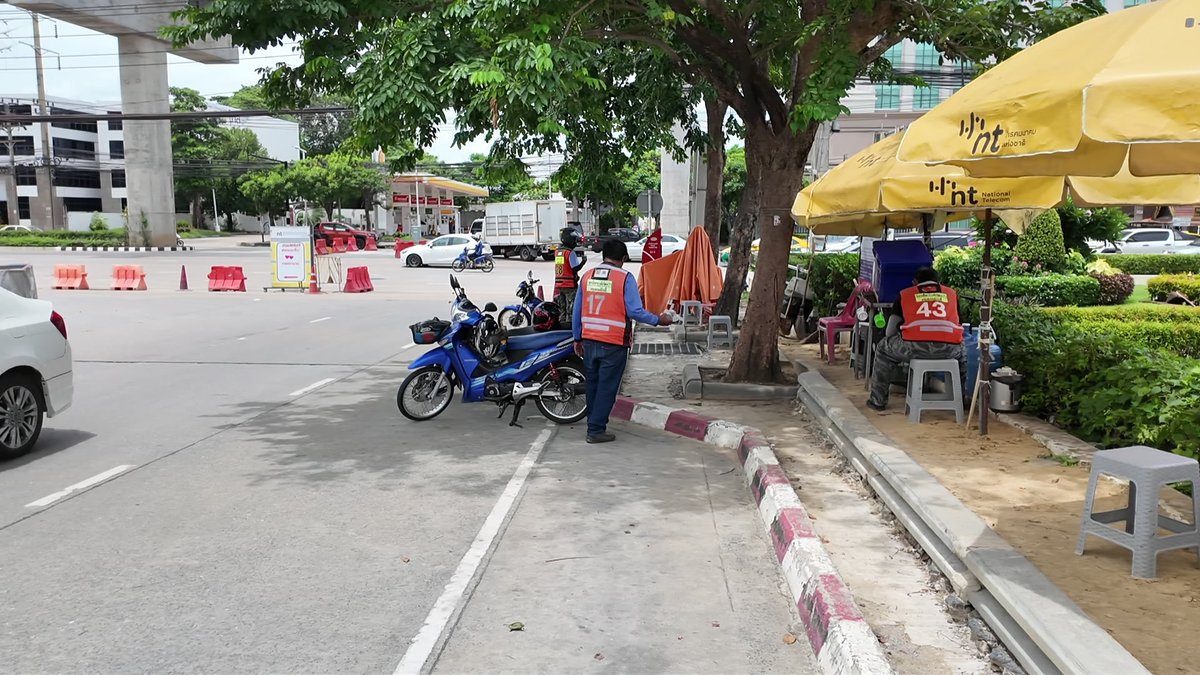
Recognizable by their distinctive orange vests, motorcycle taxi drivers can be found waiting at charmingly ad hoc ranks near the entrances to many of the city’s sois, mass transit stations, or outside large shopping and entertainment centers.
The larger ranks will usually have a large signpost displaying local destinations and fares. However, these are often written in Thai, with the occasional exception at local businesses and attractions like Big C.
Fares generally work on a loose zoning system and are fairly standardized. So it’s generally around THB20 for the first kilometer, with the price increasing from there. Generally speaking, these fares are not up for negotiation — simply state your destination, hop on the back, and pay the correct fare at the end of the trip.
Note that in some tourist areas like Siam, these fares increase sharply and can be as much as THB40 a kilometer.
Freelance motorsai can also be flagged down from the side of the road if they happen to be passing and you’re not near a stop. As there’s no set price for these kind of transactions, you’ll have to negotiate a little. However, if it’s a route you take regularly, you can usually hand over the standard price without receiving any complaints.
A few more unscrupulous drivers, particularly outside of the downtown area, may take advantage of your naivety to squeeze a couple of extra baht out of you if you ask about the fare.
Although, the vast majority of motorbike taxi drivers are commendably honest. I was once chased down by one to hand me back my THB10 after I mistakenly paid for a THB30 ride with two 20-baht notes.
Bear in mind that most Bangkokians use motorbike taxis for the five to 10 minute trip from the BTS to their condo since it’s not that safe. Rapid trips back and forth are the driver’s bread-and-butter. While they’ll rarely turn down a long-distance fare, you can expect to have to pay over the odds if you want a driver to carry you across town.
Also, it can be much safer to take a 10-hour flight to Bangkok than taking a motorbike taxi here for 10 minutes. For some people, they need to pray for a safe journey every time they need to take a motorbike taxi.
Recently, police have been cracking down on motorcycle drivers and passengers who don’t wear helmets. So, be sure to ask for an extra helmet from the driver. And if you take motorcycle taxi regularly, it may be a good idea to invest in your own.
Lastly, if you use motorcycle taxis regularly, you can download the Grab or Bolt app to make it more convenient to find a driver.
If you travel regularly by motorcycle taxi, be sure that you have health insurance.
Tuk-Tuks
Tuk-tuks have an undeniable charm about them. And there’s something special about careering through a Bangkok night, hunched in the back with the wind in your hair and recirculated diesel fumes in your lungs.
- Starting Cost: THB80 but increases with traffic conditions
- Pros: Iconic, fast, and genuinely quite fun
- Cons: Pricey compared to similar modes of transport, notoriously dishonest drivers, increasingly rare in many parts of the city
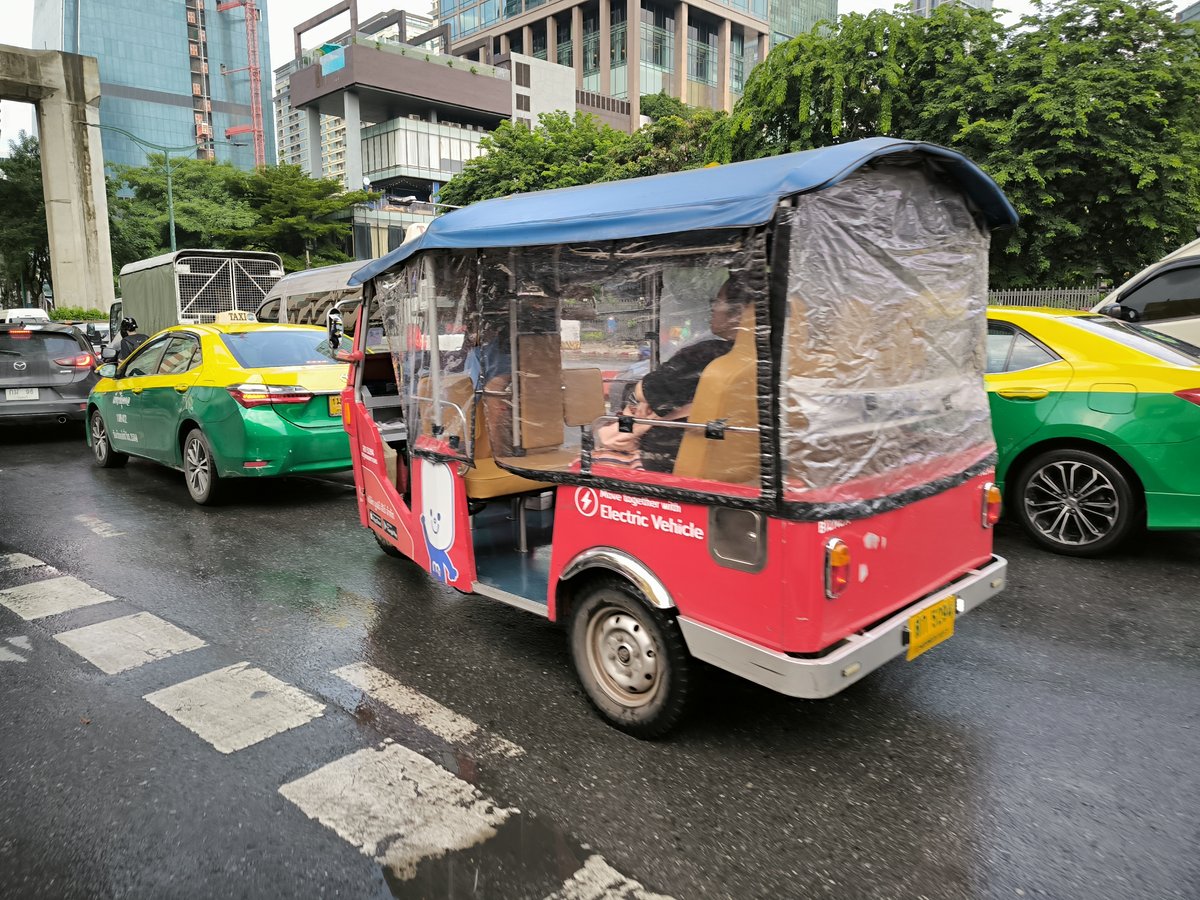
Seemingly unregulated, tuk-tuk fares are mostly up for negotiation with your driver. Although somewhere between THB80 and THB100 is generally agreed to be a fair figure for a short hop.
Longer journeys rarely cost more than THB150. This is a flat rate, regardless of how many people are in the back. Some tuk-tuk drivers may try to entice you into their ride by pointing out how little the fare is per person. For example, a THB80 ride for four people works out to just THB20 each.
It’s usually best to work out how near or far your destination is before negotiating the fare, and to have a general idea of how much you’re willing to pay. Most tuk-tuk drivers generally expect you to haggle over the price, so expect a preposterously inflated sum upon first asking.
Despite their appearance, tuk-tuks are generally safer than motorcycles. Although you’ll endure almost the same level of exposure to the elements. You’re probably more at risk from the drivers themselves, who have been known to get aggressive during fare disputes. The best course of action is to keep calm and walk away if the situation appears to be getting out of control.
Scams involving tuk-tuk drivers are legendary among travelers in Thailand. The best known is the infamous jewelry store scam. A tuk-tuk driver at some local attraction (Grand Palace, Wat Pho, etc.) earnestly tricks you to thinking that said attraction is closed. And then they offer to give you a cheap or even free ride to another place nearby — usually a fake gem store.


In a similar vein, your driver may take you to an overpriced, mediocre restaurant or tailor, for which they receive a little commission. Best course of action is to be wary of any offer that seems too good to be true, and to stay informed of the latest scams.
Good to know: Many locals and expats view them as something for the tourists rather than a practical, everyday means of transportation. And they’re a rare sight in many residential areas of the city. The main reason is that they’re even more expensive than taxis. However, tuk-tuks continue to swarm in large numbers at tourist hubs like the Grand Palace, Khao San Road, and Siam Square.
Water Transportation
A more adventurous way to get around Bangkok is by water vessel, whether that’s a ferry or canal boat.
Chao Phraya Express Boats
Bangkok was once known as the Venice of the East for its intricate network of canals (khlongs) that once operated as the city’s water source, food source, transportation infrastructure, and waste removal system.
- Starting Cost: THB15 depending on line and distance traveled; THB200 for the tourist boat
- Hours of Operation: 6 AM to 8 PM but varies by line
- Pros: Skip the traffic, easy access to some of the city’s biggest tourist attractions
- Cons: Limited to only the places that can be reached from the Chao Phraya River
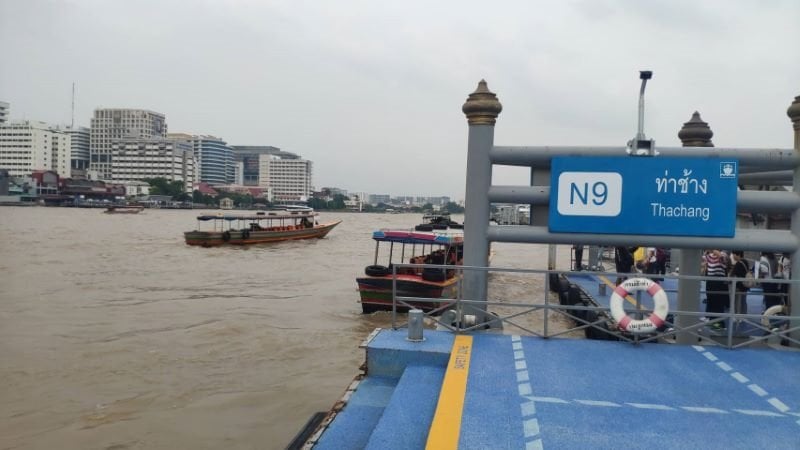
While the road has long since taken over many of the khlong’s former duties, the canals and the mighty Chao Phraya River continue to function as a part of Bangkok’s transportation network.
Riding on a river taxi is certainly one of the more pleasant ways to traverse the city. Feeling the river breeze in your hair as you fly past what remains of Bangkok’s past — ramshackle stilt houses, shimmering riverside temples, the peaks and spires of palaces — certainly beats squatting in the back of a musty taxi.
There are a wide variety of boats available, from the opulent river cruises to the wooden river-crossing ferries. Here’s a brief breakdown of options:
Express Boat River Taxis service the Chao Phraya, the main artery of Bangkok’s water network. Services run from Wat Rajsingkorn, near the fancy Asiatique restaurant and shopping complex, all the way up to Pak Kret in the northern suburbs.
Sathorn Pier, which is connected to the BTS Saphan Taksin by a short walkway, is the hub for the Chao Phraya Express Boat and will more than likely be your first port of call if you’re arriving from Silom or Sukhumvit.
Each pier is designated by a number, counting either up or down from the Central Pier in Sathorn. So, the pier immediately north of Sathorn, Oriental, is Pier N1, the next, Wat Muang Kae, is N2, and so on. The piers to the south are S1, S2, etc. Those wishing to visit Asiatique can also take a free shuttle boat from Sathorn Pier.
There are four different lines operating along the river, which run either all day or only during the morning or evening rush as follows.
The All Day Services include the Orange Flag and the Blue Flag Lines. The Orange Flag Line runs between Nonthaburi and Wat Rajsingkorn. But it skips a number of the smaller piers along the way, such as Rajinee Pier (N7). It runs seven days a week between the hours of 6 AM to 7 PM and costs a flat rate of THB17.
The Blue Flag Line is the dreaded Chao Phraya Tourist Boat, which is a more user-friendly version of the standard Express boats. They are more spacious vessels with English-speaking tour guides.
The Tourist Boat charges either about THB40 for a one-way trip or a flat fee of THB200 for a full ticket, although this ticket does entitle you to ride the boat all day, or at least for the hours it’s operational. It skips the majority of piers along the route, stopping only at the major tourist destinations.
The Commuter Services include the No Flag, Yellow, and Green Lines. The No Flag (Local) Line runs from Nonthaburi (N30) to Wat Rajsingkorn (S3). Predominantly a commuter service, it operates between the hours of 6:45 AM and 7:30 AM, and again from 4 PM to 4:30 PM, Monday to Friday. Tickets are between THB10 and THB20, depending on distance. The Local Line stops at almost every pier along the route, making it slow-going for tourists in a hurry.
Similarly, the Green-Yellow Flag Line is another commuter-oriented service, running from Pak Kret (N33) to Sathorn (Central) via Nonthaburi (N30). Like the Local Line, it runs two services a day, Monday to Friday. The Morning Service runs from 6:10 AM to 8:10 AM, and the afternoon service runs from 4:05 PM to 6:05 PM. Fares are again dependent on distance, ranging from THB15 to THB34.
The Yellow Flag Line runs from Nonthaburi (N30) to Sathorn (Central). It also runs two daily services, Monday to Friday. The morning service runs from 6:15 AM to 8:20 AM, and the afternoon service runs from 4 PM to 8 PM. Fares are a flat rate of THB22.
Long-Tail Boats
Long-tail boats are narrow, slender, covered vessels that can zip along the city’s narrower canals at stomach-churning speeds. Available for private hire, touts offering tours can be seen at several of the larger piers, such as Sathorn or the Oriental Pier (Pier No.1).
- Starting Cost: Expect to pay anything from THB500 to THB2,000, depending on length and duration of your trip and your negotiating skills
- Hours of Operation: Dawn till dusk
- Pros: Exotic, see a different side of Bangkok
- Cons: Scams are not unheard of

Tours are arranged on a fairly freewheeling basis, and routes and fares can be arranged with your guide beforehand. Reports vary on a good price. Some report paying THB600 to THB700 for an hour-long tour, and between THB1,500 to THB1,800 for an hour and a half.
A few websites have warned of scams involving long-tail boats, especially those offering seemingly too-good-to-be-true discounts. Usually, these are of the “stop-at-gem-stops” variety, although there are cases of hapless tourists being taken out into the middle of the river and gouged for cash before their guide agreed to take them to shore. As with most of these situations, it’s best to trust your instincts or book through a hotel or tour operator.
River-Crossing Ferry
River-crossing ferries are no-frills water vessels that go from point A to point B without much fanfare.
- Starting Cost: THB3.5
- Hours of Operation: Dawn till dusk
- Pros: Can’t be beat when it comes to crossing the river
- Cons: Any cons are negated by the fact that you’ll be on a ferry for about a minute

Not much needs to be said about these ferries. Although the starting price is THB3.5, you can pay up to THB4 to be escorted across the river by a ramshackle wooden raft. Such ferries can be found at most piers in the city.
Khlong Saen Saep Express Boats
The Khlong Saen Saep is a major canal that cuts an aquatic beeline through some of the most prominent areas of the city, including Sukhumvit, Pratunam, and Ramkhamheng.
- Starting Cost: THB10
- Hours of Operation: 5:30 AM to 8:30 PM and 7 PM on weekends
- Pros: Skip the traffic, see a different side of downtown Bangkok
- Cons: Overcrowding can be a problem at rush hour, safety features are lacking
The express boat service is split into two lines, the Panfa Leelard Line, which terminates at Panfa Leelard near the Golden Mount, and the Wat Sriboonreung Line, which terminates at Wat Sriboonreung. Both intersect at Pratunam Pier.
A single ticket, which ranges from THB10 to THB20 and increases by increments of THB2 depending on the distance traveled, can be purchased for both lines. But don’t toss the ticket before switching boats.
Tip: Riding the boat itself can be something of an adventure. To avoid being doused with canal water, make sure you grab a seat up front if possible. Getting on and off the boat can be a challenge too, often involving a little light jumping — women with short skirts and/or high heels, take heed.
All available routes are available on Transit Bangkok’s website.
Free Transport Options
You have two options to get around Bangkok for free: walking and biking. Let’s look at each one more closely.
Walking
Walking is a free and healthy way to get to know the city up close and personal. However, because Bangkok is always hot, prepare to sweat a lot while traversing the capital on foot.
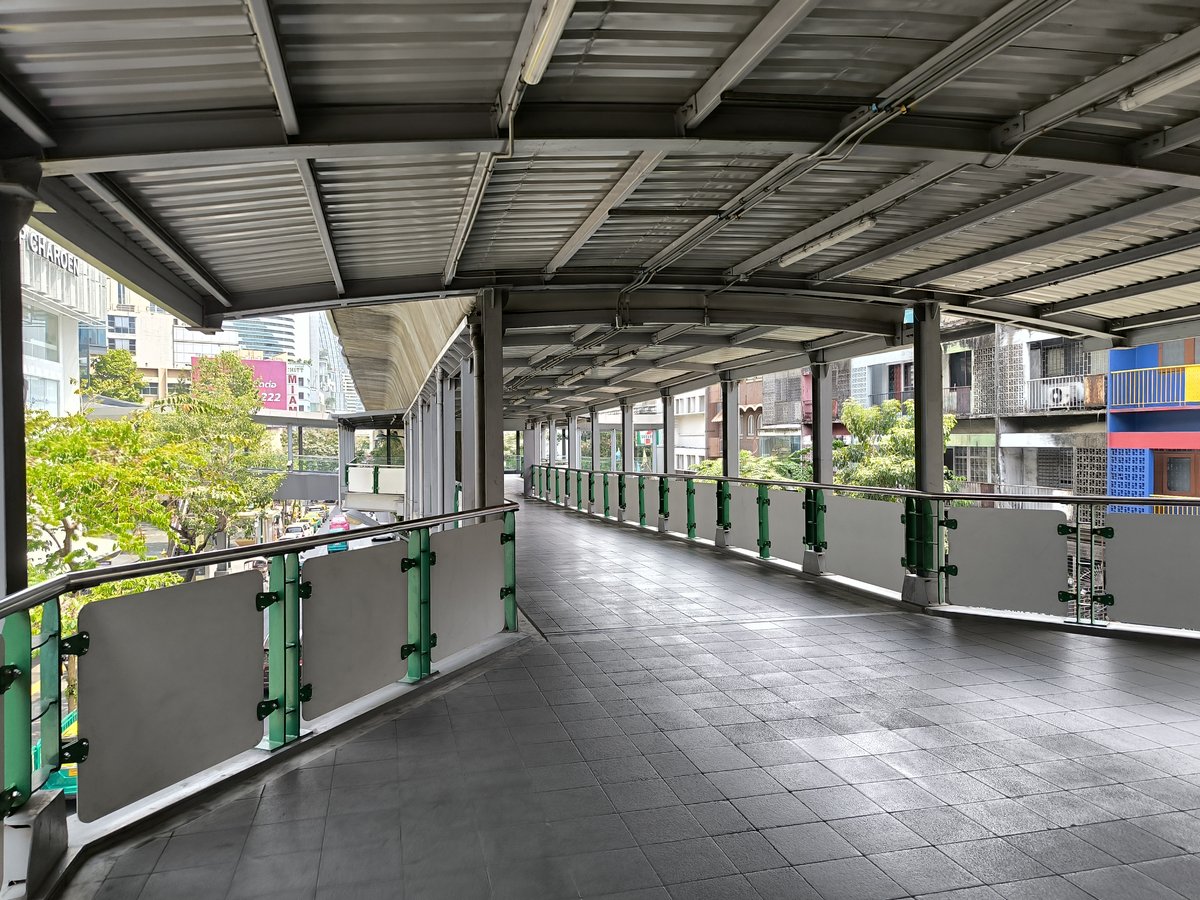
As a result of my European upbringing, I’m a big fan of walking. It’s the best way to experience a city in its most natural state.
I used to resent having to pay to cover distances that I could’ve easily navigated by foot. In fact, I spent much of my first year in Bangkok with disdain for locals and expats who I witnessed hopping on motorbikes for a 200-meter trip to the 7-Eleven.
After three years of tumbling off curbs, tripping over guy-ropes, and standing bewildered at the terminus of another stretch of pavement, I’ve been cured of my pedestrian elitism. Now I, too, am willing to flag down a local motorsai driver to carry me a block down the road.
For the most part, pedestrians are often neglected on the streets of Bangkok. Pavements are often poorly built and riddled with hazards (market vendor tents, stray parked motorcycles, etc.).
In many stretches of the city, sidewalks are non-existent, mysteriously tapering out and leaving your intrepid pedestrian to tiptoe along the nearest wall or hedge.
There are, however, a handful of places in the city that you can navigate more comfortably by foot. Big Boy Travel has a series of walking routes for a few popular (and a few lesser-known) sites of interest in Bangkok.
Cycling
Cycling around Bangkok is a free and fast way to travel during rush hour when you can’t find a taxi or you want to avoid sitting in a taxi at one traffic light for 45 minutes. Riding a bike around Bangkok, though, can be dangerous.
Bangkok is definitely not the best place to bike for many reasons. Footpaths are overrun with vendors, manhole covers could be missing, drivers may not notice you, clouds of black toxic fumes spew from buses’ exhaust pipes, and the heat can make you sweat within five minutes. If you can overcome these obstacles, biking can even be faster than driving a car.
Bikes and trains don’t mix well. MRT rules say you need staff permission to bring a bicycle on board, so ask before you wheel one to the gate, and never try it at rush hour.
Many department stores have bicycle parking lots. The best one is at Fortune Tower, which comes with a roof, bike lock, security guard, restroom, and bike maintenance sets. If any places don’t have bicycle parking lots, you need to park with the motorcycles.
As a rule of safety, always wear a helmet and set of gloves. Everything on the road can cause an accident, no matter how careful you are. So, it’s a good idea to have health insurance.
During rush hour, it’s better to avoid the main streets with a bike if possible. You would never want to get stuck in the traffic, inhaling black smoke. But at night, ride on the main streets and use front and tail lights.
Avoid cycling from late night till dawn at all costs. You can get hit by a speeding drunk driver or have a problem with dek waen, or motorbike gangs.
Airport Transfers
To combat some of the issues that Suvarnabhumi Airport has faced with taxi drivers, the airport now has an official station where you can get a taxi into the city. It’s located outside of the ground-floor, just outside the main entrance.
Simply go to one of the taxi kiosks and get a queue number. Before you get your number, however, you will be asked where you’re going and whether you need a car or SUV, depending on how many people you’re with and the amount of luggage you have.
You have to pay a THB50 airport fee, plus any tools, and the cost of the fare. The fare is calculated the same as in any taxi in Bangkok, which I talk about in the Metered Taxi section.
Grab is a good alternative, especially when you need to get to the airport from town. It regularly offers coupon codes that will net you up to a THB100 discount. Grab posts coupons on their app, so be sure to install it before coming to Thailand. I talk more about Grab in the section below.
The aforementioned Airport Rail Link can be found on the underground floor at Suvarnabhumi Airport. In addition, the airport has public vans and buses that go to many parts of Bangkok and other popular provinces. You can find them at the bus terminal, accessible by one of the free airport shuttle buses.
Don Mueang Airport also offers shuttle buses to many parts of Bangkok, including Khao San Road.
Read more: Bangkok Airport Transfers: Costs, Services, Locations, and More!
Getting Around Bangkok with Limited Mobility, a Stroller, or Heavy Luggage
Bangkok’s transport network still has real gaps in accessibility, though it keeps improving. Here’s what to expect if you’re traveling with a wheelchair, a stroller, elderly relatives, or heavy luggage.
- BTS (Skytrain). Elevator coverage is inconsistent. Some stations, including major interchanges, still lack a working elevator, or keep one locked until staff unlock it on request. Check your specific station ahead of time rather than assuming access.
- MRT, Pink Line, and Yellow Line. Built more recently, these generally offer more consistent elevator coverage than the original BTS lines.
- Every rail station. Has a wider gate beside the regular ticket turnstiles for wheelchairs, strollers, and bulky luggage. You may need to ask staff to open it.
- Buses and songthaews. Not built for wheelchairs or strollers, with high steps and frequent overcrowding. Best avoided if mobility is limited.
- Taxis and Grab. The most reliable door-to-door option. Grab lets you request a larger vehicle in advance for extra luggage or a folded wheelchair, and a metered taxi driver will usually help load and unload if you ask.
- MRT fare exemption. Holders of an official Thai disability ID card ride the MRT Blue Line free, on top of the half-price fare already available to seniors. This applies to registered Thai disability card holders rather than to visiting tourists.
If your trip depends on a specific station having a working elevator, call ahead or check current station information before you travel. Coverage keeps changing as more lines and elevators come online.
Google Maps can help too. When you plan a transit route in the app, its route options include a wheelchair-accessible setting that avoids stairs-only stations where that data is available. It’s not foolproof in Bangkok, since not every station is mapped in detail, but it’s a useful first check before you commit to a route.
Private Hires
You also have the option of hiring private modes of transportation to get around Bangkok. Let’s look at a few of your options below.
Limousines
A number of limousine companies are available in Bangkok for the more discerning traveler, offering high-class luxury vehicles at high-class luxury prices. Specializing in transport to and from the airport, many companies also offer rides to neighboring provinces such as Pattaya and Ayutthaya.
- Starting Cost: Between THB1,000 and THB4,500 for a one-way downtown trip is standard
- Pros: Travel in style
- Cons: A bit pricey
There are endless options when it comes to hiring luxury cars. The most prominent and reasonably-priced option appears to be the service offered by Airports of Thailand (AOT), who offer a number of vehicles ranging from the Mercedes-Benz E300 to the BMW 7 series. Fares seem to hover around the THB1,500 region for a Toyota, increasing to THB2,000 for the 7 series.
Oriental Escape is another company who come highly recommended by those in the know. Fares for a downtown hop range from around THB1,100 for a bog-standard Camry up to THB7,300 for a ride in a Mercedes S-Class.
Read more: Renting a Car in Thailand: What You Need to Know
Helicopters
For when you really need to channel that Phil Collins flying-into-Live-Aid-vibe, a number of companies in Bangkok offer the option of chartering a helicopter to your destination.
- Starting Cost: Around THB90,000 to THB100,000 per hour
- Pros: Soar over the traffic, feel like a rock star
- Cons: Probably not a feasible option unless you’re either a millionaire or on a particularly generous expat package
From what I gather, Advance Aviation and Skydance appear to be the two biggest operators when it comes to charter helicopters in the city. Their prices are similar, with Advance charging THB87,500 per hour (plus VAT) for a ride in their EC-135 and Skydance charging THB93,625 (again, exclusive of VAT). Both appear to operate between dawn and dusk.
General Tips and Advice
With so many options available for getting from Point A to B, it’s worth doing the research before setting out. Things like the weather, time of day, and big events can make a difference. Here’s a general breakdown of available transportation and what to take on which day.
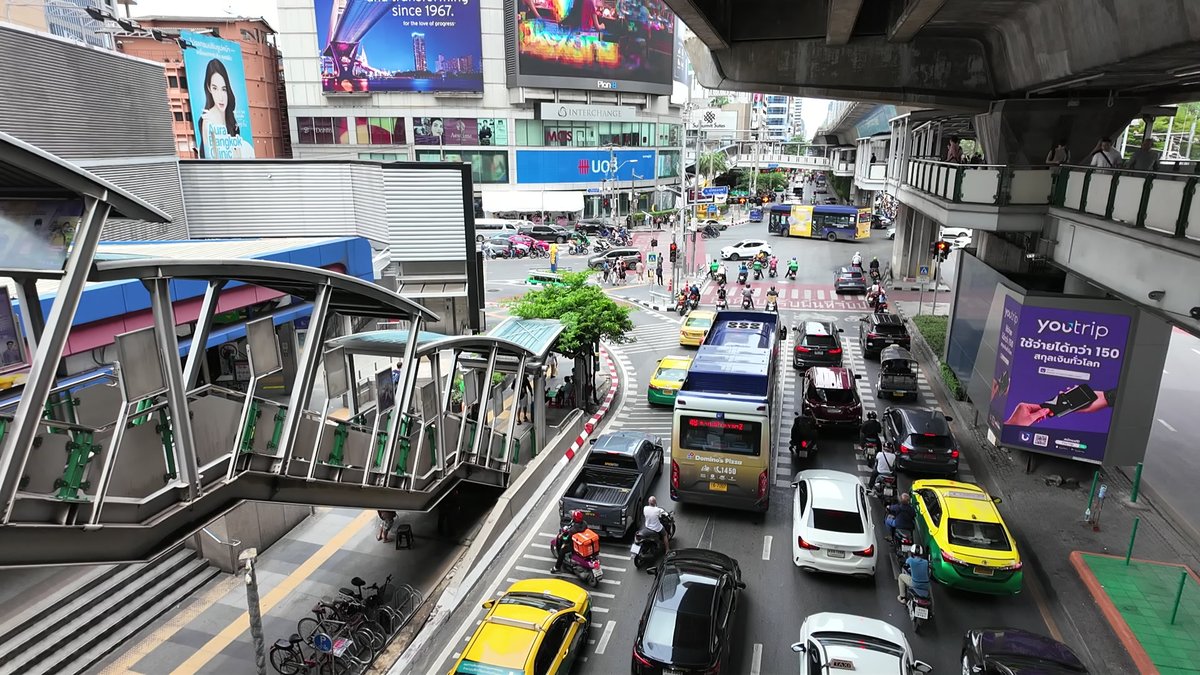
Weekdays
Early Morning (5 AM to 7 AM): Traffic is genuinely mild during this time, getting progressively busier towards 7 AM. There may be some congestion along major roads like Sukhumvit or Phahon Yothin from around 6 AM onward, particularly near the entrances of schools, but nothing too strenuous.
Taxis, minivans, and buses are still an option at this time for longer journeys. However, traffic coming into the city from the suburbs may cause some delays. You might save a little money taking a taxi if you usually take the BTS, MRT, ARL, BRT, or motorcycle taxis during this time.
A number of Chao Phraya Express Boat lines begin operating at this time. The Local Line operates from 6:45 AM to 7:30 AM, the Orange Line begins operating at 6 AM, and the Green-Yellow Flag Line operated from 6:10 AM to 8:10 AM, and the Yellow Flag Line runs from 6:15 AM to 8:20 AM.
For commuters entering the city from Nonthaburi and the northern suburbs, this could be a massive time and money saver. The Khlong Saen Saep Express Boat service begins operating at 5:30 AM, which could also save a lot of time for those who live and/or work near the canal.
Morning Rush Hour (7 AM to 10 AM): Traffic ramps up quickly during this time. In many areas, traffic police begin re-directing traffic, causing gridlock. Taxis are no longer a sensible option in the city center for anything but the shortest of short hops.
The BTS and MRT run at peak frequency during this time (on the MRT Blue Line, a train at least every 4 minutes). However, due to the influx of passengers, longer lines can form at some stations, which may cause delays and general discomfort.
However, they are the best option for longer journeys in the downtown area during this time. Motorcycle taxis are a good option for short hops during rush hour, as they can weave effortlessly through the traffic.
Buses and songtheaws should be avoided, except for short journeys, and only if you’re not in a rush, as even side streets can quickly become congested.
Only the Orange Flag Line remains operational on the Chao Phraya after 8:20 AM, and it remains operational until the afternoon service begins at around 4 PM.
Daytime (10 AM to 4 PM): Traffic begins to taper off during this time. With the majority of youngsters at school or work, Bangkok begins to take on a Night of the Living Dead-style vibe as the elderly shuffle out to reclaim the streets.
However, traffic remains moderate throughout this time. It’s possible to get a taxi along the main roads like Sukhumvit, but expect it to be a little slow-going. Roads going into and out of the city quiet down a bit, making the bus or minivan a slower option. Tuk-tuks run throughout the more popular tourist areas, and may be an option for short hops (depending on your tolerance for negotiation). Minivans may also save you a little time, as they can make use of the city’s expressways.
Trains on the BTS and MRT come less often during the daytime (up to 7 minutes apart on the MRT Blue Line). For trips of one or two stations, it may be quicker and more cost-effective to get the bus during this time. Similarly, this is a good time to ride the songtheaw in areas that are serviced by them.
Evening Rush Hour (4 PM to 9 PM): Traffic begins to ramp up as the majority of schools empty between 3:30 PM and 4 PM, and it continues to rise as offices begin bleeding staff out into the city from 5 PM onward.
The roads (taxis and buses in particular) should be avoided wherever possible during these times. Once again, the BTS and MRT are at their most frequent during these times, but expect extremely long queues, particularly at stations like Asok and Siam.
However, mass transit is your best bet for these times if you want to get to your destination quickly and relatively cheaply. Minivans are also an option at both rush hours, as their size allows them to bypass much of the worst gridlock.
The Chao Phraya Express runs its afternoon service during this time. The Local Line runs a service from 4 PM to 4:30 PM, the Green-Yellow Flag Line runs a service from 4:05 PM to 6:05 PM, and the Yellow Flag Line runs a service from 4 PM to 8 PM, which may be a safer bet than the roads. The Khlong Saen Saep Express also continues to run during this time, closing down at around 8:30 PM.
Late Night (9PM to 5 AM): After a small surge around 9 PM as the major shopping centers close and night-time revelers take to the streets, traffic begins to taper off to very agreeable levels as midnight approaches.
The BTS and MRT run less often as the night wears on and stop around midnight. The majority of buses stop operating at 11 PM, with the exception of the cream-red colored Night Bus.
Songtheaws stop running at around 10 PM. Many motorcycle taxis begin to wind down their activities at 10 PM or 11 PM mark, although some can be found at particularly busy nightlife spots throughout the late evening.
Basically, your best option for travel late at night is a taxi or Grab. With the roads mostly clear, (except for around some of the busy nightlife areas like lower Sukhumvit or Khao San), you can expect to have a speedy and fairly painless journey.
However, you do need to be a little more mindful of your personal safety as the night wears on and the scam artists (or worse) begin to multiply. Using a taxi app like Grab is the safer bet.
Weekends and Holidays
Although generally quieter than on weekdays, traffic can still be a major problem on the weekend and during holidays. Saturday night in the Sukhumvit area can be a nightmare, for example. The BTS runs on a separate weekend timetable, so check the interval before you rely on a tight connection.
Other than that, schedules are generally the same as during the week. There’s no change to either the bus or minivan schedule on the weekend, making them a good, cheap – if somewhat unpredictable – option.
Getting a boat is a little trickier. On the Chao Phraya Express, only the Orange Flag and Tourist lines are available. On the other hand, the Khlong Saen Saep Express runs a similar schedule to the rest of the week, although it ceases operations a little earlier (7 PM).
Its proximity to a number of major sites of interest and the shopping hub of Pratunam makes it a pleasant choice for a Saturday outing, if you happen to be nearby.
Frequently Asked Questions
Here are the questions people ask most often about getting around Bangkok.
What’s the fastest way to get around Bangkok?
The BTS and MRT are the fastest option once traffic builds up, since they run most often during rush hour and skip the gridlock entirely. For short trips down a soi, a motorbike taxi is quicker door to door, but it is the riskiest option on this list.
How much does the BTS or MRT cost in Bangkok?
The BTS runs from THB17 to THB65 and the MRT Blue Line from THB17 to THB44, with fares rising by distance. Children under 90 centimeters ride the BTS free, and children up to 120 centimeters ride the MRT Blue and Purple lines free. Our guides to the BTS and the MRT have the full fare details.
Is Uber available in Bangkok?
No. Uber does not operate in Thailand. Grab is the dominant ride-hailing app, with LINE as a direct competitor and Bolt as the cheaper, less-regulated alternative.
What time do the BTS and MRT stop running?
Both stop around midnight. After that, a metered taxi or a ride-hailing app like Grab is the safer bet, since songthaews stop around 10 PM and most motorcycle taxi drivers wind down by 10 or 11 PM.
Are tuk-tuks worth taking in Bangkok?
They are fun once, but rarely practical. Fares are negotiable and usually land higher than a metered taxi or Grab to the same destination, and tuk-tuk drivers are the ones behind the well-known gem-shop and tailor scams near tourist sites. Agree on a price before you get in.
Are motorcycle taxis safe in Bangkok?
They are the fastest way through gridlock, identifiable by their orange vests, but also statistically the most dangerous way to get around the city. Always ask the driver for a spare helmet, and consider health insurance if you use them regularly.
When is rush hour in Bangkok, and what should I avoid?
Weekday rush hours run roughly 7 to 9:30 AM and 4 to 7 PM. Avoid taxis and buses during these windows since roads gridlock, and stick to the BTS or MRT if you have somewhere to be.
Do I need a Rabbit card or an MRT card for occasional trips?
No. Single-journey tickets and MRT tokens work fine if you’re only riding occasionally. On the MRT you can also tap a contactless credit card, since the old MRT stored-value cards stopped working on 1 June 2026. A Rabbit card makes sense once you’re riding the BTS more than a few times a week.
Can I tap my debit or credit card directly on the BTS or MRT?
Not on the BTS. As of 2026, the Skytrain still requires a single-journey ticket or a Rabbit card at the gate. The MRT Blue, Purple, Pink, and Yellow Lines accept EMV contactless payment, so you can tap a Visa or Mastercard credit card, or an eligible Thai bank debit card, directly at the gate. Use the same card to tap in and out to avoid a shortfall charge.
Is Bangkok’s public transport accessible for wheelchairs and strollers?
Only partially. Newer lines like the MRT, Pink Line, and Yellow Line generally have elevators throughout, but a number of older BTS stations still lack one or keep it locked unless staff unlock it. Every station has a wider gate next to the regular turnstiles for wheelchairs and strollers. For a reliably accessible door-to-door trip, a taxi or Grab, with a larger vehicle requested in advance if needed, is the simplest option.
Now, on to You
That sums up our Bangkok transportation guide. I hope that you find the easiest way to get from where you are to where you’re going in the city.
If at all possible, be sure to use the advice above to beat Bangkok’s traffic and traverse the city with ease.
However, if you do have to get across Bangkok during peak times, you now know which routes and modes of transportation to take.
Sources Cited
- BTS Skytrain, Trip packages: trip packages, THB65 maximum adult fare.
- BTS Skytrain, Timetable: last trains from Siam, ticket office hours.
- BTS Skytrain, Announcement and Regulations: free travel for children under 90 cm.
- MRTA, Blue Line fare regulation 2026: THB17 to THB44 fares, free travel for children up to 120 cm.
- BEM, MRT route map: Blue and Purple line service hours and train frequency.
- BEM, Discontinuation of MRT and MRT Plus cards: end of use on 1 June 2026.
- BEM, EMV Contactless: accepted credit and debit cards on the Blue and Purple lines.
- NBM, EMV card on the Pink Line: THB45 charge for exiting with a different card.
- Suvarnabhumi Airport, Ways to transport: Airport Rail Link station on Level B1, operating hours 05:30 to 24:00.
- Chao Phraya Express Boat: current river-boat fares by flag line.
- Bangkok Mass Transit Authority (BMTA): public bus routes and fares.


 Deutsch:
 Français:
 Español: