Key Takeaways
- Around 200 tourists die in Thailand each year, most from water recreation accidents, road deaths, and personal health problems.
- All hospital expenses must be paid before the hospital will release the body, so having travel or life insurance that covers repatriation expenses is important.
- The death must be registered within 24 hours at the local district office (amphur), which issues the official Thai-language death certificate. You then arrange a certified translation, and some countries also want the Thai Ministry of Foreign Affairs to legalise it.
- The embassy also cancels the passport and provides a letter permitting disposal or transportation of the remains.
- Funeral procedures take place at a Thai temple regardless of the deceased’s religion or nationality, and you will need a funeral home experienced with foreigners.
- If the deceased had assets in Thailand, engage a Thai law firm early: the court reviews the will about 45 days after death and must approve the executor before assets can be distributed.
- Repatriation of the body or ashes is possible through the funeral home, but some countries require an import permit so check requirements with the home country’s embassy in advance.


Sadly, it is not an uncommon occurrence that a foreigner passes away here in Thailand. While Thailand is a wonderful and safe place to live, there are many factors that coincide to lead to the deaths of both tourists and expats in the Land of Smiles.
Thailand is a popular place for retirees to settle down and for those with health problems to seek affordable care. It is also a place where people enjoy reckless activities like diving, motorcycle riding, and extreme sports. Even sometimes just crossing the road can be a risky move.
Every year, there is around 200 tourist deaths (not including expats). The majority were from water recreation activities, then road deaths, personal health problems, and suicide.
For whatever reason, you are seeking out this article, we are so sorry. We hope that we can clarify the steps for you so that while you are grieving, you have some transparency over the process of dealing with this awful situation.
As the next-of-kin (NoK), you will have to navigate some bureaucracy and processes, which we suggest you have a Thai translator for to make it all much easier.
Disclaimer: Some links in this article go to our partners, and we may earn a commission if you use them. It costs you nothing extra, and we only recommend services we'd use ourselves. Read more in our Advertising Disclosure.
Contents
- Key Takeaways
- Bureaucracy Overview
- Step 1: The Deceased Goes to the Morgue
- Step 2: Releasing the Body From the Morgue
- Obtaining a Death Certificate in Thailand
- Death Registration Deadlines and Extra Copies
- Step 3: Planning a Funeral or Repatriation
- Funeral Homes, Costs, and Their Services
- What If There is No Next-of-Kin?
- What Your Embassy Can and Cannot Do
- Country-Specific Paperwork
- Translating and Legalising the Death Certificate for Use Abroad
- Travel or Life Insurance Assistance
- Now, on to You
- Frequently Asked Questions
- Sources Cited
Bureaucracy Overview
When a foreigner dies in Thailand, the steps that follow will depend on whether or not the person has a Thai spouse and/or family, whether or not a NoK is able to travel to Thailand to handle the procedure, and whether or not the deceased has assets in Thailand. It will also depend on whether the foreigner will be repatriated or laid to rest in Thailand.
In this article, we will go into a lot of detail about these processes, but here is the general overview of the paperwork and bureaucratic processes you should prepare for.
Death Occurrence:
- The hospital issues a temporary death certificate or doctor’s death certificate. For natural causes, no autopsy or police report is needed. If the cause of death is unknown, an autopsy will be automatic. If it is suspicious, then there will be further police processes to handle.
- All hospital expenses must be paid before they will release the body.
Registration:
- The death must be registered at the local district office (amphur), and they will issue the official death certificate or civil registry death certificate. It is in Thai.
Embassy Procedures:
- The death certificate and the deceased’s passport must be taken to the embassy. The embassy usually cancels the passport (for the UK, this is done through HM Passport Office with form D1), and some embassies issue certified copies for a fee. They also issue a letter permitting the disposal or transportation of the remains.
Funeral Formalities:
- A Thai funeral home with experience with foreigners is engaged to handle proceedings, which take place at a local temple.
- They might need to obtain a cremation permit from local authorities giving permission for the cremation to go ahead. This confirms that there were no suspicious circumstances in the death and that no autopsy is pending.
Post Funeral:
- Notify appropriate authorities in the deceased’s home country, providing certified copies of the death certificate and, if needed, the will.
Asset Management:
- If the foreigner has family and assets in Thailand, a Thai law firm should be engaged to handle legal matters.
- The will is reviewed by the court approximately 45 days after death. The court approves the will, allowing the executor to manage the deceased’s assets.
- A lawyer in the deceased’s home country might need to be engaged to handle assets and the will at home.
Bank and Utility Management:
- Bank accounts in Thailand should be frozen, and utilities and other services should be cancelled or transferred.
Repatriation of the Body or Ashes:
- Your funeral home can facilitate this process.
- An import permit might be needed depending on the home country’s requirements.
Step 1: The Deceased Goes to the Morgue
What happens when someone first dies in Thailand will depend on the location and circumstances of the death.
A Person Passes Away at Home or Outside
If someone passes away at home or in an accident in public, the person who discovers them should contact Emergency Medical Services to transport the body to the nearest city morgue. Someone will need to incur costs for this service on the spot at the time of transportation. Any of the numbers below will trigger the response you need.
- Thailand Emergency Hotline: 191
- Thailand Ambulance & Rescue: 1554
- Thailand Tourist Police: 1155
- Thailand Medical Emergency: 1669
An ambulance will transport the deceased to the nearest city morgue, usually located within the main government-run hospital for the provincial district. If the deceased is a foreign national, the morgue will inform the tourist police, who will then contact the relevant embassy in Bangkok. The embassy will notify the deceased’s NoK.
If the reason for the death is unknown or suspicious, there will be an autopsy. Even if the family objects to this for personal or religious reasons, this cannot be avoided and the NoK might not be informed before it happens. Parts of the body removed for testing in the autopsy procedure will likely not be returned to the NoK.

A Person Passes Away in a Hospital
Their body will be sent to the morgue by the hospital staff, which could be within that hospital or another location. Private hospital deaths require transportation to the city morgue at additional costs to the family.
The hospital should already be in contact with the NoK and will be able to advise those people of their next steps. After transportation, the morgue will also notify the tourist police, who will determine the deceased’s name and nationality, then contact their embassy. The police will hold onto the personal effects, such as wallet, passport, and identification at this stage.

In the case of a hospital death with a known cause of death, a complete autopsy will not usually be performed. If the family requests one, this can be done at an additional cost. The hospital will provide a notification of death, stating the cause of death.
Someone must pay all hospital bills before they will release the body.
Step 2: Releasing the Body From the Morgue
The person to whom the Thai authorities can handover the body must be decided by the embassy. They will be the ones who determine who the NoK is. They will use electronic records from their country to determine based on things such as passport applications, marriage records, and medical records.
By this point, the embassy should have already been in contact with the NoK and will have established the main contact person who will likely be in Thailand, or come to Thailand to assist the process in person.
If no NoK can go to Thailand to handle the process, a Thai law firm can be employed by the family to handle the process in Thailand and arrange for the remains to be repatriated.
Engaging a lawyer can be very beneficial for this process, regardless of the situation. If the deceased owns assets in Thailand, a lawyer must oversee the inheritance process in court to appoint an executor, irrespective of the presence of a last will and testament.
Please see our articles here on finding legal assistance:
- An In-Depth Guide to Hiring a Lawyer in Thailand
- Lawyers in Bangkok: A List of Recommended Law Firms
The embassy will provide the NoK with a letter of authorization, which is needed to request that Thai authorities release the body from the morgue to a funeral director.
Obtaining a Death Certificate in Thailand
The process begins at the City Morgue, which provides an initial document to declare the death of the foreigner. This initial document is not the official death certificate but serves as a preliminary declaration of death.
The official Thai death certificate is issued by the local district office (amphur) or, in a city, the municipal registry (tedsaban). This certificate is necessary for formal acknowledgment of the death of a foreign national in Thailand.
A visit to the local amphur is necessary.
It is the duty of the NoK or an appointed attorney to visit the official office to complete the necessary paperwork for the official death certificate. This process involves submitting the initial document from the morgue and any additional required documents.
After obtaining the official death certificate in Thai, the family must get an official translation. Embassies do not usually do this. The British and Australian embassies both say they do not translate or certify translations, so the family or funeral director uses a certified translation agency.
Death Registration Deadlines and Extra Copies
Report a death to the local registry within 24 hours of the time of death or the time the body is found. The district office (amphur, or the municipal office in a city) then issues the Thai death certificate. (Verified October 2026.)
Who reports it? The householder where the death happened (a hospital counts as the house), or the person who found the body or was with the person who died. In practice a funeral director or lawyer usually does it for the family.
The hospital’s confirmation of death isn’t the official certificate. You still need the report at the district office, for hospital and non-hospital deaths alike. If the death happens outside a hospital or by accident, the police investigate first and may request an autopsy.
A district office issues only one original death certificate, and it goes to the person who reports the death. A duplicate is hard to get later. The Australian and British embassies both point families to a Thai lawyer or the funeral director for that. So ask the funeral director how many certified English translations to order while you still hold the original.
Some embassies add their own step. The Netherlands Embassy, for example, says it’s usually not possible to register a death or request a copy of the certificate without the embassy’s letter of authorisation.
The US Embassy says Thai autopsy reports take at least 45 business days to produce. Plan around that if an insurer or court is waiting for one.
Step 3: Planning a Funeral or Repatriation
For families who are dealing with the death of a family member in Thailand, you have some important decisions to make.
Firstly, note that the morgue does not arrange for the transportation of the body for the funeral. In Thailand, the family usually handles transportation themselves. Alternatively, a chosen funeral home can manage the transportation arrangements.
Families have four main options to choose from when a family member dies in Thailand:
- Repatriation of the body
- Repatriation of the ashes
- Local cremation with either ash scattering or the ashes being laid to rest in an urn in a “chedi” at a temple
- Local burial (very uncommon)
Whatever the final plan is for the final resting place, some kind of funeral must take place, and a funeral director must be involved in handling the proceedings.
Even a simple cremation without a traditional Buddhist ceremony, when the family plans to take the ashes back to their home country, a funeral director will manage everything, and the cremation will take place at a temple.
If the family chooses to have a local cremation in Thailand. Thai funeral customs may differ from those in the deceased’s home country, so it is advisable to work with a local funeral director who understands the specific requirements and can assist in arranging a respectful service.
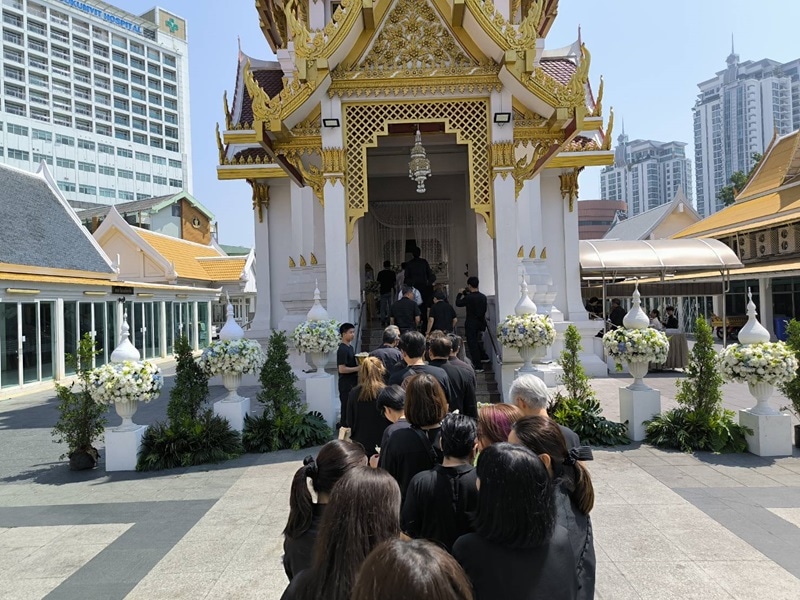
For the most part, people who have a funeral in Thailand will have a traditional Buddhist service.
For non-Buddhist foreigners, funeral services can be tailored to reflect their cultural or religious traditions. Many funeral homes in Thailand are experienced in handling diverse cultural practices.
Repatriation of the Body
If the family wishes to repatriate the body to the deceased’s home country, they will need to coordinate with the embassy and a funeral director experienced in international repatriation.
This process includes obtaining necessary documentation, such as the death certificate and embalming certificate, and complying with international shipping regulations and national import regulations of the home country.
Repatriation of the Ashes
Repatriation of ashes after a funeral and cremation in Thailand is easier than repatriating a body. But there are specific needs for each country and airline to declare that you are transporting human remains.
As an example of some repatriation requirements, you can see the Thai Airways information on the process here. You can also see another example where QANTAS has a special booking section for those carrying human remains.
If the NoK is not personally travelling with the remains, the funeral director can facilitate the whole process, and the family can collect the remains in their home country.
Cremation
Cremation is a Thai Buddhist tradition and the most common funeral practice, particularly in city areas. Even for non-Buddhists, the temple funeral and cremation is standard, but the monk services will be minimal.
Buddhist funerals, which happen before the cremation, are usually elaborate events that commemorate the deceased and offer the family and community spiritual support. Exact rituals vary by region.
White is traditionally the colour of mourning; mourners are usually to dress in white, black, or other muted colours, and mixed white flower wreaths are given.
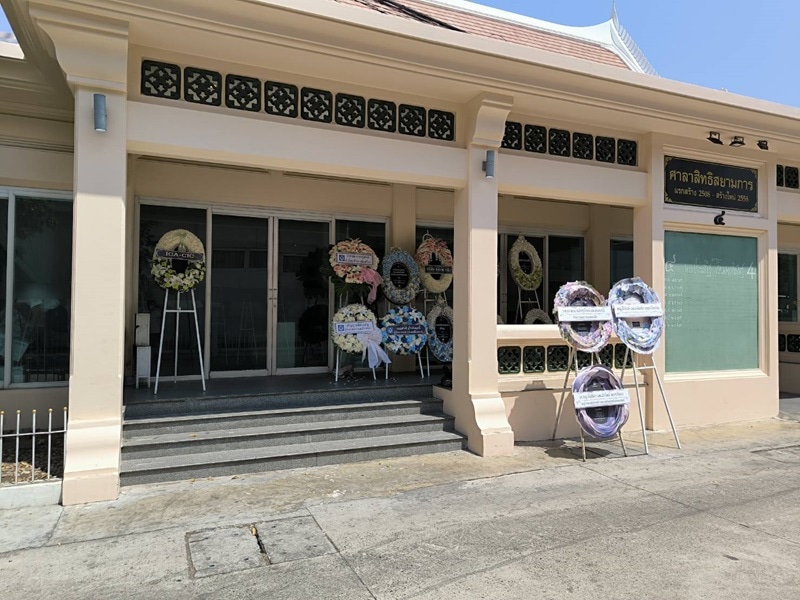
Thai funerals most often take three days, but can also take 5, 7, or 9 days. This depends on the family. If a foreigner who dies in Thailand has a Thai spouse and family here, then they might also insist on a long funeral. Funerals can take place at a family home or a temple.
Thai funerals are usually led by Buddhist monks, and often include merit-making activities such as making donations to temples, offering alms to monks, and performing rituals to accumulate merit for the deceased. These acts are believed to benefit the departed in their journey to the next life. Offerings such as flowers, candles, incense, and food are common.
The Ashes
It is common for the ashes and bones to be divided up among family members. Often, a ceremony takes place in which a monk draws the shape of a body in the ashes or roughly shapes the ashes into a human form. This is apparently so that the temporarily displaced soul can identify their former body and transition into the ash.
Sometimes, family members will bring their own urns and divide the remains between them. They will then sometimes keep the ashes in the family home. Sometimes, family members will just keep a small amount of ashes to remember their loved one. Some families will keep the ashes at a temple.

It is most common though that most of the ashes are scattered at sea. All funeral directors will offer this service.
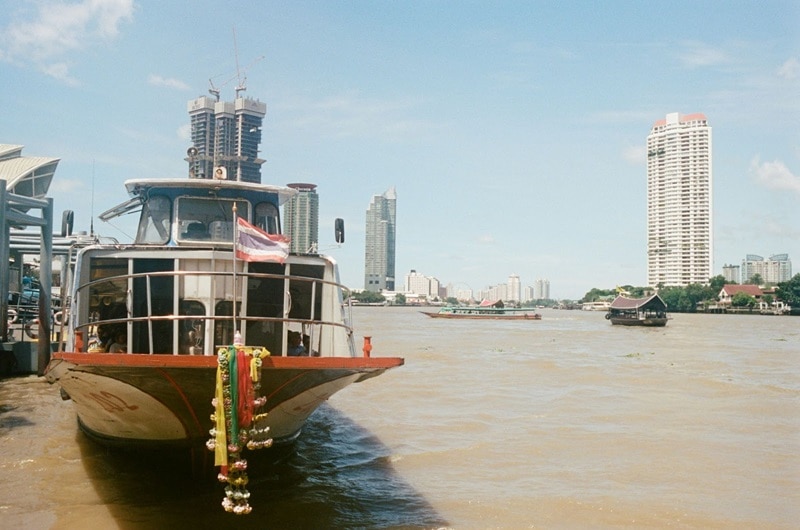
After being placed in an urn, the ashes are transported to a sacred place, such as a lake, river, mountain, or sea. A boat will be rented to take selected family members to the scattering location. This is a beautiful and meaningful way to celebrate the life of a loved one.
Burial
The Burial of a body is very unusual in Thailand. This is for several reasons. In the Thai tradition, cremation is a way to facilitate one’s rebirth into his next life, thanks to the Buddhist belief in reincarnation. It is also very expensive, graves require ongoing maintenance, and land space for cemeteries is limited.
Funeral Homes, Costs, and Their Services
Choosing a reputable funeral home is crucial. The funeral home will assist with all necessary arrangements, including transportation of the body, embalming (if required), and organising the funeral service. The embassy can often provide a list of recommended funeral homes. See our list below with some price estimates.
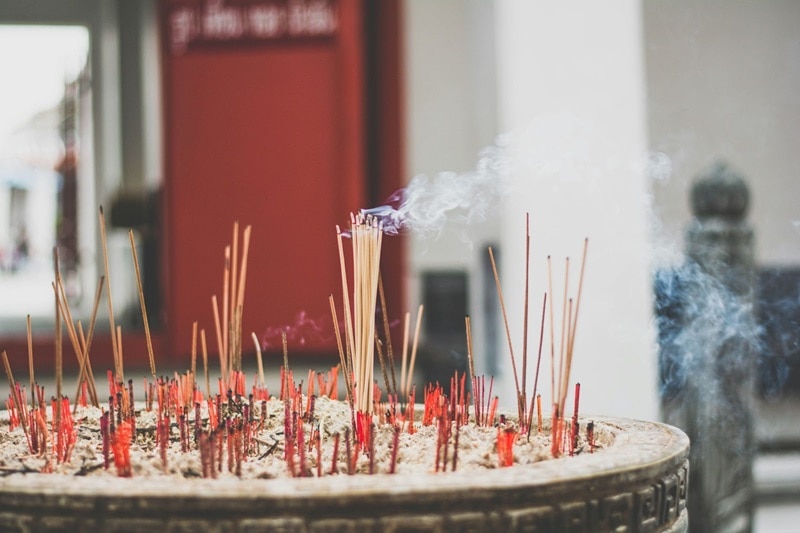
The cost of a funeral for a loved one can be a very expensive occasion. Many people believe that it is important to spend a lot of money and have funerals that go on for a whole week and provide food for entire villages of mourners. These events can cost THB100,000 or more.
If the deceased has a Thai spouse and family, then some funeral traditions will be unavoidable. But if the deceased is a tourist or someone with no real link to Thai culture, then a simple cremation can suffice. The whole process can cost as little as about THB30,000.
Siam Funeral has provided some quotations:
- Remains repatriation to the USA: THB100,000
- Cremation and return the ashes to the USA: THB46,000
- Cremation and scattering the ashes from a boat: THB41,000
- Basic Cremation: THB36,000
- Transportation of ashes to the USA: THB15,000
According to sources on the Australian embassy website here, the following are some other recommended companies and their estimated costs for funeral services:
AMAR (Allison Monkhouse Andrews Repatriations)
- Local cremation and scattering of ashes: THB31,000 – THB41,000
- Local cremation and repatriation of ashes to Australia: THB35,815 – THB45,815, plus 7% VAT (January 2026)
- Returning remains to Australia: THB105,000 – THB125,000
AsiaOne International Repatriations
- Local cremation and scattering of ashes: THB35,000 – THB40,000
- Local cremation and return of ashes to Australia: THB45,000 – THB55,000
- Returning remains to Australia: THB100,000 – THB120,000
Here are some other recommended funeral directors for specific areas around Thailand:
- Bangkok: EverCare Solution
- Bangkok: Funeral Plans
- Bangkok and Surrounding Provinces: Farewell Funerals
- Chonburi, Bangkok, Chiang Mai, Phuket: Thai888 Law & Abroad Funerals
- Chiang Mai, Chiang Rai, Lampoon, Lampang: Mindkoncept Inter Part Ltd
- Phuket and Bangkok: Medical Services Logistic International Phuket Co Ltd
- Hua Hin, Prachuap Khiri Khan and Phetchaburi: Hua Hin-Funerals
What If There is No Next-of-Kin?
If the deceased has no NoK to handle proceedings, no one has been put in charge of taking care of their funeral, and no arrangements are made within a specific period, usually 30 days, the deceased will be buried in a communal mass funeral known as a “pauper’s funeral”.
What Your Embassy Can and Cannot Do
Embassies in Bangkok confirm the death, contact the next of kin and issue the letter that lets Thai authorities release the body. They don’t pay any costs, and the British Embassy says it can’t register the death for the family. The next of kin, or a funeral director on their behalf, does the paperwork at the amphur and covers every cost. (Verified October 2026.)
| Embassy | What it provides | What it does not do |
|---|---|---|
| United States (Bangkok) | Confirms the death, notifies next of kin, writes a letter of instruction for the body’s release, issues an electronic Consular Report of Death Abroad from the Thai death certificate and a passport copy, and can act as provisional conservator of the estate if no legal representative is in Thailand | Does not pay for the funeral home, shipping or personal effects, which are the next of kin’s responsibility |
| United Kingdom (Bangkok) | Issues the letter to release the body (applied for online), and offers an optional UK-style Consular Death Registration certificate | Cannot report the death or obtain the death certificate for the family, cannot pay costs, cannot stop a post-mortem, and does not translate or certify translations |
| Australia (Bangkok and Phuket) | Issues the letter to release the body, and cancels the passport when the funeral director hands it in | Cannot investigate deaths, locate wills or insurance policy details, get involved in family disputes, or certify translations |
According to the US Embassy, a forensic institute normally does autopsies for deaths outside a hospital, free of charge. A hospital death with a clear cause usually has no full autopsy unless the family asks for one and pays.
Other nationalities should check their own embassy’s page, because letters, fees and forms differ.
Country-Specific Paperwork
Check with your embassy in Thailand to see if there is any paperwork that might be necessary for repatriation or legal matters back in your home country. Most embassies have a page dedicated to this situation and can give you the best country-specific and up-to-date information.
For example:
- US citizens can have the embassy issue a Consular Report of Death Abroad (CRODA), which can be used in US legal proceedings as proof of death.
- Australia is known for its extremely strict quarantine regulations. The repatriation of remains or ashes requires following some specific regulations as set by the Department of Agriculture, Fisheries and Forestry. You can read more about this here.
- The UK has a service called Tell Us Once, which reports a death to most government departments in one go, but it cannot be used if the person was living abroad permanently. You do not need to register the death in the UK.
- For South Africa, an import permit is required for human remains, but not for ashes. For ashes, the death certificate, cremation certificate, and copy of the deceased’s ID must accompany the ashes at all times. Read more about SA requirements here.
- The Dutch Embassy requires the person claiming to be NoK to fill out an application form requesting a letter of authorisation. They provide more information and an email address on their website here.
Translating and Legalising the Death Certificate for Use Abroad
The Thai death certificate is in Thai. Offices at home usually want a certified English translation, and some also want the Thai Ministry of Foreign Affairs to legalise it. Embassies handle translations differently, so ask before paying for any.
- United Kingdom: the embassy doesn’t translate or certify translations. The FCDO suggests getting the translation certified by the Thai Ministry of Foreign Affairs. It says the local certificate can usually be used in the UK for most purposes, including probate.
- Australia: the embassy doesn’t translate, and it doesn’t need a translation to cancel the passport. If you need the certificate for legal purposes in Australia, a NAATI-accredited translator must translate it.
- Netherlands: the Thai Ministry of Foreign Affairs must legalise the original certificate together with its translation. The embassy says this takes 2 working days, with a same-day express service.
The Ministry’s Department of Consular Affairs legalises Thai death certificates and certifies English translations of them. Our guide to document legalisation in Thailand has the step-by-step process.
Thailand joined the Hague Apostille Convention on 30 June 2026, and it enters into force on 28 February 2027. Until then, the Ministry of Foreign Affairs legalisation chain above still applies. (Verified October 2026.)
Travel or Life Insurance Assistance
If the deceased had travel or life insurance, these companies frequently offer international 24-hour helplines. Get in touch with them as soon as you can following a death.
Insurance providers will typically give guidance on local funeral services and a list of funeral directors in the foreign nation, pay the covered fees associated with the death, and sometimes handle the planning of a nearby funeral service or the deceased’s return to the home country.
Now, on to You
We understand that you might be grieving, and these times can be hard to make decisions. We hope that we have provided some clarity on the processes involved in handling the death of a foreign national in Thailand.
We know that costs are a factor for many people, and Thailand can be a very affordable place for a funeral. We strongly recommend using a professional funeral director, and, if there are any assets or Thai family members to consider, a good lawyer is also key.
Please see our articles here on finding legal assistance:
- An In-Depth Guide to Hiring a Lawyer in Thailand
- Lawyers in Bangkok: A List of Recommended Law Firms
Frequently Asked Questions
How soon must a death be registered in Thailand?
Within 24 hours of the time of death or the time the body is found. Report it to the district office (amphur) or municipal registry where the death happened. A funeral director can file it for you.
Does the embassy issue the Thai death certificate?
No. The local district office (amphur) issues it. The embassy issues the letter that releases the body and cancels the passport. The British Embassy states it can’t report the death or obtain the certificate for the family.
Can I get a second copy of the Thai death certificate?
Not easily. A district office issues one original to the person who reports the death. For a duplicate, the Australian and British embassies point families to a Thai lawyer or the funeral director. Order extra certified translations while you still hold the original.
Do I need to register the death in my home country as well?
It depends on the country. The UK says you don’t need to register the death in the UK. Australia says deaths overseas don’t necessarily need registering there. US citizens can have the embassy issue a Consular Report of Death Abroad, which can be used in US legal proceedings as proof of death.
What documents do I need to carry ashes home from Thailand?
Carry the death certificate and the cremation certificate. Check the airline’s rules first, because the airline decides whether the urn can travel as hand luggage. The UK guidance lists both certificates plus a customs form on arrival. The Dutch embassy also asks for a laissez-passer for the ashes and a certified copy of the passport.
Sources Cited
- UK FCDO, When someone dies in Thailand: district office issues the death certificate, one original only, embassy cannot register the death, body release letter, translation and MFA certification, ashes documents, 30-day pauper’s funeral.
- Australian Embassy Bangkok, When Someone Dies in Thailand: funeral director services, funeral home price ranges (January 2026), what the embassy cannot do, translation, duplicate certificates, autopsy timing.
- U.S. Mission Thailand, Death of a U.S. Citizen: next-of-kin order, letter of instruction, Consular Report of Death Abroad, free forensic autopsies for deaths outside hospitals, payment responsibility.
- Netherlands Worldwide, Death abroad: Thailand: letter of authorisation, laissez-passer, legalisation of the death certificate and translation by the Thai Ministry of Foreign Affairs.
- Thai Department of Consular Affairs, Announcement No. 23/2022: legalisation of Thai death certificates and certification of English translations.
- Bang Saray Subdistrict Municipality (Ministry of Interior), citizen manual for death reports: who reports a death and the 24-hour deadline.
- HCCH, Apostille Convention status table: Thailand’s accession on 30 June 2026 and entry into force on 28 February 2027.


 Deutsch:
 Français:
 Español: