When I was younger, I thought I was invincible. I didn’t need to worry about all those things like Wills or Living Wills.
I had plenty of time. But, after a while, seeing family and friends pass away and leave difficulties behind for their loved ones, and as I grew a little bit older and a tiny bit wiser, I started thinking maybe a Will and Living Will were pretty good ideas.
Like most, I procrastinated and wondered if I should get started now, or if I should get a lawyer to do it, how much it would cost (all the reasons we use to put off things we really should be doing now).
Then I got lucky and met a lawyer I felt I could trust and decided that, as a foreigner, this really was the best way to go for me.
If you want to do the same, you can contact a lawyer on this page.
Disclaimer: Some links in this article go to our partners, and we may earn a commission if you use them. It costs you nothing extra, and we only recommend services we'd use ourselves. Read more in our Advertising Disclosure.
Contents
- Key Takeaways
- Why You Need a Will
- What Happens if You Die Without a Will
- Which Form of Will Is Valid in Thailand
- Writing Your Own Will Versus Using a Lawyer
- What to Include in Your Will
- Which Country's Law Covers a Foreigner's Will
- Living Will
- Keeping, Changing and Cancelling Your Will
- Should I Make a Will?
- Frequently Asked Questions
- Sources Cited
Key Takeaways
- If you own assets in Thailand, you need a Thai Will. Without one, Thai law distributes your estate to statutory heirs in a fixed order, your family must go through probate court, and assets that don’t go to the right person under the rules may end up with the state.
- Using a lawyer is the safer route for most expats. A lawyer prepares the Will in both Thai and English, ensures all assets are covered, and catches gaps that could be exploited in probate court later.
- If you write it yourself, two adult witnesses must be present when you sign, and neither can be a beneficiary. You do not have to register a self-written Will. If you want an official record, make a public-document Will at any district office (THB250), and the office can keep it for you.
- The Thai Probate Court only handles assets in Thailand. If you have property or accounts abroad, you need a separate Will in that country as well.
- A condo can be passed to a foreign heir, but they must sell it within one year. Bank accounts are frozen upon the owner’s death unless the account is held jointly, so adding your spouse as a joint owner is worth considering now.
- A Living Will is a separate document that instructs your healthcare representative on end-of-life medical decisions. It is legally recognized in Thailand under Section 12 of the National Health Act B.E. 2550 (2007). File it with your usual hospital and make sure your representative understands your wishes clearly.
- Inheritance tax applies only to what each heir receives above THB100 million (after debts), at 5% for direct descendants or parents and 10% for others. Surviving spouses pay nothing.


Why You Need a Will
If you spend most of your time in Thailand, are married to a Thai national, or have some kind of property in Thailand or spend your retirement here, you should have a Thai Will that covers your Thai assets and property.
Thai law is quite clear in what happens to your assets should you die without a Will. Your loved ones will have much greater difficulty in accessing your assets after your death.
What Happens if You Die Without a Will
If you die without a Will, your estate goes to your statutory heirs in a fixed order under Section 1629 of the Civil and Commercial Code: your children, then parents, full siblings, half-siblings, grandparents, and uncles and aunts. Your surviving spouse also inherits. Under Section 1635, with children the spouse takes an equal share like one child, and with parents or full siblings the spouse takes half the estate.
If the heir is a minor or of unsound mind or incapable of managing his or her own affairs according to guidelines set out by the Thai Commercial and Civil Code, then the court will appoint a guardian or curator if you don’t already have one legally assigned.
If there are no living relatives and no Will, then your assets go to the state.
If you have heirs and die either with or without a Will, then they have to hire a lawyer to prepare court probate proceedings in Thailand. If they are overseas, that means they have to travel to Thailand to wrap up your affairs.
To put it simply, if you die without a Will, your assets may not go to the person you’d like them to go to. Also, your family will have a harder time claiming your assets and may even dispute the process.
Which Form of Will Is Valid in Thailand
A Thai will counts only if it follows one of the forms the Civil and Commercial Code allows. Most expats use a written will signed in front of at least two witnesses, who must be present together and sign at the same time. Skip the date, the signature or the witnesses and the will can be struck down, however clear your wishes are.
Typing the will is fine. Handwriting every word yourself gets you a different form, with its own rules.
| Form of will | How it is made | Witnesses |
|---|---|---|
| Written and witnessed will | Typed or handwritten and dated. You sign in front of the witnesses, and both witnesses sign to confirm your signature. | At least 2 adults, present together |
| Handwritten (holograph) will | You handwrite the whole text, the date and your signature yourself. Any typed part breaks this form, and any change must be in your own hand and initialled. | None required |
| Public-document will | Made at a district office (amphoe) or Bangkok district office. The official writes down what you say, reads it back, and you and the witnesses sign. Fee: THB250 per will. | At least 2 adults, present together |
| Secret will | You sign the will, seal it in an envelope, sign across the seal, and tell the district official and the witnesses it is your will. The official records this on the envelope. | At least 2 adults, present together |
| Oral will | Only for special circumstances such as imminent danger of death, an epidemic or a war. The witnesses must report your words to the district office without delay. | At least 2 adults, present together |
Making a Will at the District Office
A public-document will costs THB250 per will at any district office (amphoe) in Thailand or any district office in Bangkok. Each extra duplicate copy costs THB50. (Verified October 2026.) You must be at least 15 years old and not declared legally incapable.
Bring your passport if you don’t have a Thai ID card, because the district chief can check other identity documents for foreigners. If you or your witnesses can’t communicate in Thai, the office needs an interpreter present.
The office can also keep the signed will for you and gives you a receipt. You can take it back whenever you like.
Writing Your Own Will Versus Using a Lawyer
You have two options for creating a legally binding Will – write it yourself or have a lawyer experienced in Wills help you.
Hiring a Lawyer
If you use a law firm, a lawyer can help you prepare the Will in Thai, English, or your native language, while ensuring that you have all your current and future assets covered.
A lawyer can walk you through the distribution of your assets and make sure that your property goes to the beneficiaries you choose, and that your Will has no loopholes or other issues that may cause it to be debated in probate court.

For example, if you forget to include parts of your estate in your Will, then the courts will distribute those parts to the statutory heirs – not the person or people of your choosing. A lawyer makes sure this doesn’t happen.
Most importantly, a lawyer can make sure that your Will is legally valid and help you execute it.
TIP: It is best to use blue ink if handwriting your Will and in all signatures, as the blue ink is going to show up in a scanned document.
[business_directory category=”law-firms” location=”thailand”]
Writing Your Own
On the other hand, if you write the Will yourself in your own language, it’ll still be valid, but you might miss out important details that you should mention.
Moreover, if something happens to you, your heirs will have to get it translated into Thai for the courts. So, if you can’t write Thai, it’s best to get it translated now.
Also, if you write your own will, it’s best to use blue ink for all handwritten text and signatures, as the blue ink is going to show up more clearly on a scanned document.
You can find Will templates online for a fee at Thailand Law Online. These templates include both Thai and English forms. The forms don’t need to be notarized or authenticated, but at least two witnesses must be present together when you sign, and both must sign too.
When you’re done, keep the signed original somewhere your executor can find it. Registration is not required for this form of Will. If you want an official record, a public-document Will made at the district office costs THB250, and the office can keep it for you.
Documents
You’re going to need a list of beneficiaries, including names, phone numbers, addresses, and emails, and the identification information of the executor(s).
You’re going to need a list of assets including bank account information, that is, if the assets are not all going to one person. If you bequeath all your assets to a single person, it is still a good idea to have a list of those assets. However, if you are dividing assets up, then that list must be included in the Will.
Witnesses
Other than the beneficiaries, their spouses and the person who writes the Will, anyone can be a witness to the Will as long as they are adults and are present when you sign. The beneficiary in the Will can be appointed as the executor or the administrator, but cannot be a witness to the Will.

A witness cannot be a minor or of unsound mind, or have been judged to be quasi-incompetent. A witness also cannot be blind, deaf, or mute.
What to Include in Your Will
In order for your beneficiaries to receive your assets, you’ll have to list those assets in your will. Assets can be anything from real estate, investments, money in banks, and even vehicles.
Local Assets
Local assets are assets you have in Thailand, not abroad.
Real Estate/Land/House/Condo
If you have a lease, whether it carries on after you die depends on its terms. Ask your lawyer to check the lease and whether it can name an heir. A building can be owned by a foreigner and passed on to heirs.
A condo can be passed on to an heir so long as the foreigner qualifies for ownership under Section 19 of the Condominium Act, but the heir must sell the condo within one year.

If the land goes unsold, the Director-General of the Land Department will sell the land and charge a fee of 5% of the sale price before any deductions or taxes.
Shares in a Thai Company
If you hold shares in a Thai company, they’re property like any other, so you can leave them in your Will. The assets of a company maintained by a foreign director and shareholder belong to the company and not the individual foreign director or shareholder. If you are a company director, then a shareholders’ meeting must be called and a new director must be appointed in the event of your death. Your heirs will need the company to record them as the new shareholders, so ask your lawyer how to handle that.
Bank Accounts
It is important to note that if your account is joined with your spouse, the account goes to your spouse. Banks freeze the account if it is not joined upon the death of the owner. So if you want your spouse to have access, make them a joint owner.
Other Property
List the other property and information on that property in the Will. For instance, a car or a motorcycle with a license plate.
Overseas Assets
The Thai Probate Court only handles assets in Thailand. If you have any overseas assets, you’ll have to list them in a separate Will. This will also make it easier for your heirs of property in that country as they won’t need to deal with the Thai courts.

Executors or Administrators
Be sure and choose someone you trust to handle your Will, someone who knows the system and preferably speaks Thai or has access to someone who speaks Thai. Additionally, it’s a good idea to make sure that the person is younger than you. The executor can be a beneficiary. You may have more than one executor.
Funeral Requests
You can include requests for specific funeral arrangements in your Will. The administrator or executor of your estate has the power and duty to arrange for the funeral unless another person has been specially appointed for that purpose.
If there is no executor, then the person who receives the greatest portion of the estate, either by Will or statutory inheritance, is responsible for arranging the funeral.
Inheritance Taxes
Inheritance tax is only levied on the part of each heir’s inheritance above 100 million baht, after debts. Inheritance tax is 5% for ascendants or descendants and 10% for others. The tax is applied to heirs who are either individuals or Thai juristic persons. It is also applied to non-Thai nationals who inherit property and assets in Thailand.
Surviving spouses are not liable for any inheritance tax, and heirs under the age of 20 are subject to inheritance tax but their parents must file the tax returns.
Which Country’s Law Covers a Foreigner’s Will
Two laws are in play. Thai law decides who inherits your land, condo or house in Thailand. Your movable belongings, such as cash and vehicles, follow the law of the country where you have your permanent home when you die. That split is why one will rarely covers everything a foreigner owns. (Verified October 2026.)
Four rules decide how a Thai court treats a foreigner’s will:
- Thai real estate: inheritance follows Thai law, wherever you were living.
- Movable property: inheritance follows the law of the country where you were domiciled (your permanent home) at the moment you died.
- Form of the will: you can follow the form your own country requires, or the form required where you sign it. A will signed in Thailand can use a Thai form.
- Capacity to make a will: your age and mental capacity are judged under the law of your nationality when you sign.
That’s why many expats keep two wills, one for Thai assets and one for assets at home. A later will cancels an earlier one only where the two conflict, so each will should say plainly which assets it covers.
Thailand joined the Hague Apostille Convention on 30 June 2026, and it comes into force on 28 February 2027. Once it’s in force, official documents travelling between Thailand and other member countries are meant to carry an apostille from the issuing country. That replaces the longer legalisation chain. Until then, the existing process applies, and our guide to legalisation in Thailand walks you through it. (Verified October 2026.)
Living Will
A Living Will, or Advance Directive, instructs your healthcare representative on specific actions to take should you become incapacitated and terminal. The Living Will should be quite clear on what actions you are willing to have the doctor take or that you wish to not have, such as tube feeding, use of a ventilator, pain management, and others.
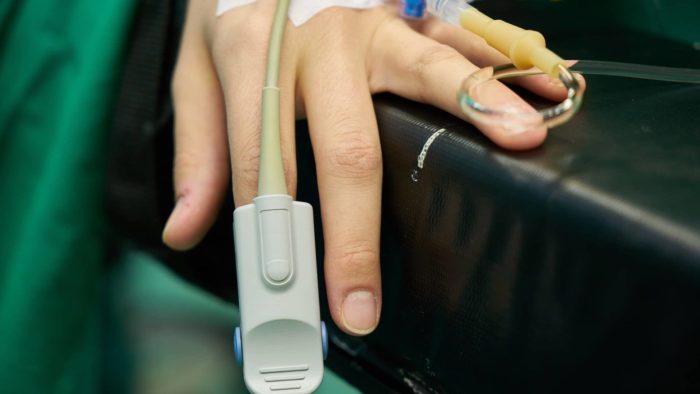
The Living Will can be a generic form found online or can be done with a lawyer. It can be only in English but it is better if it is in Thai and English so that every healthcare provider understands your wishes and that your wishes are stated clearly. ThaiLaw Forum has a free template here.
How to Draft a Living Will
A Living Will can be written as a Power Of Attorney or it can be a separate document assigning a healthcare representative to make decisions on your behalf.
The Living Will does not need to be notarized but must be signed by you and by at least one witness, and by your healthcare representative if you appoint one. Hospital forms may ask for more, so check with yours. It is a good idea to file the Living Will with the hospital you normally use and have several copies on hand with important documents as well as with the healthcare representative.
Many private hospitals will want this executed on their form so ask at your hospital if they have a separate form.
In general, hospitals don’t keep them on file and will not ask about them in a time of crisis but will perform every life-prolonging measure available. However, if they are made aware of the Living Will, they are required by law to respect it.
You and your healthcare representative, if you appoint one, sign the Living Will in front of your witness. The witness should be an adult of sound mind. All signatures should be signed in blue ink as this will show when the document is scanned.
Thai Law Regarding End-of-Life Care
A Living Will is recognized in Section 12 of the National Health Act B.E. 2550 (2007). It gives you the right to refuse treatment that only prolongs the terminal stage of your life, or treatment given to end severe suffering. You must be legally fit when writing the document. A Living Will only lets you refuse treatment that prolongs dying. You keep the full right to palliative care.
Choosing a Health Care Representative
Choose a healthcare representative willing to refuse certain care if you are terminal. Some Thai people may balk at this due to their Buddhist beliefs, so before choosing someone, it is very important to make sure they are willing to follow your instructions should you be terminal and incapable of communication.


Make sure your chosen healthcare representative has a copy of the Living Will and a clear understanding of what it means and what you want. This will be laid out in the Living Will but it is always best to also explain it verbally so the person understands exactly how you feel about life-prolonging measures and end-of-life care.
Thai doctors are often unwilling to inform a patient and his or her family that he or she is terminal, so it is vital that the healthcare representative be willing to press the doctor for a clear prognosis as to survival, and that the healthcare representative is willing to get a second or third opinion of your prognosis.
Keeping, Changing and Cancelling Your Will
You can change or cancel your will any time while you’re alive. The cleanest way is to sign a new will in a valid form that says which parts it replaces. A newer will cancels an older one only where the two contradict each other, so a vague second will can leave you with two half-valid documents.
Other ways a will, or part of it, stops working:
- You destroy it on purpose: tearing up or striking out your only original cancels it, in whole or in part. If you signed several originals, you must destroy every one.
- You sell, give away or destroy the asset: a gift of that asset in the will is cancelled.
- The beneficiary dies before you: that gift fails, so name a backup beneficiary.
Where to Keep Your Will
A public-document will can stay at the district office where you made it. The office can’t show it to anyone while you’re alive. When you die, it contacts the person you named to collect it, who must bring identification and proof of death. (Verified October 2026.)
For a will you wrote or signed privately, the original is the only valid copy, so tell your executor where it is. A scan or photocopy helps your heirs, but the court will ask for the signed original.
Court claims over an estate generally have a one-year limit, counted from the death or from the day the heir learned of it. Your executor should start the process soon after you die. (Verified October 2026.)
Should I Make a Will?
Finally, I should add that I am not a lawyer. But having gone through the process myself, I felt it was important to share. Most people don’t think about a Will. But the truth is, no matter your age, it is a good idea to have both a Will and a Living Will, because you just never know what is going to happen.
There are many families who have disputes over inherited assets just because they didn’t make a Will.
If you plan to make a Will and want to make sure it does not leave any problems after you are gone, you should start looking for a lawyer now.
None of us can predict the future, except the inevitable: death and taxes.
Frequently Asked Questions
Can a foreigner make a will in Thailand?
Yes. You can use a Thai form, such as a written will with two witnesses or a public-document will at the district office. You can also use the form your own country requires. Your capacity to make a will is judged under the law of your nationality.
Is a will written in English valid in Thailand?
Yes, if it follows a valid form. The Civil and Commercial Code regulates the form of a will (signature, date, witnesses), not the language. Your heirs will need a Thai translation for the court. At a district office, an interpreter is required if you or your witnesses can’t communicate in Thai.
How much does it cost to make a will at the district office?
THB250 per will for a public-document will, and each extra duplicate copy costs THB50. (Verified October 2026.) A lawyer’s drafting fee is separate, and the government doesn’t set it.
Can my spouse or the person who wrote my will inherit under it?
Not if they wrote the will or witnessed it. The person who writes a will, each witness, and the spouse of either of them can’t receive anything under that will, and a gift made to them is void. Your own spouse can inherit as long as they weren’t the writer or a witness.
Who can I name as my executor?
You can name one executor, several, or none. An executor must be an adult, of sound mind and not bankrupt. If your will names nobody, or the named person can’t act, an heir or other interested person can ask the court to appoint one.
Sources Cited
- Department of Provincial Administration, Will Registration Manual (includes Civil and Commercial Code Book VI, Conflict of Laws Act B.E. 2481 and the 2026 Ministerial Regulation on making wills): forms of will, witness rules, district office process, THB250 and THB50 fees, revocation, executors and the one-year claim limit.
- National Health Commission Office, National Health Act B.E. 2550 (2007), English translation: Section 12, the right to make a Living Will.
- National Health Commission Office, Ministerial Regulation on Living Wills B.E. 2553 (2010), English translation: required content, signing, revocation and use of a Living Will.
- Revenue Department, Inheritance Tax (persons liable): the THB100 million threshold applies to each heir’s net inheritance.

Accuracy checked by Pongkarn Khunphasee
Pongkarn Khunphasee is a senior lawyer and co-founder of Banchee Legal House in Bangkok. She holds a Master of Laws from the University of Wisconsin-Madison and has nearly a decade of experience helping expats with company registration, wills and succession, and court representation.
Just so you know: Banchee Legal House is one of our partners, so we may earn a small fee if you work with them. Pongkarn checked the facts in this guide, but the opinions are our own.


 Deutsch:
 Français:
 Español: