

Chiang Mai chokes on smoke from about February to April. In 2026 it hit an AQI of 235 on IQAir and ranked as the most polluted major city in the world for four days straight.
If you live in Chiang Mai, or you’re thinking about moving here, the smoke is something you need to plan around. Every year, wildfires and open burning in the hills fill the valley, the sky goes a flat white-grey, and the mountains you can usually see just vanish.
Some people stay and manage it. Plenty of others leave for six weeks every year. We’ve pulled together what the official numbers say and what residents actually do about it. You’ll find when it hits, how bad it gets, where the smoke comes from, how to check the air, how to protect yourself, and when to arrive and leave.
Contents
- Key Takeaways
- When Burning Season Hits
- How Bad It Gets
- The Cigarette Test
- Where the Smoke Comes From
- Checking the Air
- Protecting Yourself Outside
- Protecting Yourself Inside
- When to Arrive and When to Leave
- Where Residents Go to Escape
- Staying or Leaving
- Frequently Asked Questions
- When is burning season in Chiang Mai?
- How bad does the air get?
- Where does the smoke come from?
- Does the open-burning ban work?
- What is the best mask for burning season?
- Do air purifiers work during burning season?
- What is a positive-pressure room?
- When should I arrive in Chiang Mai to avoid the smoke?
- Where should I go to escape the smoke?
- Sources Cited
Key Takeaways
- Smoke season runs roughly February to April and peaks in March. The rains clear it in May.
- On the morning of 1 April 2026, Chiang Mai’s AQI hit 235 on IQAir, the worst of any major city in the world for the fourth day running.
- Breathing the city’s 1 April air for a day was roughly like smoking five cigarettes.
- Most of the smoke comes from forest fires and crop burning in the hills, plus smoke drifting in from Myanmar and Laos.
- Seal one room and run a purifier in it. A positive-pressure room, used by hospitals and child centres across the north, is the next step up.
- Land after the rains, in May or later. If you can leave, go south from about early March to late April.


When Burning Season Hits
Burning season in Chiang Mai runs from about February to April, with March the worst month. The rains arrive in May and wash most of it out. The expat forums describe the same pattern every year:
- February. The smoke starts building.
- March and April. It turns properly nasty.
- May. The first storms roll in and it’s gone.
Here’s how 2026 played out, using only the reports we could verify.
| When | What happened in Chiang Mai |
|---|---|
| 1 January | Open-burning ban starts and runs to 31 May 2026 |
| January to March | 5,090 hotspots logged by 31 March, 39 percent more than in 2025 |
| 30 March | All 111 Chiang Mai University monitoring stations in the province in the red zone; Chiang Mai tops the IQAir world ranking |
| 1 April | AQI 235 on IQAir at 08:00, fourth day in a row as the world’s most polluted major city |
| April | Governor orders all 25 districts to enforce the burning ban ahead of Songkran |
| 27 to 30 April | 10,849 hotspots counted since 1 January, then just two active hotspots on 30 April; some stations show green |
| Second half of May | Rainy season expected; ban runs out on 31 May |
We’ll start with the ban, because people assume it solves the problem. On 2 January 2026, the governor signed an announcement banning open burning from 1 January to 31 May outside designated fuel management zones. Burning rubbish, branches and leaves in community areas is out too. (Verified October 2026.)
There are exceptions. If burning is genuinely needed for fuel management, it has to be registered in the Fire-D and Burn Check system and approved by the district command center. Anyone else caught lighting a fire faces legal action.
By 30 April the province was down to two active hotspots, and officials were already talking about the season wrapping up in early May.
How Bad It Gets
Bad enough that Chiang Mai topped IQAir’s world ranking for four days in a row in 2026. On the morning of 1 April the AQI hit 235, and Thai Rath reported people queuing at pharmacies for N95 masks and saline nasal sprays. N95 sales were up 30 percent.
What It Does to You
You feel it fast. Eyes and nose start burning, and a lot of people say breathing gets harder. Food delivery riders told Pattaya Mail they have no choice but to keep working long hours in it, with burning eyes and noses. Students were wearing masks to summer school in April.
In the expat forums, people also talk about:
- Headaches and feeling wiped out
- Chest infections that hang around
- Asthma flaring up worse than usual
The hospital data backs that up. A study of upper northern Thailand from 2013 to 2022 found that PM2.5 sat above the air quality standard from January to April, and that COPD patients were being readmitted to hospital most often in March. During haze periods, COPD deaths and readmissions rose significantly.
Across Thailand, the Public Health Ministry counted around 3 million people with PM2.5-linked illnesses in 2024. That included almost 600,000 acute asthma cases and almost 490,000 COPD cases, and the National Cancer Institute lists PM2.5 as one of the factors behind lung cancer. The Nation has the full breakdown.
The World Health Organization says fine particles like PM2.5 cause cardiovascular and respiratory disease, and cancers. They’re small enough to get deep into your lungs.
Tip: If you have asthma, COPD or a heart condition, see a doctor before the season starts, not halfway through it. Our guide to hospitals in Chiang Mai lists the international-standard options.
The Cigarette Test
The easiest way to picture how bad the air is, is cigarettes. Berkeley Earth’s rule of thumb is that breathing air at 22 µg/m³ for a full day is roughly like smoking one cigarette. For comparison, Thailand’s daily PM2.5 limit is 37.5 µg/m³ and the WHO guideline is 15 µg/m³. (Verified October 2026.)
Here’s what the readings from the morning of 1 April 2026 look like next to those limits and in cigarettes.
| Place | PM2.5 (24-hour average) | Times Thailand’s daily limit | Times WHO guideline | Cigarettes a day |
|---|---|---|---|---|
| Suthep, Chiang Mai city | 80.3 µg/m³ | 2 times | 5 times | about 4 |
| Chang Phueak, Chiang Mai city | 110.3 µg/m³ | 3 times | 7 times | about 5 |
| Chang Kheng, Mae Chaem | 155.2 µg/m³ | 4 times | 10 times | about 7 |
| Muang Na, Chiang Dao | 286.0 µg/m³ | 8 times | 19 times | about 13 |
So an ordinary morning in the city that week was roughly five cigarettes’ worth, and that’s before you add the unlucky districts up north.
Where the Smoke Comes From
Mostly from fires in the hills: forest fires, crop burning, and smoke drifting in from Myanmar and Laos. Burning like this is behind nearly half of Chiang Mai’s PM2.5 over the whole year, and more than 70 percent of it in April, according to a research paper on northern Thailand.
- Forest fires. These are the biggest single source. On 31 March 2024, 1,477 of Thailand’s 1,864 hotspots were in forest and reserved areas, against just 294 on farmland, according to GISTDA data reported by BenarNews.
- Crop burning. Farmers in the north, especially corn growers, burn the stalks left after harvest to clear their fields, often in early February. They say the slopes are too steep for machines.
- Smoke from Myanmar and Laos. On that same day in 2024, Myanmar had 5,296 hotspots and Laos had 3,047. When the wind is wrong, a lot of that ends up over Chiang Mai.
- Burning rubbish and branches. This is the small, local part, and it’s what the provincial ban targets inside communities.
That’s why the ban on its own can’t fix it. Even with open burning banned in Chiang Mai, the province still logged 10,849 hotspots by 27 April 2026, and a good share of the smoke arrives from outside its borders.

Checking the Air
Use an AQI app or a government dashboard, and look at the station nearest to you. Readings swing wildly between districts (110 in Chang Phueak and 286 in Chiang Dao on the same morning), so a citywide number only tells you so much.
Websites
Short answer: IQAir is the easiest to use, Air4Thai is the official one, and DustBoy is the best for what’s in the air on your street right now. Most people end up using two.
- IQAir (app and website). The easiest. Pick the location nearest you and you get a live number, a forecast and a world ranking. It’s the one most residents check every morning.
- Air4Thai. The Pollution Control Department’s official government network, so it’s the most authoritative. The catch is that its main number is a 24-hour average, which reads lower than real-time sensors during a spike, as The Nation noted back in 2019.
- CMU CCDC (DustBoy). Chiang Mai University’s Climate Change Data Center runs a network of local sensors that update in real time, so it’s the best for your own street. Treat it as a sharp local indicator rather than an official record. CMU publishes its sensor test results and comparisons against US EPA standards on the site.
- GISTDA fire map. Not an air reading, but satellite hotspot data from Thailand’s space agency shows where fires are burning right now.
Apps
The IQAir AirVisual app is the daily go-to. Plenty of people cross-check it with AQICN so they’re not trusting a single source.
Home Monitors
A home monitor tells you whether your sealed room is actually working. If the number inside creeps toward the number outside, air is getting in somewhere. You have three sensible options.
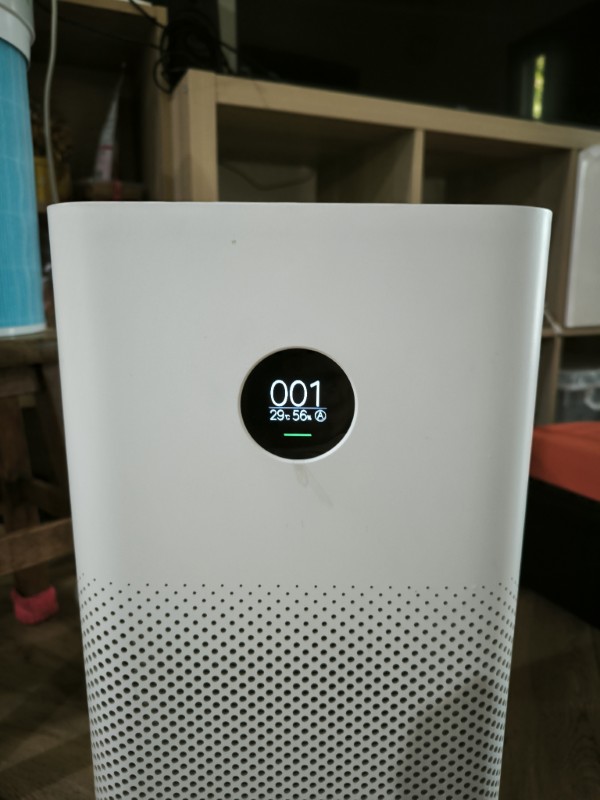
- Use your purifier’s display. Many purifiers, including Xiaomi’s, have a built-in PM2.5 readout. If yours does, you may not need a separate monitor at all.
- A Smart Air monitor. It’s a portable unit that tracks PM2.5, CO2, temperature and humidity. In Thailand it’s sold through WeDo Air, Smart Air’s official distributor.
- An IQAir AirVisual monitor. It’s the premium choice and it feeds your readings to IQAir’s map. It costs a lot more than the others.
We couldn’t confirm current prices for any of these, and they change often, so check the listing on the day. There are also plenty of unbranded PM2.5 monitors on Lazada and Shopee, but with few reviews, buying one is a bit of a gamble. We’d stick to a brand that has a Thai distributor so you can get support.
Protecting Yourself Outside
We’d go with an N95, KN95 or FFP2 mask that fits snugly over your nose and mouth. People in the expat forums often mention N95 or N99. A surgical mask won’t filter PM2.5, so we wouldn’t bother with one.
Masks
Gaps at the nose or cheeks let smoke straight through, so pick a size that seals and swap it out once it’s damp or loose. Pharmacy N95 sales jumped 30 percent during the late-March spike, so buy a few before the season starts.
Outdoor Exercise
On the worst March days we’d move workouts indoors or skip them, and so do most long-term residents. Check the PM2.5 reading before a run or a ride. If it’s red, take a rest day.
Protecting Yourself Inside
The standard Chiang Mai setup is one sealed room with a purifier running on high. For stronger protection, people build a positive-pressure room. In our view the order matters: seal first, because a purifier in a leaky room does very little.
Air Purifiers
A HEPA purifier sized for the room is the core of any indoor setup. Our guide on how to choose a good air purifier covers sizing and filters in detail.
Our pick would be a budget model with easy-to-find replacement filters. Forum advice points the same way, and Xiaomi purifiers sold on Lazada come up a lot. A cheap filter is one you’ll actually change on time.
Sealing the Room
Keep windows and doors shut for the whole season and run the air conditioning. Newer condos usually seal better than older Thai houses, which tend to leak around doors, vents and roof lines. Renting? Check the window and door seals before you sign. We’d walk away from a place with visible gaps.
Positive-Pressure Rooms
A positive-pressure room is a sealed room where a fan pushes filtered outside air in. That keeps the pressure inside slightly higher than outside, so air leaks out through the gaps and smoke can’t leak in. A purifier on its own only recycles the air that’s already in the room.
This Thai-language video from AiroTEC shows a DIY positive-pressure room being set up, and you can follow the build even without the narration. If you’d like English, The Thought Emporium’s video shows the same idea.
It’s popular in Chiang Mai. Hospitals use it, the Department of Health has built it into child development centres, and Thai families set one up at home too, usually in a bedroom. Here’s how to do it yourself:
- Pick the right room. A bedroom with few windows and a door that closes is ideal. Pick somewhere comfortable, so you aren’t opening the door all day.
- Seal the gaps. The Department of Health recommends sealing windows and doors with tape or caulk and keeping vents closed.
- Run a purifier. Put it in the middle of the room on its highest setting, with space around it. Keep it away from corners, walls and the air conditioner.
- Add filtered fresh air. This is the part that makes it positive pressure. A fan pushing air through a filter into the room stops the air getting stale and keeps the pressure up.
- Keep the air conditioner on recirculate. Turn off any setting that pulls in outdoor air.
- Check it works. Put a PM2.5 monitor in the room. If the number climbs, you’ve got a leak or a dirty filter.
You don’t need to spend much. The Chiang Mai University clean air room that the government is rolling out to 83 sites across eight northern provinces costs about THB3,600 per room. Suan Dok Hospital makes its own DIY purifiers for THB1,200 to THB1,500 each. A certified purifier is the better choice if you can afford one.
Does it work? One nursery teacher who ran a room like this told The Nation:
It’s such a huge difference. An air-pollution detector shows the room’s particle dust level drops to just 19mcg, while the outside shows a reading of over 100mcg.
Chanakan Intanet, nursery teacher in Yangmoen, Samoeng district, speaking to The Nation in 2019
The kids also coughed less and slept more easily.
Tip: Pick one room, usually the bedroom, and make that your clean room. We’d rather spend the budget making one bedroom properly clean than half-clean a whole apartment. In a room without air conditioning, a sealed room gets hot fast, so use it only on the worst days and open up when the air improves.
When to Arrive and When to Leave
Arrive after the rains start, in May or later, and plan to be out of the north from about early March to late April. That’s the short version.
- Best time to arrive. From May onwards. The ban runs to 31 May, hotspots had dropped to two by 30 April in 2026, and the rainy season was expected in the second half of May.
- Worst time to arrive. February to April, and especially March. If you can’t avoid it, have your sealed room, purifier and masks ready before you land.
- When to leave. The expat norm is four to eight weeks away. Going from about the start of March to late April covers the worst of it, since PM2.5 sits above the standard from January to April and peaks in March.
- When to come back. Around the start of May. In 2026 the fires had mostly died down by the end of April.
- If you’re staying. Get your clean room sorted by the end of January, buy masks and spare filters early, and check the air every morning.
The season shifts a little every year, so check the live readings before you book flights either way.
Where Residents Go to Escape
South. Phuket, Koh Samui and Koh Phangan come up most in the expat forums, and some people leave Thailand altogether, to Da Nang in Vietnam for example.
Nearby northern towns won’t help. Forum users warn that Pai and Chiang Rai can be just as smoky, because the valleys there trap smoke the same way Chiang Mai’s does. We’d skip them.
Look up the live PM2.5 reading for any destination before you book. If the season has you thinking about a longer move, our comparison of Hua Hin and Phuket is a good place to start.
Staying or Leaving
It depends on your health, your home and how flexible your work is. Remote workers can usually skip town for a few weeks. Retirees with a lease and a regular doctor often stay and run a sealed room.
If we had asthma or small kids, we’d leave for the worst weeks. If we were healthy, working from home and had a properly sealed room, we’d probably stay.
In the expat forums, the smoke is a frequent deal-breaker for people planning to settle long term, and some end up in coastal cities like Hua Hin or Pattaya because of it. People who stay treat it as a personal health call.
Still deciding? Read our guides to living in Chiang Mai and Bangkok vs Chiang Mai. The underrated neighborhoods in Chiang Mai are worth a look for housing, and our piece on air pollution in Bangkok shows how the capital compares.
If you plan to stay through a season, health cover matters. Our guide to digital nomad health insurance in Thailand explains what policies usually cover, and Is Chiang Mai safe? covers the other risks.
Frequently Asked Questions
When is burning season in Chiang Mai?
Roughly February to April, with the worst smoke in March. It clears when the rains arrive in May. In 2026 the provincial open-burning ban ran from 1 January to 31 May.
How bad does the air get?
On 1 April 2026, Chiang Mai hit an AQI of 235 on IQAir and ranked as the world’s most polluted major city for the fourth day in a row. A day in the city’s air that week was roughly like smoking five cigarettes.
Where does the smoke come from?
Mostly forest fires and crop burning in the hills, plus smoke from Myanmar and Laos. Burning like this causes more than 70 percent of Chiang Mai’s PM2.5 in April, according to a research paper on northern Thailand.
Does the open-burning ban work?
It helps, but it doesn’t stop the smoke. Despite the 2026 ban, Chiang Mai recorded 10,849 hotspots by 27 April, plus 240 enforcement cases against 257 suspects.
What is the best mask for burning season?
An N95, KN95 or FFP2 mask that fits snugly over your nose and mouth. Surgical masks don’t filter PM2.5, and gaps at the sides let smoke through.
Do air purifiers work during burning season?
Yes, in a sealed room. A purifier in a room with leaky windows and doors struggles to keep up, so seal the room first and run the purifier on high.
What is a positive-pressure room?
A sealed room where a fan pushes filtered outside air in, so air flows out through the gaps instead of smoke flowing in. The Department of Health and ThaiHealth have built them for child development centres in Chiang Mai province.
When should I arrive in Chiang Mai to avoid the smoke?
From May onwards. Avoid landing between February and April, and especially in March. If you want to leave during the worst of it, plan on about early March to late April.
Where should I go to escape the smoke?
Expat forums point to Phuket, Koh Samui and Koh Phangan for four to eight weeks in March and April. Pai and Chiang Rai aren’t good alternatives because they trap smoke too.
Sources Cited
- Thailand Public Relations Department: positive-pressure dust-free room at Samran Rat Child Development Center, 20 April 2026.
- World Health Organization fact sheet: PM2.5 health effects.
- WHO global air quality guidelines, 2021: PM2.5 guideline values of 5 µg/m³ annual and 15 µg/m³ 24-hour (Table 0.1).
- Pollution Control Department presentation, May 2023: Thai PM2.5 standards and effective dates.
- Pollution Control Department (Air4Thai): official Thai air quality monitoring.
- Chiang Mai University Climate Change Data Center: local PM2.5 sensor network, sensor test and US EPA comparison reports.
- Decadal trends in air pollutants and COPD and lung cancer in upper northern Thailand, 2013 to 2022: PM2.5 above the standard January to April, COPD readmissions peaking in March.
- Near real-time biomass burning PM2.5 emission estimation in northern Thailand (PMC): biomass burning share of Chiang Mai PM2.5, and transboundary smoke.
- Bangkok Hospital Chiang Mai: its positive-pressure system and PM2.5 target.
- HITAP: clean air room guidance, including the Department of Health recommendations on sealing, purifier placement and air conditioner settings.
- Berkeley Earth: the 22 µg/m³ per cigarette rule of thumb.
- Thai Rath, 2 January 2026: Chiang Mai open-burning ban, 1 January to 31 May 2026.
- Thai Rath, 1 April 2026: Chiang Mai ranked worst in the world for four days, AQI 235, station readings and hotspot totals.
- Khaosod English, 30 April 2026: hotspot counts and enforcement figures.
- Pattaya Mail, 31 March 2026: all 111 Chiang Mai monitoring stations in the red zone, and delivery riders working through the smoke.
- The Nation, 1 April 2026: Public Health Ministry figures on PM2.5-linked illness in 2024.
- BenarNews, February 2025: forest, farmland and cross-border hotspot counts for 31 March 2024, and crop burning.
- The Nation, 26 February 2019: Air4Thai 24-hour averages read lower than real-time DustBoy sensors.
- MGR Online, April 2026: governor orders all 25 districts to enforce the burning ban ahead of Songkran.
- ASEAN NOW, clean air room launch: THB3,600 per room, 83 locations in eight northern provinces.
- Chiang Mai CityLife, 9 April 2026: Suan Dok Hospital DIY purifiers at THB1,200 to THB1,500 each.
- The Nation, 16 April 2019: Chiang Mai University clean-room initiative and nursery teacher quote.