
Foreigners teach English in Thailand under completely different conditions. Some hold a work permit and a teacher’s licence. Some hold neither. Where you teach decides your pay, your paperwork, and whether the job is legal at all.
I’m Thai and went through the Thai school system, so I met foreign English teachers long before I ever wrote about them. Some were career teachers at international schools in Bangkok. Others were travellers picking up a few hours a week at a tutoring shop in a shopping mall.
Several of our writers at the Thailand Starter Kit teach or have taught English here, and they describe the same split. Two people can both say “I teach English in Thailand” and be in entirely different legal positions, on salaries three times apart.
This guide walks through what you need to get hired, where you can actually work, what each route pays, how to find the job, and how to get your paperwork right so you can stay.
Contents
Key Takeaways
- You need a bachelor’s degree to get a teacher’s licence, and you need that licence to work at a real school. Any subject qualifies, but a relevant degree gets you better jobs.
- Of the 84 teaching jobs advertised on ajarn.com on 11 August 2026, the median advertised minimum was THB46,250 a month, ranging from THB15,000 to THB100,000.
- Government schools pay THB32,000 to THB40,000 and put you in front of very large classes. Top international schools pay THB100,000 and up, and ask for a subject degree plus a teaching qualification.
- If a school cannot provide a work permit, do not take the job. The risk sits entirely with you.
- You do not need to arrange your teacher’s licence before arriving. Your school applies for it once you are hired.
- Aim for THB40,000 to THB50,000 in Bangkok. Upcountry, THB25,000 goes considerably further.
- Non-native speakers do get hired, but face fewer openings and lower pay for the same work.

What You Need to Teach English Here
Thailand asks for less than most countries and more than the internet will tell you. A degree, a TEFL certificate, and an employer willing to do paperwork will get you into a classroom.
A Bachelor’s Degree
You need one, and what it says on it matters more than you may have been told.
For the teacher’s licence, a degree in any subject qualifies. That is where the “any degree works” advice comes from, and for a government or private school job it is broadly true.
Hiring works differently. A degree in education, English, or the subject you want to teach puts you ahead of other candidates for the same post and widens the range of jobs you can realistically apply for.
International schools are stricter again. They generally want a degree in the subject you will be teaching plus a recognised teaching qualification. An unrelated degree will keep you out of that part of the market no matter how well you interview.
Teaching with no degree at all is possible, and we have a full guide to it. Your choices shrink to language schools, agencies, and the grey routes, and the pay follows them down.
Read more: Teaching in Thailand Without a Degree: What Are Your Options?
A TEFL Certificate, or Something Stronger
No law requires one, but applying without a certificate puts you behind everyone else in the pile. A 120-hour accredited TEFL is the baseline schools expect.
CELTA is the step up. It is Cambridge-accredited, more demanding, more expensive, and carries more weight with language centres and international schools. DELTA sits above it and is aimed at teachers already working who want to move into senior roles. TESOL certificates vary a great deal by provider, so check the accreditation before you pay.
Where you take it matters too. Online from home is cheaper and faster. But many of the teacher friends I talk to recommend taking the course in Thailand instead, because it puts you in front of Thai students while you train. That is a different experience from practising on your classmates, and the real classroom time counts for a lot when you start applying.
Read more: TEFL in Thailand: How to Get Certified and Recommended Courses, which compares TEFL against CELTA and DELTA and reviews the main course providers here.
The Teacher’s Licence
The licence comes from the Teachers’ Council of Thailand and applies to formal schools, meaning any school teaching the Thai curriculum with students grouped by age, plus international schools.
You do not need to sort this out before you arrive, and you cannot apply for it on your own from abroad. Your school applies on your behalf once you are hired, here in Thailand. Any school that has employed foreign teachers before will have been through it many times, and the Council publishes a manual specifically for foreign teacher applications.
What you get first is a temporary permission to teach rather than a full licence. It runs in two-year terms, and from the two-year point you have to show evidence of your own professional development to continue. In practice that carries most teachers through their first six years before a permanent licence becomes the question.
Language centres and tutoring shops sit outside all of this. No licence needed, which is why they hire so freely.
Read more: Thai Teacher’s License: Application, Requirements, and Renewal

A Work Permit
The licence says you are allowed to teach. The work permit says you are allowed to work at all, and it is the document that decides whether your job is legal.
It ties you to one employer and one kind of work. Private students at the weekend are not covered by it, even when everything else about your job is in order.
If a school cannot provide a work permit, my advice is to turn the job down. This is not a technicality to sort out later. Working without one is a criminal offence, it puts your ability to stay in Thailand at risk, and you have no protection if the school decides to withhold a month of your salary.
No teaching job here pays enough to be worth that.
Read more: How to Get a Thailand Work Permit
If You Are Not a Native Speaker
Plainly: your chances are lower than a native speaker’s, and the pay offered is usually lower for the same work. Job ads still specify native speakers, and schools still market foreign teachers to parents on that basis.
Thousands of Filipino, Indian, and European teachers work here regardless, and many build long careers. A strong TOEIC or IELTS score is what gets you past the first filter, and international schools in particular treat TOEIC as the standard proof of English ability.
Required Documents
Bring originals of everything. Replacing a document from Thailand is slow and expensive.
- Degree certificate and transcripts
- TEFL, TESOL, or CELTA certificate, the original rather than a printout
- A criminal background check from your home country, increasingly requested and slow to obtain once you have left
- Passport photos, more than you think you need
- TOEIC or IELTS results if English is not your first language
Good to know: Your degree and transcripts have to be verified before the licence application goes through. How that is done depends on your nationality and on your school: some teachers arrange authentication at home before flying, others handle it here through their own embassy in Bangkok. Ask your school which route they use before you send documents anywhere, because doing it twice is a waste of several weeks.
Where You Can Actually Teach
Who employs you shapes your year more than anything else: your salary, your holidays, how many hours you sit at a desk, and whether immigration would have anything to say about you.
Government Schools
I studied in schools like these. Sixty students to a classroom, packed in, white shirts and khaki shorts or blue skirts, and the whole school lined up in the courtyard for the anthem every morning.
They employ more foreign teachers than anyone else. Pay sits at the bottom of the range and has barely moved in a decade, and the classes are the largest you will teach anywhere in the country.
What they offer is a genuine way in. A government school can sponsor your work permit, apply for your licence, and keep you employed across the school year. For a first job in Thailand, that counts for more than the salary does.
Private and Bilingual Schools
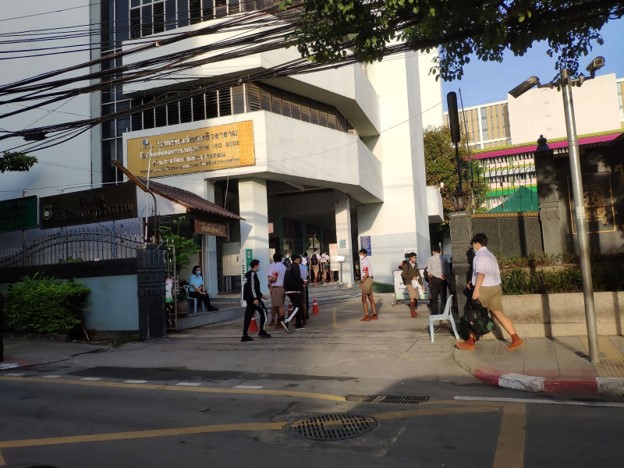
Same Thai curriculum, private funding. Smaller classes, better facilities, and a few thousand baht more a month.
Bilingual schools teach part of the curriculum in English, so you get more hours in your own subject and better pay again. If you have a degree and a TEFL but no formal teaching qualification, this is where the value sits.
International Schools
The top of the market. They run an international curriculum such as the IB, or a national one from the UK or the US, and they pay accordingly.
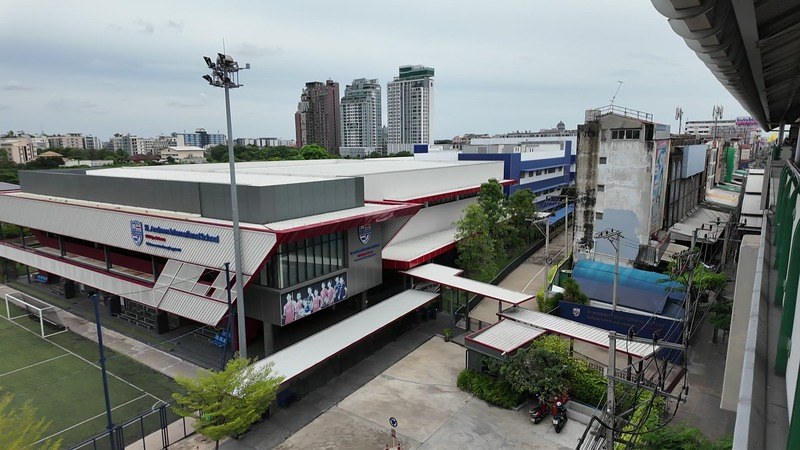
They also want a subject degree, a real teaching qualification, and classroom experience, so this is rarely a first job in Thailand. Teachers do work their way in from government schools, usually by picking up a qualification such as a PGCEi along the way.
The word “international” on the gate guarantees nothing. Teachers sort these schools into rough tiers, and a bottom-tier one can pay less and treat you worse than a good private school down the road. Ask around before you sign.
Read more: International Schools in Thailand
Universities
A lighter teaching load, adult students, and twelve-month contracts. Universities also give you far more freedom over your day than a school will.
Competition is heavier and a master’s degree is often expected. Worth aiming at once you have a couple of years here.
Language Centres
Go to the education floor of any large mall and you will find a row of them. They hire constantly, they pay by the hour, and many will take your resume at the desk.
One contract will not support you. People who make this work stack several across the week, a morning class at one centre and an evening class at another, and they work when students are free, which means evenings and weekends.
The adult market has shrunk. Twenty years ago every mall had a chain school full of office workers studying after work. Most of those students now study online rather than cross Bangkok at rush hour.

Corporate Classes
Centres send teachers into companies to run English classes for staff, and it pays roughly double the in-house rate. The students are adults whose employer is paying, which helps with motivation.
Travel time is the catch. A class at a factory beyond the airport can take two hours out of your day before you teach anything.
Teaching Agencies
Agencies place foreign teachers into government and private schools. You work at the school, but the agency employs you, handles your paperwork, and keeps a share of what the school pays for you.
For a first job with no contacts here, that can be a fair trade. Be clear on who holds your work permit, what happens to your pay over the school holidays, and which schools they have placed teachers in before.
Tutoring Shops, Private Students, and Online
Thai children study after school and at weekends, so tutoring is a substantial industry here rather than a sideline. Small shops hire foreigners readily, and many of them cannot sponsor a work permit at all.
Private students and online platforms sit in the same position. The hourly rate beats most salaried school work, which is the appeal.
Without a permit covering it, none of it is legal, and you have no recourse when a shop decides your last month went unpaid.
What It Pays
So what does the job actually pay?
What Schools Are Advertising Right Now
Ajarn.com is the job board the industry actually uses, so its listings are as close to a live salary index as Thailand has.
We counted on 11 August 2026. Of 84 listings showing a salary, the middle one advertised THB46,250 a month. The lowest was THB15,000 and the highest THB100,000.
| Advertised monthly minimum | Share of listings |
|---|---|
| Under THB30,000 | 10% |
| THB30,000 to THB39,999 | 24% |
| THB40,000 to THB49,999 | 20% |
| THB50,000 to THB59,999 | 25% |
| THB60,000 to THB79,999 | 17% |
| THB80,000 and above | 5% |
Those are advertised minimums on a single day, not what teachers take home. Job boards over-represent schools hiring at that moment, and the best international posts are filled through contacts long before anyone writes an advertisement.
Pay by School Type
| Where you teach | Typical monthly pay | Work permit |
|---|---|---|
| Government school | THB32,000 to THB40,000 | Yes, licence required |
| Private or bilingual school | THB40,000 to THB60,000 | Yes, licence required |
| International school, lower tier | THB60,000 to THB80,000 | Yes, licence required |
| International school, top tier | THB100,000 and above | Yes, licence required |
| Language centre, contracts stacked | THB31,500 to THB40,500 | Sometimes, ask first |
| Corporate classes through a centre | THB54,000 to THB72,000 | Through the centre |
| Private students and online | Varies by hours | No, illegal without one |
A strong international school will go past THB200,000 a month for the right person. Those jobs go to qualified teachers with a track record, which is the practical argument for getting properly qualified.
Hourly Work Adds Up Differently
Language centres pay around THB350 to THB450 an hour in-house. Corporate work runs THB600 to THB800. Private students go for about THB500.
Those rates look strong until you work out the totals. A 30-hour contract at a centre, spread over three months, comes to roughly THB10,500 to THB13,500 in all. The same contract at a company pays THB18,000 to THB24,000.
That is why nobody teaches a single contract. Stacking several is the job rather than an extra.
Bangkok Versus Upcountry
Provincial salaries run at about 70% of Bangkok pay. Anything over THB30,000 upcountry is a good wage, and lower rents make it stretch in ways the same money never does in the capital.

Jobs on the islands and in the northern towns are the ones everyone wants. There are few of them and they pay poorly, which is why most teachers end up in the cities.
What You Need to Live On
In Bangkok, THB40,000 to THB50,000 a month supports a comfortable life. People do manage on THB25,000 to THB30,000, and teachers who have done it describe it as getting by rather than living well. Saving much on that is not realistic.
Outside the capital, THB25,000 goes a long way. Either way, budget for rent from your first month. Accommodation is almost never part of a teaching package here, whatever you may have read about other countries in Asia.
Read more: The Cost of Living in Thailand and The Cost of Living in Bangkok
How to Find a Job
There are four routes worth working at once, and the best jobs rarely come through the same one twice.
Ajarn and the Job Boards
Ajarn.com has been running since 1999 and it is still where most teachers look first. Jobs, salary discussion, regional guides, and a couple of decades of teachers arguing about pay in the blogs.
Read the advertisements carefully. A salary written as “at least THB35,000” is usually the number you will be offered, not a starting point for negotiation.
Facebook Groups
A large share of language centre and agency work never reaches a job board at all. Groups for teachers in your target city move faster than any website, and short-notice cover work turns up there first. Teaching Jobs in Thailand and English Teachers in Thailand are two of the busier ones.
They are also the quickest way to learn which schools teachers are warning each other about.
Walking In
Still effective, particularly for language schools. Print resumes, dress properly, and visit the education floor of a few malls in person.
Thai hiring is more face-to-face than you may be used to. Turning up smartly dressed and polite does more for you here than a well-formatted CV emailed into an inbox nobody reads.
Google the schools in the area you want to live in, then check their own websites. Vacancies often go up there and nowhere else. This works best with private and international schools, which tend to run their own hiring rather than going through an agency.
Recruitment Fairs
If you are qualified and aiming at international schools, this is the route in. Search Associates and International School Services run the fairs where those schools do their hiring, months ahead of an August start.
Networking matters more than applications at this end of the market. Teachers who move up into international schools tend to get there through someone they know.
Both run the fairs international schools recruit through: Search Associates and International School Services. Registering costs money and needs a teaching qualification, so they are worth it once you are qualified rather than before.
When to Apply
Thai schools run their year from around May, with a break in October and a longer one through March and April. Hiring peaks in the weeks before the May term and again around October.
International schools and universities follow the Western calendar and start in August, and they recruit considerably earlier than that.
Read more: The Complete Guide to Getting an English Teaching Job in Thailand covers resumes, interviews, and demo lessons in detail.
Getting Your Visa and Work Permit
Two documents keep you legal here, and the order you get them in depends on whether you arrive with a job already lined up. Neither is something you can arrange alone, because your employer drives both.
If You Have a Job Before You Fly
Your school sends documents ahead and you apply for a Non-Immigrant B visa at the Thai embassy at home. The package usually includes a letter of acceptance, approval from the relevant Thai government body, and the school’s licence and business registration.
This is the cleaner route. You land with the right visa and the work permit process can start straight away.
The Non-B gives you 90 days to begin with. Once you are here and working, you apply at immigration to extend it, and that extension runs for a year from your first entry. Your school handles this, and it is the point where a disorganised school starts costing you days off work.
If You Are Coming to Look
Most first-timers do it this way, and there are two ways to arrive.
Visa exemption is the simpler one. You turn up without applying for anything beforehand, and from 15 September 2026 most nationalities get 30 days.
A tourist visa, applied for at a Thai embassy before you travel, also permits a stay of up to 60 days, and immigration can grant a further 30. That extra month is the reason many teachers prefer it, because converting your status through an employer takes time you may not have on a shorter stay.
The visa exemption has been cut. The Royal Gazette published the change on 31 August 2026 and it takes effect on 15 September 2026: a 30-day exemption for 60 countries and territories, 15 days for Mauritius and Seychelles, and visa on arrival for Azerbaijan, Belarus and Serbia. Anyone stamped in before 15 September keeps the stay they were given. For a teacher arriving to job-hunt, this matters: 30 days plus a 30-day extension is 60 days to find a school and convert your status, where it used to be 90.
Looking for a job on either is fine. Working on either is not.
Read more: The Thailand Tourist Visa and The Thailand Business Visa
When a School Asks You to Start Early
Sooner or later someone will ask you to teach while the permit is still being processed. It happens most at rural government schools, where a class has no teacher and the paperwork moves slowly.
They are usually not trying to trick you. There are sixty children and nobody to stand in front of them, and the request is common enough that plenty of teachers assume it is simply how things work here.
Good to know: Thai law lets you start work only once the permit has been issued and handed to you. Your school can file the application before you begin, but filing is not the same as holding it. Working without one carries a fine of THB2,000 to THB100,000 and up to five years’ imprisonment, while the school risks THB10,000 to THB100,000 per foreign employee. The larger penalty is yours.


Plenty of teachers agree anyway. If you do, ask how long the school expects the permit to take, ask which teacher there went through it most recently, and get your start date in writing.
Once You Are Settled
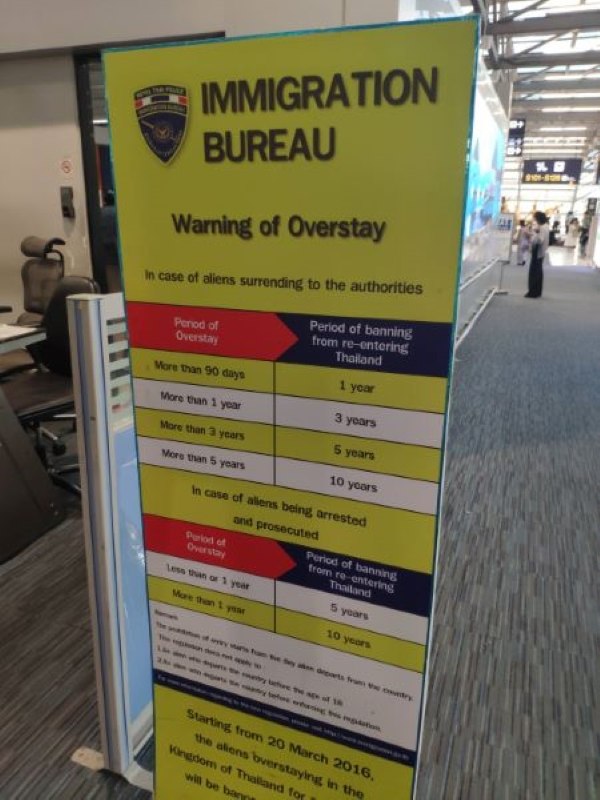
On a long-stay visa you report your address to immigration every 90 days. Miss it and you pay a fine. It is the most commonly forgotten piece of admin among new teachers, and it remains your responsibility rather than your school’s.
Read more: 90-Day Reporting in Thailand
How to Tell a Good School From a Bad One
Salary is the easiest thing to compare between two offers and the least useful. How a school treats its foreign staff shows up in smaller details, and most of them are visible before you sign anything.
Watch How They Handle Your Paperwork
Schools sort themselves into four groups by how they deal with your visa and work permit, and it predicts most other things about them.
- Good schools run the whole process and pay the fees. Larger ones have someone whose entire job is foreign teacher paperwork.
- Decent schools cover one of the two, usually the work permit, and leave you the rest.
- Bad schools pay nothing and hand you their half of the forms to deal with yourself.
- Terrible schools offer nothing at all and are content to employ you illegally.
The Eleven-Month Contract
Thai school contracts normally run a full year, roughly April or May to the end of March or April. Some schools write them for eleven months and skip the April break.
You lose a month of salary, and your work permit and visa are cancelled at the end of each contract, so the whole application starts again even if you re-sign with the same school. It costs you twice. Turn it down unless something else about the job justifies it.
Questions Worth Asking Before You Sign
- Who pays for the visa and work permit, and when does the process start?
- Is the contract twelve months, and am I paid through the holidays?
- How many contact hours, and how many hours do you want me on site?
- Does the school employ me, or an agency? Who holds the permit?
- Can I speak to a foreign teacher who already works here?
The last one does more work than the other four together. A school with nothing to hide will put you in touch with someone.
What the Job Is Really Like
Your contract tells you how many hours you teach. It rarely tells you how the rest of the week actually goes.
Hours
Most teachers try to stay between 16 and 20 contact hours a week with their main employer. Push much past that with young learners and burnout follows quickly.
Contact hours and hours on site are different things. Thai schools generally want you there through the working day whether you are teaching or not, partly for preparation and marking, and partly because a foreign teacher visible on campus is something the school presents to parents. Five days a week is standard, six at some schools.
Everything Outside the Classroom
Sports day, English camps, morning assembly, open days, and the occasional weekend event come with a Thai school job. Some contracts spell this out and some assume it.
Salaried work pays you through public holidays and cancelled classes. Hourly work does not, which matters more than it sounds in a country with as many public holidays as this one.
Which Route Suits You
With a degree and no teaching qualification, a government or private school is the straightforward way in. Modest pay, well-worn paperwork, and a year to work out whether you want to stay.
With a subject degree, a teaching qualification, and experience, go straight at the international schools. The gap between the top of that market and a government salary is wider than any other choice you will make here.
If you want your days free and do not mind chasing work, language centres and corporate classes fit better than a school timetable.
Useful Resources
- Ajarn.com: jobs, salary discussion, regional guides, teacher blogs.
- Search Associates and International School Services: recruitment fairs for international schools.
- Teachers’ Council of Thailand: teacher licensing.
- Department of Employment: work permits.
- Your local immigration office: extensions and 90-day reporting happen where you live, not centrally.
- Our own guides: getting hired, TEFL and CELTA courses, the SEE TEFL course reviewed, language centre work, the teacher’s licence, and teaching without a degree.
Frequently Asked Questions
The questions we get asked most often by people planning a move here.
Can I Teach English in Thailand Without a Degree?
Not at a formal school, because the licence requires one. Language schools and other non-formal schools will hire you, at lower pay, and fewer of them will sponsor a work permit.
Does My Degree Subject Matter?
For the licence, no. For getting hired, yes. A degree in education, English, or your teaching subject opens more doors, and international schools generally require a degree in the subject you will teach.
Do I Need to Speak Thai?
Not to get hired, and most schools want an English-only classroom anyway. Thai helps considerably with the staffroom, the admin, and understanding what your students are saying to each other.
Is Private Tutoring Legal?
Only if your work permit covers it, and it usually does not. The permit ties you to one employer and defined work, so weekend students sit outside it even when your main job is entirely in order.
Can I Live on a Government School Salary?
Upcountry, comfortably. In Bangkok you will watch your money, and saving much on THB32,000 once rent is paid is not realistic.
Do Schools Provide Accommodation?
Rarely, and it is not the norm here. Some rural schools do, and many employers will point you towards decent places nearby. If housing matters to your budget, negotiate before you sign and see the room first.
How Long Does the Paperwork Take?
Weeks, sometimes months, depending on how organised your school is and how complete your documents are. Having your degree and transcripts ready to verify removes the biggest delay.
Now, on to You
Pick your employer before you pick your city. The difference between a licensed school job and hourly work at a tutoring shop shows up in your bank balance, your visa status, and how easily you get to stay a second year.
If you have taught here, tell us which route you took and what your school actually did about your work permit. That is the thing new teachers ask us about most.
Sources Cited
- Thailand Board of Investment, One Start One Stop Investment Center: work may begin only once the work permit has been issued, and the penalties for working without one.
- Ministry of Foreign Affairs, Non-Immigrant Visa “B”: the visa is issued for work and business, gives an initial 90 days, and can be extended at the Immigration Bureau for one year from first entry.
- Ministry of Foreign Affairs, Issuance of Visa: tourist visa holders are permitted to stay not exceeding 60 days, and Non-Immigrant holders an initial 90 days.
- Royal Gazette, Vol. 143 Special Part 207: the Ministry of Interior announcements replacing the 60-day visa exemption with 30-day, 15-day, and visa on arrival tiers, published 31 August 2026 and effective fifteen days later on 15 September 2026.
- Teachers’ Council of Thailand, temporary permission to practise a controlled profession: the official application route, including the Council’s separate manual for foreign teachers.
- Teachers’ Council of Thailand, KSP School manual (2026): schools submit temporary permission applications on a teacher’s behalf, and applicants who have held the permission for a full two years must attach evidence of professional self-development.
- Ajarn.com job board: advertised salary figures across 84 listings, sampled 11 August 2026.
- Ajarn.com Newbie Guide: teacher-reported living costs, contact hours, accommodation norms, and provincial pay differences.


 Español:
 Deutsch:
 Français: