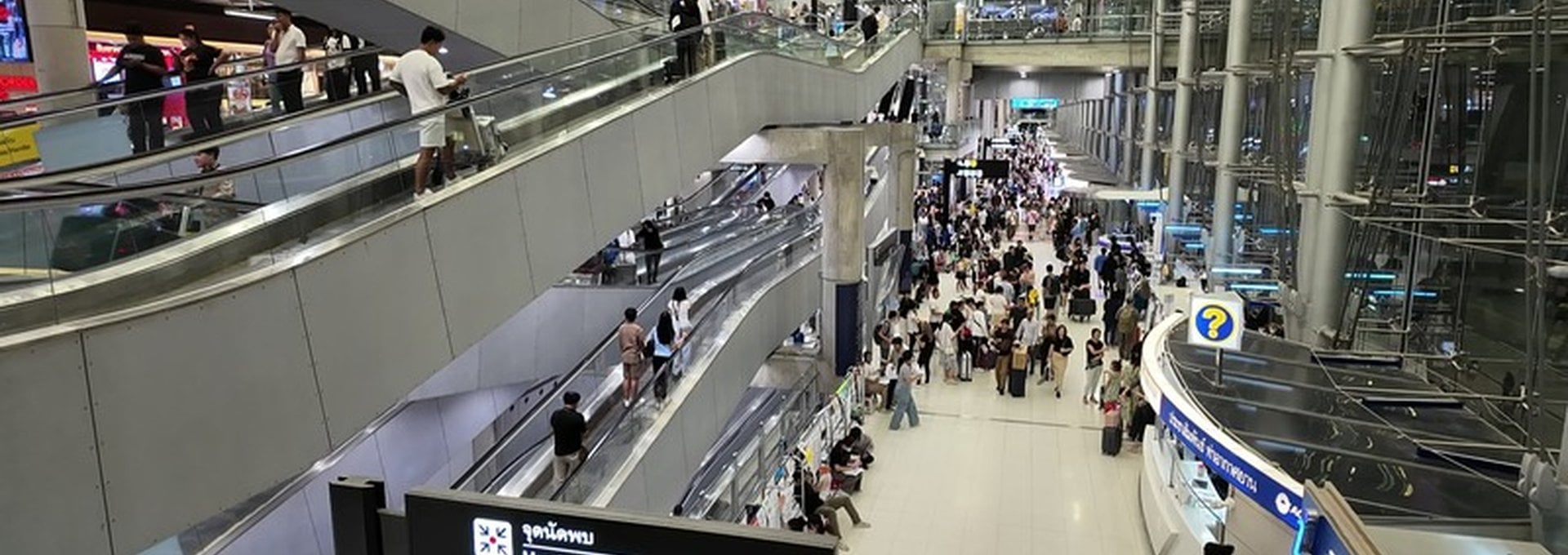

Vapes are illegal in Thailand. That’s hard to believe when you see them for sale on Khao San Road and in tourist markets, but it’s true.
Every year, tourists and expats get stopped by police over a vape, and some pay thousands of baht to walk away. Thailand has other rules you probably don’t have at home, too, like no smoking on some beaches or no alcohol sales on Buddhist holidays.
This guide shows you what’s illegal, what can happen if you’re caught, and what to do if the police stop you.
Please note: I’m not a lawyer, and Thailand Starter Kit isn’t a law firm. This guide explains the rules in plain words, using official sources and what Thai law firms tell their clients. If you’re facing a charge, talk to a Thai lawyer.
Disclaimer: Some links in this article go to our partners, and we may earn a commission if you use them. It costs you nothing extra, and we only recommend services we'd use ourselves. Read more in our Advertising Disclosure.
Contents
- Key Takeaways
- At a Glance
- Vapes: Banned, Even for Personal Use
- Your Rights If You're Stopped or Arrested
- Flying In With a Vape
- Cannabis Is Medical-Only Again
- Smoking in Public and on Beaches
- Alcohol Hours and Ban Days
- Drones Need Two Registrations
- Gambling and Playing Cards
- The Monarchy
- Laws That Matter Once You Live Here
- FAQ
- Sources Cited
Key Takeaways
- Vapes, e-cigarettes and refill liquids are banned, even for personal use, and that includes bringing one in your luggage.
- Having a vape can mean up to five years in prison or a THB500,000 fine, though people stopped on the street usually report paying THB10,000 to THB20,000.
- If you’re arrested, you can stay silent, ask for a lawyer and an interpreter, and have your embassy told.
- Cannabis is medical-only again, so you need a prescription from a Thai doctor.
- Smoking is banned on 24 popular beaches, and shops can’t sell alcohol on five Buddhist holidays.
- If you live here, take even small charges seriously, because since August 2026 a court fine can lead to a deportation review.


At a Glance
This table is the short version. The third column shows the most the law allows. The last one shows what people in expat forums say they actually paid.
| What | Allowed? | Most the law allows | What people report paying |
|---|---|---|---|
| Having a vape | No | 5 years in prison, a THB500,000 fine, or both | Around THB10,000 to THB20,000 at a stop |
| Smoking in a no-smoking area | No | THB5,000 fine | THB5,000 |
| Smoking on a pilot beach | No | 1 year in prison or a THB100,000 fine | THB5,000 discussed in Pattaya |
| Cannabis without a prescription | No | Depends on the offence | THB2,000 for one joint in Phuket |
| Buying alcohol on a Buddhist holiday | No, in most shops | THB10,000 fine for drinking at a shop or bar during a ban | Not reported |
| Flying a drone during a flight ban | No | 1 year in prison or a THB40,000 fine | Warning and drone taken |
| Playing poker for money | No | 3 years in prison or a THB5,000 fine | Arrest and charge |
Vapes: Banned, Even for Personal Use
Vaping has been illegal in Thailand since 2014, so the rule isn’t new, even if it’s in the news a lot. You can’t buy, sell or bring in a vape. You can’t even have one in your pocket.
The Thai government warns visitors about it directly. The Royal Thai Embassy in London says anyone using an e-cigarette “could be arrested and face jail time, or a fine several times the value of the illegal item(s)”. That goes for Thais and foreigners alike.
The official ban covers any electric device you puff on like a cigarette, plus the liquids. So disposables, pods, refill bottles and electric shisha pens are all out. According to the UK government’s travel advice, heated-tobacco devices like IQOS are banned too.
The penalty depends on what you did (I convert at about THB32.5 to US$1):
- Having one: up to five years in prison, a fine of up to THB500,000 (about US$15,400), or both, because customs law treats it as holding banned goods that came in illegally.
- Bringing one in: up to 10 years in prison, a fine of up to five times the vape’s value, or both, and the vape is taken. Customs law can add its own charge, with up to 10 years or a fine of up to THB500,000.
- Selling one: up to three years in prison, a fine of up to THB600,000, or both, under the consumer protection rules.
Those are the maximums, and real fines are much lower. The UK government says they’re usually between THB5,000 and THB30,000. It also says you may have to stay in Thailand until your case is finished, which is the real headache if you have a flight home soon.
What a Stop Looks Like
Most stories in the expat forums go the same way. Police stop you, find the vape, and you pay cash.
One tourist was stopped on Khao San Road in September 2026, taken to a police station and searched. They were held for about two hours, and police checked their phone. Then they were sent to an ATM to take out THB10,000.
A lot of the time, the vape isn’t even why police stopped you. Forum posters say it usually starts with a scooter check or a late-night search, and the vape turns up after that. My advice is to leave it at home, and if you ride a scooter, get a Thai driving license so a licence check is nothing to worry about.
Your Rights If You’re Stopped or Arrested
Getting stopped by police is scary, especially when you don’t speak Thai. I’m not a lawyer, so this part comes from what Thai law firms tell their clients:
- Stay calm: be polite and don’t argue on the street.
- You can stay silent and ask for a lawyer: ThaiLawOnline says you have the right to remain silent and to request a lawyer, and police must tell you both before they take a statement. Siam Legal advises asking for a lawyer clearly before any questioning.
- Ask for an interpreter: ThaiLawOnline says you can insist on one if you don’t understand Thai.
- Have your embassy told: you can ask police to notify it. Siam Legal says the embassy can’t step into your case, but it can tell your family and give you a list of local lawyers.
- How long they can hold you: up to 48 hours before you go before a judge. After that, Siam Legal says a court can order detention 7 days at a time, up to 84 days in total, and bail is open to foreigners too.
- Never offer a bribe: Siam Legal warns that trying to pay off an official can make things much worse.
- Get a receipt for any fine: forum posters often describe on-the-spot payments with no receipt, so ask for an official one from the police station.
Before you sign anything
ThaiLawOnline’s advice is simple: “Don’t sign what you don’t understand.” Statements are usually written in Thai, so:
- Ask for an interpreter.
- Have it read to you line by line.
- Get any mistakes corrected before you sign.
- Initial each page and ask for a copy.
Our guide to what to do if you’re stopped or arrested by police walks through the whole process, and our list of lawyers in Thailand is a good place to find help fast.
Flying In With a Vape
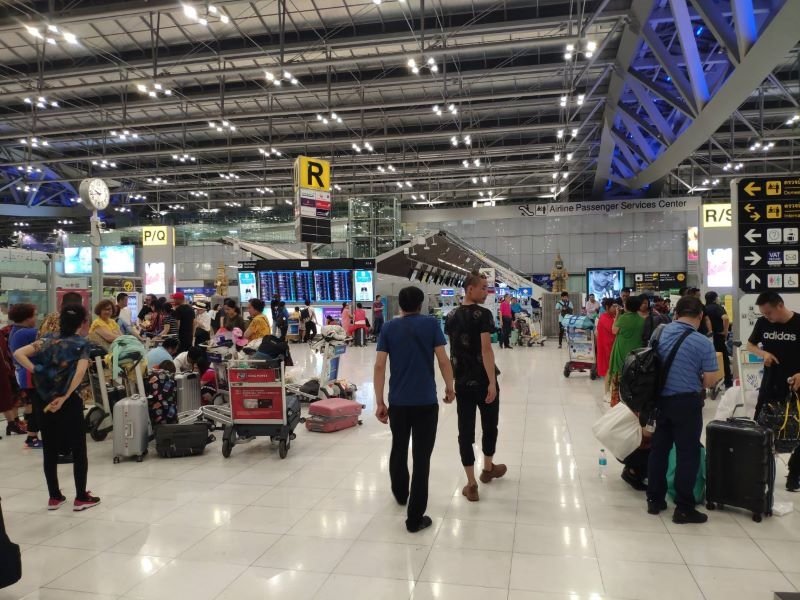
This question comes up in the forums all the time. Some people have heard it’s fine if the vape is in your pocket. It isn’t.
You can’t bring a vape into Thailand at all, whether it’s in your pocket or your bag. The Tourism Authority of Thailand also tells visitors not to bring e-cigarettes or the liquid.
So use it up or throw it away before you fly, and pack nicotine patches or gum instead. If you’re moving here and you vape, plan to quit or switch to cigarettes. There’s no legal way to vape in Thailand.
Cannabis Is Medical-Only Again
You’ll still see cannabis shops all over Bangkok and Phuket. Since 26 June 2025, though, they can only sell to people with a prescription from a Thai doctor.
Thai law firm ThaiLawOnline says a prescription covers up to 30 days, and vending machines and online sales are banned. You also can’t smoke at the shop, unless a licensed doctor is supervising, according to JusLaws.

Forum posters say many shops sort out the prescription for you on the spot. So don’t take an open shop as a sign you can buy without one. Smoking in public can cost you too, and Siam Legal says the fine is up to THB25,000 or three months in prison.
Taking cannabis out of Thailand is far more serious. The UK government says fines start at THB30,000 per kilogram, and if you can’t pay, you’re detained and put on an immigration watchlist.
So check your bags properly before you head to the airport. Our guide to cannabis in Thailand has more.
Smoking in Public and on Beaches
Cigarettes are legal, but you can’t light up just anywhere. Siam Legal and the UK government both put the fine for smoking in a no-smoking area at up to THB5,000. The Customs Department says vaping in places like schools, hospitals and markets gets the same fine.
- Beaches: since 2017, smoking and dropping butts have been banned on 24 beaches in 15 provinces, including Patong, Pattaya, Jomtien, Hua Hin, Cha-am and Bang Saen. On paper it’s up to a year in prison or THB100,000, but when Pattaya’s crackdown hit the forums in July 2025, the fine people discussed was THB5,000.
- Indoors: the ban is enforced, even when the smoker is a politician. In August 2026, Amarin TV reported that health officials fined a former member of parliament THB5,000 for smoking in police custody, and fined the station THB3,000 for allowing it.
My advice is to treat every popular beach as no-smoking. Use the marked smoking areas instead, and take your butts with you.
Alcohol Hours and Ban Days
Since 29 May 2026, shops and restaurants can sell alcohol from 11:00 to midnight. The old 2pm to 5pm break is gone, so you can pick up a beer in the afternoon now.
- Buddhist holy days: alcohol can’t be sold on Makha Bucha, Visakha Bucha, Asahna Bucha, Khao Phansa and Ok Phansa (the start and end of Buddhist Lent). Hotels, licensed entertainment venues, international airports and some venues in named tourist areas can still sell.
- Places you can’t drink: temples, government offices, schools, hospitals, pharmacies, petrol stations and government-run public parks, every day of the year.
- Your social media: the UK government and Siam Legal both warn that posting photos of people drinking can cause you problems, so keep the beer out of anything public, especially a business page.
In May 2025, an expat in Buriram went out on a Saturday night, thinking the Visakha Bucha ban started the next day. The whole bar area was shut, because a local election that weekend had stopped sales from 6pm. So I’d stock up the day before any holiday, and check the news for elections too.
Drones Need Two Registrations
If you bring a drone, you have to register it twice, with two different offices:
- Register with the aviation authority: any drone with a camera, whatever it weighs, has to be registered with the Civil Aviation Authority of Thailand (CAAT). Drones without a camera need registering once they’re over 2kg.
- Register the radio too: the telecoms regulator (NBTC) needs its own registration within 30 days of arriving or buying the drone, even if you never fly it, according to the UK government. Skipping it can mean THB100,000, five years in prison, or both.
- Fly by the rules: stay under 90 meters, keep the drone in sight, fly in daylight only, and stay at least 9km from any airfield.
Registering with CAAT, step by step
- Get a Thai SIM card, because the online portal sends a one-time password to a Thai number.
- Buy third-party liability insurance with at least THB1,000,000 of cover.
- Pass the online exam for a basic drone pilot certificate, which lasts two years. Fail it and you wait 24 hours to try again.
- Register the drone and stick the registration number clearly on it.
The exam is open-book, but don’t expect it to be easy. In July 2025, one drone owner in the expat forums said he failed the 40-question test three times. Another passed the first time with 32 out of 40.
CAAT can also ban all drone flights at short notice. It did that nationwide in July and August 2025, with up to a year in prison or a THB40,000 fine for breaking it.
That August, Khaosod English reported that a Swedish tourist who didn’t know about the ban had his drone taken on Pattaya Beach and got a warning. So I’d check CAAT’s notices before every flight.
Gambling and Playing Cards
Poker with friends sounds harmless, but under the Gambling Act, most card and casino games are illegal, including poker. Players can be arrested too, not only the person running the game. The penalty is up to three years in prison, a fine of up to THB5,000, or both.
That includes friendly games at home. In October 2024, Khaosod English reported that Pattaya police raided a private poker game and arrested nine foreigners, most of them retirees living in Thailand.
In March 2025, police in Bangkok’s Ramkhamhaeng area arrested 52 poker players from 10 countries. If you play cards with friends, I’d play for chips, not money.
There’s also an odd old rule about the cards themselves. The UK government says carrying more than 120 playing cards (a bit over two decks) is illegal, so one deck is fine.
The Monarchy
Thai law protects the royal family very strictly. Under section 112 of the Criminal Code, it’s a crime to defame, insult or threaten the King, the Queen, the Heir-apparent or the Regent.
In ThaiLawOnline’s translation, the penalty is three to fifteen years in prison per count, with no fine option. If the comment was posted online, there’s often a computer crime charge as well.
It covers online comments too, even in private groups. In June 2026, The Star reported that a man was jailed for 18 months over a comment in a private Facebook group.
Siam Legal says the law can cover jokes on social media as well. My advice is to not post, share or like anything about the royal family, even as a joke.
Laws That Matter Once You Live Here
Once you live here, a small charge can cost you far more than the fine:
- Carrying ID: Siam Legal says carrying proper ID is mandatory, and if you can’t show it, you may have to bring it to a police station within 24 hours. The UK government adds that a copy of your passport photo page is usually enough, so keep one in your wallet and a photo on your phone.
- Deportation: new rules took effect on 28 August 2026. Siam Legal says paying a court fine or getting a suspended sentence “is not enough to settle the matter”, because the court must tell the Interior Ministry, which leads to a deportation review. ThaiLawOnline adds that a referral doesn’t automatically mean deportation, and that an offence carrying a five-year maximum can qualify even if the court only fined you.
- Overstaying: it has its own fines and entry bans, covered in our guide to overstaying a visa in Thailand.
Remember that having a vape can mean up to five years in prison. So if you live here, a vape case that goes to court is a big deal. No law firm says whether a fine paid at the police station counts, so I’d talk to a lawyer before you pay anything.
FAQ
Can I Buy a Vape if I See Them in Shops?
No. The shop selling it is breaking the law, and you are too once you buy it.
Is IQOS or Heated Tobacco Legal in Thailand?
I’d treat it as banned. The UK government’s advice puts heat-not-burn devices in the same illegal group as vapes.
Can Police Search My Phone?
The law firms I checked don’t cover phone searches, but people in the forums say police have checked their phones during stops. ThaiLawOnline’s advice on searches is to ask what the legal reason is. If you agree to a search, keep it clear and limited, and ask for a lawyer.
Can I Drink a Beer I Already Bought on a Buddhist Holiday?
Yes, at home. The rule stops shops from selling, so beer you bought the day before is fine. Just don’t drink it in a temple or a public park.
Do I Need to Register a Small Drone Like a DJI Mini?
Yes, if it has a camera, however light it is. Small drones get no exemption from CAAT or the NBTC.
Sources Cited
- Royal Thai Embassy, London, “Prohibition of e-cigarettes”: arrest, jail or a fine several times the value, for foreigners and Thais alike.
- Siam Legal, “Arrested in Thailand: What to do?”: asking for a lawyer, detention periods, embassy help and bribes.
- Siam Legal, “What Foreigners Need to Know about Thai Laws”: smoking fines, carrying ID, drinking photos, public cannabis smoking and the monarchy law online.
- Siam Legal, Thailand’s new deportation rules (2026): court fines and suspended sentences leading to a deportation review.
- ThaiLawOnline, “Arrested in Thailand: Rights for Foreigners”: silence, a lawyer, an interpreter, 48 hours and bail.
- ThaiLawOnline, “Police Interview in Thailand: Rights”: signing statements, searches and embassy notification.
- ThaiLawOnline, “Deportation from Thailand: The 2026 Rules”: referrals after fines and the five-year penalty category.
- ThaiLawOnline, “Is Marijuana Legal in Thailand?”: prescription-only sales, the 30-day limit and no smoking at shops.
- JusLaws, cannabis law amendment of 25 June 2025: in force 26 June 2025, and smoking at shops only under a doctor’s supervision.
- ThaiLawOnline, Criminal Code section 112 (English translation): wording and the three to fifteen year penalty.
- The Star, man jailed 18 months over a royal Facebook comment (June 2026): a comment in a private Facebook group.
- Khaosod English, Pattaya poker raid (October 2024): nine foreigners arrested, most of them retirees living in Thailand.
- Khaosod English, Bangkok poker raid (March 2025): 52 players from 10 countries arrested in Ramkhamhaeng.
- Thansettakij, summary of the 2025 alcohol law (Thai): the THB10,000 fine for drinking at a shop or bar during banned times.
- Royal Gazette, Ministry of Commerce notification banning imports of shisha and e-cigarettes (2014): what counts as an e-cigarette, and the import ban.
- Customs Act B.E. 2560 (2017), Royal Gazette text: penalties for bringing in banned goods (s.244) and for holding them (s.246).
- Customs Department, article on e-cigarettes: possession penalty and the THB5,000 fine for smoking or vaping in no-smoking areas.
- Office of the Consumer Protection Board, “E-cigarettes: penalties and dangers”: sale ban and penalties, and the import penalty of up to 10 years or five times the value.
- Amarin TV, former MP fined for smoking at a Nonthaburi police station (August 2026): THB5,000 fine for the smoker and THB3,000 for the station.
- Tourism Authority of Thailand, “Electronic cigarettes are illegal in Thailand”: advice to visitors not to bring e-cigarettes or liquids.
- Department of Marine and Coastal Resources, beach smoking pilot: 24 beaches in 15 provinces.
- Tourism Authority of Thailand, beach smoking ban: penalty of up to a year in prison or a THB100,000 fine.
- Marine and Coastal Resources Management Promotion Act B.E. 2558, English translation (ONEP): Section 27 penalty for breaking a Section 17 order.
- Thai PBS, cannabis flower made a controlled herb from 26 June 2025: sale only with a prescription.
- Royal Gazette, Alcoholic Beverage Control Committee notification on sale hours (2026): 11:00 to midnight and the exceptions.
- Royal Gazette, Prime Minister’s Office notification on alcohol ban days (2025): the five Buddhist holidays and exceptions.
- Thairath, public consultation on a new alcohol ban-days notice (July 2026): the ban-days list is under review.
- Alcoholic Beverage Control Act B.E. 2551 (2008): places where drinking is banned.
- CAAT, “Important things to know before using drones”: which drones need registering, and the NBTC step.
- CAAT, “Flying a drone in Thailand”: registration steps, insurance and flying rules.
- CAAT, nationwide drone ban notice (July 2025): temporary ban and Air Navigation Act penalty.
- Khaosod English, Swedish tourist caught flying a drone in Pattaya during the ban (August 2025): drone confiscated, released with a warning.
- Gambling Act B.E. 2478 (1935), English translation (Department of Provincial Administration): Section 12 penalties for players.
- UK Foreign, Commonwealth and Development Office, Thailand travel advice: vape fines in practice, heated tobacco, cannabis prescriptions, drone NBTC registration, playing cards, the monarchy, carrying ID, drinking photos and the August 2026 deportation rules.