Key Takeaways
- Renting a car is the most practical way to explore outside Chiang Mai city; public transport is limited once you leave the urban area.
- An international driver’s license is required. Driving with only a home-country license risks a traffic fine and may void your insurance in an accident.
- Economy cars start at THB800 to THB1,000 per day; full-size SUVs range from THB1,800 to THB2,800 per day. You must be at least 21 (sometimes 25) years old to rent.
- Mountain roads around Chiang Mai have steep inclines and sharp curves. If you have not driven in hilly terrain before, practice engine braking before heading into the mountains.
- Avoid driving during long holidays and weekends when traffic increases significantly, especially on popular routes like Doi Inthanon and the Chiang Rai road.
- Motorbikes are a much riskier option than cars in Chiang Mai’s mountainous terrain, even for experienced riders.

Are you planning a trip to Chiang Mai?
Renting a car isn’t just convenient; it’s also a fun way to explore the region, especially if you enjoy driving in mountainous areas. Fresh air, lush green scenery, winding roads, and the occasional steep incline are all part of the experience when driving here.
In this article, you’ll find everything you need to know about renting a car in Chiang Mai. We’ll cover what to prepare in advance, how to choose the right car rental company, what to expect, and important tips for driving in this beautiful region.
Let’s dive in!
Disclaimer: Some links in this article go to our partners, and we may earn a commission if you use them. It costs you nothing extra, and we only recommend services we'd use ourselves. Read more in our Advertising Disclosure.
Contents
- Key Takeaways
- Should I Rent a Car in Chiang Mai?
- Is It Safe to Drive in Chiang Mai?
- Requirements
- Cost
- Which Car Should You Rent?
- Additional Costs
- Recommended Car Rental Companies in Chiang Mai
- How to Book a Rental Car
- Pick-Up and Drop-Off Location
- Picking Up Your Car at Chiang Mai Airport
- Returning a Car
- Fuel
- Do I Need to Book in Advance?
- More Tips About Driving in Chiang Mai
- Driving the Mae Hong Son Loop, Pai, and Doi Inthanon
- Alternative Options
- FAQ
- Can I do a one-way rental from Chiang Mai to Pai or Chiang Rai?
- Do I need a 4x4 or SUV for Doi Inthanon or the Mae Hong Son loop?
- Should I rent from the airport or from a company in Chiang Mai's city center?
- Should I rent a car or a motorbike for the Mae Hong Son loop?
- How much does it cost to lower the insurance excess for mountain driving?
- Do I need to convert to a Thai driving license if I'm staying in Chiang Mai long-term?
- What should I do if I get in an accident on a rural road outside Chiang Mai?
- When is the worst time to rent a car in Chiang Mai because of traffic?
- Now, on to You
Should I Rent a Car in Chiang Mai?
If you want to fully explore Chiang Mai, renting a car is the most convenient way for many reasons:
- Public transportation in Chiang Mai is mainly available within the city area.
- It is challenging to rely on public transportation when traveling outside of Chiang Mai, especially if you don’t speak the language, due to the limited options available.
- Since Chiang Mai is big, renting a car is usually cheaper than taking a taxi.
With that being said:
- If you plan to travel only within cities, you don’t need to rent a car.
- If you plan to travel outside of the city, renting a car is recommended. Alternatively, you can also rent a motorcycle. But it’s much more dangerous. More on this later.
Is It Safe to Drive in Chiang Mai?
Although Chiang Mai is a mountainous area, it’s completely safe to drive. Roads are generally in good condition, and traffic is light most of the time, except during long holidays, weekends, and inside the city.
If you are an experienced driver, you should have no problem driving in Chiang Mai.
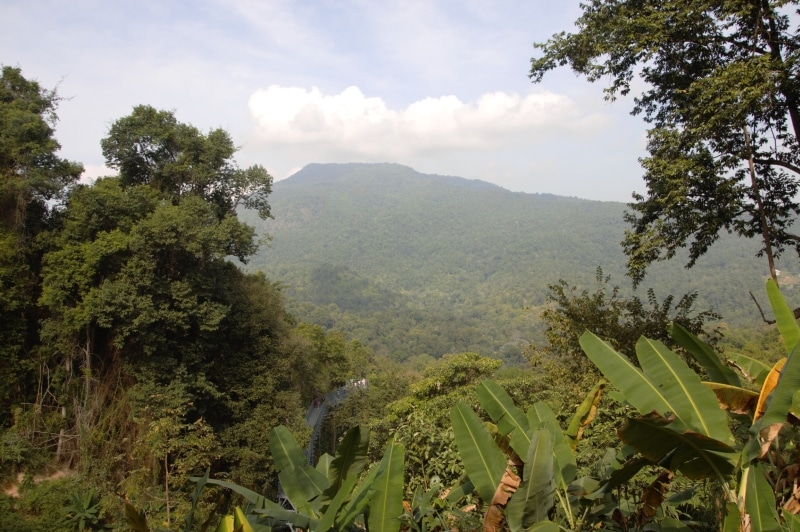
The main challenge is driving in mountainous areas due to sharp curves and steep roads. If you’ve never driven in this type of area before, it’s a good idea to learn how to properly use brakes, engine brakes, and gears.
Also, avoid driving during long holidays and weekends due to increased traffic.
Requirements
There are only two requirements to rent a car in Chiang Mai:
- Driving license: You need an international driver’s license. While some may say they were able to rent a car with a license from their home country, it’s not always the case. You may be stopped by traffic police and fined, or the insurance may not cover you in the event of an accident.
- Age: You need to be at least 21 years old. Some car rental companies may require you to be at least 25 years old.
Cost
The table below shows the cost of renting a car per day in Chiang Mai:
| Type | Car Models | Daily Rental Cost (THB) |
| Economy | Toyota Yaris, Mitsubishi Mirage, Nissan March, Honda Jazz, Nissan Almera | 800 – 1,000 THB |
| Compact | Toyota Vios Sedan, Honda City | 850 – 1200 THB |
| Standard | Toyota Altis, Honda Civic, Mazda 3 | 1,100 – 1,500 THB |
| Intermediate SUV | Haval Jolion, Honda HR-V, Toyota CH-R | 1,200 – 1,900 THB |
| Full-size SUV | Toyota Fortuner, Isuzu Mu-X, Mitsubishi Pajero Sport | 1,800 – 2,600 THB |
There are three key points to note:
- The cost can be slightly higher during the high season (November to February).
- On the other hand, it can be lower during the low season (May to October).
- You may receive a discount when renting for more than a week.
Which Car Should You Rent?
Since Chiang Mai has many mountainous areas, you should consider renting a car with enough power for driving uphill.
If you want a comfortable ride to places like Doi Suthep, Doi Pui, and Doi Luang Chiang Dao, it’s best to rent at least a standard sedan, such as a Toyota Altis or Honda Civic.
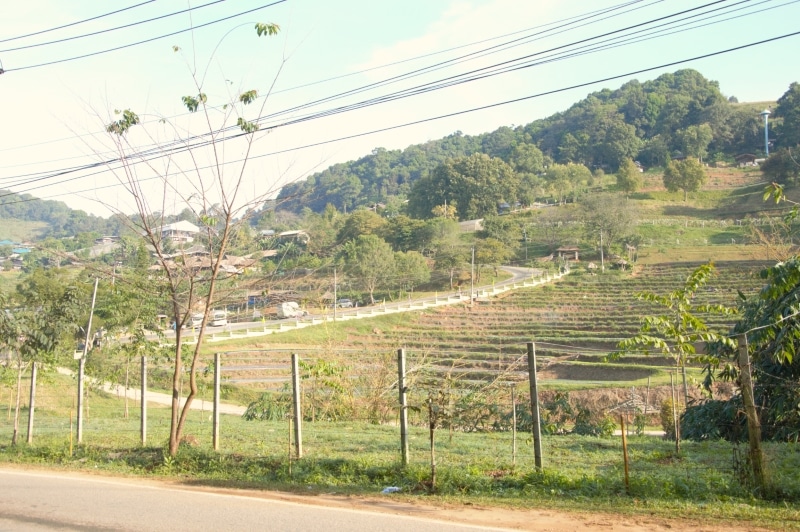
An economy car, such as a Toyota Yaris, Nissan Almera, or Nissan March, isn’t recommended. While it’s possible to drive uphill, these cars may lack the power to overtake, which could be necessary in certain situations.
However, if you plan to drive mainly within the city, any car model will suffice.
Additional Costs
Like other places in Thailand, there are additional costs to renting a car in Chiang Mai, including:
- Additional Insurance: Full coverage typically adds THB 200 – 400 per day.*
- Child seat: THB 100 – 150 per day.
- Additional driver: THB 100 – 200 per day (depending on the insurance company).
*Rental cars in Chiang Mai usually come with basic insurance. However, without purchasing additional insurance, you may have to pay a car excess of THB 5,000 to THB 10,000 on average in the event of an accident. Here you can find out more about car insurance for rental cars.

Recommended Car Rental Companies in Chiang Mai
There are both local and international car rental companies in Chiang Mai.
Generally, local car rental companies offer cheaper deals, but their regulations can be stricter than those of international companies. For instance, they may not provide a grace period for returns.
Notable car rental companies in Chiang Mai include:
- Asap Car Rental (local company)
- Yesaway Car Rental (local company)
- Thai Rent a Car (local company)
- Sixt
- Europcar
In addition to these companies, there are smaller-sized companies throughout Chiang Mai. They may offer more flexibility and lower prices compared to larger companies. However, their policies may differ.
How to Book a Rental Car
The easiest way to rent a car in Chiang Mai is to use Discover Car, which allows you to compare deals from various companies at once.
Once you find the best deal, you can book it directly through the site.

After booking, visit the car rental counter and follow these steps:
- Show your booking confirmation.
- Inspect the car and take pictures of any noticeable damage.
- Make the payment.*
- Make a deposit of THB 5,000 to THB 10,000, depending on the car model. It may be higher for luxury models.*
*Generally, only credit cards (MasterCard and Visa) are accepted for payment and deposits.
Pick-Up and Drop-Off Location
Chiang Mai Airport is the most popular pick-up and drop-off location. Most car rental companies operate from there.
Alternatively, if you want to rent from the city center, smaller local rental companies can be found throughout Chiang Mai.
Notable companies based on Google Maps reviews include:
It’s also possible to arrange a different pick-up and drop-off location if it’s within the Chiang Mai city area and Chiang Mai Airport.
Picking Up Your Car at Chiang Mai Airport
Chiang Mai International Airport (CNX) sits only about 4 km from the old city, so it’s the easiest pick-up point if you’re flying in and want a car waiting.
Most international chains and several local companies keep a counter inside or just outside the arrivals hall. A few smaller local companies don’t have a desk at the terminal and instead send someone to meet you and drive you to their office nearby, so confirm exactly where to go when you book.
Bring your booking confirmation, passport, International Driving Permit, and home-country license to the counter. If your flight is delayed, message the rental company as soon as you know. Larger chains will usually hold the car, but smaller local companies with stricter policies may not.
- Compare prices and availability across counters through Discover Car before you land, so you already know which company to walk to.
- Staying in Chiang Mai long-term rather than just visiting? Our guide to living in Chiang Mai covers longer-term transport options too.
Returning a Car
Most car rental companies follow a similar process when it comes to returning a car:
- Return the car to the drop-off location.
- Hand over the car key.
- The car rental company will inspect the car.
- If everything is in order, you should get your full deposit back within 24 hours.
Note: Depending on the company’s policy, you may be charged THB 100 per hour for a late return.
Fuel
In most cases, rental cars come with a full tank of fuel. You should also fill up the tank before returning the car.
If you don’t, you’ll be fined, and the cost will be much higher than filling it up yourself.
Additionally, ask the car rental company about the fuel type for your vehicle. Thailand has several fuel options. Read our article on how to fill up your gas tank in Thailand for more details.
Do I Need to Book in Advance?
While you can book directly at the car rental counter when you arrive, it’s recommended to book in advance for several reasons:
- You can choose the car model you prefer.
- You won’t have to wait in line.
- Booking in advance may give you a better deal.
- If it’s high season, booking in advance ensures a car will be available for you.
More Tips About Driving in Chiang Mai
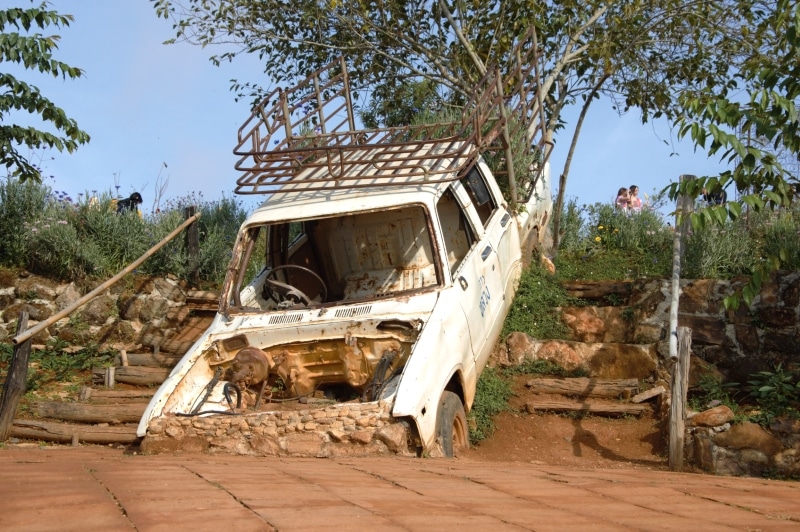
Here are some useful tips for driving in Chiang Mai:
- Don’t always trust GPS: While it’s helpful to use GPS, especially outside the city, the fastest route isn’t always the safest. Stick to the main roads and study the route beforehand.
- Don’t drive at night: Driving in mountainous areas at night can be dangerous due to poor visibility.
- Speed limit:
- In the city, the speed limit is typically no faster than 80 km/h. Traffic often makes it hard to exceed this limit.
- Outside the city, the speed limit ranges from 90 to 120 km/h. Always check the speed limit signs.
- Driving faster than 140 km/h is considered reckless, and the car rental company may cancel your agreement.
- Vehicle right of way: While right of way technically exists, not many people observe it, so proceed with caution.
- Overtaking: Thai drivers tend to be fast, and overtaking (and even undertaking) is common outside the city. Be mindful of your surroundings.
- Honking: In Thailand, honking is generally used to signal when another driver is doing something wrong. It’s not well-received, so use it sparingly. If someone honks at you, it might mean you’re in the wrong.
- Parking:
- Inside the city: Free parking spots (black-painted curbs) are becoming harder to find. You’ll often need to park in paid lots or at department stores, which offer a few hours of free parking. After that, it’s around THB 20 per hour.
- Outside the city: Free parking is more available, except during long weekends or holidays in popular destinations.
For more detailed information, check out our article on driving in Thailand.
Driving the Mae Hong Son Loop, Pai, and Doi Inthanon
Chiang Mai is the starting point for two of northern Thailand’s best self-drive routes: the short trip up to Doi Inthanon National Park, and the longer Mae Hong Son loop through Pai. Our Chiang Mai travel guide covers both as day trips or multi-day routes if you’re still planning your itinerary.
Doi Inthanon, Thailand’s highest point, is about a 90-minute drive from the city on a paved, well-maintained road. There’s no need for a 4×4. Fill the tank before you leave the city, since fuel stations thin out as you climb, and expect cooler temperatures and fog near the summit, especially in the early morning.
The Mae Hong Son loop is a bigger commitment: a roughly 600 km circuit through Pai, Mae Hong Son, and Mae Sariang on highways 1095 and 108, best done over 3 to 4 days rather than rushed in one. Both highways are paved two-lane roads, but they’re known locally for hundreds of tight curves and steep switchbacks, so budget more driving time than the distance alone suggests.
A standard sedan or a small SUV with a bit more power handles this route more comfortably than an economy car, for the same reason it’s recommended for Doi Suthep and Doi Pui earlier in this guide. If you’d rather have a larger or more comfortable vehicle for the loop, our guide to luxury car rental in Thailand covers higher-end options.
Most Chiang Mai rental companies expect the car back where you picked it up. A few offer one-way rentals to Pai, Mae Hong Son, or Chiang Rai for an extra fee, but this isn’t standard, so ask directly when you book if you want to end the loop somewhere other than Chiang Mai.
- Fill up whenever you pass a fuel station on the loop. Long stretches between Pai and Mae Hong Son have none.
- Phone signal drops in and out on the mountain sections, so download offline maps before you set out.
- Avoid driving the loop after dark. Sharp curves, no streetlights, and animals on the road are a bad mix. Our guide on how safe Chiang Mai is covers getting around after dark more generally.
Alternative Options
If you don’t want to rent a car, here are a few alternative options:
- Rent a motorcycle: This is much cheaper, costing only a few hundred baht per day. However, it’s more dangerous. Many accidents occur, especially in mountainous areas, due to inexperience.
- Songthaew/Taxi: You can rent a songthaew (a modified pickup truck) or a taxi for a day tour. Prices range from THB 1,500 to THB 3,000, depending on the destination.
- Tour service: You can book a tour with companies like KKDay, which typically includes hotel transfers in the price.
- Public transport: You can go to the Chiang Mai Bus Terminal or the Van Station to take public buses or vans to various locations.
FAQ
Can I do a one-way rental from Chiang Mai to Pai or Chiang Rai?
Sometimes, but it’s not the default. Most Chiang Mai rental companies expect the car returned to where you picked it up, and only some offer one-way drop-off in Pai, Mae Hong Son, or Chiang Rai for an extra fee. Ask about this when you book if you’re planning a one-way route.
Do I need a 4×4 or SUV for Doi Inthanon or the Mae Hong Son loop?
No. The roads to Doi Inthanon and around the Mae Hong Son loop are paved two-lane highways, not off-road tracks. A standard sedan with reasonable power handles them fine. A 4×4 only helps if you’re planning to detour onto unpaved side roads.
Should I rent from the airport or from a company in Chiang Mai’s city center?
Renting at the airport is the most convenient option if you’re flying in, since most major companies have a counter there. City center rentals, often smaller local companies, can be cheaper and more flexible on pickup times, but you’ll need to get there yourself first, usually by taxi or ride-hailing app.
Should I rent a car or a motorbike for the Mae Hong Son loop?
A car is the safer choice for most people. The loop’s sharp curves and steep drops are demanding even for experienced motorcyclists, and accidents on this route are common among inexperienced riders. If you do choose a motorbike, read our guide on riding a motorcycle safely in Thailand first.
How much does it cost to lower the insurance excess for mountain driving?
Additional insurance to lower or waive your excess typically runs THB 200 to 400 per day, on top of the base rental price. Paying it is a reasonable trade-off on mountain routes like Doi Inthanon or the Mae Hong Son loop, where the odds of a minor scrape go up. See our broader guide to car insurance in Thailand for how excess and coverage work.
Do I need to convert to a Thai driving license if I’m staying in Chiang Mai long-term?
Your International Driving Permit is only valid for one year from when you enter Thailand. If you’re staying longer or renting cars regularly, converting to a Thai driving license is the more practical long-term option.
What should I do if I get in an accident on a rural road outside Chiang Mai?
Call the rental company’s emergency line first; the number is usually on your contract. Take photos of both vehicles and the scene before moving anything, and call 191 for police if anyone is injured or the other driver disputes fault. The nearest hospital in Chiang Mai may be far if you’re deep into the loop, so a basic first aid kit in the car is worth having.
When is the worst time to rent a car in Chiang Mai because of traffic?
Yi Peng and Loy Krathong in November, and the days around Songkran in April, bring the heaviest traffic and the highest rental demand in Chiang Mai. Book well ahead if your trip falls during either period, and expect popular routes like Doi Inthanon to be busier than usual.
Now, on to You
If you want to fully explore Chiang Mai, renting a car is one of the best options. It provides you with the convenience and flexibility to go wherever you want.
In addition, it’s affordable and easy to drive.
You can find many rental car companies throughout Chiang Mai. If you want to quickly find the best deal and have a rental car ready when you land at Chiang Mai Airport, you can easily do so through Discover Car.



 Deutsch:
 Français:
'/%3E%3Cpath%20fill='%23b2b2b2'%20d='M241%20382q0%2016%2017%2026%2017%2011%2042%2011t42-11q16-11%2017-26V269H241'/%3E%3Cpath%20fill='%239f7e00'%20d='M241%20379q0%2014%208%2023%209%209%2021%209%2014%200%2021-9%209-9%209-23V269h-59'/%3E%3Cpath%20d='M241%20339v-70h59v110q0%2014-9%2023l-6%205v-68h-15v72q-8%200-14-4v-68zm59%2040c0%2022%2015%2032%2029%2032%2021%200%2030-18%2030-32v-40h-59'/%3E%3Cpath%20fill='%239f7e00'%20d='M266%20277v5h2v12h-3v-5h2v-5h-9v5h2v5h-4v9h3v18h-5v10h34v-10h-5v-18h3v-9h-4v-5h2v-5h-9v5h2v5h-3v-12h2v-5zm42%20101q0%2010%206%2017%206%206%2015%207%2010-1%2016-7%206-7%206-17v-29h-43'/%3E%3Ccircle%20fill='%230044ad'%20cx='329.5'%20cy='372'%20r='6'/%3E%3Cellipse%20fill='%230044ad'%20cx='300'%20cy='340'%20rx='16'%20ry='21'/%3E%3C/svg%3E) Español:
Español: