
Foreigners can own Thai shares, collect dividends and send the money home. This guide covers which brokers accept expats, the documents you need, fees, NVDRs, taxes and the mistakes forum regulars warn about.
Buying Thai stocks is the easy part. Getting a broker to open the account is where most expats get stuck, because the questions come before you’ve picked a single share.
What visa are you on? Do you have a work permit? Where’s your Thai bank book?
The answers decide which broker will take you, and they don’t all give the same answer. One expat with a Non-Immigrant O visa was turned away by one broker and signed up at another the following month with nothing more than a passport.
This guide walks through all of it: who can open an account, which brokers accept foreigners, what it costs, which version of a share to buy, how dividends are taxed and how to get your money out again.
Contents
- Key Takeaways
- Can Foreigners Buy Thai Stocks?
- Why Invest Through a Thai Broker
- Requirements
- Which Brokers Accept Foreigners
- Documents
- The Application Process
- Costs
- Foreign Limits, F Shares and NVDRs
- Taxes on Your Thai Shares
- How to Take Your Money Out
- Alternatives to a Thai Brokerage Account
- Common Mistakes and Pitfalls
- FAQ
- Can I Open a Thai Brokerage Account on a Tourist Visa?
- Do I Need a Work Permit to Buy Thai Stocks?
- How Much Tax Do Foreigners Pay on Thai Dividends?
- Do Foreigners Pay Capital Gains Tax on Thai Stocks?
- Can Foreigners Buy Thai ETFs?
- What's the Difference Between -R and -F Shares?
- Can I Send My Profits Home?
- Sources Cited
Key Takeaways
- Foreigners living in Thailand can open a Thai brokerage account and trade SET-listed shares in their own name.
- You’ll need a long-stay visa, a Thai bank account and a Thai phone number. A tourist stamp won’t get you an account.
- Profits from selling SET-listed shares are tax-exempt for individual investors, and dividends carry a flat 10% withholding tax.
- Buy the -R (NVDR) or -F version of a share so the dividends reach you.
- Online commissions start around 0.15% of the trade value, and brokers differ on whether a work permit is required, so apply at a broker’s head office rather than a bank branch.
- Keep proof of every transfer you bring into Thailand. It makes sending the money home later much simpler.

Can Foreigners Buy Thai Stocks?
Yes, foreigners can buy shares listed on the Stock Exchange of Thailand (SET) and its smaller-company board, mai, through a Thai securities company, and they receive dividends and sale proceeds in their own name. There’s no special investor visa involved.
Most of the big brokers are owned by a Thai bank.
- Bualuang Securities belongs to the Bangkok Bank group
- KSecurities to Kasikornbank
- InnovestX to SCB
You’ll place orders through an app, most often Streaming, which nearly every Thai broker uses.
The limits that do exist sit at the company level. Most listed companies cap how much of their stock foreigners can own, and that’s why Thai tickers come in several versions. The section on foreign limits below explains which one to pick.
Why Invest Through a Thai Broker
Profits from selling shares on the SET are tax-exempt for individual investors in Thailand, whether you’re a Thai tax resident or a foreigner who isn’t doing business here. (Verified September 2026.) For long-term investors, that’s the biggest draw.
The other benefits are smaller but add up:
- Flat dividend tax: dividends from Thai listed companies have 10% withheld at source, and dividends from companies promoted by the Board of Investment are tax-exempt.
- No tax on share sales: the Finance Ministry scrapped its planned transaction tax on share sales in September 2023, so selling costs nothing beyond commission and fees.
- Lower costs than trading from abroad: Thai stocks bought through brokers outside Thailand usually come with much higher commissions than a local online account.
- A use for the baht you already have: if you earn or hold THB here, you can invest it without converting it to another currency and back.
The main downside is the market itself. The SET is dominated by banks, energy and telecom companies, and English-language company data can be thin once you move beyond the large caps.
Requirements
To open a Thai brokerage account as a foreigner, you’ll need to
- be at least 20
- live in Thailand on a long-stay visa
- have a Thai bank account
- have a Thai-registered mobile number
(Verified September 2026.)
KSecurities lists exactly those qualifications on its foreigner account page, and other brokers ask for much the same.
A tourist visa or visa exemption stamp won’t work. The Thai bank account you need first is itself hard to open without a long-stay visa, and some bank branches ask for a yellow house registration book on top of that.
What Brokers Actually Ask For
A work permit is the simplest document to show, but it isn’t required everywhere. KSecurities accepts any of these Thai government documents with your photo:
- A work permit
- An alien registration book
- Another Thai government document with your photo, such as a pink ID card
If you don’t have any of those, KSecurities will take one of these instead:
- A yellow house registration book (Tor.Ror.13)
- A Non-Immigrant visa, such as a retirement or marriage visa
- A 90-day report receipt from immigration
Retirees and spouses on a retirement visa or marriage visa can usually get an account at KSecurities without a work permit. Your latest 90-day report receipt can also serve as the supporting document.
If You Live Outside Thailand
Foreigners who live abroad generally can’t open a retail account with a Thai broker, because the brokers’ requirements assume a Thai address, a Thai bank and a Thai phone number. The practical routes are an international broker that offers SET access, or a fund that holds Thai shares.

Both are covered under alternatives below.
Which Brokers Accept Foreigners
Bualuang Securities and KSecurities both publish English-language account-opening steps for foreigners, so they’re the most predictable places to start. (Verified September 2026.) Other brokers accept foreigners too, but the rules often depend on the branch and the staff member.
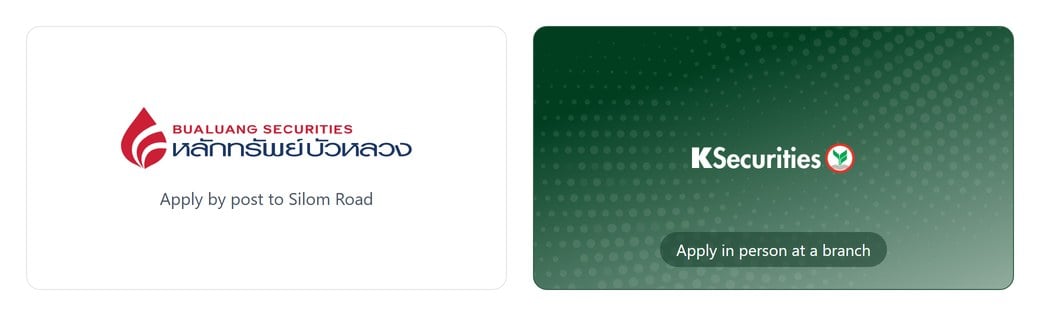
- Bualuang Securities: you post certified copies of your documents to its Digital Investment Service team at Zuellig House on Silom Road, and your username and password arrive by email in about five business days. It asks for a work permit copy only if you work in Thailand. In an expat forum thread in November 2025, an investor opened an account with just a passport and a Non-O visa.
- KSecurities: you fill in the forms and take them to a KSecurities branch. It accepts the widest published range of alternatives to a work permit, listed above.
- InnovestX (SCB): forum members report it accepts foreigners without a work permit, but one had to visit the main branch in person to apply.
- Krungsri Securities: the same November 2025 forum thread reported a refusal for a foreigner without a work permit.
App-only investing platforms are a dead end for most foreigners. Their sign-up flows expect a Thai ID card or a Thai-language name. Online identity checks through NDID are built around the Thai ID card too, which is why a paper application or a branch visit is still the normal route for expats.
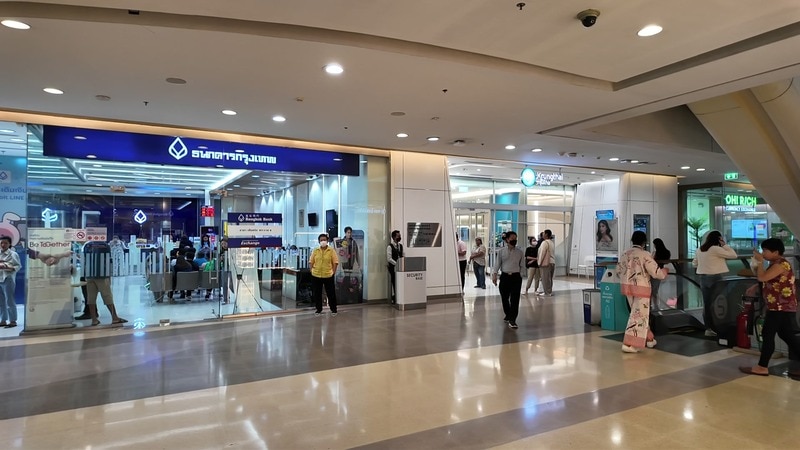
Tip: Apply at the broker’s head office or its own branch, not at the parent bank’s branch. Bank tellers deal mostly with mutual funds, and forum regulars say that’s where you get steered into a fund you didn’t ask for.
US citizens can open accounts at Thai brokers, but they’ll sign a FATCA form (W-9), and Bualuang doesn’t let US citizens buy US stocks through its global investing account. Everyone else signs a W-8BEN declaring they’re not a US person.
Documents
A Thai brokerage application for a foreigner needs your passport, a Thai government document linking you to Thailand, proof of your Thai address and a copy of your Thai bank book. (Verified September 2026.) The table below combines what Bualuang and KSecurities publish.
| Document | What it’s for |
|---|---|
| Passport (original, plus one or two copies) | Identity. Bualuang wants two certified copies by post; KSecurities wants the original at the branch. |
| Work permit, yellow book, pink card, Non-Immigrant visa or 90-day receipt | Proof you live in Thailand. KSecurities accepts any one; Bualuang asks for the work permit only if you work here. |
| Utility bill, phone bill, credit card statement or bank statement | Proof of your Thai address (KSecurities). It must show your name, the same address as the form, and be from the latest month. |
| Copy of your Thai bank book | Where dividends and withdrawals go, and the account for automatic settlement. |
| W-8BEN or W-9 form | US tax status declaration (FATCA). US citizens sign the W-9. |
| Account application and suitability questionnaire | The broker’s own forms, including a short test of your investment experience and risk tolerance. |
The broker may ask for more once it reviews your file. A Thai tax ID isn’t on either published list, but it’s useful to have if you ever want to reclaim dividend tax.
The Application Process
Opening a Thai brokerage account as a foreigner usually takes about a week from application to first login. Bualuang quotes about five business days for approval once it has your documents. (Verified September 2026.)
- Open a Thai bank account first: every broker links your trading account to a Thai bank account for dividends and withdrawals.
- Choose a broker and an account type: see Cash Balance vs. Cash Account below. Tell the broker clearly which one you want.
- Submit the forms: by post (Bualuang) or at a branch (KSecurities). Expect a stack of signatures, a FATCA declaration and a suitability questionnaire.
- Wait for approval: you’ll get an account number and login details by email, and an SMS code to your Thai number for the first login.
- Fund the account: transfer baht from your Thai bank. A Cash Balance account must be funded before you can trade.
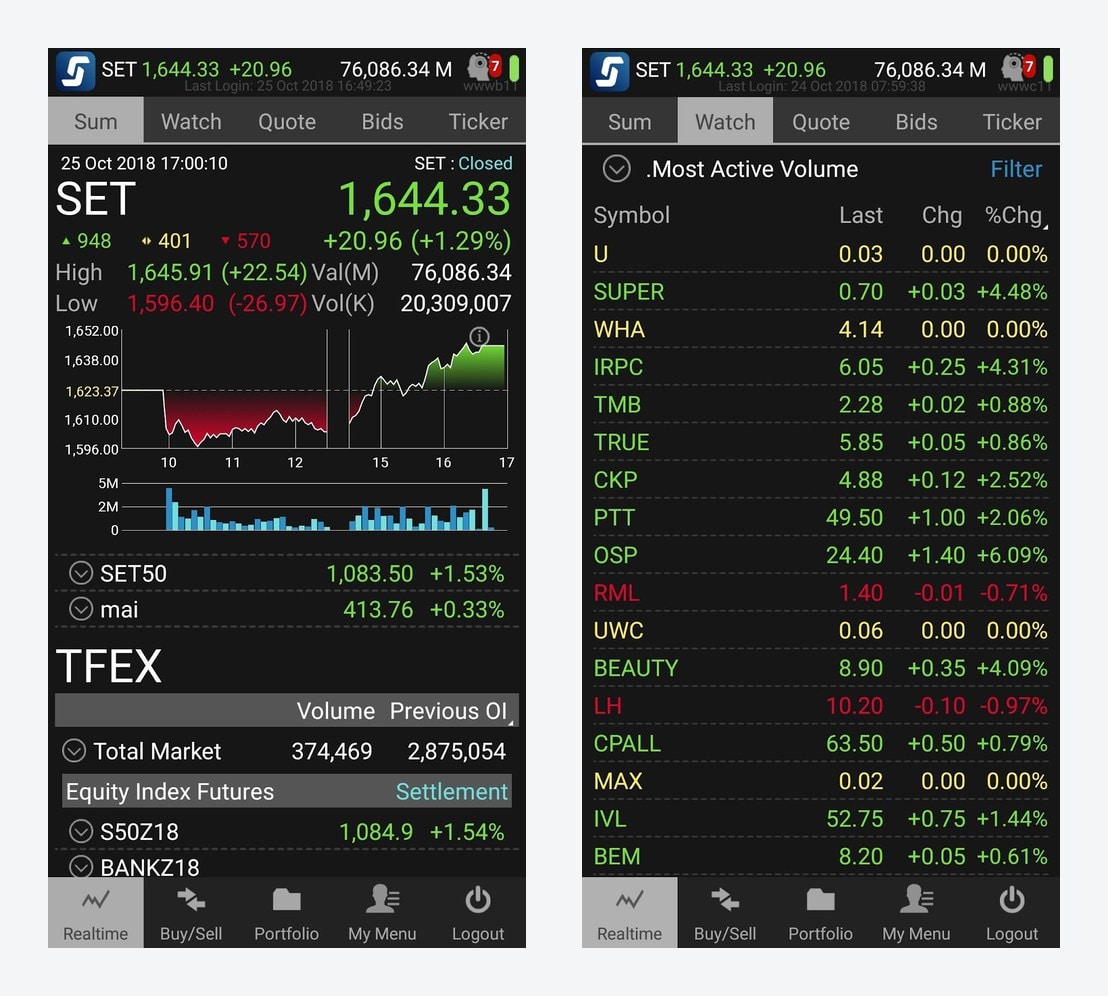
- Install the trading app: most brokers use Streaming. Ask your marketing officer (the Thai term for your account rep) to walk you through placing an order.
Cash Balance vs. Cash Account
Thai brokers offer two basic account types, and the choice affects both your commission and how easily you can repatriate money later:
- Cash Balance account: you deposit money with the broker first and trade from that balance. KSecurities charges 0.15% online on this account, and the broker holds your cash between trades.
- Cash Account (ATS): trades settle automatically against your Thai bank account through the Automated Transfer System, so sale proceeds land back in your bank. KSecurities charges 0.20% online plus a THB14 settlement fee.
For foreigners who plan to send money home one day, the Cash Balance account has an extra advantage, covered under taking your money out below.
Read more:
- How to Open a Thai Bank Account in 2026: Requirements, Best Banks, and Tourist Rules
- Easiest Place to Open a Thai Bank Account
Costs
Online commission at a Thai broker starts around 0.15% of the trade value, plus exchange and regulatory fees of 0.007% and 7% VAT on the total. (Verified September 2026.) Trading through a marketing officer costs more, at 0.25% for most retail trade sizes.
| Daily trade value | Through a marketing officer | Online, Cash Balance | Online, Cash Account (ATS) |
|---|---|---|---|
| Up to THB5 million | 0.25% | 0.15% | 0.20% |
| THB5-10 million | 0.22% | 0.13% | 0.18% |
| THB10-20 million | 0.18% | 0.11% | 0.15% |
| Over THB20 million | 0.15% | 0.10% | 0.12% |
On top of commission, every trade carries the same exchange fees at every broker:
- SET trading fee: 0.005% of the trade value
- Clearing fee: 0.001% of the trade value
- Regulatory fee: 0.001% of the trade value
- VAT: 7% on the commission and fees combined
Watch for daily minimum commissions if you buy in small amounts. Bualuang charges no minimum on a Cash Balance account traded online with email confirmations, but THB100 a day on an ATS account with statements by post. KSecurities advertises no daily minimum.
As a worked example, a THB100,000 online purchase at 0.15% costs THB150 in commission plus THB7 in fees, and 7% VAT brings the total to about THB168.
Foreign Limits, F Shares and NVDRs
Foreign ownership of most Thai companies is capped at 49% under the Foreign Business Act, and some sectors, such as commercial banks, are capped at 25%. A company’s own articles can set a lower limit. Once foreigners hold the maximum, new foreign buyers need a different version of the share.
Each listed company can show up under several tickers in your trading app:
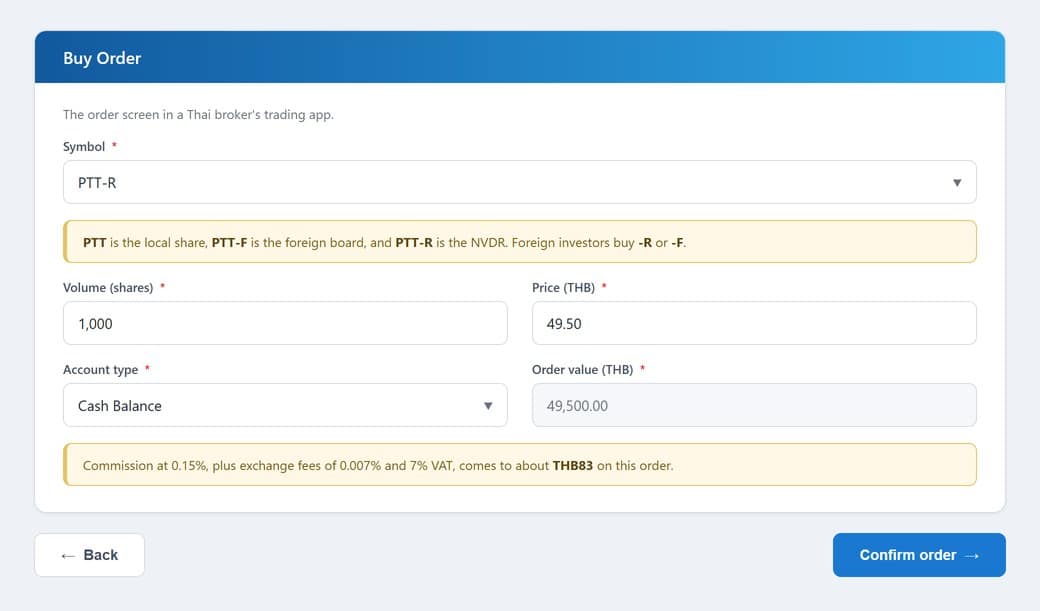
- Foreign shares (-F): registered on the foreign board in your name, with the same dividends and voting rights as a Thai shareholder. They’re only available while the company has foreign room left, and popular -F shares can trade at a premium when that room runs out.
- NVDRs (-R): non-voting depository receipts issued by Thai NVDR Co., a SET subsidiary. They carry the same price and financial benefits as the underlying share, including dividends and rights offerings, but no vote. They aren’t affected by the foreign limit.
- Local shares (no suffix): the main board where Thai investors trade.
Since 4 June 2024, only foreign customers can buy NVDRs. The SEC changed the rules to stop Thai investors using NVDRs to hide their holdings, which keeps the -R line reserved for foreigners.
Which Version to Buy
Buy the -R (NVDR) version by default, or the -F version if the company still has foreign room and you want voting rights. For a small shareholder, losing the vote at the annual meeting makes little practical difference.
Avoid holding plain local shares. The veteran investor behind Thaistocks.com warns that many brokers no longer protect a foreigner’s dividends and rights offerings on local shares. An expat forum thread records a buyer who bought local shares without being warned, then paid a fee to move them to the foreign board before dividend time.
Tip: Check the suffix on the order screen before you confirm. PTT, PTT-R and PTT-F are the same company, but only the last two are meant for you.
If foreign room opens up later, you can ask your broker to convert NVDRs into -F shares.
Taxes on Your Thai Shares
Individual investors pay no Thai tax on profits from selling SET-listed shares, and dividends from Thai listed companies have 10% tax withheld before the money reaches you. (Verified September 2026.) For most foreign investors, those two rules cover everything.
Dividends
The 10% dividend withholding tax applies to foreigners and Thais alike, and it comes off automatically before the dividend lands in your bank account. The company issues a withholding tax certificate for the amount deducted. Dividends from companies promoted by the Board of Investment are exempt.
If you’re a Thai tax resident (in Thailand 180 days or more in a tax year), you can treat that 10% as your final tax on the dividend and leave it out of your return. That’s the simplest option, and many investors never file for their dividends at all.
Claiming Back the 10%
Thai tax residents can instead include their dividends in a Thai tax return and claim a dividend tax credit for the corporate tax the company already paid. If your total income is modest, that can mean a refund of some or all of the 10% withheld.
In the expat forums, regulars point out that a foreigner with a Thai tax number can claim this back every year, and it’s easy to overlook. You’ll need a Thai tax ID, the withholding certificates and a personal income tax return. The credit is added to your income and then deducted from the tax due, so run the numbers both ways before you file.
Funding the Account From Abroad
Thai tax residents are taxed on foreign income they bring into Thailand, so the money you transfer in to fund a brokerage account can have a tax angle of its own. Whether a given transfer is taxable depends on whether it’s income or savings and when it was earned. The details are in our guide to foreign income tax in Thailand.
Thai ESG Funds
Thai ESG funds bought between 1 January 2024 and 31 December 2026 give a tax deduction of up to 30% of assessable income, capped at THB300,000 a year, if you hold the units for at least five years. (Verified September 2026.) Foreigners can buy these funds through a Thai bank or broker.
The deduction only helps if you have Thai taxable income and file a Thai return. For a retiree who doesn’t file, a Thai ESG fund is just another equity fund with a five-year lock-up.
How to Take Your Money Out
Foreigners can sell Thai shares and send the proceeds abroad, but Thai banks ask where the money came from before they’ll process a large transfer out. The easiest proof is a paper trail showing you brought the money into Thailand in the first place.
Keep the bank records for every inbound transfer. Hold on to your broker statements too, since they link the money you put in to the money you’re taking out.
The account type matters here. The investor behind Thaistocks.com, who has lived in Thailand for 35 years, recommends a Cash Balance account for foreigners who may repatriate. Your money then stays with the broker between trades instead of mixing with other funds in your bank account, where the bank may later ask you to prove it came from abroad.
For smaller sums, many expats skip the bank wire and send money out of Thailand through a money transfer service instead. It’s usually cheaper than a bank’s international transfer.
Alternatives to a Thai Brokerage Account
If you can’t open a Thai brokerage account, or don’t want to pick individual stocks, you can invest in Thai shares through funds or a broker outside Thailand. Each route trades convenience for cost in a different way.
- Thai mutual funds: sold at any Thai bank branch using your regular bank account, with no brokerage account needed. Compare fees and past performance before you buy, because bank staff tend to push the fund of the month.
- SET-listed ETFs: bought through your brokerage account like a share. Foreigners can buy them, even if a marketing officer tells you otherwise; one forum member who was first told no ended up buying a gold ETF through Bualuang. Check the expense ratio, as some Thai ETFs charge far more than their Western equivalents.
- International brokers with SET access: an option if you live outside Thailand. Expect higher commissions than a local account and check that the broker covers the Thai market before you open.
- Thailand funds abroad: many international fund houses run a Thailand fund or ETF, usually priced in US dollars, so your return moves with the baht as well as with Thai shares.
Our investor hub compares these with property, bonds and starting a business.
Common Mistakes and Pitfalls
Most problems foreigners report with Thai brokerage accounts come from setup choices made on the first day. These are the ones that come up again and again in expat forums:
- Buying local shares: the most common confusion in forum threads. Stick to -R or -F tickers so dividends and rights reach you without a conversion fee.
- Asking for advice at a bank branch: the consistent advice in the expat forums is not to ask a bank teller where to invest. You’re likely to walk out with a high-fee mutual fund.
- Being talked into frequent trading: marketing officers earn from commissions, and Thaistocks.com warns that many will nudge you toward trading instead of investing. A polite “I’m a long-term investor” usually ends it.
- Taking one refusal as final: one broker’s no doesn’t mean every broker’s no. Rules on work permits vary between brokers and even between branches.
- Choosing the account type by accident: if you plan to repatriate, ask for a Cash Balance account and say so clearly at sign-up.
- Expecting everything in English: Streaming has an English mode, but company announcements, research and some support are Thai-first. The larger brokers assign English-speaking marketing officers, so ask for one.
Tip: Before you pick stocks, look at the SET’s own company pages for financial history and dividend records. Some smaller listed companies are run mainly for the benefit of their owners, and long-run data in English is harder to find for them.
FAQ
Most questions foreigners ask about Thai brokerage accounts come down to visas, tax and getting money home.
Can I Open a Thai Brokerage Account on a Tourist Visa?
No, Thai brokers require you to live in Thailand, and a tourist visa or visa exemption stamp doesn’t meet that requirement. You’ll also struggle to open the Thai bank account the broker needs.
Do I Need a Work Permit to Buy Thai Stocks?
No, a work permit isn’t required at every broker. KSecurities accepts a Non-Immigrant visa, a yellow book or a 90-day report receipt instead, and Bualuang asks for a work permit only if you work in Thailand.
How Much Tax Do Foreigners Pay on Thai Dividends?
Foreigners pay a flat 10% withholding tax on dividends from Thai listed companies, deducted before the payment reaches you. It isn’t the 30% some expats expect from US-style rules, and dividends from BOI-promoted companies are exempt.
Do Foreigners Pay Capital Gains Tax on Thai Stocks?
No, individual investors pay no Thai tax on profits from selling shares on the SET. Your home country may still tax the gain, depending on where you’re tax resident.
Can Foreigners Buy Thai ETFs?
Yes, foreigners with a Thai brokerage account can buy SET-listed ETFs the same way they buy shares. If your marketing officer says otherwise, ask them to check.
What’s the Difference Between -R and -F Shares?
-F shares are registered in your name on the foreign board with full voting rights, while -R shares (NVDRs) give the same dividends and price but no vote. NVDRs don’t depend on the company’s foreign ownership limit, so they’re always available.
Can I Send My Profits Home?
Yes, foreigners can repatriate sale proceeds and dividends. Keep records of the money you brought into Thailand and your broker statements, because banks ask for the source of funds on larger outbound transfers.

Sources Cited
- Stock Exchange of Thailand, Tax: capital gains exemption for individuals, 10% dividend withholding tax, BOI dividend exemption.
- Thai NVDR Co., FAQs: NVDR financial benefits, voting rights, conversion to foreign shares.
- SET Circular PorKor.(Wor) 4/2567: NVDR purchases limited to foreign customers from 4 June 2024.
- Clearstream, Investment regulation Thailand: 49% foreign shareholding limit under the Foreign Business Act, 25% for commercial banks.
- Revenue Department, Revenue Code Sections 38-64: 180-day residence rule, dividend tax credit, 10% final tax election on Thai dividends.
- KSecurities, Open Account for Foreigners: qualifications and accepted documents.
- KSecurities, Securities Trading Commission and Fees: commission rates, exchange fees, THB14 ATS fee.
- Bualuang Securities, How to Open a Trading Account: foreigner documents, postal application, five-day approval, US citizen restriction.
- Bualuang Securities, Commission Rates: daily minimum commission by account type.
- Bangkok Post, Planned financial transaction tax axed: Finance Ministry dropping the share-sale tax, September 2023.
- SCB, New Tax Criteria for Thai ESG: THB300,000 cap, 30% of income, five-year holding period for 2024-2026 purchases.
- Thaistocks.com, As a foreigner, how to open a Thai broker account: account types for repatriation, marketing officer practices.