Thailand is one of Southeast Asia’s largest economies and has courted foreign investors for decades. But “Thailand is good for investment” doesn’t tell you where, in what, under what rules, or with what risks. This guide breaks it down across the main categories: real estate, business, stocks, bonds, private equity, and crypto, each with its own Thailand-specific complications.
Contents
- Thailand's Investment Environment
- Real Estate Investment
- Opening a Business
- Investing in the Stock Market
- Private Equity
- Cryptocurrencies
- Which Investment Makes Sense for You?
- Recommended Service Providers for Investors in Thailand
- Recommended Articles for Investors in Thailand
- Latest Articles for Investors in Thailand
Thailand’s Investment Environment
Thailand is part of the ASEAN Free Trade Area and a co-founder of the RCEP, with free trade agreements across Australia, China, Japan, New Zealand, South Korea, and EFTA. That puts it at a genuine crossroads between South and East Asia. For serious investors, the first useful entry point is the Office of the Board of Investment (BOI), a government agency that helps with tax incentives, import duty exemptions, and visa and work permit support. It’s worth getting acquainted with them early.
The Honest Investment Challenges
- Climate exposure. Floods and droughts increasingly affect agriculture and the broader economy; the 2012 floods that hit major industrial estates are the most-cited example.
- Political unpredictability. Thailand has had 20 constitutions since 1932 and numerous coups. The trajectory is hard to forecast.
- Foreign ownership restrictions. Almost every category has a legal ceiling on what foreigners can own. These are foundational features of Thai law, not loopholes.
- Language and bureaucracy. Processes are paper-heavy, and contracts and regulations are often only in Thai.
None of this makes Thailand a bad place to invest, but it makes due diligence more important than in more transparent markets.
Real Estate Investment
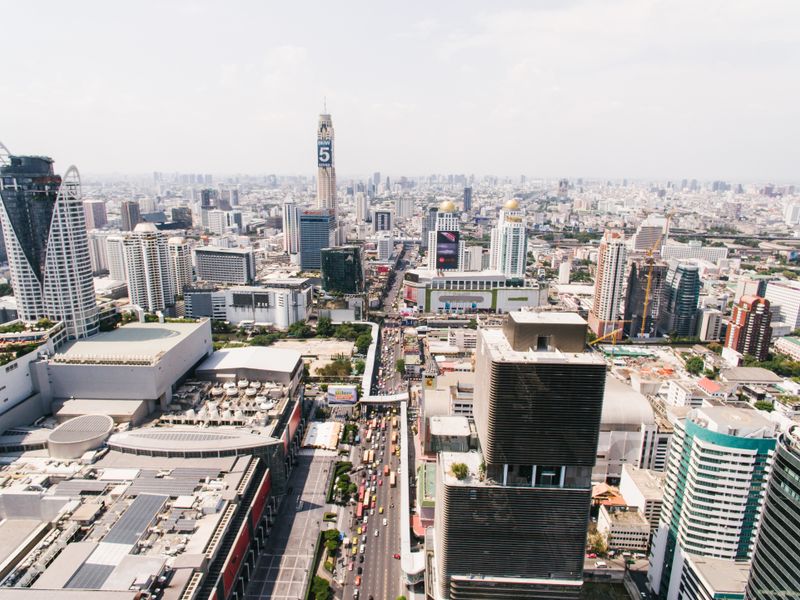
Real estate is where most foreigners start, and with good reason: strong tourism, and long-stay visa pathways like the DTV and LTR bringing in more residents. Foreign buyers transferred 14,899 condo units in 2025 (up 2.2 percent on 2024), with the average foreign purchase around THB4.1 million for a 41-square-meter unit.
What Foreigners Can and Can’t Own
- Condominiums (freehold): you can own a condo outright in your own name, as long as foreign ownership in the building hasn’t exceeded 49 percent of total sellable floor area. The cleanest structure available to foreigners.
- Land: foreigners cannot own land directly. This is not a grey area, Land Code Section 86 prohibits it, with criminal penalties for violations.
- Houses and villas: since they sit on land, foreigners typically use a 30-year registered leasehold with a superficies right (ownership of the building, not the land).
- Thai nominee structures: using Thai nominee shareholders to hold land is illegal and under active enforcement, with 46,000+ companies flagged and over 850 prosecutions.
One key practical note: your purchase funds must be transferred from abroad in foreign currency and converted to baht by a licensed Thai bank, which issues the Foreign Exchange Transaction (FET) form you need to register ownership. You can’t just wire baht from a Thai account.
The most active markets are Bangkok (widest range, with value along the BTS extension corridors), Phuket (rental yields of 5 percent to 12 percent cited for well-managed properties), Pattaya and Hua Hin (cheaper lifestyle markets), Koh Samui (legally more complex), and Chiang Mai (lower price points, growing expat base).
The case for it: lower entry prices than most Western markets, low property taxes, strong rental demand in tourist cities, and clear freehold rights for condos. The case against: no direct land ownership, real legal risk in Thai-partner structures, language barriers in contracts, and the 49 percent quota limiting options in popular buildings.
Read more: Our full guide to buying a condo in Thailand.
Opening a Business
Thailand is an attractive business environment for the right type of business, but it’s not straightforward. Setting up requires patience, a genuine understanding of Thai law, and ongoing help from lawyers and accountants.
The Foreign Business Act of 1999 restricts foreigners from 50 categories across three lists: List 1 (absolute prohibitions like newspaper publishing and agriculture), List 2 (national security and natural resources, with exceptions via a Foreign Business License), and List 3 (activities where Thais are deemed “not yet ready to compete,” also via an FBL). You can’t just open any business, you need to confirm your activity isn’t restricted.
There are three main ways to structure a business:
- Limited company: the most common structure, but current law caps foreigners at 49 percent of shares, so you need a trusted Thai majority partner. Nominee shareholders are illegal and increasingly enforced, so don’t rely on them.
- BOI-promoted company: if you qualify, you can hold 100 percent of shares plus income tax exemptions of up to 8 years, import duty exemptions, easier work permits, and the right to own land. The application is demanding but the benefits are substantial.
- Sole proprietorship: technically exists but rarely practical for foreigners. LLCs are not available in Thailand.
Running a business means regular obligations: monthly withholding tax, the PND 51 half-year and PND 50 annual returns, and VAT registration above the threshold. Work permits are required, and for every foreigner you hire, you generally need three to four full-time Thai employees (unless you have BOI promotion).
Read more: Our guides to setting up a BOI company and starting a business in Thailand.
Investing in the Stock Market
The Stock Exchange of Thailand (SET), founded in 1975, is the country’s only exchange. At the end of 2025 it listed 638 companies with a market cap around THB15.93 trillion (about US$506 billion). Performance has been mixed, foreign investors were net sellers in 2025, though early 2026 showed signs of recovery. There are four main ways for foreigners to participate.
- Thai brokerage account: the most direct route. You first need a Thai bank account (generally available on a long-term visa), then a brokerage account, most are bank-owned (Bualuang, Innovest X, Kasikorn, Krungsri). Trading is done through apps like Streaming. Capital gains on SET-listed shares are generally exempt from personal income tax; dividends are taxed at 10 percent withholding. When a stock’s 49 percent foreign quota is full, NVDRs (suffix “-R”) give economic rights without voting.
- Mutual funds: a hands-off option, bought from any Thai bank. Research first via the bank’s site or an aggregator like Finnomena, check NAV history and fees (typically 1 percent to 2 percent a year). Most Thai funds are positioned toward lower risk and lower returns.
- ETFs: bought through your brokerage like stocks. Fewer than 20 are listed on the SET, covering Thai and Chinese equities, gold, and commodities, a solid middle ground.
- Bonds: government and corporate bonds are issued periodically. Government bonds yield below 2 percent on average and sell out quickly, sometimes within hours. Low risk and predictable income, but low returns.
Private Equity
Private equity is available but comes with layers of legal complexity. Foreign investments in Thai portfolio companies fall under the Foreign Business Act, so Thai nationals must hold at least 51 percent of shares. Most firms handle this through a Special Purpose Vehicle (SPV) that invests via equity, debt, or a hybrid, giving economic exposure while sidestepping some direct ownership restrictions. Opportunities exist across food and beverage, fintech, robotics, e-commerce, and energy.
This is not an area to enter without professional legal advice. Enforcement has tightened, and the definition of “circumventing the shareholding limit” (Section 26 of the FBA) is still not precisely defined, which creates genuine legal exposure. The upside is real growth potential; the downside is significant upfront capital, illiquidity, and company-failure risk.

Cryptocurrencies
Crypto gained major traction in Thailand during 2020 to 2022, with exchanges like Bitkub (the largest Thai platform) emerging alongside Thai-specific coins. Opening an account is straightforward: personal details and a government ID. These platforms also support Bitcoin, ETH, and BNB.
The honest picture: crypto has delivered extraordinary returns for people who timed it right and very large losses for those who didn’t. The Thai market is no different from the global pattern, high risk, deeply unpredictable, and not a place for money you can’t afford to lose. The regulatory environment also continues to evolve.
Which Investment Makes Sense for You?
There’s no universal answer. The most useful frame is: invest in what you actually understand. If you know the Thai property market and can spot a good condo in a strong location, that’s a real edge. If you have no feel for stock analysis, a low-risk mutual fund beats picking SET companies yourself. If you have relevant business experience and an idea that fits BOI criteria, a company here can be genuinely rewarding. If none of those apply, government bonds or ETFs are a quiet place to start.
The mistake most people make is investing in something because they saw someone else do well with it, without understanding how or why. The investments that make money here share a few things: real due diligence, professional legal and tax advice, and patience.
A note before you invest: this guide is a broad map of your options, not financial advice. Your tax residency, home-country reporting obligations, risk tolerance, capital, and timeline all affect what makes sense. Before committing money, work with professionals who know the Thai landscape, a lawyer familiar with Thai property or business law and a financial advisor who understands cross-border investing. That advice is always cheaper than getting it wrong.
Recommended Service Providers for Investors in Thailand
- Wise: move investment funds into Thailand at the mid-market rate (useful for FET-compliant condo purchases).
- ExpatTax Thailand: cross-border tax advice on residency and remitted income.
- Cigna: international health insurance for long-stay investors.
- Luma: affordable local health cover that meets visa requirements.
- CheckDi: compare health insurance quotes from several insurers.
- Agoda: hotels and domestic flights for property-scouting trips.
- Discover Cars: compare car rentals while you view properties.
- Airalo: a Thailand eSIM so you’re connected on arrival.
- NordVPN: secure access to your home brokerage and banking.
- ThaiPod101: enough Thai to navigate contracts and officials more confidently.
Click here to see a complete list of all services you need as an expat in Thailand.

Recommended Articles for Investors in Thailand
 General: Is It a Good Idea to Do a Business in Thailand? - When my former business partner and I picked out Thailand, I was 22 years old. Thailand was on our radar because he had done an internship here. That was … ...
 Buying a Condo in Thailand: Costs, Quota & Legal Steps (2026) - A complete guide to buying a condo in Thailand: the 49% foreign quota, taxes, the Land Office process, and how to resell later. ...
 Thailand Startup Visa (SMART Visa): Requirements, Benefits, and Duration - Thailand’s Board of Investment has been issuing SMART Visas since 2018, and many expats and their families have benefited from the convenience this visa offers. Initially, the SMART Visa was… ...
 Health Insurance in Thailand: What You Need to Know as an Expat in 2026 - Health insurance is one of the most sensible investments you can make as an expat in Thailand. This guide walks through your options, what they cover, what they cost, and… ...
 How to Buy a Car in Thailand: Costs, Financing & Registration (2026) - A complete guide to buying a car in Thailand: upfront and running costs, financing for foreigners, compulsory insurance, taxes, and how to register it. ...
 Currency Exchange in Thailand 2026: Best Rates & Fees Compared - Skip the airport: get the best currency exchange in Thailand at a SuperRich kiosk. Compare kiosk, bank, ATM, and card costs before you exchange baht. ...
 How to Send Money to Thailand: The Fast, Cheap, Reliable Way - ExpatDen's complete guide to sending money to Thailand, covering Wise, Remitly, bank transfers, SWIFT codes, and the best method for every situation. ...
Latest Articles for Investors in Thailand
- How to Open a Thai Bank Account in 2026: Requirements, Best Banks, and Tourist Rules
- Thailand Overstay: Rules, Fines, and Penalties
- Vaccinations for Thailand: Which Ones You Actually Need
- Real Estate Agents in Bangkok: How to Find the Best One
- Thai Driving License for Foreigners in 2026: Documents, Tests & Cost
- Personal Trainers in Bangkok: Prices, Gyms, and How to Choose One
- An Expat’s Guide to Cannabis in Thailand
- Mental Health in Thailand: Costs, Counseling, and Crisis Resources for Expats
- WorldRemit Review: Is It Legit, What It Costs, and How It Compares
- Thai SIM Cards in 2026: AIS vs. True (dtac) vs. eSIM
- Bangkok Bookstores: Where to Buy, Borrow, and Trade Books
- An In-Depth Guide to Hiring a Lawyer in Thailand
- Taxation in Thailand: 6 Common Mistakes and the Penalties
- Buying Property in Hua Hin: What You Need to Know Before You Invest
- Thai Residence Certificate: Cost, Documents & Where to Apply
- Car Rental in Thailand: Cost, Companies, Insurance & Rules
- Domestic Flights in Thailand: Airlines, Routes, and Cheap Tickets
- Non-Immigrant Visas to Thailand: an In-Depth Guide
- Thailand Re-Entry Permit 2026: Fees, Rules, and How to Apply
- Cost of Doing Business in Bangkok: ฿46,970 per Employee (2026)
If you want to read more than just our investment articles, you can find our full list of guides on this page.