

Since late 2024, Thai banks have been emailing and texting foreign customers asking them to sign tax forms. For Americans, those forms feed a US reporting system that has been running since 2010. This guide covers what FATCA is, what your Thai bank does with your details, which forms you owe, and how to catch up if you have never filed.
Thailand joined the system in April 2024. Kasikorn started working through its customer list a few months later, then Bangkok Bank, then Krungthai. If you bank here on a US passport, your account details are already on their way to the IRS.
None of that is a tax. It’s paperwork. And most Americans here get the paperwork wrong the same way, by worrying about the big form that doesn’t apply to them and never hearing about the small one that does.
Conversions here use the US Treasury’s 30 June 2026 rate of THB33.2 to US$1.
Contents
Key Takeaways
- Thailand’s FATCA agreement has been in force since 29 April 2024. Thai banks report US-held accounts to the Thai Revenue Department, which passes them to the IRS.
- The FBAR is the form that catches most Americans in Thailand. All your foreign accounts added together top US$10,000 for a single day, and you owe it.
- Most retirees never need Form 8938. Living abroad, it starts at US$200,000 on the last day of the year, or US$300,000 at any point, and doubles if you file jointly.
- Filing an FBAR doesn’t mean you owe tax.
- Your house or condo isn’t reportable. Thai mutual funds, RMFs and SSFs are, and they carry ugly US tax treatment.
- Never filed? The Streamlined Foreign Offshore Procedures cover three years of returns and six years of FBARs with no penalty, as long as the failure wasn’t deliberate.
- Renouncing US citizenship got much cheaper in April 2026, down from US$2,350 to US$450. The exit tax rules didn’t move.

What FATCA Is
FATCA is a 2010 US law that makes banks outside the United States report accounts held by US citizens and green card holders to the IRS. The full name is the Foreign Account Tax Compliance Act. The point of it is visibility.
It runs on agreements between governments. Thailand signed a Model 1 agreement, in force since 29 April 2024. Your Thai bank reports to the Thai Revenue Department, and the Revenue Department passes the file to the IRS.
Treasury now lists 113 jurisdictions with agreements in place. (Verified September 2026.) There’s no longer a country where an American can quietly keep a bank account.
FATCA creates no new tax. It creates a paper trail, and the US tax rules that already existed apply to whatever shows up on it.
FATCA and CRS Are Not the Same Thing
Your bank’s envelope usually covers two separate systems. That’s why your British neighbour gets a near-identical email and then compares notes with you in confusion.
- FATCA: American law, US persons only. This is what triggers the W-9 and the questions about US citizenship or a US birthplace.
- CRS: the Common Reporting Standard, an OECD agreement Thailand also joined. It covers tax residents of every participating country, so non-Americans get asked for a tax ID too.
An American usually signs the FATCA self-certification and a W-9. Everyone else signs the CRS form and a W-8BEN.
How Thai Banks Apply FATCA
Thai banks ask American customers for a W-9 and a Social Security number. Since 2024, many want a Thai tax ID as well. They’ve been collecting this since July 2014, so if you opened your account before then, yours is exactly the file a bank is now going back to fill in.
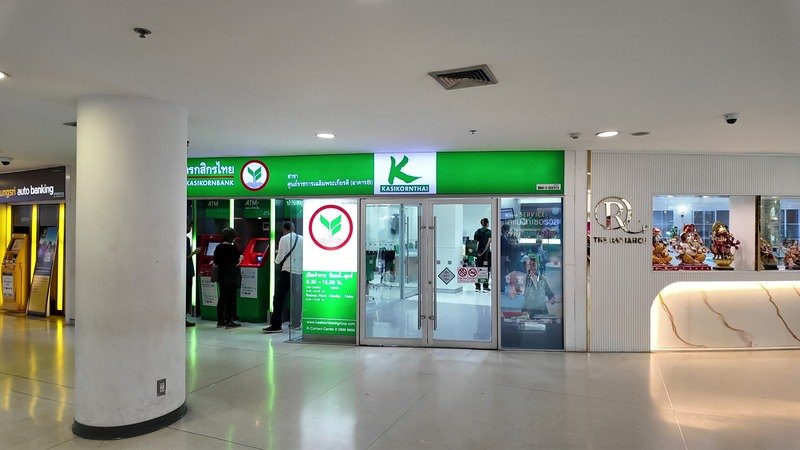
What the bank hunts for is any signal that you might be American. A US passport, obviously. A US birthplace on a non-US passport counts too, which is how people who left the States as babies find out they owe the IRS paperwork.
A US mailing address does it. So does a US phone number, or a power of attorney over your account held by someone back home.
The Thai tax ID is the awkward one if you split your year between countries. The Revenue Department hands them out to people who are tax resident or have Thai income. Spend under 180 days here with no local income and you’re stuck between a bank that wants a number and a revenue office that sees no reason to give you one.
Our guide on how to get a Thai tax ID covers what the office actually asks for.
If Your Bank Sends a FATCA Update Request
These requests are genuine. They started in November 2024, when Kasikorn emailed customers three attachments: a FATCA-CRS self-certification, a W-9 and a W-8BEN.
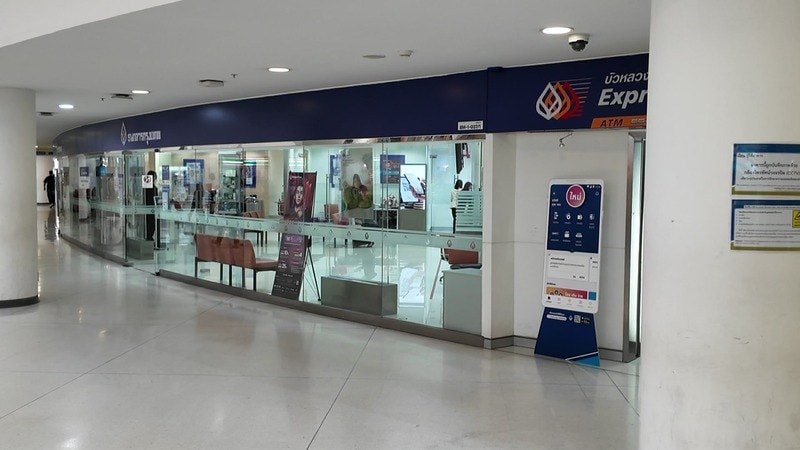
Bangkok Bank followed in February 2025. Krungthai sent an SMS the same month, opening with the word URGENT, and plenty of people took one look and assumed scam.
Fair enough. Thai banks get impersonated constantly, and the message read like every phishing text ever written. Customers at all three banks confirmed in the forums that it was real.
Tip: Never use a link or attachment in a bank SMS. Open your banking app, or walk into a branch with your passport and bank book and ask what they need. If the request is real, the branch will have it on file.
Bring your passport, bank book, Social Security number, and a Thai tax ID if you have one. Some branches send you home with the forms and want them back signed.

Retirees mostly worry about one account: the one holding THB800,000 (about US$24,000) for the visa extension. Forum reports do describe transfers getting blocked until the customer turns up at a branch, though the branch doesn’t always explain what triggered it. People who complied went back to normal banking.
Your bank’s paperwork and your visa extension are separate processes, and nothing in the FATCA agreement gives immigration a role in either. If you do get locked out of transfers, our guide on what to do when a Thai bank account is suspended covers the steps.
Refusing to sign is the one genuinely bad move. A bank that can’t document your status can restrict or close the account. Proving funds for a visa extension is hard enough without being shut out of Thai banking first.
Read more:
FBAR and Form 8938
Most Americans in Thailand owe the FBAR and not Form 8938. The thresholds are US$10,000 and US$200,000. One catches an ordinary retiree with a visa deposit and a spending account. The other is aimed at serious money.
They also go to different places. The FBAR goes to FinCEN, part of the Treasury, and has nothing to do with your tax return. Form 8938 is attached to your Form 1040 and goes to the IRS.
Filing one doesn’t cover the other. Plenty of people here owe both.
| FBAR (FinCEN Form 114) | Form 8938 | |
|---|---|---|
| Filed with | FinCEN, through the BSA E-Filing system | The IRS, attached to your Form 1040 |
| Threshold if you live abroad | All foreign accounts together over US$10,000 (about THB332,000) at any time in the year | Over US$200,000 (about THB6.6 million) on the last day of the year, or over US$300,000 at any time |
| Threshold, married filing jointly abroad | Same US$10,000 | Over US$400,000 on the last day, or over US$600,000 at any time |
| Deadline | 15 April, with an automatic extension to 15 October | The due date of your tax return, including extensions |
| Do you owe tax on it? | No, it is an information report | No, it is an information report |
That US$10,000 is cumulative, not per account. Two accounts with US$6,000 in each put you over. So does a single transfer passing through on its way somewhere else.
And it’s the highest balance each account touched during the year that counts, not the balance on 31 December. Sell a car in March, hold the cash for a week, spend it, and you still file.
Form 8938’s higher thresholds only apply if you genuinely live abroad. The IRS wants your tax home in a foreign country plus 330 days outside the US in a 12-month period. Split your year between Thailand and the States and you’re held to the US-resident thresholds, which start at US$50,000. (Verified September 2026.)
What Counts as a Reportable Asset
A Thai bank account goes on both forms. A Thai house in your own name goes on neither. In between, the two forms disagree with each other often enough to be annoying.
| Asset | FBAR | Form 8938 |
|---|---|---|
| Thai savings or current account | Yes | Yes |
| Thai fixed deposit | Yes | Yes |
| Thai mutual fund, RMF or SSF | Yes | Yes |
| SET shares held in a Thai brokerage account | Yes, the account itself | Yes, the account itself |
| Thai shares held directly, not through an account | No | Yes |
| A condo or house in your own name | No | No |
| Property held through a Thai company | No | The company interest is reportable, and its value includes the property |
| An account you only have signature authority over | Yes | No, unless you have an interest in it |
| Cash in a safe at home | No | No |
Signature authority catches people out. If you can move money out of an account by telling the bank to move it, that account goes on your FBAR even when none of the money is yours. Think of an employee with authority over the company account, or a daughter added to her elderly father’s Thai account.
Joint Accounts With a Thai Spouse
Hold a joint account with your Thai spouse and you report the whole balance, not your half. The form wants the account’s full maximum value.
Your spouse files nothing. The FBAR is for US persons, and a Thai national who isn’t a US citizen or green card holder has no obligation at all. The account gets reported because your name is on it.
Where both spouses are American, each files a separate FBAR, and each reports the full value of the joint accounts. One exception. If every account the non-filing spouse would report is jointly owned with the filing spouse, and they complete Form 114a, a single FBAR covers them both.
The usual forum advice is to keep your Thai spouse’s money in their own account. It keeps their finances out of a US filing and makes yours simpler. Some Thai spouses hate the idea of being reported to a foreign government, and that’s worth discussing before anyone opens a joint account.
Good to Know: Over-reporting isn’t a crime. There’s no penalty for listing an account you didn’t need to list, so if you can’t decide, put it on the form.
Thai Mutual Funds and the PFIC Problem
A Thai mutual fund is a PFIC under US rules, and PFIC tax treatment is punishing enough that most American expats won’t touch them. PFIC stands for passive foreign investment company. The rules exist to stop Americans sheltering investment income offshore, and they make no exception for a retiree who bought a fund because the bank teller suggested it.
Two things bite. Your gains get taxed at the top ordinary rate instead of the long-term capital gains rate, with an interest charge tacked on for every year you held the fund. Then each fund needs its own Form 8621, and preparers bill per form.
The products pushed hardest at long-term residents are exactly the ones caught:
- RMF: the retirement mutual fund, sold on a Thai tax deduction the IRS doesn’t recognise.
- SSF: the super savings fund. Same structure, same problem.
- Thai mutual funds generally: including the safe-looking bond funds banks suggest for parking cash.
- Investment-linked Thai life insurance: policies with a savings or unit-linked component.
In the expat forums this is one of the few questions that gets a unanimous answer. Keep your investments in a US brokerage account and buy US-domiciled funds. A THB15,000 Thai tax deduction is a poor trade for a US filing that costs more than that to prepare.
How to File
You file the FBAR yourself, online, free, through FinCEN’s BSA E-Filing system. No preparer needed. Have ready the name on each account, the account number, the bank’s name and address, the account type, and the highest balance it hit during the year.

Converting baht is the fiddly bit. Use the Treasury’s year-end rate, which is what the FBAR instructions call for. For 31 December 2025 that rate was THB31.66 to US$1. (Verified September 2026.)
You’re allowed another verifiable rate only when no Treasury rate exists, which never happens with the baht. Your bank’s TT rate is the wrong starting point, whatever the forums say about getting away with it.
Take each account’s highest balance, convert all of them at that one year-end rate, add them up. Don’t convert at the rate on the day of each peak.
Form 8938, if you need it, goes in with your tax return. Both forms are due 15 April.
The FBAR carries an automatic extension to 15 October, and Americans abroad get until 15 June for the tax return itself. You don’t have to ask for either.
For the return side of things, our guide on filing US taxes as an American expat in Thailand covers the documents and the preparers.
Penalties
The penalties look brutal on paper and land unevenly in practice. Miss Form 8938 and it starts at US$10,000, plus another US$10,000 for every 30 days after the IRS notifies you, up to US$60,000. Criminal penalties are possible on top.
FBAR penalties turn on intent. Non-willful runs up to US$10,000, adjusted for inflation each year. Willful runs to the greater of US$100,000 or half the account balance, which is where the horror stories come from.
Until 2023, the IRS counted those penalties per account. One taxpayer with 272 unreported accounts over five years was billed US$2.72 million. The Supreme Court threw that out and ruled that a non-willful penalty applies per report.
If you hold four or five Thai accounts, that ruling is the difference between one penalty and five.
Tip: Penalties get far more likely once the IRS finds you first. The catch-up programmes below are built for people who come forward, and they close the moment you’re under examination.
How to Catch Up If You Have Never Filed
The Streamlined Foreign Offshore Procedures let Americans abroad file three years of tax returns and six years of FBARs with no failure-to-file, failure-to-pay, accuracy or FBAR penalties. It’s the standard route for someone who moved here years ago and only just learned these forms existed.
You qualify if you live outside the US and the failure wasn’t willful. The IRS means negligence, inadvertence, mistake, or an honest misunderstanding of the law. The residency test asks for 330 days outside the US in one of the last three years, which any settled Thailand resident clears.
Then you file: three years of returns, six years of FBARs, and Form 14653 certifying that you didn’t do it deliberately. You sign that certification under penalty of perjury.
On cost, the forums agree. The process itself runs smoothly, and the IRS typically sends nothing back at all, which rattles people expecting a letter. What stings is the bill from the specialist firms who prepare these, often thousands of dollars for returns that would be simple one at a time.
Good to Know: Filed your returns all along and simply never heard of the FBAR? If you owe no extra tax, skip streamlined. File the late FBARs through the normal system with an explanation attached.
Renouncing US Citizenship
Don’t renounce over FBAR paperwork. For an average retiree that paperwork is one form, once a year, an hour of your time. Giving up the right to live and work in the United States to avoid it is a bad trade.
Will the Rules Change?
The US taxes its citizens wherever they live, the only major country that still does. A bill to change that, the Residence-Based Taxation for Americans Abroad Act, arrived in December 2024 and died with that Congress a month later.

As of September 2026 nobody has reintroduced it, and sponsors are still waiting on a revenue score from the Joint Committee on Taxation. (Verified September 2026.) File on the rules as they are.
Common Mistakes and Pitfalls
These come up over and over in the expat forums and the Thai banking threads. All of them are avoidable.
- Deleting the bank’s FATCA email: it looks like phishing, especially by SMS, and it isn’t. Check at a branch instead of ignoring it.
- Treating US$10,000 as an income test: US$10,000 in a Thai account triggers an FBAR, not a tax bill. It says nothing about whether you owe US tax.
- Reporting only the year-end balance: the FBAR wants each account’s highest balance. A visa deposit that peaked in March belongs on the form even if it was gone by December.
- Missing accounts that aren’t yours: signature authority over a company account, or a parent’s account, is reportable.
- Assuming the Foreign Earned Income Exclusion covers you: the exclusion, US$132,900 for 2026, cuts your tax. It does nothing about reporting. People who owe zero US tax still file both forms.
- Buying Thai funds for the Thai tax break: PFIC treatment usually costs more than the deduction saves.
- Forgetting the children: a child born to an American parent is usually a US citizen with the same obligations. Dual Thai-American young adults with a Thai job and a Thai bank account are often the last to find out.
- Hiding your citizenship from the bank: they’ll get it from your passport or your birthplace anyway, and a false self-certification is far worse than the reporting it avoids.
Frequently Asked Questions
Will a FATCA request affect my retirement extension?
No. FATCA is a banking and tax matter, and Thai immigration plays no part in it.
The practical overlap is the one to watch. If your bank restricts an account while its paperwork sits half-finished, you may struggle to get a bank letter when you need one, so deal with the request well before extension season.
Does FATCA mean Thailand taxes my US income?
No. FATCA sends account information from Thailand to the US, not the other way round.
Whether Thailand taxes your foreign income is a separate question that turns on Thai tax residency, which starts at 180 days in a calendar year, and on what you remit into the country. Our guide on Thailand’s tax on foreign income covers how that works.
Do I have to report my condo?
Not if you own it in your own name. Foreign real estate held directly isn’t a specified foreign financial asset, and it isn’t a financial account either.
Hold the property through a Thai company and it changes. The company interest goes on Form 8938, and its value includes the property.
Does my Thai spouse have to sign a W-9?
Only if they’re a US citizen or green card holder. Otherwise they sign a W-8BEN or the CRS form. On a joint account, the reporting happens because of your status, and your spouse still owes the IRS nothing.
Do green card holders have to file?
Yes. Green card holders are US persons for both forms, and years in Thailand change nothing until the card is formally abandoned. Let a card lapse without filing Form I-407 and the obligations usually continue.
What if my Thai bank never asked me anything?
You still file. Your obligations don’t depend on what your bank does, and accounts opened before July 2014 haven’t all been reviewed yet. Some branches are simply slower than others.
Read more:
- Living in Thailand as an American
- Social Security and American Expats in Thailand
- Thailand Income Tax for Foreigners
Sources Cited
- US Department of the Treasury, FATCA agreements by jurisdiction: Thailand’s Model 1 agreement in force 29 April 2024, and the count of 113 jurisdictions.
- IRS, Comparison of Form 8938 and FBAR requirements: thresholds, deadlines, penalties, and which assets each form covers.
- IRS, Summary of FATCA reporting for US taxpayers: the 330-day test for the higher thresholds that apply abroad.
- FinCEN, Report of Foreign Bank and Financial Accounts: the US$10,000 aggregate threshold and the BSA E-Filing system.
- FinCEN, FBAR line item filing instructions: joint account reporting, the spouse exception and Form 114a, and the Treasury exchange rate rule.
- US Treasury, reporting rates of exchange: the THB31.66 rate for 31 December 2025 and THB33.2 for 30 June 2026.
- IRS, Streamlined Foreign Offshore Procedures: the three-year and six-year filing requirement, Form 14653, and the penalty relief.
- Supreme Court of the United States, Bittner v. United States (2023): non-willful FBAR penalties apply per report, not per account.
- Federal Register, Schedule of Fees for Consular Services: the renunciation fee cut from US$2,350 to US$450, effective 13 April 2026.
- IRS, Expatriation tax: the US$2 million net worth test and the US$206,000 average tax figure for 2025.
- IRS, Figuring the Foreign Earned Income Exclusion: the US$132,900 exclusion for 2026.