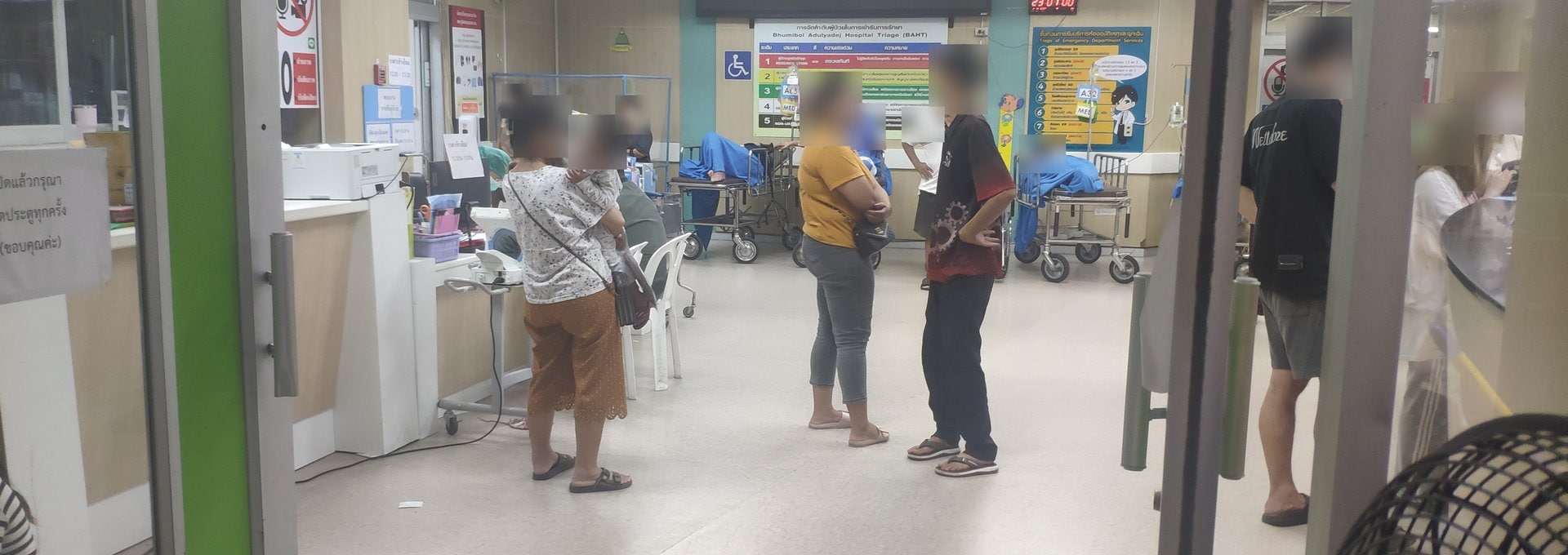

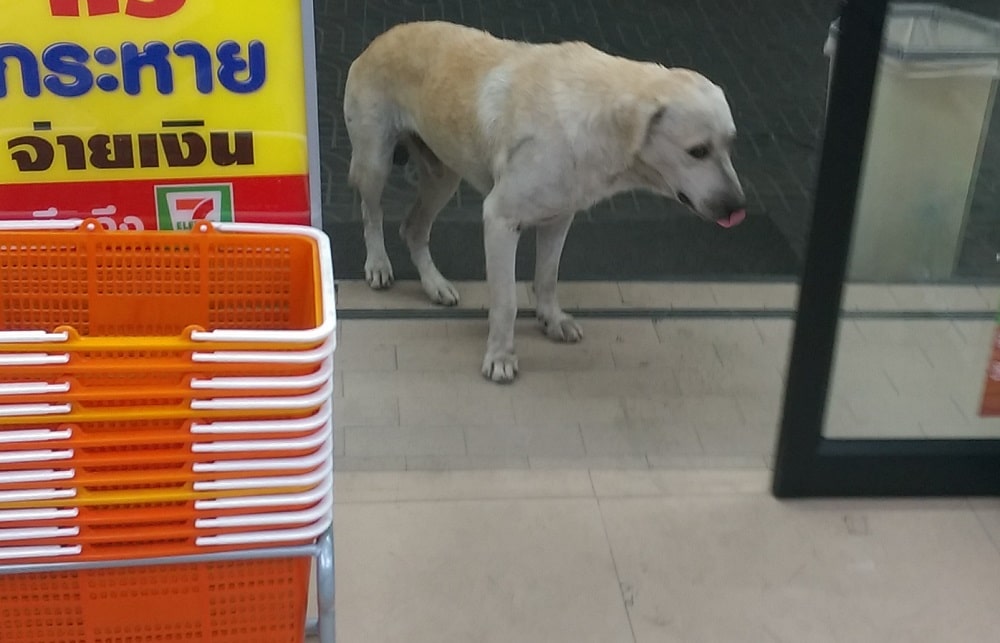
Thailand has a lot of street dogs and stray cats, and monkeys too in some areas. Most of them are harmless. But a nip or a scratch is easy to pick up here, and it’s normal to panic afterwards.
Rabies is the reason. It’s a virus in an infected animal’s saliva, and once symptoms start, it’s almost always fatal. The good news is that shots given in time prevent it, and Thai hospitals treat animal bites every day.
This guide shows you what to do in the first hour, whether you need shots, where to get them and how to finish the course, even if you’re traveling or flying home soon.
See a doctor today: if an animal has bitten or scratched you and broken the skin, wash it and get to a hospital or clinic today. Only a doctor can decide whether you need shots. This guide is general information, not medical advice.
Disclaimer: Some links in this article go to our partners, and we may earn a commission if you use them. It costs you nothing extra, and we only recommend services we'd use ourselves. Read more in our Advertising Disclosure.
Contents
- Key Takeaways
- Rabies in Thailand by the Numbers
- What Rabies Is and Why a Small Bite Matters
- What to Do Right After a Bite
- Do You Need Rabies Shots?
- Where to Go for Rabies Shots
- What Happens at the Hospital
- The Rabies Shot Schedule
- If You've Had Rabies Shots Before
- Finishing Your Shots While Traveling
- How Much Rabies Treatment Costs
- How to Avoid Bites
- FAQ
- Sources Cited
Key Takeaways
- A few people still die of rabies in Thailand every year, and in 2025 none of them had shots after being bitten.
- Dogs carry almost all of it, then cats, and pets can carry it as well as strays.
- Wash the wound with soap and running water for at least 15 minutes, then go to a hospital the same day.
- Any bite or scratch that breaks the skin needs a doctor to look at it.
- The first three shots fall on days 0, 3 and 7. Keep to those dates and keep your vaccination card.
- If you had a full course of rabies shots before, a new bite usually means just one or two boosters.


Rabies in Thailand by the Numbers
Rabies is rare in Thailand, but it still kills people every year, and almost always for the same avoidable reason.
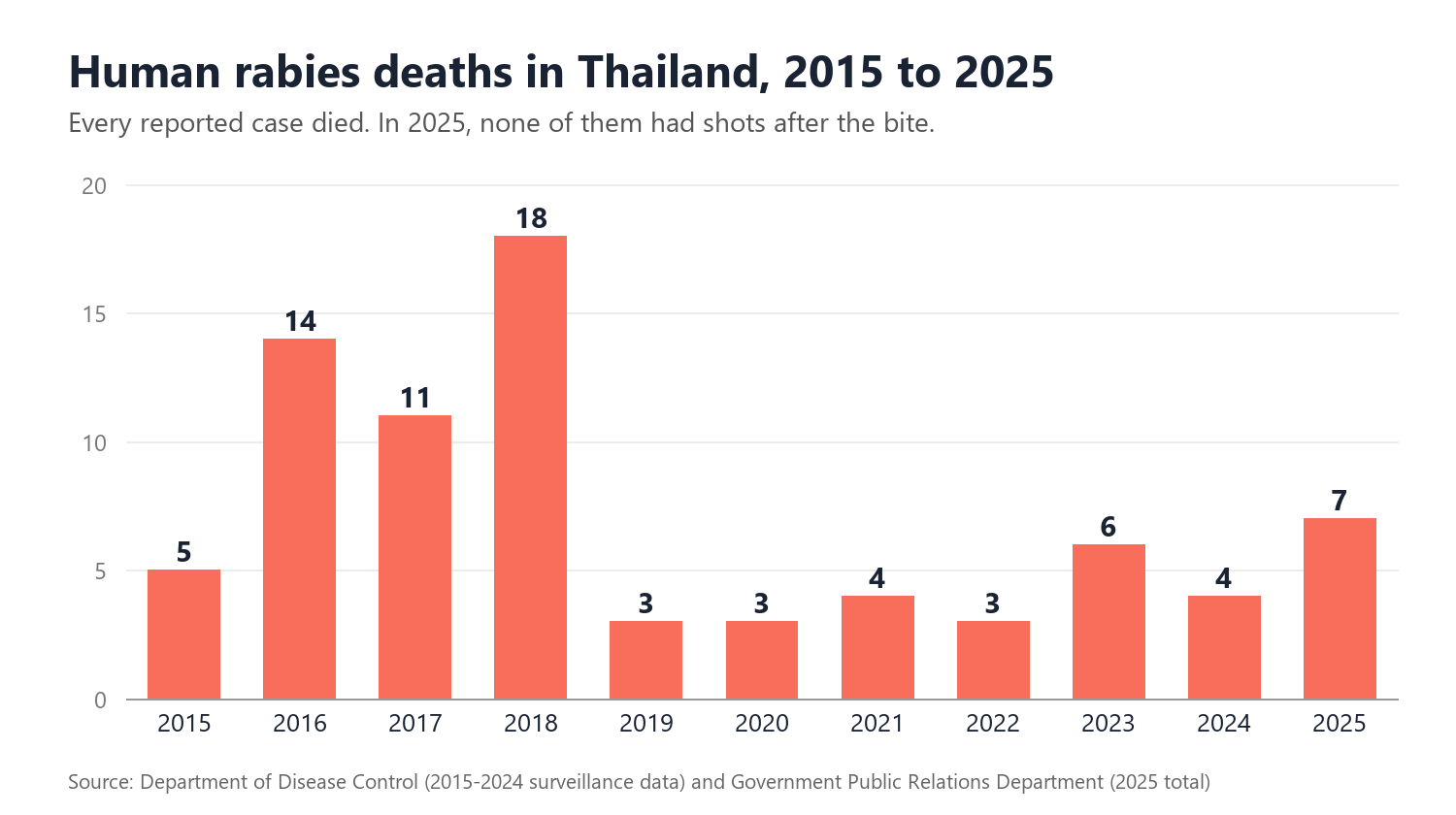
- Deaths: between 3 and 18 a year since 2015. Every reported case was fatal.
- Rising again: 7 deaths in 2025, and 5 more by 7 May 2026. Officials warned 2026 could pass 10.
- Why they died: none of the 2025 cases had rabies shots after the bite, and most never washed the wound.
- In animals: 305 animals tested positive for rabies in 2024, mostly dogs, and Bangkok was among the six provinces with the highest share of positive tests.
Washing the wound and getting the shots in time are the two simple steps that prevent rabies, and they’re what this guide is about.
What Rabies Is and Why a Small Bite Matters
Rabies spreads through an infected animal’s saliva. It gets in through a bite or a scratch, or when the animal licks a cut, your eyes or your mouth. So even a small scratch that barely bleeds can be enough.
The tricky part is the wait. Symptoms usually take two to three months to show, but by then it’s too late, because the WHO says rabies is fatal in virtually every case once symptoms appear. That’s why you treat the bite, not the symptoms.
In Thailand, the animals to think about are:
- Dogs: they carry about 95% of rabies here. Stray and temple dogs are the obvious risk, but in the 2025 cases, more than half the animals that infected people had owners, and none were known to have been vaccinated.
- Cats: about 4%, and Thai doctors treat a cat bite exactly like a dog bite.
- Monkeys and other mammals: rare carriers, but a bite or scratch still counts, so get it checked.
What to Do Right After a Bite
Wash the wound first, before you even think about which hospital. Both the World Health Organization and Thailand’s Department of Disease Control say to wash it with soap and water for at least 15 minutes. That feels like forever at a sink, so set a timer.
Right after a bite or scratch
- Wash the wound under running water with soap for at least 15 minutes. Soap it up several times and rinse it all off. If the wound is deep, get the water right into it.
- Dab on an antiseptic such as povidone-iodine if you have one.
- Don’t put herbs, lime or anything else on it. The Department of Disease Control says herbal pastes don’t prevent rabies.
- Take a photo of the animal if you can, and note where it happened and who owns it. The doctor will ask.
- Go to a hospital or clinic today. Don’t wait to see how the wound looks tomorrow.
Thailand’s guidelines say to start the shots as soon as you can, ideally within 48 hours. If you’re reading this days or even weeks after a bite, go anyway, because doctors treat a late visit like a fresh bite.
Do You Need Rabies Shots?
You need rabies shots after any bite or scratch that breaks the skin, and after an animal licks a cut or gets saliva in your eyes or mouth. Thai hospitals use the WHO’s three levels to decide.
| What happened | What the WHO recommends |
|---|---|
| You touched or fed the animal, or it licked unbroken skin | Wash the skin. No shots needed. |
| It nibbled bare skin, or left a small scratch or graze that didn’t bleed | Wash the wound and start the rabies vaccine straight away. |
| It bit or scratched through the skin, or licked broken skin, your eyes or your mouth | Wash the wound, start the vaccine straight away and get rabies immunoglobulin (antibodies injected into the wound). |
So a cat brushing past your legs doesn’t need treatment, but a scratch that drew a little blood does, and so does a “playful” nip from a kitten. If you can’t tell whether the skin broke, let the doctor look. You’ll hear two things that might tempt you to wait:
- “The owner says it’s vaccinated”: that helps, but Thai doctors only hold off on shots when the dog or cat looks healthy, has had at least two rabies shots with the last one in the past year, is well looked after, and bit for a clear reason, like you stepping on it. A street dog never ticks those boxes.
- “Wait 10 days and see if the dog’s still alive”: if a dog or cat is still healthy 10 days after the bite, doctors can use that to stop the shots early. It’s a reason to stop, never a reason not to start.
Where to Go for Rabies Shots
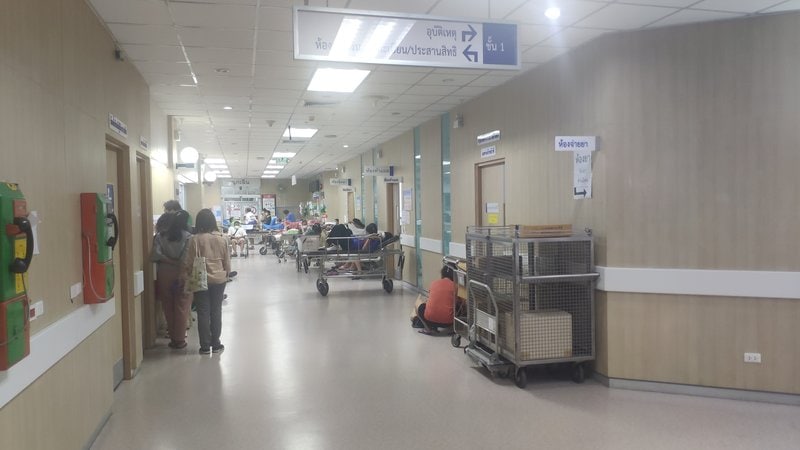
Almost any hospital in Thailand can treat an animal bite, and so can most local clinics, without an appointment. Bites are very common here. When a dog bit me as a kid, my mom just took me to a nearby clinic. I’d go to whichever is closest for the first shot, because getting started matters more than where, and to a hospital emergency room if it’s late at night.
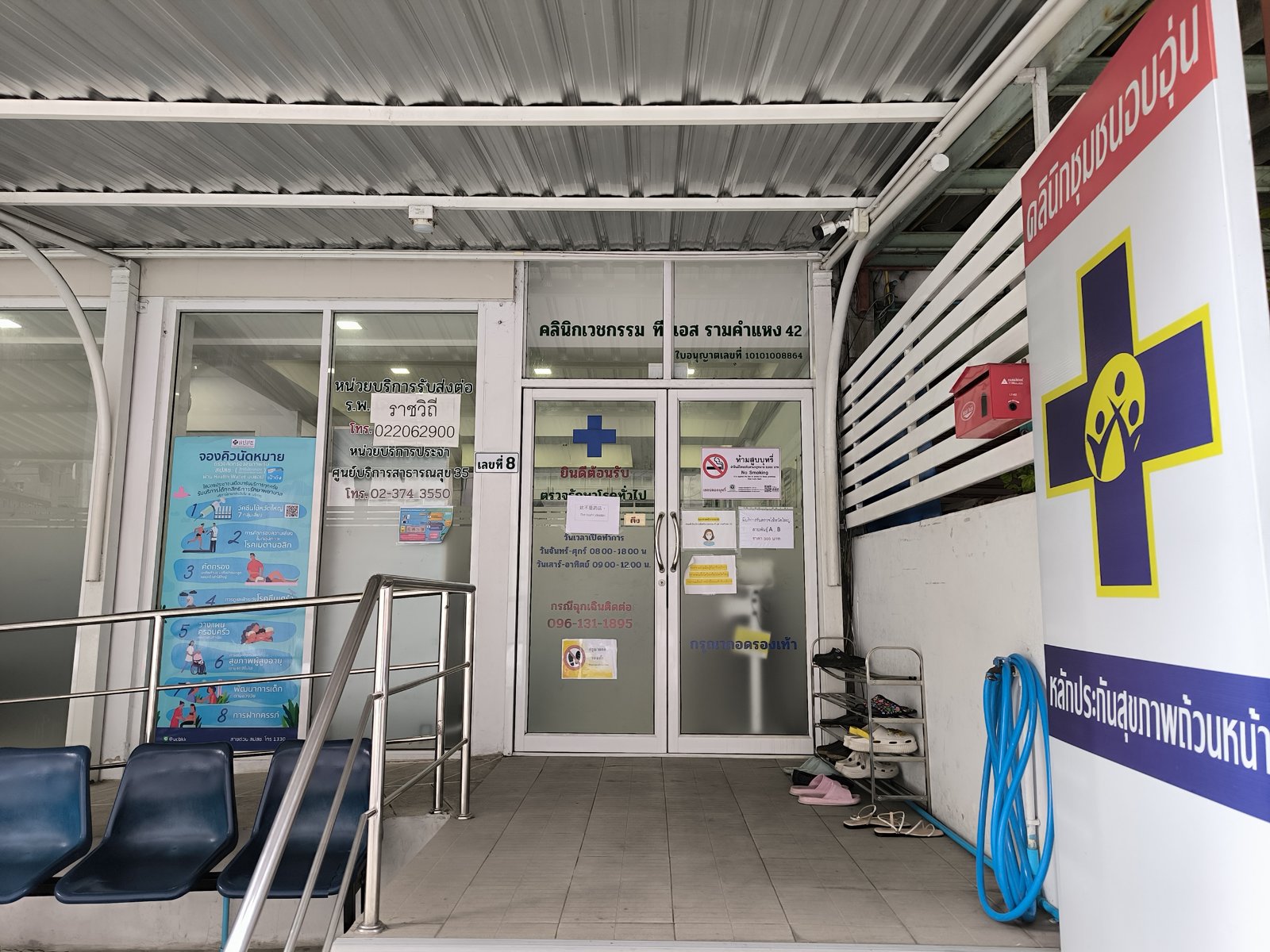
Government hospitals cost far less, going by what readers report paying, while private ones tend to be quicker and more used to foreigners. If you have travel insurance, call them first, because they may tell you where to go. Our guide to hospitals in Thailand lists the bigger ones by city.
Busy hospitals do sometimes turn people away. Back in 2024, a family in Surin was sent home from a full provincial emergency room, and a district hospital 15 minutes away gave the first shot within an hour the next day. If that happens to you, don’t wait for tomorrow. Go to the nearest district hospital that night.
In Bangkok, two specialist clinics have treated expats for years:
- Thai Travel Clinic, at Mahidol University’s Hospital for Tropical Diseases: walk in Monday to Friday from 8:00 to 16:00 (last walk-in 15:00), with extra hours until 19:00, or Saturday from 9:00 to 16:00. It’s closed on Sundays, public holidays and from 12:00 to 13:00. Phone 02-306-9145.
- Queen Saovabha Memorial Institute, the Thai Red Cross clinic at 1871 Rama IV Road: in 2024 its site listed 8:30 to 16:00 on weekdays and 8:30 to 12:00 on Saturdays and public holidays, so it’s handy on a holiday morning. Call (+66 2) 252 0161-4 to check the hours first.
You don’t need a specialist clinic, though. Rabies shots are routine here, and most local clinics can give them too, so I’d just go to whichever is nearest, especially on a Sunday or at night.
What Happens at the Hospital
Expect questions first: what animal it was, bite or scratch, where and when, whether it has an owner, and whether you’ve had rabies shots before. Then they’ll clean the wound properly and decide on a plan, which may include a tetanus shot and antibiotics.
What to bring
- Your passport, because hospitals register foreigners with it.
- Any record of rabies shots you’ve had before, even years ago.
- Your travel or health insurance details.
- A photo of the animal, and where and when it happened.
For a bite or scratch that broke the skin, you’ll usually get the first rabies vaccine shot that day. If you’ve never been vaccinated, the doctor will usually add rabies immunoglobulin (RIG), a dose of ready-made antibodies injected into and around the wound that protects you straight away while the vaccine builds your own protection. Thailand’s guidelines say RIG works best within 48 hours.

Readers say some smaller hospitals don’t give RIG, so if the skin was broken and the doctor doesn’t mention it, ask. Tell them too if you have HIV or take medicine that weakens your immune system, because Thailand’s guidelines treat those patients differently.
Before you leave, you’ll get a vaccination card with the vaccine brand, the date of each shot and when the next one’s due. Photograph it straight away, because every doctor after this will ask to see it.
The Rabies Shot Schedule
A full course means four or five visits over about a month. Your doctor picks one of two ways to give it:
- Into the skin: a small shot in each upper arm on days 0, 3, 7 and 30.
- Into the muscle: one shot in the upper arm on five visits.
Day 0 is the day of your first shot, and the first three (days 0, 3 and 7) are the ones to keep exactly, because they build your protection over the first two weeks. A delay of two or three days is still workable, but miss a dose by weeks and you may have to start again.
Stick with the same method and, if you can, the same vaccine brand for the whole course. That’s why the brand on your card matters. If the dog or cat is still healthy 10 days after the bite, the doctor can stop the course after the day 7 shot.
If You’ve Had Rabies Shots Before
A full course of rabies shots in the past (before a trip, or after an earlier bite) makes a new bite much easier to deal with. Under Thailand’s guidelines, a bite within six months of your last dose needs one booster, and after that you get two boosters on days 0 and 3, however many years it’s been. You don’t need RIG either.
Bring proof of those earlier shots, because the doctor can’t give you the short course without it. If you only had one or two doses before your trip, you’ll be treated as unvaccinated.
Should you get shots before you come? For a short holiday in the cities, I wouldn’t bother. If you’re moving here, have kids who’ll play with animals, or are heading somewhere hours from a hospital, I’d get them. Our guide to vaccinations for Thailand covers where to get them.
Finishing Your Shots While Traveling
Inside Thailand, follow-up shots are easy. Walk into any hospital or clinic on the due date, show your card and ask for your next rabies shot. Not every hospital stocks every brand, though, so message them first and ask, which many hospitals will answer on LINE (the messaging app everyone uses here).
Flying home mid-course? Sort out the next dose before you board
- Ask the Thai doctor for a written schedule with the vaccine brand, the method (skin or muscle) and every date given and due.
- Photograph the card and the schedule, and email the photos to yourself.
- Contact your doctor or a travel clinic at home before you fly, so they can find the vaccine in time.
- If the next dose falls in the first week, try to get it in Thailand before you leave.
How Much Rabies Treatment Costs
Rabies treatment is cheap at a government hospital or local clinic and gets expensive fast at a private hospital. A full course means four or five visits, so the total depends on where you go for each one.
Your bill is made up of:
- Doctor and hospital fees: charged at every visit, and higher at night or at private hospitals.
- The vaccine: a few hundred baht a dose, given at every visit.
- RIG (the antibody injection): first visit only, if you need it. It’s dosed by body weight, so it’s usually the biggest single cost.
- Extras: wound cleaning, and sometimes a tetanus shot and antibiotics.
One Published Price List
There’s no national price, but the Thai Travel Clinic in Bangkok publishes its prices, which gives you a good idea of the basics.
| Item | Price |
|---|---|
| Rabies vaccine, Speeda | THB327 per dose |
| Rabies vaccine, Chirorab | THB353 per dose |
| Rabies vaccine, Verorab | THB449 per dose |
| Horse-derived immunoglobulin (ERIG) | THB333 per 2 ml vial, THB774 per 5 ml vial |
| Human immunoglobulin (HRIG) | THB3,022 per 2 ml vial |
| Doctor, hospital and injection fees | THB320 per visit (THB200 + THB100 + THB20) |
| Registration | THB20, first visit only |
What People Actually Paid
Real bills vary a lot more than the price list. These are what readers in the expat forums say they paid:
| Where | First visit | Each follow-up |
|---|---|---|
| Rural district hospital, 2026 | THB725, tetanus shot included | About THB495 (about THB2,000 for the whole course) |
| Government hospital, Pattaya, 2024 | THB3,000, including the injection around the wound | THB250 |
| Hospital after a dog bite on Koh Mook, 2026 | THB1,750 | Not reported |
| Hospital a reader found by messaging several on LINE, 2026 | Not reported | THB750 |
| Private hospital after a dog bite, 2026 | THB7,884, antibiotics included | Not reported |
| Private hospital, Phuket, 2026 | Close to THB15,000 after a bad cat scratch | Not reported |
| Private hospital, Pattaya, 2024 | THB19,000 reported in total | |
The big private bills nearly always include RIG. If money’s tight, I’d get the first shot wherever’s closest, then do the follow-ups at a government hospital or local clinic. If you have travel insurance, call them before you pay and keep every receipt.
How to Avoid Bites
My own dog bite
I was bitten by a street dog as a kid, inside a temple. I was just watching a dog eat its food from a distance when it suddenly charged at me and bit me. My mom rushed me to a nearby clinic.
The bite didn’t hurt that much, but the bad part was going back for shot after shot. I still love dogs, but I’m much more careful around street dogs now, especially when they’re eating.
- Dogs: leave a dog alone while it’s eating, and give dogs on beaches, in temples and at the end of a soi (side street) plenty of space. If dogs bark and close in, don’t run. Back away slowly, facing them, and take another route.
- Monkeys: they grab food, drinks and bags, so keep those out of sight at temples and viewpoints, and never feed them.
- Cats and puppies: think twice before petting stray cats or the cute puppies at markets.
Our guide to street dogs in Thailand covers how to read a dog’s body language and what to do when a pack follows you.
FAQ
Can I Get Rabies From a Lick?
Only if the saliva gets into broken skin, your eyes or your mouth. A lick on unbroken skin just needs a good wash, but if a dog licked a fresh scratch or your face, see a doctor the same day.
It Happened a Week Ago. Is It Too Late?
No, go now. Thailand’s guidelines treat a bite from weeks or even months ago the same as a fresh one. If the dog or cat is still healthy now, tell the doctor, because that can shorten what you need.
Are Rabies Shots Safe in Pregnancy and for Kids?
Yes. Thailand’s Department of Disease Control says the vaccine and immunoglobulin are safe for pregnant women and children. Kids get the same vaccine dose as adults, so there’s no reason to wait if your child is bitten.
What Should I Do About the Dog?
Get treated first. After that, if the dog has an owner, ask them to keep it in for 10 days so your doctor knows whether it stays healthy. For questions about rabies, the Department of Disease Control runs a hotline on 1422.
Sources Cited
- Department of Disease Control, rabies situation alert (2 July 2025) (Thai): yearly human cases 2015 to 2025, the animals, vaccination status and wound care in the 2025 cases, and animals testing positive in early 2025.
- Weekly Epidemiological Surveillance Report, rabies situation in Thailand 2024 to 2025 (Thai): 2020 to 2024 cases, animals testing positive in 2024 by province, and dogs, cats and other animals as carriers.
- Government Public Relations Department, rabies in Thailand 2026 (Thai): 7 deaths in 2025 and 5 by 7 May 2026.
- World Health Organization, rabies fact sheet: wound washing, the three exposure categories, incubation period and fatality once symptoms appear.
- Department of Disease Control, rabies clinical practice guideline and FAQ (Thai, 2021 printing): wound care, the schedules, missed doses, switching brands, the 10-day observation, boosters, RIG timing, pregnancy and children.
- Department of Disease Control: the 1422 hotline.
- Thai Travel Clinic, rabies post-exposure treatment: walk-in service, clinic hours, almost all Thai hospitals treating bites.
- Thai Travel Clinic, vaccine price list: vaccine and immunoglobulin prices and visit fees (updated 22 October 2026).
- Thai Red Cross Society, Queen Saovabha Memorial Institute and its service page (archived January 2024): rabies services, address, phone and clinic hours.