
Thailand is known for its quality medical care, and that extends to what it offers in the form of medications.
In fact, there are plenty of pharmacies in the country, so if you need a specific kind of medication, you should be able to find it here easily.
However, Thailand’s drug laws will almost certainly differ from those in your home country, and some people with rare or chronic conditions may find that the medication they need are strictly controlled or outright unavailable here.
Thankfully, there are ways around these laws for some medications — but it’s not easy.
In this guide, we’ll explain what drugs are currently restricted in Thailand, and the criteria the Thai government uses to categorize them. We’ll also explain the process of bringing controlled medications into Thailand, and the paperwork you’ll need to fill out to do so.
Key Takeaways
- Most standard over-the-counter medications are available at Thai pharmacies, often under a different brand name, so buying locally is usually easier than bringing your own.
- Thailand classifies controlled drugs into narcotics (five categories) and psychotropics (four categories). Category 1 narcotics and Category 1 psychotropics cannot be brought into the country under any circumstances.
- Psychotropic medications in Categories 2, 3, and 4 can be brought in for up to 30 days with a doctor’s certificate (your name, diagnosis, drug name, and the prescribing doctor’s license number), or for 31 to 90 days if you apply for a permit in advance.
- To bring Category 2 narcotics, you must apply to the Thai FDA at least 15 days before travel using form IC-2; approval takes about 3 working days.
- All controlled medications must arrive in their original packaging and be declared at the Red Channel at customs on arrival.
- For non-controlled medications, bring no more than a 30-day supply and keep your prescription with you in case you are stopped.
- Penalties for bringing illegal drugs into Thailand can reach up to 15 years in prison depending on quantity.



Disclaimer: Some links in this article go to our partners, and we may earn a commission if you use them. It costs you nothing extra, and we only recommend services we'd use ourselves. Read more in our Advertising Disclosure.
Contents
- Key Takeaways
- What Medications are Controlled?
- What Can You Bring into Thailand?
- Narcotics
- Psychotropics
- Bringing More Than 30 Days of Psychotropic Medication
- Other Medications
- Common Medications: What’s Allowed and What’s Banned
- Penalties
- Useful Contact
- Frequently Asked Questions
- Is Adderall legal in Thailand?
- Can I bring Xanax, Valium, or other benzodiazepines into Thailand?
- Do I need to declare over-the-counter medicine at Thai customs?
- Can I bring CBD or cannabis products into Thailand from abroad?
- Is Sudafed or other pseudoephedrine-based cold medicine allowed?
- Can I bring insulin and syringes into Thailand?
- What happens if my medication isn’t on any of these lists?
- Now, on to You
What Medications are Controlled?
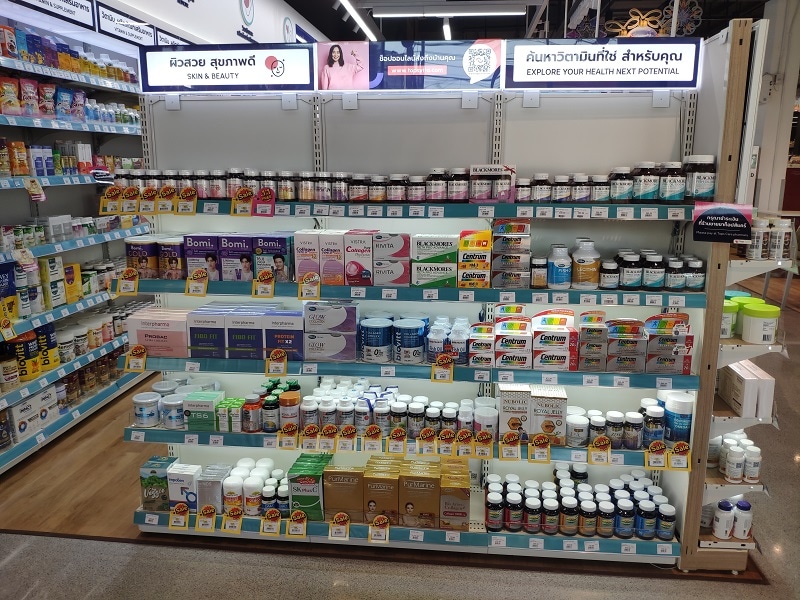
It’s easy to get hold of most standard over-the-counter medications in Thailand, and it’s likely that you can find your medication in the country, albeit potentially under a different brand name.
However, some prescription drugs may be banned for sale outright.
What Can You Bring into Thailand?
To find out what medications you can bring to Thailand, you first need to know about controlled medications in Thailand, which are grouped into narcotics and psychotropics, and then further sub-divided into five categories for narcotics and four categories for psychotropics.
Thailand Food and Drug Administration (Thailand FDA) has a complete list of controlled narcotics and psychotropics.
Narcotics
The five categories for narcotics are as follows:
- Category One narcotics are those considered to be dangerous — heroin, methamphetamine, and so on.
- Category Two covers ordinary narcotics, such as morphine, oxycodone, and fentanyl.
- Category Three covers any medicines that contain Category Two narcotics as ingredients.
- Category Four covers any chemicals that can be used in the production of Category One narcotics, such as lysergic acid.
- Category Five covers any narcotics that aren’t listed in the other four categories, such as cannabis.
Currently, only Category 2 and some Category 5 narcotics can be brought into Thailand with the following conditions:
- A maximum of 90 days’ use
- You need to get a permission from the Thailand Food and Drug Administration before flying to Thailand
- Your medication must be in its original packaging.
How to Get Narcotic Medications to Thailand
If your medication falls under Category Two narcotics, you’ll have to apply for permission from the Thai FDA ahead of time. To apply, complete form IC-2 on the FDA traveler permit portal. In your application, you’ll need to include:
- the exact date you’ll be traveling
- your port of arrival
- your prescription
- a copy of your passport
You should submit your application at least 15 days before your arrival date in Thailand. Any later than that and your application may be turned down outright.
It takes 3 working days for the Thai FDA to approve your permission.
If you’re granted permission, you have to present your medication, medical documents (e.g a prescription), and your permit at the Red Channel at customs as soon as you land in Thailand.
You won’t need a separate permit to take the medication back out of Thailand. The permit that covered bringing it in also covers taking it out, though you should have any remaining medication and your documents ready to show at customs on your way out if you’re asked.
Psychotropics
The four categories for psychotropics are as follows:
- Category One psychotropics are those with no medicinal purpose and that are most likely to be improperly used or abused (such as mescaline).
- Category Two psychotropics are those that have medicinal purposes, but are also likely to be abused (such as pseudoephedrine).
- Category Three psychotropics are those with medicinal purposes and that are only moderately likely to be abused.
- Category Four psychotropics have medicinal uses and are also the least likely to be abused (such as diazepam).
You are allowed to bring psychotropics Category Two, Three, and Four to Thailand for a maximum of 30 days.
You won’t be allowed to bring psychotropics Category One into the country at all.

How to Bring Psychotropics Medications to Thailand
Unlike with restricted narcotics, you don’t need a permit from the FDA beforehand.
You will, however, need a certificate or medical prescription from your doctor containing the following details:
- your name and address
- the condition your drugs are treating
- the name of the medication, its strength, instructions for use, and the reason they were prescribed for that condition
- the dosage and total amount of medication prescribed
- the name, address, and license number of the prescribing physician
It must also be in its original packaging when you land in the country.
While you don’t need to declare your psychotropic medication at customs, you will need the accompanying documents if you are stopped for a random search, so it’s important that you have it with you when you land in Thailand.
Bringing More Than 30 Days of Psychotropic Medication
If your prescription runs longer than 30 days, you’re not automatically out of options. A 2024 regulation update lets travelers bring a 31-to-90-day supply of Category 2, 3, or 4 psychotropic medication into Thailand, provided you apply for a permit in advance.
The process mirrors the narcotics permit described above:
- Apply online through the Thai FDA traveler permit portal using form IC-2, at least 15 days before you arrive.
- Submit a copy of your passport and a medical document from your prescribing doctor covering your name and address, diagnosis, medication name and strength, dosage and total quantity, and the doctor’s license number.
- Processing takes around 3 working days once your application is complete.
- Keep the original prescription and the printed (or emailed) permit with you. Present both, plus the medication in its original packaging, at the Red Channel when you land.
Under 30 days of supply, you don’t need this permit at all. The doctor’s certificate described above is enough, and you won’t need to declare the medication unless you’re stopped for a random check.
Other Medications
If your drug is not on any of the above lists, it’s legal — which means there’s a good chance you can buy it at any of Thailand’s many pharmacies.
However, if you prefer to bring your own medication, you shouldn’t bring in more than you’d need for 30 days of prescribed usage, even if it’s sold legally.
It’s also a good idea to bring your prescription and any other necessary documents with you to Thailand.
In addition to avoiding any potential tricky questions at customs, it’ll also help your physician in Thailand to know what local brands they can prescribe for you, if needed.
Common Medications: What’s Allowed and What’s Banned
Most questions about bringing medicine into Thailand come down to a handful of drug types. Here’s how they map onto the categories above.
- Standard over-the-counter and prescription medication (blood pressure, cholesterol, thyroid, most antibiotics, most diabetes medication, insulin): not controlled. Bring a personal supply, keep it in original packaging, and carry your prescription. No permit or declaration needed.
- Opioid painkillers (codeine, morphine, oxycodone, fentanyl, and similar): Category 2 narcotics. Always require the FDA permit described above, regardless of quantity, up to a 90-day supply.
- Benzodiazepines and similar sedatives (diazepam, alprazolam, lorazepam, clonazepam, zolpidem): Category 2 to 4 psychotropics. Allowed with a doctor’s certificate for up to 30 days, or with a permit for up to 90 days.
- ADHD medication containing methylphenidate (Ritalin, Concerta): a Category 2 psychotropic, so the same certificate and permit rules apply.
- ADHD medication containing amphetamine or dextroamphetamine (Adderall and similar): classified as a Category 1 narcotic in Thailand, with no accepted medical use under Thai law. There is no permit route, so it cannot be brought in legally, even with a prescription. Talk to your doctor about a substitute before you travel.
- Decongestants containing pseudoephedrine (Sudafed and similar cold medicine): a Category 2 psychotropic. It’s easy to pack this without thinking twice, but it falls under the same certificate and permit rules as prescription sedatives.
- CBD, THC, or cannabis-derived products bought abroad: dronabinol and similar cannabis extracts are Category 1 psychotropics with no import permit available. This is separate from Thailand’s domestic cannabis rules. See our guide to cannabis in Thailand for what’s legal to buy once you’re here.
| Medication type | Rule | Documents needed |
|---|---|---|
| Standard OTC/prescription (blood pressure, insulin, antibiotics, etc.) | Not controlled. Personal supply only, no permit. | Prescription (recommended, not required) |
| Opioid painkillers (codeine, morphine, oxycodone, fentanyl) | Category 2 narcotic. Permit always required, up to 90-day supply. | FDA permit, prescription, passport copy |
| Benzodiazepines/sedatives (diazepam, alprazolam, zolpidem) | Category 2 to 4 psychotropic. No permit needed up to 30 days; permit for 31 to 90 days. | Doctor’s certificate (30 days) or FDA permit (31 to 90 days) |
| ADHD medication (methylphenidate: Ritalin, Concerta) | Category 2 psychotropic. Same rule as sedatives above. | Doctor’s certificate or FDA permit |
| ADHD medication (amphetamine/dextroamphetamine: Adderall) | Category 1 narcotic. Prohibited, no permit available. | None. Cannot be legally imported. |
| Pseudoephedrine decongestants (Sudafed) | Category 2 psychotropic. Same rule as sedatives above. | Doctor’s certificate or FDA permit |
| CBD/THC products bought abroad | Category 1 psychotropic. Prohibited, no permit available. | None. Cannot be legally imported. |
This list isn’t exhaustive, and Thailand’s controlled-substance schedules do change. If your medication isn’t listed here, the Thai FDA’s searchable schedule list is the place to check before you pack, not a forum post or a blog.
Penalties
If you bring illegal medications to Thailand, be aware that the punishment can be very harsh — potentially up to 15 years in prison, depending on the quantity.
While some people may say they never get checked at Thailand customs, it does happen. Therefore, it’s always best to strictly follow the official guidelines to avoid any issues.
Useful Contact
The list of controlled medications in Thailand is subject to change without notice. If you plan to bring medications into Thailand, it’s a good idea to contact the FDA in advance. Here is their contact information.
Email: [email protected]
Telephone: +66 2590 7346
Fax: +66 2590 7707
Frequently Asked Questions
Is Adderall legal in Thailand?
No. Amphetamine and dextroamphetamine, the active ingredients in Adderall, are classified as Category 1 narcotics in Thailand with no recognized medical use. There’s no permit process for Category 1 substances, so they cannot be brought in legally under any circumstances, even with a prescription. Talk to your doctor about a substitute like methylphenidate before you travel, since that falls under the more workable psychotropic permit rules.
Can I bring Xanax, Valium, or other benzodiazepines into Thailand?
Yes, as a Category 2 to 4 psychotropic. Up to a 30-day supply just needs a doctor’s certificate with you. A longer prescription, up to 90 days, needs the FDA permit described above, applied for at least 15 days before you travel.
Do I need to declare over-the-counter medicine at Thai customs?
No, as long as it isn’t a controlled narcotic or psychotropic and you’re carrying a reasonable personal-use quantity. Keep it in its original packaging and bring your prescription anyway, in case you’re asked about it during a routine check.
Can I bring CBD or cannabis products into Thailand from abroad?
No. Imported cannabis extracts like dronabinol are classified as Category 1 psychotropics, with no permit route available. This is a different question from what’s legal to buy locally once you’re in Thailand. See our guide to cannabis in Thailand for that.
Is Sudafed or other pseudoephedrine-based cold medicine allowed?
It’s a Category 2 psychotropic in Thailand, which surprises a lot of travelers. It’s allowed under the same rules as prescription sedatives: a doctor’s certificate for up to 30 days, or an FDA permit for a longer supply.
Can I bring insulin and syringes into Thailand?
Insulin itself isn’t a controlled narcotic or psychotropic, so it isn’t covered by the FDA permit system above. Carry it in its original packaging, keep a doctor’s letter or prescription with your supplies, and pack it in your carry-on rather than checked luggage. If you’re unsure about needle or syringe quantities for a longer trip, check with the airline and your doctor before you fly.
What happens if my medication isn’t on any of these lists?
Check it against the Thai FDA’s searchable schedule before you travel, or email the Narcotics Control Division directly. Drug classifications change, and it’s a faster and more reliable answer than a forum thread.
Now, on to You
As stated in the introduction, there are no shortage of pharmacies in Thailand, so if you take a generic medication you’ll almost certainly be able to buy it in the country.
However, if you’re currently taking a stronger or more specialized medicine, or you’d simply like to take your current prescription into the country, make it a priority to check its current legality before you hop on the plane.
You may need to apply for permits beforehand.
If you are unsure about what to do, contact Thailand FDA.
Related Articles:



 Deutsch:
 Français:
'/%3E%3Cpath%20fill='%23b2b2b2'%20d='M241%20382q0%2016%2017%2026%2017%2011%2042%2011t42-11q16-11%2017-26V269H241'/%3E%3Cpath%20fill='%239f7e00'%20d='M241%20379q0%2014%208%2023%209%209%2021%209%2014%200%2021-9%209-9%209-23V269h-59'/%3E%3Cpath%20d='M241%20339v-70h59v110q0%2014-9%2023l-6%205v-68h-15v72q-8%200-14-4v-68zm59%2040c0%2022%2015%2032%2029%2032%2021%200%2030-18%2030-32v-40h-59'/%3E%3Cpath%20fill='%239f7e00'%20d='M266%20277v5h2v12h-3v-5h2v-5h-9v5h2v5h-4v9h3v18h-5v10h34v-10h-5v-18h3v-9h-4v-5h2v-5h-9v5h2v5h-3v-12h2v-5zm42%20101q0%2010%206%2017%206%206%2015%207%2010-1%2016-7%206-7%206-17v-29h-43'/%3E%3Ccircle%20fill='%230044ad'%20cx='329.5'%20cy='372'%20r='6'/%3E%3Cellipse%20fill='%230044ad'%20cx='300'%20cy='340'%20rx='16'%20ry='21'/%3E%3C/svg%3E) Español:
Español: