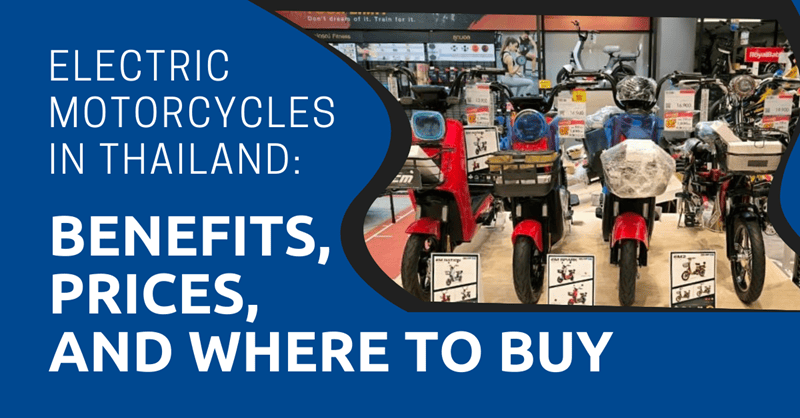
Electric motorcycles are motorcycles that run on electricity and use rechargeable batteries.
Similar to EVs, electric motorcycles are becoming more popular in Thailand because of government incentives that give discounts of up to THB10,000 for purchases.
You now see more electric motorcycles on the streets of Thailand, and they will only become more popular in the coming years.
By the end of this guide, you’ll find out everything you need to know when it comes to buying an electric motorcycle in Thailand, including specs, prices, brands, pros and cons, and how to register your electric motorcycle.
Disclaimer: Some links in this article go to our partners, and we may earn a commission if you use them. It costs you nothing extra, and we only recommend services we'd use ourselves. Read more in our Advertising Disclosure.
Contents
- Key Takeaways
- Benefits of Owning an Electric Motorcycle in Thailand
- Thailand's EV Motorcycle Incentives in 2026
- Downsides to Owning an Electric Motorcycle
- What to Consider
- Popular Electric Motorcycle Brands in Thailand
- Registered Vs. Unregistered Electric Motorcycles
- Where to Buy an Electric Motorcycle
- How to Charge Your Electric Motorcycle
- How to Register Your Electric Motorcycle
- Do You Need a License to Ride an Electric Motorcycle?
- Should You Buy a Used Electric Motorcycle?
- Frequently Asked Questions
- What are the best electric motorcycle brands in Thailand?
- How much does an electric motorcycle cost?
- How far can it go on a single charge?
- How long does charging take?
- Do you need to register an electric motorcycle?
- Is an electric motorcycle worth buying?
- Should I buy a used electric motorcycle?
- Are electric motorcycles legal to ride on Thailand's roads?
- Do you need a motorcycle license to ride an electric motorcycle in Thailand?
- Is there a government subsidy for electric motorcycles in Thailand?
- Can foreigners buy an electric motorcycle in Thailand?
- Where can you charge an electric motorcycle in Bangkok?
- Now, on to You
- Sources Cited
Key Takeaways
- Electric motorcycles are becoming more popular in Thailand since they are eco-friendly and have much lower fuel costs.
- In addition to low fuel costs, electric motorcycles require very little maintenance.
- There are many electric motorcycle brands in Thailand. Most of them are new brands from Thailand or China.
- Because of battery limitations, it’s hard to find an electric motorcycle that can run for more than 100 kilometers per charge.
- When choosing an electric motorcycle, the motor size should be at least 2,000 watts. Otherwise, it can be too slow to ride on the road.
- Some electric motorcycles cannot be registered. This means you cannot legally ride them on the main road.

Benefits of Owning an Electric Motorcycle in Thailand
Here are some advantages to buying an EV.
- Less fuel cost: The cost to run an electric motorcycle is very cheap. On average, it costs only THB0.1/km (with electric prices at THB3.88/kWh) for an electric motorcycle. For a gas bike, you pay around THB0.9/km (with fuel prices at THB41/liter).
- Less maintenance: There’s no engine oil to change. Basically, you need to take care of only the battery, brakes, tires, shocks, and suspension system.
- Initial speed: An electric motorcycle’s initial speed is much better than a gas bike.
- Convenience: You can charge your electric motorcycle at home. Just plug an adapter into a power outlet. That’s it. No more waiting to fill up at the gas station. If you live in an apartment or a condo, you can remove the batteries and change them in your place.
- Environmentally friendly: There is zero tailpipe emission with an electric motorcycle. Because Thailand has a major air quality issue right now, by using an electric motorcycle, you’ll play a part in making the environment better for yourself and everyone else.
Thailand’s EV Motorcycle Incentives in 2026
Thailand’s EV3.5 package subsidizes electric motorcycle purchases through 2027. The government pays the subsidy directly to manufacturers and importers, who pass the discount on to you at the point of sale. You do not need to apply for anything yourself.
To qualify, an electric motorcycle must be assembled in Thailand, priced at THB150,000 or below, and have a battery capacity of at least 3 kWh. Qualifying models receive a subsidy of up to THB10,000 per unit, plus a reduced excise tax rate as low as 1%.
- Subsidy: up to THB10,000 off qualifying models
- Eligibility: made in Thailand, priced ≤THB150,000, battery ≥3 kWh
- Excise tax: reduced rate for qualifying models
- Scheme window: 2024 to 2027, with local-production requirements increasing annually
Dealerships and online sellers usually include the discount in the advertised price. Verify with the seller whether the listed price already reflects the subsidy before comparing it with non-qualifying models.
Downsides to Owning an Electric Motorcycle
There are a few disadvantages to owning an electric motorcycle.
- Initial price: The initial price of an electric motorcycle is more expensive than a gas bike. For example, a Deco SuperAce, priced at THB62,900, can run for 100 kilometers with a max speed of 80 km/h. On the other hand, it only costs THB51,900 for a Honda Click 125. And it comes with a better max speed of 100 km/h and can run for 200 kilometers.
- Distance: The average maximum distance of an electric motorcycle is only 100 kilometers. With this number, it’s good to use to get to work and back or run to the store. However, it’s not suitable for long-distance rides.
- Charging times: Charging time depends on battery size, type, and the charging station. On average, it takes three to four hours to fully charge an electric motorcycle.
- Lack of charging stations: The number of charging stations in Thailand is still limited, even in Bangkok.
- Replacement tires: The engine for an electric motorcycle is normally located near the back wheels. Because it’s a new technology, most mechanics won’t replace your back tire because they’re afraid of damaging the engine.
- Too quiet: Because an electric motorcycle is very quiet, other cars may not notice you. So, you should be extra careful when riding one on the streets.
- Brand reputation: Unlike gas motorcycles, electric motorcycles in Thailand are manufactured by new brands from Thailand and China that you may have never heard of before.
What to Consider
In addition to price, there are a few other things to weigh up before buying an electric motorcycle in Thailand:
- Watts
- Battery types
- Charging speeds
- Maintenance
- License plates
Let’s take a look at each factor.
Watts
Generally, the motor size of electric motorcycles in Thailand range from 1,000 watts to 5,000 watts.
The higher the wattage, the greater the acceleration and maximum speed of your electric motorcycle. Consequently, the price is also going to be higher.
Below is an average max speed of the motor size for each wattage.
- 1,000 watts: 60 km/hour
- 2,000 watts: 80 km/hour
- 3,000 watts: 90 km/hour
- 5,000 watts: 100 km/hour
At the very least, you should aim for a 2,000-watt electric motorcycle with a minimum max speed of 80 km/hour.
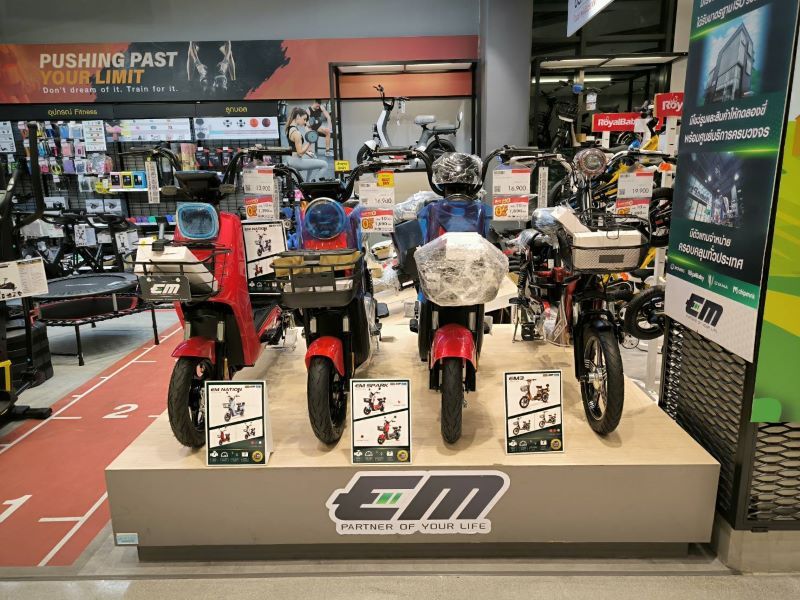
If the max speed is low, driving speeds might be too slow to ride on Thailand’s main roads, which is going to be unsafe for both you and other drivers.
Please note that max speeds can vary because there are many other factors involved, including the weight of the rider.
Battery Types
There are two main types of batteries for electric motorcycles in Thailand: lithium-ion batteries and lead-acid batteries.
According to Green Power Energy, here are their main differences:

- Lithium-ion: The same type of battery in mobile phones and laptops. They’re lightweight, charge quickly, and can last longer than a lead-acid battery. However, they’re more expensive as well.
- Lead-acid: Many budget electric motorcycles have lead-acid batteries because they are much cheaper than lithium-ion batteries. However, they’re heavier and provide fewer charging cycles.
Charging Speeds
The charging speed of an electric motorcycle depends on a few things:
- Charging technology
- Adapters
- Power outlets
- Battery types
Lithium-ion batteries can take three to four hours to fully charge at home. Lead-acid batteries take six to eight hours.
Maintenance
While an electric motorcycle requires less maintenance, it’s still a good idea to check how easy it is to find spare parts of the bike and find a mechanic in the area.
One pro right now is that it’s possible to buy parts online from Lazada and have it delivered to your home.
Read more: How to Find a Good Mechanic in Your Area
License Plates
Not all electric motorcycles can be registered with the Department of Land Transport.
So, if you want to use it on the main roads, make sure you can register your electric motorcycle and that it qualifies for a license plate, like gas-powered motorcycles.
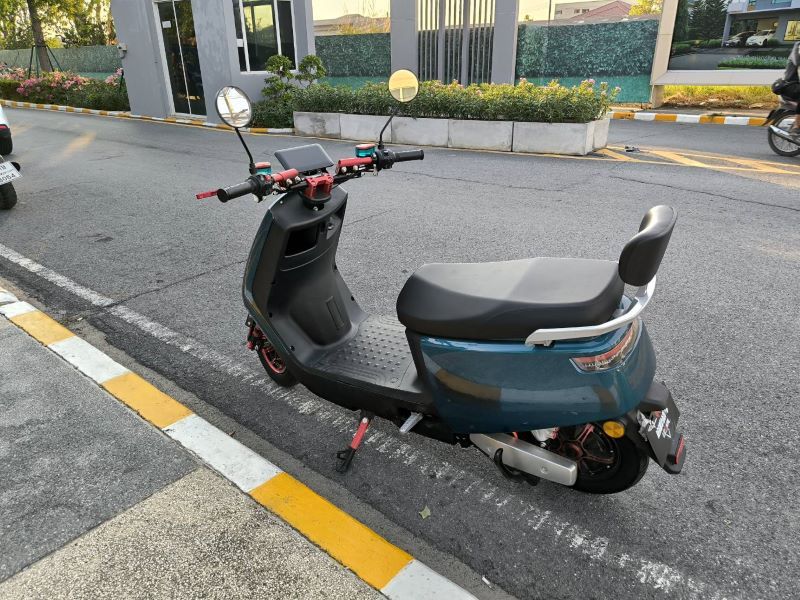
On the other hand, if you want an electric motorcycle to drive up and down a small soi or to a nearby market, you can buy an electric motorcycle that you don’t need to register, which will be cheaper than buying one that you have to register.
In fact, an unregistered electric motorcycle is especially popular for people who live in gated communities and need to get to the neighborhood convenience store or market.
Popular Electric Motorcycle Brands in Thailand
The electric motorcycle market in Thailand is dominated by Thai or Chinese brands that you may have never heard of before.
Below is a list of popular electric motorcycle Brands in Thailand:
- DECO: One of the first brands to sell electric motorcycles in Thailand.
- Lion EV: In addition to electric motorcycles, it makes electric bikes and tricycles.
- AJ: Previously, AJ was known for speakers, DVD players, and kitchen appliances. Now, it has expanded its product line to include various electric motorcycle models.
- H Sem: Another brand of Chinese electric motorcycles.
Other brands include Sleek EV, EM, Lyva, Scomadi, and Zeeho.
A Comparison of Electric Motorcycles
To give you a better idea about what’s available on the market, the table below compares popular models and brands of electric motorcycles. All prices are in Thai Baht.
| Model | Sleek Play | EM Owen Long Range | Lyva MB5 | Scomadi TURISMO Electrica | ZEEHO AE8 S+ |
| Price | 69,900 | 87,200 | 77,000 | 129,790 | 149,900 |
| Watts | 3,000 Watts | 3,500 Watts | 1,200 Watts | 3,000 Watts | 5,000 Watts |
| Max Speed | 90 km/hour | 85 km/hour | 50 km/hour | 90 km/hour | 100 km/hour |
| Distance | 80 km | 200 km | 120 km | 100 km | 140 km |
| Battery Type | Lithium-Ion | Lithium-Ion | Lithium-Ion | Lithium-Ion | Lithium-Ion NMC |
| Charging Time | 3.5 hours | 4 hours | 4 hours | 3 hours | 5 hours |
Registered Vs. Unregistered Electric Motorcycles
Because there are two types of electric motorcycles in Thailand, let’s take a quick look at how they differ.
Registered Electric Motorcycles
With a registered electric motorcycle, you can get a license plate and a green book like a normal gas-powered motorcycle.
But prices are going to be much more expensive than those for unregistered electric motorcycles. Normally, registered electric motorcycles start at THB35,000 for a basic model.
If you need a good electric motorcycle that can drive around 80 kilometers per charge, you should expect to pay at least THB60,000.
Unregistered Electric Motorcycles
With this type of electric motorcycle, you cannot get a license plate or green book. This means you cannot legally ride it on the streets. It’s mainly for those who need to get from home to a nearby market or store.
But prices are two to three times cheaper than registered electric motorcycles. Specs, however, can be slightly lower.
You can also buy them online from Lazada.
Where to Buy an Electric Motorcycle
There are two ways you can buy an electric motorcycle in Thailand:
- Visit a dealership
- Look online
Actually, buying an electric motorcycle online from a site like Lazada is quite popular because of the limited number of dealerships in Thailand.
When buying online, there are a few things you should ask a seller beforehand:
- Do you need to assemble the motorcycle yourself? If it’s a budget electric motorcycle, you may need to assemble it yourself. It’s not that hard if you have some mechanical skills.
- How do you register an electric motorcycle? In some cases, you need to register it yourself.
Pro tip: If you want to get the best price for an electric motorcycle, you should buy it online and wait for the double-deal day, such as May 5, June 6, November 11, December 12, and so on. During those days, the sites normally offer coupons of up to THB4,000.
How to Charge Your Electric Motorcycle
When you buy an electric motorcycle, it will come with a charging adapter. You can plug it directly into a power socket just like you would a laptop charger.
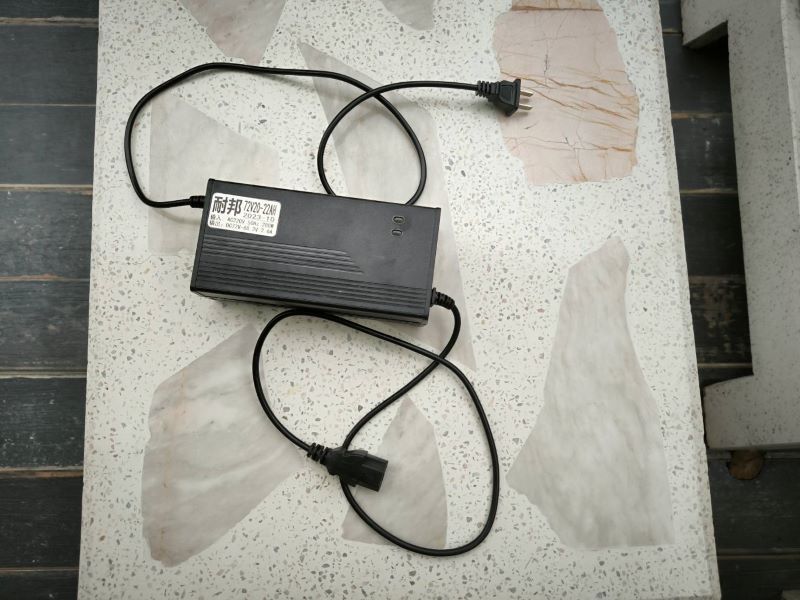
There are three ways you can charge an electric motorcycle:
- Using a power adapter plugged into a power socket.
- Removing the battery and charging it at home.
- Paying for a top-up at a charging station, convenience store, or shopping mall.
In order to use method number three, your electric motorcycle must come with an AC Type 2 socket, which is usually only available on registered electric motorcycles.
How to Register Your Electric Motorcycle
If you can register your electric motorcycle at the Department of Land Transport (DLT), the registration process is the same as that of a gas bike. Just visit your local DLT with the following documents:
- Application; you can pick one up at the DLT
- A signed copy of your passport (photo page, current visa, and most recent Thailand entry stamp), plus all the originals
- Residence certificate
- The electric motorcycle’s green book
- Por Ror Bor
- Registration fee: THB505
Related Articles:
Do You Need a License to Ride an Electric Motorcycle?
You need a valid motorcycle driving license to ride an electric motorcycle on public roads in Thailand, just like a gas-powered bike. The license must match the power output of the bike you ride.
If you don’t already hold a Thai driving license, you must obtain one before registering a motorcycle in your name, or ride using an International Driving Permit endorsed for motorcycles.
Unregistered electric bikes and low-speed scooters ridden only inside private sois or gated communities do not require a license, as they are not permitted on public roads.
Should You Buy a Used Electric Motorcycle?
You shouldn’t buy a used electric motorcycle in Thailand out of safety concerns.
There are many people here that customize their electric motorcycles by modifying the engines or using batteries that aren’t supported by the dealership. Doing so can increase the chance of fire, especially while charging batteries.
Frequently Asked Questions
Here are frequently asked questions about electric motorcycles in Thailand.
What are the best electric motorcycle brands in Thailand?
Popular brands include DECO, Lion EV, AJ, and H Sem, plus Sleek EV, EM, Lyva, Scomadi, and Zeeho. Most are Thai or Chinese brands, since Japanese manufacturers haven’t entered this market here yet.
How much does an electric motorcycle cost?
A basic registered model starts around THB35,000, and one with ~80 km range costs at least THB60,000. Comparison-table models run THB69,900 to THB149,900; unregistered ones cost two to three times less.
How far can it go on a single charge?
Most max out around 100 km per charge, fine for commuting but not long distance. The table spans 80 km (Sleek Play) to 200 km (EM Owen Long Range).
How long does charging take?
A lithium-ion battery takes 3 to 4 hours at home, a lead-acid battery 6 to 8 hours. You can top up at a station, convenience store, or mall if the bike has an AC Type 2 socket (usually registered models only).
Do you need to register an electric motorcycle?
Not all can be registered with the Department of Land Transport. If yours can, it’s like a gas motorcycle (application, passport copy, residence certificate, green book, Por Ror Bor, THB505 fee). Unregistered bikes can’t legally use main roads.

Is an electric motorcycle worth buying?
It depends. Running costs are far lower (about THB0.1 per km versus THB0.9 for gas) and maintenance is minimal, but the upfront price is higher, range tops out around 100 km, and charging stations are limited.
Should I buy a used electric motorcycle?
No, the article advises against it. Modified engines or unsupported replacement batteries raise the fire risk, especially while charging, so buying new from a reputable brand is safer.
Are electric motorcycles legal to ride on Thailand’s roads?
Yes, as long as they are registered with the Department of Land Transport. Registered electric motorcycles receive a license plate and green book, allowing them on public roads. Unregistered models are restricted to private sois and gated communities.
Do you need a motorcycle license to ride an electric motorcycle in Thailand?
Yes. You need a valid motorcycle driving license or an International Driving Permit with motorcycle endorsement to ride any road-registered electric motorcycle in Thailand.
Is there a government subsidy for electric motorcycles in Thailand?
Yes. The EV3.5 scheme runs from 2024 through 2027 and offers subsidies of up to THB10,000 on qualifying locally assembled electric motorcycles. To qualify, the bike must cost THB150,000 or less and have a battery capacity of at least 3 kWh.
Can foreigners buy an electric motorcycle in Thailand?
Yes. Foreigners can purchase an electric motorcycle from dealerships or online marketplaces without restrictions. To register it in your name, you must follow the standard Department of Land Transport process using your passport and a certificate of residence.
Where can you charge an electric motorcycle in Bangkok?
You can charge at home using a standard wall socket and adapter, or at public charging stations in shopping malls and convenience stores if your bike supports AC Type 2 charging. Charging infrastructure remains limited outside major cities.
Now, on to You
While electric motorcycles are still new to Thailand, they are becoming more popular. Because of lower fuel and maintenance costs, more and more electric motorcycles are on the streets nowadays.
If you’re planning to buy one, you should only buy from a reputable brand.


 Deutsch:
 Français:
'/%3E%3Cpath%20fill='%23b2b2b2'%20d='M241%20382q0%2016%2017%2026%2017%2011%2042%2011t42-11q16-11%2017-26V269H241'/%3E%3Cpath%20fill='%239f7e00'%20d='M241%20379q0%2014%208%2023%209%209%2021%209%2014%200%2021-9%209-9%209-23V269h-59'/%3E%3Cpath%20d='M241%20339v-70h59v110q0%2014-9%2023l-6%205v-68h-15v72q-8%200-14-4v-68zm59%2040c0%2022%2015%2032%2029%2032%2021%200%2030-18%2030-32v-40h-59'/%3E%3Cpath%20fill='%239f7e00'%20d='M266%20277v5h2v12h-3v-5h2v-5h-9v5h2v5h-4v9h3v18h-5v10h34v-10h-5v-18h3v-9h-4v-5h2v-5h-9v5h2v5h-3v-12h2v-5zm42%20101q0%2010%206%2017%206%206%2015%207%2010-1%2016-7%206-7%206-17v-29h-43'/%3E%3Ccircle%20fill='%230044ad'%20cx='329.5'%20cy='372'%20r='6'/%3E%3Cellipse%20fill='%230044ad'%20cx='300'%20cy='340'%20rx='16'%20ry='21'/%3E%3C/svg%3E) Español:
Español: