
Renting a condo in Thailand is usually easy, but when something goes wrong, it isn’t always clear who you should complain to. This guide shows you where to take the most common problems, like deposits, repairs, noise and smoke, and what to do if nobody helps.
We’ve put the problems in order of how often readers run into them, starting with the deposit. Each section explains what Thai lease rules say, who to go to, and a real case from a renter who went through it.
Please note: Thailand Starter Kit isn’t a law firm, and this guide is general information, not legal advice. If a dispute involves a lot of money or you’re being threatened with eviction, get a Thai lawyer to look at your own case.
Disclaimer: Some links in this article go to our partners, and we may earn a commission if you use them. It costs you nothing extra, and we only recommend services we'd use ourselves. Read more in our Advertising Disclosure.
Contents
- Key Takeaways
- The Problems Renters Run Into Most
- Who to Go To First
- Getting Your Deposit Back
- Repairs, Leaks and Pests
- Noise, Smoke and Dogs
- What the Juristic Office Can and Can't Do
- How to Complain in Writing
- When the Building Won't Act
- Leaving Early or Being Asked to Leave
- Rent Rises and the End of Your Lease
- Electricity and Water Bills
- Taking It to Court
- Frequently Asked Questions
- Sources Cited
Key Takeaways
- Deposits are the problem renters run into most. A landlord can only keep the real cost of damage you caused and unpaid bills, not normal wear.
- Your landlord pays for real repairs. You handle small things like light bulbs.
- If your landlord rents out three or more units, consumer protection rules cover your deposit, repairs and leaving early.
- The juristic office enforces your building’s own rules. It can’t arrest, evict or fine anyone under the law itself.
- Put every complaint in writing, keep a log with dates and times, and get a stamped paper copy.
- If the building doesn’t act on noise or smoke, go to your district office in Bangkok, or the municipality elsewhere.
- Deposit fights up to THB300,000 can go to small claims court.
- Call the police on 191, or the Tourist Police on 1155, only for threats or violence.


The Problems Renters Run Into Most
We read 44 threads from 2024 to 2026 in the expat forums where renters in Thailand described a real problem with their condo or landlord. It’s a sample, not a survey, and people post when they’re stuck, not when things go well. But the same problems kept coming up.
| Problem | Threads |
|---|---|
| Deposit kept, cut or paid late | 11 |
| Leaks, mould and pests | 6 |
| Noise | 6 |
| Repairs not done | 5 |
| Being moved out, or the unit being sold | 5 |
| Rent rises and harsh lease clauses | 4 |
| Electricity and water charges | 3 |
| Fines from the building | 3 |
| Smoke | 1 |
Deposits come out on top by a clear margin, and they’re the only problem readers called “far too common” in so many words. Plenty of renters do get every baht back, though, so it isn’t a lost cause. If you count leaks, mould, pests and repairs together as the unit going wrong, that’s just as common. Noise comes next, and it’s the problem where readers most often said the juristic office couldn’t or wouldn’t help.
Who to Go To First
Find your problem in the first column and start there. Only move to the last column if the first step gets you nowhere.
| Problem | Start here | If that doesn’t work |
|---|---|---|
| Deposit kept or bills overcharged, business landlord | Consumer protection hotline 1166 | Consumer case at court |
| Deposit kept, private owner with one or two units | Written demand to your landlord | Small claims court |
| Repairs not done | Written message to your landlord | Ending the lease (business landlord) or small claims court |
| Noise, smoke or barking from a neighbour | Written complaint to the juristic office | District office (Bangkok) or municipality |
| Threats or someone banging on your door | Police on 191, or Tourist Police on 1155 | District office, with your log |
You’ll see “business landlord” a lot below. It means a landlord who rents out three or more units. Since 2025, these landlords have had to follow lease rules from Thailand’s Office of the Consumer Protection Board (OCPB), and those rules give you real protection. A private owner with one or two condos usually falls outside them, so your lease does most of the work. That’s why we’d always ask a landlord how many units they rent out before signing.
Getting Your Deposit Back
Deposits are where a lot of landlord fights end up. The rule itself is simple. A landlord can only take the real cost of damage you caused, plus any unpaid bills, and normal wear from living there isn’t damage.
A business landlord has to return the rest within 14 days of the lease ending and you handing back the keys, or within 7 days if there’s no damage. (Verified October 2026.) A private owner isn’t bound by that deadline, so check what your lease says.
The law also helps you here:
- If there’s no signed record of the unit’s condition when you moved in, the law assumes it was in good repair and that you only have to return it that way.
- A landlord has six months after you hand the unit back to make a claim against you over the lease.
Even so, we’d take dated photos of everything on day one, scuffs and stains included. It’s a dull job, and it’s your best defence if the landlord argues at move-out.
In the expat forums, deposit stories tend to follow a pattern: a cleaning or air-con fee, then extra repair charges, then delays. If yours comes back short, ask in writing for a list of what was taken and why. Our guide to getting your full deposit back has a checklist and a demand letter.
Case study: In May 2026, a renter leaving a condo after six years had a THB20,000 deposit on THB10,000 rent. The agent had already charged a THB3,000 cleaning fee, then sent a repair bill that charged for cleaning again, plus rust and a loose chair. In the renter’s words, they were “trying to keep the full deposit AND ask me to pay more on top”. Other readers pointed them to the OCPB and its 2025 lease rules. After six years, some wear is normal, and a cleaning fee you’ve already paid shouldn’t turn up twice, so ask for every deduction in writing.
It isn’t all bad news. In a 2024 thread, one renter said they’d had their full deposit back from four different landlords, and one only took a THB2,000 cleaning fee that was written into the lease. Readers’ results with the OCPB are mixed, though. Some say a complaint got things moving, while others say theirs sat unanswered.
One more thing to agree before you move out is how the money comes back. In 2026, a Chiang Mai landlord wanted to refund a deposit to a Thai bank account the tenant couldn’t open. We’d agree the method in writing, whether that’s cash or a transfer to an account you already have, before you hand over the keys.
Repairs, Leaks and Pests
Most repair arguments come down to who pays, and on the big things the answer is clear. Your landlord has to hand over the unit in good repair and fix what breaks during the lease, so a leaking pipe or a dead air-con compressor is on them. You look after the place as if it were your own and handle small jobs like changing bulbs.
Don’t sit on a problem. If you wait and the damage gets worse, you can end up paying for it. We’d message the landlord the same day with a photo, and follow up in writing if the answer is vague. “I’ll send someone” with no date isn’t really an answer.
Case study: In March 2025, a Bangkok renter reported a leaking air-con to their agent within a month of moving in, and kept reporting it. Six months later, the air-con stopped working completely and the leak had damaged the floor. The owner then suggested splitting the cost of the floor 50/50. The renter had the whole LINE history, which showed they’d “clearly documented and communicated” the problem from the start. That record is what puts the cost back on the owner, so keep every message.
If you have to pay for an urgent repair yourself to stop more damage, keep the receipts and photos. The landlord has to pay you back for necessary, reasonable costs.
The grey area is regular air-con cleaning. The law doesn’t say who pays, and it’s one of the charges renters complain about at move-out, so we’d get it written into the lease. Our guide on what to check before signing a rental contract lists the repair clauses to look for. One clause to watch for makes you pay for all repairs after the first month. A reader in 2025 signed one, then paid for a broken tap, air-con, TV and light in the second month.

Cockroaches, leaks and mould come up a lot in the forums, sometimes from the first day. If pests are coming from the walls or drains, ask the juristic office too, because the problem may be in the building, not your unit. One reader was told their building should spray for free. Damp and mould are harder. Readers who wanted to leave early because of them were usually told it would cost them the deposit, unless they had a business landlord who wouldn’t fix it.
A business landlord who drags their feet gives you a stronger card to play. If a repair isn’t done within a reasonable time after you’ve told them, and it stops you using the unit, you can end the lease.
Noise, Smoke and Dogs
There’s no magic decibel number in Thai law. Noise, smell, smoke and badly kept animals count as a nuisance when they harm or could harm people’s health, and officials look at the whole picture. The Department of Health has even said a sound meter reading isn’t needed to prove a barking problem, which helps when a dog barks on and off.
For late-night parties, drilling and loud music, we’d start with the building’s quiet hours rather than the law. The juristic office enforces its own rules, so that’s the rulebook to quote. Pet limits come from the regulations too. If you’re still choosing a place and you have a dog, our guide to finding pet-friendly accommodation covers what to ask.
Case study: In March 2026, a renter in a new Bangkok building said they could hear their neighbour “having conversations at normal volume, watching TV, coughing, opening and closing doors”. They asked if they could break the lease and keep the deposit. Readers said almost certainly not. Their advice for next time was to look at older buildings with bigger units, which tend to have thicker walls. If you’re sensitive to noise, we’d visit in the evening before you sign.
Smoke is harder. Smoking has been banned in a condo’s lobby, shared rooms and corridors since 3 February 2019. When it drifts in from next door, it goes through the building rules first, then the district office if it doesn’t stop. You can’t record a smell the way you can record noise, so keep a note of each time it happens and how long it lasts. One reader in 2026 found that calling security stopped most of the smoke in the hallway, but not the smoke coming through the kitchen vent.
What the Juristic Office Can and Can’t Do
Think of the juristic office as the building’s manager, not its police. It runs the shared spaces like the lobby, lifts, pool and parking, and its manager has to keep the building safe and orderly. Most of what it can do comes from the building’s regulations, which the owners vote on.
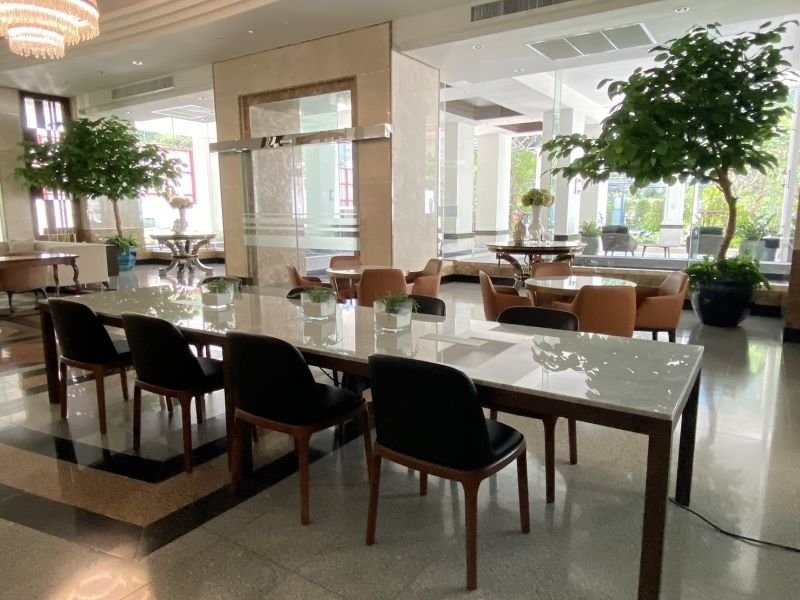
Those regulations usually cover the things neighbours argue about, such as quiet hours, pets, parking, moving in and out, and the gym and pool. The office can send warnings, post notices and keep a file of complaints about a unit, and it controls key cards and shared facilities. With most neighbour problems, we’d let the office send that warning rather than knocking on the door ourselves. It keeps things less personal, and it starts a file.
What it can’t do is play police. It can’t arrest anyone, evict anyone or make a neighbour move out. Thailand’s condo law says nothing about noise, pets or smoking, and it doesn’t give the office a power to fine residents. So if a fine turns up, it has to come from the building’s own regulations.
Case study: In July 2026, a Bangkok renter who’d gone nine months without a complaint was fined THB5,000 for about 10 to 15 minutes of music around 9 pm. The evidence was a neighbour’s recording from the corridor, where “the doors are paper thin”. The building’s rules set noise fines from THB2,000 to THB10,000, and the landlord and agent were little help. Other readers suggested staying polite, asking for mediation, and expecting the landlord to take any unpaid fine out of the deposit. We wouldn’t just pay it. Ask the office in writing which rule it’s based on and what evidence it has, then ask your landlord who the office will bill.
Fines can get bigger, too. In 2024, another Bangkok renter was fined THB12,000 after CCTV showed them using a nicotine inhaler in the lift, with THB500 a day added until they paid and their key cards switched off.
Tip: Ask your landlord for a copy of the building’s regulations before you sign. It’s a dull read, but it’s the document you’ll want the first night something goes wrong.
How to Complain in Writing
A chat at the front desk feels friendlier, and sometimes that’s all it takes. But a dated message is what the district office or a court will want later, so we’d do both. Talk to them, then put it in writing the same day.
- Keep a log of each incident. Write down the date, the start and end time, what you heard or smelled, and where it seemed to come from. Short clips recorded inside your own unit help.
- Ask the juristic office for a copy of the building’s regulations and how it handles complaints.
- Send your complaint by LINE or email. If you rent, copy your landlord in.
- Print a copy, hand it to the front desk, and ask them to stamp it with the date. Take a photo of the stamped page.
- If nothing changes after a week, send a second message. Refer to the first one by date and say you’ll take it to the district office.
Keep it short and calm, even if you’re writing at 2am. Describe the problem rather than accusing anyone, and only name a unit if you’re sure. If you have a Thai-speaking friend, ask them to add a Thai version. You can adapt this:
Subject: Noise complaint, unit [your unit], [date]. Dear Juristic Office, on [dates and times] I heard [loud music, banging, barking] from [the unit above, beside or below]. It lasted [how long] and kept me awake. Please tell me which building regulation applies, what you’ll do and when. I’ve attached [recordings or photos]. If it continues after [date], I’ll take the matter to the district office. [Your name, unit number and phone number]
Case study: Records help whichever side you’re on. In June 2026, a renter in a high-end Bangkok building kept getting complaints from one neighbour, and management sent “a warning-style email, cc’ing the owner of my unit” without really looking into it. When the neighbour threatened them, the renter recorded it, and management finally took their side. If you’re the one being complained about, keep your own log too.
When the Building Won’t Act
If you rent, get your landlord involved. Owners can raise problems with the building’s committee and vote at owners’ meetings, so a complaint from the owner carries more weight than one from a tenant.
Case study: In June 2026, a Bangkok renter had ongoing noise from the unit upstairs. Management said “nothing can be done” because the neighbour owned their unit rather than renting it, and the police complaints line was hard to use without Thai. In a similar 2024 case, a renter next to a pool pump room had noise around the clock, and their landlord was “supportive but weak” with management. Readers gave the same advice both times: get the owner of your unit to push, and keep a paper trail for the district office.
Still nothing? Take it to your district office in Bangkok, or the municipality elsewhere. This is the route with real teeth. The local official can order whoever’s causing the nuisance to stop, and ignoring that order can mean up to three months in jail, a THB25,000 fine, or both.
In Bangkok, it’s the district office’s environment and sanitation team you want. One district’s guidance says it’s easier to follow up if you file in person, so we’d go in person. Take your log, your recordings and your stamped complaint, plus your name, phone number and the unit causing the problem. That district says it reports a first result within two working days. You can also call Bangkok’s 1555 hotline.
When to Call the Police
We wouldn’t call the police over a party next door. Save 191 for threats, violence or someone pounding on your door, and call the Tourist Police on 1155 if you need English. Our emergencies guide has the full list of numbers. For noise, start with building security or the juristic office, then the district office. It’s slower, but it leaves a paper trail, and that paper trail is what the district office works from.
Leaving Early or Being Asked to Leave
Plans change, and sometimes you need to go before the lease is up. With a business landlord, you can end a fixed-term lease once you’ve lived there for half the term, as long as you give 30 days’ notice in writing and you’re up to date on rent.
With a private owner, the law gives you no general right to leave early, so it comes down to your lease. If you need to go, ask the landlord to agree in writing to a move-out date and what happens to the deposit. We’d do that even with a friendly landlord, because the deposit is usually what’s at stake. Our guide to Thai rental law explains why leaving early usually costs you the deposit.
Business landlords can’t play rough, either. They can’t lock you out or move your things while your lease is running, change the rent partway through, or walk into your unit without telling you first unless it’s an emergency.
Case study: In September 2026, a tenant three months into a one-year lease was moved by their landlord to a different unit in another building, at the same rent but “in a much worse condition”. Readers pointed out that the lease names the unit, so you don’t have to accept a different one. A day later, the tenant posted again: the landlord was now delaying the deposit. If a landlord asks you to move, we’d get any new unit and the deposit terms agreed in writing before you pack a box.
Falling behind on rent is different. A landlord can end the lease over unpaid monthly rent, but they have to give you at least 15 days to pay first. And if your landlord sells the condo, you don’t have to move. Your lease carries on, and the new owner becomes your landlord. A bank auction may be different. One reader in 2025 asked what happens when the condo is sold at a foreclosure auction, and the replies disagreed, so we’d get a lawyer to check your lease if that happens to you.
Rent Rises and the End of Your Lease
A business landlord can’t change the rent partway through a lease. When the lease ends, though, the landlord can ask for a new rent, and you’re free to say no and leave. The trouble starts when nobody notices the end date.
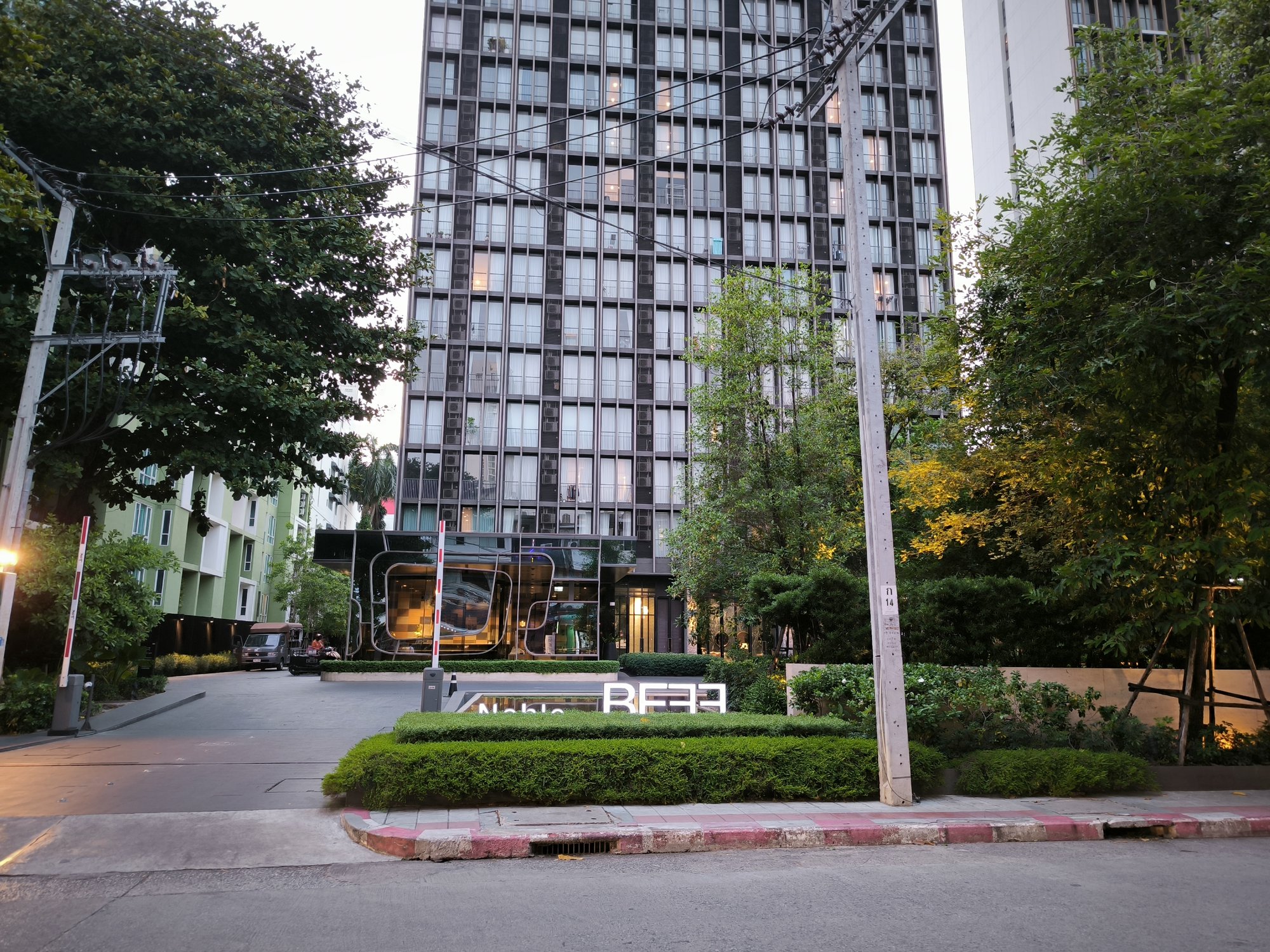
Case study: In September 2026, a Bangkok renter found out their lease had quietly run out a few months earlier. The owner then wanted to raise the rent to THB12,000 a month and charge an extra THB6,000 for the months since the lease ended. The top reply said it plainly: “You havent signed anything. So you’ve agreed to nothing”. A rise only applies once you’ve agreed to it, so we’d ask for the renewal terms in writing a month or two before your lease ends.
Electricity and Water Bills
Many condos and apartments bill you for electricity and water themselves, and the rate per unit can be much higher than you’d pay with your own meter. A business landlord’s charges fall under the OCPB’s lease rules, so an overcharge is something you can take to the 1166 hotline.
Case study: In August 2026, a Bangkok renter said their building charged THB8 a unit for electricity, “basically double” what the electricity authority would charge on a direct meter. They asked the juristic office more than once, and the answer was always that it’s how the building works and they couldn’t switch. They ended up buying a new air-con to cut their usage. We’d ask the rate per unit before you sign, and walk away if nobody can tell you.
Taking It to Court
Small claims court sounds dramatic, but it’s built for exactly this kind of dispute. If your landlord won’t return money you’re owed, it’s the last step, and Thai courts treat claims up to THB300,000 as small claims.
With a business landlord, it’s even easier, because those disputes count as consumer cases. You can file in writing, or just tell the court’s officer, who writes the claim down for you to sign. Consumers don’t pay a court fee either. In some cases the OCPB can bring the case itself, so we’d call it on 1166 or use complaint.ocpb.go.th first.
Against a private owner, it’s an ordinary small claim, and the fee depends on how much you’re claiming. Bring your lease, proof of payment, your photos and every written message. If the amount is large, our guide to finding a budget lawyer can help.
Case study: In June 2026, a renter was owed part of their deposit after a dispute over about THB25,000 in deductions. Their lease said the deposit would be settled within 30 days, and that deadline passed with no refund and no list of deductions. The landlord then offered the undisputed part, about THB8,600, but only if the renter signed a paper saying they “cannot pursue any further legal action”. Readers told them not to sign, and to send a formal letter through a lawyer first. We’d do the same, because that signature gives up the rest of your claim.
Frequently Asked Questions
Can my landlord keep my deposit for normal wear?
No. They can only take the real cost of damage you caused and unpaid bills. Ask for every deduction in writing.
Can the juristic office fine me for noise?
Only if your building’s regulations allow it, because the law itself doesn’t. Ask the office which rule they’re using, and get the answer in writing.
Can my landlord come into my condo without telling me?
If they rent out three or more units, no, unless it’s an emergency. With a private owner, it depends on your lease, so check before you sign.
Who should I call first about a noisy neighbour at night?
Building security or the juristic office desk. They’re in the building and can knock on the door. If it keeps happening, that’s when the district office comes in.
Does the OCPB take complaints about a private owner?
Usually not, because its lease rules are for landlords with three or more units. With a private owner, a written demand and then small claims court is the way to go.
Sources Cited
- Department of Lands, Condominium Act B.E. 2522 (Thai text): the juristic office’s role, the manager’s duty to keep order, building regulations. The Act has no noise, pet, smoking or fine provisions.
- Public Health Act B.E. 2535 (Thai text, FAOLEX): nuisance, the local official’s orders and the penalty for ignoring one.
- Department of Health, opinion 4/2565 on dog barking: how officers weigh noise evidence without a sound meter reading.
- Bang Kapi District Office, reporting a nuisance: filing a complaint and the two-working-day first response.
- Nong Khaem District Office, complaint channels: the 1555 hotline.
- Department of Disease Control, smoke-free places: smoke-free condo lobbies, shared rooms and corridors from 3 February 2019.
- OCPB, residential lease notification B.E. 2568: the three-unit threshold and banned clauses (entry without notice, lock-outs, rent changes mid-lease).
- OCPB, standard short-term residential lease: repairs, leaving after half the term, and the 7-day and 14-day deposit deadlines.
- OCPB, residential lease measures: the 1166 hotline and online complaints.
- Courts of Justice, Taling Chan Civil Court FAQ: small claims up to THB300,000.
- Courts of Justice, what is a consumer case: renting a condo counts as a consumer case.
- Office of Consumer Organization Affairs, filing a consumer case: filing in writing or orally, no court fee, the OCPB suing for a consumer.
- Ministry of Foreign Affairs, emergency hotlines: 191 and 1155.
- Civil and Commercial Code sections 546 to 570 (ThaiLawOnline): repairs, the tenant’s duties, telling the landlord, the condition presumption, the six-month limit, unpaid rent and sale of the unit.