Thailand cut its visa on arrival list from 31 countries to three, effective 15 September 2026. Here is who still qualifies, who never needed it, and what dropped nationalities should do instead.
If you read a headline this year saying Thailand slashed its visa on arrival list from 31 countries to just four, you read something that was half right and has since been overtaken. The cut is real and it is now law: the Ministry of Interior published it in the Royal Gazette on 31 August 2026, and it takes effect on 15 September 2026. But the surviving list is three countries, not four. India, widely reported as the fourth, was put on the visa exemption list instead.
I have watched Thai visa rules get announced, walked back, delayed, and quietly re-announced enough times to know the gap between “approved” and “in force” is where most travelers get tripped up. So let me lay out what actually changed, who genuinely needs to worry, and what to do if your passport is on the chopping block.
Contents
- Key Takeaways
- What Visa on Arrival Actually Is
- The 2026 Overhaul: What Changed and When It Takes Effect
- Who Still Qualifies: The Three Remaining Countries
- Who Is Not Really Affected: Nationalities Covered by Visa Exemption
- How to Apply for Visa on Arrival at the Airport
- Cost and Validity
- VoA Visa Extensions
- Nationalities Being Dropped from Visa on Arrival
- What Dropped Nationalities Should Do Instead
- Frequently Asked Questions
- Is visa on arrival still available in Thailand right now?
- Which countries keep visa on arrival after the change?
- I am American, British, or from the EU. Does this affect me?
- What is the difference between visa on arrival and visa exemption?
- Can I extend a visa on arrival?
- When exactly does the new rule start?
Key Takeaways
- Visa on arrival still works for all 31 current countries up to and including 14 September 2026. The new list starts the next day.
- The Thai Cabinet approved the cut on 19 May 2026 and the Royal Gazette published it on 31 August 2026.
- From 15 September 2026, only Azerbaijan, Belarus and Serbia keep visa on arrival. India is not on the final list; it moved to the 30-day visa exemption instead.
- The rule bites fifteen days after Gazette publication, which puts the start date at 15 September 2026.
- Visa on arrival costs THB2,000, gives a single 15-day stay, and is paid in cash baht at the airport.
- Many nationalities being dropped, including China, already enter Thailand visa-free, so nothing changes for them.
- If you lose visa on arrival and have no visa-free route, apply for a single-entry tourist visa online before you fly, or look at the DTV for longer stays.


What Visa on Arrival Actually Is
Visa on arrival (VOA) is the stamp you buy at the airport when you land, without applying at an embassy first. It costs THB2,000, gives you a single entry of 15 days, and is meant for tourism only. You pay in cash baht at a dedicated counter before you reach the regular immigration desks.
The thing to understand up front is that VOA is not the same as visa exemption, and the two get confused constantly.
- Visa exemption is the free stamp that citizens of most Western countries get automatically: you walk up to immigration, they stamp you in, no fee, no separate counter.
- Visa on arrival is a paid visa for a smaller set of nationalities who are not covered by the exemption scheme.
The 2026 Overhaul: What Changed and When It Takes Effect
On 19 May 2026, the Thai Cabinet approved a revision that cuts the visa on arrival list from 31 countries and territories down to three. The stated logic is to remove overlap, since many nationalities qualified for both VOA and visa-free entry at the same time.
Here is the part that matters for anyone booking a flight: the change is now law, with a start date. The Ministry of Interior announcement was published in the Royal Gazette on 31 August 2026, and under Thai procedure it takes effect fifteen days later. That means the current 31-country framework stands until 14 September 2026, and the three-country list applies from 15 September.
The Tourism Authority of Thailand put it plainly when the Cabinet decision was announced. “Until the revised measures take effect, current entry conditions remain in place.” That window now has an end date on it.
So the date on your arrival matters more than the date you booked. Land on 14 September and the old rules apply to you. Land on 15 September and they do not.
You can confirm the live status two ways:
- check the announcements on the Ministry of Foreign Affairs and Tourism Authority of Thailand websites
- or contact the Thai embassy or consulate nearest you before you book. Do not rely on a news headline from May to tell you the rule on the day you fly.
One more thing worth separating out: the VOA cut is a different measure from the widely reported change that reverts visa-free stays from 60 days back to 30 days for the exemption countries. Both were approved in the same May Cabinet session, both were published in the same Gazette issue on 31 August 2026, and both start on 15 September, but they affect different groups of people. This article is about the visa on arrival side.
Who Still Qualifies: The Three Remaining Countries
From 15 September 2026, visa on arrival is available to nationals of three countries only:
- Azerbaijan
- Belarus
- Serbia
India is the one to watch here, because most coverage of the Cabinet decision listed it as a fourth surviving VOA country. The published announcement does not. Instead, India appears on the new 30-day visa exemption list, which is the better outcome: a free stamp and 30 days rather than a THB2,000 fee and 15. Indian passport holders can also still apply for a tourist visa through the official Thai e-Visa system before flying if they want longer.
Read more: Thailand Visa Guide for Indian Citizens
Who Is Not Really Affected: Nationalities Covered by Visa Exemption
Several countries on the current 31-strong VOA list also qualify for visa-free entry under Thailand’s exemption scheme. For those travelers, losing VOA changes nothing, because they were never supposed to use the paid counter anyway.
China is the clearest example. Chinese nationals can enter Thailand visa-free under a mutual exemption arrangement, so the fact that China drops off the VOA list has no practical effect on a Chinese tourist. The same logic applies to a handful of other nationalities that hold both privileges today.
And if you are reading this from the US, the UK, Canada, Australia, or most of the EU, you can relax entirely. You were never on the visa on arrival list to begin with. Your passport gets a visa exemption stamp on the spot, free of charge, and none of the VOA changes touch you.
Good to Know: Where a nationality qualifies for both visa exemption and visa on arrival, exemption is almost always the better deal. It is free and it usually grants a longer stay than the 15-day VOA. If you have the choice, take the exemption.
Read more: Thailand Scraps the 60-Day Free Pass: What Long-Stay Expats and Nomads Do Now
How to Apply for Visa on Arrival at the Airport
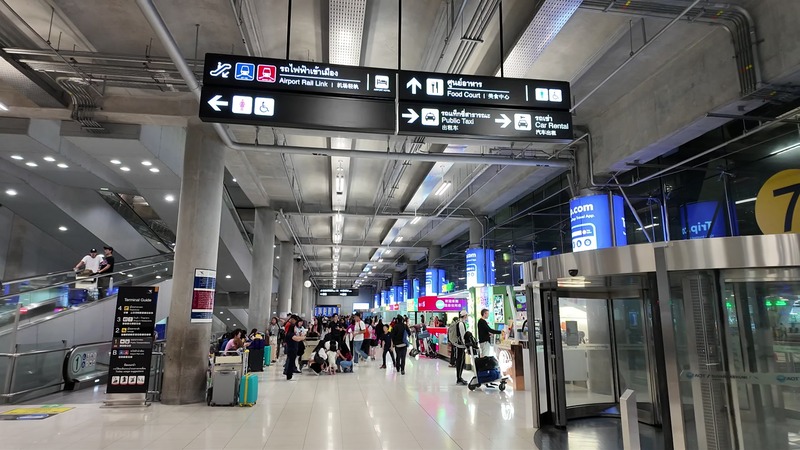
Here is exactly how the process works for an eligible traveler. Visa on arrival counters sit before the main immigration hall at the major international airports, including Suvarnabhumi and Don Mueang in Bangkok, plus Phuket and Chiang Mai.
Required Documents
- Passport: valid for at least six months from your arrival date, with at least one blank visa page.
- Passport photo: one recent 4cm by 6cm photo. Some counters have a booth if you forget, but bring your own to be safe.
- Proof of onward travel: a confirmed ticket showing you will leave Thailand within 15 days of entry. This is enforced at the VOA counter, and open-dated bus or train tickets do not count.
- Proof of funds: officials can ask to see cash. The commonly cited figure is around THB20,000 per person or the equivalent in another currency, so carry some accessible funds.
- Thailand Digital Arrival Card (TDAC): every foreign visitor must complete this online within 72 hours before arrival, regardless of visa type.
The Process
Fill in the application form at the counter, hand over your documents and photo, pay the fee, and wait for the stamp. At busy times the VOA line can be long and slow, which is one more reason to use visa exemption instead if your nationality allows it.
Read more: The Thailand Digital Arrival Card (TDAC), Explained
Tip: The THB2,000 fee is payable in Thai baht cash at the counter. No cards, no US dollars, no exceptions. Hit an ATM in the arrivals area or bring baht with you so you are not stuck at the front of the queue.
Cost and Validity
The core terms are simple. Visa on arrival costs THB2,000, grants 15 days, and is single entry, so once you leave you cannot use the same stamp to come back.
VoA Visa Extensions
Extensions are where it gets fuzzy. In practice, a 15-day VOA can usually be extended once, by up to seven days, for a fee of THB1,900 at a Thai immigration office.

But this is discretionary, not guaranteed, and I would never build a trip around getting it. If you know you need more than a couple of weeks in Thailand, do not lean on a VOA extension. Get a proper tourist visa before you fly.
Nationalities Being Dropped from Visa on Arrival
The dropped nationalities split into two groups, and the difference matters a lot. Most of them land on the new 30-day visa exemption list, including Bulgaria, Romania, Cyprus, Malta, Georgia and Fiji. For those travelers, losing VOA is an upgrade: a free stamp and 30 days instead of a THB2,000 fee and 15. The smaller group left with no visa-free fallback is spread across Latin America, Africa, Central Asia and the Pacific, with Mexico, Uzbekistan, Ethiopia, Nauru, Papua New Guinea and Vanuatu among them.
If your passport is in that second group, the practical effect is that you can no longer just show up and buy a stamp. You will need a visa arranged in advance.
Good to Know: Visa lists in Thailand have shifted more than once in the past two years, and a country’s exemption status can change on its own timeline. Before you book anything, check your specific nationality against the official Ministry of Foreign Affairs visa summary, or ask the nearest Thai embassy. Do not assume based on a general list, including this one.
What Dropped Nationalities Should Do Instead
If you lose visa on arrival access, you have three sensible routes, depending on how long you want to stay and what you plan to do. None of them involves the old back-to-back border run habit, which Thai immigration has been actively discouraging and which is a bad bet for anyone who wants a clean record here.
Single-Entry Tourist Visa
For most short trips, this is the replacement for VOA. You apply through the official Thailand e-Visa portal before you travel, uploading your passport, photo, itinerary, accommodation, and a bank statement. It grants an initial 60 days on entry and can be extended once by 30 days at a Thai immigration office, for up to 90 days total. Processing typically runs a few business days, so apply at least a week or two before you fly.
Compared with the 15-day VOA, a tourist visa gives you four times the stay for a similar cost, and you sort it out from your sofa instead of at a crowded airport counter. For anyone dropped from VOA, this is usually the obvious answer.
Read more: Thailand Tourist Visas: Requirements, Extensions, and Costs
Visa Exemption, Where It Applies
Double-check whether your nationality actually qualifies for visa-free entry, because as noted above, some countries hold both privileges. If yours is one of them, you do not need any visa for a short stay. You just get stamped in. This is the least hassle of all the options, so rule it in or out first before you go through the e-Visa process.
Destination Thailand Visa (DTV)
If you are a remote worker, a digital nomad, or someone who wants to spend real time in Thailand rather than a two-week holiday, the Destination Thailand Visa is worth a serious look. It runs for five years, lets you stay 180 days at a time, and is built for people working remotely or enrolling in activities like Muay Thai or cooking courses. You need to show a bank balance of around THB500,000 and evidence of your qualifying activity.
The DTV is overkill for a single short trip, but if the VOA change has you rethinking how you spend time in Thailand anyway, it is a far more durable answer than juggling short visas.
Read more: Thailand Visa Guide: Every Visa Type Explained
Frequently Asked Questions
Is visa on arrival still available in Thailand right now?
Yes, until 14 September 2026. The current 31-country visa on arrival scheme runs to that date, and the three-country list replaces it on 15 September 2026. Check the official status before you fly.
Which countries keep visa on arrival after the change?
Three: Azerbaijan, Belarus and Serbia. India was reported as a fourth when the Cabinet approved the cut, but the published announcement leaves it off and gives Indian nationals a 30-day visa exemption instead.
I am American, British, or from the EU. Does this affect me?
No. You enter under visa exemption, not visa on arrival, so the VOA changes do not apply to you. What does apply is the separate cut of the exemption itself from 60 days to 30, also starting 15 September 2026. Bulgarian and Romanian passport holders, who previously used VOA, move onto that same 30-day exemption.
What is the difference between visa on arrival and visa exemption?
Visa exemption is a free stamp given automatically to citizens of exempt countries, with no fee and no separate counter. Visa on arrival is a paid THB2,000 visa for a smaller set of nationalities who are not covered by the exemption scheme. Where you qualify for both, use the exemption.
Can I extend a visa on arrival?
Sometimes. A 15-day VOA can usually be extended once by up to seven days for THB1,900 at an immigration office, but it is discretionary and not guaranteed. If you need more than about two weeks, get a tourist visa before you travel instead of relying on an extension.
When exactly does the new rule start?
15 September 2026. The measure was published in the Royal Gazette on 31 August 2026 and takes effect fifteen days after publication. Until then the current rules apply.



 Español:
 Deutsch:
 Français: