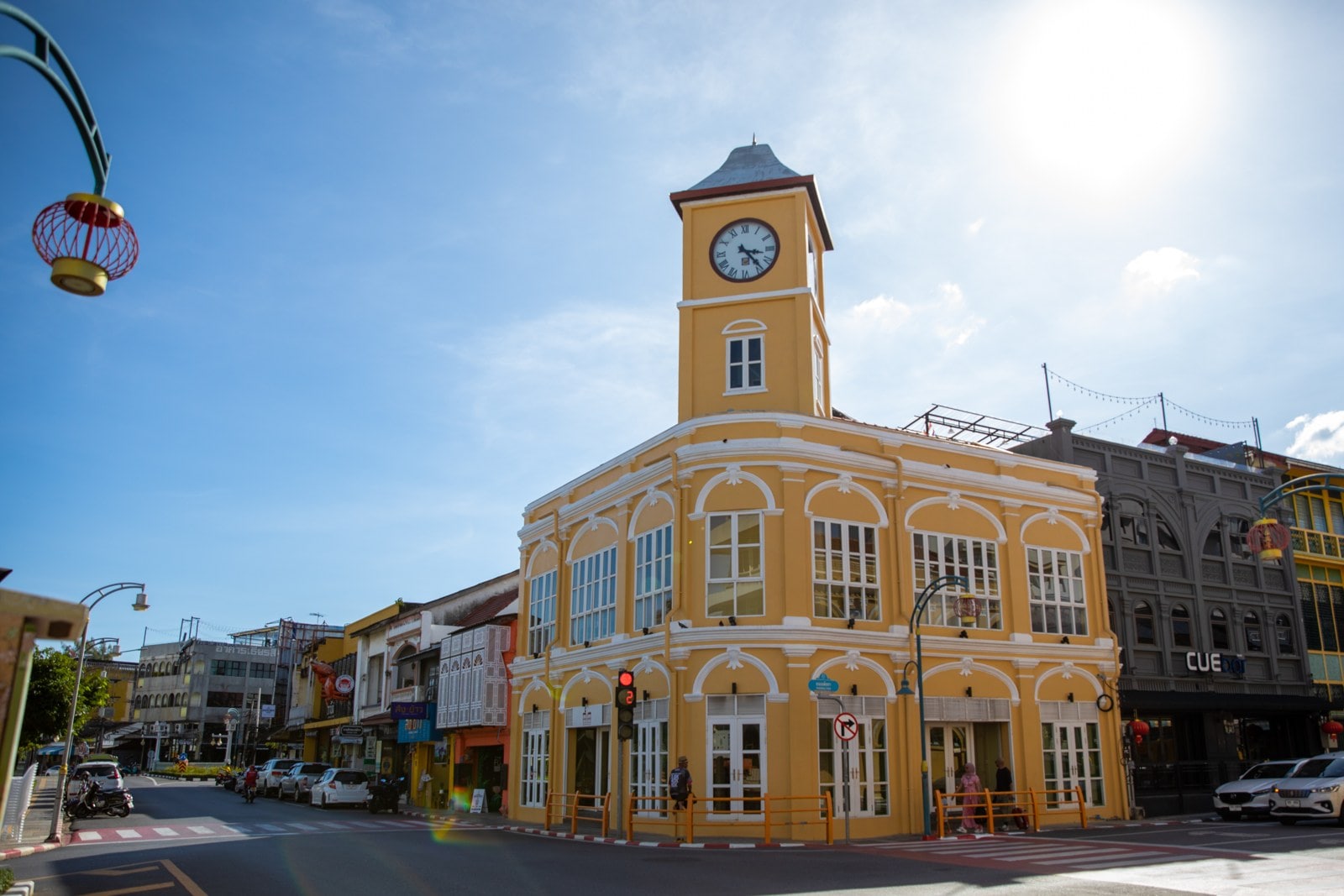
Phuket has good private hospitals with English-speaking staff, and a visit costs far less than it would in most Western countries. This guide shows you which hospital to pick, roughly what it’ll cost and what to expect when you get there.
If you live on the island or you’re staying a while, you’ll end up at one of four hospitals. Two belong to the Bangkok Hospital group, one is a smaller private hospital in the same network, and one is the big government hospital in Phuket Town.
Which one is right comes down to how serious the problem is, whether you have insurance and how much you’re willing to pay. We’ll walk you through each of them, what readers liked and what annoyed them, so you know where to go before you need to.
Disclaimer: Some links in this article go to our partners, and we may earn a commission if you use them. It costs you nothing extra, and we only recommend services we'd use ourselves. Read more in our Advertising Disclosure.
Contents
- Key Takeaways
- Treatment Quality
- How Much Phuket Hospitals Cost
- The Best Private Hospitals in Phuket
- The Public Hospital: Vachira Phuket
- Making an Appointment
- Emergencies and Outpatient Care
- Using Insurance at a Phuket Hospital
- Tips for Visiting Hospitals in Phuket
- Serious Cases and Transfers to Bangkok
- How to Choose the Right Hospital for You
- Frequently Asked Questions
- What's the best hospital in Phuket for foreigners?
- What number do I call for an ambulance in Phuket?
- Is Bangkok Hospital Siriroj the same as Phuket International Hospital?
- Can foreigners use the public hospital in Phuket?
- Do Phuket hospitals accept international insurance?
- Is a doctor's visit in Phuket expensive?
- Can I pay with a foreign credit card?
- Sources Cited
Key Takeaways
- Bangkok Hospital Phuket is the biggest private hospital on the island and the one to choose for anything serious, like heart, spine or cancer care. It’s also the most expensive.
- Bangkok Hospital Siriroj, which most people still call Phuket International Hospital, is a slightly cheaper choice for everyday problems, women’s health, children and dental work.
- Dibuk Hospital is smaller and cheaper again. Readers like it for quick routine visits, but it doesn’t have the equipment for big cases.
- Vachira Phuket Hospital is the government hospital. It costs the least by far, but expect crowds and very little English.
- For an ambulance anywhere in Thailand, call 1669. Save your chosen hospital’s emergency number in your phone too.
- If you have international insurance, the private hospitals can bill your insurer directly. Without it, you pay at the counter, so ask for an estimate before any test.

Treatment Quality
The private hospitals in Phuket are good. You’ll get modern equipment, specialists in most fields and staff who are used to foreign patients, because the island sees a lot of them.
One reader who went to Bangkok Hospital Phuket with a heart problem in 2024 was seen straight away and had an ECG, blood tests and a cardiologist within an hour and a half. Another reader who used Siriroj and Dibuk said there was no waiting, the staff were professional, and both hospitals were clean and comfortable. Those are the experiences we hear most often.
The honest limit is that Phuket isn’t Bangkok. For very complex surgery or rare specialist care, your doctor may suggest a transfer to the capital, and we’d take that advice. For almost everything else, from a broken wrist to a check-up, you don’t need to leave the island.
How Much Phuket Hospitals Cost
Prices at private hospitals in Phuket depend on the hospital far more than the treatment, so we’ve given each one a rating instead of a price list. One $ is the cheapest in Phuket and $$$$$ is the most expensive.
- Bangkok Hospital Phuket: $$$$$
- Bangkok Hospital Siriroj: $$$$
- Dibuk Hospital: $$$
- Vachira Phuket Hospital (public): $
The ratings come from what readers report paying and how each hospital positions itself, and none of the private hospitals publishes a full price list. So the best habit is to ask for a written estimate before any test, scan or admission. Staff are used to the question and it saves a nasty surprise at the cashier.
A few real numbers help. Below are bills readers shared with the year they paid, alongside prices the hospitals post on their own websites. Use them as a rough guide, not a quote.
| Treatment | Hospital | Price | Source |
|---|---|---|---|
| Specialist consultation fee | Bangkok Hospital Phuket | About THB1,500 | Reader, 2020 |
| Cheapest overnight stay quoted | Bangkok Hospital Phuket | About THB20,000 | Reader, 2020 |
| Urologist visit, urine test and 20 days of medicine (about THB8,000 of it medicine) | Bangkok Hospital Siriroj | About THB10,000 | Reader, 2024 |
| Women’s health check package | Dibuk Hospital | From THB1,500 | Hospital website (offer to 31 December 2026) |
| Thyroid screening | Dibuk Hospital | THB3,990 to THB6,990 | Hospital website |
| Flu vaccine for patients 65 and over | Dibuk Hospital | THB1,900 | Hospital website (offer to 31 December 2026) |
| Paid check-up at the hospital clinic | Vachira Phuket Hospital | About THB2,000 | Reader, 2022 |
| Private room, per day | Vachira Phuket Hospital | From THB2,200 | Hospital website |
| Extra fee for the evening clinic | Vachira Phuket Hospital | THB600 | Hospital website |
The Bangkok Hospital Phuket figures date from 2020, and prices have risen since, so budget for more.
Medicine is where bills grow quietly. Private hospitals charge more for the same drug than a pharmacy down the road, and readers in Phuket have noticed the gap for things as simple as skin cream. If your doctor prescribes a common medicine for a long course, ask for the drug name and check a local pharmacy.
The Best Private Hospitals in Phuket
All three private hospitals are in Mueang Phuket district, around Phuket Town, so if you live near the west-coast beaches you’ll be driving across the island whichever one you pick.
Bangkok Hospital Phuket ($$$$$)
Bangkok Hospital Phuket is the largest hospital in Phuket Province, with 200 beds and more than 30 specialist centres. It was also the first hospital in Phuket to get JCI accreditation, the international hospital standard. This is where you go for something serious. It has a Heart Center with a heart catheter lab, a Spine Academy, a cancer institute, a neurology centre and even a diving medicine centre for scuba injuries.
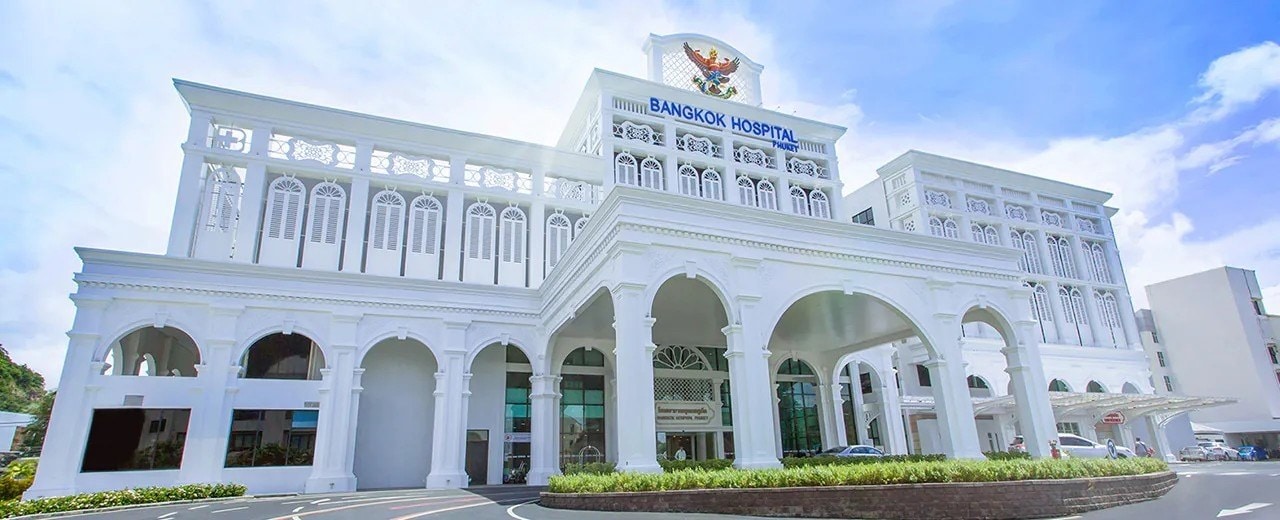
It’s also the easiest hospital for non-Thai speakers. It offers free interpreters in languages including Chinese, French, German, Russian and Spanish, and they’ll help your family too. Its international team talks to your insurer for you, which is a real relief when you’re unwell.
The downside is price. Long-time residents say it’s the most expensive hospital on the island, and readers have been surprised by the cost of an overnight stay. If you have good insurance, that matters less. If you’re paying yourself, we’d use it for the serious things and go elsewhere for a sore throat.
Good:
- Best equipment and widest range of specialists on the island
- Free interpreters and an international team that handles your insurer
- Fast emergency and heart care
Not so good:
- The most expensive hospital in Phuket
- Email replies in English can be hard to follow, so call instead
- A long drive from the west-coast beaches
Bangkok Hospital Siriroj ($$$$)
Bangkok Hospital Siriroj is the hospital many residents still call Phuket International Hospital. It opened in 1982, joined the Bangkok Hospital group and is also JCI-accredited. It’s strongest for everyday family care, with a women’s health centre, a children’s department, a dental centre, kidney dialysis and a plastic surgery institute.
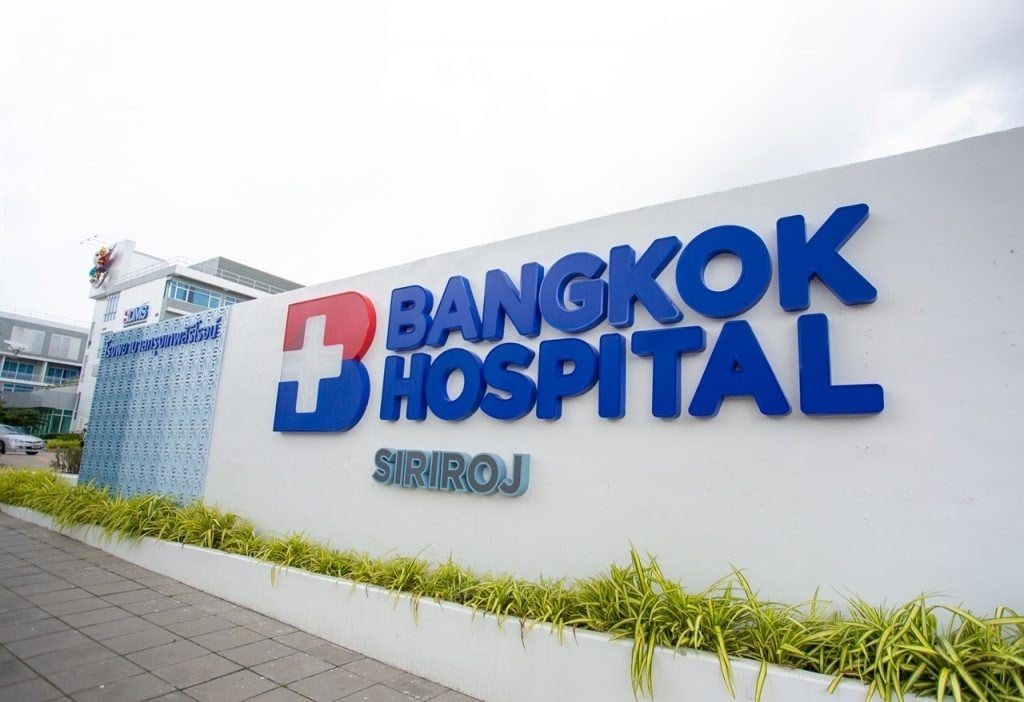
Readers who’ve used it describe short waits and clean, comfortable rooms. It suits you if you want a big private hospital but don’t need the specialist centres at Bangkok Hospital Phuket.
Since joining the group, though, its prices have moved closer to its bigger sister hospital, so don’t expect a bargain. One reader also found that a standard check-up there didn’t include tests like a chest X-ray or a PSA test unless they paid extra, so ask what a package includes before you book. It takes Thai baht cash and Visa, Mastercard and American Express.

Good:
- Short waits and a comfortable hospital
- Good for women’s health, children and dental care
- JCI-accredited
Not so good:
- Prices close to Bangkok Hospital Phuket
- Check-up packages may leave out tests you assume are included
Dibuk Hospital ($$$)
Dibuk Hospital is a smaller private hospital on Chaofa Road with a 24-hour emergency department. It covers the everyday things: internal medicine, bones and joints, ear, nose and throat, children, check-ups, physiotherapy and acupuncture.
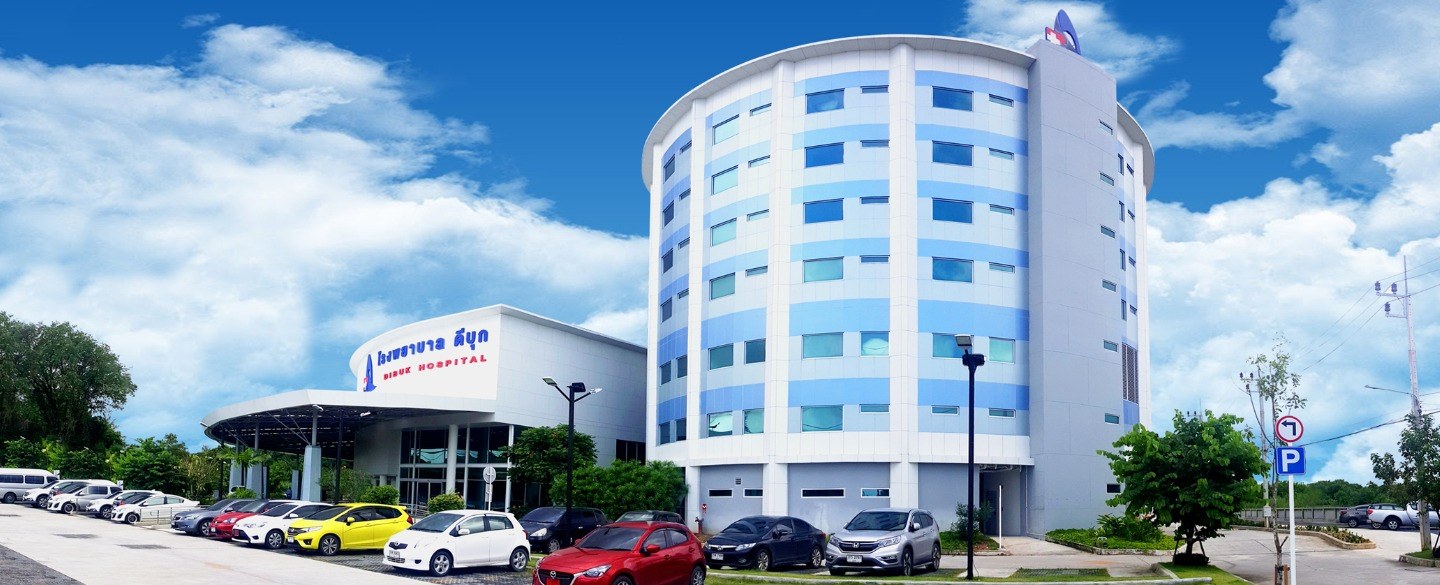
Residents like it because it’s cheaper than the two Bangkok hospitals and handier for many people, and it’s in the same network if you need to move up. Readers also report quick service and a clean, professional feel.
The trade-off is equipment. Dibuk calls itself a secondary-care hospital, and its website doesn’t mention JCI or Thai hospital accreditation. For heart, cancer or major surgery, the doctors will send you to a bigger hospital anyway, so we’d start there for anything that sounds serious.
Good:
- Cheaper than the Bangkok Hospital group’s larger hospitals
- Quick service for routine problems
- 24-hour emergency department
Not so good:
- Less equipment, so big cases get referred on
- No accreditation mentioned on its website
The Public Hospital: Vachira Phuket
Vachira Phuket Hospital is the government hospital in Phuket Town, with 650 beds, and it’s accredited by Thailand’s hospital standards body. It costs a fraction of the private hospitals, and readers who’ve used it say the care is good. Long-time residents also rate it for road accidents and broken bones.
Outpatient clinics open on weekdays from 08:30 to 16:30, and the mornings are packed, so we’d go early and bring something to read. There’s no foreign-patient desk, and the website is mostly in Thai, so bring a Thai speaker if you can. If you can’t take a weekday off, the hospital runs evening clinics too, but they charge extra and readers say they’re not much cheaper than going private.
Vachira’s emergency department is open 24 hours on +66 76 361 234. If you’re on Thai Social Security through your job, check which hospital you’re registered with, because it may be this one. The guide to lowering your costs with government hospitals explains how the public system works.
Making an Appointment
You can book by phone, through the hospital’s website or by walking in. For a specialist, we’d call ahead, because you’ll wait less and you can ask whether the doctor consults in English.
| Hospital | Phone | Website |
|---|---|---|
| Bangkok Hospital Phuket | +66 76 254 425 | Visit site |
| Bangkok Hospital Siriroj | +66 76 361 888 | Visit site |
| Dibuk Hospital | +66 76 298 298 | Visit site |
| Vachira Phuket Hospital | +66 76 361 234 | Visit site |
On your first visit you’ll register at the front desk with your passport and get a hospital card or number. Keep it, because it links all your records for later visits. If you’re booking by email, keep messages short and simple. One reader who emailed Bangkok Hospital Phuket in English found the replies hard to follow, and a phone call is often quicker.
Emergencies and Outpatient Care
For anything that can wait a day, like a cough, a rash or a follow-up, book a normal outpatient visit. For chest pain, a bad accident, trouble breathing or heavy bleeding, go to the emergency room (ER). All four hospitals in this guide run one 24 hours a day.
For an ambulance, call 1669. It’s Thailand’s free national emergency medical number, and it works across Phuket. If someone can drive you safely, going straight to the nearest ER is often faster, and getting treated quickly matters more than which hospital you end up in.
At a private ER, staff treat you first and sort out payment while you’re being looked after. Bring your passport and insurance card if you can, or keep photos of both on your phone. If you were hurt on a motorbike or in a car, mention it at the desk. Thai vehicles carry compulsory motor insurance, and Dibuk says it covers traffic-accident care under it.
Read more: Emergencies in Thailand: what to do and who to call
Using Insurance at a Phuket Hospital
All three private hospitals work with international insurers. When you register, show your passport and insurance card, and the hospital contacts your insurer for a guarantee of payment. That’s a written promise from your insurer to pay the hospital directly, so you don’t pay upfront.
It works smoothly for hospital stays. For outpatient visits, some insurers don’t issue a guarantee, which means you pay at the counter and claim the money back later with the receipts and medical report. And if your insurer isn’t on the hospital’s list at all, you can still be treated, but the bill is yours first.
Two things catch people out. Bangkok Hospital Phuket asks for a deposit of around 80% of the estimated cost for a planned admission or surgery unless the guarantee has already arrived. And on the day you leave, the final sign-off from your insurer can take a few hours, so don’t book a flight for that afternoon.
Before a planned treatment, call your insurer and ask whether it has direct billing with that specific hospital. If you’re still choosing a plan, the health insurance in Thailand guide compares the main types.
Tips for Visiting Hospitals in Phuket
- Bring your passport. Every hospital asks for it at registration.
- Bring your insurance card, or a photo of it, and your insurer’s 24-hour assistance number.
- Bring a list of your medicines with doses, and any recent test results or scans on your phone or a USB stick.
- Carry a credit card. Even with insurance, you may pay a deposit or an excess.
- Tell your bank before a big hospital payment so your card isn’t blocked.
- If you’re staying in Thailand for treatment longer than your visa allows, Bangkok Hospital Phuket can give you the medical certificate you need to apply for an extension.
- Ask questions before every test: why it’s needed, what it costs and whether your insurance covers it.
Serious Cases and Transfers to Bangkok
If something is serious, Bangkok Hospital Phuket is where you want to be. It runs ambulances with doctors on board, a mobile intensive care unit and a centre that coordinates transfers to other hospitals in the Bangkok Hospital group.
If you need care that Phuket can’t give, the hospital and your insurer arrange the move together, usually to Bangkok. Its international team keeps your insurer updated on when you’re fit to fly. Medical transfers are expensive, so check now whether your policy covers evacuation and how much.
Read more: Private Hospitals in Bangkok: Costs, Insurance, and How to Choose
How to Choose the Right Hospital for You
The best hospital is the one that fits your problem, your insurance and where you live.
- Serious or specialist problem: Bangkok Hospital Phuket, whatever the price.
- Everyday care with good insurance: Bangkok Hospital Siriroj or Bangkok Hospital Phuket, whichever is closer.
- Everyday care paying yourself: Dibuk Hospital, or Vachira if you don’t mind the wait.
- Non-urgent care on a tight budget: Vachira Phuket Hospital, with a Thai speaker.
Whichever you pick, register there once while you’re healthy. Your records are then on file, and in an emergency you’ll know exactly where to go. If you’re still deciding where to live, the living in Phuket guide covers the island’s areas.

Looking for a plan Phuket hospitals accept? Carsten Creutzburg is an independent insurance broker who lives in Thailand and has more than 20 years in the insurance industry in Germany and Asia. Tell him what you need and he’ll send you up to three quotes. His advice is free. Get free quotes from Carsten (Sponsored)
Frequently Asked Questions
What’s the best hospital in Phuket for foreigners?
Bangkok Hospital Phuket is the biggest and best equipped, with free interpreters and a team that deals with your insurer. It’s also the most expensive. For everyday care, Bangkok Hospital Siriroj and Dibuk Hospital cost less.
What number do I call for an ambulance in Phuket?
Call 1669, Thailand’s free emergency medical number. The Tourist Police are on 1155.
Is Bangkok Hospital Siriroj the same as Phuket International Hospital?
Yes. It used to be called Phuket International Hospital, and before that Siriroj International Hospital. It’s now part of the Bangkok Hospital group.
Can foreigners use the public hospital in Phuket?
Yes. Vachira Phuket Hospital treats foreigners and costs far less than the private hospitals. Expect long morning queues and little English, so bring a Thai speaker if you can.
Do Phuket hospitals accept international insurance?
The three private hospitals all work with international insurers and can bill many of them directly. Call your insurer before a planned visit to check it has an agreement with that hospital.
Is a doctor’s visit in Phuket expensive?
At the private hospitals, it costs more than at a public hospital but usually far less than in the US or Western Europe. Bangkok Hospital Phuket is the priciest, so ask for an estimate before tests if you’re paying yourself.
Can I pay with a foreign credit card?
Yes. Bangkok Hospital Phuket takes major cards and Apple Pay, and Bangkok Hospital Siriroj takes Visa, Mastercard and American Express.
Sources Cited
- Bangkok Hospital Phuket, Facilities: beds, specialist centres, JCI accreditation, ambulances and transfer service.
- Bangkok Hospital Phuket, International Patient Services: interpreters, guarantee of payment, deposits, what to bring, visa extensions.
- Bangkok Hospital Phuket, Important Telephone Numbers: main and emergency numbers.
- Bangkok Hospital Phuket, Pricing and Payment: payment methods.
- Bangkok Hospital Network Directory, South: addresses and phone numbers for Bangkok Hospital Phuket, Siriroj and Dibuk.
- Bangkok Hospital Siriroj, Our Story: history, JCI accreditation, departments.
- Bangkok Hospital Siriroj, Pricing and Payment: accepted payment methods.
- Bangkok Hospital Siriroj, Our Insurance Partner: direct billing.
- Dibuk Hospital: departments, hours, phone numbers.
- Dibuk Hospital, Accident and Emergency Department: secondary care, 24-hour emergency, motor insurance.
- Dibuk Hospital, Accreditation and Awards: awards listed.
- Dibuk Hospital, Packages: check-up, screening and vaccine prices.
- Vachira Phuket Hospital, Hospital Information: 650 beds, address.
- Vachira Phuket Hospital, Telephone Directory: main number and emergency line.
- Vachira Phuket Hospital, FAQ: clinic hours, evening clinics and the evening fee.
- Vachira Phuket Hospital, HA Accreditation: accreditation.
- Vachira Phuket Hospital, Special Patient Rooms: private room rates.
- Ministry of Foreign Affairs of Thailand, emergency hotlines: 1669 and 1155.