A practical 2026 guide to Thailand visas for UK citizens: the shrinking visa-free entry, the DTV for remote workers, retirement and work routes, fees, and the mistakes that get British applications bounced at the London embassy.
For years, a British passport was about the most relaxed travel document you could carry into Thailand. You landed, an immigration officer stamped you in, and you had two months before you needed to think about paperwork. No embassy, no forms, no fee.
That easy ride ends on 15 September 2026. The free stay is halved, the old border-run trick is dead, and anyone planning more than a short holiday now has a reason to understand how the Royal Thai Embassy in London works. This guide walks through every route a UK citizen is likely to use, what each one costs, and where British applicants most often trip up.
Contents
- Key Takeaways
- Do UK Citizens Need a Visa for Thailand?
- How UK Citizens Apply: The e-Visa System
- Tourist Visa
- The DTV: Thailand's Visa for Remote Workers
- Non-Immigrant B: Work and Business
- Retirement Visas for UK Citizens
- Marriage and Family Visas
- Education (ED) Visa
- Extensions, 90-Day Reporting, and the TDAC
- Common Mistakes and Pitfalls
- Frequently Asked Questions
- Now, on to You
Key Takeaways
- British citizens get 30 days visa-free from 15 September 2026, cut from 60. The Cabinet approved it on 19 May 2026 and the Royal Gazette published it on 31 August 2026.
- Visa-exempt entry at a land border is capped at two per calendar year, which ends back-to-back border runs. Air arrivals have no stated number but get a full passport-history review.
- You can no longer walk a paper application into the London embassy. Every visa is applied for online at the official Thai e-Visa portal.
- For remote workers, the DTV is now the headline long-stay option: five years, 180 days per entry, and savings of around £12,500 (THB500,000).
- Retirement routes need either around £20,000 (THB800,000) in the bank or £1,625 a month (THB65,000) in income, plus health insurance.
- The London embassy is one of the slower posts. Budget two to four weeks, and never submit bank statements older than 30 days.
- Everyone, on every route, must complete the Thailand Digital Arrival Card (TDAC) before arrival.


Do UK Citizens Need a Visa for Thailand?
For a short holiday, most British citizens still do not need a visa, but the free pass has halved. Holders of a full British Citizen passport enter under the visa exemption scheme, and from 15 September 2026 that is a 30-day stamp on arrival rather than 60. Older embassy pages have not all caught up: the Royal Thai Embassy in London still states that “British and Irish passport holders are permitted to enter Thailand for 60 days without a visa.” That wording describes the scheme that was repealed on 31 August 2026.
On 19 May 2026 the Thai Cabinet approved rolling back the 60-day scheme that had been in place since July 2024, and the Ministry of Interior announcement was published in the Royal Gazette, Thailand’s official record where laws become enforceable, on 31 August 2026. Sixty countries and territories drop to a 30-day visa exemption, the United Kingdom among them. It applies fifteen days after publication, which means 15 September 2026. Anyone stamped in before that date keeps the 60 days printed in their passport.
Two things matter for British travelers here. First, the stay is halved. Second, the published text caps visa-exempt entry at a land border to two per calendar year. That second point is the one that catches long-stay visitors out.
Good to Know: The embassy already warns that “multiple entries into Thailand under the visa exemption scheme may result in the denial of entry.” Even under today’s rules, treating the exemption as a renewable long-stay visa is a fast way to get pulled aside at immigration.
What This Means for Border Runs
For a decade, the unofficial long-stay hack was simple: enter visa-free, leave before the stamp expired, come back, repeat. Under a 30-day exemption with land border entries capped at two per calendar year, that no longer adds up to a life in Thailand. If you intend to stay for months rather than weeks, the honest answer in 2026 is that you need a proper visa. The rest of this guide is about which one.

How UK Citizens Apply: The e-Visa System
Whatever visa you need, the route to it has narrowed to a single door. The London embassy no longer accepts walk-in or postal applications. As the embassy puts it: “Physical applications are no longer accepted. All applications must be completed online via www.thaievisa.go.th.”
The embassy serves applicants resident in the UK, Ireland, and UK Territories. If you live elsewhere, you apply through the Thai mission that covers your country of residence, not London.
A few requirements apply to essentially every application:
- Passport: valid for at least six months with two or more blank pages.
- Photo: taken within the last six months.
- Confirmed travel: most visa types want a confirmed e-ticket at submission.
- File format: documents as PDF, JPG, or JPEG, each under 3 megabytes.
- Translations: foreign-language documents must be translated into English and certified by the relevant embassy in London.
How Long It Takes
The embassy quotes roughly 15 working days for standard processing, longer if an interview or extra documents are requested, and four to six weeks for complex cases. In practice, London runs slower than many other Thai missions. Applicants commonly report anything from one week to nearly a month, and the delays usually trace back to document errors rather than the system itself. The lesson from the community is consistent: apply well before you travel, and get the paperwork right the first time so you avoid a round of back-and-forth that adds a fortnight.
Tourist Visa
If your trip is longer than the visa-free window but still firmly a holiday, the tourist visa is the straightforward choice. Now that the exemption is 30 days, the 60-day tourist visa is a lot more useful for British visitors who want a proper extended stay without committing to a long-stay visa.
Single-Entry Tourist Visa
This grants a 60-day stay and is valid for three months from the date of issue. It suits a one-off long holiday: a couple of months touring the islands, the north, and Bangkok without watching the calendar. Once in Thailand, you can usually extend it by a further 30 days at an immigration office for THB1,900 (about £48).
Multiple-Entry Tourist Visa
Valid for six months and allowing repeated 60-day stays, this version is built for travelers who want to come and go, hopping to neighbouring countries and returning without burning their exemption entries. It costs more and asks for more financial evidence, but for a long, multi-country Southeast Asia trip it removes a lot of friction.
Tip: Tourist visa e-Visa fees generally land somewhere around £32 to £63 (US$40 to US$80) depending on single or multiple entry. Confirm the exact pound amount on the e-Visa portal before you pay, since the fee is non-refundable.
Read more: Thailand Tourist Visa: The Complete Guide
The DTV: Thailand’s Visa for Remote Workers
If there is one visa that has reshaped the British long-stay picture, it is the Destination Thailand Visa. Launched in 2024 and now the default answer for nomads who used to live on border runs, the DTV is a five-year, multiple-entry visa. Each entry gives you up to 180 days, and you can extend that by another 180 days from inside Thailand for THB1,900 (about £48), which means a full year on the ground per cycle if you want it.
The DTV is built for two main groups of British applicants:
- Workcation: remote employees, freelancers, and digital nomads working for companies or clients outside Thailand.
- Soft power activities: people coming for Muay Thai training, Thai cooking courses, medical treatment, or cultural and educational programmes.
Spouses and children under 20 of a DTV holder can apply as dependants.

Financial Requirement
You need to show at least THB500,000 (about £12,500) in available funds, held for the preceding three months. Evidence is usually bank statements, sometimes supported by payslips, an employment contract, or a sponsorship letter. Self-supporting applicants must be at least 20 years old.
The London Bank Statement Trap
This is where British applicants most often come unstuck, and the community is loud about it. London is treated as a slow, scrutinising post. The THB500,000 must genuinely sit in the account for the full three months, and some applicants report being asked for six months of statements. The single most common avoidable rejection is a bank statement dated more than 30 days before submission. The embassy wants current proof that the money is still there, so pull your statements right before you file, not weeks ahead.
Fee and Validity
The government DTV fee is THB10,000, which the London embassy charges in pounds. Applicants have reported figures in the region of £230 to £300. The visa itself is valid for five years from issue. Employment contracts and company registration documents from abroad typically need to be authenticated by the relevant embassy before submission.
Read more:
Non-Immigrant B: Work and Business
If you are coming to Thailand to work for a Thai employer or do business, you need a Non-Immigrant B visa. This is the gateway to a work permit, and the London embassy is exacting about the paperwork.
What you submit depends on your purpose:
- Employment: a Thai business license, an employment letter from your Thai employer, WP3 approval from Thailand’s Ministry of Labour, bank statements, and proof of UK or Ireland residence.
- Business travel: an employment letter from your UK or Ireland employer, an invitation from the Thai company, the Thai company’s business license, financial evidence, and residence proof. Multiple-entry is available on this track.
- Teaching: your academic qualifications, an employment letter, the school’s registration and Ministry of Education approval, and a criminal record check.
The criminal record check trips up a lot of would-be teachers. The embassy specifies a “Certificate of criminal record clearance from the UK (ACRO, DBS, or issued by the police, not older than 6 months).” Order it early, because ACRO certificates have their own processing queue and the six-month clock is unforgiving.
A single-entry Non-B is valid for three months from issue and typically grants 90 days of stay. To stay longer, you extend at the Immigration Bureau in Bangkok once you have your work permit.
Read more: Thailand Business Visa: How to Get One
Retirement Visas for UK Citizens
Thailand remains one of the more achievable retirement destinations for British pensioners, and there are three layers to the system. All of them start at age 50.
Non-Immigrant O-A (One Year)
This is the standard retirement route for applicants aged 50 and over with no intention of working. It is valid for one year with multiple entries. The financial bar, in the embassy’s own words, is “monthly income of not less than 65,000 THB (approx. £1,625) or having the current balance of 800,000 THB (approx. £20,000).” In short, around £20,000 sitting in the bank or £1,625 a month coming in.
You will also need:
- A medical certificate confirming you are free of the diseases listed under Ministerial Regulation No.14, no more than three months old.
- A UK criminal record clearance (ACRO, DBS, or police).
- Health insurance meeting the Office of Insurance Commission rules, with COVID-19 cover of at least US$100,000.
Non-Immigrant O (Up to 90 Days)
For a shorter retirement stay, or as a first step that you later convert to a longer extension inside Thailand, the Non-O covers retirement for up to 90 days. British applicants can qualify with a pension statement, a one-month bank statement showing pension income, or a three-month statement showing at least £10,000.
Non-Immigrant O-X (Up to 10 Years)
The UK is one of only 14 countries whose nationals can apply for the O-X long-stay visa, which runs five years and is renewable for another five, for a maximum of ten. The trade-off is a much higher financial commitment. You need either around £75,000 (THB3 million) on deposit in a Thai bank, or around £45,000 (THB1.8 million) on deposit plus annual income of about £30,000 (THB1.2 million). The fee is THB10,000 (about £250), and holders must report to immigration every 90 days and in person once a year.
For retirees who want simplicity over a decade and can park the capital, the O-X is worth weighing against the Long-Term Resident visa. For most British retirees, though, the annual O-A with THB800,000 in the bank remains the practical default.
Read more:
Marriage and Family Visas
If you are married to a Thai national or visiting close family, the Non-Immigrant O covers it. For a family visit of 60 days or more, the embassy wants proof of the relationship (a marriage or birth certificate), the Thai family member’s identification, accommodation proof, and financial evidence. The marriage version is the foundation many British husbands of Thai wives build a long-term life on, since it can be extended inside Thailand year to year and carries a lower financial bar than retirement.
Read more: The Thai Marriage Visa Explained
Education (ED) Visa
The ED visa covers study at any level, from a university degree to a Thai language course, and also Buddhist monastic study. British applicants submit an enrolment confirmation letter, the school or university’s registration and Ministry of Education approval (or, for Buddhist study, an approval letter from the National Office of Buddhism), financial evidence, and proof of UK or Ireland residence. It is single-entry, so if you plan to leave and re-enter Thailand during your course you will need a re-entry permit.
Read more: Thailand Education Visa: What to Know
Extensions, 90-Day Reporting, and the TDAC
Getting the visa is the start, not the finish. Three ongoing obligations apply once you are in Thailand.
- Extensions: most stays can be extended at a local immigration office. A tourist stay typically extends 30 days for THB1,900; long-stay visas extend annually against the same financial criteria you first qualified on.
- 90-day reporting: if you stay continuously for more than 90 days on a long-stay visa, you must report your address to immigration every 90 days. This can be done online, by post, or in person.
- TDAC: every traveler must complete the Thailand Digital Arrival Card online before arriving. It replaced the paper arrival card in 2025 and applies even to short visa-free trips.
Read more:
Common Mistakes and Pitfalls
The rejections and refusals British applicants run into are predictable, and almost all of them are avoidable.
- Submitting stale bank statements: the most common DTV and retirement rejection at the London embassy. Statements older than 30 days fail. Pull them immediately before you file, and make sure the qualifying balance has genuinely sat in the account for the full three months.
- Assuming border runs still work: with the exemption at 30 days and land border entries capped at two per calendar year, stringing together visa-free entries is finished. If you want to live in Thailand, get a long-stay visa now rather than discovering the cap at the border.
- Underestimating London’s queue: it is one of the slower Thai missions. A fortnight is optimistic in peak season. Do not book non-refundable flights around a visa you have not yet received.
- Letting the ACRO certificate expire: teachers and retirees need a UK criminal record check no older than six months. Order it early and submit it fresh.
- Treating the exemption as a visa: repeated visa-free entries can get you refused at the border. The embassy says so directly.
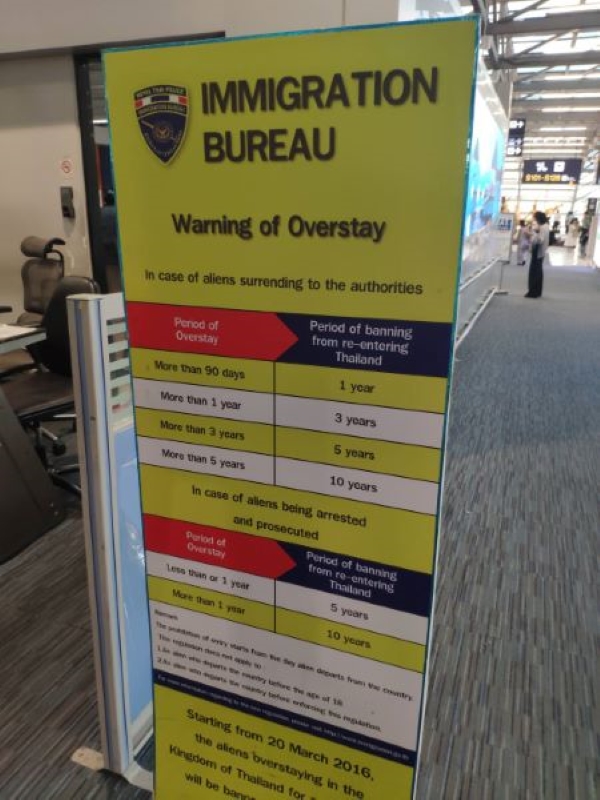
- Overstaying: even a day over carries a THB500-per-day fine (about £13), capped at THB20,000, and a serious overstay can get you banned from re-entry for years.
Read more: Overstaying Your Visa in Thailand: Fines and Penalties
Frequently Asked Questions
Do British citizens need a visa to visit Thailand in 2026?
Not for a short trip. You get 30 days visa-free from 15 September 2026, down from 60. For longer stays or for work, study, retirement, or remote work, you need a visa.
When exactly does the 30-day limit start?
15 September 2026. The Royal Gazette published the change on 31 August 2026 and it takes effect fifteen days later. Arrive on or before 14 September and you still get 60 days.
Can I still do visa runs?
Effectively no. Visa-exempt entry at a land border is capped at two per calendar year, which kills the back-to-back border-run strategy. The DTV is the usual replacement for long-stay nomads.
How much money do I need for a retirement visa?
Around £20,000 (THB800,000) in a bank account, or income of about £1,625 a month (THB65,000), plus qualifying health insurance. The 10-year O-X requires far more.
Can I apply at the London embassy in person?
No. All applications go through the online e-Visa portal at thaievisa.go.th. The embassy only handles applicants resident in the UK, Ireland, and UK Territories.
How long does the London embassy take?
Officially around 15 working days, but realistically two to four weeks, and longer in peak season or if your documents need correcting.
Now, on to You
The era of treating Thailand as a place you could simply keep flying back into is ending in 2026. For a holiday, a British passport still gets you in with no paperwork, just for fewer days than before. For anything longer, the smart move is to pick the right visa early, get the financial evidence clean and current, and give the London embassy more time than you think you need.
Match the visa to your actual plan: a tourist visa for a long holiday, the DTV if you work remotely, a retirement visa if you are over 50 and settling in, a Non-B if a Thai employer is hiring you. Get that choice right and the rest is mostly admin.



 Deutsch:
 Français:
 Español: