

A visa run used to be the default long-stay strategy in Thailand. Cross a border, come back, repeat. In 2026 that strategy is a lot more fragile. Here’s what still works, what’s already changed, and what’s still sitting on paper.
Spend any time in Thailand’s long-stay expat circles and you’ve heard the routine treated like a law of nature. Run to the border every couple of months, keep the stamps coming, stay forever. Nobody ever made it official. Immigration just left it alone for years.
That’s the part that changed in 2026. The Immigration Bureau is enforcing harder, the visa-exempt stay is cut from 60 days to 30 from 15 September 2026, and officers now read your entire passport history at the counter instead of the one stamp in front of them. This guide covers what a visa run actually is, which rules bite when, and when it makes more sense to just get a real visa.
Contents
Key Takeaways
- A “visa run” covers two different moves: a border run (leave and come straight back for a fresh visa-exempt stamp) and a visa run proper (leave to get an actual visa, usually online now rather than at a consulate).
- Land border visa-exempt entries are capped at two per calendar year. That cap dates to December 2016, not 2026, but officers enforce it far more strictly now and it is restated in the announcement published on 31 August 2026.
- Air entry has no official numerical cap. It still gets you a full passport-history review at the counter, not just a look at your current stamp.
- The visa-exempt stay drops from 60 days to 30 on 15 September 2026. The Cabinet approved it in May, the Royal Gazette published it on 31 August, and it bites fifteen days after that.
- The measures cover 65 countries and territories: 60 on 30 days, Mauritius and Seychelles on 15, and Azerbaijan, Belarus and Serbia moved to visa on arrival.
- A proper long-term visa like the DTV or LTR costs more in baht upfront but far less in hassle than stringing together visa runs.


What a Visa Run Actually Is
People use the term loosely, but there are mainly two types.
Border Run
A border run means leaving Thailand and coming straight back, usually the same day, purely to get a fresh visa-exempt entry stamp. You don’t apply for anything. You’re betting entirely on the visa exemption resetting itself each time you cross.
This is the type that gets cracked down on, and we don’t recommend anyone doing it since it’s illegal.
Visa Run
A visa run means leaving to get an actual visa, historically in person at a Thai consulate in a neighboring country. In 2026 the application itself is online. Most categories, including the Destination Thailand Visa (DTV), go through Thailand’s e-Visa system, and you have to file from outside Thailand.
So plenty of people still fly to a nearby country like Laos, Vietnam, or Malaysia, apply online while they’re there, and wait for approval before flying back in.
For this type of visa run, it’s still fine to do, as long as you’re genuinely applying for a legitimate visa.
Why Thailand Is Cracking Down Now
Thailand has actually been cracking down on this kind of border bounce for a long time, but this year it’s getting much stricter. The Immigration Bureau runs its 2026 push under the banner “No Entry, No Stay, No Escape,” which targets scam operations, unlicensed work, and people using tourist stamps as a stand-in for residency.
The numbers behind it are not small. The Immigration Bureau reported in June 2026 that 29,490 foreigners had been refused entry under the campaign, citing insufficient funds, no clear itinerary, or a visa-run pattern in the passport. Another 169,506 people sit on the advance passenger screening blacklist, which stops them before they board.
Those refusals aren’t random. They land on passports whose stamp history reads like residency rather than tourism.
The Rules As They Stand Today
Two separate sets of rules govern how often you can lean on a visa exemption, and they’ve been on very different timelines.
Land Border Entries
Enter by land or sea on a regular passport, through the crossings into Cambodia, Laos, Malaysia, or Myanmar, and you get two visa-exempt entries per calendar year. This isn’t a 2026 invention.
The cap came in back in December 2016, aimed squarely at people living in Thailand indefinitely on tourist stamps. The count resets on January 1. The announcement published on 31 August 2026 writes the exemptions into the rule: nationals of Malaysia, Brunei Darussalam, Indonesia and Singapore are not bound by the cap, plus any other nationality the Minister designates. Malaysians in particular cross the land border regularly anyway, mainly for business and trade.
Good to know: Don’t rely too much on those two visa-exempt entries per calendar year. In the end, each immigration officer has the discretion to deny your entry if they see a suspicious pattern in your travel history.
Air Entries
While flying in has no official numerical limit, officers now review your complete passport history when you land, not just the stamp they’re about to give you.
This means that if you string together back-to-back 60- or 90-day stays with barely a gap between them, that’s exactly the kind of pattern immigration officers are suspicious of.
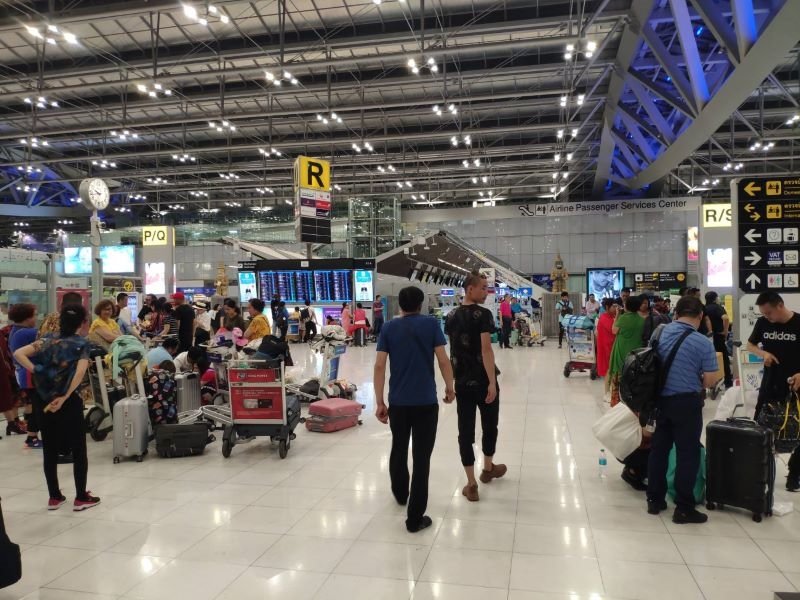
Tip: If you’ve been doing border bounces to live in Thailand, we don’t recommend it. Get a proper visa.
What Long-Stayers Actually Do Today
Some in the forums may tell you to take an ordinary visa-exempt entry, extend it 30 days at a local immigration office, then add one land border run for another stretch. That arithmetic got a lot worse on 15 September 2026: the same routine that used to reach roughly four months now reaches about three. We don’t recommend it either way.

We don’t recommend doing a border bounce at all, by air or land, since it isn’t entirely legal. If you choose to, you do it at your own risk.
So, if you need to live in Thailand long-term, it’s best to get a long-term visa.
Visa Run vs. a Real Long-Term Visa
When you’re spending more time doing math on entry stamps than actually living in Thailand, you’ve outgrown the visa-exempt route. Here’s how the long-stay options compare.
| Option | Length of Stay | Cost | Best For |
|---|---|---|---|
| Visa run / border run | Weeks to a few months per cycle, indefinitely in theory | Low per trip, but adds up and carries real refusal risk | Short trips only, not a long-term strategy anymore |
| Destination Thailand Visa (DTV) | Up to 180 days per entry, extendable once, valid 5 years multiple-entry | THB10,000 government fee, plus a THB500,000 bank balance requirement | Remote workers and freelancers working for employers outside Thailand |
| Long-Term Resident (LTR) Visa | Up to 10 years | Higher income and asset thresholds, but strong tax benefits for qualifying categories | High-income professionals, remote workers, and retirees who qualify |
| Retirement Visa (Non-O) | 1 year, renewable | THB800,000 deposited in a Thai bank, or equivalent income | Retirees aged 50 and over settling long-term |
FAQ
How many visa runs can I actually do in a year?
By land or sea, two visa-exempt entries per calendar year. By air, there’s no official cap, but your full travel history is reviewed every time you enter, and an officer can refuse you regardless of the number.
What’s the difference between a border run and a visa run?
A border run gets you a fresh visa-exempt stamp with no visa involved. A visa run means actually applying for and getting a visa, which today usually happens online before you travel rather than in person at a border.
Do I need a re-entry permit if I already have a visa?
Yes, if you plan to leave Thailand temporarily and want your existing visa still valid when you come back. Leave without one and you can void a visa you already hold. This applies to actual visas, not to visa-exempt stays.
Do I need to worry about getting denied at the airport?
If you’re coming to Thailand as a genuine traveler, you don’t need to worry at all. The enforcement targets those with suspicious behavior. From what we see when people complain about getting denied at the airport, most, if not all, of them have a history of abusing the visa exemption or tourist visa.
Do I need to show proof of funds?
This one is debated. Some people say they never get asked to show the THB20,000 proof of funds at all. Others still do, and sometimes in cash, especially at a land border. At the airport, you can usually use a bank statement as proof instead.
Final Advice
- If you’re visiting a handful of times a year, none of this changes anything for you. The crackdown isn’t aimed at ordinary travelers.
- If you’ve been stringing together visa-exempt stays for a year or more, treat that as a warning sign, not a stable plan. Look at a long-term visa instead.
- Get the right visa before your risk tolerance gets tested at the border, not after an officer decides your passport tells a different story than you do.



 Español:
 Deutsch:
 Français: