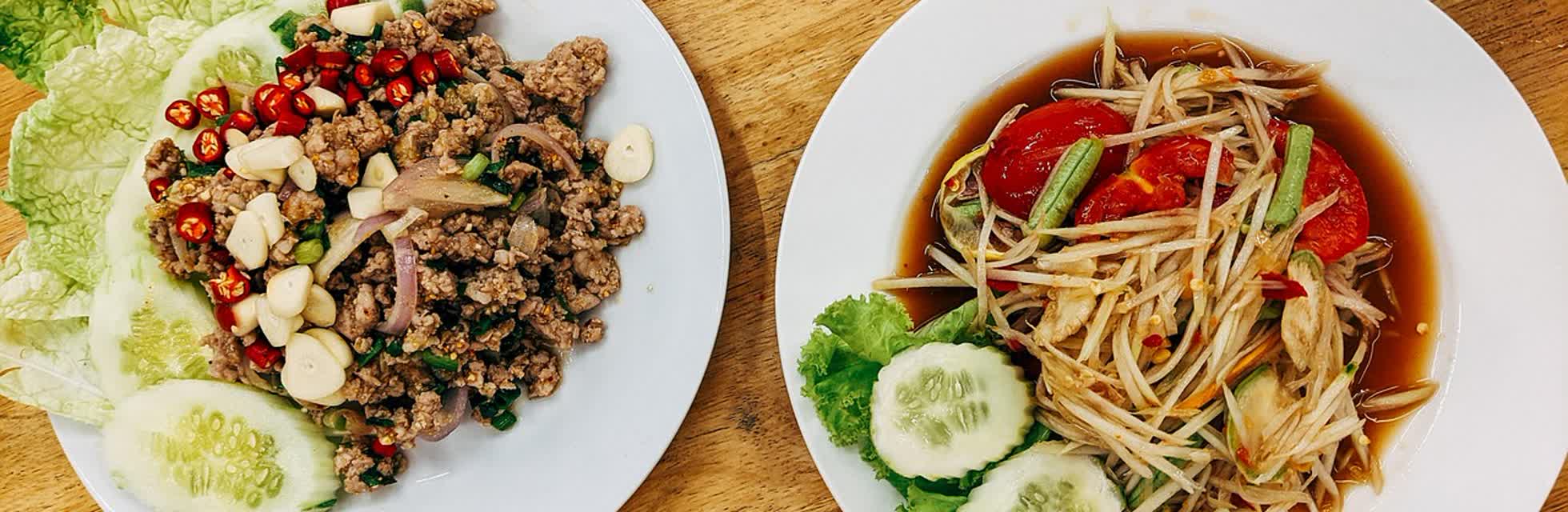

A university in the Northeast screened its new students for liver fluke this month and a third of them tested positive. If you live in Thailand and eat Isaan food, here is what that means for you, in plain language, and how to keep enjoying the food without the risk.
In early July 2026, Maha Sarakham University screened its incoming students for liver fluke. Out of 12,733 new students tested, 4,233 came back positive. That is about one in three.
A nearby university, Rajabhat Maha Sarakham, ran the same check and found 19 percent of its new students infected. Both numbers sit well above the rate the province usually sees in the general population.
The screening used a quick urine test, and the Department of Disease Control has said the positives still need a stool test to confirm, so the final count may shift. But it is a useful reminder that not everything you eat in Thailand is safe, especially when it comes to raw dishes.
So in this article, we will walk you through liver fluke in Thailand: what it is, what is safe to eat, what to avoid, and more. Let’s take a look.
Contents
Key Takeaways
- A July 2026 screening at Maha Sarakham University found a third of new students infected with liver fluke, a parasite you get from raw freshwater fish.
- The risk comes from raw and fermented freshwater fish dishes such as koi pla, lab pla, and som tam made with uncooked pla ra.
- Salmon and other saltwater sushi are not a source, so your Japanese food is fine.
- Most infections cause no symptoms, which is why they go unnoticed for years.
- The real danger is the long game: repeated infection is linked to bile duct cancer, and northeast Thailand has the highest rate of it in the world.
- Cooking freshwater fish through kills the parasite; salting, fermenting, and pickling do not.
- Treatment is a simple, effective medicine, but you can be reinfected if you keep eating raw fish.


What Liver Fluke Actually Is
Liver fluke is a small parasite called Opisthorchis viverrini. You get it from eating raw or undercooked freshwater fish that carries it. Once inside you, it settles in the bile ducts, the small tubes that carry bile from your liver to your gut, and it can live there for years.
The tricky part is that most people feel nothing. According to the US Centers for Disease Control and Prevention, many infected people have no symptoms at all, and when symptoms do show up they are usually mild stomach trouble that is easy to blame on something else. So it is not the kind of thing that makes you sick the next morning and teaches you a lesson. It just sits there.
That quietness is exactly why health officials take it seriously. A parasite you cannot feel is one you keep feeding, meal after meal, for years.
Why Thailand, and Why the Northeast
This is largely a food-culture story. In Isaan, raw and fermented freshwater fish is everyday eating, and the parasite has a strong foothold there as a result. Screening across parts of the region regularly turns up infection rates far higher than the rest of the country.
The consequence shows up in the cancer numbers. The World Health Organization notes that this fluke is a known cause of bile duct cancer, and northeast Thailand has the highest rate of it in the world, around 85 cases per 100,000 people a year, many times the rate seen in Europe or the US. The liver fluke is the main reason.
One newer worry is that younger Thais, who might have skipped the raw dishes a generation ago, are picking up the habit again, partly from food trends online. That is part of why a batch of university students lighting up on a screening test made the news.
Good to Know: You do not need to be young, Thai, or from Isaan to catch this. Anyone who eats raw or undercooked freshwater fish here can pick it up. The habit is what matters, not who you are.
The Dishes That Carry the Risk
The risk comes from specific dishes made with raw, fermented, or lightly preserved freshwater fish. Siriraj Hospital lists the usual culprits, and they are dishes you will recognize from any Isaan table:
- Koi pla: a raw minced freshwater fish salad. This is the classic high-risk dish.
- Som tam with pla ra: papaya salad made with fermented fish that has not been cooked or properly processed.
- Lab pla: a fish larb made with raw freshwater fish.
- Pla som and raw pla ra: fermented and pickled freshwater fish. Fermenting is not the same as cooking.
- Pla khem and other lightly salted fish: salting alone does not reliably kill the parasite.
The common thread is freshwater fish that never got properly cooked. Fermenting, salting, souring, and pickling all feel like they should count, but they do not reliably kill the parasite.
The good news for most foreigners is that these dishes are not popular with expats here, often because of the strong smell. Some do enjoy them, though, and if your partner is Thai, they may love them.
Good to Know: This particular parasite comes from freshwater fish, so your salmon sashimi and sushi are not a liver fluke risk. Raw saltwater fish can carry a different parasite (a worm called Anisakis), which is why reputable sushi uses fish that has been frozen to kill it, as food-safety rules require. Eat sushi from a place that handles fish properly and you are fine.
Why It Is Worth Caring About
A single infection is treatable and often causes no obvious harm on its own. The problem is the long game. Years of infection, usually kept going by eating raw fish again and again, inflame the bile ducts and, in some people, lead to bile duct cancer.
The World Health Organization classes this fluke as a definite cause of cancer in humans, which is a rare and serious label. That is not a reason to panic over one plate of koi pla you ate three years ago. It is a reason to not make raw freshwater fish a regular habit.
Think of it the way you think of smoking or heavy sun exposure. One time is not the story. The pattern over years is.
How to Find Out If You Have It
If you have eaten a fair amount of raw or fermented freshwater fish since moving here, getting checked is cheap peace of mind. The standard confirmation is a stool test, where a lab looks for the parasite’s eggs. The quick urine test used in the university screening is a first-pass tool, and a stool test is what confirms it.

Any decent clinic or hospital can arrange this. If you are not sure where to go, our guide to hospitals in Thailand covers your options, and a general check-up is a natural time to ask for it. You do not need to make it a big production. Just mention that you have eaten raw freshwater fish and want to be screened.
Tip: If you are due a routine health check anyway, add a stool test for parasites to the list. It is a small add-on, and it catches more than just liver fluke.
If You Test Positive
The good news is that treatment is simple and effective. The World Health Organization recommends a medicine called praziquantel, usually taken as a short course over a single day. Siriraj Hospital puts its success rate above 90 percent, so a confirmed infection is very treatable.
The catch is reinfection. The medicine clears the parasite you have now, but it does nothing to protect you from the next raw fish meal. People who keep eating the same dishes simply get infected again. So the treatment is only half the fix; the other half is changing the habit that caused it.
How to Keep Eating Thai Food Safely
None of this means giving up Isaan food, which would be a sad and unnecessary overreaction. It means being a little choosy about how the fish is prepared. A few simple habits cover almost all of it:
- Cook freshwater fish through: heat kills the parasite, so grilled fish, fish soups, steamed fish, and cooked larb are all fine.
- Treat raw and fermented as the risky versions: koi pla, raw lab pla, and som tam made with uncooked pla ra are the ones to skip or eat rarely.
- Do not trust salting or fermenting to make it safe: the CDC notes that lightly salted, smoked, or pickled freshwater fish can still carry the parasite.
- Ask how the pla ra was made: som tam made with cooked or properly boiled pla ra is a much safer bet than the raw version, and many shops will tell you if you ask.
- Saltwater fish is a separate question: sushi and sashimi from ocean fish carry no liver fluke, though raw marine fish can hold other parasites, so stick to places that freeze their fish as the rules require.
So the simple rule is to eat it cooked, and you sidestep the problem almost entirely.
Frequently Asked Questions
Can I get liver fluke from salmon or sushi?
Not liver fluke, no. It comes from freshwater fish, so salmon, tuna, and other saltwater fish used in sushi and sashimi are not the source. Raw marine fish can carry a different parasite called Anisakis, but food-safety rules require sushi fish to be frozen first, which kills it, so reputable sushi is low risk. The liver fluke risk is raw and fermented freshwater fish dishes.
I ate koi pla once. Should I worry?
Try not to panic. The serious risk builds up over years of repeated infection, not from a single meal. If it is bothering you, a stool test will settle it, and treatment is simple if you do test positive.
Does freezing the fish make it safe?
Thorough freezing can kill the parasite, and so can proper cooking. The catch is that you rarely control how street or market fish was handled, so cooking it through is the reliable choice you can actually count on.
How would I even know I have it?
Usually you would not, because most infections cause no clear symptoms. That is the whole reason screening exists. If you have eaten raw freshwater fish here, the only sure way to know is a test.
Is this only a problem in Isaan?
The Northeast has the highest rates because the raw-fish dishes are most common there, but the parasite exists elsewhere in Thailand too. The deciding factor is the food, not the province, so the same raw dish carries the same risk wherever you eat it.



 Deutsch:
 Français:
 Español: