Raising a family in Thailand is a different project from moving here on your own. School fees, dependent visas, family-sized budgets, and what daily life looks like with kids all change the maths. This guide walks through what families actually need to plan for: the groundwork before you fly, the visa routes that cover children, the real costs (schools above all), the move, and settling in once you land.
Contents
Before You Move
It’s tempting to start with the exciting decisions, the neighborhood, the school, what your weekends will look like. With children in the picture, though, the unglamorous prep you finish at home is what keeps the first few months calm instead of chaotic.
Paying Off Debt and Saving
Clear as much debt as you can before leaving so nothing back home keeps pulling at you once you arrive. Pay down the high-interest balances first, and freeing up those monthly payments means you land in Thailand without old obligations hanging over the family.
How big a cushion you need depends on family size and the life you want here. As a rough guide:
- Single person: around THB45,000 a month covers a modest but comfortable life, so a six-month buffer is roughly US$8,700.
- Family: budget closer to THB80,000 a month. Six months comes to about US$15,600, with US$12,000 a sensible floor if money is tight.
Saving less than that isn’t a dealbreaker. Families do arrive with thinner reserves and manage, but expect a lean stretch while you find your feet.
Property, Documents, and Accounts
If you own a home, settle what happens to it before you leave. Renting it out sounds appealing, but managing a property from the far side of the planet eats up energy you won’t have to spare, so many families simply sell. Whatever you choose, decide early, because unresolved property issues tend to flare up exactly when the family is trying to settle.
Get your paperwork in order well ahead of time and pack it in your carry-on rather than a checked bag: everyone’s passports (6+ months validity), an international driver’s license, birth and marriage certificates, school records and any degrees or professional certificates, medical and prescription histories, and an up-to-date will.
On the money side, simplify before you go. Pare your home-country accounts down to one you can run from abroad, and consider adding a trusted relative to it. For moving funds between countries, Wise is consistently cheaper and quicker than a bank wire.
Visas
Choosing the right visa is the first decision that really matters, and it pays to weigh the options for the whole family rather than picking whatever looks simplest for one person.
If You Have a Thai Spouse
A Non-Immigrant O visa based on marriage is a dependable route. You’ll need THB400,000 in a Thai bank account or THB40,000 in monthly income, plus your passport, a copy of your spouse’s Thai passport and birth certificate, and a certified Thai translation of your marriage certificate. It runs about THB6,400, with a 90-day check-in and a yearly renewal.
Tip: once you’re in Thailand, register your marriage here and get a Thai marriage certificate. It makes extending your marriage visa much easier.
If You’re Coming for a Local Job
This means a Non-Immigrant B visa with a work permit, normally sponsored by your employer. Your spouse and children usually join you on Non-Immigrant O dependent visas. Once the kids are enrolled in a Thai or international school, they move onto education visas and you can hold a Guardian visa, with the school supplying the document checklist.
Other Visa Options
For families without a Thai spouse or a local job, the Destination Thailand Visa (DTV) has become the popular choice. It lasts 5 years with stays of up to 180 days per entry, asks for THB500,000 in liquid assets, and lets your spouse and children under 20 join as dependents (each paying a THB10,000 fee). You can work remotely for foreign employers, but not for Thai companies or clients. Couples who are both 50+ can look at a retirement visa instead, while the LTR and Privilege visas fit larger budgets.
Whichever visa you hold, plan on reporting your address to Immigration every 90 days (yearly on the LTR) and buying a re-entry permit (THB1,000 single, THB3,800 multiple) before any trip abroad so the visa stays valid. Treat it as routine admin rather than a hassle.

Read more: Our full DTV guide.
The Real Costs of Family Life
Costs are where families get caught out, and it’s rarely because Thailand is pricey. The surprise is how wide the gap is between a tight budget and a comfortable one, and how completely school fees can rewrite the total. Here’s monthly living, before any tuition:
- Tight budget: THB50,000 to THB70,000 a month (modest apartment, mostly local food, public transport)
- Comfortable: THB80,000 to THB120,000 a month (decent condo or small house, mixed food, some activities)
- Higher-end: THB120,000+ once you add the kids’ activities, Western restaurants, healthcare, and trips
A typical family of four lands at around THB80,000 a month, excluding school.
The School Question
This is the figure that reshapes a family budget more than any other. You have two realistic paths.
Thai schools are affordable and excellent for language immersion. Bilingual Thai-English programs run roughly THB150,000 to THB400,000 a year, and they’re worth a serious look if you’re staying long-term with younger children.
International schools are where most expat families land. Typical 2026 fees:
- Early years (ages 2 to 5): THB350,000 to THB700,000 a year
- Primary (Years 1 to 6): THB500,000 to THB900,000 a year
- Middle school (Years 7 to 9): THB650,000 to THB1,000,000 a year
- Senior school and IB Diploma: THB800,000 to THB1,200,000 a year
Tuition isn’t the whole bill. Application fees, transport, uniforms, and extracurriculars push a realistic first year to roughly 25 percent to 35 percent above the headline number. Because the school usually dictates where you’ll live, choose the school before you lock in a neighborhood.
Read more: Our guide to international schools in Thailand.
Health Insurance
Don’t skip this. It’s tempting to reason that Thai healthcare is cheap enough to pay out of pocket and put off buying cover, but one serious diagnosis can turn that gamble into a six-figure baht bill. For a family, insurance is not the place to economise.
Private hospitals here are genuinely good and far cheaper than the US or UK, yet a major illness without cover can still reach hundreds of thousands of baht. Look for a plan that covers every family member, inpatient cover of at least THB400,000 per person, a lifetime renewal guarantee, and specific cancer cover. Cigna, Pacific Cross, and AXA Thailand are all worth quoting; a basic family plan for a couple in their 30s with one child usually lands at THB3,000 to THB6,000 a month.
Read more: Our family health insurance guide.
The Move Itself
A few flight notes for families. If your spouse holds a Thai passport, a one-way ticket is no problem, and non-Thai holders can usually fly one-way on a proper long-stay visa (marriage, Non-B, or DTV). Reserve a bassinet seat if you’re travelling with an infant, and confirm your visa requirements before you pay for tickets.
On shipping, be ruthless. The test to apply to every box is simple: would replacing this in Thailand cost more than shipping it? If yes it’s worth bringing, so specialised baby gear, decent bicycles, and good cooking tools usually make the cut, while furniture and everyday household items rarely do. As a rough benchmark, a full household shipment of around 60 boxes from the US runs in the region of US$1,500 and takes about four weeks. Keep a box-by-box inventory for customs, set aside something for possible import tax, and if pets are coming, start their paperwork early.
Read more: Our guide to shipping your belongings to Thailand.
After You Arrive
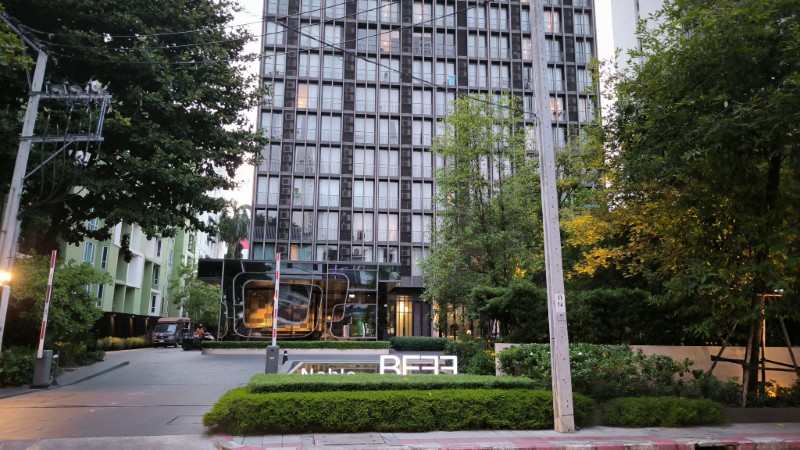
Resist signing a year lease before you’ve lived here a while. A serviced apartment or short-term rental for the first month buys you time to see which area genuinely fits the family, especially once the school is settled. In Bangkok, expat families tend to cluster around Sukhumvit (Soi 31, 39, 49, 63), Bang Na (near Bangkok Prep), and Pakkret/Nonthaburi (near ISB). In Chiang Mai, Nimmanhaemin and Santitham are the usual favourites. Family rentals typically run THB25,000 to THB60,000 a month in Bangkok and THB15,000 to THB35,000 in Chiang Mai.
If you land without work lined up, give the family time to settle before you chase it. Plenty of new arrivals begin with English teaching, the easiest entry point without a specialised offer, though it generally needs a TEFL certificate. Any job here requires a work permit tied to one specific employer, and US citizens still owe the IRS wherever they live, so get proper advice on both your US and Thai taxes. The one rule that keeps immigration painless: never let a visa lapse before you’ve dealt with it.
Thai Culture and Family Life
One thing that surprises many newcomers is how warmly Thais treat children. In some Western countries you can feel as though kids in tow are an imposition; here it’s the opposite. At many cafés and restaurants, children are handed free drinks and stickers, and nobody minds them being kids.
What to Prepare Your Kids For
Thailand’s cultural differences get very real once you’re parenting here. Respect for hierarchy runs deep, and teachers in particular are treated with real deference. The wai (the traditional greeting) is used constantly, including with teachers and elders, so it’s worth teaching your children early. Buddhist customs show up in temple visits, school ceremonies, and the calendar of holidays. The upside is that children, the younger the better, pick up Thai remarkably fast.
Mental Health and the Honest Reality
Expat life carries strains that rarely get aired. Pulling up roots takes nerve and brings uncertainty, and with fewer people nearby who truly get your situation, the worries stack up. Some expats drift, stop moving their bodies, drink too much, and let their mental health slide. What tends to help:
- Keep real social connection, the kind where you can be honest, not just drinking buddies.
- Stay physically active. Bangkok’s parks fill up at 6am and Muay Thai gyms are everywhere.
- Don’t live in expat forums. They draw the most embittered voices and will talk you into believing the country is awful while they carry on living in it.
- Ask for help if you need it. Mental health stigma is real in Thailand, but don’t let it stop you.
Making Friends
Most people make friends more easily here than they did at home. Other expats were the new family once and remember how it felt, so they tend to be welcoming. You still have to put yourself out there, though. Shared activities like cycling, Muay Thai, or your children’s school are the easiest way in, and it pays not to stick only to your own nationality: friendships with Thais and expats from elsewhere make the whole experience richer. Easy starting points are the TSK and ExpatDen Thailand communities, city expat Facebook groups, and local sports and activity clubs.
The Long Game
Give it long enough and daily life here simply becomes daily life. The novelty fades, which is exactly the point: Thailand stops being a long adventure and becomes home. Families do best when they arrive with clear eyes, enough savings, a worked-out plan for schools and visas, and a real willingness to engage with the culture instead of hiding inside an expat bubble. The ones who thrive treat the country as a home to build, not a holiday that happens to be running long.
Recommended Service Providers for Families in Thailand
- Wise: cheaper, faster transfers from home to Thailand.
- Cigna: family health insurance covering all members, with lifetime renewal.
- Luma: affordable local health cover for the family.
- CheckDi: compare family health insurance quotes.
- SEE TEFL: get TEFL-certified to teach, a common first job for new arrivals.
- ExpatTax Thailand: advice on US and Thai tax obligations.
- ThaiPod101: learn conversational Thai at your own pace.
- Agoda: hotels and domestic flights for family trips.
- Discover Cars: compare car rentals for the family.
- Airalo: Thailand eSIMs for everyone’s phones on arrival.
Click here to see a complete list of all services you need as an expat in Thailand.

Recommended Articles for Families in Thailand
 Moving To Thailand: A Guide for Expats to Live Here in 2026 - An in-depth guide to making this Southeast Asian country your new home. ...
 Health Insurance in Thailand: What You Need to Know as an Expat in 2026 - Health insurance is one of the most sensible investments you can make as an expat in Thailand. This guide walks through your options, what they cover, what they cost, and… ...
 Shipping to Thailand: Services, Costs, and Customs - Shipping a letter or package to Thailand? Moving here and need to send all your belongings? Find out how to do it. ...
 Bangkok Apartments: Rental Prices, Best Areas, and Lease Tips - Real Bangkok rental prices by property type, deposits and lease terms, the documents you need, and the rental scams to watch for before you sign. ...
 How to Pick the Best International Schools in Thailand for Expats - Choosing an international school in Thailand involves more than comparing fees. This guide covers curricula, accreditation, tier rankings, hidden costs, and what expat families actually need to know. ...
 How to Buy a Car in Thailand: Costs, Financing & Registration (2026) - A complete guide to buying a car in Thailand: upfront and running costs, financing for foreigners, compulsory insurance, taxes, and how to register it. ...
 Giving Birth in Thailand: Costs, Best Hospitals, and How to Register Your Baby (2026) - A practical guide to giving birth in Thailand as a foreigner: hospital costs, choosing public vs. private care, insurance, and how to register your baby's birth certificate and citizenship. ...
 Thailand Hospitals: What to Do When You Need Medical Treatment - Thailand's hospitals range from affordable government facilities with long queues to high-end private hospitals that rival the West in quality. This guide covers the main options, costs, and what to… ...
 Learning Thai for Beginners: A Roadmap and Guide to Every Method - A beginner's roadmap for learning Thai: what to learn first, how to pick a school, tutor, or app, and the mistakes that slow most learners down. ...
 How to Apply and Renew Your Thailand Marriage Visa in 2026 - Learn how to apply for a Thai marriage visa, including the financial requirements, required documents, application process, renewals, and re-entry permits. ...
Latest Articles for Families in Thailand
- Hua Hin vs Phuket: Which Is Better for Retirement in 2026?
- Driving in Thailand: Rules, Regulations, and How to Drive Safely
- Motorcycle License in Thailand: Documents, Tests, Fees & Renewal
- Best Internet Providers in Thailand 2026: Plans & Setup
- Cost of Living in Thailand 2026: Real Monthly Budgets
- Currency Exchange in Thailand 2026: Best Rates & Fees Compared
- Vaccinations for Thailand: Which Ones You Actually Need
- Is It Safe to Drink Water in Thailand? Let’s Find Out!
- Insurance in Thailand: What’s Legally Required and What You Can Skip
- How to Ride a Motorcycle Safely During the Rainy Season in Thailand
- Thailand’s Monsoon and Flash Flood Season: A Safety Guide for Expats
- Emergencies in Thailand: What to Do and Who to Call
- Thailand SSO vs. Private Health Insurance: Which One Is Better?
- Recommended International Schools in Bangkok 2026: Costs, Locations, and Choices
- Sin Sod in Thailand: How Much Do You Need to Give?
- Pharmacies in Thailand: What You Can Buy Without a Prescription (2026 Guide)
- Prenuptial Agreements in Thailand: A Guide for Foreigners Marrying a Thai
- How to Open a Thai Bank Account in 2026: Requirements, Best Banks, and Tourist Rules
- Traveling Out of Thailand With Your Thai Children Without Your Spouse
- Thai Driving License for Foreigners in 2026: Documents, Tests & Cost
If you want to read more than just our family articles, you can find our full list of guides on this page.