
Health insurance is one of the most sensible investments you can make as an expat in Thailand. In this guide I walk you through your options, what they cover, what they cost, and how to find a plan that protects you when you need it most.
If you’ve ever met me, you know I am a pragmatic man. That’s why I started Thailand Starter Kit to begin with. And I firmly believe that having health insurance in Thailand is one of the most sensible things you can do for yourself and your finances.
As an expat in Thailand, you might be wondering why you should get health insurance. While the cost of healthcare in the country is affordable, things can get expensive over time, which you’ll discover later in this guide.
But buying health insurance isn’t only about finding the cheapest plan on the market; you want a plan that actually covers you when you need it most.
By the end of this guide you’ll be able to narrow down your health insurance choices as an expat in Thailand and start reaching out to the right companies for quotes.
If you want to skip this guide and get right to my recommendation, check out Cigna Global. It offers comprehensible and flexible expat health insurance plans. Even its basic plan comes with a US$1,000,000 annual limit, plenty for your life in Thailand.
Disclaimer: Some links in this article go to our partners, and we may earn a commission if you use them. It costs you nothing extra, and we only recommend services we'd use ourselves. Read more in our Advertising Disclosure.
Contents
- Key Takeaways
- The Current State of Health Insurance in Thailand
- Why I Chose to Get Health Insurance and Which Company I Picked
- Insurance Options
- Expat Health Insurance
- Local Health Insurance
- Public Insurance
- Travel Insurance
- Free Healthcare in Thailand
- Health Insurance for Retirees
- Finding the Best Insurance Plan
- Best Health Insurance Companies for Thailand Expats
- Compare Thai Health Insurance Plan
- How to Apply for Thailand Health Insurance
- Mandatory Health Insurance for Retirement Visa
- Frequently Asked Questions
- Should I Use a Broker to Buy Health Insurance in Thailand?
- How Much Coverage Limit Should I Need?
- Can I Use Health Insurance from My Home Country?
- Can I buy health insurance while I’m in Thailand?
- Does Thailand have free healthcare?
- Do I need health insurance to enter Thailand?
- Is there any recommended child health insurance?
- Is it possible to get health insurance in Thailand after 70?
- Do I need health insurance for the DTV visa?
- How much health insurance do I need for the LTR visa?
- What is the co-payment rule on Thai health insurance?
- Health Insurance Plans Explained
- Which Health Insurance Should I Get?
- Sources Cited
Key Takeaways
- Healthcare in Thailand is affordable, but costs add up over time, so health insurance is a sensible investment for most expats.
- Your main options are international (expat) insurance, local Thai insurance, group plans, public schemes, and travel insurance.
- International plans like Cigna Global cost more but offer high annual limits and flexible, comprehensive coverage.
- Local plans are cheaper but often come with lower limits and per-procedure caps, so you may still pay out of pocket.
- Don’t choose on price alone; check the coverage limit, area of coverage, deductibles, and exclusions before you buy.
- The Non-Immigrant O-A retirement visa (applied for from a Thai embassy abroad) requires health insurance, with many embassies asking for up to THB3,000,000 (US$100,000) in coverage. The standard in-country Non-O retirement extension has no insurance requirement.
- Buy insurance before you need it, since waiting makes pre-existing conditions harder to cover.
- If you are unsure which plan fits, a broker can assess your needs and recommend options.



The Current State of Health Insurance in Thailand
Thailand’s health insurance market has been growing fast over the past few years. In fact, more people are looking for plans that don’t just cover hospital bills but also include wellness programs and preventive care. It’s not just about emergencies anymore. Expats want insurance that helps them stay healthy so they can enjoy their lives in Thailand in the long run.
At the same time, Thailand’s government has been pushing for universal healthcare, but public hospitals are overcrowded, and costs for private care keep going up. That’s why many expats are choosing private health insurance.
My wife works at a government hospital in Bangkok, which means I get free care. Even then, I still have an expat health insurance plan. It just makes sense for the reasons I’ve listed above.
The health insurance industry in Thailand is changing to meet these new demands. More choices, better coverage, and easier access are shaping the way expats choose their health insurance, and I hope the rest of this guide helps shape the way you choose yours.
Why I Chose to Get Health Insurance and Which Company I Picked
When I first arrived in Thailand at age 23, I relied solely on travel insurance. My backup plan was to return to Germany for treatment if I encountered any serious medical issues. This strategy proved unsustainable after five years when I reached the maximum allowable period for travel insurance coverage.
My next insurance provider initially seemed ideal but quickly became financially untenable after implementing a 30 percent premium increase.
While employed in Thailand, I had access to Thai social security coverage. However, this limited me to a poorly-rated local hospital that I rarely used except for basic services like getting antibiotics.
Other local insurance options provided insufficient coverage for the international hospitals I preferred, though I should note this situation has improved significantly in recent years.
This all led me to ACS.

Without insurance, being admitted turns into a money decision. I recently took a friend to hospital with bad diarrhoea, and the doctor wanted to admit her. Ramkhamhaeng Hospital estimated around THB25,000, so she had to weigh it up on the spot. With insurance, you just get admitted and don’t think about the bill.
Saran Lhawpongsawad, Project Manager, Thailand Starter Kit
I originally chose ACS because it offered a non-Thai insurance plan with Thailand-level pricing by focusing on Southeast Asia. This strategic regional focus allows ACS to leverage the area’s relatively low healthcare costs while providing international-standard coverage.
The company’s detailed coverage limitations, though initially seeming cumbersome, actually serve a purpose. It effectively counters Thailand’s hospital monopoly and helps prevent unexpected premium increases that plague many international insurance plans.
ACS has recently replaced its Southeast Asia-specific plan with a more comprehensive expat plan that still maintains reasonable pricing and predictable future increases. Rather than offering flat-rate coverage across all facilities, it implemented a tiered system based on hospital categories.
Its premium tier provides excellent coverage for high-end medical facilities including Bumrungrad International Hospital, Medpark Hospital, and Bangkok Hospital Group. Meanwhile, its lower-tier plans are well-suited for budget-conscious expats who may prefer more affordable options like St. Louis Hospital or Sukhumvit Hospital. While ACS doesn’t explicitly market its plans in these terms, this is essentially how its tiered structure works in practice.

Tip: When selecting health insurance in Thailand, I recommend securing a policy with at least US$300,000 in coverage to protect against serious medical events. While price and coverage details are relatively easy to verify, a company’s reputation for claim handling requires deeper research. Consider reading online reviews and browsing Facebook expat groups.
You should also work with a reputable insurance broker who can guide you through options from multiple providers. But you should talk to a broker in person rather than through email, as they can address your specific circumstances and concerns.
Insurance Options
I’ve found that you have six common health insurance options as an expat who’s coming to or already living in Thailand. They are:
- Expat health insurance
- Local Thai health insurance
- Group health insurance
- Public health insurance
- Travel insurance for Thailand
Each has its own pros and cons. So let’s take a closer look.
Most expats settle on one of three: a comprehensive international plan, a cheaper visa-compliant local plan, or a broker’s help to narrow it down.
- Comprehensive cover: an international plan like Cigna Global, with high annual limits and worldwide protection.
- Budget or retirement-visa cover: Luma Long Stay Care, cheaper and built to meet O-A visa requirements.
- Unsure, or want local plans: an insurance broker can compare options for your situation.
Expat Health Insurance
Expat health insurance plans are for people like you and me, made for those who leave their home countries to live abroad. These plans are offered by international health insurance companies as opposed to local Thai companies.
It’s by far the most popular option for expats in Thailand. Even I use an expat health insurance plan. Here’s what they offer:
- Comprehensive coverage: Coverage and limits are by far the most comprehensive, better than local Thai health insurance plans.
- Global coverage: You get international coverage, not just in Thailand. This means you can keep the same plan even if you move to another country.
- Clarity and simplicity: International health insurance plans are much easier to understand than Thai health insurance plans because they work the same way as those in your home country.
- Lifetime policy renewal: Many expat health insurance companies renew your policy despite your age. This is called a lifetime guarantee. But it’s advisable to get health insurance before you turn 55 years old.
- Stricter regulatory standards: International health insurance companies need to follow insurance regulations from abroad. For example, it can be by the United States or the European Union, depending on the provider. And they are more stringent than Thai health insurance regulations. This means you’re less likely to be kicked out of your plan or experience significant premium increases just for making a claim.

Because expat health insurance comes with higher coverage limits, it’s enough for premium hospitals in Thailand such as Bumrungrad and Bangkok Hospital.
Expat Health Insurance Coverage
The overall coverage you get with expat health insurance — even with a basic plan — is enough for expats in Thailand. These plans cover most medical care in full, as long as it’s under your annual limit, including:
- ICU stays
- Cancer treatment
- Evacuations
- Surgery costs
- Medication
- Hospital rooms
- Nursing fees
However, expat health insurance companies may have separate limits for certain minor treatments, such as:
- Out-patient treatment (OPD)
- MRIs
- Home nursing
- Physiotherapy
- Acupuncture
When it comes to outpatient care, some expat health insurance plans offer annual limits and others offer plans that limit the number of visits you can make per illness.
In this case study, you can read the story of a long-time expat who reached out after being diagnosed with Atrial Fibrillation, a heart condition that raises the risk of stroke and heart failure. Without insurance in place beforehand, he now faces significant, lifelong medical expenses, as insurers won’t cover his pre-existing condition.
Health issues don’t wait for the “right time.” Acting while you’re healthy can make all the difference. Remember, trying to get insured after a diagnosis is like buying car insurance after an accident. It’s too late.
Expat Health Insurance Areas of Coverage
Expat health insurance usually comes with worldwide coverage, but it might not cover you in the United States. During my own health insurance buying process, I found plans that would cover me in the United States, but I’d have to pay a much higher premium. So, I opted out.
Many plans also come with home coverage. This means you can fly back to your home country and get treatment there. This is useful if you want treatment in familiar surroundings or prefer to have your family around.
Expat Health Insurance Options
You have several expat health insurance options in Thailand.

First,Cigna Healthcare is what I recommend. Even its standard plan comes with a US$1,000,000 annual limit, which is plenty for Thailand’s healthcare system.
You can customize the plan to suit your needs too. For example, you can choose whether you need coverage in the United States, OPD care, medical checkups, and more. Cigna also has plans for retirees and is open to expats of all ages.
It’s also easy to get pre-authorization with Cigna. People have reported that their medical cases are approved the same day after one phone call.
Other major players in the market include:
- GeoBlue: known for covering you in the United States
- Now Health: affordable plans but can get more expensive after making claims
- Foyer Global Health: unlimited coverage limits
- April International: worldwide plans you can join up to age 60 if you live in Thailand, though the two cheaper plans pay only 60% for planned stays at some top private hospitals
- ACS: as mentioned at the beginning of this guide, ACS is what I use because of its sufficient plans that cover me in Southeast Asia
There are also other good plans for expats in Thailand such as William Russell, Aetna, Passport Card, and much more. You can use our Thailand Starter Kit Health Insurance Comparison tool for a side-by-side breakdown of each policy.
Tip: If you don’t want to compare it yourself, you can just talk to a broker instead. This is also the method I now use when buying health insurance. For expats in Thailand, you can talk to Carsten Creutzburg, a German insurance broker living in Thailand. He is very knowledgeable when it comes to international health insurance. You can read our review here.
Expat Health Insurance Disadvantages
I’ve come to learn that expat health insurance could be improved. There are still certain disadvantages, including:
- Premiums: The most expensive option for health insurance in Thailand. You can expect to pay at least US$100 a month even for a basic plan.
- Claims: Making a claim is harder than making a claim through local Thai insurance. For outpatient care, you may need to pay out-of-pocket first and make a claim later.
- Support: Expat health insurance companies may not have an office in Thailand. To contact them, you have to make an international call or use an app.
- Disputes: If you have a dispute with an expat health insurance company, you might have to pursue your claim outside Thailand. And disputes overseas are a lot harder to manage. As far as I know, you can dispute claims in Thailand with local insurance companies through the Office of Insurance Commission (OIC) without the need to hire a lawyer in Thailand.
To avoid these disadvantages, you should buy expat health insurance from a credible company. While premiums are higher, you run into fewer problems when making claims, getting support, or settling disputes.
But I’ve found it’s still a good idea to read your insurance policy in detail to understand what you’re getting. Based on what I saw, many disputes come from people trying to make a claim on an exclusion.
Where to Get Expat Health Insurance
You can buy expat health insurance through two methods:
- Contact the health insurance company
- Use an international insurance broker such as International Citizens Insurance
By using International Citizens Insurance, you get instant quotes for the leading expat health insurance plans mentioned above. You can also ask its international brokers any questions you might have.
Or you can fill out our health insurance form to get advice and quotes from our partner expat health insurance brokers. You can rest assured knowing that my team vets each and every one of our partner brokers. Also, I would only recommend a broker who I would use myself if I were in your shoes.
Keep in mind, though, that you can only get expat health insurance from a broker outside Thailand. One of the main reasons for this is that the OIC only allows brokers in Thailand to sell local health insurance.
I often refer people to the story of a long-time expat who reached out to me after being diagnosed with Atrial Fibrillation, a heart condition that raises the risk of stroke and heart failure. Because he didn’t have health insurance, he now faces significant lifelong medical expenses, as insurers refuse to cover his pre-existing condition.
Health issues show up at any time. So getting covered while you’re healthy can make all the difference. Remember, trying to get insured after a diagnosis is like buying car insurance after an accident. It’s too late.
Read the full case study to learn why timing is everything.
Local Health Insurance
International insurance companies that have branches in Thailand offer local insurance, including AXA, Allianz, AIA, and Luma to name a few.
Here’s a summary of why you might want to get local Thai health insurance:
- Cheaper Price: Local health insurance is cheaper than international insurance. However, the coverage, including coverage limits and area of coverage, is also lower.
- Claiming: Local health insurance companies in Thailand offer direct billing to most hospitals in Thailand. You can go to any hospital in their network and have the insurance pay the hospital, including for outpatient care. You show your card when you register, and the hospital and insurance company take care of the rest.
- On-site Support: Depending on where you buy health insurance, sometimes an insurance agent visits you in person if you are hospitalized and offer on-site support.
Local Health Insurance Coverage
The coverage for most private local health insurance plans works differently than in the West. Coverage might confuse you as well, as it comes with benefit limits, sickness limits, or annual limits.
Benefits limits
Instead of annual limits, they come with benefits limits. What you find when browsing for local health insurance plans is a list of coverage limits on different hospital expenses, such as:
- Doctor fees
- Scans
- Hospital rooms
- Surgery fees
- ICU stays
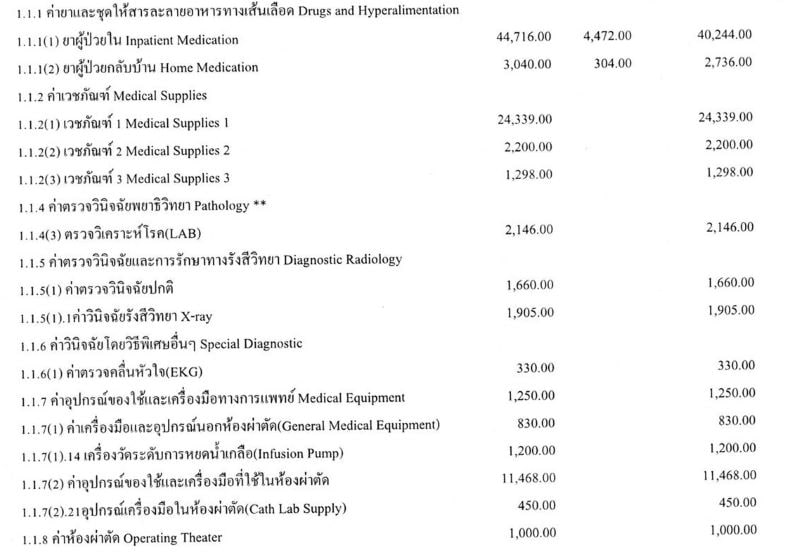
For example, your plan may have a limit of THB1 million but might cap surgical fees at THB100,000, hospital bills at THB80,000, and room and board at THB8,000 per day.
So, depending on how much a hospital charges for each procedure, you may need to pay out of pocket.
Sickness limits
To add to benefit limits, local health insurance plans come with sickness limits, or the total amount they pay per sickness. This is becoming more popular.
Annual limits
Some local health insurance companies are even starting to offer plans with annual limits like expat health insurance.
Please note that even local plans may come with annual limits or limits per sickness. They may still have a cap on doctor’s fees, hospital rooms, and hospital fees. So, read your plan.
Local Health Insurance Options
Still, you can choose from many local health insurance plans in Thailand. There is a wide range of local private health insurance plans with different coverage limits. Some might not have comprehensive plans, but they are affordable.

Popular options include:
- Standalone from Private Health Insurance Companies: You can buy a standalone plan from local health insurance companies, but the way it works differs between each company.
- Additional Coverage from Life Insurance: This is a popular way for Thais to get health insurance. They buy life insurance and receive health insurance as part of the life insurance plan from companies like AIA. The whole situation is quite the same for health insurance in Indonesia at the moment.
- Thailand Banks: Banks in Thailand also offer health insurance, but most of the time, it’s an add-on package to life insurance. This add-on insurance is only available to Thais, because it’s difficult for expats to get life insurance from a Thai bank.
One private local health insurance company I often suggest is Luma.

The plan is for expats and works like expat health insurance. It comes with annual limits of THB5 million to THB50 million, which should cover even the most expensive medical care in Thailand. They’ve also partnered with many top-tier private hospitals, including
- Bumrungrad
- Bangkok Hospital
- Samitivej
You can also choose to get international coverage through Luma.
Other major players in the local insurance market include:
- AXA
- AIA
- LMG
- Muang Thai
- Aetna, which has been taken over by Allianz
You can compare these local plans and buy them from a local broker named CheckDi.
Local Insurance Disadvantages
Local coverage can also be limited in terms of:
- Coverage per Premium: Local insurance is more expensive than expat health insurance in terms of coverage per premium. For example, you might pay THB42,000 per year for a local plan that pays out THB500,000 at most per sickness. On the other hand, expat health insurance is more expensive but offers much higher coverage limits of up to THB35,000,000 per year and includes international coverage.
- Coverage Limits: While local insurance is affordable, the coverage amount you receive is much lower than expat health insurance.
- Less Strict Regulations: Local health insurance companies follow Thai insurance regulations, which are often less strict than those in Western countries. Sometimes, they may raise your premium after an expensive claim or even end your coverage.
- Exclusions: Avoid getting into a motorcycle accident, as you won’t always get coverage.
- Coverage Area: You cannot keep your plan if you move out of Thailand.
Because of this, local private health insurance is a good choice if you have a limited budget and know what you want.
If you get good private local health insurance, you can rest easy knowing you have higher coverage limits. However, premiums are on par with those of international insurance.
The Co-Payment Rule on Thai Health Policies
Thai health policies can now include a co-payment clause, under rules the Office of Insurance Commission (OIC) brought in for 2025. It only applies at renewal, and only to people whose claims in the previous year match one of two patterns. (Verified October 2026.)
You may have to pay up to 30% of covered costs in the next policy year if either of these applies:
- Minor-illness admissions: you were admitted as an inpatient for a common minor illness with no medical need to stay in hospital, you made 3 or more such claims, and your claims added up to at least 200% of your premium.
- General-illness admissions: you made 3 or more inpatient claims for general illnesses (not serious illness or major surgery), adding up to at least 400% of your premium.
If both patterns apply, the co-payment is capped at 50%. The check is done again every year, so if you don’t meet the conditions the following year, the co-payment drops off.
Serious illnesses and major surgery don’t trigger it. In practice, it targets people who use inpatient cover for minor problems, so check whether a Thai policy you are buying includes this clause before you sign.
Where to Get Local Health Insurance
Just like expat insurance, you can get local health insurance from the insurance company’s website.
Since most customers are Thai, English-speaking customer support is lacking, unless you go through an insurer that targets expats, such as Luma.
Or you can buy from a local health insurance broker.
I recommend CheckDi. It’s a one-stop website that lets you shop around for local plans and compare them side-by-side. You can also talk to one of its brokers for further details.
Group Insurance
Group insurance is separated into two kinds:
- group insurance for families
- group insurance for business
Group Insurance for Families
If you buy family group insurance, you can get a discount if you insure three or more family members. Discounts range from 5 percent to 10 percent.
The main disadvantage of group insurance is that when the number of people in your plan falls short of the minimum requirement, you usually can’t renew the policy.
This is a problem for aging people with medical conditions because they won’t get coverage for medical care anymore.
Group Insurance for Business
Another choice is group insurance for business. If you run a company in Thailand, you can buy group insurance for you and your workers from local health insurance companies.
They are cheaper than individual plans. And you can use them to decrease your business taxes. Based on what I see, it’s not comprehensive enough if you want to use them as your main health insurance. But it’s a nice benefit for your workers.
The amount of outpatient coverage is what grabs workers’ attention the most.
On the other hand, if you have a team of remote workers, you can’t get a group plan from local insurers. You need to get international plans instead.
Remote Health is a good choice. It’s international insurance for digital nomads and remote workers. It comes with worldwide coverage and an annual limit of US$1,500,000.
It’s much more comprehensive than local plans but more expensive as well.
To find out more read our group health insurance guide.
Public Insurance
You have two major public insurance choices available to you in Thailand:
- Social Security
- Universal Health Coverage
Let’s take a look at each choice.


Social Security
If you work in Thailand legally, you get insurance through Social Security.
Your employer deducts 5 percent of your gross salary, but no more than THB875, for Social Security every month.
With Social Security, you can get medical care and medicine for free by going to your designated Social Security hospital with your Social Security card and passport.
I have social security, but I don’t lean on it for much. For minor things, a cold and the like, it’s fine. For anything serious I go straight to a private hospital. It isn’t only the long queues; it’s the few minutes you get with the doctor, and a referral to a specialist can take weeks. I keep paying into it anyway, so that when I’m older I still have some healthcare options. And I have heard good stories: our accountant had breast cancer, and social security covered most of her treatment, apart from a few extra medications.
Saran Lhawpongsawad, Project Manager, Thailand Starter Kit
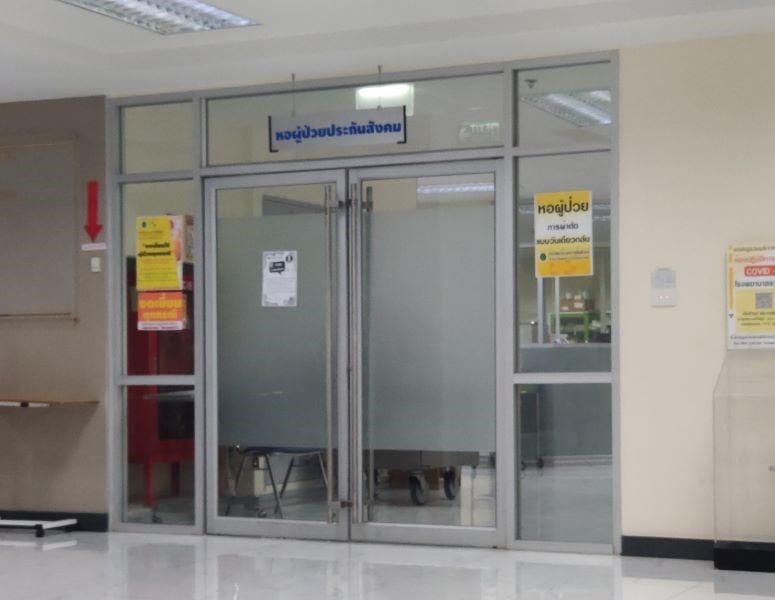
You can pick three hospitals to visit through the Social Security network. Then, the Social Security will pick a hospital based on your choice. You have over 40 hospitals to choose from in Bangkok alone.
While Social Security gets you free medical care, there’s a concern about the quality and waiting times because of the long queues at the hospital. Many expats I talk to, including me, skip using Social Security and rely solely on private insurance because they don’t want to waste the entire day at a hospital.
You can find out more in our guide to Social Security in Thailand.
Universal Health Coverage
Thailand’s universal health coverage is known as the 30-baht scheme. With this scheme, you can pay THB30 to get full treatment at your designated hospital. The 30-baht scheme is only for Thais without Social Security or for government officers.
At this point, you might be tempted to scroll on, but wait a second. Sure, you’re probably not Thai. But could you become Thai? Yes, very much so. It’s a process that takes a few years and costs the equivalent of a year’s worth of health insurance premiums, but it’s definitely possible. The first step would be to become a permanent resident. And while those wheels are grinding, it’s probably a good idea to find some alternative coverage in the mean time, so read on.
Find out more: Healthcare System in Thailand: A Guide for Expats
Travel Insurance
Some insurance companies offer short-term coverage in the form of travel insurance.
Short-term coverage can range from a few weeks to a few years. You should get travel insurance before coming to Thailand. Otherwise, choices can be more limited. Travel insurance prices are a lot more attractive than what you’d get for long-term coverage.
The biggest mistake, by far, is relying on travel insurance. It’s designed for short trips, with low benefit limits, narrow coverage, and exclusions that make it unsuitable for anyone living abroad for months at a time. It might cover a quick doctor’s visit, but if something serious happens, you can find yourself significantly underinsured.
Laurent Genc, international health insurance expert, April International
By taking out travel insurance coverage, though, you’re facing four possible problems:
- Travel insurance companies can avoid dealing with expensive long-term care. If you need long-term care they could repatriate you and hand you off to the Social Security system in your home country.
- Travel insurance companies tend to offer emergency healthcare coverage. This means you’re covered for accidents or illnesses that need immediate care.
- Travel insurance generally only covers you for a maximum of six months.
- Since travel insurance is for traveling, if they find out that you live here instead of traveling, they may reject your claim.
Therefore, you should get travel insurance for short-term stays or vacations in Thailand. Other than that, it makes sense to get long-term health insurance so you’re covered for severe medical problems.
Read our guide to travel insurance to find out more.
Free Healthcare in Thailand
There is one case where you could get free health insurance in Thailand, and that’s if your Thai spouse works for the Thai government. If so, you’d be able to get free healthcare at Chulalongkorn Hospital for being the spouse. Your doctor’s visits, medicine, and any treatments would be covered in full. If you have kids, they would also be covered in full as well.
Health Insurance for Retirees
Retirees have limited health insurance choices since many insurance companies may not accept new applicants if they’re older than 60. It’s also getting harder to find a company that accepts someone who’s older than 70.
If they do accept you, expect higher premiums, which can cost over THB100,000 a year.
Retirees have fewer choices for insurance companies, both local and international, that offer sufficient plans.
Cigna Global, for example, has a senior plan that’s created for retired expats living abroad.
In addition to international coverage and an annual limit of US$1,000,000, this plan accepts expats of all ages. You can sign up at any age and keep renewing your plan.
Cigna also covers outpatient care and medications for pre-existing conditions such as hypertension, type-2 diabetes, arthritis, and more.
In addition to Cigna Global, you can check retiree plans offered by local insurance companies. These plans are to qualify for a Thailand retirement visa. So, the coverage limits can change, depending on visa requirements.
It’s more affordable than Cigna Global but not as comprehensive. For example, the coverage limits are much lower. And it tends to come with a high deductible, at least THB100,000.
If this is your choice, check out Luma Long Stay Care.
Finding the Best Insurance Plan
When looking for insurance plans, my tip is to avoid focusing only on the cheapest option.
Instead, it’s better to consider:
- Coverage limits: I always aim for an annual limit of THB 35,000,000 to ensure my insurance covers everything, even the most expensive treatments in Thailand.
- Area of coverage: In addition to Thailand, you may want your health insurance plan to cover the countries you travel to regularly. At the very least, it should include emergency coverage abroad.
- Exclusions: Are there exclusions you should be aware of? Do you have a chronic disease or participate in activities that aren’t covered?
- Renewal guarantee: Will they continue to cover you if you’re diagnosed with a chronic disease, make too many claims, or claim a high amount?
- Company reputation: Research the company’s reputation in advance. Is the insurance company easy to deal with? Do they raise premiums significantly every year? What are other people’s experiences with them?
- Read the fine print: You might be tempted to skip it, but reading the fine print is crucial as it provides important details about your plan.
Because of this, the plan suitable for you might cost more, but it’s better than getting a plan that gives you less coverage when you need it most. You can find more information in the section below on Health Insurance Plan Explained.
If you do not want to do research yourself, talking to a good broker helps.
Best Health Insurance Companies for Thailand Expats
While writing this guide, I came across over 100 insurance companies that offer health insurance for expats in Thailand. Due to time constraints, I avoid listing them all.
Also, each company has different pros and cons. Some plans are more expensive than others but come with better coverage or easier claims processes. Some companies may have a great plan on paper but cancel your coverage if you make too many claims.
Here’s a list of insurance companies in Thailand that are popular with expats. Some of them are more popular than others, so let’s take a look.
Cigna Healthcare
Cigna Healthcare is one of the largest health insurance companies. Its plans are popular with expats not just in Thailand but around the world.
Key Takeaways
- Good health insurance plan overall for expats in Thailand
- Comes with annual coverage limit of THB35,000,000
- Comprehensive overall coverage
- Many ways to customize your health insurance plan
- Good senior plan, which in our opinion is one of the best in the market for retirees
- Easy one-day claims process
- Slightly more expensive than other plans
Cigna offers flexible plans. You can customize your coverage, optional coverage, areas of coverage, and much more.
Cigna’s basic plan comes with THB35,000,000 in coverage, which is enough for expats in Thailand.
Cigna also has a Cigna Close Care plan, which is another affordable choice. But this plan comes with only THB15,000,000 in coverage. And you can choose from just one country to get coverage in.
Luma
Luma offers many local health insurance plans. One of its main plans for expats in Thailand, Hi5 Health Insurance, comes with THB5,000,000 in coverage. While the coverage amount is lower than Cigna’s, it’s still enough.
Key Takeaways
- More affordable choice than Cigna but still comprehensive
- Sufficient THB5,000,000 coverage limit
- Direct billing with many of Thailand hospitals
- Can also get coverage for other Asean countries (Zone C plan)
- Can increase your coverage limit to THB50,000,000
If you want more coverage, they also have a PRIME tier, which comes with THB50,000,000 in coverage per year.
They have many areas of coverage. For expats in Thailand, Zone C is the most appropriate choice. However, they do not cover you in these Asian countries:
- Japan
- Hong Kong
- Singapore
- Taiwan
Also, to enjoy the full benefits of direct billing, you must visit a hospital that operates within their network. Most of these hospitals are located in Bangkok, but they do work with hospitals in other provinces.
Foyer Global Health
This might be the first time you’re hearing about Foyer Global Health. However, this health insurance company offers great plans for expats.

Key Takeaways
- Their health insurance plans come with outpatient coverage in their basic plans, which is rare to find with other companies.
- Unlimited coverage
- Can contact them in advance and have them pay the hospital directly
- Located in Luxembourg, so contacting them from Thailand might not be convenient
- Overall price is good for what you get
The first time I found out about Foyer was from our partnered insurance broker in Bangkok. He insures himself through Foyer. He had knee surgery in Bangkok Hospital and Foyer paid for all the costs. So, it’s another good choice for expats in Thailand.
One good thing about Foyer is that its basic plans come with outpatient coverage. This is hard to find from health insurance companies that cover expats in Thailand.
However, since it’s from Luxembourg, setting up direct billing in Thai hospitals might be hard. This is true for outpatient care.
GeoBlue
If you are from the U.S., you might already know about GeoBlue. It’s a partner of Blue Cross, the largest health insurance network in the U.S.

Key Takeaways
- One of the best plans for those who need U.S. coverage
- More affordable than other plans that offer the same U.S. coverage
- Since it’s a partner of Blue Cross, you get access to their vast U.S. network
- If you can skip U.S. coverage, it’s better to buy another plan
GeoBlue is popular with U.S. expats who need coverage in the U.S. After all, GeoBlue is cheaper than other health insurance companies. You also get access to its massive U.S. health network.
However, in our opinion, GeoBlue’s health insurance plans are not that attractive if you can skip U.S. coverage.
ACS
ACS offers health insurance for individuals, families, and groups who live or travel in Thailand and Southeast Asia. Some of these plans include Travel Medical Insurance, Expat Insurance, International Business insurance, and Student Medical Insurance.

Key Takeaways
- All plans provide the choice between US$500,000 or US$1 million in coverage
- You have three plans to choose from: Bronze, Silver, and Gold
- Covers a wide range of expats, including professionals, students, and retirees
- Although cost effective, you won’t be covered for emergency medical evacuations
ACS’s Health in Asia plan is underwritten by MGEN Portugal and administered in Bangkok by Euro-Center. With it, you get health coverage for a reasonable price in Thailand, Cambodia, Laos, Vietnam, Myanmar, Indonesia, Malaysia, the Philippines, and Taiwan. You won’t get coverage in Singapore though.
if you travel outside of this region, you can also get health insurance coverage in Europe for up to 120 consecutive days.
Read more: ACS Health Insurance- A Review from Expats for Expats
LMG
LMG has two local health insurance plans for expats: Long Stay Visa Plus, and Long Stay Visa Plus Premium Plan US$100,000.

Key Takeaways
- Affordable health insurance plan for expats in Thailand
- Many plans available for those with different coverage needs
- Plans for those getting a Thai retirement visa
- While it’s affordable, you get less overall coverage than other plans
LMG is good for expats who need health insurance for visa purposes or retirees who need coverage for major care
These plans are available to anyone younger than 80 and you can renew until you are 100 years old. Premiums are also affordable than other plans for anyone older than 60.
The main disadvantage is the high deductible, which starts at THB100,000.
One thing to know: LMG’s insurance business was bought by Chubb in 2025 and is being folded into Chubb Samaggi, so the plans may carry new branding. Check the current plan details when you ask for a quote.
To get a plan from LMG, it’s a good idea to talk to a local broker so that you understand what you’re getting. We recommend CheckDi. You can also explore other local Thai insurance plans with them.
Compare Thai Health Insurance Plan
Comparison websites let you search for insurance plans with filters and searches, rather than having to compare sales brochures and brokers’ Excel sheets.
You can also fill out medical surveys and apply online for plans.
Expat Insurance
In case you’d like to look into expat insurance plans, you can use a comparison service from International Citizens Insurance. They are international brokers and can give quotes from multiple major offshore insurance companies at once.
If you have any questions or concerns, you can ask them for advice. They can suggest a plan that you may have missed during your research.
Local Insurance
CheckDi offers a comprehensive comparison website of local health insurance plans in Thailand. If you’re looking for a Thai-licensed, Thai-baht insurance plan, they’re a one-stop shop.
They are a licensed brokerage company in Thailand. They let you do the initial research yourself, making it easy to compare plan benefits and costs online at your own pace before talking to one of their agents.
The website covers major insurance companies and:
- Sorts them by price
- Allows you to filter them by coverage level
- Gives details about coverage limits
- Displays editorial ratings of each company.
They also act as a broker and have English-speaking staff who can answer your questions.
How to Apply for Thailand Health Insurance
Applying for insurance in Thailand is like applying in other countries that includes the following steps.

Speak to an independent advisor who does not work for the insurance company before you submit an application. And never change a health insurance policy if you already have chronic conditions that need regular check-ups or medication.
Carsten Creutzburg, insurance broker with 20+ years’ experience
- Online Form: You can fill out an online form. After that, an insurance broker or sales representative will get back to you with quotes and options.
- Insurance Survey: Each insurance company has its own survey that asks you questions about your past health and illnesses. If you lie about it, your coverage might be voided.
- Payment: You can pay for insurance online. I recommend using a wire transfer, as it usually has the lowest transfer fee.
- Receive an Insurance Card: After that, a health insurance card should be sent to you. You can then use it to start accessing your health insurance benefits.
You can buy it through an insurance broker or directly from the insurance company. You get the same plan at the same price.
If you want to start buying health insurance in Thailand, you can use our health insurance comparison page. Once you choose a plan, you can fill out the form to begin the buying process right away.
Tip: Some companies ask if other companies have turned you down. If you think you’re at risk of getting turned down by some companies, apply for all of them at once.This way they can’t deny you if you get turned down by another insurer.
Mandatory Health Insurance for Retirement Visa
Health insurance is mandatory if you apply for a Non-Immigrant O-A retirement visa from a Thai embassy abroad. If you retire on the in-country Non-O extension of stay instead, there is currently no insurance requirement, though having cover is still sensible.
You can use either international or local insurance. For the O-A, the requirement is cover of at least US$100,000 (THB3,000,000) for your whole stay, including COVID-19 treatment. The lower thresholds you may see quoted, THB400,000 for inpatient and THB40,000 for outpatient care, belong to the 10-year O-X visa instead. Embassies word their checklists slightly differently, so confirm with the one handling your application.
Luma Long Stay Care is a good plan in this regard. Aside from being affordable, they also follow the new regulations for the retirement visa to make sure that their plans pass the requirements.
The plan is also available for those who are younger than 79 and renewable until you are 90 years old.
You should note that insurance plans for the retirement visa in Thailand come with a high deductible of THB20,000 to THB200,000. You may also need to do a health checkup if you are over the age of 65.
Getting health insurance before you need it is prudent. This is true because serious issues may not only crop up without prior warning, but also then prevent you from being able to get coverage in the future due to a pre-existing condition.
Insurance Requirements by Visa Type
Only a few Thai visas make health insurance compulsory, and each sets its own minimum. Here is what the official checklists ask for. (Verified October 2026.)
| Visa | Health insurance required? | Minimum cover |
|---|---|---|
| Non-Immigrant O-A (retirement, applied for abroad) | Yes | US$100,000 or THB3,000,000 for the whole stay, including COVID-19 |
| Non-Immigrant O-X (10-year long stay) | Yes, from a Thai insurer | THB400,000 inpatient and THB40,000 outpatient per policy year |
| Long-Term Resident (LTR) | Yes, or an alternative | US$50,000, or Thai social security, or US$100,000 kept in a bank account for 12 months |
| Destination Thailand Visa (DTV) | Not on the official checklists | None set, but a few missions may ask |
| Visa exemption or tourist visa | No | None, though travel insurance is sensible |
For the O-X, each family member needs their own insurance certificate and must keep the policy for the whole visa period. For the LTR, travel insurance is not enough, because the policy has to cover medical treatment in Thailand.
If you are weighing the long-stay options, our DTV vs LTR comparison sets out the other differences.
Frequently Asked Questions
Below is a list of questions about health insurance frequently asked by expats living in Thailand.
Should I Use a Broker to Buy Health Insurance in Thailand?
Finding an insurance broker in Thailand is easy. And the rate you get when going through a broker is the same as when you go to the insurance company.
Signing up for insurance through a broker means you have one more person you can talk to before signing, and one more person to complain to after signing.
Here’s why you should use a broker:
- Compare plans at once: An insurance broker can offer you a wider range of plans than a single insurance company.
- Help pick a plan: If you need assistance choosing a plan, they can provide details on what best suits your needs.
- Help with claims or disputes: Brokers offer additional support with claims or disputes. Beyond the details of your case, the outcome may depend on their relationship with the insurer and the insurance company itself. Whether your broker sends a significant amount of business to the insurer, and whether the insurance company values that relationship, can make a difference.
One thing to keep in mind is that sales commissions for brokers are recurring. For every year you stay with them, they get between 10% and 15% of your premium. If you go through an insurance company, they keep that sales commission.
This means brokers have an incentive to sell you an insurance plan and keep you as a client in the future. This recurring commission payment means that the broker has a financial interest to help you when it comes to dealing with insurance.
In theory, brokers are neutral and act in your best interest. In practice, in Thailand, that’s only true for good brokers and not always the case for others. This is why it’s important to buy health insurance from a broker who knows their stuff and acts in your best interest.
If you need help finding a good broker, you can talk to our partnered broker who can give you advice and suggest different international plans that are suitable to your needs.
For more information, read our in-depth guide to insurance brokers in Thailand.
Good to know: In case you’re not happy with the support of your broker, you should also know that you can change brokers without changing insurance plans.
How Much Coverage Limit Should I Need?
If I were to sign up for new insurance, I would aim for at least THB15 million in coverage. For expat plans that would mean US$500,000 in coverage.
To explain how I came up with this number, you can look at Bumrungrad Hospital. They are one of the most reputable hospitals in Thailand and their prices match the quality of care and level of comfort they offer.
The most expensive case I’ve heard of involved heart surgery with a total hospital stay of six months. The cost for that came to THB12,000,000. He amassed that amount the first few weeks in the ICU, which clocked in at about THB500,000 a day.
No broker I talked to knew of anyone who ran up more than THB16.5 million in bills.
On the lower end you should keep in mind what the Thai government deems minimum coverage. Thailand’s Social Security System has a coverage limit of THB2 million.In other words, that’s the healthcare coverage every 7-ELEVEN employee gets. You don’t want to go below that.
Can I Use Health Insurance from My Home Country?
It totally depends on your nationality.
Some countries in Western Europe provide health insurance for their citizens no matter where in the world they live — even Thailand. I found this out through my Belgian friend, Pascal. Belgium’s government reimburses him for medical and dental treatment he receives in Thailand, with some conditions.
First, after he gets the medical treatment, he has to upload all the files to Belgium’s healthcare system. Someone checks the documents and medical bills. Then that person compares the Thailand cost against what the Belgium healthcare system would charge for the same procedure.
If the price in Belgium is higher than what he paid in Thailand, he is reimbursed 100 percent. If the cost in Belgium is lower than what he paid in Thailand, he is reimbursed only the amount he would’ve paid in Belgium.
He can even get second opinions from Belgium doctors by uploading his Thailand medical records into the Belgium healthcare system.
There is one caveat though. This health insurance is a great option for him because he works in a low-risk sales job in Bangkok, spending most of his time in an office or meeting international clients. If he were working on an oil rig in Rayong, he would need supplemental health insurance, as the Belgium government would not cover him for accidents in this case. The job is too risky.
So, look into what kind of coverage you get — if any — from your home government. Think about whether that’s enough to cover you while living in Thailand. If it is, great. If not, then consider getting supplemental expat or local Thai health insurance.
However, as far as I know, this is not the case for most expats.
Can I buy health insurance while I’m in Thailand?
You can get health insurance either inside or outside Thailand.
The only insurance that you need to get in Thailand is one that’s tied to the Social Security program, which is arranged for you by your employer.
Does Thailand have free healthcare?
Yes, and it is offered under the Universal Coverage for Emergency Patients (UCEP) program. However, it only applies to emergency treatments, usually for life-threatening medical cases.
And it’s available only to Thais.
According to the UCEP Coordination Center, you can get free healthcare for the first 72 hours of treatment in any hospital nearest to you as long as your medical case includes symptoms or conditions such as temporary unconsciousness, severe breathing problems, sudden chest pain, sudden limb weakness, and other symptoms that affect the circulatory (blood circulation) and nervous systems.
Keep in mind that you have to get free emergency treatment approved by the UCEP Coordination Center, and you get free healthcare only for the first 72 hours of treatment. You or your insurance company need to pay the remaining cost.
Do I need health insurance to enter Thailand?
You no longer need health insurance to enter Thailand anymore unless your visa requires it during your visa application process. However, it’s still a good idea to have some kind of insurance — even travel insurance.
Is there any recommended child health insurance?
An optimal way to go about getting health insurance for your child is to buy family health insurance.
It’s group insurance that comes with a 10 percent to 20 percent discount when you buy a plan with at least three family members under the same plan.
You can read our guide to family insurance in Thailand to find out more.
Is it possible to get health insurance in Thailand after 70?
If you are over 70 years old, it’s still possible to get health insurance in Thailand. Because of the new insurance requirements for the retiree visa, many local insurance companies have been introducing new plans for those who are over 70 years old.
For example, Luma has their Long Stay Care plan for anyone who is younger than 79 years old. Although it’s less comprehensive than an expat plan, it’s much cheaper.
And you can use it to apply for the Thailand retiree visa.
Do I need health insurance for the DTV visa?
Not as a national rule. The DTV checklists published by Thai missions, such as the embassy in Oslo and the consulate in Dubai, don’t list health insurance, though an individual mission can ask for extra documents. Insurance is still worth having, because the DTV gives you no access to public healthcare.
How much health insurance do I need for the LTR visa?
At least US$50,000 of cover for medical treatment in Thailand. Instead of insurance, you can show Thai social security cover, or keep at least US$100,000 in a bank account for 12 months.
What is the co-payment rule on Thai health insurance?
Since 2025, Thai policies can make you pay up to 30% of covered costs at renewal if you made frequent inpatient claims for minor or general illnesses in the past year, or up to 50% if both conditions apply. Serious illness and major surgery claims don’t count.
Health Insurance Plans Explained
This lengthy section is for those who want to learn more about health insurance in detail.
You’ll find the price of health insurance and what’s included are the tip of the iceberg. Read the fine print to find out about:
- Coverage limits
- Areas of coverage
- Exclusions
- Pre-existing conditions
- Cancellations or non-extensions
- Age restrictions
- Premiums
- Optional coverage choices
Let’s take a closer look at what’s excluded.
Coverage Limits
Health insurance in Thailand has three limits: annual limits, sickness limits, and benefits limits.
- Annual limits are quoted per year.
- Sickness limit and benefits limits are quoted per sickness.
Coming from Germany, the fact that a Thai insurance company would only repay me a certain amount was new to me.
In Germany, you’re either covered in full or you have to make a copayment (usually for dental work) and that’s it. It doesn’t matter if you’re in a coma for 10 years or more. What are they going to do? Stop treating you once you reach your limit?
Well, that’s what can happen to you in Thailand.
In Thailand, every private health insurance sold has a limit. If you’re new to the country, it’s a tough call to decide what amount of coverage is enough.
Procedure-Specific Limits
Insurance companies limit specific procedures. Here’s an overview of common procedures and how much you’re limited to:
Organ Transplants
Some insurers have limits on donor costs for organ transplants. Now Health International’s WorldCare Excel plan limits them to $50,000.
I assume if a liver is too costly, they’ll pass and wait for the next, cheaper one?
Most limits are about the donor’s costs. I assume they want to avoid having the hospital bill them for ICU costs by the late donor. In some cases, like with ACS, they refuse to pay for any donor costs.
HIV Treatment
This is a big topic in Southeast Asia. Lots of insurance companies leave it out if caught through sex. Some even exclude it outright.
Those that are okay with limited treatment costs put a limit on the amount you can claim.
HIV treatment in Thailand is inexpensive because HIV medication is made here. But in the future you might not get coverage for more expensive treatments.
Pregnancy
To my knowledge, pregnancy, in most cases, is an add-on, often with coverage limits and a 10-month waiting period before coverage kicks in.
You can check out our post on having a baby in Thailand for more details and the costs involved.
Area of Coverage
Are you covered when traveling to your home country and other places? If so, for how long?
Not a big deal, since travel insurance is cheap as long as you sign up for it every time you go abroad.
Exclusions
Here are some exclusions that every insurance plan has. It’s good to know these in advance because some are relevant to Thailand.
It doesn’t matter if it’s chronic or not. Even a broken arm that is completely healed is a pre-existing condition. And if you leave out important medical information, that can mean cancellation of the policy from the beginning.
Carsten Creutzburg, insurance broker with 20+ years’ experience
- Pre-existing conditions
- Chronic diseases
- Alcoholism
- Disasters and terrorism
- Motorcycle accidents
- Sexually transmitted diseases
- Sports
Pre-existing Conditions
Pre-existing conditions are the biggest problem with health insurance plans.
Insurance companies often review pre-existing conditions on a case-by-case basis or offer insurance excluding pre-existing conditions.
In my experience, that’s true for things like:
- Rashes
- Allergies
- Injuries that don’t affect other parts of the body
- One-time occurrences from accidents
Insurers may refuse you coverage for serious injuries or illnesses that can lead to problems in the future.
As a rule of thumb, if your illness is a major reason you’re seeking insurance, they won’t accept you. Beware of insurers that accept you only to check this after you make a claim. They’ll give you a false sense of security.
Tip: If you are older than 40 years old, it’s recommended to get a health checkup before buying a new health insurance policy. You can use it as a proof if the insurance company refuses to pay for your treatment by claiming that it’s a pre-existing condition.
Chronic Diseases
Most of the time, insurance companies exclude pre-existing conditions. But they cover any new conditions in full.
But some insurance companies might limit your coverage of new chronic diseases, so you should ask about this ahead of time. With outpatient department coverage, or OPD, chronic diseases cause some of the most costly claims.
Also, an insurance company could deny you coverage for a chronic disease if, based on a doctor’s decision, further treatment won’t improve your condition.
Alcoholism
Insurers exclude alcoholism under all plans. There are also selective exclusions if you get hurt under the influence of alcohol.
Read the fine print to find out if this means no coverage for “drunken bar fights” or “for anything as long as a traceable amount of alcohol is in your blood.”
I’ve heard of one insurance company who hired a private investigator to check if a patient who filed a big insurance claim was under the influence during the accident in question.
It turned out that he was. The insurance company refused to pay for medical care and the hospital kicked the patient out of the hospital.
What does this mean for you? Never, under any circumstances, do anything risky after drinking even just a few beers in Thailand.
Disasters and Terrorism
Every insurance company excludes you from coverage if you take part in war or crime. Some insurance companies might not offer coverage if you were a victim of a natural or man-made disaster.
Since Thailand experiences only occasional natural disasters and rarely ever any acts of terrorism, you can rest easy about this exclusion.
But you should watch out for Thailand’s severe flooding issues. A report from Asian Disaster Reduction Center (ADAC) shows that extreme flooding remains one of the country’s most disastrous yearly natural occurrences.
With that, you should avoid certain parts of the country during the rainy season. This is true for places like Chaing Mai, Phuket, and certain parts of Bangkok.
Motorcycle Accidents
Some plans don’t cover anything motorcycle-related. This isn’t good because there are over 20 million motorcycles on Thailand’s roads. And you’re bound to drive one at one time or another.
Other plans are more lenient and cover you if you were driving with a Thai license. Some tricky plans exclude accidents involving both jaw bones, regardless if you wore a helmet or not.
You should read the fine print of this exclusion on insurance plans. But good news is that if you are a passenger or hit by a motorcycle, you’re covered.
Thailand also has compulsory insurance known as Por Ror Bor that always covers road accidents.
Read our car insurance article to find out more.
Sexually Transmitted Diseases
Some insurers may not cover you for sexually transmitted diseases (STDs) or sexually transmitted infections (STIs). Others might cover you if you weren’t at fault. But proving that may fall on your shoulders.
Some insurance companies limit coverage costs for HIV treatment as well.
In any case, most of the costs for the treatment of STDs are OPD. So, unless you opt for OPD coverage, insurers won’t cover you.
Unless you’re rather promiscuous in Thailand, you can skip worrying about catching any STDs or STIs. But of all the possible transmissions, gonorrhoea has been the most common STI in Thailand.
Sports
You won’t find much coverage for taking part in professional sports, combat sports such as Muay Thai in Thailand, and other high-risk activities like paragliding.
If you compete or take part in a dangerous sport, check the exclusions for sports activities. Some insurance companies exclude specific sports. Others describe the sports they exclude less clearly.
If you’re at risk for sports injuries, have your potential insurer put into writing whether they’ll cover you.
Cancellations or Non-Extensions
Is the insurance company able to cancel the policy or refuse to renew it?
Avoid plans that allow insurance companies to cancel or refuse the renewal of your policy.
Because if you send in a lot of claims, get a chronic disease, or are sick when the renewal date comes around, expect insurance companies to do just that.
I had one reader email me who had that happen to him.
A broker sold him an affordable plan that seemed comprehensive. He found out it was an “annual plan” when the insurance company canceled it the moment he became too pricey for them.
The same thing also happened to my employee. A few years ago he had to get a cardiac Holter monitoring test.
Although the results showed that his heart was normal, the insurance company listed it as an exclusion and they refused to cover the costs related to cardiac arrhythmia for a year after that.
In other words, when my employee needed the insurance the most, the insurer walked away scot-free.
Age Restrictions
The rule of thumb is that if you sign up before the age of sixty, you can find health insurance with lifetime coverage.
Once you turn sixty-five, it becomes harder to get comprehensive health insurance for people of retirement age.
If you are older than 70, you have limited choices.
One reason for the de-facto age limit is that, on average, people spend 80% of their healthcare costs in the last five years of their lives.
Acceptance is just one part of it–the other is the premium.
Above the age of 60, it gets harder to find affordable insurance. Plans in Thailand don’t subsidize older age groups with premiums from younger members. This means coverage at an advanced age comes at a much higher price than you’d pay back home.
It’s important that your insurer continues your coverage and renews your policy each year.
You also want to watch out for any specified age limits. Lots of companies with lower costing, local insurance plans specify an age at which coverage ends.
It might not matter if you’re thirty-three, but at fifty-five you need to take this into account.
You still have to deal with rising premiums, but it is a lot cheaper than finding yourself without coverage after falling ill.
One insurance company you can take a look at is Luma Health. Their plans comes with:
- THB5-million to THB50-million limit
- coverage for cancer treatment
- medical evacuation
- a lifetime guarantee until you are 99 years old
You won’t get coverage for pre-existing conditions. But this is normal for health insurance companies.
Although the age limit you can sign up for is 70, you should get it before turning 55. The premium rate for fifty-five year old males starts at THB70,000 a year.
For older applicants, Cigna’s senior plan accepts expats of all ages, while Luma Long Stay Care is the cheaper, visa-ready option. Both are covered in the retiree section above.
Cost
Cost or the premium is the clearest part of an insurance policy. It’s the fine print that’s trickier to get. But even though the premiums are stated, you should keep these things mind:
- payment terms
- deductibles
- medical inflation
- age groups
Payment Terms
A number of insurers have a surcharge for monthly payments. Since your contract runs the full year anyway, you might as well pay in full.
Deductibles
Your premiums drop if you agree to pay for the first thousand or two thousand dollars of healthcare each year yourself.
In practice, that means you can only file a claim for non-severe medical cases.
Make sure you keep receipts and file them by their deadlines. People forget about this because they don’t expect to have to pay for bills beyond their deductible, until they do.
An easier, more hassle-free choice that would get you the same results but much less paperwork is to just opt out of OPD coverage.
What happens if you’re in an age group where the cost for insurance shoots up? You can add a deductible to lower your premium to an affordable level while keeping coverage for serious cases.
Medical Inflation
Medical inflation in Thailand is high. Most insurance companies say they raise yearly premiums by less than 10 percent.
From my experience, I’d say that the increases are a lot lower than that.
But you should keep this in mind for future budgeting. Your health insurance goes up 5 percent each year along with the increases that occur when you get older.
If you go with a local insurer, costs rise after you make an expensive claim.
Age Groups
Most insurance companies divide age ranges in groups of five years.
Every time you enter a new age group, your premiums go up. In your 20s and 30s that’s okay. But once you pass 40, your pocket will feel the increase.
You should compare current day rates and the rates your insurance is charging people who are five to ten years older than you.
Optional Coverage Choices
A few options are covered as add-ons. Skipping them lets you lower your premium as long as you’re okay with paying out of pocket.
Some of the optional coverage is:
- OPD
- dental
- medical evacuation
OPD
In Thailand, I opted for OPD coverage because I feel the amount I overpay is worth the fact that I won’t have to put off a hospital visit due to costs.
Going to a private hospital in Bangkok costs anywhere from THB1,200 to THB3,000 in total, depending on the fanciness of the hospital, medications, and the doctor’s chosen medical field.
To give you an idea, Bangkok Hospital, one of the fanciest hospitals in Thailand, charges you around THB2,500 per visit to see a doctor, while general private hospitals charge around THB1,500.
Going to cheaper hospitals that don’t have free juice and a hotel-lobby-style waiting room would lower your OPD costs. If you live outside Bangkok, the OPD facilities you use will be cheaper unless you visit a branch of Bangkok Hospital.
Medication is sold at a mark-up in the hospital itself. Mark-ups range from two to ten times the cost of a pharmacy. If you buy medication at the hospital you could pay just as much as you pay to see the doctor.
A close second in why you might not want to bother with OPD insurance is the paperwork. A lot of people dread having to fill out forms, mail claims, and dispute denials.
It’s frustrating to do that for a minor claim only to have it denied. You’re better off paying straight out of your own pocket. You should consider that some insurance companies classify certain procedures as OPD, even though you might spend a few days in the hospital.
This way they can refuse a claim unless you opt for OPD coverage.
Dental
Coverage for dental varies a bit. Some insurance companies make you co-pay or cover one routine checkup a year. In my experience though, they’ve covered 100 percent of my dental costs for the minor claims I filed.
You should pay up to THB3,000 per year for regular checkups every six months, even if you visit an international clinic like BIDC.
Most insurance plans in Thailand include dental work as an add-on. They also won’t cover cosmetic dentistry or dental implants unless it’s necessary such as you need to do it after having an accident.
But since the cost of dental care is lower, you can get away with paying out of pocket.
Medical Evacuation
Some insurance companies offer medical evacuation as an add-on. The usefulness depends on where you live in Thailand. Most competitive-priced insurers fly you to a hospital in Bangkok instead of one in your home country.
If you mostly stay in Bangkok or get travel insurance when you do leave, there’s little point in requiring medical evacuation.
The exception? If your limit is high, I imagine the insurance company might offer it themselves whether you picked it or not.
Flying you home might be cheaper for them than paying for an extended stay at a top-tier hospital in Thailand.
But don’t count on it.
Other Terms and Conditions
Your insurance coverage could be affected by other terms and conditions. Reading the conditions of your insurance contract is tedious. But think about how much you spend on your plan for the next five to 10 years.
That alone is worth setting aside an hour or two to go over the details of your plan.
We published a nice wrap-up on expat insurance terms and what they mean. You should check it out to get to know the language of insurance.
If in doubt, I suggest sending an email to your potential insurer. List what you’re worried about and get a statement from your broker or insurance company that gives you an answer.
I’m not a lawyer or insurance expert and this isn’t legal advice, but I assume this should improve your position if it ever comes to a dispute.
Prior Authorizations
In some cases, insurance companies require prior authorization before getting hospital care. You can call them and do it via their apps. This is standard for any non-urgent visits to a hospital.
Some insurance companies also require prior authorization for more expensive OPD procedures like MRIs.
That tends to result in a back and forth between hospital and insurer and you waiting a day or two until the insurance comes through. So, I recommend contacting your insurance company before going to a hospital.
In case it’s an emergency, go to a hospital and contact an insurance company when you can. Or ask your friend to do it.
Denials of Claims
What good is insurance coverage if your claim gets denied?
Pre-existing conditions are one of the most common claim denials. Sometimes, if you make a claim many times after getting health insurance for a few months, the insurance company may ask you to pay out of your pocket first until they can investigate your case and reimburse you later.
Our editor experienced an even wilder issue. His insurance company denied him coverage for a medical emergency that wasn’t pre-existing after a year of him having health insurance.
The insurance company said they needed to check every surrounding hospital before they covered him, to make sure he never went there for the same medical issue. You can read all about it in his health insurance experience as an expat in Thailand.
Many brokers said that another common reason for denials of claims come from clients not understanding the coverage they get and trying to make a claim for an exclusion.
So, read your insurance policy well.
Which Health Insurance Should I Get?
If you’ve read this far and are still unsure about which health insurance plan is right for you, I recommend reaching out to our partnered broker. They can assess your needs and suggest a plan that best fits your situation. Simply fill out this form to get in touch with them.
Sources Cited
- Office of Insurance Commission (OIC): disputing insurance claims with Thai insurers without hiring a lawyer.
- Statista: the size and growth of Thailand’s health insurance market.
- Asian Disaster Reduction Center: Thailand’s recurring severe flooding.
- GARDP: gonorrhoea as the most common STI in Thailand.
- Royal Thai Embassy, Oslo: Non-Immigrant O-A: US$100,000 or THB3,000,000 insurance requirement.
- Royal Thai Embassy, Kuala Lumpur: Non-Immigrant O-X: THB400,000 inpatient and THB40,000 outpatient requirement.
- BOI: Long-Term Resident Visa: US$50,000 health insurance or alternatives.
- Royal Thai Embassy, Oslo: DTV: DTV document checklist without a health insurance requirement.
- Office of Insurance Commission: Copayment rules: co-payment conditions at renewal (30%, capped at 50%).

Accuracy checked by Carsten Creutzburg
Carsten Creutzburg is a licensed insurance broker in Thailand with over a decade of experience helping expats arrange international health and life insurance, known for detailed side-by-side comparisons of major insurers.
Just so you know: Carsten is one of our partners, so we may earn a small fee if you get a quote through him. He checked the facts in this guide, but the opinions are our own.


 Deutsch:
 Français:
'/%3E%3Cpath%20fill='%23b2b2b2'%20d='M241%20382q0%2016%2017%2026%2017%2011%2042%2011t42-11q16-11%2017-26V269H241'/%3E%3Cpath%20fill='%239f7e00'%20d='M241%20379q0%2014%208%2023%209%209%2021%209%2014%200%2021-9%209-9%209-23V269h-59'/%3E%3Cpath%20d='M241%20339v-70h59v110q0%2014-9%2023l-6%205v-68h-15v72q-8%200-14-4v-68zm59%2040c0%2022%2015%2032%2029%2032%2021%200%2030-18%2030-32v-40h-59'/%3E%3Cpath%20fill='%239f7e00'%20d='M266%20277v5h2v12h-3v-5h2v-5h-9v5h2v5h-4v9h3v18h-5v10h34v-10h-5v-18h3v-9h-4v-5h2v-5h-9v5h2v5h-3v-12h2v-5zm42%20101q0%2010%206%2017%206%206%2015%207%2010-1%2016-7%206-7%206-17v-29h-43'/%3E%3Ccircle%20fill='%230044ad'%20cx='329.5'%20cy='372'%20r='6'/%3E%3Cellipse%20fill='%230044ad'%20cx='300'%20cy='340'%20rx='16'%20ry='21'/%3E%3C/svg%3E) Español:
Español: